
10 Fun Maths Toys and Games for 3-Year-Olds
Before the age of three, early maths is mainly about exploring numbers, patterns, shapes and measurement through everyday play—sorting blocks, singing counting songs, filling containers and comparing sizes.
Until our daughter was around three, we mostly counted pine cones on walks, spotted rabbits at the farm and played games such as, “May I have two red blocks?”
Around three, though, you might notice that your child can recite numbers to ten without quite understanding the quantities. They may count an object twice or hand you a handful when you ask for two. Knowing the counting sequence and understanding what each number means are different skills.
What Maths Skills Are Three-Year-Olds Developing?
During the three to four-year-old period, children gradually begin to:
- Recognise small groups of up to three objects without counting.
- Match one number word to each object as they count.
- Understand that the last number counted tells them how many there are.
- Connect written numbers with small quantities.
They’re also exploring shapes, sorting, patterns, position and comparisons such as bigger, smaller and more. These are developing skills, not a checklist to complete by their third birthday.
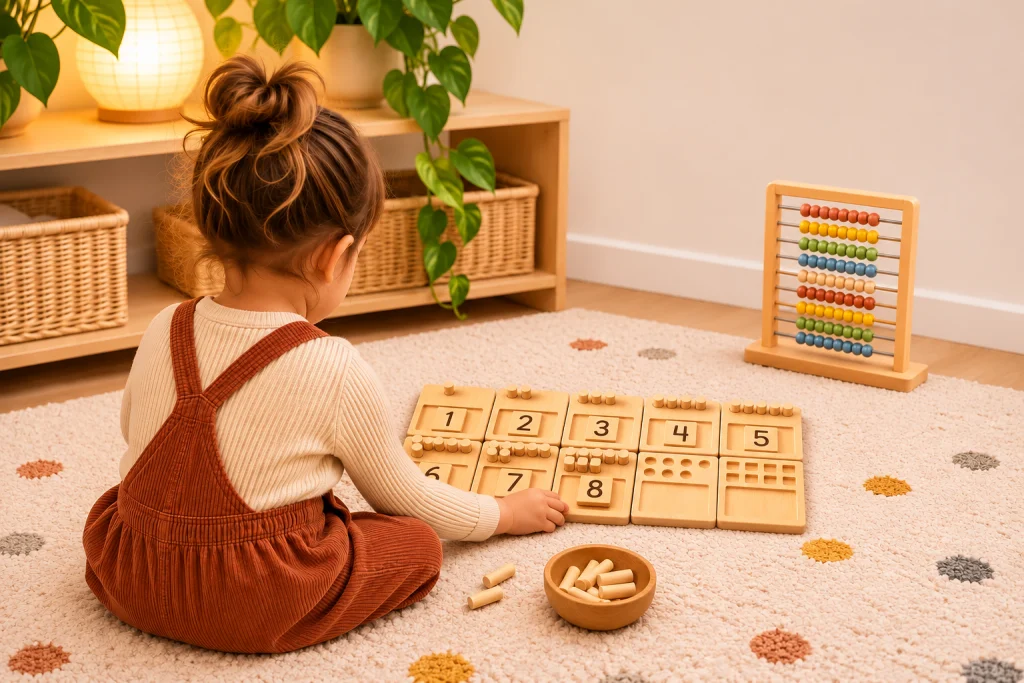
For us, this was when engaging toys and simple games became useful. Moving beads, counting pegs and fitting shapes together gave our daughter reasons to revisit these ideas and stay interested for longer.
The ten toys and games below cover counting, quantities, shapes and problem-solving, with activities ranging from simple hands-on exploration to more challenging games and puzzles. Most can be used in different ways as your child grows, from simple exploration to more involved games and puzzles. You don’t need all ten—choose what suits your child’s interests and build from there.
This post contains affiliate links. I may earn a small commission at no extra cost to you. As an Amazon Associate, I earn from qualifying purchases.
How to Make Early Maths Feel Like Play
At this age, the best maths activities often happen without children realising they’re learning. Count the steps as you climb the stairs, sort socks into pairs or ask your toddler to bring you three spoons for the table. These little everyday moments help numbers become meaningful.
There’s no need to correct every mistake or rush towards bigger numbers. If your child counts the same object twice, simply count together again, pointing to or moving each item as you go. The aim is to build curiosity and confidence, not to get every answer right.
1. Dot-to-Dot Triangle Game
Roll the die, join the dots and claim completed triangles with your initial—practising counting, shapes and turn-taking as you play.
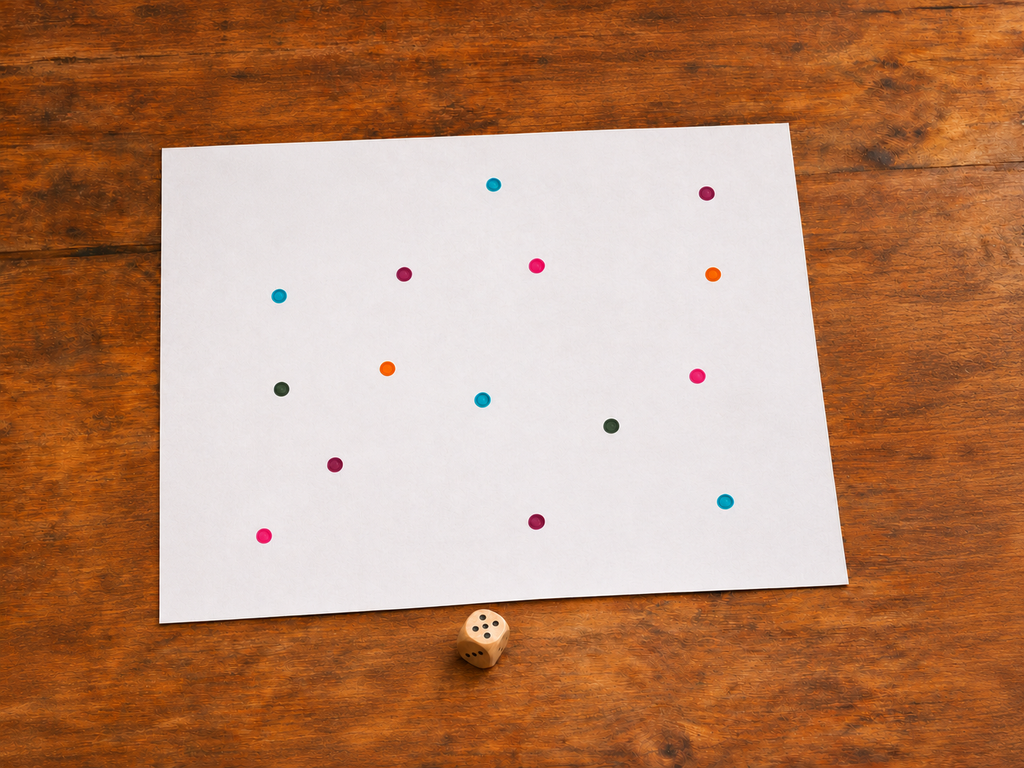
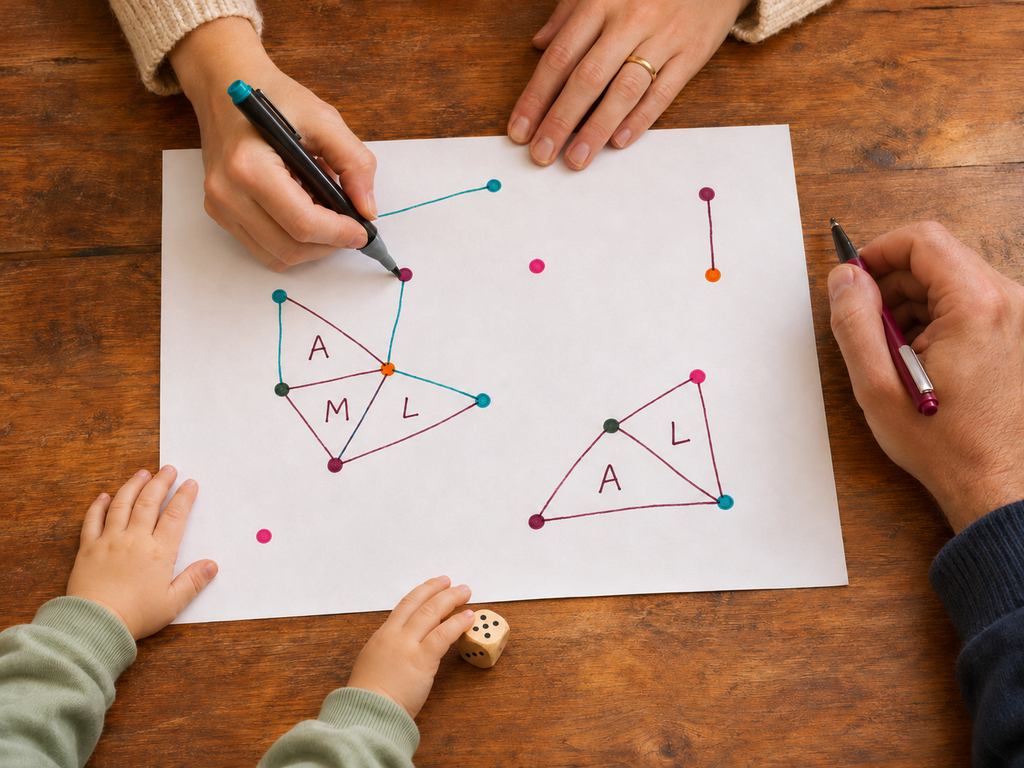
As far as family maths games go, this is by far our favourite as it’s practically no-prep and gets competitive very fast. An extra bonus is that it gives our daughter practice with turn-taking and introduces counting through play.
You’ll need: paper, a pen for each player and a die.
How to Play
- Draw dots across the paper. Scatter them around, leaving enough space to draw lines between them. They don’t need to form a neat grid.
- Choose an initial (or a shape) for each player. You’ll write this inside any triangles you complete so you can count them at the end.
- Take turns rolling the die. The number rolled tells you how many lines you can draw on your turn.
- Join two dots with each line. Count each new line aloud as you draw. Lines must not cross other lines or pass through another dot, and you can’t draw over an existing line.
- Claim any triangles you complete. If your line closes a triangle with a dot at each corner and no dots or lines inside it, write your initial in the middle. You can use lines drawn by any player—whoever adds the final side claims the triangle.
- Pass the die to the next player. Completing a triangle doesn’t give you an extra turn. If you run out of legal moves before using your roll, your turn ends.
- Count your triangles. When no more lines can be drawn, count each player’s initials. Whoever has the most triangles wins!
For a simpler first game: skip the die and draw just one line per turn. You can also help your child spot a nearly completed triangle and count its three sides together.
If you love games that are just as entertaining for grown-ups, take a look at our Educational Games for Toddlers That Parents Actually Enjoy Too for more ideas the whole family can enjoy.
2. Abacus
Move and count just 1–3 beads together. No game rules or written numbers needed.
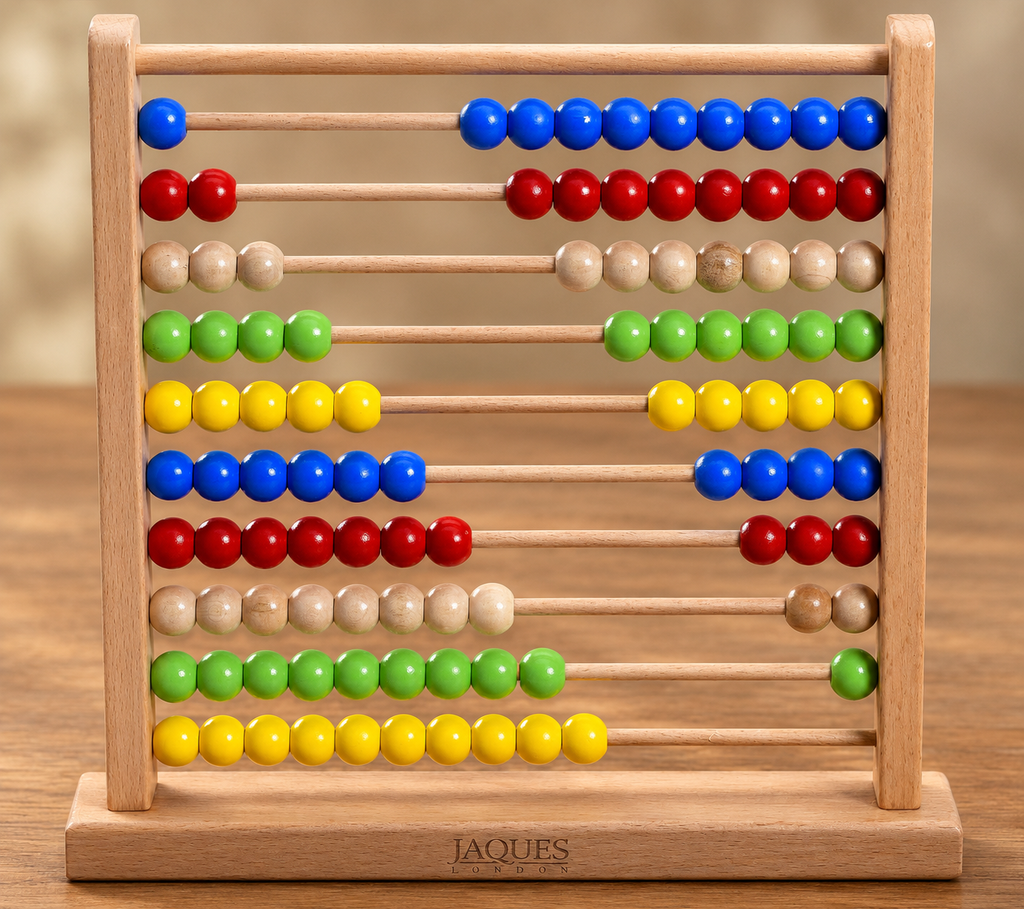
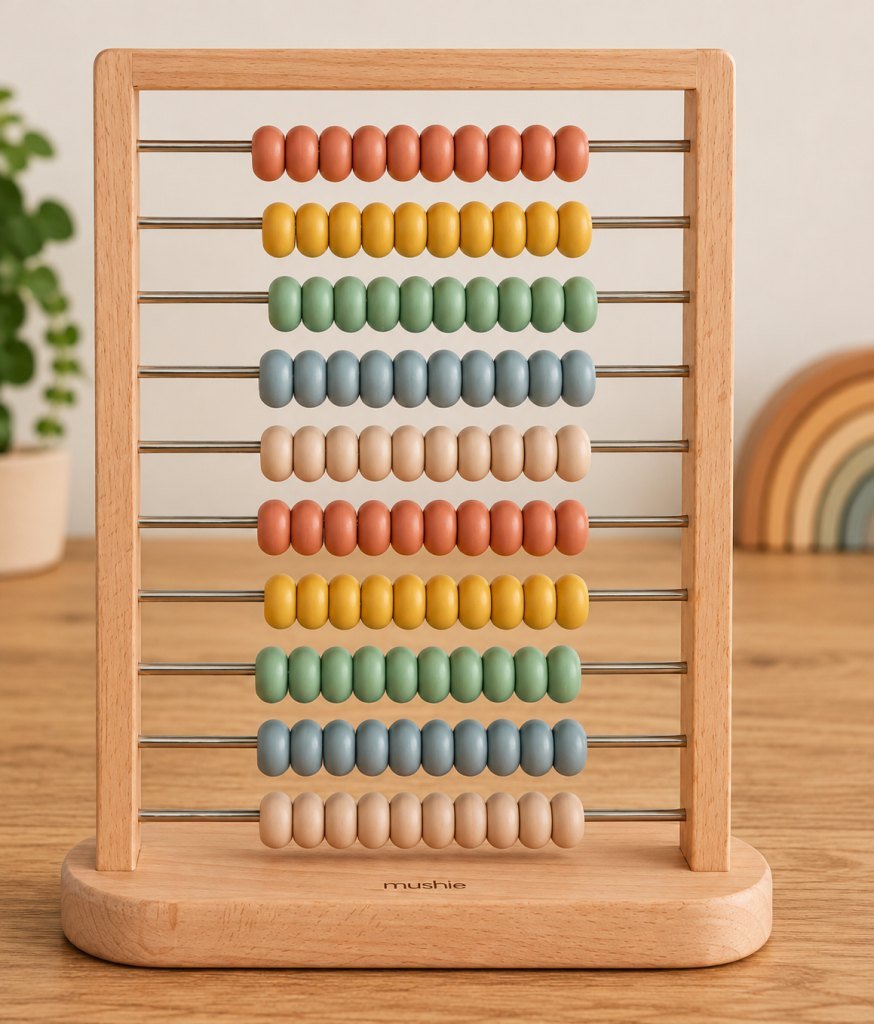
An abacus makes numbers something your child can move, count and experiment with. Start with just three beads: slide them across one at a time, counting together, then ask, “Can you move two back?”
Try copying each other’s bead arrangements or comparing small groups: “Which row has more?” As their confidence grows, add simple stories: “Two birds are sitting here. One more arrives—how many now?”
At three, keep the numbers small and follow their interest. There’s plenty to explore before introducing written sums.
3. Snakes and Ladders Game
Roll, count and move—practising numbers and turn-taking with every climb and slide.
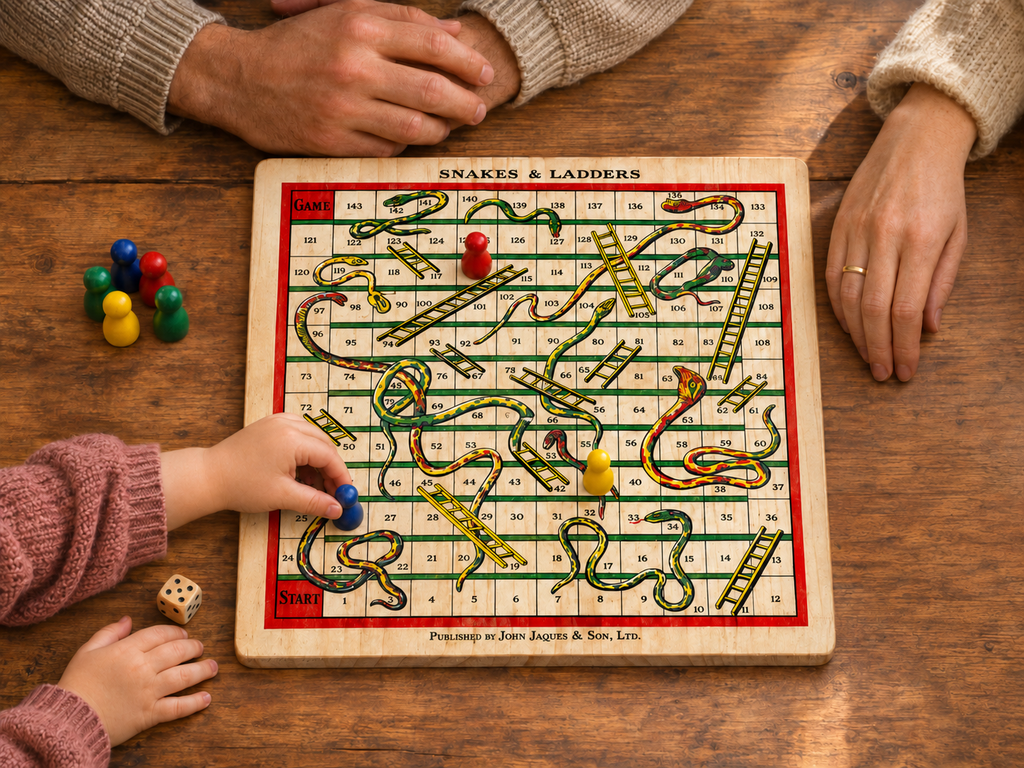
Snakes and ladders gives counting a purpose: roll the die, count the dots and move your counter that many spaces. Matching each count to one move takes practice, so count together at first.
The ladders and snakes add plenty to talk about. “You need three to reach that ladder!” invites your child to count ahead and notice how far away a square is. You can also wonder together where different rolls might land them.
There’s no strategy that changes the roll—it’s a game of chance—but predicting possible moves introduces thinking ahead. Along the way, children practise recognising dice patterns, following the number sequence and taking turns, with the excitement of a climb or slide keeping the counting part of the fun.
4. Noughts and Crosses
Take turns placing pieces, spotting three in a row and learning to block your opponent.

Noughts and crosses is quick to set up, easy to repeat and surprisingly competitive once your child starts spotting where to put their next piece.
Take turns placing an X or O in an empty square, aiming to make three in a row—across, down or diagonally. At three, start by helping your child recognise a completed line. Then introduce little prompts such as, “You’ve got two here. Where would the third go?” or “Can you spot where I might win?”
The maths here is about position, recognising patterns and thinking ahead. Over time, children begin to notice that a move can help complete their own line or block someone else’s.
We invested in a more premium wooden version because we love this game as a family and can see ourselves playing it for decades. For us, it felt worth the investment. But if you’re not sure whether your child will enjoy it, pen and paper works just as well. The thinking—and the satisfaction of blocking a parent’s winning move—is exactly the same.
5. Jaques Educational Wooden Shapes Puzzle
Begin with simple pictures, matching and positioning shapes.
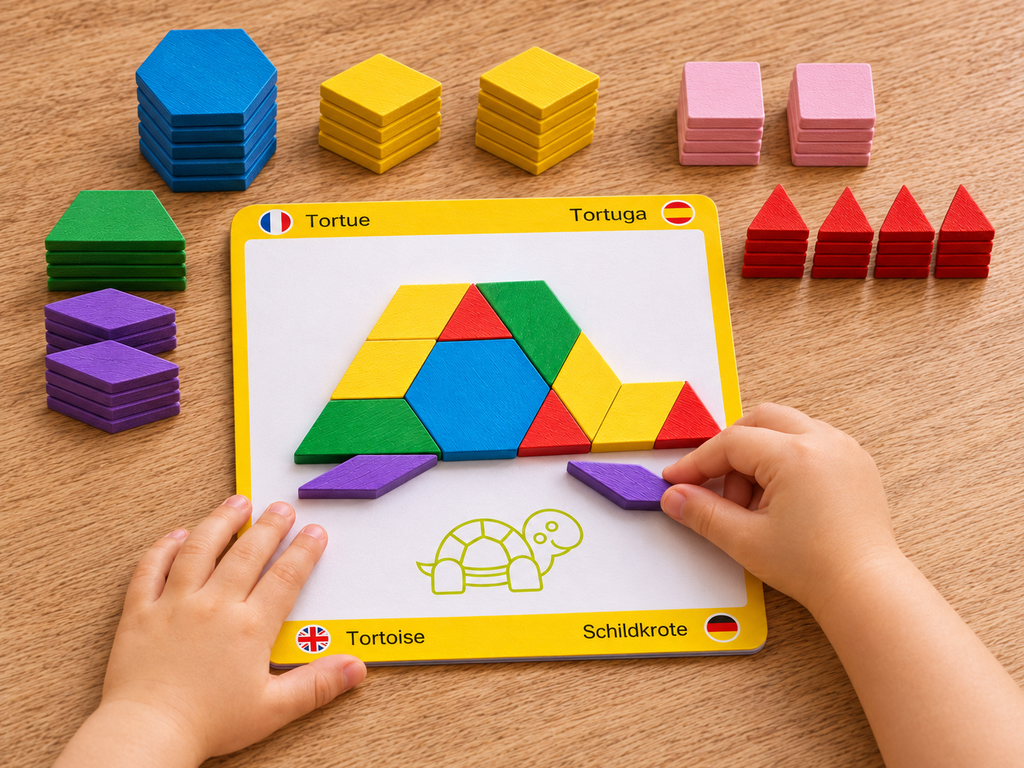
This one explores the geometry side of early maths. Children use colourful wooden shapes to recreate pictures, working out which pieces they need and how to position them.
Turning a triangle until its corners line up with the card is a small exercise in spatial reasoning. Joining pieces together introduces another useful idea: smaller shapes can combine to make something bigger. Along the way, children explore edges, corners and how shapes fit, without needing formal geometry vocabulary.
Start by placing pieces directly onto the card, with prompts such as, “Could you turn that around?” As confidence grows, try copying the picture beside the card or making an original design. Picking up and positioning the pieces also gives little hands practice with fine motor control.
The picture names appear in four languages—a lovely extra for families who enjoy exploring words alongside shapes.
Full disclosure: in the early days, our daughter was far more interested in stacking the pieces or building roads with them than completing several cards in a row. We’re getting there! And working out how to balance a tower or fit a road together is its own little geometry experiment.
6. Wooden Counting Pegs
Place and count pegs on the smallest number boards, then connect quantities to numerals.
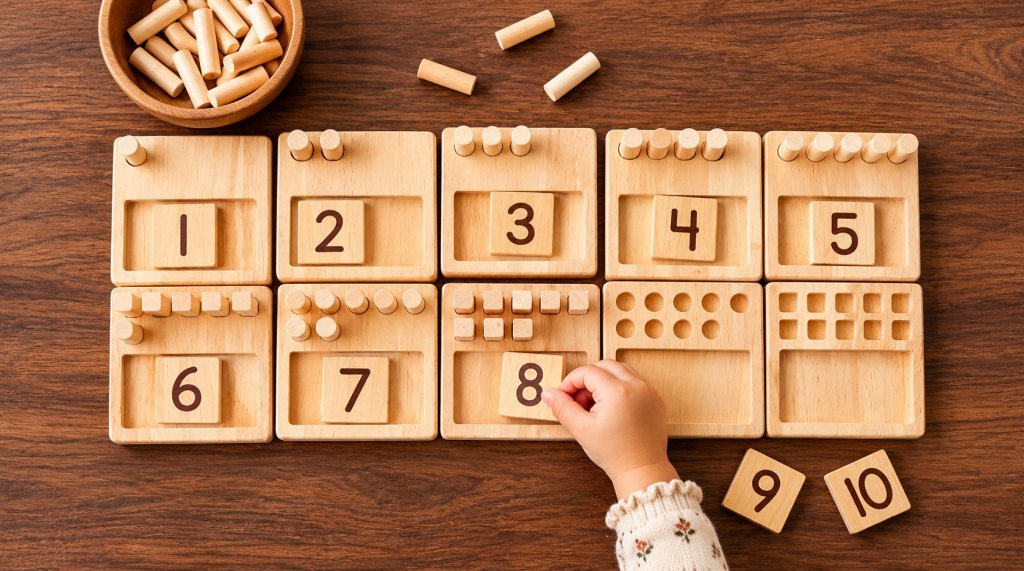
A little mathematician’s best friend! This beautifully crafted wooden counting set makes those first steps into the world of numbers wonderfully hands-on. Children start by matching numbers and placing wooden pegs, gradually exploring number patterns, addition and subtraction as their confidence grows.
We particularly love the sensory experience of wooden toys. The smooth pieces, their gentle weight and that satisfying click as each peg finds its place make learning feel like play rather than a lesson.
With its Montessori-inspired approach, the set encourages independent exploration and repetition. But when we’re playing together, we love making deliberately silly mistakes to keep things entertaining. Two pegs on the number 8 board? “There, all done!” Our daughter is usually very quick to point out our terrible counting!
With plenty of ways to play and learn, it’s a lovely educational toy that can grow with your child well into their first years at school.
7. Touch Bingo
Match numbers and quantities while following bingo rules.
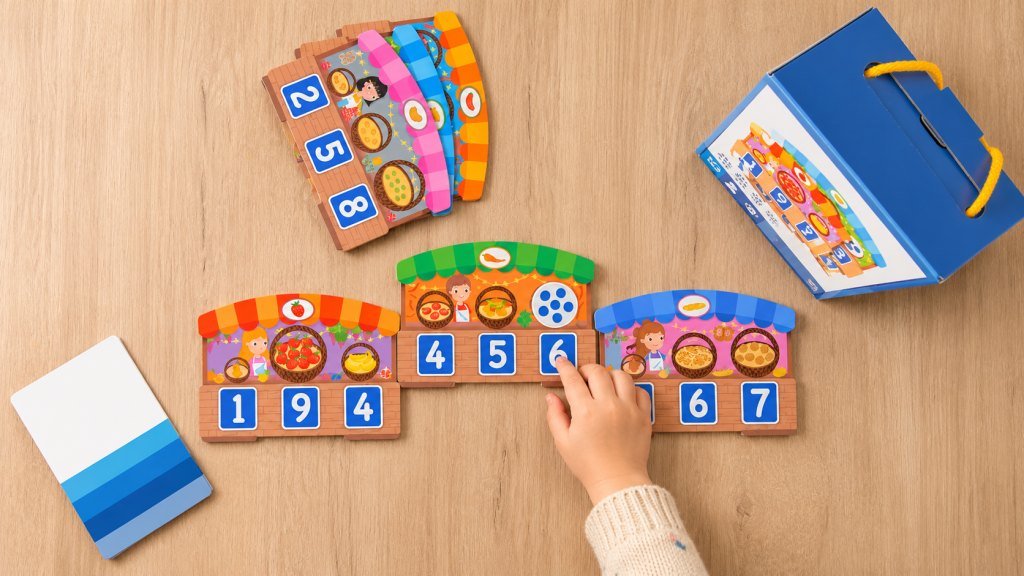
Who doesn’t love a trip to the market? This colourful Montessori-inspired game brings early maths to life through a fun shopping adventure! It’s also a brilliant activity to practise in real shops: count how many bananas, apples or oranges you’re putting into the basket together, then bring that experience home with the game.
Children explore illustrated market stalls, counting the items in each basket before matching them to the correct number of dots and written numeral. Three bananas? Find the three-dot card, place it on the basket, then match the number 3 underneath!
With tactile number pieces and a playful market theme, it’s a lovely way to build number recognition, counting, matching and early maths confidence, all while having fun. Perfect for curious little shoppers aged 3–6!
8. Dinosaur Number Eggs
Spin, match numbered eggs and hatch baby dinosaurs in this exciting counting game!
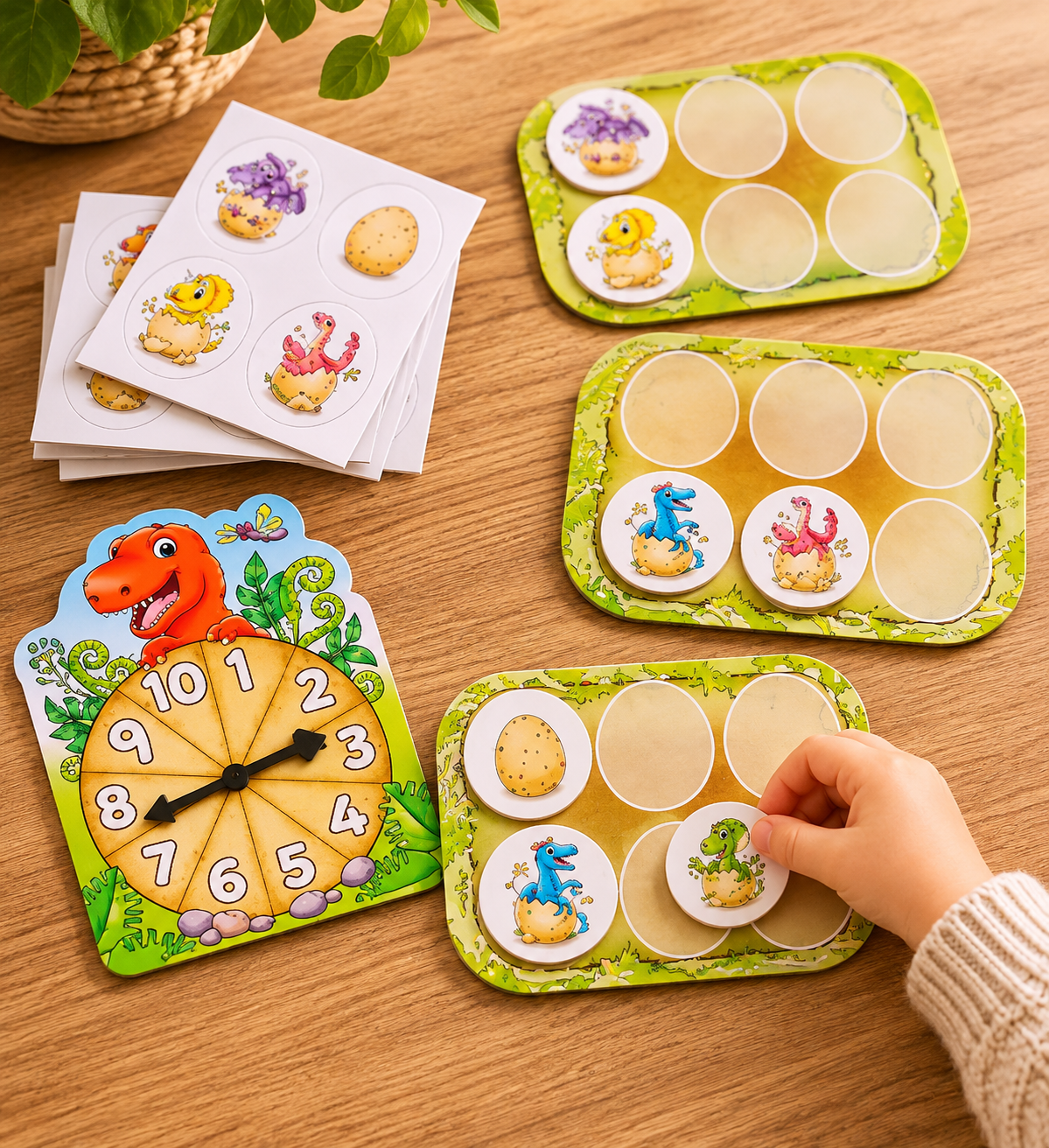
Who knew dinosaurs could make maths so much fun? In this colourful number-matching game, children spin the spinner, find the matching numbered eggs and race to hatch the most baby dinosaurs!
But watch out for the T-Rex wildcard! Draw one of these and you’ll have to give up an egg from your nest, adding a little suspense and plenty of excitement.
Along the way, children practise number recognition, counting and matching quantities, all while developing turn-taking skills. A lovely introduction to early maths that feels much more like a dinosaur adventure than a lesson!
9. Wooden Tetris Puzzle
Copy progressively harder designs by choosing, rotating and arranging pieces.

A little puzzle with some surprisingly big learning benefits! This colourful wooden Tetris-style game invites children to turn, arrange and fit different shapes together, either following the pattern cards or experimenting with their own designs.
It’s a lovely way to introduce early maths skills without numbers or worksheets. As little ones rotate pieces, work out what fits and fill the gaps, they’re developing spatial awareness, shape recognition, problem-solving and an early understanding of how smaller shapes combine to make larger ones.
We particularly love how it encourages children to think, try, adjust and try again. There’s no rush, just hands-on discovery and that wonderfully satisfying moment when the final piece fits!
It’s also compact enough to take on trips, making it a handy screen-free activity for holidays and days away. For more ideas to keep little minds busy on the go, explore our favourite travel toys for toddlers.
10. TOWO Wooden Colour Sorting Puzzle
Plan moves along the tracks, including moving other colours out of the way.
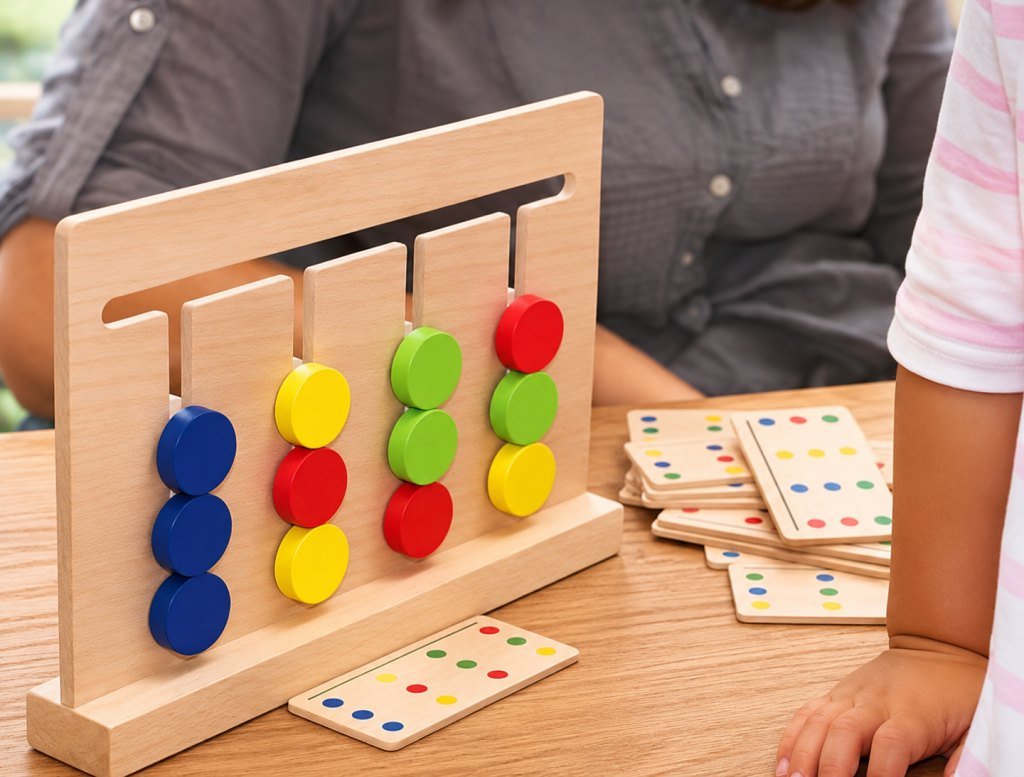
This clever wooden puzzle is much trickier than it first looks! Children use colourful sliding discs to recreate patterns shown on the challenge cards. But there’s a twist: the discs can’t simply be picked up and moved. Little ones have to work out how to slide them around each other to get every colour into the right position.
It’s a brilliant way to introduce early mathematical thinking through play, developing pattern recognition, sequencing, spatial awareness and logical reasoning. Children learn to plan ahead, experiment with different solutions and recognise when they need to change their approach.
With 18 pattern challenges and endless opportunities to create their own, it’s a wonderfully hands-on game that encourages patience, concentration and independent problem-solving. And don’t be surprised if the grown-ups find themselves having a go, too!
Frequently Asked Questions
What maths skills should a 3-year-old be learning?
At three, children are beginning to explore counting, recognising small quantities, sorting, shapes and simple patterns. There’s no need to rush into addition or written sums. Understanding numbers through everyday play is a great starting point.
What are the best maths toys for 3-year-olds?
Wooden counting pegs, abacuses, number-matching games and shape puzzles are all lovely options. The best choice depends on your child’s interests and current abilities.
How can I teach my 3-year-old maths at home?
Keep it playful! Count fruit while shopping, sort toys by colour, compare the sizes of building blocks or play simple dice games. Short, enjoyable activities are often more effective than structured lessons.
Should my 3-year-old be able to count to 10?
Some three-year-olds can recite numbers well beyond ten, while others are still learning the sequence. What’s more important is gradually understanding that numbers represent quantities, rather than simply memorising number words.
Are Montessori maths toys better than traditional games?
Not necessarily. Montessori-inspired toys encourage hands-on exploration and independent learning, but traditional games such as snakes and ladders can be equally valuable for practising counting, recognising numbers and taking turns.