
How to Prepare Your Toddler for Nursery: What Helped Ours
Starting nursery marks the beginning of a new chapter—for your toddler and for you.
Before our daughter started, we spent a surprising amount of time thinking about what she’d need.
A new backpack.
Spare clothes.
A water bottle.
The practical things definitely mattered.
They made busy nursery mornings simpler.
But they weren’t the biggest reason she settled so well.
The biggest difference came from making nursery feel a little less unfamiliar before she ever walked through the door.
Small routines.
Simple conversations.
Tiny moments of growing independence.
Those were the things that quietly built confidence long before the first day arrived.
Disclaimer: This article contains affiliate links, including links from Amazon Associates and selected retail partners. If you purchase through these links, we may earn a small commission at no extra cost to you. We only recommend products we genuinely trust and believe are worth considering.
Start talking about nursery a few weeks beforehand
One of the easiest ways to make somewhere feel familiar is to talk about it before it becomes part of everyday life.
A few weeks before nursery starts, begin mentioning it naturally during conversations rather than treating it like one enormous event.
Talk about painting pictures, singing songs, playing outside, listening to stories and sharing snack time with other children.
Rather than promising they’ll love every minute, simply reassure them that they’ll spend some time playing—and when the day is over, you’ll come back to collect them.
For many toddlers, that quiet certainty is all the reassurance they need.
Let them know what to expect
Toddlers don’t need every detail.
They simply like knowing what comes next.
Talk through the day in broad, reassuring steps:
You’ll arrive together.
You’ll say goodbye.
You’ll play.
Have a snack.
Play outside.
Eat lunch.
And before long…
…it’ll be time for you to come back.
Sometimes a simple rhythm feels far less overwhelming than a long explanation.
Adjust their routine before they start
The first nursery morning already brings enough change.
If bedtime, breakfast and getting ready also feel completely different, it can make everything seem much bigger.
A week or two beforehand, gradually shift your toddler’s routine towards nursery hours.
That way, the first morning feels more familiar than rushed.
If nursery starts at 8:30, don’t wait until the first day to discover your toddler usually sleeps until 8:15.
Encourage little moments of independence
This was probably the thing that surprised us most.
We chose a Montessori nursery where children pour their own drinks, serve their own food and help tidy up afterwards.
Instead of waiting for nursery to teach those skills, we simply started practising them at home.
Our daughter loved it.
Before long, she wasn’t just pouring her own water…
…she was proudly serving ours too.
Simple opportunities like:
- pouring water
- carrying a plate
- using child-sized utensils
- helping tidy away
help children feel capable long before they walk through the nursery door.
One thing that helped
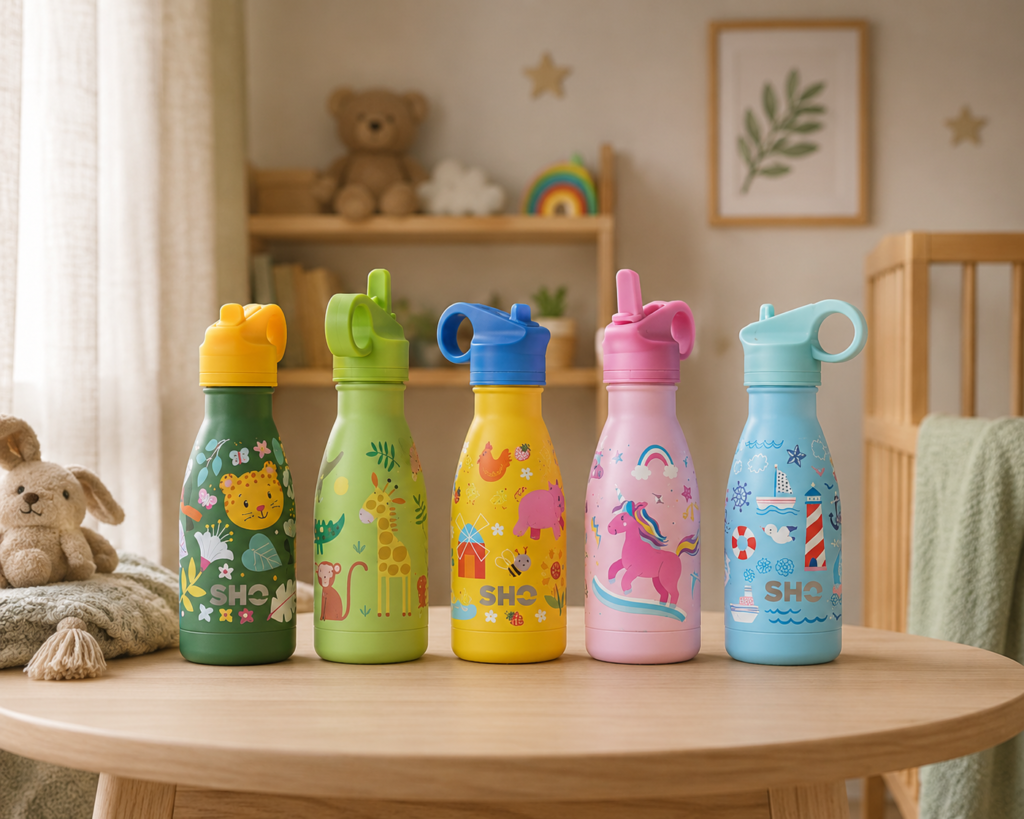
We didn’t expect something as simple as a familiar water bottle to become part of her routine.
Because she recognised it as hers, taking it to nursery quickly became part of the routine rather than something new to learn.
View our favourite water bottle
Pack something familiar
One thing from home can make a new environment feel surprisingly different.
If your nursery allows it, consider packing a comfort toy.
For some children that’s a favourite teddy they’ve had for years.
For others it’s a special nursery companion that only comes out on nursery days.
Either way, one familiar object can quietly bridge the gap between home and nursery.
What to pack
Every nursery is a little different, but these are the things we found ourselves reaching for most often.
- spare clothes
- nappies if needed
- wipes
- spare underwear
- comfort toy
- labelled water bottle
- nursery backpack
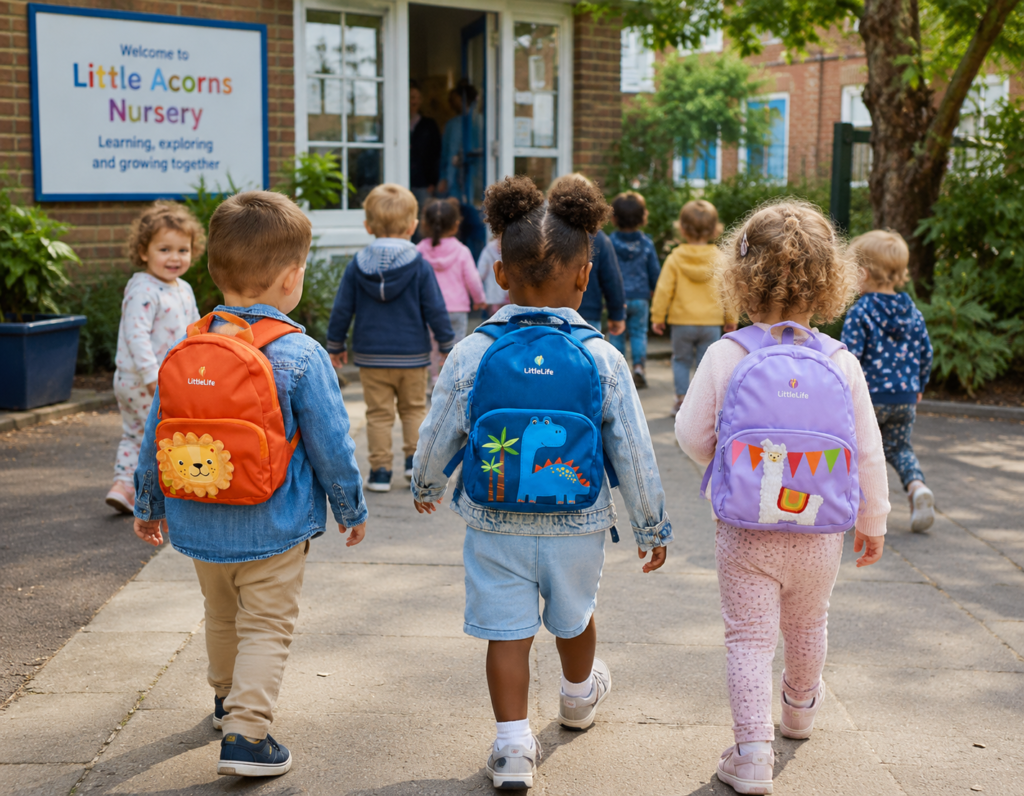
The backpack mattered more than we expected
At first we thought a nursery backpack was simply somewhere to carry spare clothes.
Instead, it quickly became something our daughter recognised as hers.
She enjoyed carrying it herself, helping pack it and bringing it to nursery each morning.
That small sense of ownership seemed to make the routine feel much more familiar.
We also found it easier to keep a dedicated nursery backpack ready to go rather than unpacking and repacking our everyday changing bag each evening.
See Our Favourite Nursery Backpack
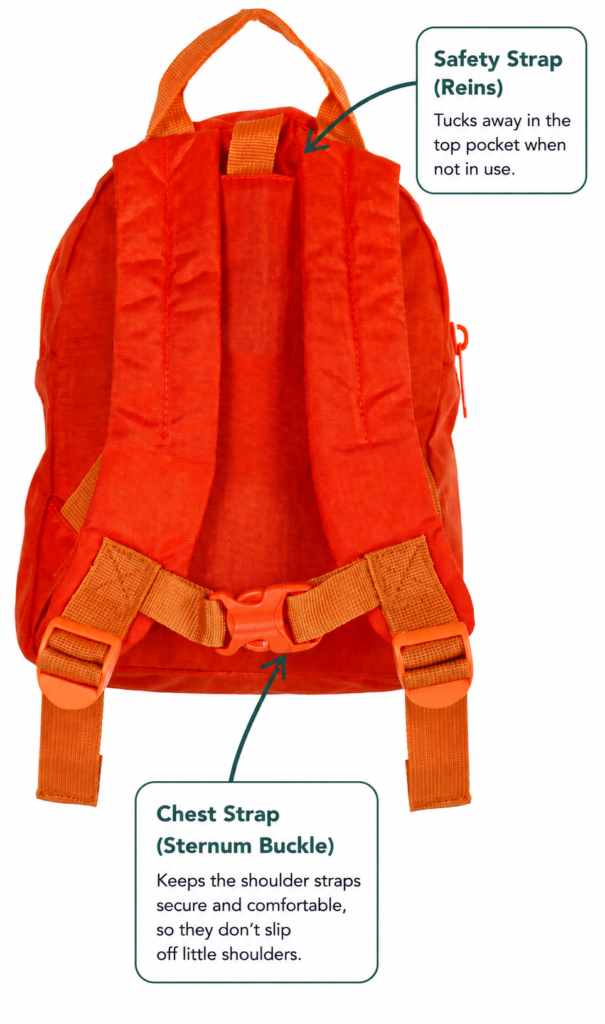
One feature we didn’t fully appreciate until we started using it was the integrated safety strap. It can be tucked neatly into its own pocket when not needed, but quickly converts into toddler reins whenever you want a little extra reassurance. Some nursery days involve walks to the local park or nearby woodland, and having the option for teachers to use the reins during road crossings offered extra reassurance without needing a separate harness.
The adjustable chest strap has also been surprisingly valuable. It’s one of those features that’s easy to overlook until you’ve used a backpack without one. Just like adult backpacks, shoulder straps tend to slide off when there’s no chest strap to keep everything comfortably in place. For toddlers, that often means constantly stopping to pull the backpack back onto their shoulders. A simple chest strap makes it much more comfortable for them to carry independently.
A Lunch Box That Can Handle Snacks and Proper Meals
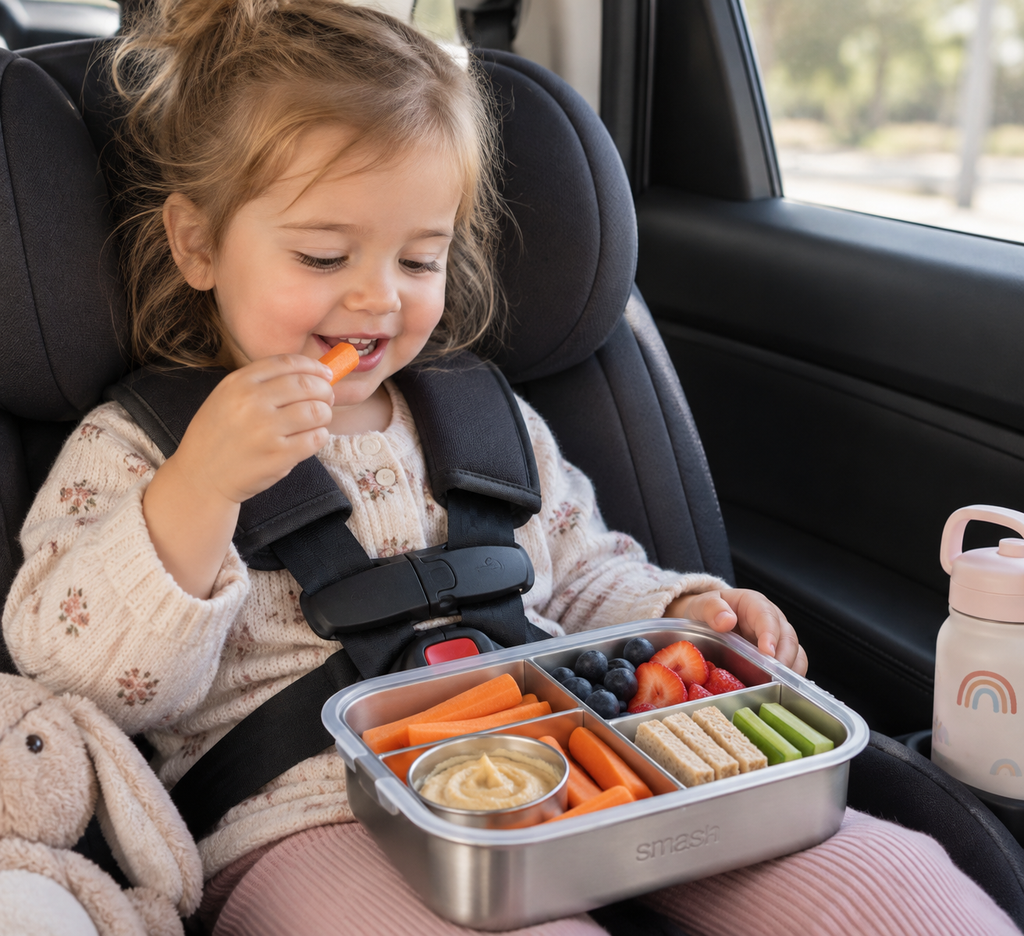
One nursery purchase we’ve ended up finding particularly useful is our Smash stainless steel bento box. It has three compartments, so you can pack a few different foods without needing several separate containers, and the stainless steel base is surprisingly microwave-safe — just remove the lid and follow the manufacturer’s heating instructions.
We also use ours for post-nursery snacks, which has become particularly useful now that we’ve discovered just how hungry and overwhelmed a toddler can be after a busy nursery day.
Why we like it: It’s sturdy, dishwasher-safe and large enough for a proper lunch, but the divided sections also work well for packing a selection of smaller foods. Just bear in mind that although the lid is designed to be leak-proof, the dividers don’t seal liquids from one compartment to another.
See the Smash Stainless Steel Bento Box
Visit Before the First Day
If possible, walk or drive past nursery a few times before they start. Point out the building, talk about it together or simply wave as you pass.
Seeing the building become familiar before the first drop-off can make it feel much less like somewhere completely new.
Label Everything
This was one thing we almost overlooked.
Then we realised almost every toddler seemed to have a very similar water bottle, jumper and backpack.
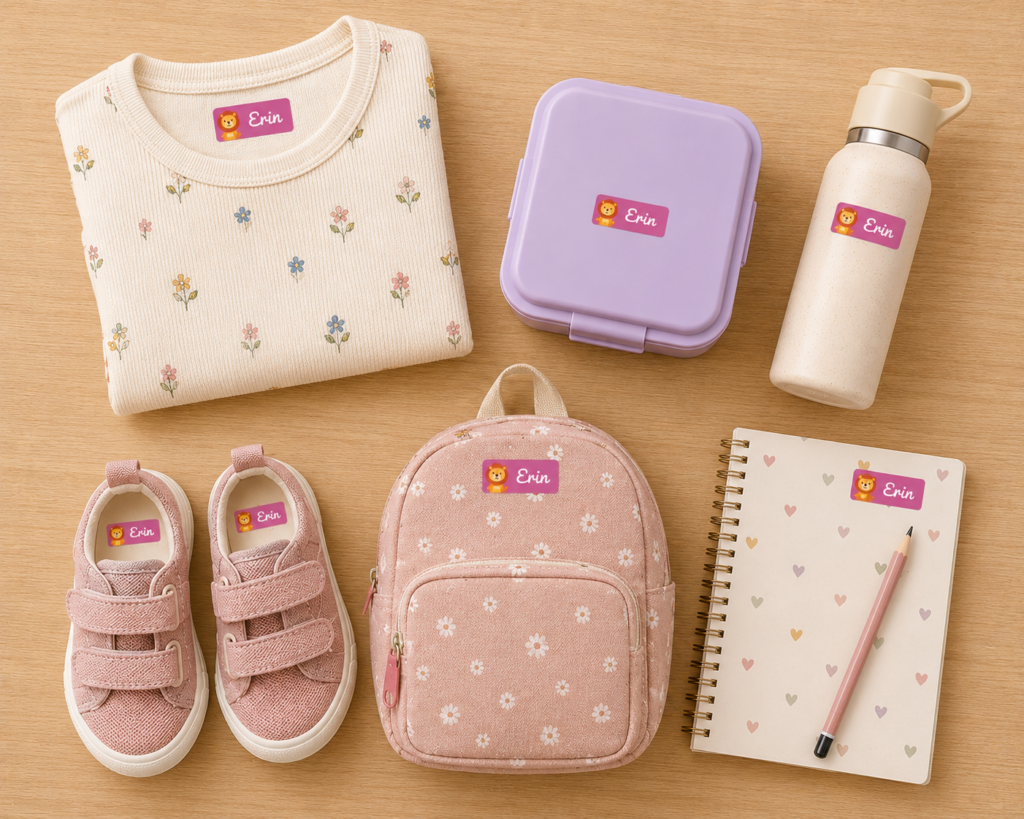
Good name labels quickly became one of those small purchases we rarely thought about again—but used every single day.
The ones we recommend can be personalised and stick securely to clothing, shoes, water bottles, lunch boxes, backpacks and comfort toys. They’re designed to withstand washing up to 60°C and even regular trips through the dishwasher.
Don’t Send Their Favourite Clothes
Nursery is wonderfully messy.
Painting.
Mud.
Sand.
Water play.
Spaghetti.
That’s exactly how it should be.
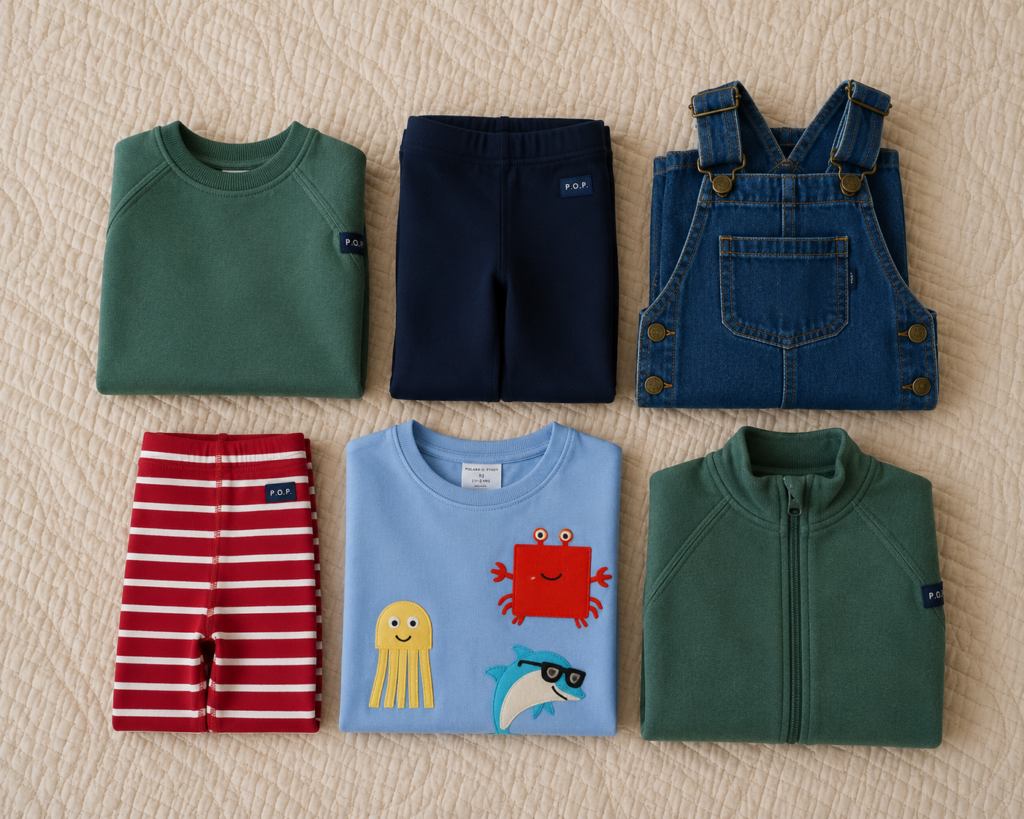
Rather than worrying about stains, we found it much easier to keep a small collection of comfortable “nursery clothes” ready to go.
We actually put together a handful of everyday essentials from Polarn O. Pyret and treated them almost like a nursery uniform, keeping some of our daughter’s favourite outfits for weekends and family days out instead. We found it easier to have a small collection of clothes we knew would wash well, keep their shape and be ready to wear again the next day. They’ve been through countless washes and still look remarkably good. It made busy mornings simpler, and we never had to think twice about what she should wear.
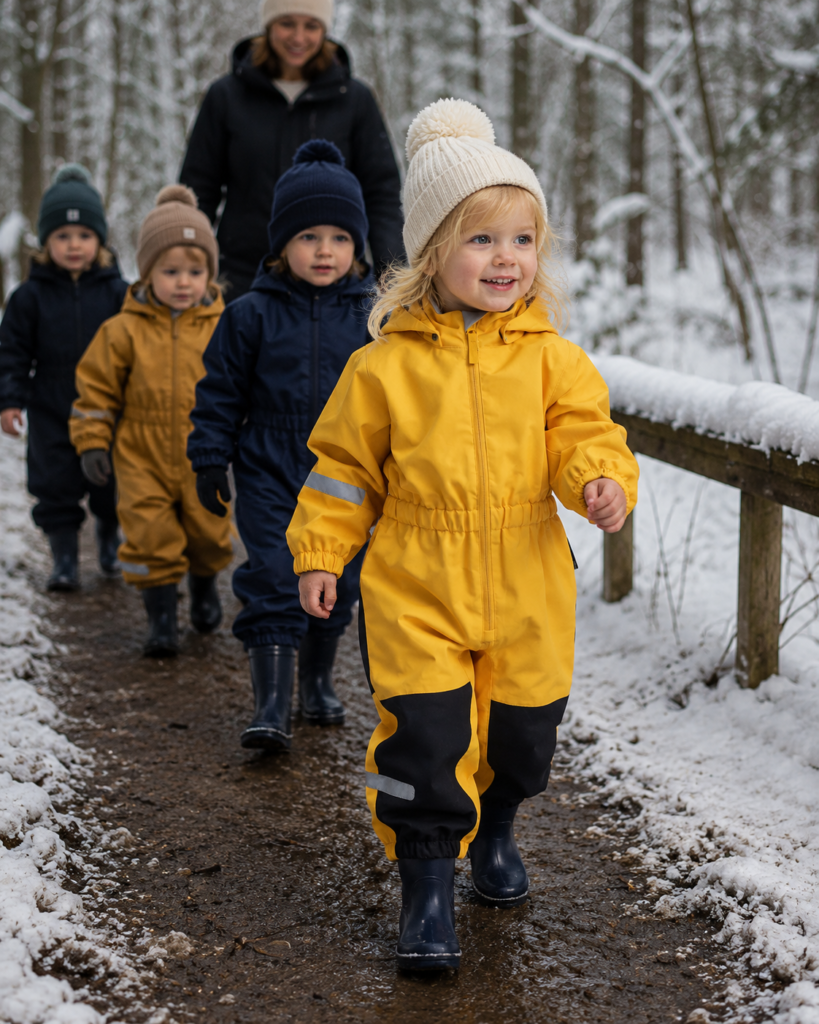
We didn’t realise how much time they’d spend outdoors
This genuinely surprised us.
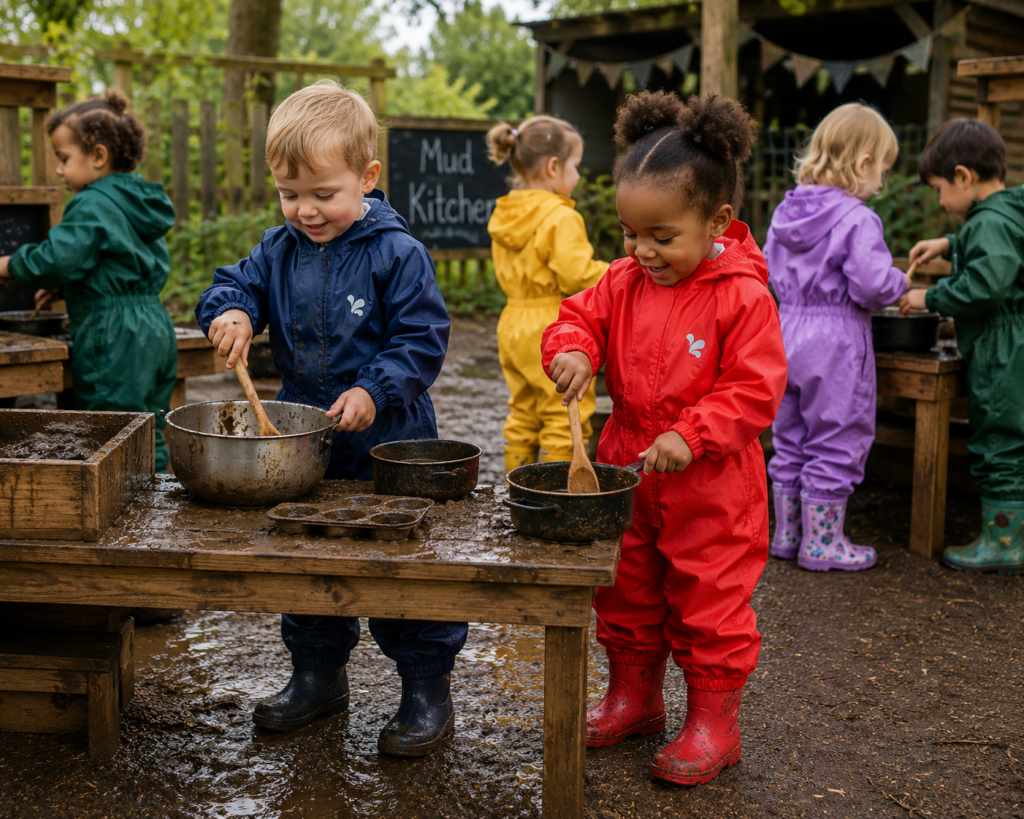
Our daughter spent far more time outdoors than we’d imagined.
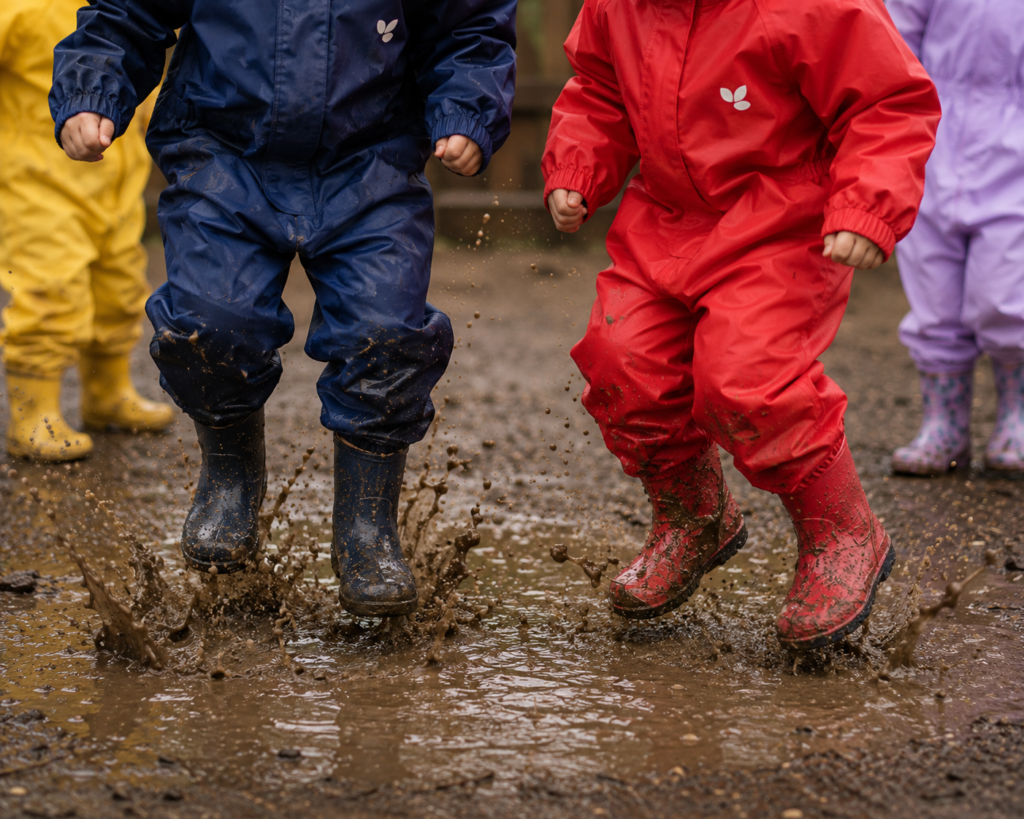
Rain didn’t stop outdoor play. In fact, some of her favourite nursery days seemed to involve the most mud.
Looking back, waterproof clothing ended up being some of our most-used nursery purchases.
Looking back, waterproof clothing ended up being some of our most-used nursery purchases. If you’re not sure whether to choose an all-in-one, waterproof dungarees or a separate jacket, we’ve compared the options in our guide to the Best Toddler Waterproof Puddlesuits, Dungarees & Jackets.
Outdoor essentials we’d happily buy again
Summer puddle suit
Ideal for damp grass, water play and unexpected showers.
This was one of those purchases we reached for far more often than we expected. It’s lightweight enough for warmer months, fully waterproof and roomy enough to layer over everyday clothes when needed.
See our favourite summer puddle suit
Waterproof winter overall
This is the waterproof overall we use throughout the colder months. Rather than being heavily insulated, it relies on layering underneath, which we’ve found much more practical for active nursery days. It keeps wind and rain out while allowing you to adjust warmth with a simple fleece or wool layer depending on the weather.
Fully waterproof, windproof and breathable, it’s an excellent choice for nurseries that spend lots of time outdoors, particularly if you live in a colder or windier part of the UK.
We’ve also been impressed by how well it wears. Despite regular outdoor play and frequent washing, after more than a year of regular nursery use it still looks almost new, and the durable fabric has resisted stains far better than we expected.
View our favourite winter puddle suit
Wellies
We tried a few different pairs before finding these.
Some felt so rigid that our daughter struggled to walk comfortably in them, especially during longer outdoor sessions. These struck the right balance: soft and flexible enough to move naturally in, while still providing plenty of grip on wet grass and muddy paths.
One small thing that made the journey home easier
We’d spent so much time thinking about the morning that we’d barely thought about the journey home.
Then came the first few pick-ups.
Our daughter was happy…
…but absolutely exhausted.
Packing a familiar snack for the journey home turned out to be one of the simplest things we did.
A banana.
Some apple slices.
A fruit pouch.
Just enough to take the edge off before we got home.
Final Thoughts
Before nursery, it’s easy to think the preparation happens in the shopping.
Looking back, we think it happened much earlier than that.
Every time our daughter poured her own drink.
Packed her own backpack.
Carried her own water bottle.
Or talked about what nursery might be like.
Those small moments quietly made the first day feel a little less unfamiliar.
The nursery essentials certainly helped.
Looking back, confidence wasn’t something we packed in her backpack.
It was something we quietly built together.
Shopping on Amazon?
If you’re not already a Prime member, you can check whether you’re eligible for a free 30-day trial and enjoy Prime delivery on millions of eligible items.
Frequently Asked Questions
For this article, I’d avoid FAQs that simply repeat what’s already in the body. Instead, target the long-tail searches people type into Google. These can help the article rank for additional queries while still providing value.
Here are the ones I’d use:
How can I prepare my toddler for nursery?
The best preparation usually starts a few weeks before the first day. Talk positively about nursery, explain what the day might look like, gradually adjust their routine and encourage small moments of independence, such as carrying their own backpack or drinking from their own water bottle. These simple experiences can help nursery feel much more familiar when the day arrives.
When should I start preparing my toddler for nursery?
Most families find it helpful to begin preparing two to four weeks before the start date. This gives your toddler time to become familiar with the idea of nursery without making it feel like a major event that hangs over them for months.
What should I pack for my toddler’s first day at nursery?
Every nursery has slightly different requirements, but most ask for:
- Spare clothes
- Nappies and wipes (if needed)
- A labelled water bottle
- A nursery backpack
- A comfort toy (if permitted)
- Spare underwear for children who are toilet training
It’s also worth packing a small snack for the journey home, as many toddlers are surprisingly tired after their first few sessions.
How do I make my toddler’s first day at nursery less stressful?
Keeping the morning calm and predictable often helps more than trying to make it perfect. Talk positively about nursery beforehand, stick to familiar routines, keep goodbyes short and reassuring, and let your child know you’ll be back to collect them. Many toddlers settle more quickly than parents expect.
Is it normal for toddlers to cry on their first day at nursery?
Yes. Some toddlers walk straight in without looking back, while others need a little more reassurance. Both responses are completely normal. It’s common for children to become more confident as the new environment becomes familiar over the following days or weeks.
Should I buy new clothes for nursery?
Not necessarily. Many parents find it easier to keep a small collection of comfortable, durable clothes specifically for nursery days. Choosing well-made basics that wash well and stand up to frequent wear often proves more practical than saving clothes for special occasions.
What helps toddlers settle into nursery more quickly?
Familiar routines, consistent drop-offs and opportunities to practise independence at home can all make the transition easier. Simple skills like carrying their own backpack, pouring a drink or tidying away toys help build confidence before nursery even begins.