
My Toddler Won’t Sleep Without Me: What Helps
If your toddler will happily sleep—as long as you’re lying beside them, holding their hand or sitting next to the bed—you are certainly not alone.
And perhaps the hardest part is that the arrangement may have worked perfectly well for quite some time. Then one evening you realise you’ve spent the best part of an hour waiting for a small person to fall asleep, and you’re wondering whether you’ll ever get your evenings back.
Helping a toddler learn to fall asleep without you doesn’t necessarily mean suddenly leaving the room or following a strict sleep-training method.
A gentler approach is to look at what your presence currently provides—comfort, security, entertainment, help winding down—and gradually create an environment in which your child can begin doing some of those things for themselves.
That’s where a Montessori-inspired approach can be particularly useful.

Disclaimer: This post contains affiliate links. As an Amazon Associate I earn from qualifying purchases at no extra cost to you.
Find Your Bedtime Struggle
Not every toddler needs you there for the same reason. If you already know what seems to be keeping your child from settling independently, jump to the section that sounds most familiar:
- They’re frightened when the room gets dark → Give Them Control Over Their Light
- They keep asking for another book or more interaction → Make Books Accessible Without Making the Bedroom a Playroom
- They become upset specifically when you leave → Introduce Something Familiar That Stays When You Leave
- They need you lying or sitting beside them to fall asleep → You Don’t Necessarily Have to Stop Staying With Them
- They simply don’t seem tired at bedtime → Start by Working Out What Your Toddler Needs You For
- Household or outside noise keeps disturbing them → What About White Noise?
- Their bedroom itself seems too stimulating → Keep the Bedroom Calm
Not quite sure what the problem is? Start at the beginning — sometimes a few evenings of observation tell you more than changing the bedtime routine straight away.
Independent Sleep Doesn’t Have to Mean Sleep Training
There isn’t a prescribed Montessori sleep-training method.
In fact, the Montessori approach to sleep is much more closely connected with observing the individual child, responding to their needs and creating an environment that supports increasing independence.
The material around Montessori sleep also places considerable emphasis on closeness and responsiveness. Children may still need cuddling, rocking, nursing or simply a parent nearby while they’re becoming comfortable with sleep.
So the goal isn’t necessarily:
“My toddler must fall asleep alone.”
A more helpful goal might be:
“How can I create the conditions that allow my toddler to need a little less help from me when they’re ready?”
That distinction matters.
Start by Working Out What Your Toddler Needs You For
Before changing anything, spend a few evenings observing.
What actually happens when you try to leave?
Perhaps your toddler:
- becomes frightened when the room goes dark
- wants you to continue talking or reading
- repeatedly asks for another cuddle or another book
- seems perfectly content but simply expects you to remain beside them
- gets out of bed as soon as you leave
- isn’t actually tired yet
Those are quite different problems—and they’ll need different solutions.
Montessori places considerable importance on observing the child rather than automatically imposing an adult-designed schedule. Montessori herself criticised overly rigid approaches to children’s sleep and argued for greater consideration of children’s individual sleep needs.
So before concluding that your toddler can’t fall asleep without you, consider whether you’re also asking them to sleep before they’re ready.
Create a Bedtime Routine Your Toddler Can Participate In
A predictable bedtime routine can provide some of the reassurance that previously came entirely from you.
It doesn’t need to be elaborate.
It might simply be:
bath → pyjamas → teeth → choose a book → dim the lights → cuddle → bed
or if your child feels energised rather than relaxed after a bath, this can also look like:
calming activities like painting → pyjamas → teeth → brush hair → choose a book → dim the lights → cuddle → bed
The Montessori-inspired part isn’t really the particular sequence. It’s allowing your toddler to participate rather than having bedtime happen to them.
Let them put their day clothes in the laundry basket, pick their pyjamas and put them on as best they can. Keep their toothbrush accessible. Let them choose between two bedtime books. Have them put their comforter into bed.
Small acts of independence make bedtime increasingly familiar and manageable.
Give Them Control Over Their Light
This is one of my favourite practical changes for a toddler who doesn’t like being left in a dark room.
If you currently turn off the light and leave, darkness becomes something you do to them.
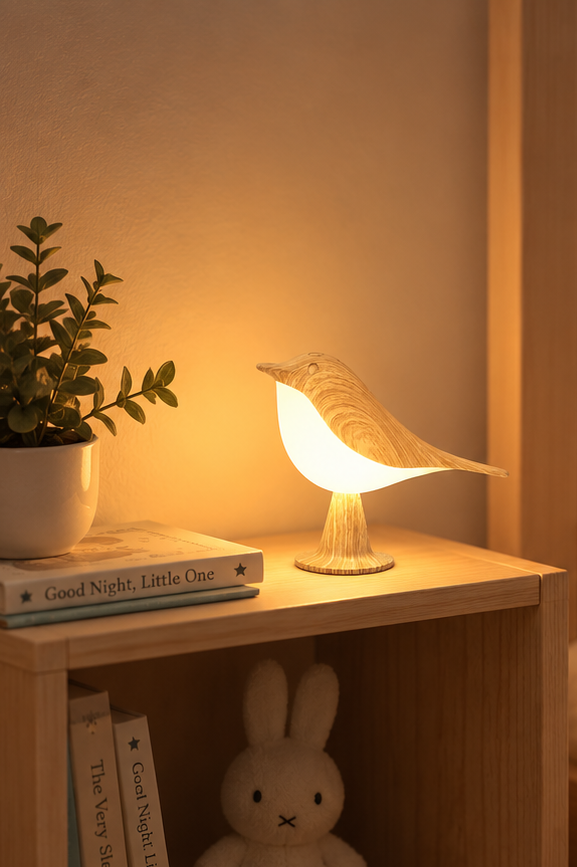
Instead, consider giving your toddler access to a small, child-operated bedside light that they can switch on and off themselves.
That tiny amount of control can make a surprisingly big difference.
If the room feels too dark, they don’t necessarily have to call for you — they know where their light is and how to use it.
Keep it simple. I’d look for a light that is:
- easy for small hands to operate
- dimmable
- warm rather than harsh blue-white
- cool to the touch
- cordless or otherwise safely positioned
- simple enough that it doesn’t become an exciting bedtime toy
View Touch Control Night Light
If your toddler prefers the bedroom itself dark but feels uncomfortable when you leave, another option is a very dim hallway night light rather than illuminating the bedroom.
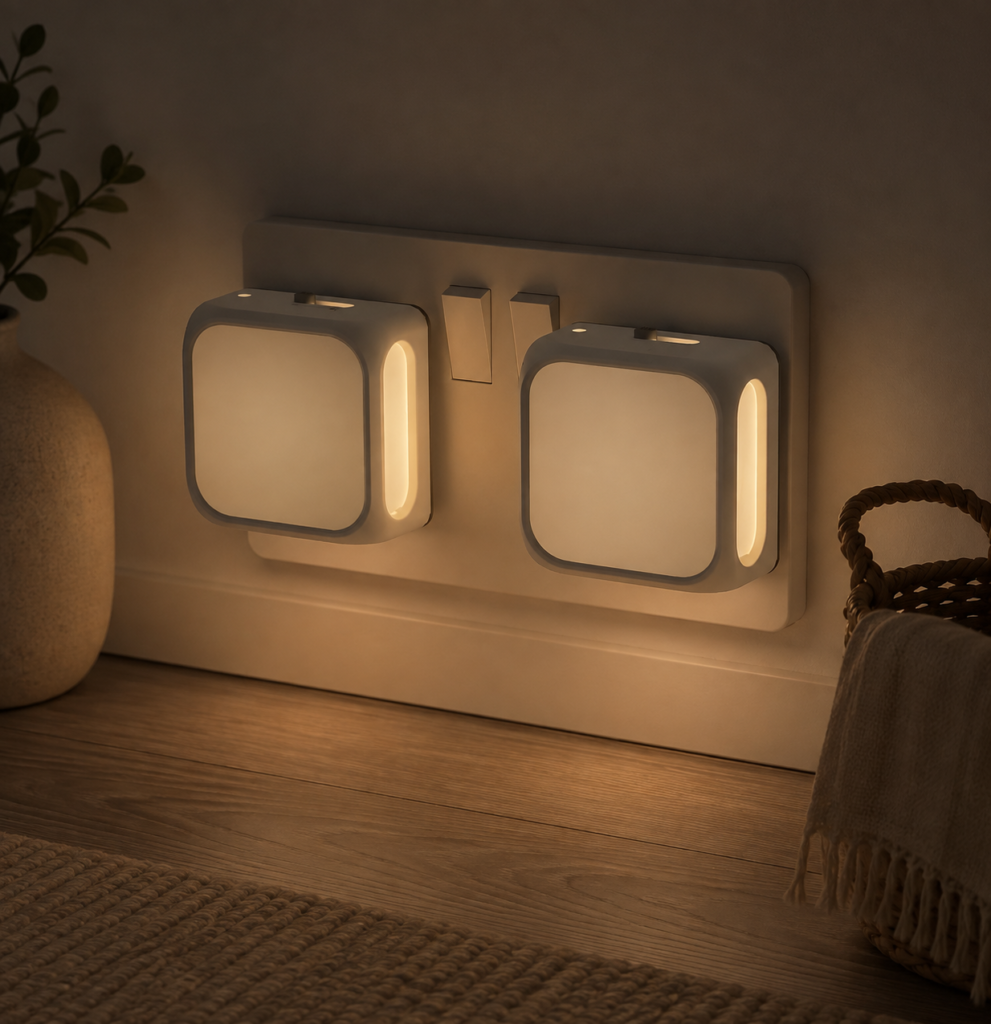
For other night light options you can visit our more extensive article: Comforting and Safe Night Lights for Babies and Toddlers
Make Books Accessible Without Making the Bedroom a Playroom
If part of your bedtime struggle is “one more story!”, consider leaving a very small selection of bedtime books somewhere your toddler can reach independently.
A front-facing bedside table or a small bookshelf works beautifully.
The important part is restraint.
Twenty exciting books next to the bed aren’t particularly conducive to sleep. Two or three familiar, calming books provide something your toddler can quietly look through without turning bedtime into another play session.
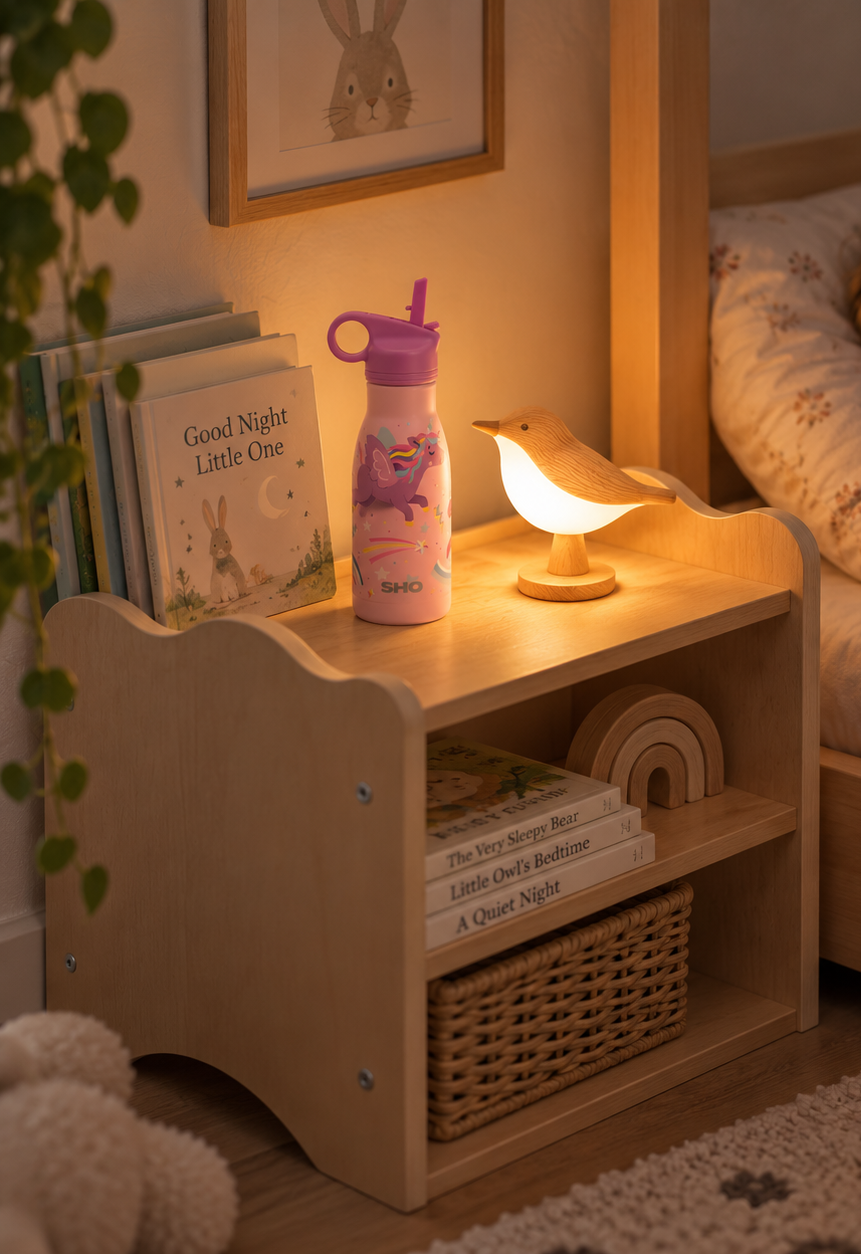
Looking for a few gentle books to keep nearby? See our guide to the best bedtime books for babies and toddlers, organised by age.
Introduce Something Familiar That Stays When You Leave
For some toddlers, the difficult part isn’t darkness or boredom.
It’s simply you leaving.
A familiar comfort object can become one small constant in the transition.
Rather than introducing an elaborate new “sleep aid”, this could simply be a soft toy or comforter your toddler already loves.
You can incorporate it into the bedtime routine:
“Bunny is getting into bed. Shall we tuck him in?”
The object doesn’t replace parental comfort. It simply becomes another familiar part of the child’s sleeping environment.

Consider Whether Their Bed Supports Independence
This is probably the most recognisably Montessori element.
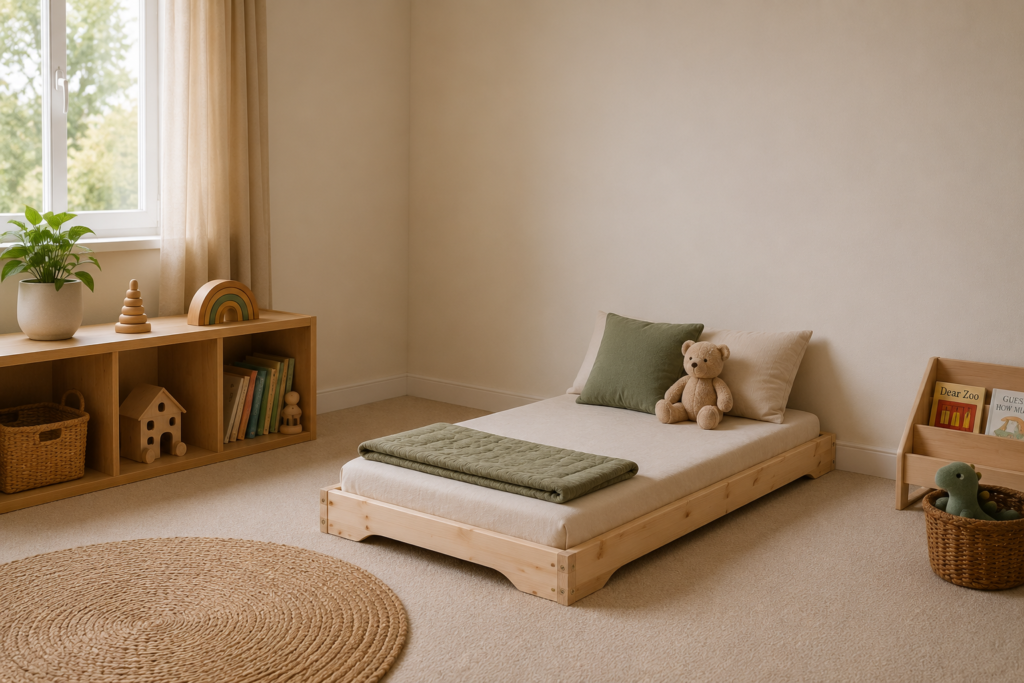
Montessori environments traditionally favour a low bed rather than restricting a mobile child to a high-sided cot. The principle is freedom of movement: the child can independently get into and out of their sleeping space.
That doesn’t mean you need to replace a perfectly functional toddler bed because you’re reading a Montessori-inspired article.
But if you’re already making the transition from cot to bed, a low toddler or floor bed may be worth considering.
The bed itself is only one part of the setup, though. Mattress height, rails, access and the surrounding bedroom all matter when you’re creating a sleep space a young child can use more independently. We look at these considerations — along with the different styles and options available — in our guide to Best Floor Beds for Toddlers (UK)
View Smartwood Wooden Montessori Floor Bed
You Don’t Necessarily Have to Stop Staying With Them
This is where I’d depart from a lot of conventional advice about independent sleep.
You can still stay.
The change can be much smaller.
If your toddler currently needs you lying in bed beside them, perhaps you start sitting beside the bed.
Once that feels completely comfortable, perhaps you sit slightly farther away.
Eventually you might sit near the doorway.
Or you might discover that your toddler begins happily looking at their book while you say:
“I’m going downstairs to put my cup away. I’ll come back and check on you.”
And one evening, they’re asleep when you return.
There’s no requirement for this to happen according to a predetermined seven-day schedule.
Watch what your child is telling you.
Notice When Your Help Is No Longer Needed
This may be the most interesting Montessori principle to apply to bedtime.
Sometimes children develop a new ability before adults realise they’ve developed it.
Montessori writing around sleep also describes the idea of adults inadvertently becoming an “obstacle to growth” — continuing to provide a sleep aid when observation suggests that the child may already be developing the ability to fall asleep without it.
Imagine that your toddler normally asks you to hold their hand.
One evening they let go and start quietly looking at a book.
You don’t necessarily need to remind them:
“Come on, it’s sleep time. Give me your hand.”
Wait.
Observe.
Perhaps they’re showing you that they don’t need that particular piece of help anymore.
Those tiny moments are opportunities for independence.
What About White Noise?
White noise can be useful when outside sounds are genuinely interfering with your toddler’s sleep — perhaps you have older children still awake, live near a busy road or simply have a house where sound travels easily.
Interestingly, descriptions of Montessori Nido sleep environments sometimes include the use of a fan to provide gentle background noise. But that doesn’t mean white noise is an essential part of a Montessori-inspired bedroom, or something every child needs.
I wouldn’t introduce it simply because you’re working towards more independent sleep. If noise isn’t disturbing your toddler now, there’s nothing to fix.
If you do find background noise helpful, I’d keep the setup deliberately simple: a basic white-noise machine with adjustable volume rather than one filled with lights, projections and other features that can turn bedtime into another source of stimulation.
What we’d choose: A simple, screen-free white-noise machine with straightforward controls.
View Dreamegg White Noise Machine
Keep the Bedroom Calm
A Montessori-inspired bedroom doesn’t need to look like Pinterest.
What matters more is that the environment works for the child.
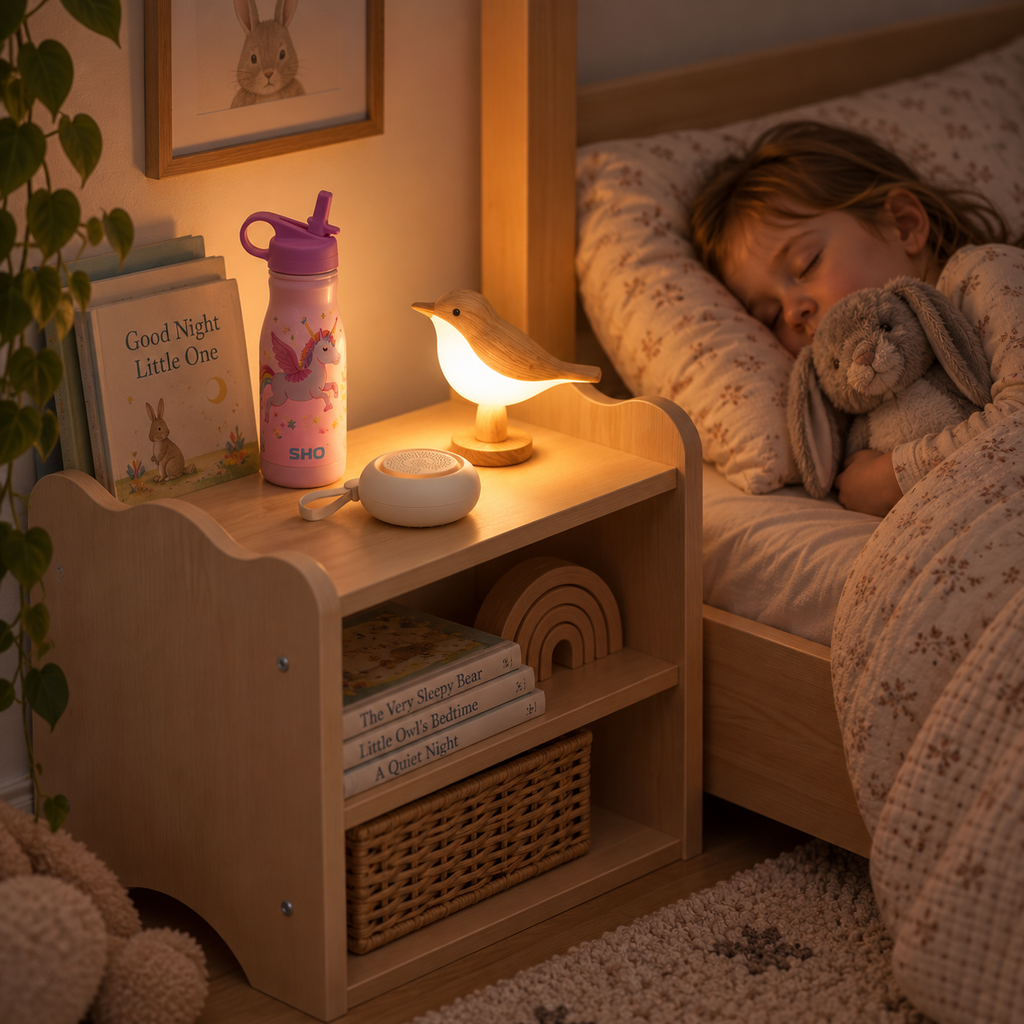
At bedtime, I’d particularly think about what your toddler can see, reach and control.
Can they reach their comforter?
Can they choose a book?
Can they operate their little light?
Can they get comfortably into bed?
Is the room relatively calm, or are their most exciting toys staring at them from across the room?
You don’t need to redesign the bedroom.
Sometimes removing things is more useful than adding them.
What I’d Try First
If your toddler currently won’t fall asleep unless you’re there, I wouldn’t change five things tomorrow night.
I’d start with one.
Create the same simple bedtime sequence each evening.
Then give your toddler one element of bedtime they can manage independently—perhaps choosing their book or controlling their own little bedside light.
Continue providing the reassurance they need while watching for moments when they begin needing slightly less of it.
When those moments appear, give them space to use that new ability.
Because helping a toddler become independent doesn’t necessarily mean making them do something alone.
Sometimes it simply means noticing when they’re ready to do a little more for themselves—and allowing them to.
You Might Also Find Helpful