21 Montessori Pumpkin Activities for Toddlers Using Just One Pumpkin
Looking for simple fall activities for toddlers that don’t involve lots of preparation or expensive supplies?
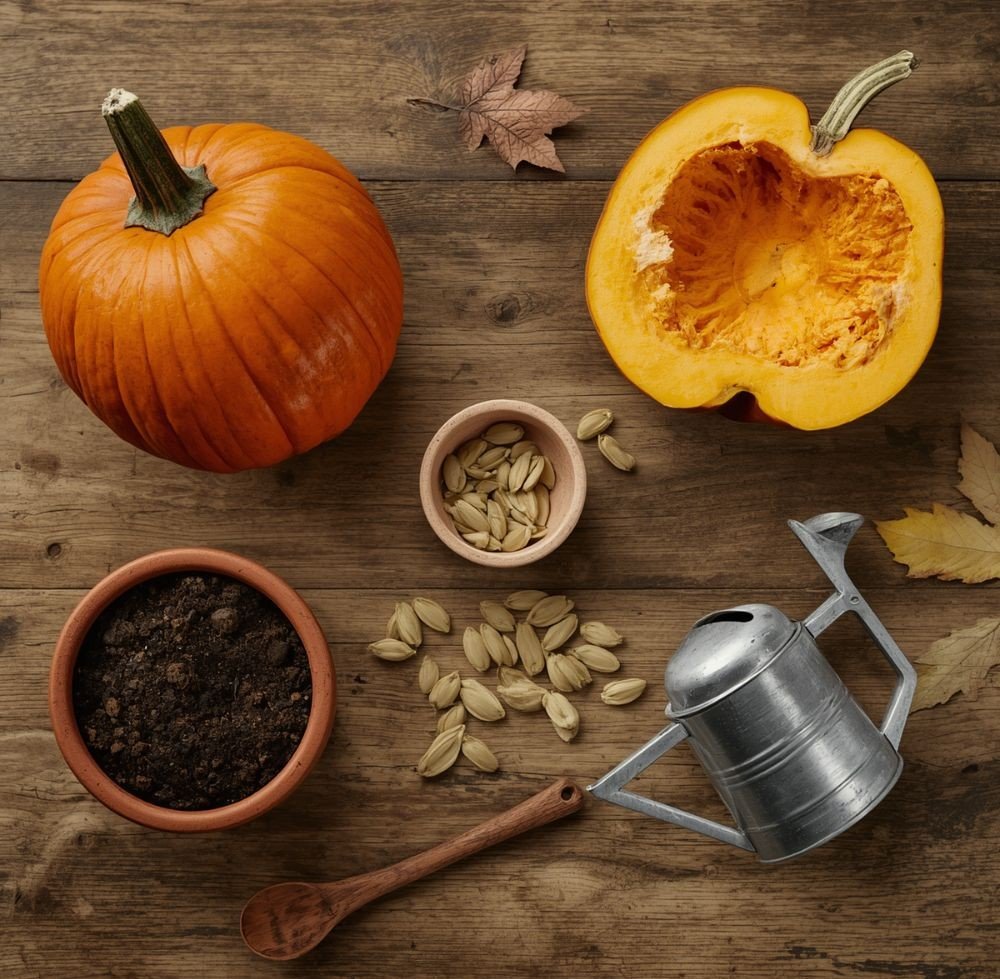
A single pumpkin can provide hours of meaningful play, making it one of our favourite autumn activities for 2 and 3 year olds. From exploring colours and textures to scooping out seeds and tasting freshly cooked pumpkin, these hands-on pumpkin activities encourage curiosity through real-life experiences.
As you explore together, you’ll naturally introduce more than 50 rich words—from ridge and stem to pulp, sprout and compost—through everyday conversation rather than formal teaching.
Whether you’re planning a cosy afternoon at home, adding a seasonal invitation to play, or looking for pumpkin sensory activities to enjoy during autumn, this guide will help your child explore one pumpkin using all five senses.
Unlike many fall sensory activities that rely on themed bins or printable worksheets, these simple ideas focus on a real pumpkin. Your toddler will observe, touch, listen, smell and taste as they discover how one everyday object can inspire rich conversations, new vocabulary and plenty of seasonal fun.
Follow your child’s curiosity rather than rushing through the activities. Some children will spend twenty minutes separating pumpkin seeds, while others may be fascinated by the stem or the way the pumpkin sounds when tapped. That’s all part of learning.
You’ll Need
- 1 medium pumpkin
- A child-safe spoon
- A large bowl
- A chopping board
- An adult for carving
- A baking tray (optional)
- A small plant pot and compost (optional)
If your toddler enjoys hands-on learning, you might also like our collection of practical life activities for toddlers.
1. Seeing Your Pumpkin
New words to explore: pumpkin, stem, ridge, round, bumpy, smooth, orange, green, heavy
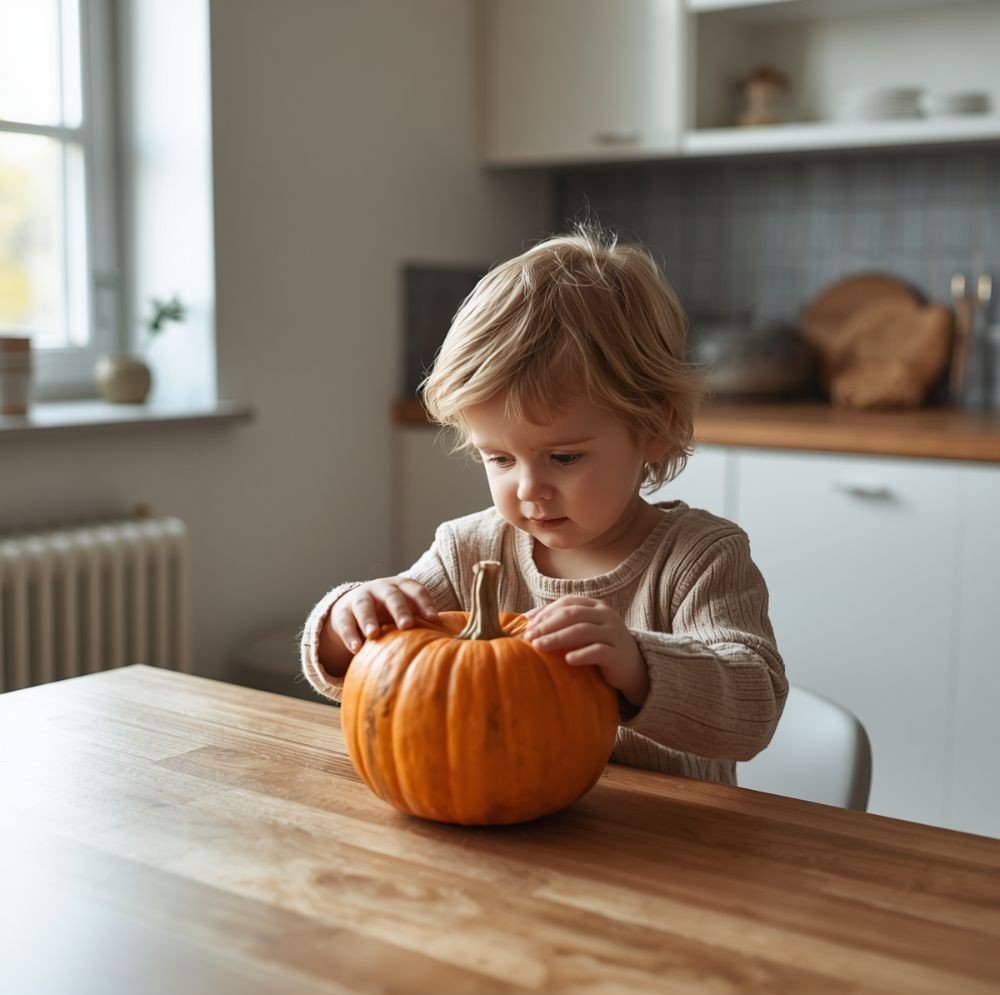
Before anyone touches the pumpkin, take a few quiet moments simply to look at it together. Toddlers naturally notice details adults often miss, and slowing down helps build observation skills from the very beginning.
Encourage your toddler to take their time. Rather than asking lots of questions, make gentle observations and allow them to notice details in their own way.
Look All Around
Place the pumpkin on the floor or a low table and slowly turn it together.
What do you notice?
- It isn’t perfectly round.
- One side may be flatter than the other.
- Some pumpkins have bumps, marks or stripes.
- The stem has its own unique shape and colour.
Find the Colours
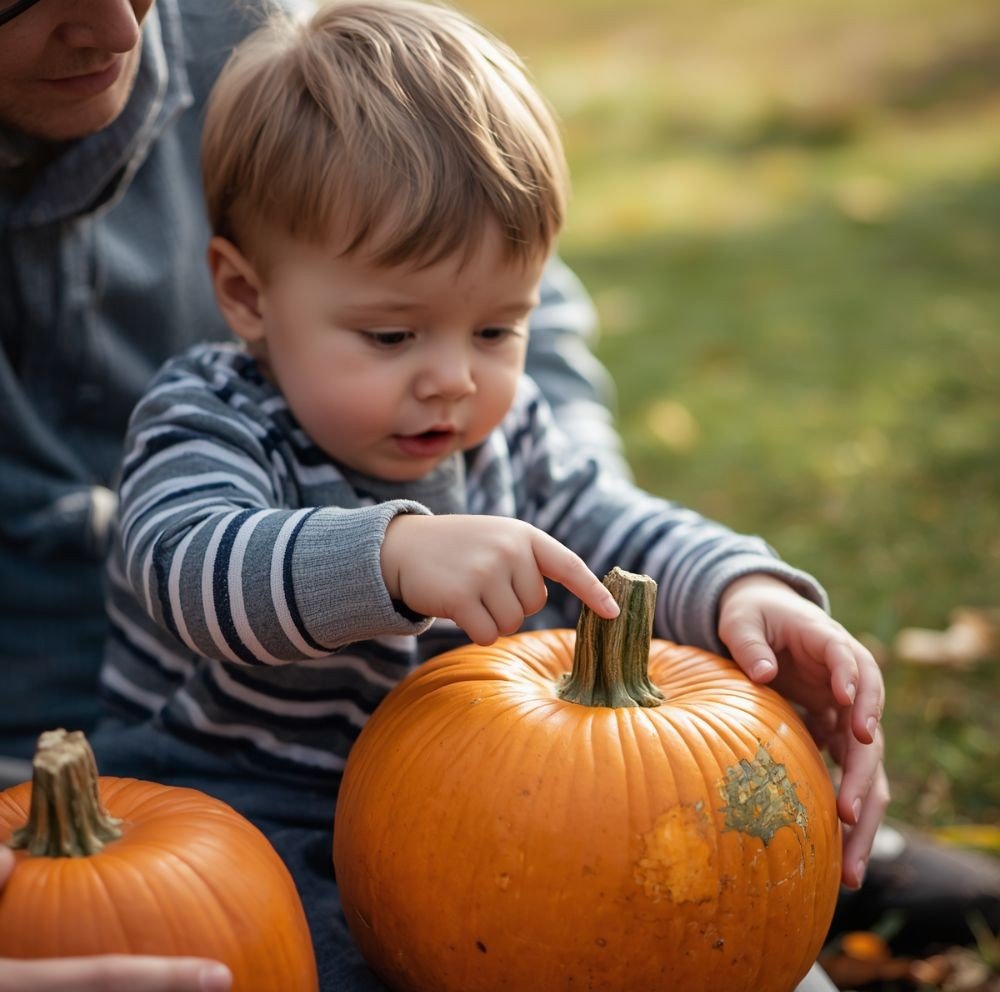
Pumpkins are rarely just orange.
Can you spot:
🟠 Orange
🟢 Green
🟤 Brown
🟡 Yellow
Some pumpkins even have creamy white patches or darker shadows.
Count the Ridges
Follow one ridge with your finger from the stem to the bottom.
Count together slowly.
If you lose count, simply start again. At this age, enjoying the counting is far more important than getting the right answer.
Compare Two Pumpkins (Optional)
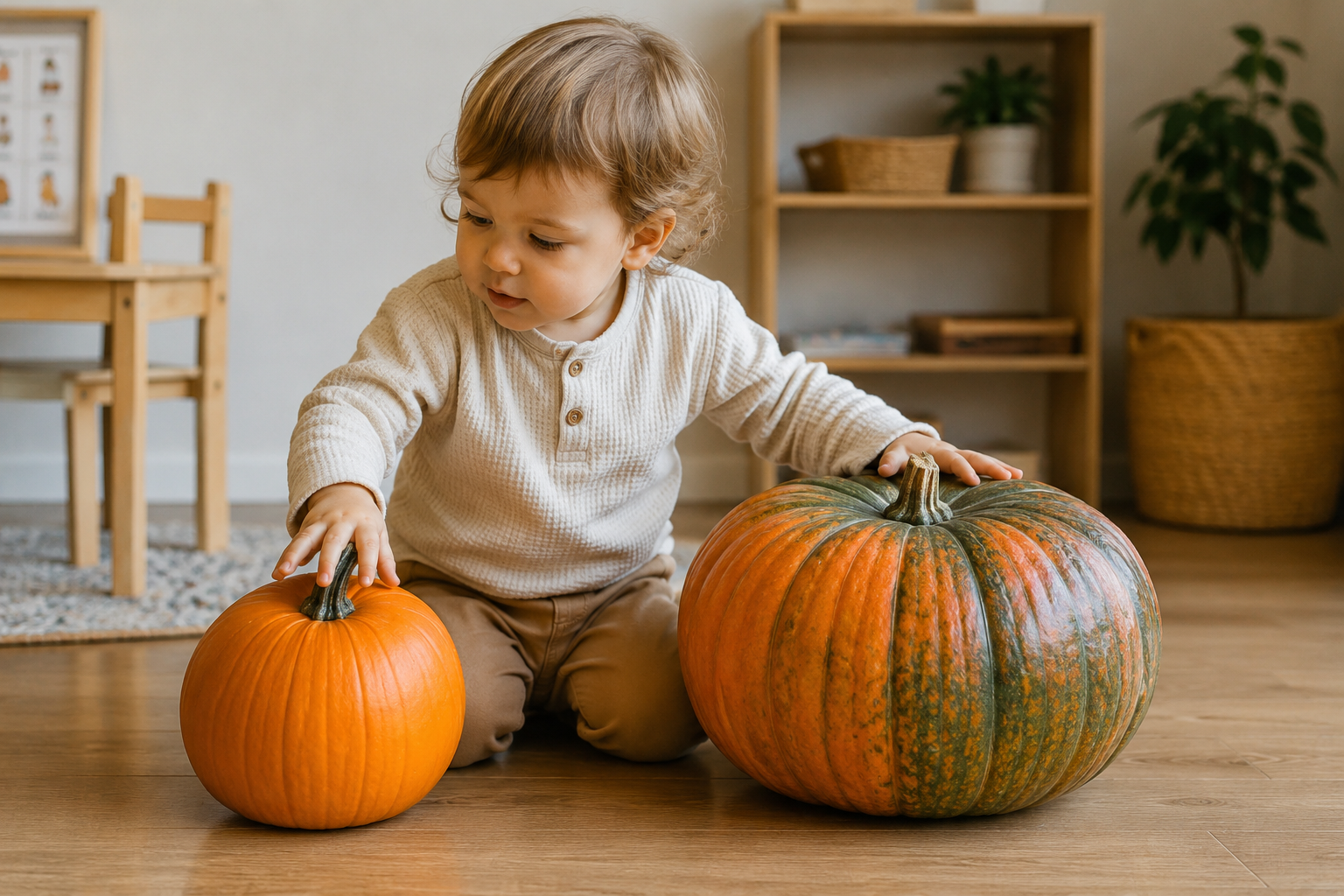
If you have more than one pumpkin, place them side by side.
Which one is:
- bigger?
- smaller?
- rounder?
- darker?
Encourage your child to point if they don’t yet have the words.
2. Feeling Your Pumpkin
New words to explore: rough, smooth, hard, soft, heavy, light, lift, roll, texture
Now it’s time to explore with your hands.
Toddlers learn best by holding, lifting and feeling real objects. Allow your child to investigate at their own pace.
Lift It Together
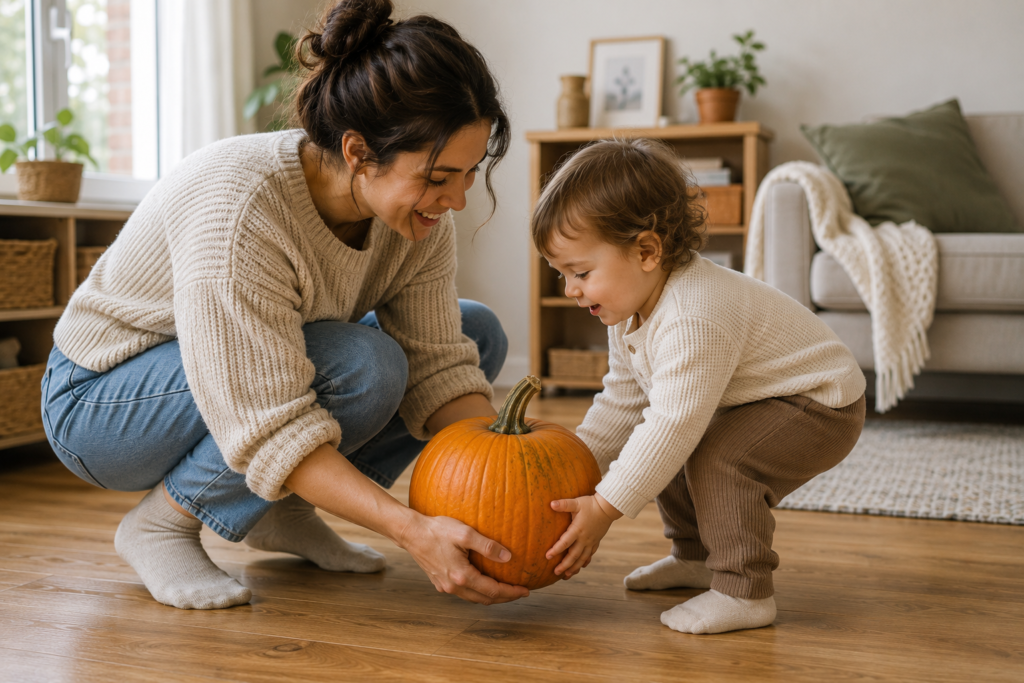
Invite your toddler to help you lift the pumpkin.
Is it heavier than they expected?
If you have two pumpkins, compare them.
Which one feels heavier?
Which one is easier to carry?
Feel the Different Textures
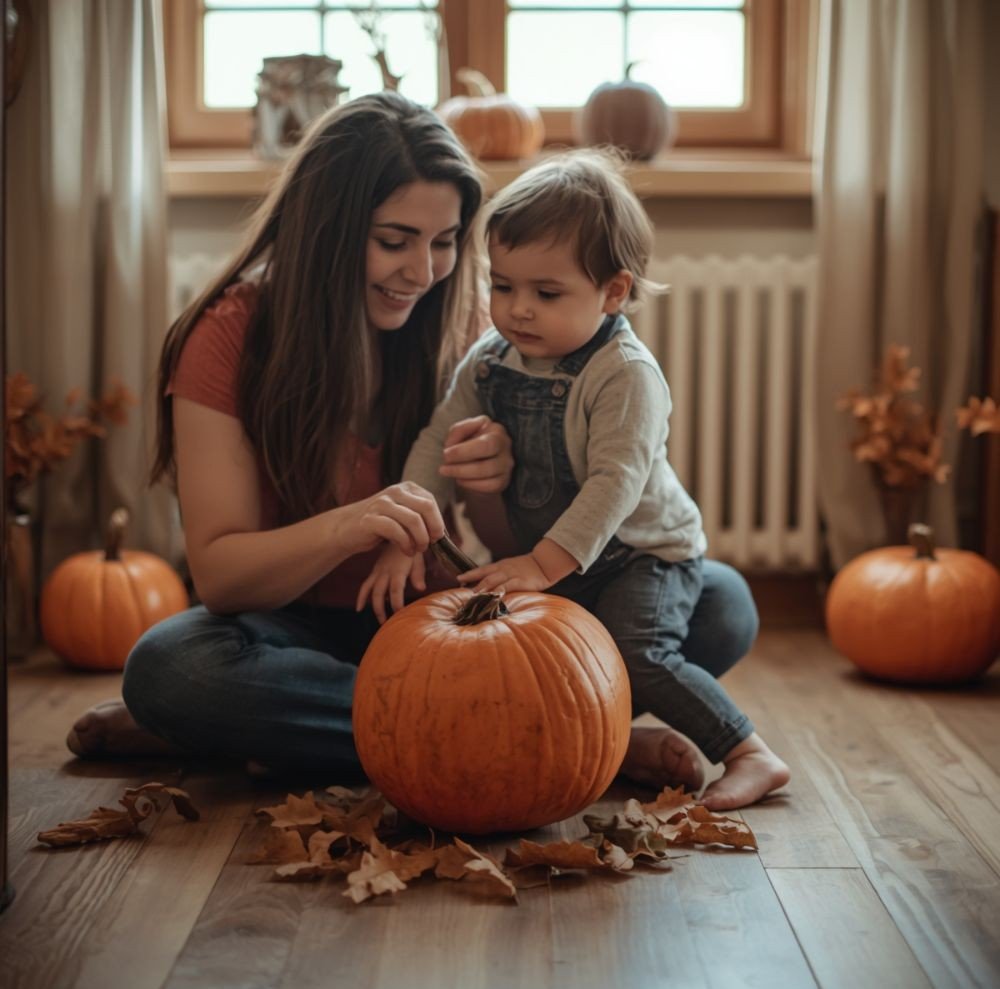
Run your hands over different parts of the pumpkin.
Can you find somewhere that feels:
- smooth?
- bumpy?
- hard?
- rough?
Describe what you notice together.
“The stem feels rough.”
“These ridges feel bumpy.”
“The pumpkin feels hard all over.”
Roll the Pumpkin
Place the pumpkin on the floor and gently roll it.
Does it roll in a straight line?
Or does it wobble because of its shape?
Many children are fascinated to discover that not everything rolls in the same way.
3. Discover What’s Inside
New words to explore: inside, outside, flesh, pulp, seed, sticky, slippery, scoop, hollow
Once you’ve explored the outside, it’s time to find out what’s hidden inside.
This is often the most exciting part for toddlers.
Watch the Pumpkin Being Carved
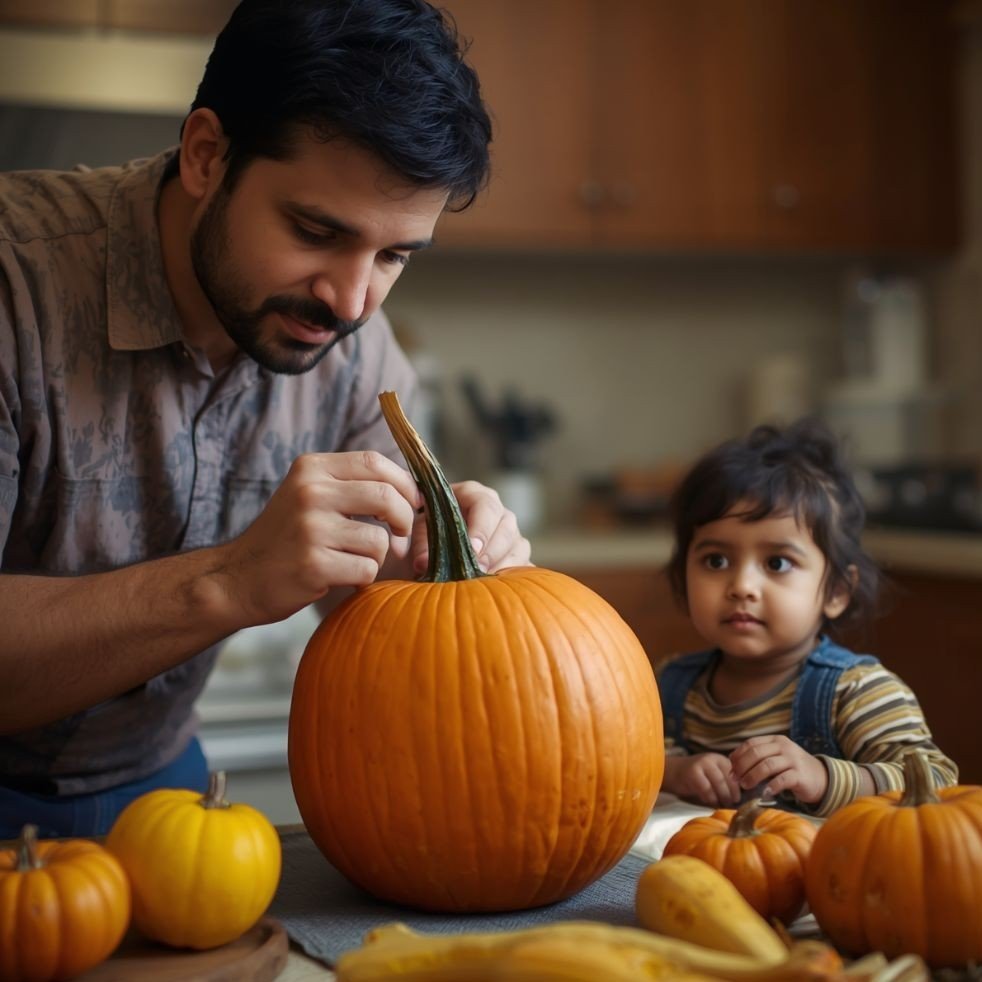
With an adult doing the carving, invite your child to watch closely.
Lift off the lid together and look inside.
What do you notice?
Is the inside what you expected?
A learning tower can make it much easier for toddlers to observe safely at worktop height while feeling involved in the process.
→ Best Learning Towers for Toddlers
Feel Inside the Pumpkin
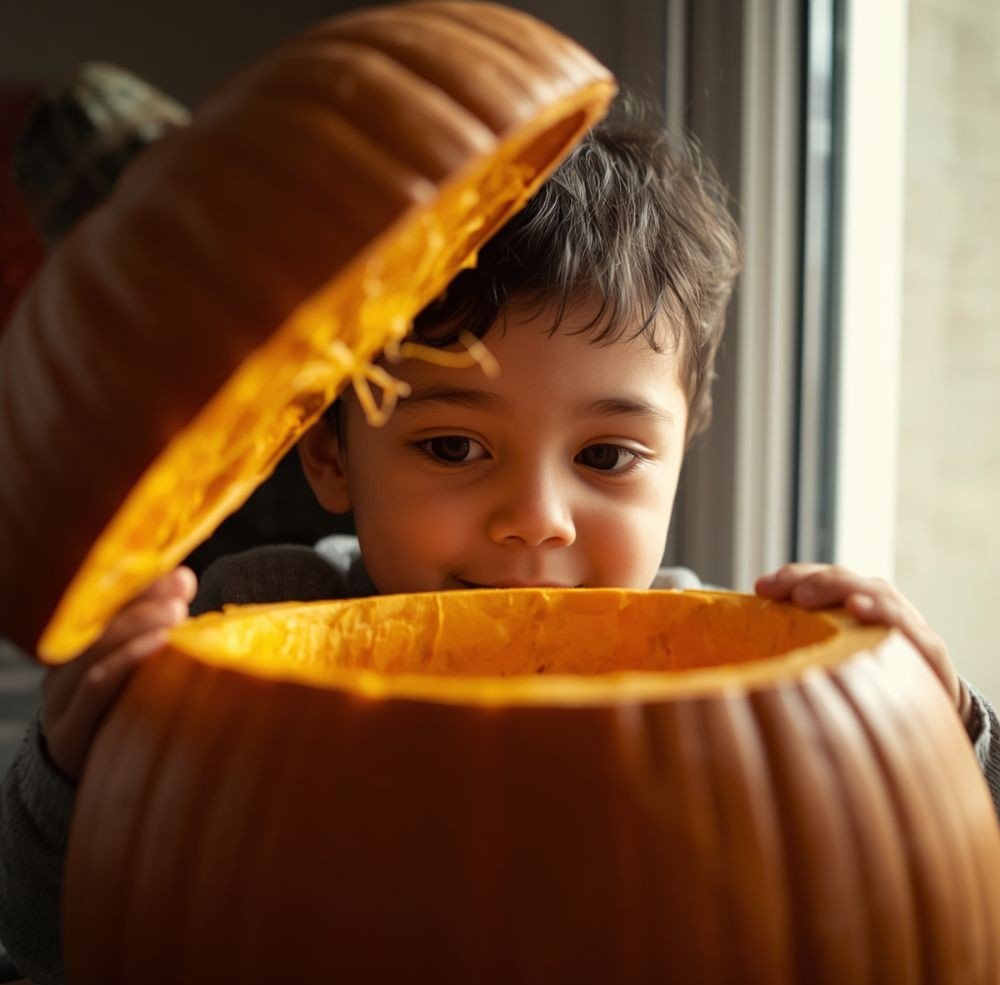
Carefully explore the inside using your hands.
Notice how different it feels from the outside.
The flesh is smooth.
The pulp is sticky.
The seeds are slippery.
Find the Pumpkin’s Heart
Can you find where all the seeds are attached?
Lift one bundle carefully.
See how every seed is connected.
Scoop and Separate the Seeds
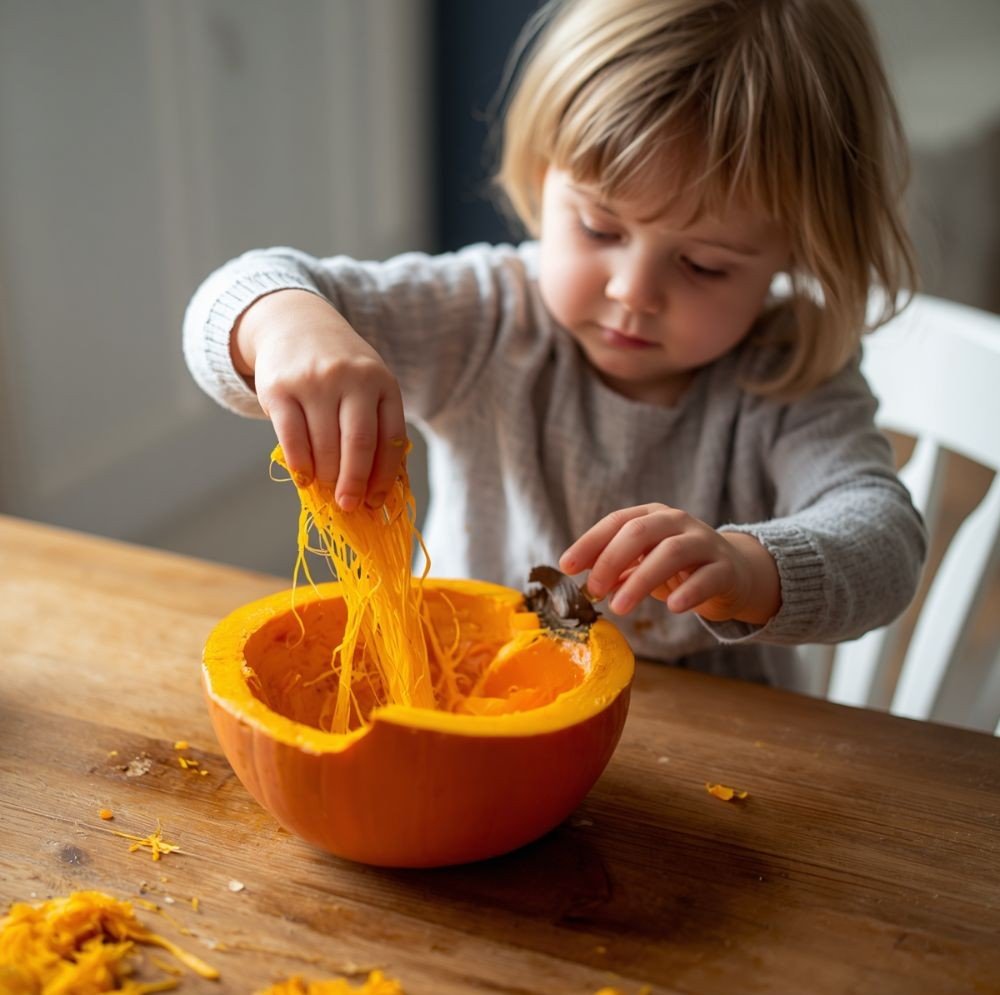
Place the seeds and stringy pulp into a large bowl.
Your toddler can enjoy:
- scooping handfuls of seeds
- pulling the sticky strands apart
- separating seeds from the pulp
- transferring seeds into another bowl
Many toddlers will happily repeat this for twenty minutes or more.
Montessori Tip: Instead of showing your child exactly what to do, try demonstrating once and then stepping back. Many toddlers enjoy repeating the same movement over and over as they refine their coordination.
4. Hearing Your Pumpkin
New words to explore: tap, knock, quiet, loud, shake, roll, listen, echo, sound
Pumpkins may seem quiet, but they can make lots of interesting sounds if you listen carefully.
Tap, Tap, Tap

Try tapping the pumpkin using:
- fingertips
- knuckles
- the palm of your hand
Does each one sound different?
If you have two pumpkins, compare them.
A larger pumpkin may produce a deeper sound.
Roll and Listen
Roll the pumpkin across different surfaces.
Try:
- wooden flooring
- carpet
- grass
How does the sound change?
Shake the Seeds
Place a handful of pumpkin seeds into a small container with a lid.
Shake it gently.
Then try:
- more seeds
- fewer seeds
- adding a few larger pieces of pumpkin
How does the sound change each time?
5. Smelling Your Pumpkin
New words to explore: smell, scent, fresh, earthy, sweet, strong, gentle, sniff
Pumpkins have a surprisingly gentle scent that’s easy to miss unless you stop and notice it.
Smell the Whole Pumpkin
Before carving, hold the pumpkin close and take a gentle sniff together.
Some pumpkins have almost no smell, while others have a fresh, earthy scent.
Smell Inside
Once the pumpkin has been opened, smell it again.
Does it smell different now?
Many children notice that the fresh flesh and stringy pulp have a much stronger scent than the outside.
Compare the Different Parts
Smell:
- the stem
- the flesh
- the pulp
- the seeds
Do they all smell the same?
Notice the Change After Cooking
After roasting or baking the pumpkin, smell it once more.
Cooking transforms the scent into something warmer and sweeter.
6. Tasting Your Pumpkin
New words to explore: taste, sweet, savoury, soft, warm, creamy, crunchy, roast, bake
Finish your pumpkin exploration by sharing something delicious together.
Taste Roasted Pumpkin
Roast small cubes of pumpkin until they’re soft and tender.
Talk about how they feel.
Are they:
- soft?
- warm?
- creamy?
- slightly sweet?
Every reaction is part of learning—even if your toddler only takes a tiny taste.
Try Pumpkin Seeds
If your child is developmentally ready and can safely chew them, enjoy a few roasted pumpkin seeds together. For younger toddlers, finely chop or grind the seeds and sprinkle them over foods such as porridge or yoghurt to avoid choking hazards.
Bake Together
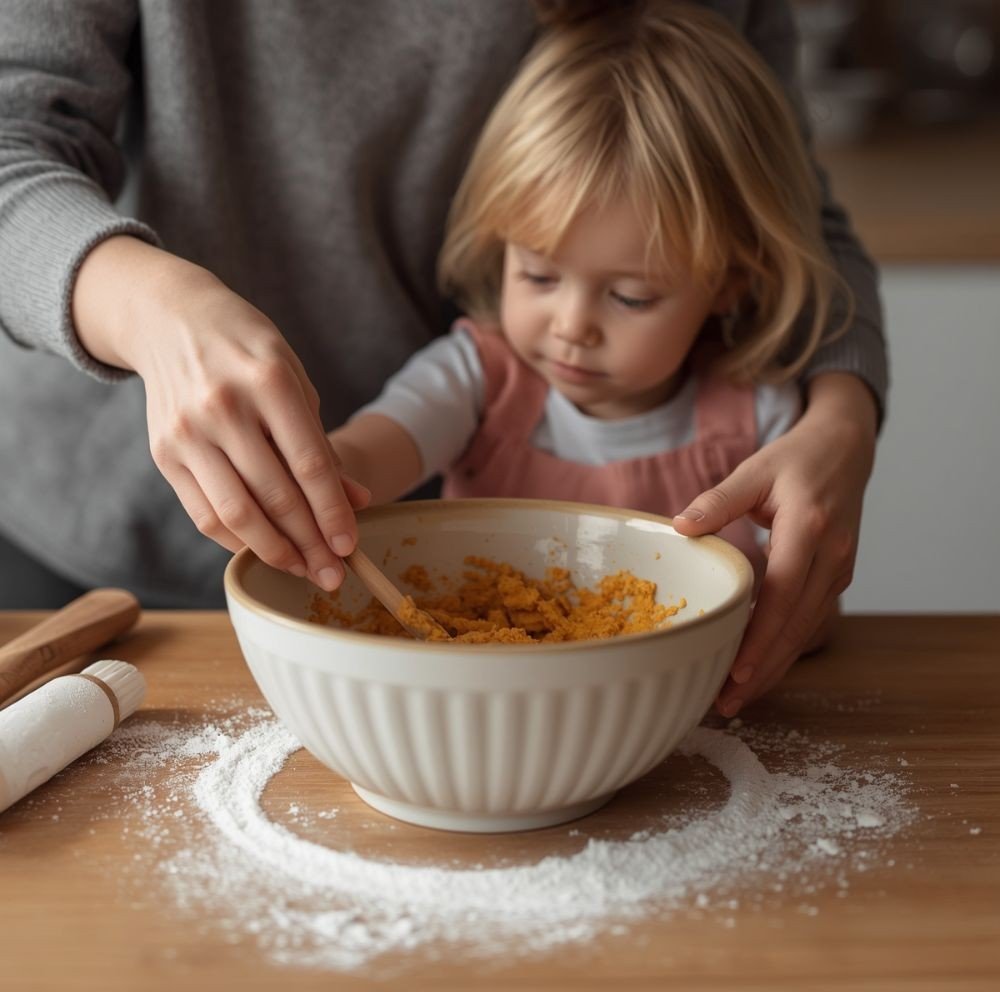
Turn your pumpkin into something new.
Ideas include:
- pumpkin muffins
- pumpkin pancakes
- pumpkin bread
- pumpkin soup
Even simple jobs like stirring, pouring or mixing help toddlers feel involved.
Plant a Pumpkin Seed
New words to explore: plant, soil, compost, water, grow, sprout, root, shoot, leaf
Once you’ve finished exploring your pumpkin, save a few healthy seeds to plant together.
Wash the seeds to remove any remaining pulp, then leave them to dry for a day or two. Plant one or two seeds in a small pot filled with compost, cover them lightly with soil and water gently.
Place the pot somewhere warm and bright, then check it together every few days.
Even if your seed doesn’t grow beyond a small seedling, your toddler will have experienced how plants begin with soil, water, light and time.
Watch It Grow
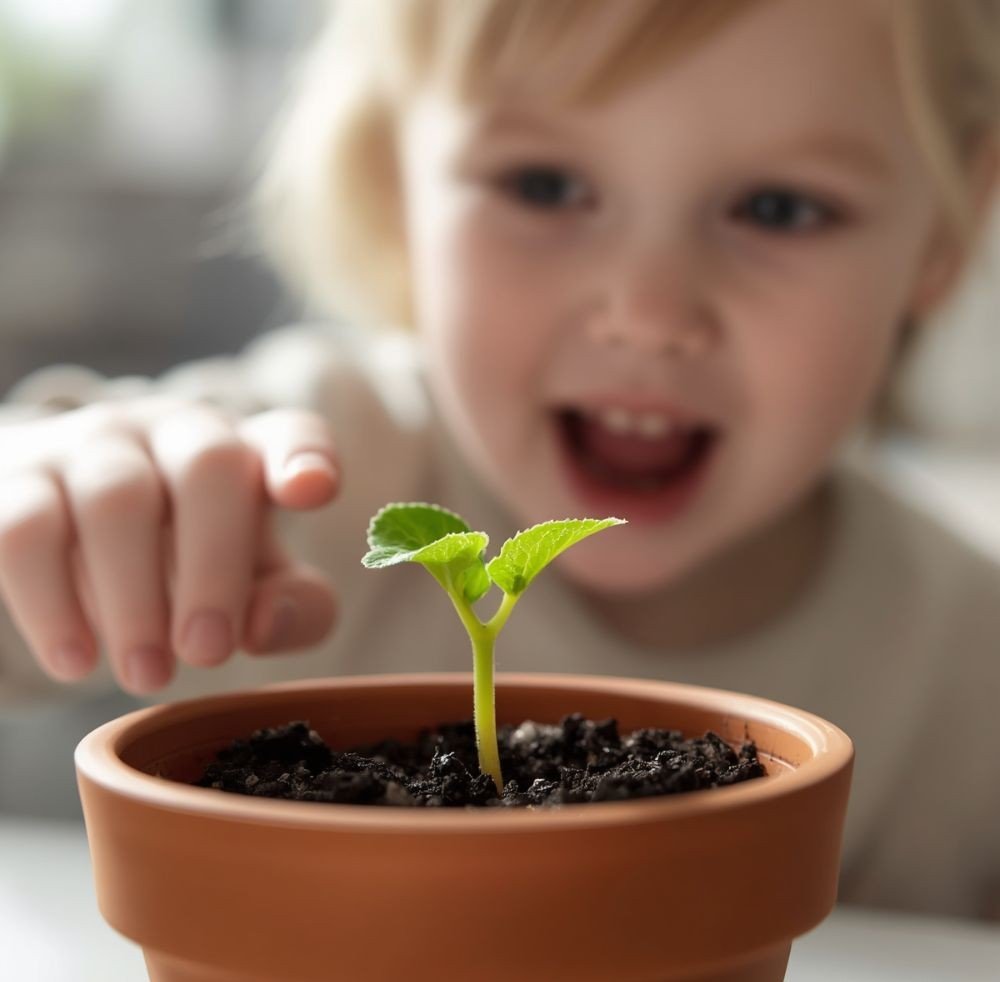
As the days pass, encourage your child to look for small changes.
Can you see:
- a tiny green shoot?
- the first leaves?
- roots appearing through the bottom of the pot?
Taking a quick photo every few days is a lovely way to see how much the seedling has grown.
Growing Little Minds Tip
Pumpkin seeds from supermarket pumpkins are very likely to sprout, making them a fun way for toddlers to observe the early stages of plant growth. However, they’re unlikely to grow into full pumpkins, especially in the UK climate or when grown in a small pot. The real value lies in caring for the seed, watching it germinate and discovering how a tiny seed can become a young plant.
Every Pumpkin Is Different
No two pumpkins are exactly alike, and neither are two toddlers. Some children will spend half an hour separating seeds, while others will be fascinated by tapping the pumpkin or simply watching you carve it.
There is no right way to explore.
Follow your child’s curiosity rather than the list. Those slow, unhurried moments of observation are often where the richest learning happens—and sometimes one simple pumpkin is all you need.
You Might Also Find Helpful