
Best Gifts for 2 Year Olds: Beautiful Toys They’ll Treasure for Years
Buying gifts for a 2 year old is often harder than it looks.
By this age, many toddlers already have plenty of toys—but not all of them continue to hold their attention. As their confidence grows, so does their desire to do more for themselves. They begin inventing stories, copying everyday life and returning to the same favourite toys in increasingly creative ways.
That’s why the gifts that last are rarely the ones with the most buttons or features.
Instead, they’re the toys that leave room for imagination, encourage independence and can be enjoyed in different ways as new skills emerge.
The recommendations below are the toys we’ve found ourselves reaching for time and again—beautifully made, genuinely engaging and still played with long after the excitement of opening them had passed.
Disclaimer: This post contains affiliate links. As an Amazon Associate I earn from qualifying purchases at no extra cost to you.
What Makes a Good Gift for a 2 Year Old?
At this age, the gifts that tend to get used most are usually surprisingly simple.
Toddlers are still learning through repetition, movement and hands-on play, which is why open-ended toys often last much longer than toys with lots of lights, sounds or complicated features.
The best gifts are usually easy to use independently, calming rather than overstimulating, and durable enough to grow with the child over time.
And in many homes, fewer toys actually leads to calmer and more focused play overall. A small rotation of simple toys is often far more engaging than constantly adding something new.
If independent play feels difficult right now, this may help too:
→ Independent Play Tools for Toddlers (Simple Montessori Ideas That Work)
Best Gifts for 2 Year Olds (Montessori-Inspired)
The gifts below are the kinds of toys that tend to stay in rotation long after many toddler toys have been forgotten.
Most are simple, open-ended and easy for toddlers to return to independently — without needing constant help, instructions or overstimulating features to hold attention.
And often, the toys that get used most at this age are not the loudest or most expensive ones.
They are the ones that quietly become part of everyday play.
1. For Toddlers Ready for More Focused Play
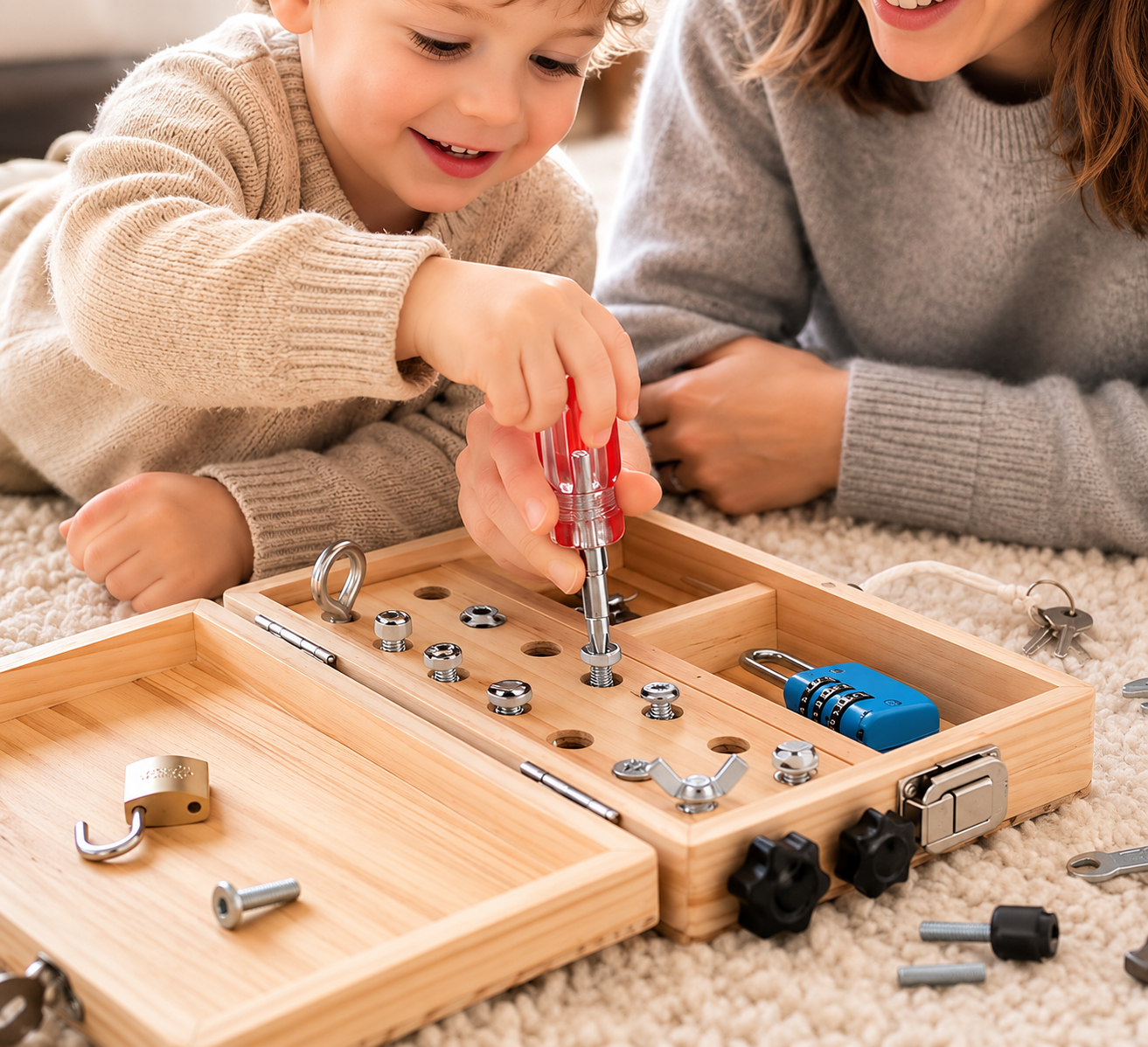
There’s something about real locks, keys and screwdrivers that toddlers seem to find endlessly fascinating. Perhaps it’s because they’re finally being trusted with objects that feel a little more “grown up.”
Our daughter could happily spend ages tightening screws, unlocking padlocks, opening latches and then starting all over again—usually with the kind of intense concentration that makes you wonder whether she’s secretly planning a career in engineering.
We liked the Lehoo Castle Wooden Screwdriver Board because it channels that curiosity into a sturdy, well-made activity that keeps little hands busy while quietly building fine motor skills, coordination and problem-solving. It’s also compact enough to take on journeys, making it one of those rare travel toys that holds attention for longer than five minutes.
Like many of the best toddler gifts, there isn’t a flashing light or battery in sight—just plenty to discover, figure out and come back to again tomorrow.
2. A Gift That Grows With Their Imagination
Some toys seem to become more interesting with every birthday rather than less.
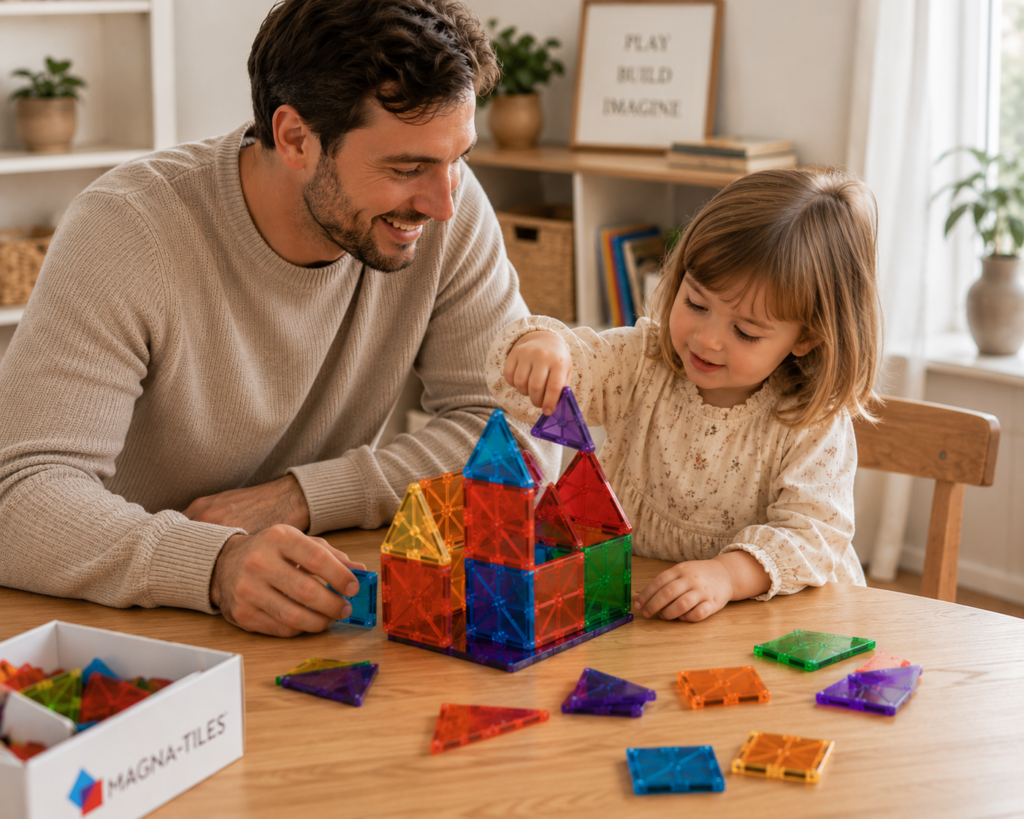
Around age two, many toddlers simply enjoy connecting magnetic tiles together, pulling them apart and experimenting with simple towers. Before long, those same pieces gradually become houses, garages, animal homes and imaginative little worlds of their own.
What makes Magna-Tiles feel so timeless is that the play changes as children do. One day they’re building simple towers, the next they’re creating houses, bridges and imaginative little worlds of their own.
They’re also one of those rare toys that older siblings and even adults often find themselves joining in with, making them feel less like a short-lived toddler gift and more like something the whole family enjoys over the years.
Although we naturally gravitate towards wooden toys for the way they help children explore weight, balance, gravity and cause and effect through real materials, Magna-Tiles are one of the few exceptions for us. They introduce early engineering, spatial reasoning and STEM-style thinking in a wonderfully open-ended way, while still leaving the child free to experiment, create and rebuild at their own pace.
While they’re certainly an investment compared with many toddler toys, they’re also one of the few gifts we can genuinely imagine still being used well into the primary school years.
3. A Gift That Leaves Room for Creativity
Open-ended toys often stay relevant for much longer because there is no single “right” way to use them.
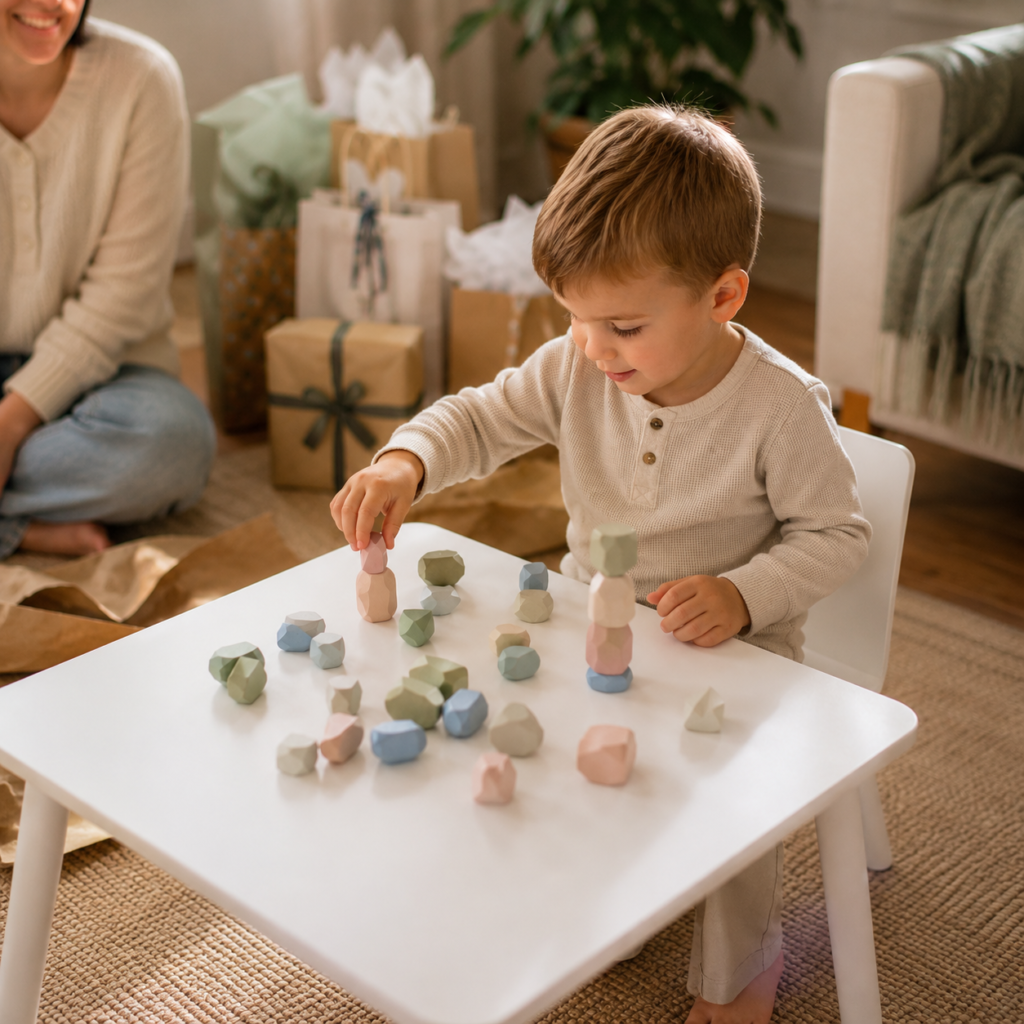
We were drawn to these wooden sensory blocks because they don’t dictate the play. They simply offer a collection of beautiful pieces that toddlers can stack, balance, sort and explore differently with each stage of development.
The soft colours and simple shapes also make the play feel calmer and less overstimulating than many modern toddler toys, which is part of what makes them so easy to return to again and again.
And unlike toys built around one activity, these are the kinds of pieces that quietly evolve with the child over time — from simple stacking at age 2 to more creative and imaginative play in the years that follow.
4. The Gift That Grows With Them
Some toys are loved for a season. Others quietly become part of childhood.
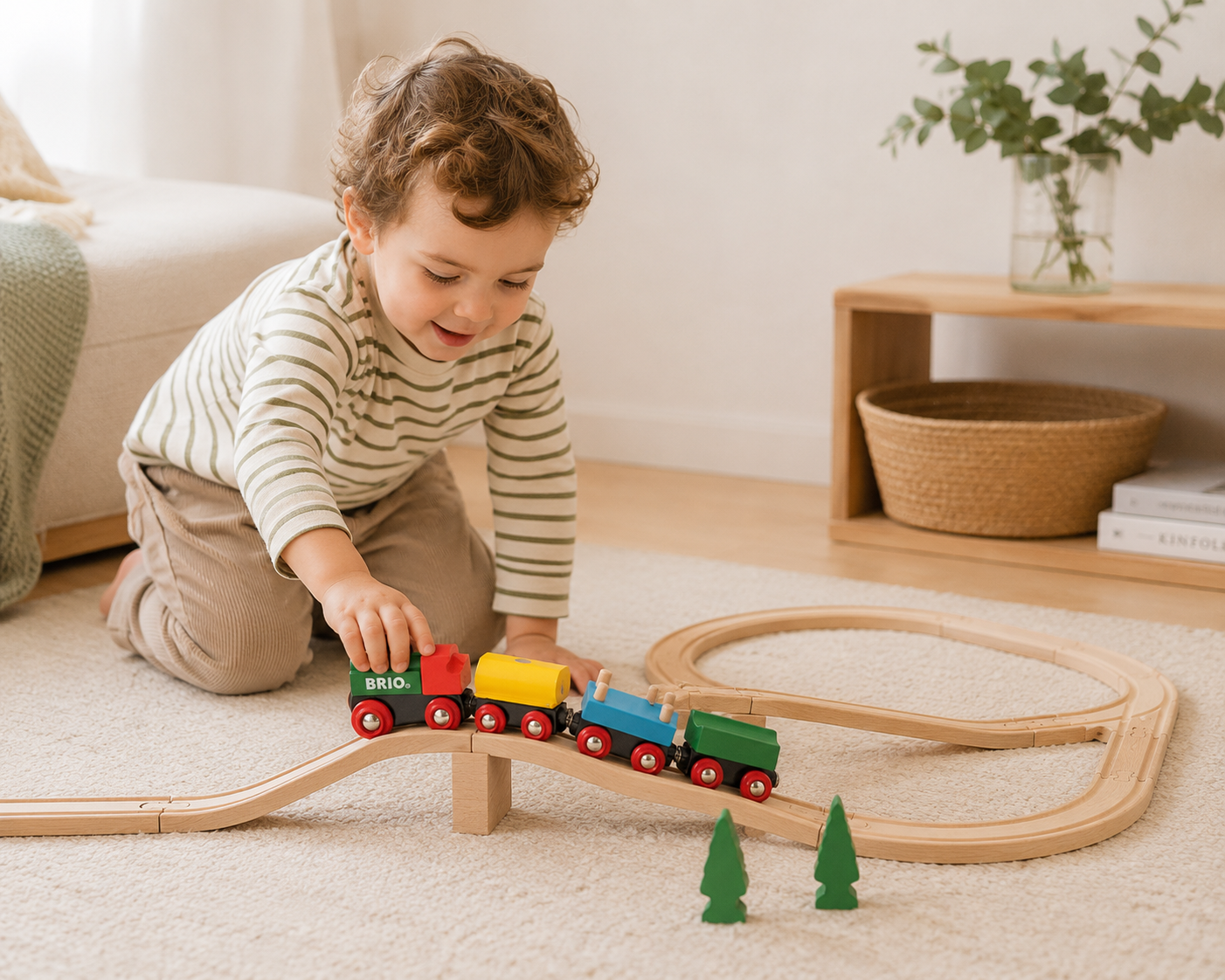
The BRIO Train Set feels very much like the second. Beautifully made from FSC-certified wood, it’s one of those classic toys that many parents remember from their own childhood—and for good reason.
What makes BRIO special isn’t just the first train set. It’s that every new engine, bridge, station or tunnel added over the years connects seamlessly with the one before it. Birthdays and Christmases gradually become opportunities to expand a little world rather than replace it entirely.
It’s the kind of thoughtful gift that grows alongside your child, encouraging imagination, storytelling and open-ended play long after many other toys have been forgotten.
5. For Matching, Turn-Taking and Early Games
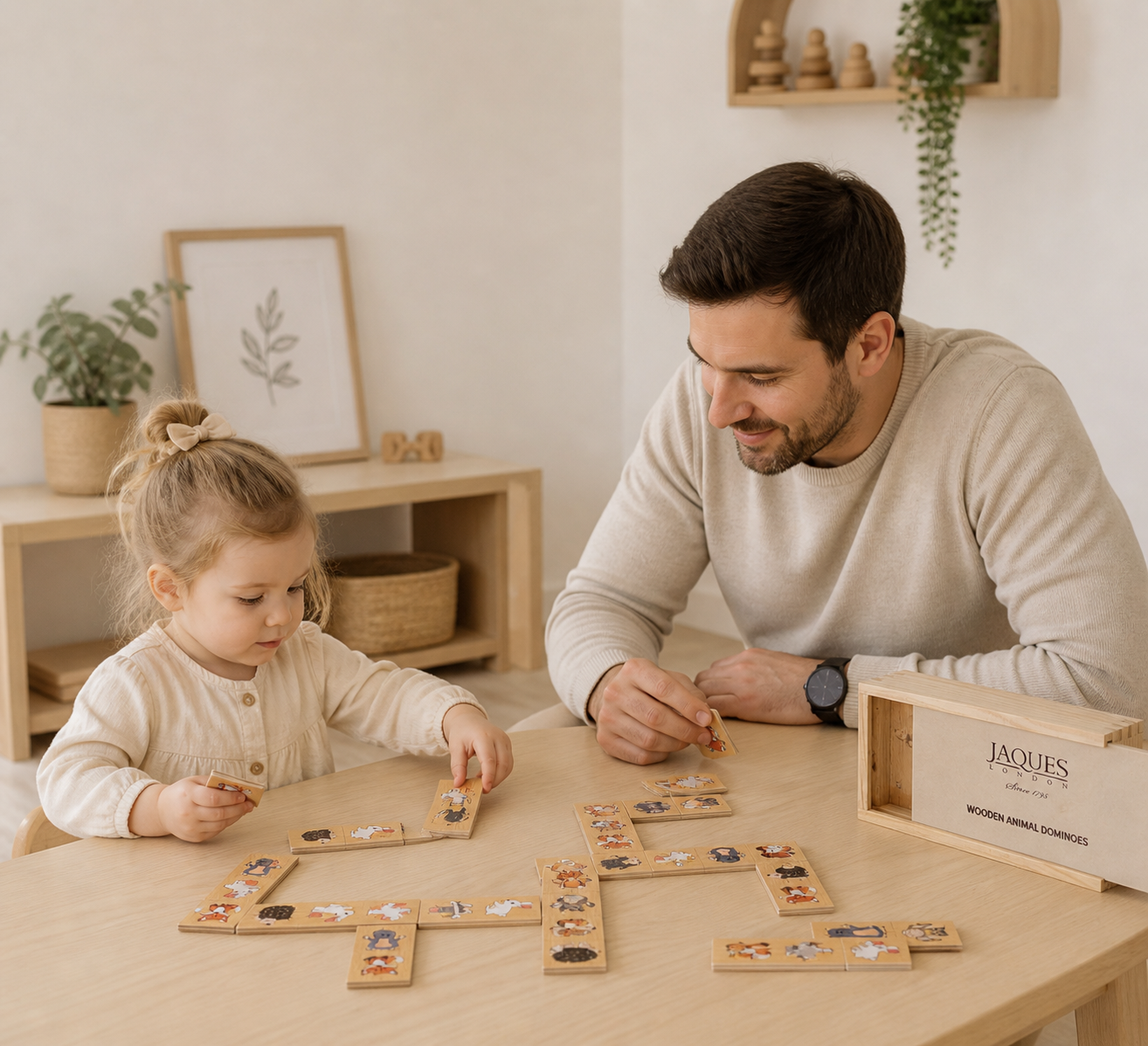
Around age two, many children begin showing a growing interest in matching, sorting and noticing relationships between objects. That’s one of the reasons simple domino games often become much more engaging during the second year.
Animal dominoes provide a gentle introduction to turn-taking and following simple rules without feeling overly structured or academic. Younger children may start by matching familiar animals and colours, while older toddlers gradually begin understanding how the pieces connect together to form a chain.
We particularly like animal-themed dominoes because they encourage conversation as well as play. Toddlers naturally begin naming animals, making sounds and talking about what they can see while building the domino line.
The game can be enjoyed independently, but it also works well as a first family game. Because the rules can be simplified or adapted as children grow, it is one of those toys that often remains useful well beyond the toddler years.
6. A Garden Game They’ll Keep Bringing Out Every Summer
Some gifts end up forgotten in a cupboard after a few weeks. Others quietly become part of family traditions.
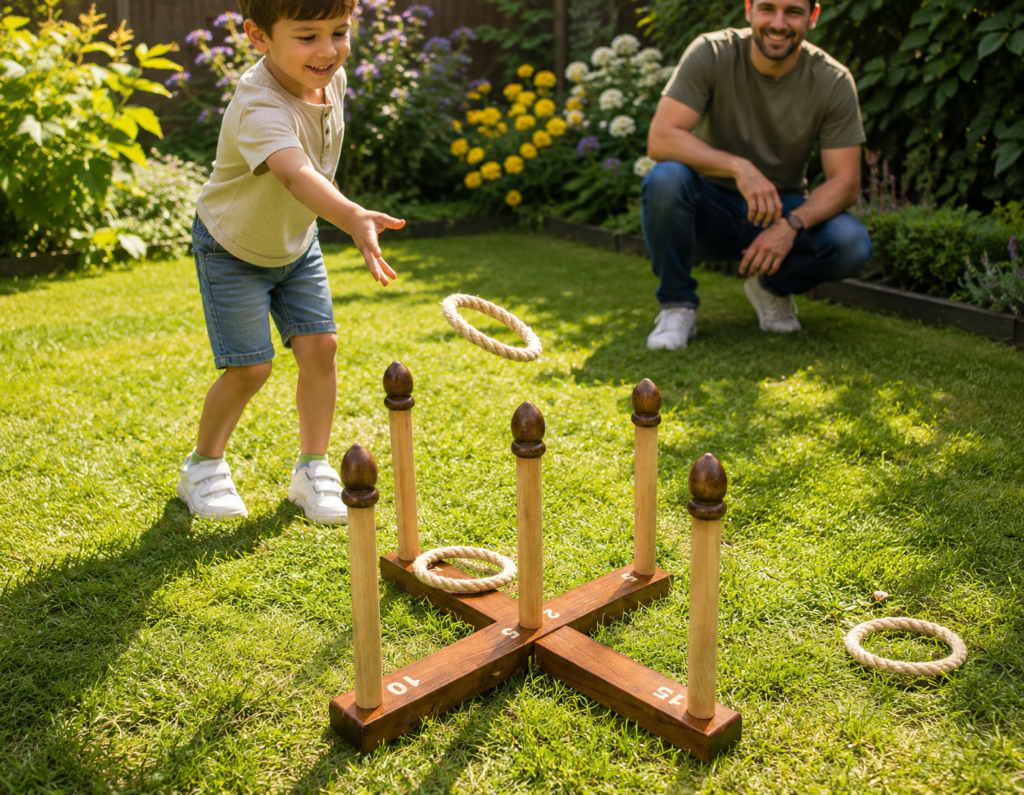
This wooden quoits set has the kind of timeless appeal that doesn’t fade with age. It’s easy enough for younger children to join in with, yet just as enjoyable on family afternoons in the garden years later.
The natural wood, classic design and beautiful packaging also make it feel more thoughtful and giftable than many plastic outdoor toys, while still being easy enough for younger children to join in with independently.
And because the game works across different ages, it often becomes less of a short-term toddler toy and more of a family garden game that grows alongside the child over time.
7. For Slower, More Focused Play
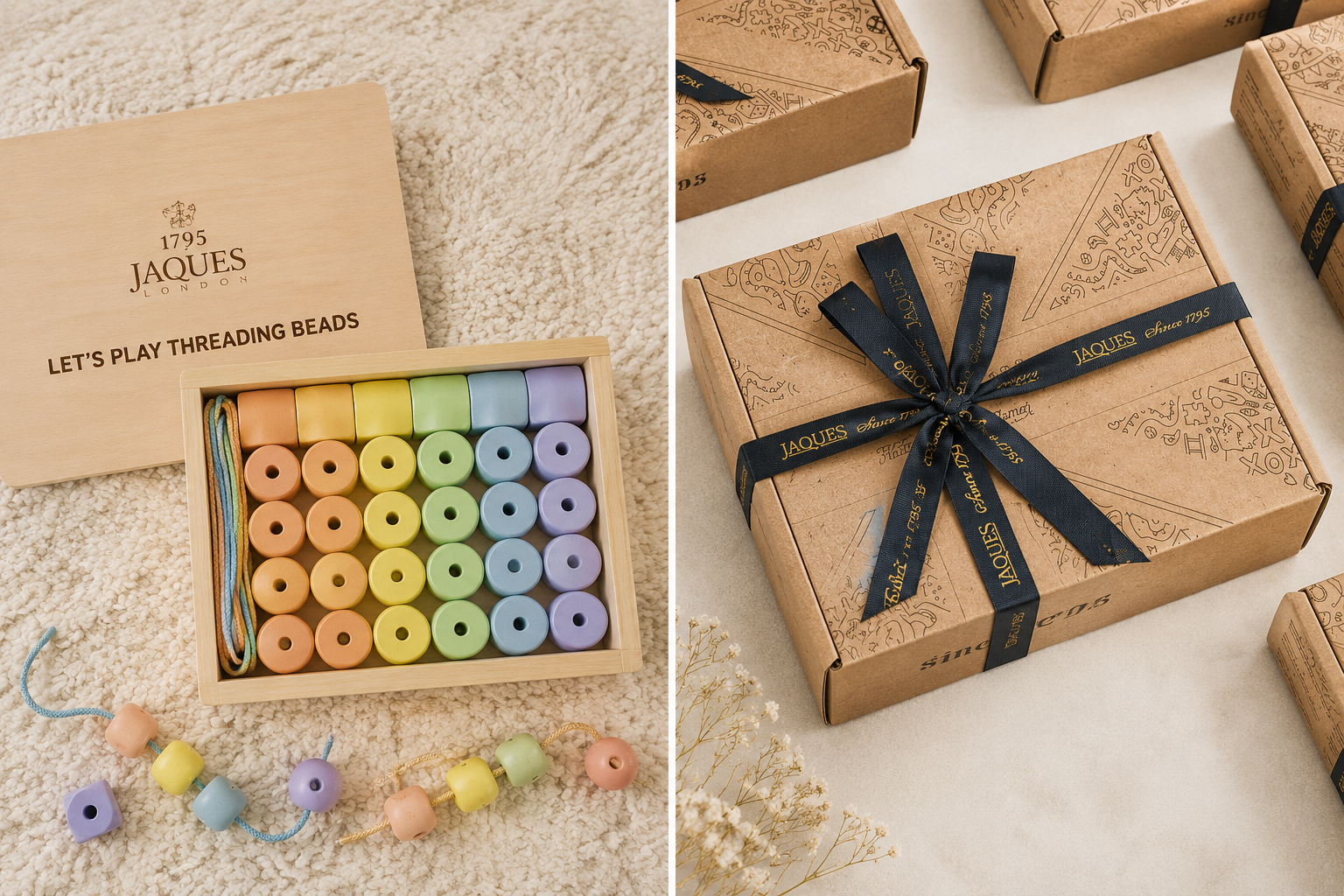
Threading and lacing activities often become more interesting around age 2 because toddlers begin enjoying slightly more precise, hands-on challenges.
We liked the Melissa & Doug Wooden Lacing Beads because the activity feels simple and calming while still offering enough challenge to keep toddlers engaged for longer stretches of play.
And because the movements repeat so naturally, many children find this kind of play surprisingly absorbing during quieter moments at home.
If you’re looking for something slightly more giftable or long-lasting, the Jaques of London Toddler Threading Beads also work beautifully as a more premium wooden option that can grow with the child over time — in signature Jaques of London gift wrap with hand tied ribbon.
8. A Garden Game That Makes Outdoor Play Feel Special
Some outdoor toys get used once and forgotten about. Others become part of slow summer afternoons, birthday parties and family weekends in the garden.
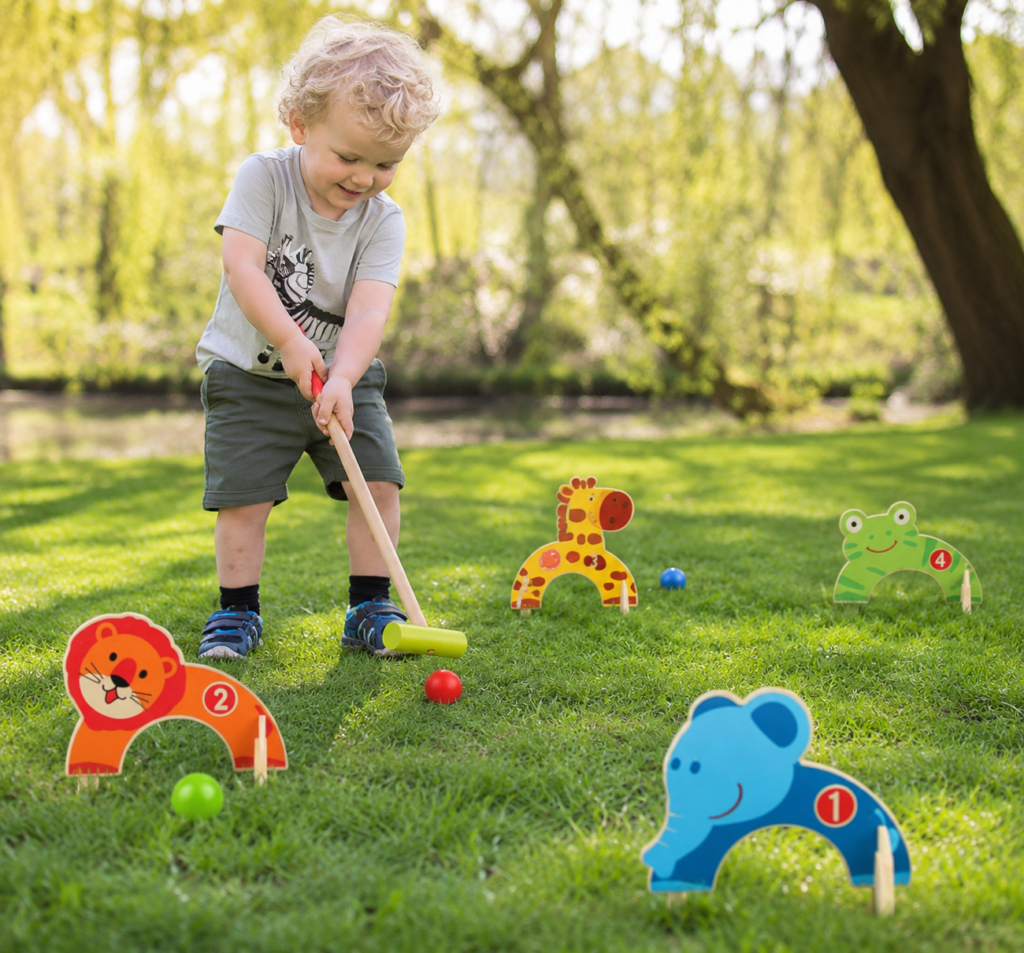
This wooden croquet set brings a slower pace to outdoor play. It’s easy enough for younger children to join in with, yet timeless enough to become part of family afternoons in the garden for years to come.
The animal arches and child-sized mallets make the game feel playful without becoming overly noisy or overstimulating, and the setup naturally encourages movement, coordination and turn-taking through play.
And because it works across different ages, it often becomes the kind of gift families bring out year after year rather than quickly outgrowing.
9. A Gift That Encourages Imagination and Storytelling
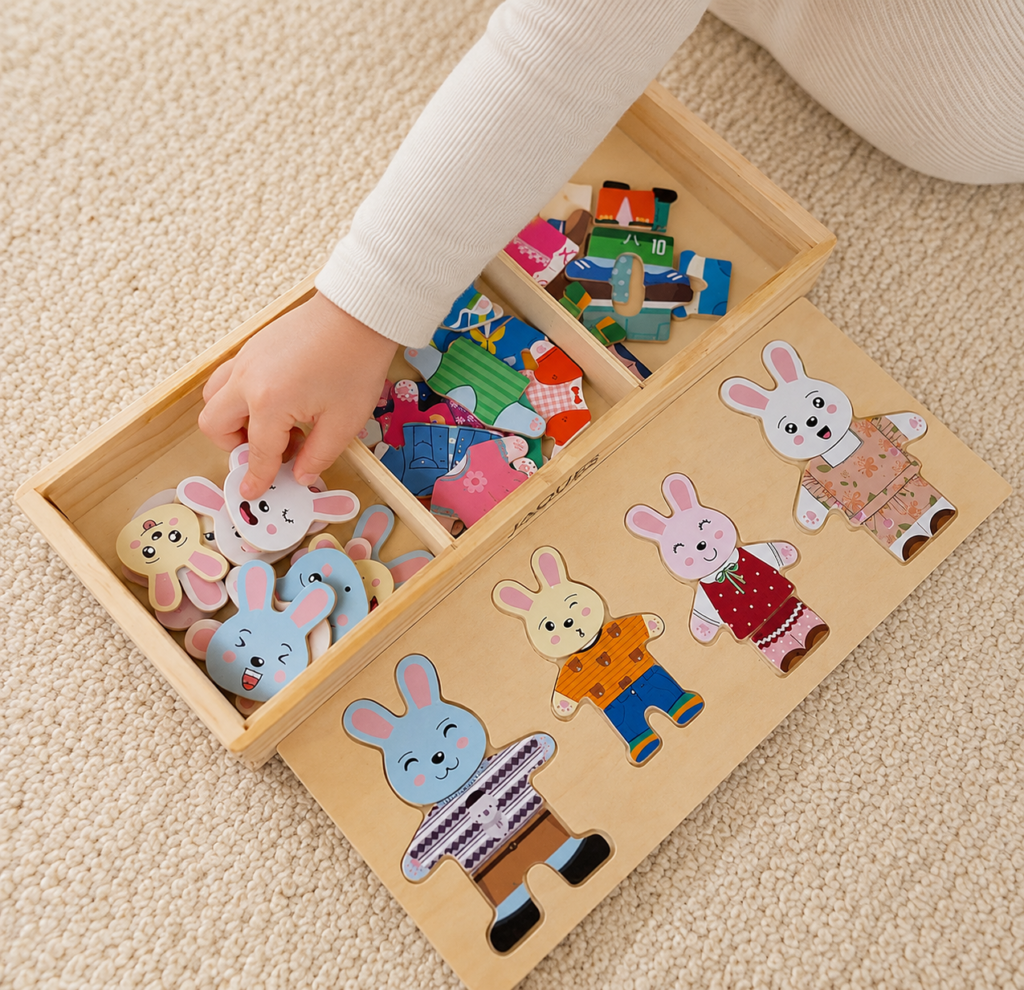
Dress-up puzzles often become especially engaging around this age because toddlers naturally begin experimenting with characters, emotions and everyday routines through play.
Rather than telling children exactly what to do, this wooden bunny dress-up set encourages them to explore different combinations, invent little characters and create stories of their own.
The wooden storage box and beautifully illustrated pieces also make it feel more thoughtful and giftable than many plastic toddler toys, while still being practical enough for everyday play.
And because there are so many combinations to explore, it often becomes the kind of toy children return to repeatedly for quieter, more imaginative play over time.
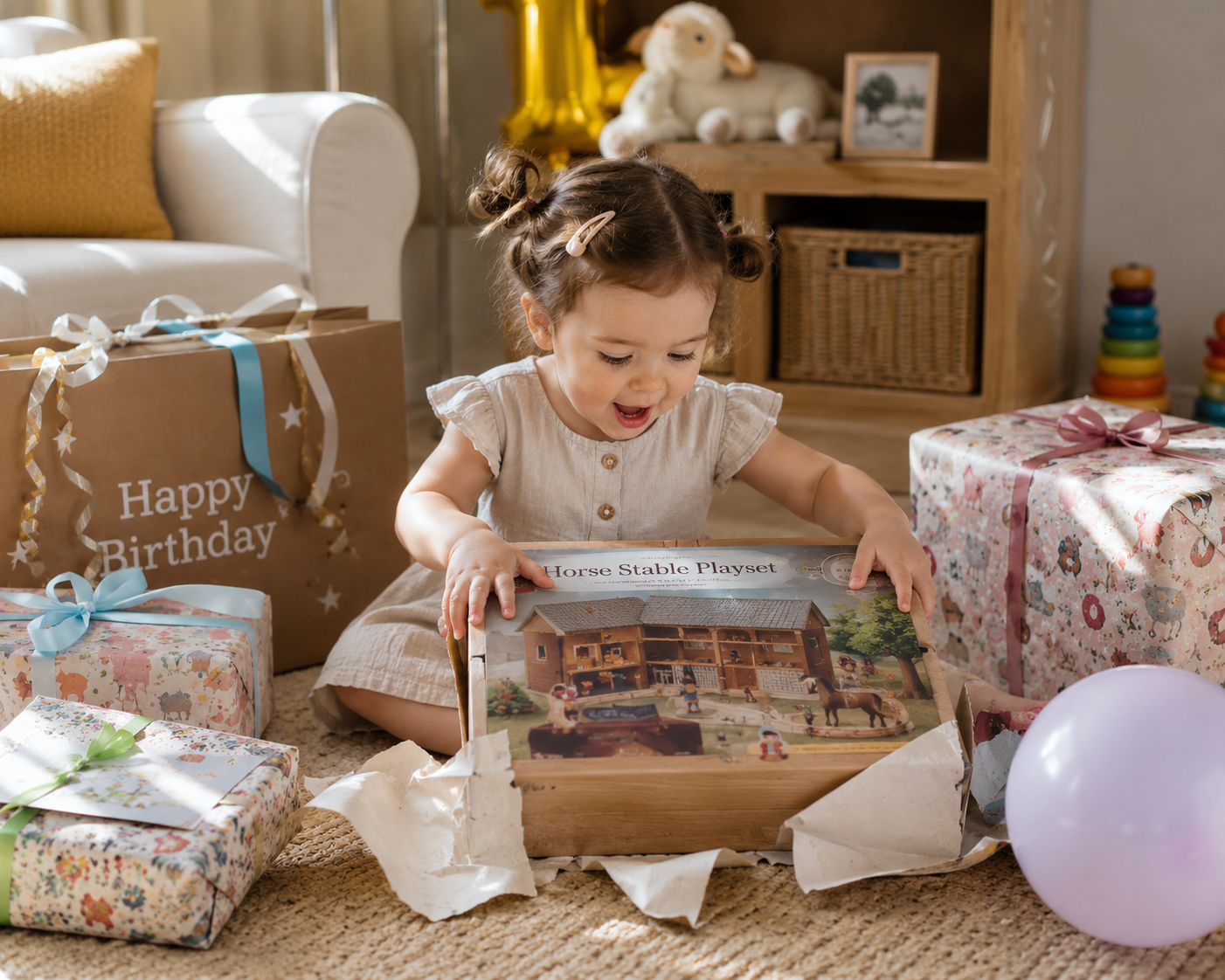
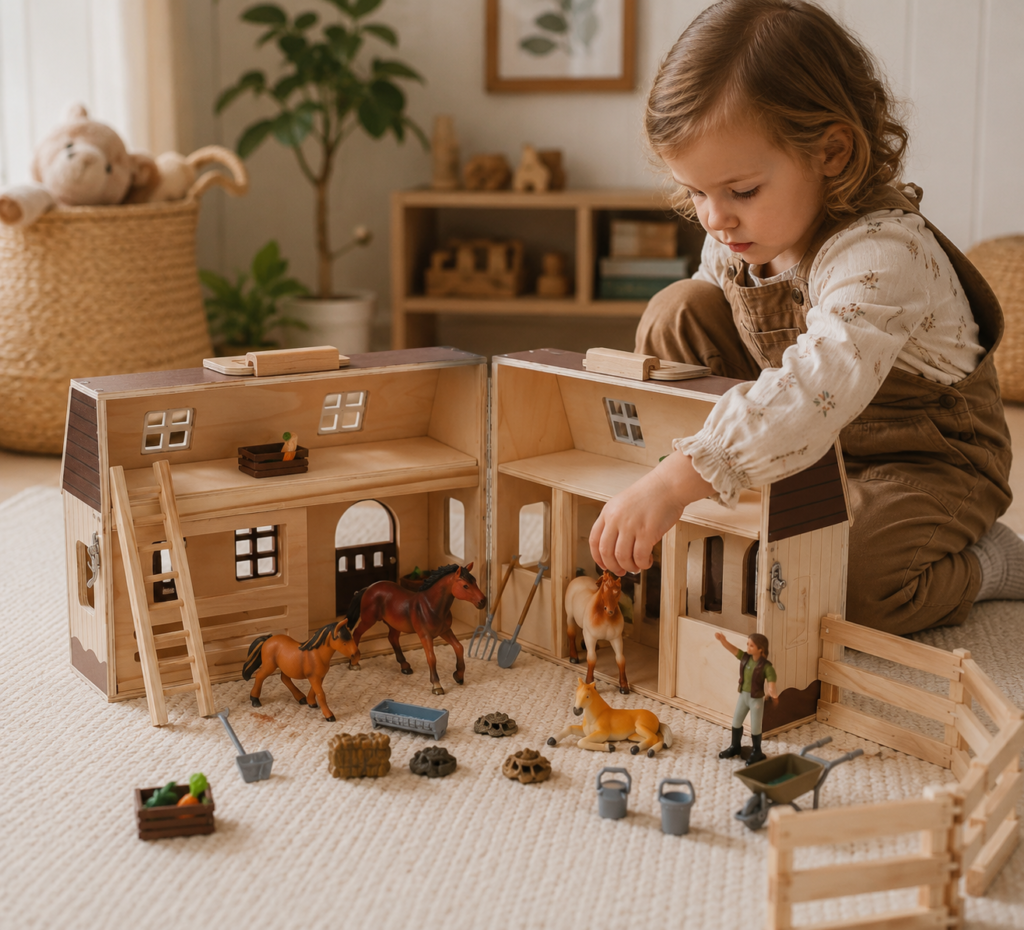
If your toddler loves animals, this is the kind of toy that can keep them occupied for surprisingly long stretches. Rather than following one fixed activity, children can create their own stories, care for the horses and rearrange the stable however they like. We also appreciate that every accessory packs neatly back inside the stable, making it practical as well as beautifully made.
10. A Gift That Turns Into Family Play
Some toys feel exciting for a few days. Others slowly become part of birthdays, rainy afternoons and family traditions.
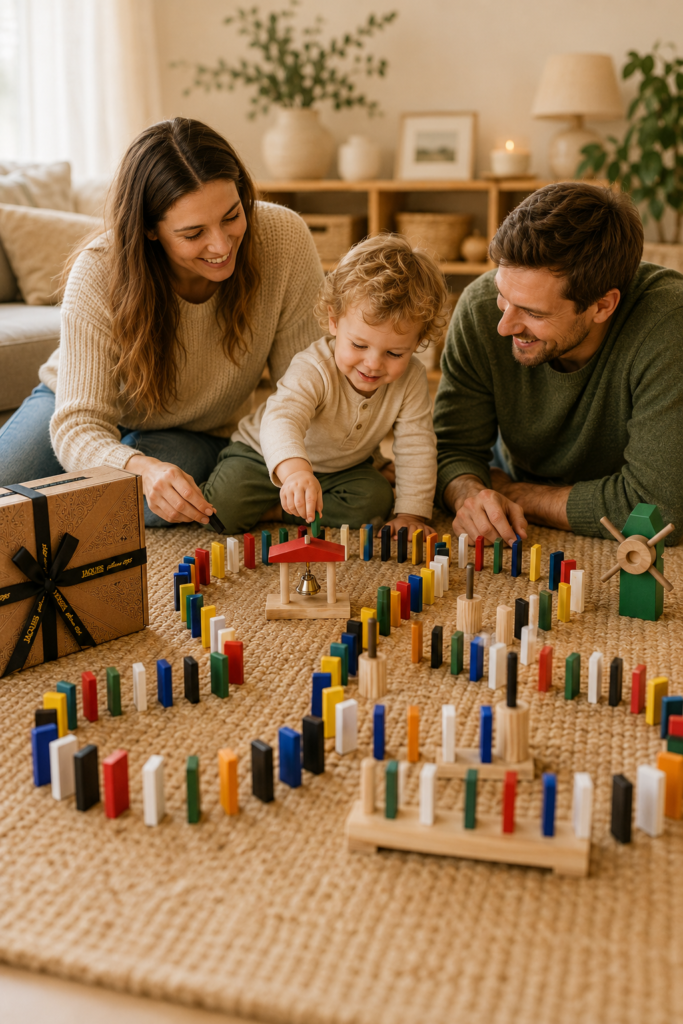
This is one of those classic toys that rarely stays the same for long. Simple lines gradually become towers, patterns and elaborate domino runs, giving children new ways to build, experiment and create as they grow.
At age 2, toddlers often begin by lining pieces up, sorting colours and knocking towers down. As they grow, the same set naturally evolves into more collaborative and imaginative play too.
And because the set feels beautifully made and thoughtfully packaged, it works especially well as a more premium gift that children can keep returning to for years rather than quickly outgrowing.
Shopping on Amazon?
If you’re not already a Prime member, you can check whether you’re eligible for a free 30-day trial and enjoy Prime delivery on millions of eligible items.
Final Thoughts
At this age, the gifts that tend to last are rarely the loudest or most complicated ones.
More often, they are the toys children can return to independently — stacking, building, sorting, carrying and experimenting in their own way over and over again.
And in many homes, a smaller number of thoughtful, open-ended toys ends up creating calmer and more engaging play than constantly adding something new.
The environment matters too. Toddlers usually play more deeply when toys are easy to access, choices feel manageable, and there is enough uninterrupted time to explore without pressure.
That is often why simple Montessori-inspired toys work so well. They leave room for curiosity, imagination and independence to develop naturally through everyday play.
And when choosing a gift for a 2 year old, the toys that get used most are often the ones that quietly grow alongside the child for years rather than weeks.
FAQs
What makes a good gift for a 2-year-old?
The best gifts for 2-year-olds are usually simple enough to use independently but open-ended enough to stay interesting as they grow. Toys that encourage imagination, movement, problem-solving or everyday play often get used far longer than toys that rely on lights, sounds or batteries.
What kind of toys do 2-year-olds enjoy most?
Many 2-year-olds enjoy toys they can return to in different ways each day. Building blocks, pretend play sets, puzzles, stacking toys, books and art materials are all popular because they grow with a child’s interests rather than offering just one way to play.
How do I choose a gift for a 2-year-old?
Start by thinking about how the child enjoys playing rather than choosing something based on age alone. Some toddlers love building, others enjoy pretend play, puzzles, vehicles, animals or creative activities. Gifts that match a child’s current interests are often the ones that get used most.
What are the best educational gifts for a 2-year-old?
At this age, the most educational toys often look like ordinary play. Simple puzzles, blocks, matching games, pretend play and books all help develop language, fine motor skills, problem-solving and imagination through everyday play.
Do 2-year-olds prefer lots of toys or fewer toys?
Many toddlers actually play more deeply with a smaller number of well-chosen toys. Having fewer options can make it easier to concentrate, repeat activities and use toys in more creative ways, rather than moving quickly from one toy to the next.
Are wooden toys better for 2-year-olds?
Not necessarily, but many families appreciate wooden toys because they’re durable, open-ended and often less visually overwhelming than heavily electronic alternatives. The best toy is one that matches your child’s interests and encourages repeated play.
What gifts do 2-year-olds keep playing with?
Toys that can be used in different ways over time tend to last the longest. Building blocks, play kitchens, wooden trains, puzzles, pretend play sets, balance bikes and art materials often remain favourites well beyond a child’s second birthday.
What should I avoid buying for a 2-year-old?
Toys with only one button to press or one action to repeat can sometimes lose their appeal quite quickly. Many parents find that simpler, more open-ended toys encourage longer periods of independent play and continue to feel interesting as children develop new skills.
Are Montessori toys good for 2-year-olds?
Many Montessori-inspired toys work particularly well around age two because they encourage independent exploration, concentration and hands-on learning. They don’t need to be labelled “Montessori” though—many classic wooden toys and everyday play materials offer the same benefits.
How much should you spend on a gift for a 2-year-old?
A thoughtful gift doesn’t have to be expensive. Many of the toys children return to most often are relatively simple. Choosing something that suits the child’s interests and stage of development is usually far more important than the price tag.