Independent Play Activities for Toddlers (Simple Montessori Ideas That Work)
Independent play usually begins much more simply than people expect.
Not with entertainment or constant stimulation — but with activities that feel purposeful, repeatable and easy for toddlers to explore on their own.
Many modern toddler toys are designed to capture attention quickly through lights, sounds and buttons. But often, those features make it harder for children to stay engaged independently because the toy is doing most of the work for them.
What tends to hold attention longer are usually much simpler activities:
pouring, stacking, transferring, opening, closing, sorting and repeating familiar movements again and again.
In other words, activities where the child creates the action themselves.
And importantly, you do not need lots of special materials to encourage this kind of play. Household objects often work beautifully on their own.
But a few thoughtfully chosen tools can make independent play easier to set up, repeat and return to throughout the day — especially when you are trying to create calmer, longer stretches of focused play at home.
The ideas below are simple, low-pressure activities that support independent play naturally, with both household alternatives and optional Montessori-inspired tools that make setup a little easier.
If you’re trying to build longer stretches of focus at home, this guide on how to help your toddler play independently (Montessori approach) explains how the environment makes the biggest difference.
Disclaimer: This post contains affiliate links. I may earn a small commission at no extra cost to you. As an Amazon Associate I earn from qualifying purchases.
1. Posting Activities (Putting Objects Into a Slot)
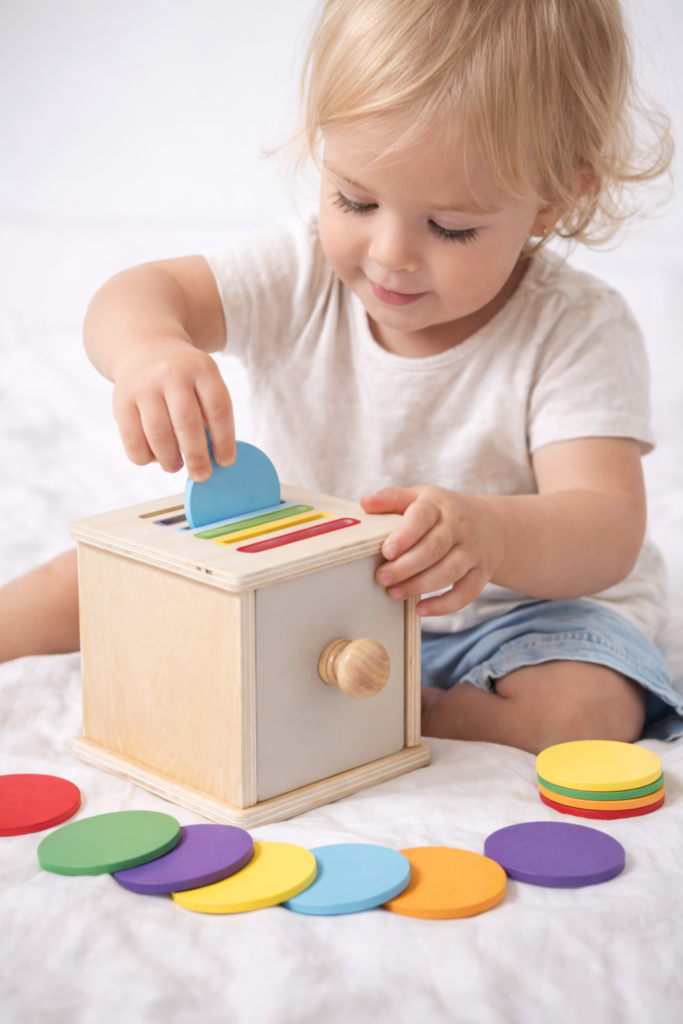
Posting activities are often one of the first independent play activities toddlers return to again and again.
On the surface, the play looks very simple — dropping objects into a slot repeatedly — but toddlers are quietly practising hand control, coordination and visual judgement every time they repeat the movement.
And because the action creates such clear and predictable feedback, many children naturally settle into longer periods of concentration without needing much adult involvement.
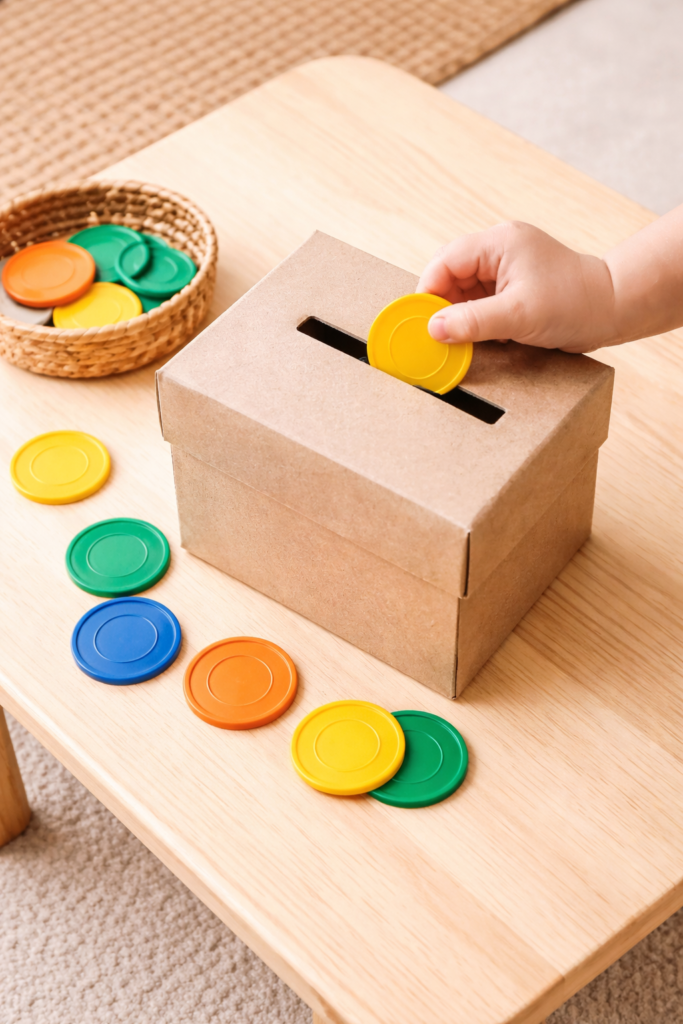
You also do not need special toys to begin.
Simple household setups often work beautifully:
- a spice jar with large buttons
- a wipes container with cards
- a tissue box with folded socks
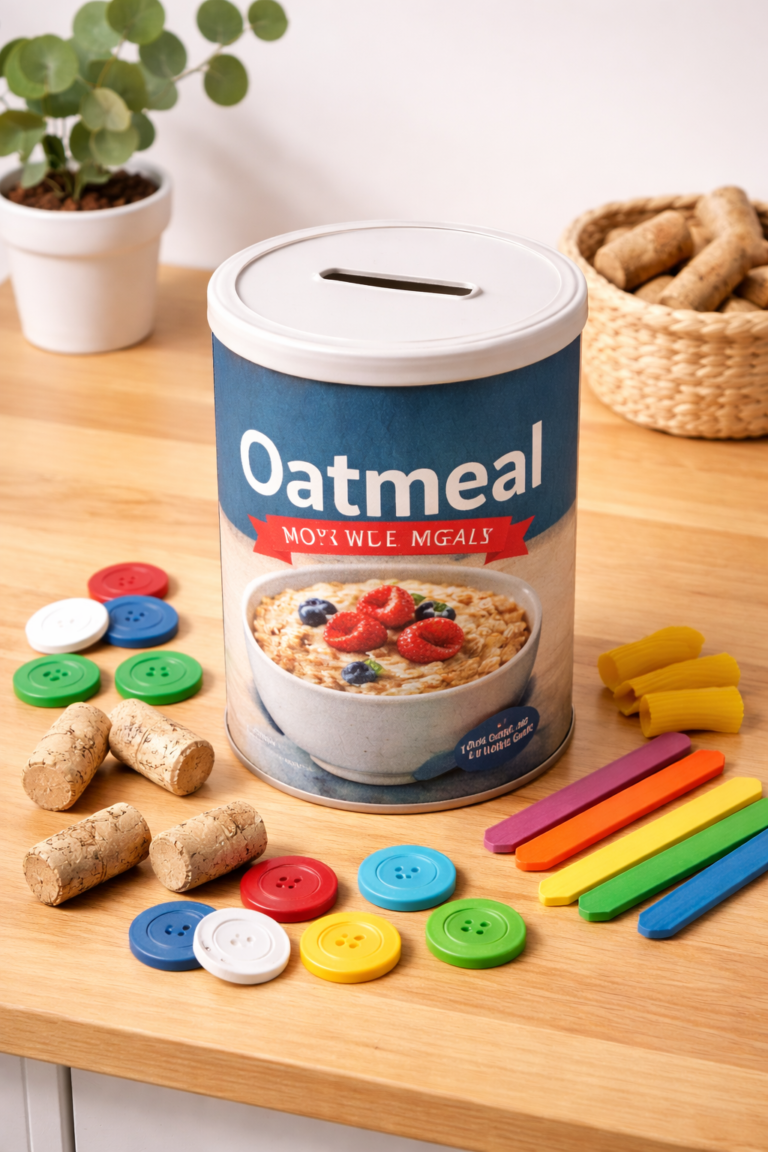
- an oatmeal container with jar lids
- a shoe box with playing cards
Often, the simplest setups are the most engaging.
One thing that makes a surprisingly big difference is the size of the opening. If the slot is too large, toddlers tend to dump objects quickly rather than post them carefully. A slightly snug fit naturally slows the movement down and encourages more focus.
Rotating the objects instead of constantly changing the container also helps keep the activity feeling new:
wooden coins, corks, large buttons, jumbo craft sticks, felt squares or large pasta pieces can all work well.
And when toddlers lose interest, the issue is often not boredom but too much visual chaos. When pieces scatter everywhere, children tend to shift from focused play into wandering and collecting instead.
A contained setup helps preserve concentration in a much calmer way.
This is also one reason Montessori toy rotation tends to work so well — fewer, clearly presented materials often make it easier for toddlers to stay focused and return to activities independently → Montessori toy rotation
2. Transferring (Moving Objects Between Containers)
Transferring activities often hold a toddler’s attention surprisingly well because the movements feel purposeful, repetitive and calming.
At first, the setup can be incredibly simple:
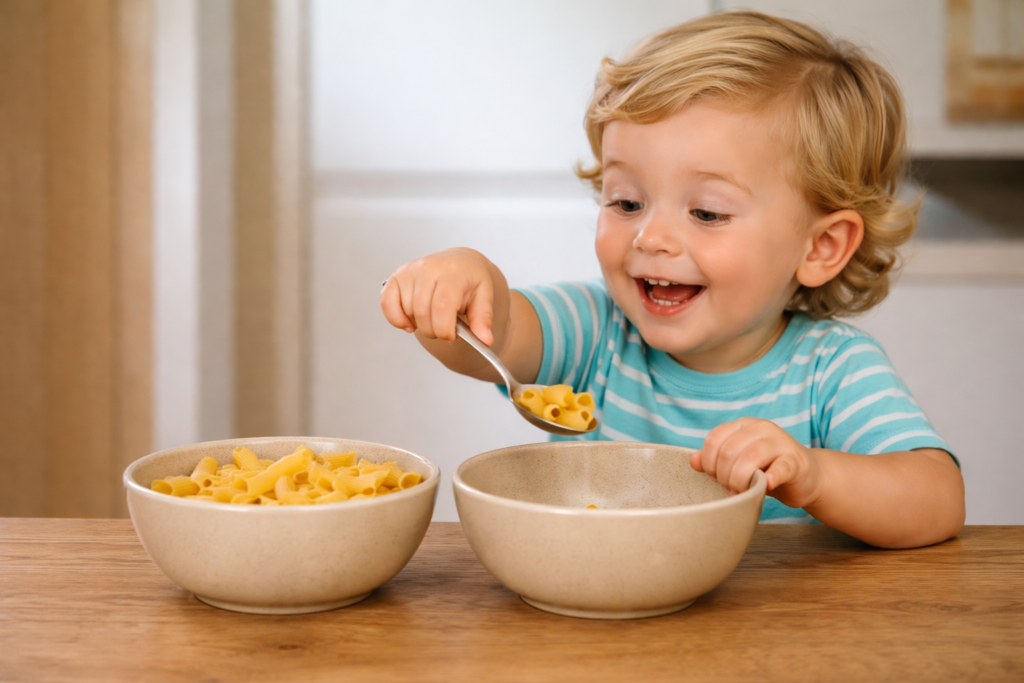
two bowls, some dry pasta and a spoon are often enough to begin.
Toddlers naturally repeat the same scooping, pouring and transferring movements again and again while quietly building coordination, sequencing and control through play.
And because the activity responds directly to their movement, many children settle into it much more deeply than toys with lights, sounds or lots of instructions.
A small child-sized pitcher, scoop or spoon can also make a noticeable difference. When the movement feels manageable and successful, toddlers are usually much more likely to stay with the activity for longer without frustration.
3. Carrying and Placing
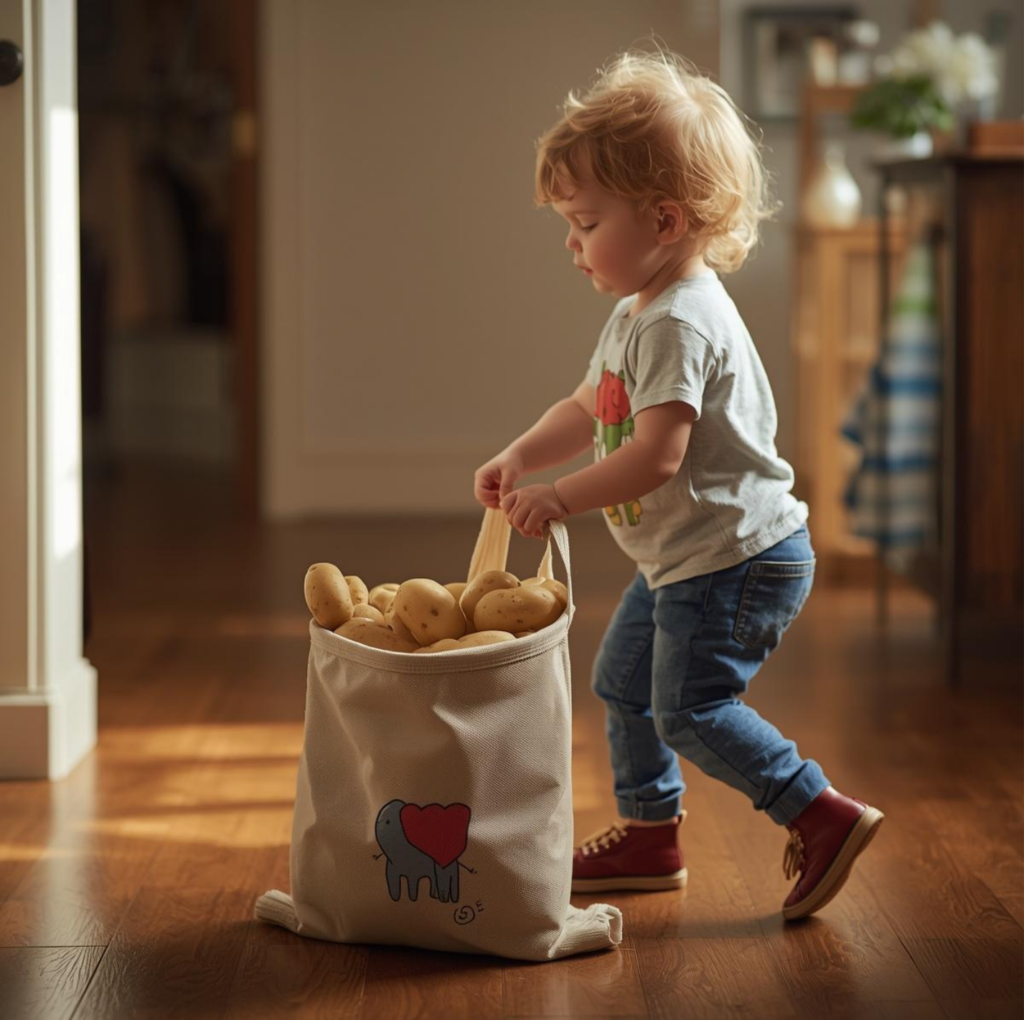
Carrying activities often look very simple to adults, but for toddlers they require a surprising amount of concentration and body control.
Moving objects carefully from one place to another helps children practise balance, coordination and controlled movement in a very natural way.
And because the activity feels purposeful, many toddlers repeat it again and again without needing much encouragement.
Simple household objects work beautifully here:
folded washcloths, small books, wooden blocks or soft toys are often enough to begin.
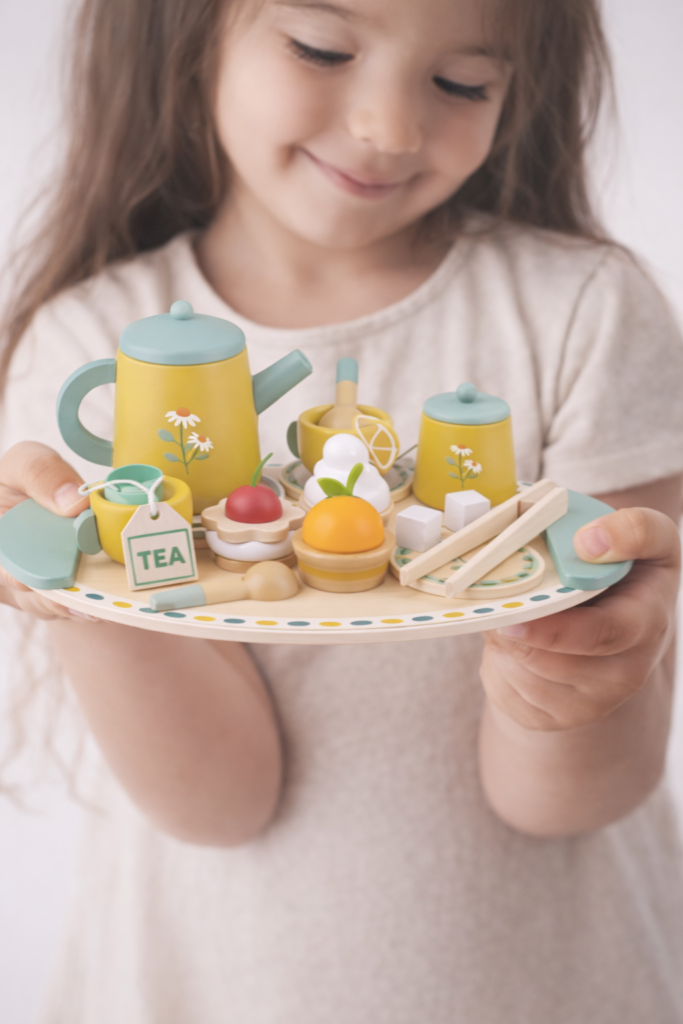
A shallow tray also helps define the activity clearly and makes carrying feel more manageable without constant dropping or frustration.
If you want a ready-made option, lightweight wooden trays or simple wooden tea sets often work especially well because they naturally encourage slower, more careful movement around the home while still feeling playful and independent.
4. Opening and Closing Containers
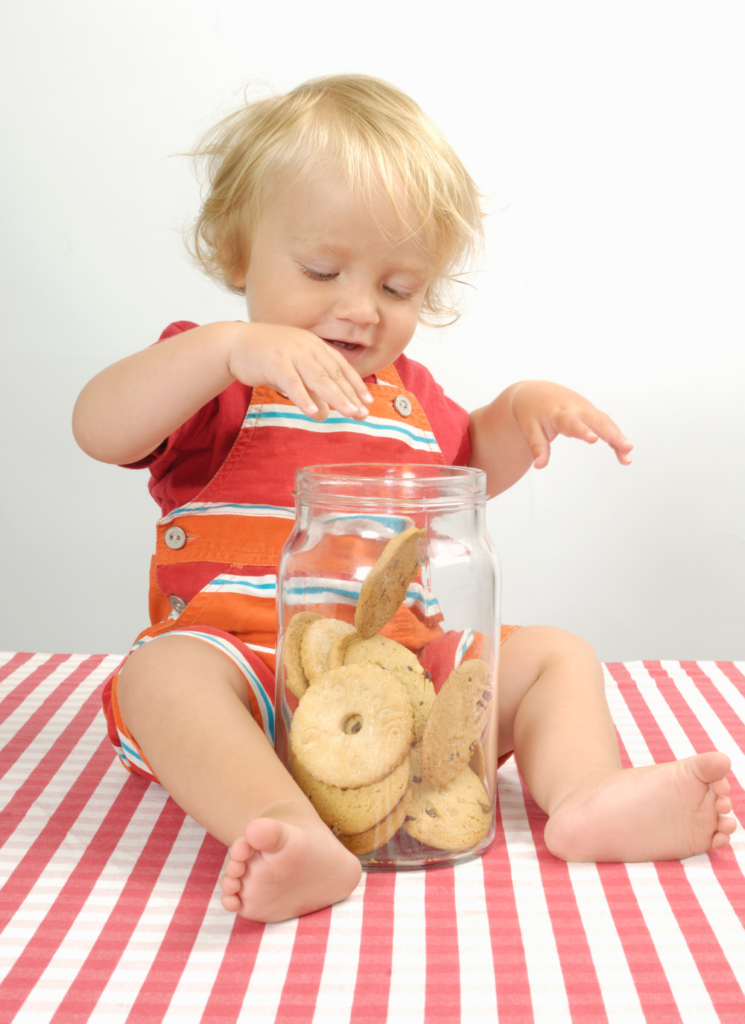
Opening and closing containers is one of those activities toddlers return to naturally because it combines movement, problem-solving and immediate feedback.
A child twists a lid, opens a box or snaps a container shut — and instantly sees the result of their effort.
That visible sense of progress is often what keeps the activity so engaging.
And importantly, you do not need lots of materials here. Variety usually matters much more than quantity.
Simple household items often work beautifully:
spice jars, reusable tubs, small boxes or plastic containers with different lids all create slightly different challenges for little hands to solve.
Keeping a small basket of containers together also helps make the activity feel calm, accessible and easy to return to independently throughout the day.
5. Water Transfer (Advanced Toddlers)
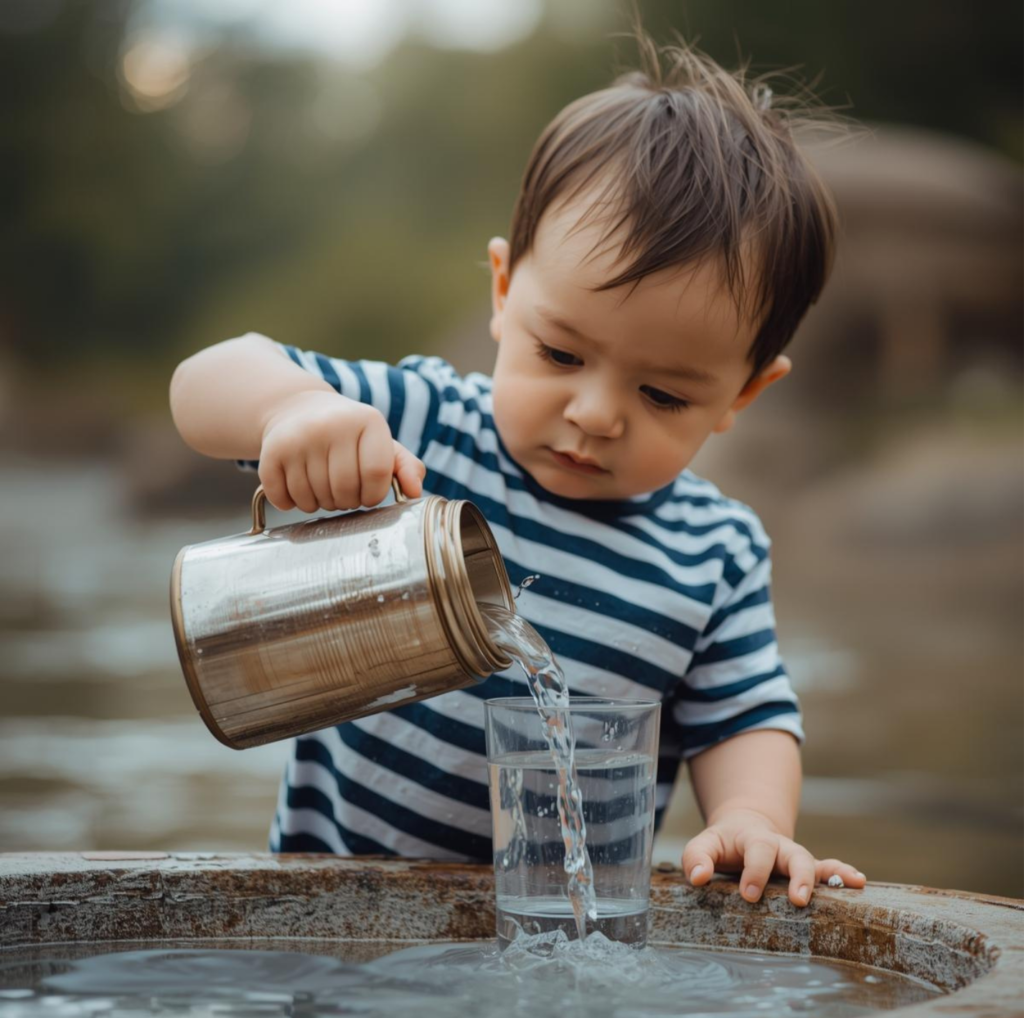
Water transfer activities often become deeply absorbing for toddlers because they combine movement, sensory feedback and visible progress in a very calming way.
A simple setup is usually enough to begin:
two bowls, a sponge and a small amount of water can hold a toddler’s attention surprisingly well.
Later, introducing a small pouring jug naturally adds more challenge. The extra weight slows movement down, which helps children practise more controlled and careful pouring over time.
We personally prefer avoiding plastic where possible, so small stainless steel barista jugs tend to work beautifully for this kind of activity. They are durable, easy for little hands to grip and naturally encourage slower, more deliberate movements.
And because they are real household tools rather than “toy” versions, toddlers often find them especially engaging and meaningful to use independently.
Why simple tools matter
Independent play usually does not begin with entertainment.
It begins when an activity feels clear, achievable and satisfying enough for a child to continue without constant help.
That is often why simple activities work so well. Toddlers are not looking for endless stimulation — they are looking for movements and actions that make sense to them and respond directly to what they do.
And in many cases, household objects are already enough.
But well-sized tools can make independent play easier to sustain because they reduce unnecessary frustration. A child-sized pitcher pours more successfully. A shallow tray prevents constant dropping. A contained setup makes repetition feel calmer and more manageable.
Often, the difference between wandering away and staying focused is simply whether the activity feels possible independently.
You will also likely notice your toddler returning to the same activity again and again. Not because it is exciting in an adult sense, but because repetition is how children gradually refine movement, build control and create understanding through play.
What looks very simple on the surface is often deeply meaningful work for a young child.
And when the activity feels manageable enough to repeat successfully, something important begins to shift:
they stop waiting for help,
and start continuing on their own.
Toddlers repeating the same activity over and over is not random — it is actually an important part of how the developing brain builds and strengthens neural pathways.
Researchers sometimes describe this as experience-dependent wiring: repeated movements and repeated success help the brain refine coordination, prediction and control over time.
Which is one reason toddlers often become deeply focused on simple activities like pouring, posting or transferring objects repeatedly without getting bored.
From an adult perspective the play can look repetitive. For a toddler, the brain is quietly building and refining important connections through every repetition.
You Might Also Find Helpful