How to Teach Your Toddler to Eat Independently (Step-by-Step Guide)
There comes a point when many toddlers decide they no longer want your help at mealtimes.
They reach for the spoon, push your hand away and insist on doing it themselves — even if considerably more food ends up on the table than in their mouth.
As inconvenient as this can be, that desire to take over is useful. Eating independently involves a surprising number of skills: coordinating hands and mouth, managing utensils and cups, making choices about food and gradually recognising hunger and fullness.
You don’t need an elaborate Montessori setup to encourage it. A few manageable tools, realistic expectations and plenty of opportunities to practise are usually a much better place to start.
What does independent eating actually look like?
Independent eating doesn’t mean a toddler sitting through an entire meal neatly using a knife and fork.
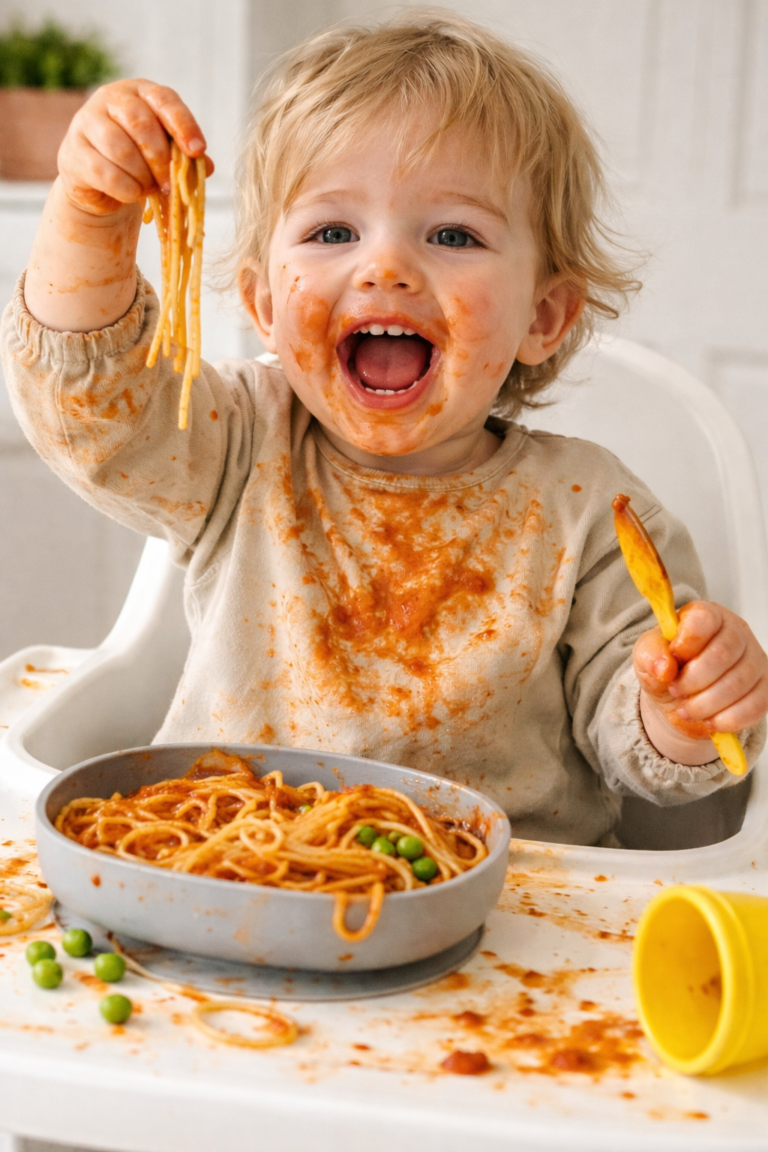
For a young toddler, it might mean picking up finger foods independently, attempting to use a spoon, holding their own cup or deciding they’ve had enough. They may still need help with particularly tricky foods or towards the end of a meal.
The important part is that they’re becoming an active participant rather than expecting an adult to manage every part of eating for them.
And yes, there will probably be mess.
Why toddlers suddenly want to feed themselves
The desire to take over at mealtimes often becomes particularly noticeable during toddlerhood, when “me do it” starts appearing everywhere from getting dressed to climbing into the car.
Eating is another opportunity to practise that independence.
The problem is that enthusiasm often arrives before coordination does. Your toddler may desperately want to scoop their own yoghurt while still lacking the control required to get most of it into their mouth.
That gap can produce frustration — but it also creates an opportunity to practise.
If food is regularly ending up on the floor rather than the plate, you may also find this useful: Why Toddlers Throw Food (And What It Really Means).
How to teach your toddler to eat independently
1. Start with a setup they can actually manage
Before worrying about table manners or how much your toddler eats independently, look at the physical setup.
A small plate or bowl, appropriately sized spoon and fork, small cup and stable place to sit are usually enough. Children’s feeding products don’t need to be complicated; they simply need to be manageable for small hands.
If the spoon is too long, the cup too large or your toddler isn’t comfortably supported while sitting, eating independently becomes unnecessarily difficult.
If you’re starting from scratch, we’ve also compared the Best Baby-Led Weaning Sets for Babies (UK) — including practical sets with plates, bowls, cups and utensils designed for little hands.
For more individual feeding essentials, you can also explore Simple Montessori Feeding Tools for Toddlers Learning to Eat Independently.
2. Make the food manageable too
A huge plate of food can be difficult for a toddler to navigate. Starting with a smaller amount and offering more when needed can make the meal feel much more manageable.
Think about how the food is served as well. Foods that stay reasonably well on a spoon or can easily be picked up give a beginner a much better chance of succeeding than something particularly slippery or difficult to scoop.
This isn’t about making every meal toddler-perfect. It’s simply about giving them some easy wins while they’re learning.
3. Give them more time than you think they need
Watching a toddler attempt to scoop the same piece of food five times can test anyone’s patience — particularly when you’re trying to get out of the house.
But independent eating is slow in the beginning.
Try to resist automatically taking over the moment something becomes difficult. Give them a few seconds to work it out first. Sometimes they’ll manage it. Sometimes they’ll look to you for help.
Both are fine.
On mornings when everyone needs to leave in ten minutes, you may naturally help more. Independence doesn’t have to be practised perfectly at every meal to develop.
4. Expect some mess
This is probably the least glamorous part of teaching a toddler to eat independently.
Food will fall. Drinks will spill. Spoons will occasionally travel in completely the wrong direction.
Much of that mess is simply the visible result of practising coordination.
You can make it easier on yourself — a wipeable mat, easy-clean bib and keeping only a small amount of drink in the cup can help — without constantly correcting your child.
There is a difference between allowing normal learning mess and allowing the entire meal to descend into chaos. If your toddler deliberately starts throwing food or playing rather than eating, it’s perfectly reasonable to calmly set a boundary.
5. Practise drinking from an open cup
A small open cup is another useful skill to practise during toddlerhood.
You certainly don’t have to abandon every other type of cup. A straw or lidded cup can be extremely practical when you’re out. At home, however, offering an open cup at some meals gives your toddler regular opportunities to practise controlling the cup, judging how far to tip it and putting it back down.
Start with a small cup and only a little water. A half-full toddler-sized cup produces a much less dramatic learning experience when it inevitably tips over.
6. Let them participate beyond eating
One of the Montessori ideas we particularly like is that mealtimes aren’t only about consuming food.
A toddler can gradually become involved in the whole routine.
Depending on their age and ability, that might mean carrying their cup to the table, putting down a placemat, taking their plate over, wiping a small spill or helping clear things away afterwards.
These don’t need to become formal chores. They’re simply small ways of communicating: you belong here, and you can help.
7. Help when they need it
Independent eating doesn’t mean refusing to help.
Sometimes a toddler is tired. Sometimes they’re hungry and becoming frustrated. Sometimes they’ve successfully eaten half the meal themselves and simply need help with the rest.
You can still support them without taking over completely.
If they’re struggling to load a spoon, for example, you might put the food onto the spoon and hand it back for them to bring to their mouth. You’re reducing the difficult part without removing their participation altogether.
That middle ground tends to be far more realistic than expecting complete independence at every meal.
What can make independent eating harder?
The most common problem is expecting too much, too quickly.
A toddler who has only recently started using a spoon isn’t going to eat neatly simply because they understand what a spoon is for. Knowing what to do and having the physical coordination to do it are very different things.
Constantly stepping in can also make it difficult for a child to practise, but so can refusing help when they’re clearly becoming frustrated.
The aim isn’t “You must do this yourself.”
It’s “You can try, and I’m here if you need me.”
That small distinction makes independent eating feel much less like another milestone parents need to achieve.
The Montessori approach to toddler mealtimes
Montessori often treats everyday routines as opportunities for children to participate in family life, and mealtimes lend themselves particularly well to this.
Instead of an adult preparing, serving, feeding and clearing everything, the child gradually takes on the parts they’re capable of managing.
At first, that might simply be holding their own spoon. Later it might mean pouring a little water, carrying their plate or wiping the table.
There is no need to introduce all of this at once.
The goal isn’t to create a miniature adult at the dinner table. It’s to give your toddler genuine opportunities to become more capable as their skills develop.
What independent eating looks like in real life
Some meals will surprise you. Your toddler will sit happily, feed themselves and suddenly look remarkably grown up.
At another meal, the spoon will hit the floor within thirty seconds and they’ll ask you to help.
That’s normal.
Independent eating develops through hundreds of ordinary meals rather than one perfect teaching method. Give your toddler manageable tools, let them attempt what they’re ready for and step in when they genuinely need you.
Over time, the spills become less frequent, the spoon finds its target more reliably and the child who once needed you to manage every bite begins doing much more for themselves.
Frequently Asked Questions
At what age should a toddler eat independently?
There isn’t a single age by which a toddler should be completely independent at mealtimes. Babies begin practising self-feeding much earlier, while skills such as using utensils and drinking neatly from an open cup continue developing throughout toddlerhood. Look at what your individual child is ready to attempt rather than expecting complete independence at a particular age.
How do I teach my toddler to eat independently?
Start with a stable seating position and simple utensils your toddler can comfortably manage. Give them regular opportunities to feed themselves, allow plenty of time and resist stepping in immediately when they struggle. Help when needed without automatically taking over the whole meal.
What if my toddler wants me to feed them?
That’s okay. Independence doesn’t need to be all or nothing. You might help load the spoon and let your toddler bring it to their mouth, alternate turns or encourage them to eat part of the meal independently. Tired or particularly hungry toddlers may also want more help than usual.
Why does my toddler make such a mess when eating?
Using utensils and cups requires considerable hand-eye coordination, so spills and dropped food are a normal part of learning. Serving manageable portions and small amounts of liquid can contain some of the mess while still giving your toddler opportunities to practise.
Should toddlers use sippy cups or open cups?
An open cup is a useful drinking skill to practise, but families don’t have to choose one type of cup for every situation. A small open cup can work well at the table, while a straw or lidded cup may be more practical when you’re out. The important thing is giving your toddler opportunities to develop different drinking skills.
How long does it take a toddler to learn to eat independently?
There isn’t a fixed timeline. You’ll probably notice gradual improvements over weeks and months as your toddler’s coordination develops. Even a child who can usually eat independently may occasionally want or need help.
What are the best tools for teaching a toddler to eat independently?
You don’t need much: stable seating, a small plate or bowl, child-sized utensils and a manageable cup are a good starting point. Choose products based on whether your child can actually use them rather than how many feeding accessories come in the set.
Why does my toddler throw food while learning to eat?
Food throwing can happen for several reasons, including experimentation, communication, boredom or frustration. It doesn’t necessarily mean your toddler isn’t ready to eat independently. Calm boundaries, manageable portions and paying attention to whether they’ve finished eating can all help.
You Might Also Find Helpful