Why Won’t My Toddler Play Alone and What Actually Helps
It’s one of the questions many parents ask around this age.
Your toddler follows you from room to room, loses interest in toys after a minute or two, or only seems willing to play if you’re sitting beside them.
If that sounds familiar, you’re not alone.
At around 18–24 months, independent play is still developing alongside concentration, emotional regulation and confidence. Most toddlers can only play alone for short periods before seeking connection, movement or reassurance again.
Rather than teaching independent play overnight, the goal is to create an environment that helps it grow naturally over time.

Disclaimer: This post contains affiliate links. As an Amazon Associate I earn from qualifying purchases at no extra cost to you.
Is It Normal That My Toddler Won’t Play Alone?
Between 18 and 24 months, most toddlers still want frequent reassurance from the adults around them. They may happily explore for a few minutes before returning to check you’re still nearby, asking for help, or simply wanting you to watch what they’re doing.
That doesn’t usually mean anything is wrong. In many cases, it reflects how concentration, confidence and emotional security are still developing at this age.
Why Independent Play Matters
Independent play isn’t just about finding five quiet minutes to make a cup of tea.
It’s during these quiet moments that children begin developing concentration, creativity, problem-solving and the confidence to explore the world on their own.
Perhaps more importantly, they discover the satisfaction of learning through their own curiosity rather than constant adult direction.
Why Toddlers Don’t Play Alone
When toddlers don’t seem interested in playing independently, it’s easy to assume something is wrong—or that they simply need more toys.
More often than not, neither is true.
Around 18–24 months, independent play is still developing alongside attention, emotional regulation and confidence. Many toddlers genuinely want to explore on their own, but they also need frequent reassurance that a trusted adult is still nearby.
There are also plenty of everyday reasons why a toddler might struggle to settle into play:
- They’re feeling disconnected and are seeking your attention before they can fully engage.
- There are too many toys available, making it difficult to decide where to begin.
- They’re still learning how to play independently, and simply need time, repetition and opportunities to practise.
Rather than expecting toddlers to entertain themselves for long periods, it often helps to think of independent play as a skill that develops gradually. Just as children learn to walk one step at a time, they also learn to play independently through many small moments of success built up over months rather than days.
Why More Toys Aren’t Usually the Answer
When toddlers struggle to play independently, it’s easy to assume they simply need more stimulation. In many cases, however, the opposite is true.
Between 18 and 24 months, many toddlers become overwhelmed by too many toys, constant noise, frequent interruptions or simply having too many choices.
When everything competes for their attention, it’s much harder to settle into deep, focused play.
This is one reason Montessori environments tend to feel calmer and more structured than many traditional playrooms. Rather than encouraging constant entertainment, they support concentration through simplicity, repetition and activities that children can access independently.
Often, small changes to the environment make a bigger difference than buying more toys.
Sometimes, what looks like a lack of interest in play is simply a child trying to make sense of too many choices.
Toddlers Usually Need Connection Before Independence
One of the biggest misconceptions about independent play is that it develops through emotional distance. In reality, toddlers often explore most confidently when they already feel connected and emotionally regulated.
Many parents notice their child plays more independently after spending some one-on-one time together, getting plenty of movement outdoors or following a familiar daily routine. By contrast, when toddlers are overtired, overwhelmed or emotionally dysregulated, they’re far more likely to seek constant reassurance from the adults around them.
If your toddler seems particularly “clingy” at this age, it doesn’t necessarily mean they’re becoming less independent. In many cases, it’s simply part of the same developmental stage.
Independent play doesn’t begin when children stop needing you. It begins when they feel safe enough to explore without you for a little while.
For many toddlers, those first moments last only a minute or two. That’s often exactly how independence begins.
If you’ve also noticed increased emotional sensitivity around this time, you may find our guide to why toddlers become more emotional around 18 months helpful → Why Toddlers Become Very Emotional or Moody Around 18 months
Fewer Toys Often Works Better
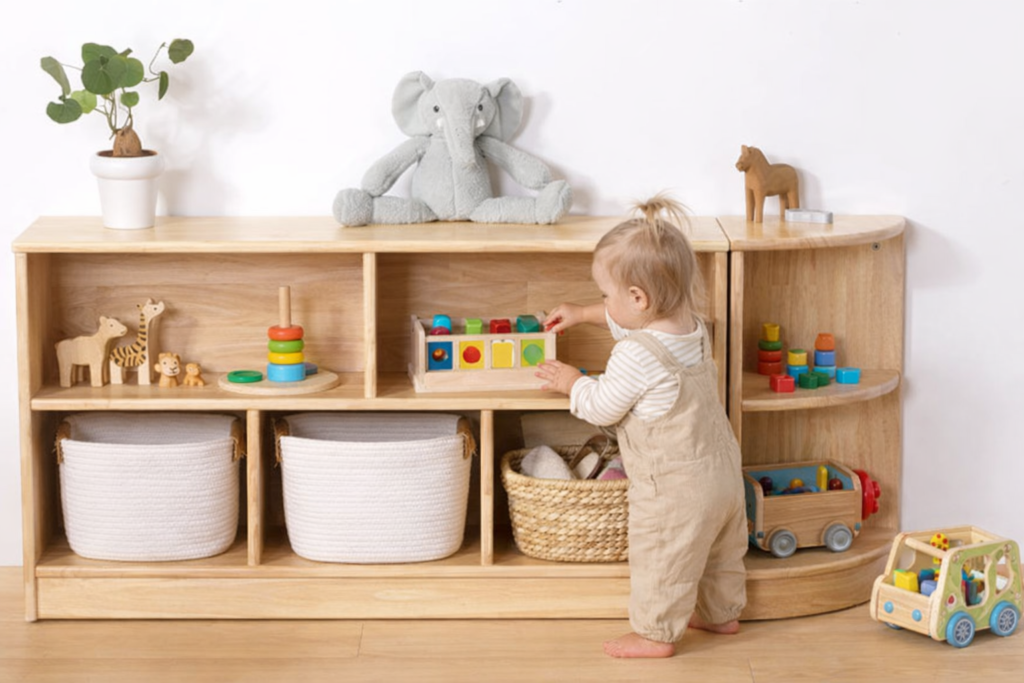
One of the biggest shifts Montessori environments make is reducing visual and sensory overwhelm.
At this age, large toy collections often make concentration harder rather than easier. When toddlers are faced with too many choices, play can quickly become scattered as they move from one activity to the next without settling into deeper exploration.
Many families notice a real difference when only a small number of carefully chosen activities are available at once. A simple shelf with a puzzle, a practical life activity and one or two open-ended toys is often far more engaging than a playroom overflowing with options.
We noticed something very similar at home. Our daughter rarely played independently when every toy was available at once. After reducing her shelf to just four or five activities, she actually stayed with each one for much longer. It wasn’t because the toys had changed—it was because choosing had become simpler.
Just as importantly, toddlers build concentration through repetition, not constant novelty. Returning to the same activity again and again is rarely a sign of boredom—it’s often a sign that they’re practising, refining and mastering a new skill.
The Best Activities Are Usually Simple
At 18–24 months, toddlers are often drawn to activities that feel purposeful, repetitive and achievable without constant adult help.
This is why many Montessori activities—such as pouring, posting, threading, transferring, stacking and simple puzzles — hold attention surprisingly well. They combine movement with repetition, giving toddlers the opportunity to practise the same skill over and over as their confidence grows.
In our experience, everyday activities often held our daughter’s attention for longer than many toys ever did. Helping to pour water, wiping a small table or carrying washing to the basket felt purposeful in a way that many brightly coloured toys simply didn’t.
If you’re looking for simple shelf ideas and activities that encourage this kind of play, we’ve shared them in our guide to designing a play space that encourages independent play. → How to Design a Play Space That Encourages Independent Play
Independent Play Starts Very Small
One of the biggest misconceptions about independent play is the expectation that toddlers should happily play alone for long stretches straight away.
In reality, even two or five minutes of focused, independent exploration can be a meaningful achievement for an 18–24-month-old. Around this age, attention span is still developing, so many toddlers naturally move between activities before gradually learning to concentrate for longer. Concentration grows through familiarity, repetition, emotional security and calm, predictable routines.
Perhaps most importantly, the goal isn’t to create a toddler who never needs you. It’s to help them build the confidence to explore the world independently, knowing you’re still close by when they need you.
If you’d like to know how we decide which toys stay on the shelf and when we swap them, we’ve shared our full toy rotation system here → Montessori toy rotation
What Independent Play Really Looks Like
One of the biggest misconceptions about independent play is that it begins with long stretches of quiet, uninterrupted play.
In reality, it usually starts much more gently.
A toddler might carry one activity to the table, repeat it several times, glance over to make sure you’re still nearby, then wander off before returning to it a little later. These small moments of concentration are often far more meaningful than they first appear.
Over time, you may notice those moments gradually becoming longer. A favourite puzzle gets repeated day after day, your toddler becomes quietly absorbed in play without asking for help quite so often, or they begin inventing their own little games and conversations.
Independent play rarely arrives all at once. It grows quietly, one small moment of confidence, curiosity and concentration at a time.
What Actually Helps
Independent play usually grows through small, everyday moments rather than dramatic changes. A few gentle shifts can make it easier for toddlers to settle into play in their own time.
Start with 10 minutes together
Many toddlers find it easier to play independently after a few minutes of uninterrupted connection. Reading a book, building a tower or simply sitting together often fills their “connection cup” before they begin exploring on their own.
Reduce the choices
Rather than offering every toy, try leaving out just four or five familiar activities. A simpler environment often makes it easier for toddlers to settle into play.
Stay nearby without leading
You don’t need to disappear. Folding laundry, reading or making a cup of tea nearby can provide enough reassurance while still allowing your toddler to take the lead.
Let repetition happen
If your toddler wants to complete the same puzzle six times, that’s often exactly what they’re meant to be doing. Repetition builds confidence, concentration and mastery.
Give it time
Independent play rarely changes overnight. Most toddlers build it gradually through hundreds of short moments rather than one dramatic breakthrough.
If you’d like practical shelf ideas, activity recommendations and simple ways to set up a space that encourages independent play, you’ll find them in our guide to → How to Design a Play Space That Encourages Independent Play
Final Thoughts
If your toddler isn’t yet playing independently for long, it doesn’t mean you’re doing anything wrong—or that they simply need more toys.
Around 18–24 months, independent play is still taking shape. It grows gradually through connection, repetition and the confidence to explore, knowing a trusted adult is still close by.
Small changes to the environment can certainly help, but perhaps the biggest shift is adjusting our expectations. A few quiet minutes of focused play today often become much longer periods of concentration over time.
One day you’ll suddenly realise you’ve folded a basket of laundry, made a cup of tea or simply sat down for five quiet minutes while your toddler happily explored nearby.
Independent play rarely arrives all at once. It grows quietly, one small moment of confidence at a time.
Frequently Asked Questions About Independent Play at 18–24 Months
Is it normal for an 18 month old not to play alone?
Yes — very normal. At 18–24 months, independent play is still developing alongside concentration, emotional regulation and confidence separating briefly from caregivers. Many toddlers can only play independently for short periods at this stage before needing reassurance or connection again.
How long should a toddler play independently at this age?
There is a wide range of normal. Some toddlers may only focus independently for a few minutes at first, while others stay engaged longer. What matters most is gradual progress in concentration over time, not long stretches of solitary play immediately.
Why does my toddler always want me nearby during play?
Toddlers often explore more confidently when they feel emotionally secure. At this age, many children still rely heavily on a caregiver’s presence for reassurance, even while beginning to play more independently nearby.
Can too many toys make independent play harder?
Often, yes. Large numbers of toys can overwhelm toddlers and make concentration more difficult. Many families notice calmer, deeper play when only a small number of activities are visible at once.
What kinds of activities support independent play best?
Simple, repetitive activities usually work best at this age. Toddlers are often naturally drawn toward puzzles, pouring, stacking, threading and practical life tasks because they allow repetition, movement and achievable focus without constant adult help.
Do Montessori toys actually help with independent play?
Sometimes — but usually because they are simpler and less overstimulating than many modern toys. The environment itself often matters more than the specific toys being used.
How do I encourage independent play without forcing it?
Independent play usually grows through emotional security, repetition and calm routines rather than pressure. Many toddlers begin exploring more independently when the environment feels predictable and they feel connected beforehand.
Why does my toddler lose interest in toys so quickly?
This is often linked to overstimulation rather than boredom. When too many activities are available, toddlers frequently move rapidly between them without settling into deeper concentration.
You Might Also Find Helpful