
Summer Outdoor Toys for Toddlers That Grow With Your Child
Summer has a way of making play feel simpler.
A watering can becomes fascinating.
A bucket of water is enough for half an hour.
A stick, a handful of leaves and a patch of mud somehow become the afternoon’s main event.
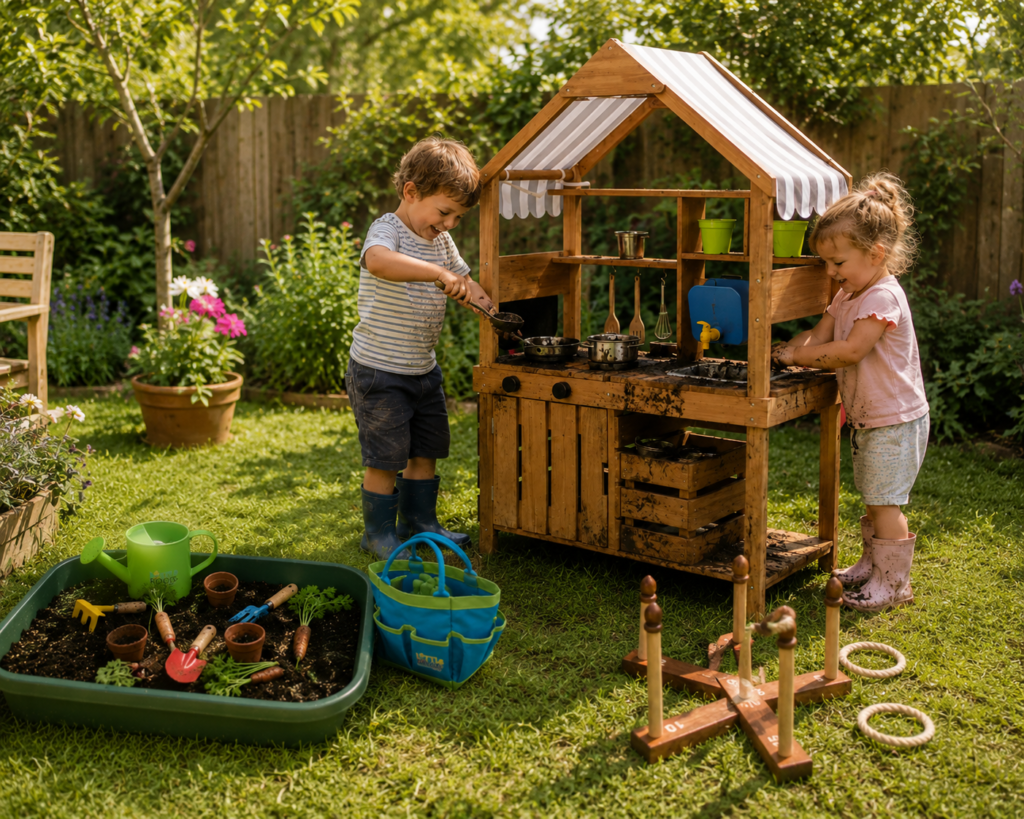
We’ve found that children rarely need much when they’re outside. Give them a few simple tools and a little freedom, and the garden quickly becomes part of the play.
The outdoor toys we’ve included below aren’t the loudest or the flashiest. They’re the ones that encourage movement, curiosity and independent exploration—while leaving plenty of room for imagination.
Disclaimer: This post contains affiliate links. As an Amazon Associate I earn from qualifying purchases at no extra cost to you.
What Makes a Good Outdoor Toy for Toddlers?
Outdoor environments naturally provide more space, freedom of movement and sensory variety than most indoor spaces.
A toddler may start with a watering can, then become interested in a ladybird, a stick, a puddle or a patch of soil.
Unlike many indoor toys, outdoor play often expands naturally into exploration rather than requiring constant new entertainment.
This is one reason simple outdoor activities frequently hold a toddler’s attention longer than more complicated toys.
When choosing outdoor toys, we generally look for activities that:
✔ encourage movement and exploration
✔ can be used independently
✔ don’t rely on batteries or flashing lights
✔ can be enjoyed in different ways over time
✔ support open-ended play rather than providing all the entertainment
Simple toys often end up being used far more than complex ones because they leave more room for a child’s own ideas.
A Favourite for Open-Ended Play: Wooden Mud Kitchen with Working Tap
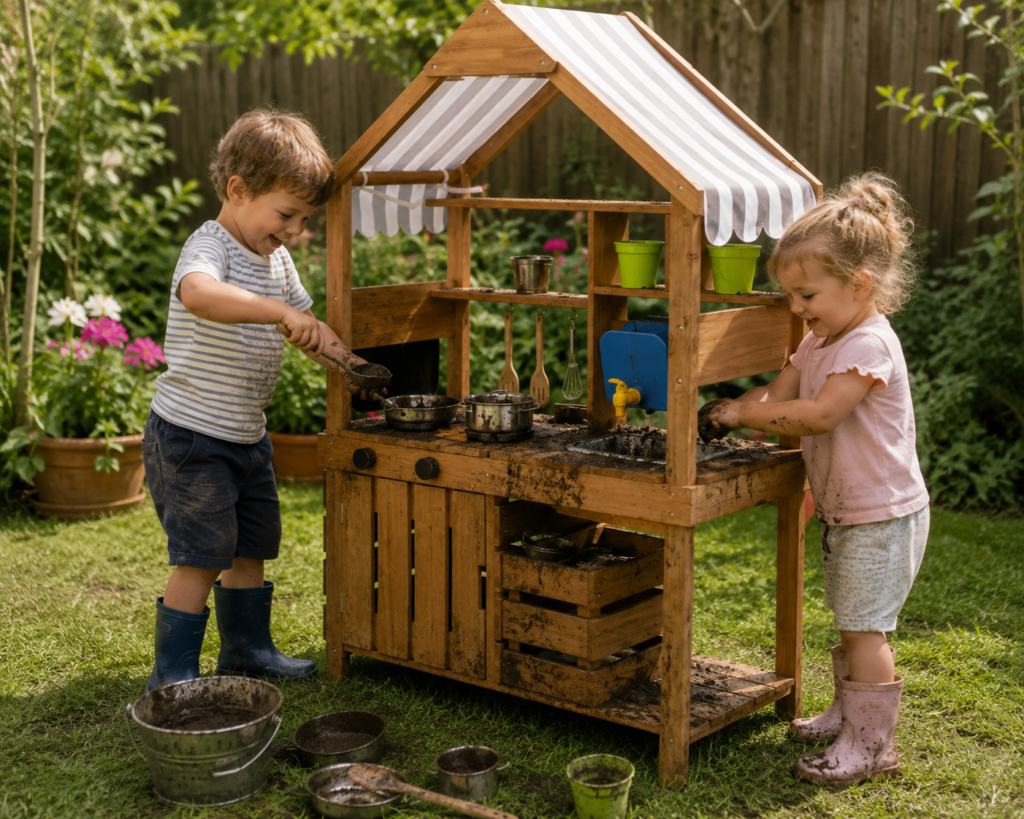
If we had to choose just one outdoor toy for summer, it would probably be a mud kitchen.
Mud kitchens combine practical life skills, sensory play and imaginative play in a way that few other toys manage.
Toddlers can:
- pour water
- mix mud
- wash stones
- collect leaves and flowers
- transfer materials between containers
- create imaginary meals
Because there is no single “correct” way to use it, children often return to mud kitchens again and again.
We particularly like models that include a working water tap, as the addition of running water creates even more opportunities for experimentation and independent play.
Can You Make a Mud Kitchen Yourself?
Absolutely.
A simple mud kitchen can be made from old shelves, pallets, an outdoor table or even a few bowls and containers. In many cases, children are just as interested in the mud, water and loose parts as they are in the kitchen itself.
If you enjoy DIY projects, building your own can be a fun and budget-friendly option. For families who prefer a ready-made solution, this wooden mud kitchen includes a working tap, storage shelves and plenty of space for imaginative outdoor play.
Ultimately, toddlers rarely care whether a mud kitchen was homemade or shop-bought. What matters most is having access to mud, water and open-ended materials they can explore again and again.
Best for Nature Exploration: Birdwatching
Some of the best outdoor activities simply help children notice what’s already around them.
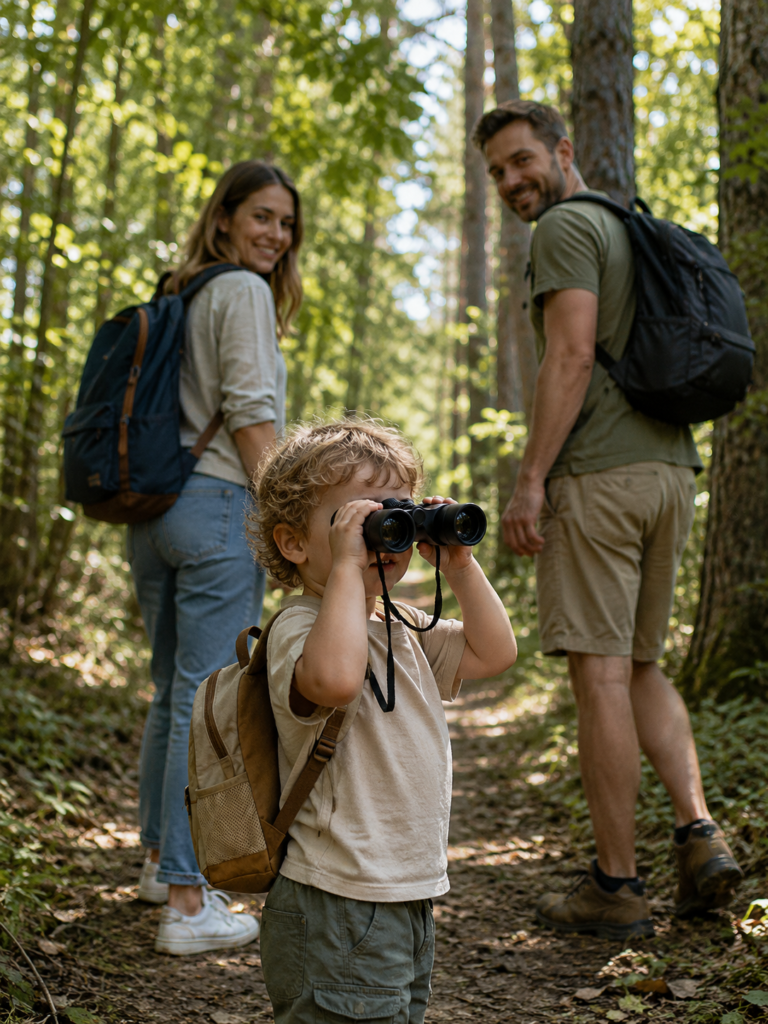
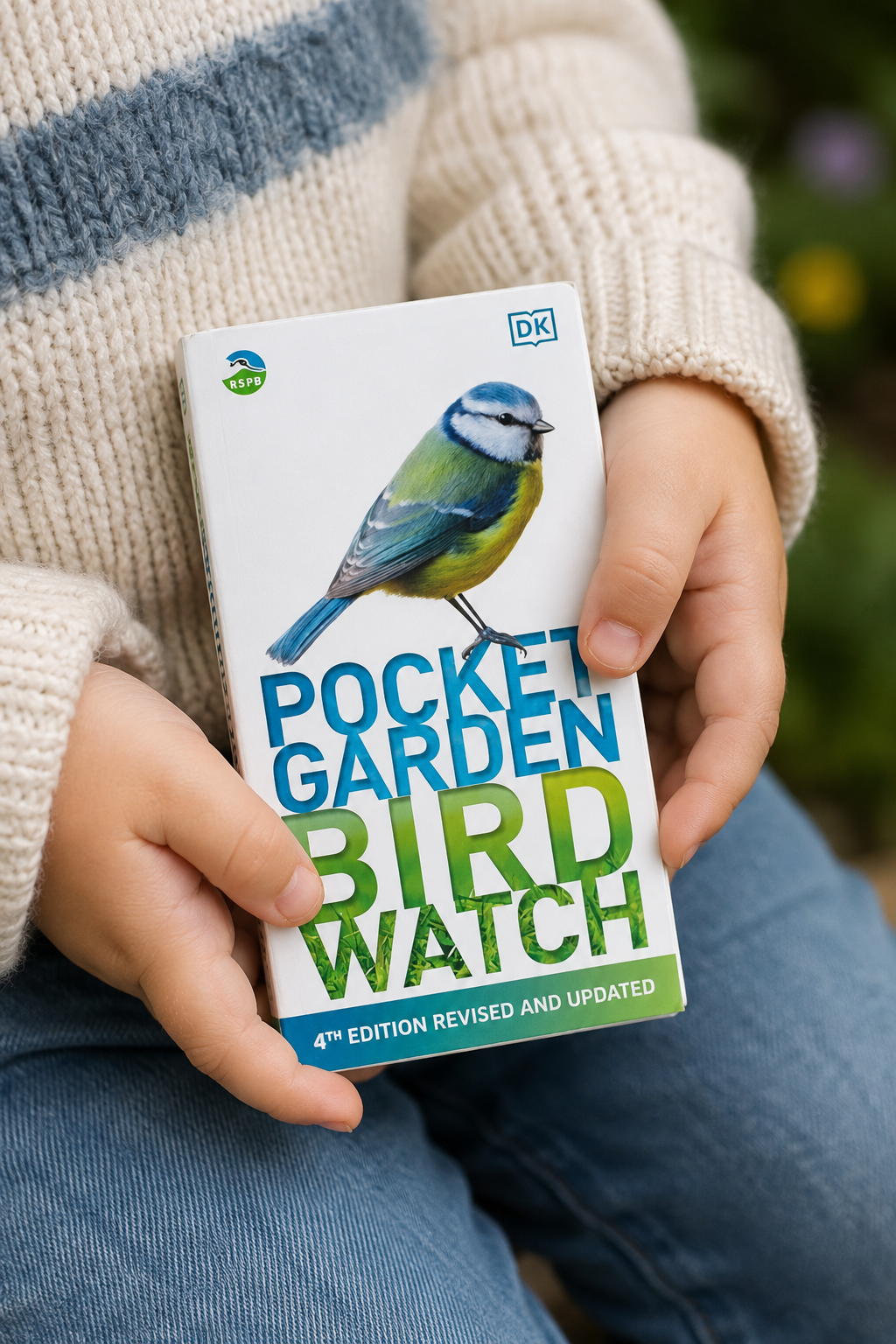
Birdwatching encourages toddlers to slow down, listen for different calls and spot movement in trees, gardens and local parks. A simple bird guide also creates lovely opportunities to name familiar garden birds and talk about the natural world together.
We found that a pair of children’s binoculars and a pocket bird guide were often all that was needed to turn an ordinary walk into an adventure. Even younger toddlers enjoy comparing colours and pointing to birds they recognise, while older children often become surprisingly excited about spotting familiar visitors.
If you’re exploring with a younger sibling too—or your little explorer has a habit of giving up halfway home—a comfortable baby carrier can make nature walks much easier while leaving your hands free for little discoveries. → Best Baby Carriers (UK)
Unlike many outdoor activities, birdwatching needs very little preparation. Whether you’re in the garden, at the park or simply looking out of the window, it’s an easy habit to build into everyday family life.
Recommended:
Our daughter has always had a soft spot for tiny books, so this little pocket guide was an instant favourite. She loves carrying it on walks and proudly flipping through the pages whenever we stop to look for birds.
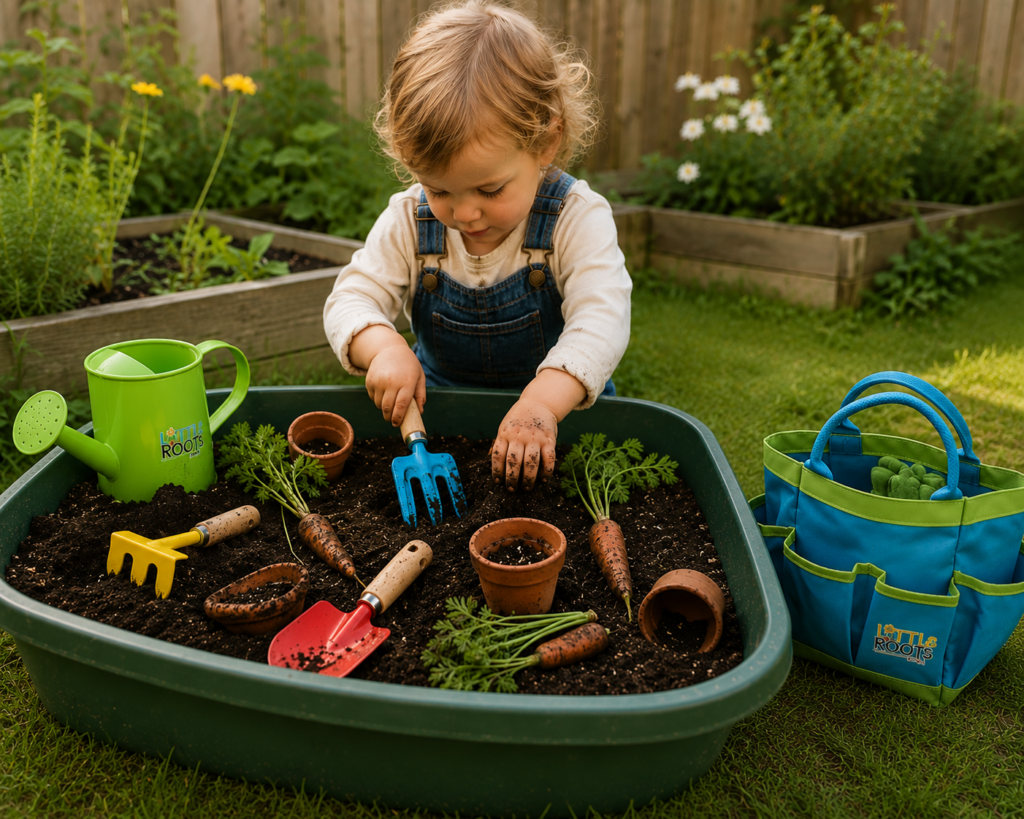
Best for Practical Life: Child-Sized Gardening Set
Many toddlers genuinely enjoy helping.
Child-sized gardening tools allow them to participate in real outdoor tasks rather than watching from the sidelines.
Simple activities such as:
- digging soil
- watering plants
- carrying leaves
- planting seeds
can provide surprisingly long periods of focused engagement.
Unlike many toys, gardening tools also give children a sense that their work has a genuine purpose.
Unlike many toys, gardening tools also give children a sense that their work has a genuine purpose.
Many families find that toddlers are happiest when they are able to participate in real activities alongside adults rather than being given separate “children’s tasks”. If your child enjoys helping in the kitchen as much as they enjoy helping in the garden, you may also like:
→ Best Learning Towers for Toddlers — Safe and Practical Options
Our daughter particularly loved planting peas and checking on them each day to see how much they had grown. Peas are a great first plant for toddlers because they germinate relatively quickly, are easy to handle, and can usually be sown throughout much of spring and summer. Watching something they planted themselves gradually emerge from the soil can be surprisingly exciting at this age.
Best for Sensory Play: Sand and Water Bench
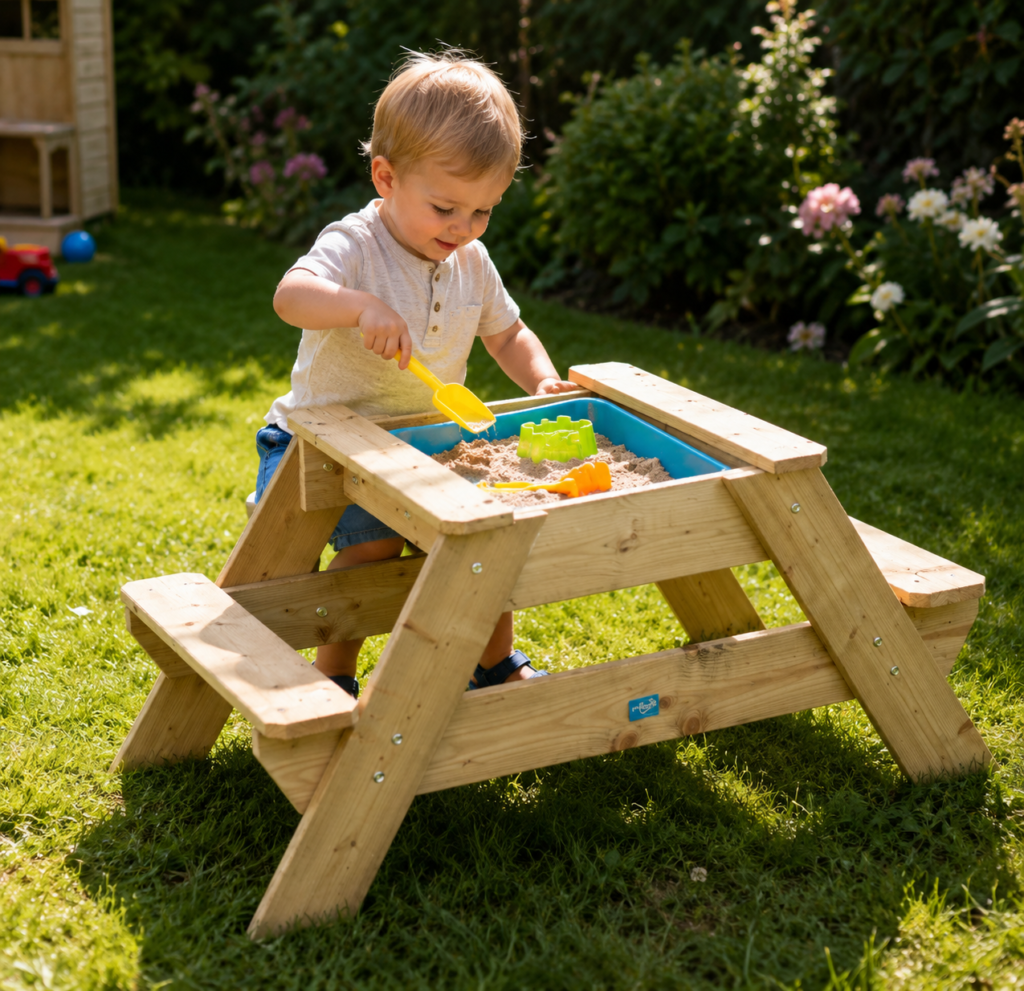
Sand and water play remain favourites for a reason.
Pouring, scooping, filling and emptying containers naturally support coordination while providing rich sensory experiences.
A combined sand and water bench works particularly well because it allows children to experiment with different materials in one place.
Many toddlers will happily spend long periods transferring water, creating channels, building sand structures or simply exploring how different objects behave.
As an added bonus for parents, most of the mess tends to stay contained to one area of the garden rather than gradually migrating through the entire house.
Because there is no fixed outcome, children can return to the same activity again and again while discovering something different each time.
Best Outdoor Games for Families, Siblings and Playdates
While many outdoor activities can be enjoyed independently, some work particularly well when siblings, friends or parents join in.
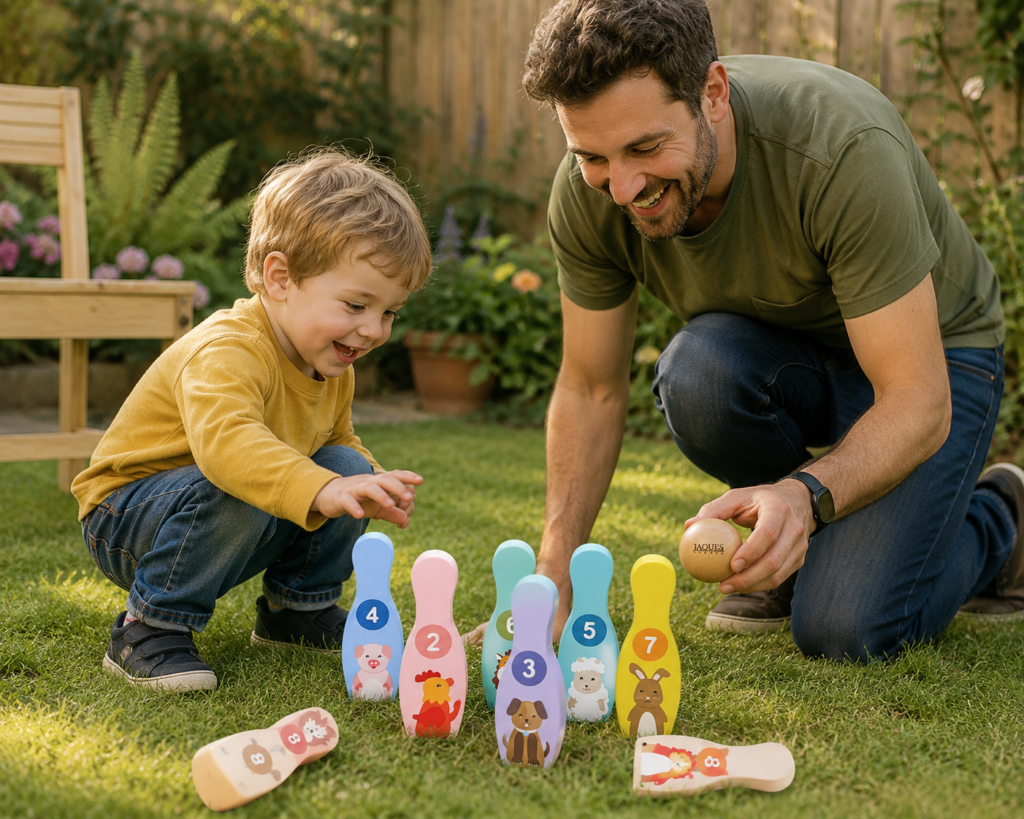
Wooden Skittles
Wooden skittles are simple, durable and easy for toddlers to understand.
Rolling a ball, knocking down skittles and resetting them provides plenty of opportunities for movement and coordination.
Unlike many electronic games, they also work just as well for mixed ages, making them useful for family gatherings and garden playdates.
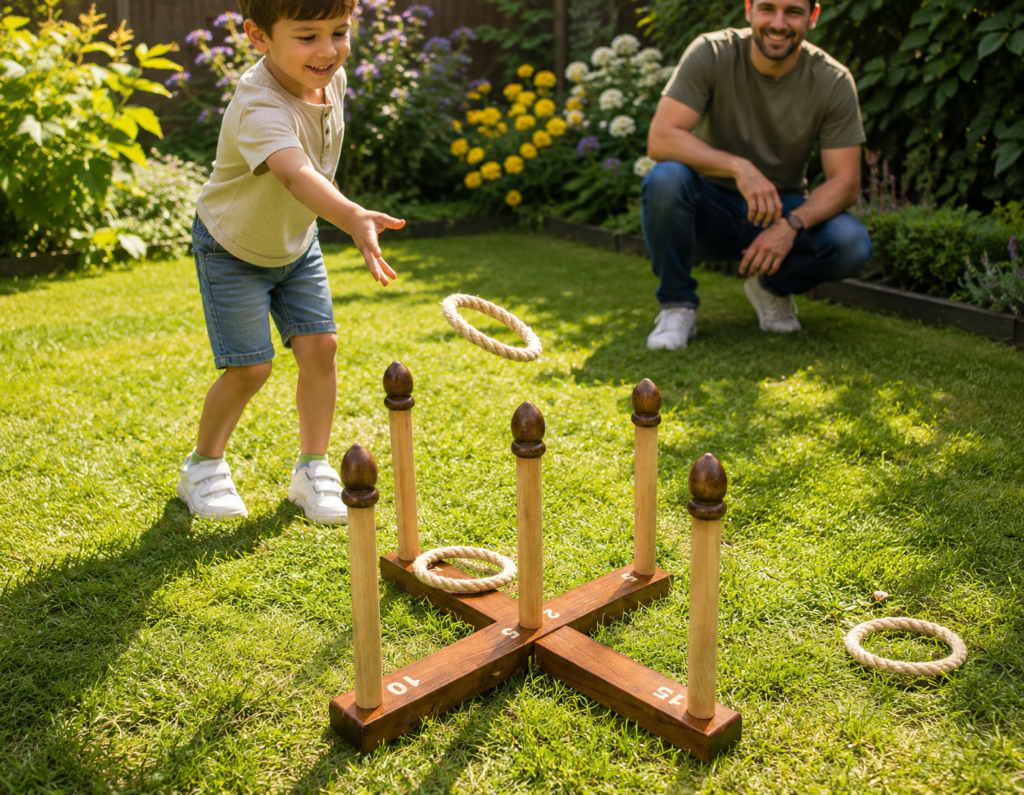
Wooden Quoits
Quoits is another classic outdoor game that grows with children.
Younger toddlers may simply enjoy throwing the rings, while older children begin aiming more accurately and introducing simple rules.
Because the game can be adapted for different ages and abilities, it often remains useful long after many other toddler toys have been outgrown.
We found these worked particularly well when grandparents visited, as toddlers could join in without needing to understand complicated rules.
Why Outdoor Play Often Matters More Than the Toy
One thing we’ve noticed repeatedly is that toddlers rarely play exactly as adults expect.
A toy might initially capture their attention, but the real value often comes from everything that happens around it.
A gardening set leads to collecting worms.
A mud kitchen leads to mixing flower petals and leaves.
A birdwatching kit leads to spotting insects and exploring the garden.
The toy provides the invitation, but the environment often provides the real learning and discovery.
→ Montessori Summer Outdoor Activities for Toddlers
Outdoor Play Essentials
Shop Now: Available at Polarn O. Pyret
Summer adventures often mean long days in the garden, park and at the beach. We always make sure our daughter has a lightweight sun hat and UV clothing so she can explore comfortably while staying protected from the sun.
We’ve had a particularly good experience with Polarn O. Pyret’s UV collection, which has held up beautifully through plenty of outdoor play. We also swear by E45 Kids & Baby Sunscreen SPF50+—it’s one of the few sunscreens we’ve found that isn’t sticky and has been gentle even on our daughter’s eczema-prone skin.
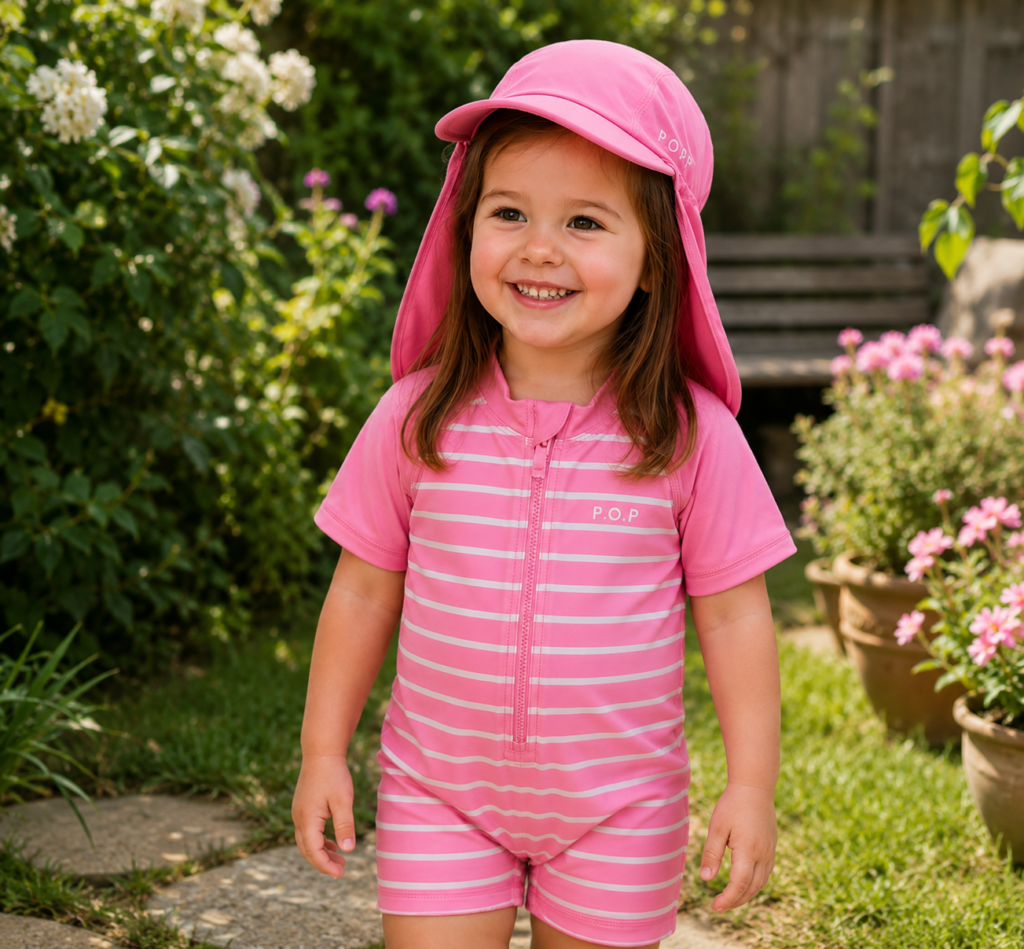
Browse UV Clothing & Sun Hats at Polarn O. Pyret
Final Thoughts
The best outdoor toys don’t need to entertain children constantly.
In many cases, the most successful toys are simply tools that encourage toddlers to move, explore, experiment and interact with the world around them.
Summer offers a wonderful opportunity to take some of the mess, noise and energy outdoors.
And often, once toddlers are given the opportunity, they discover that the garden itself provides plenty of entertainment.
FAQs
What are the best outdoor toys for a 2 year old?
The best outdoor toys for 2 year olds are usually the ones that encourage exploration rather than providing all the entertainment. Mud kitchens, gardening sets, sand and water play, simple garden games and nature activities often hold attention longer than highly structured toys because children can use them in different ways as they grow.
How do I keep my toddler entertained outside in summer?
Many toddlers don’t need constant entertainment outdoors. Providing a few simple tools such as watering cans, gardening equipment, sand and water toys or a mud kitchen often creates opportunities for longer periods of independent play. Outdoor environments naturally encourage children to explore, collect, investigate and invent their own activities.
What outdoor toys encourage independent play?
Outdoor toys that support independent play tend to be open-ended rather than highly structured. Mud kitchens, gardening tools, sand and water tables, birdwatching activities and loose parts such as buckets and containers allow toddlers to experiment and explore at their own pace without requiring constant adult direction.
Are mud kitchens worth it for toddlers?
Many parents find that mud kitchens offer excellent value because they combine sensory play, practical life skills and imaginative play in a single activity. Unlike many toys that are used in one specific way, mud kitchens can be used for pouring, mixing, collecting natural materials, washing objects and creating pretend meals.
What can I grow with a toddler in the garden?
Peas are often one of the easiest plants to grow with toddlers because they are simple to handle, germinate relatively quickly and can usually be sown throughout much of spring and summer. Other toddler-friendly options include sunflowers, radishes, lettuce and strawberries.
Are outdoor toys better than indoor toys?
Outdoor toys are not necessarily better, but they often provide opportunities that are difficult to recreate indoors. Outdoor environments allow for larger movements, messier sensory experiences and greater exploration of nature. In many cases, the environment itself becomes part of the play experience.
How can I create a Montessori-inspired outdoor play space?
A Montessori-inspired outdoor space focuses on real experiences, freedom of movement and opportunities for independent exploration. Gardening tools, water play, nature observation, simple outdoor games and access to natural materials often align well with Montessori principles because they encourage hands-on learning through real-world activities.
What outdoor toys do toddlers actually use the most?
Many families find that the most-used outdoor toys are often the simplest ones. Mud kitchens, watering cans, gardening tools, sand and water play equipment and simple garden games tend to remain engaging because children can return to them repeatedly and discover new ways to play.