Simple Montessori Summer Activities for Toddlers (Ages 2–3)
Summer with a toddler can feel strangely exhausting.
The days are longer and slower, yet somehow louder, messier and more emotionally chaotic. Toys lose their appeal within minutes, routines drift, and by mid-afternoon everyone seems slightly overstimulated — including the adults.
One thing I didn’t expect when my daughter was a toddler was how little interest she had in most of the activities I spent time setting up.
The things she returned to again and again were usually much simpler.
A bucket of water.
A watering can.
A sponge.
A basket for collecting leaves.
The more I tried to entertain her, the harder it often became to keep her engaged. But when I slowed down and involved her in ordinary activities, she seemed calmer, more focused, and far more content.
This is one of the reasons Montessori-inspired summer activities work so well for toddlers.
At ages 2–3, children are naturally drawn to movement, repetition, water, carrying, pouring, collecting, and participating in everyday life. They do not necessarily need elaborate crafts, expensive toys, or a different activity every twenty minutes.
More often, they need meaningful ways to take part in the world around them.
And summer already provides most of the materials naturally.
Disclaimer: This post contains affiliate links. As an Amazon Associate I earn from qualifying purchases at no extra cost to you.
What Makes a Montessori Summer Activity Different?
Many toddler activities are designed to entertain children.
Montessori activities are designed to involve them.
The difference sounds small, but it often changes how a child responds.
Instead of moving quickly from one activity to the next, Montessori encourages toddlers to participate in everyday experiences such as watering plants, washing a table, carrying a basket, or preparing a snack.
These activities may look simple from an adult perspective, but they give young children something many toys cannot: a sense of purpose.
The goal is not to keep toddlers occupied every minute of the day.
It is to create opportunities for concentration, movement, independence, and meaningful participation in family life.
That is often why the simplest summer activities end up being the ones toddlers return to most.
Outdoor Montessori Summer Activities for Toddlers (Ages 2–3)
Outdoor environments naturally support toddler development — especially in summer.
Water Play That Actually Holds Attention
If there is one activity that consistently earns its place during summer, it is water play.
The surprising thing is how little you usually need.
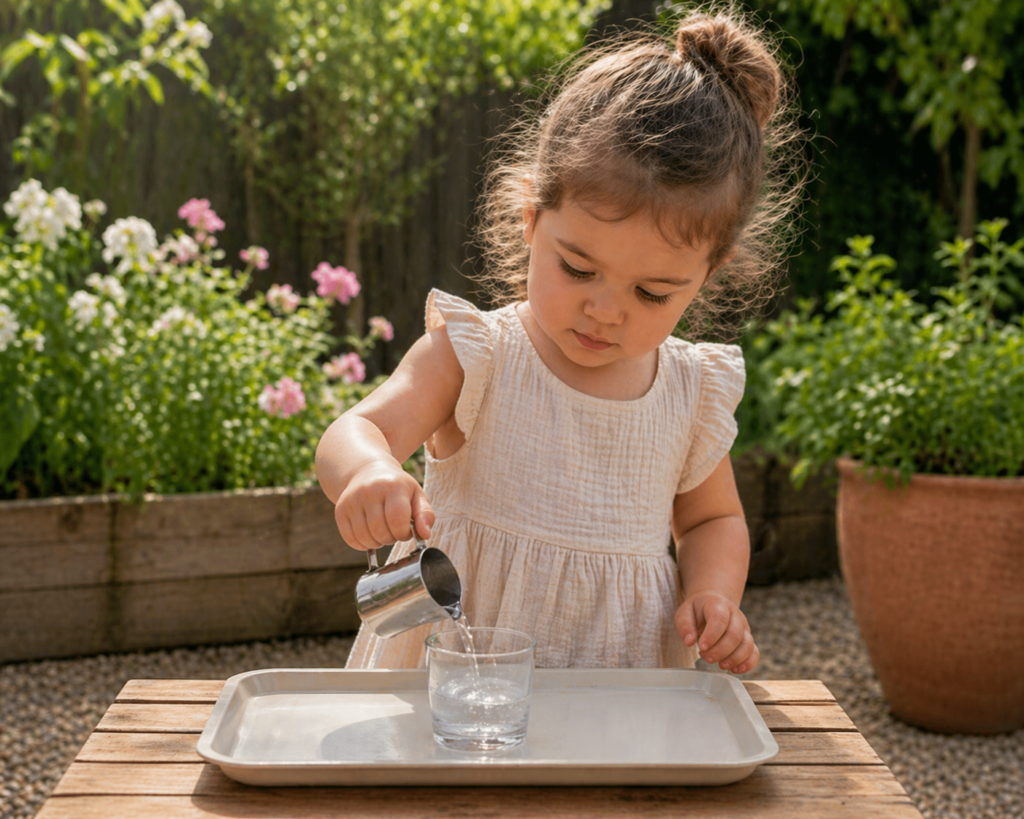
A small bowl, child-sized jug, sponge, cups, or ladle is often enough to keep a toddler engaged for far longer than many toys.
What looks repetitive to us is often exactly what toddlers enjoy.
They pour.
Transfer.
Refill.
Squeeze.
Then do it all over again.
I’ve often found that the appeal isn’t the water itself. It’s having something real to do. The activity has a clear purpose, immediate feedback, and endless opportunities for repetition.
Another surprisingly effective activity is simply washing things outdoors.
A shallow tub of warm water, a cloth, and a few toy animals, cars, or even collected pebbles can hold a toddler’s attention for a remarkably long time.
There is something deeply satisfying about cleaning, scrubbing, rinsing, and repeating.
And unlike many highly structured activities, water play tends to feel calming rather than overstimulating.
If your toddler enjoys pouring activities, a small stainless steel milk pitcher is often easier for little hands to control than larger plastic containers.
Nature Collecting Walks (Parks, Paths, Garden)
One thing I have learned about walks with toddlers is that they rarely go where you expect them to go.
A ten-minute walk can become thirty minutes because a child wants to stop and examine every flower, pebble, stick, or fallen leaf along the way.
Rather than rushing through it, try leaning into that curiosity.
Giving your toddler a simple task can make an ordinary walk feel purposeful:
“Let’s find three leaves.”
“Can you spot a white stone?”
“Let’s collect things that feel smooth.”
The goal is not to collect anything impressive. It is simply to slow down and notice what is already there.
A small basket or cloth bag often becomes part of the fun. Toddlers enjoy carrying their collection, taking it home, and looking through it again later.
Some of our simplest summer afternoons have been spent doing exactly that.
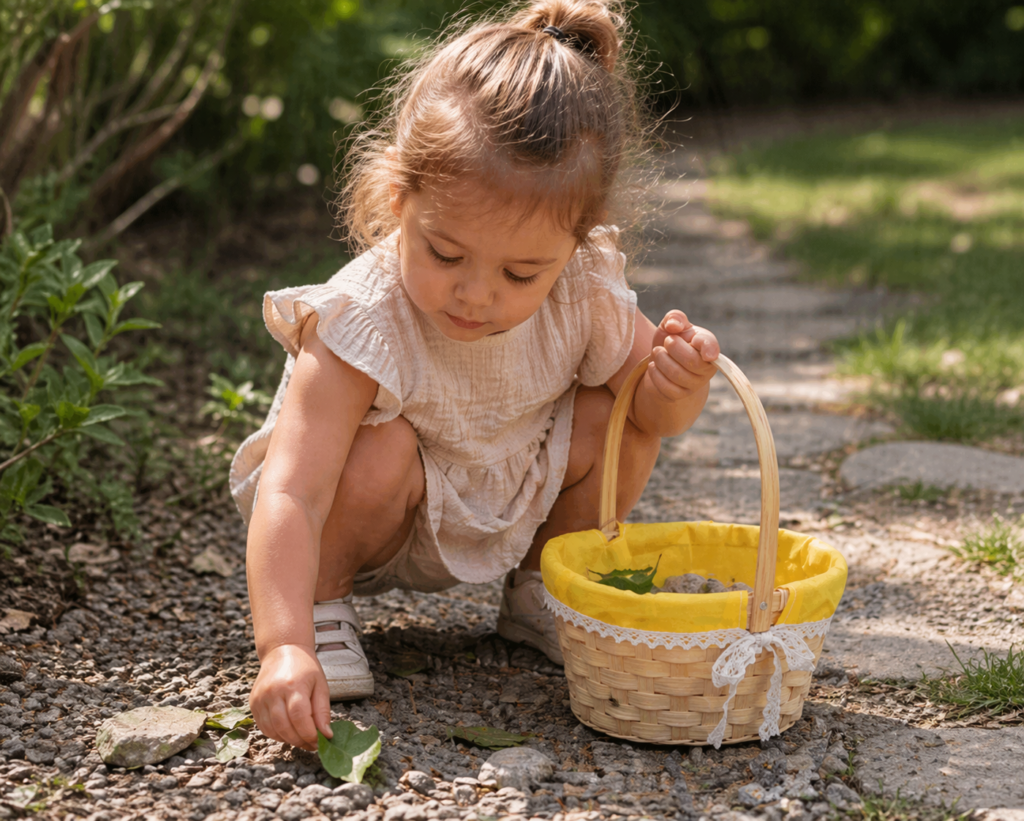
We reuse the same small basket throughout the year for nature walks, foraging, seasonal collections, or simple practical life activities at home
Carrying Things
One thing many parents notice during the toddler years is that children constantly want to carry things.
Buckets.
Watering cans.
Bags.
Rocks.
Random sticks they become deeply attached to for reasons known only to them.
It can be inconvenient when you’re trying to get somewhere, but toddlers are often drawn to activities that involve carrying, transporting, pushing, and moving objects from one place to another.
That is one reason simple outdoor tasks can be so satisfying at this age.
Carrying a watering can across the garden.
Helping transport picnic items.
Moving a small bucket of water.
Taking garden tools from one place to another.
The task itself is often less important than the process.
Many toddlers seem to enjoy the responsibility of having a job to do and the physical effort involved in completing it.
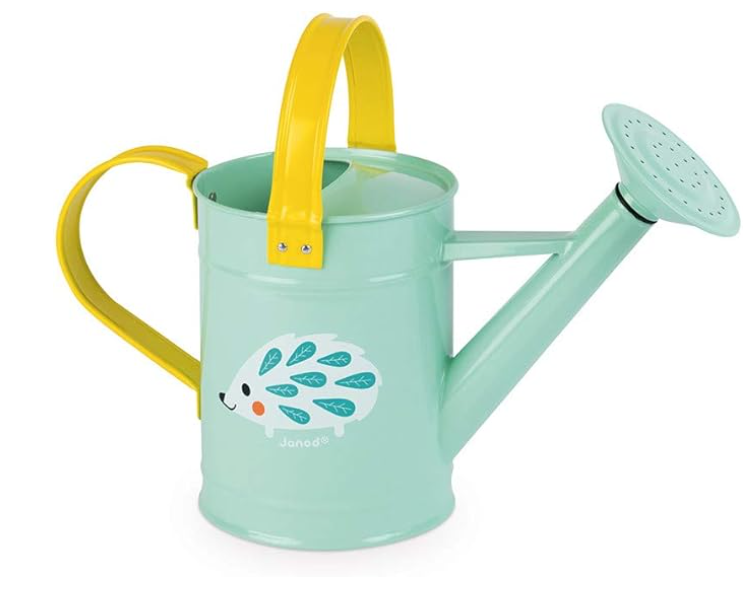
If your child enjoys carrying and pouring, a lightweight watering can is often easier for small hands to manage independently than larger garden equipment.
View watering can on Amazon UK
Montessori Gardening Activities Without the Pressure
When people picture gardening with toddlers, they often imagine carefully planting seeds and watching vegetables grow together.
In reality, most toddler gardening looks a lot less impressive.
At least in our house.
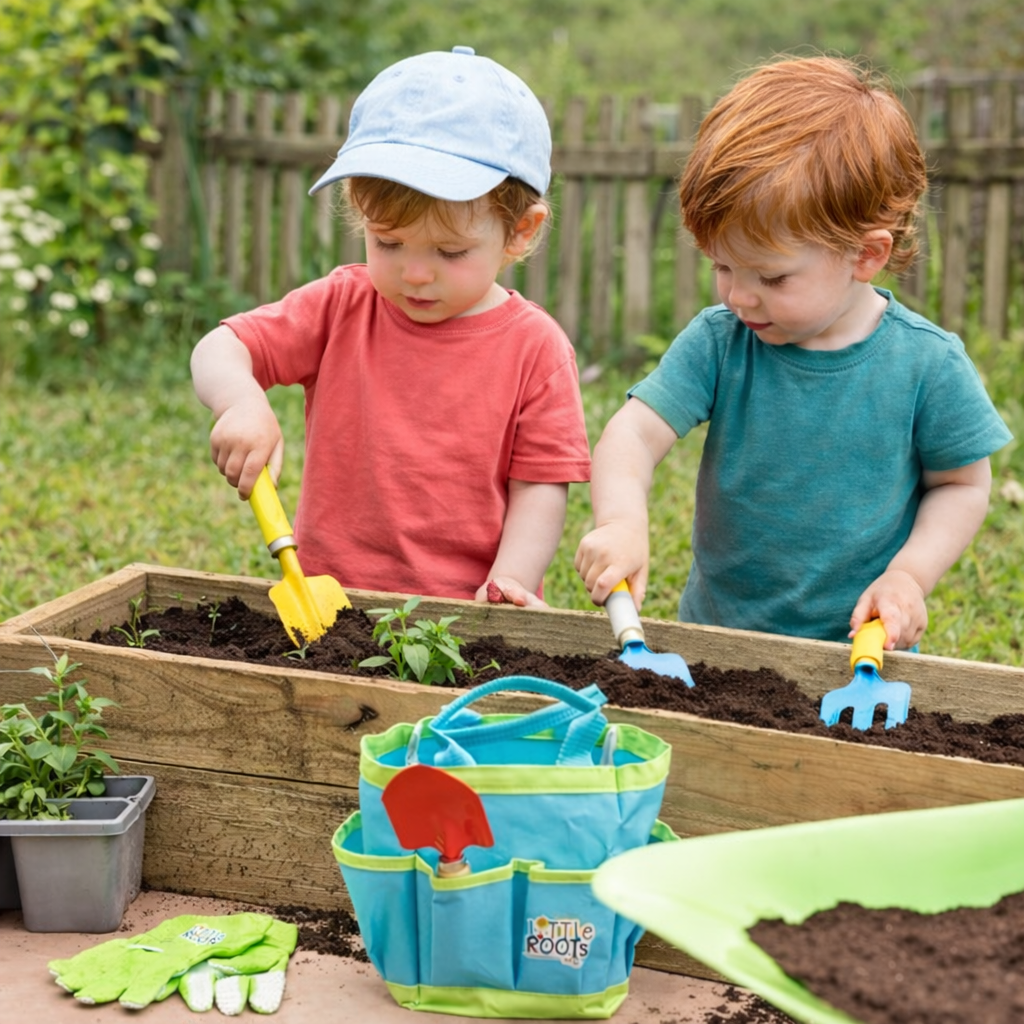
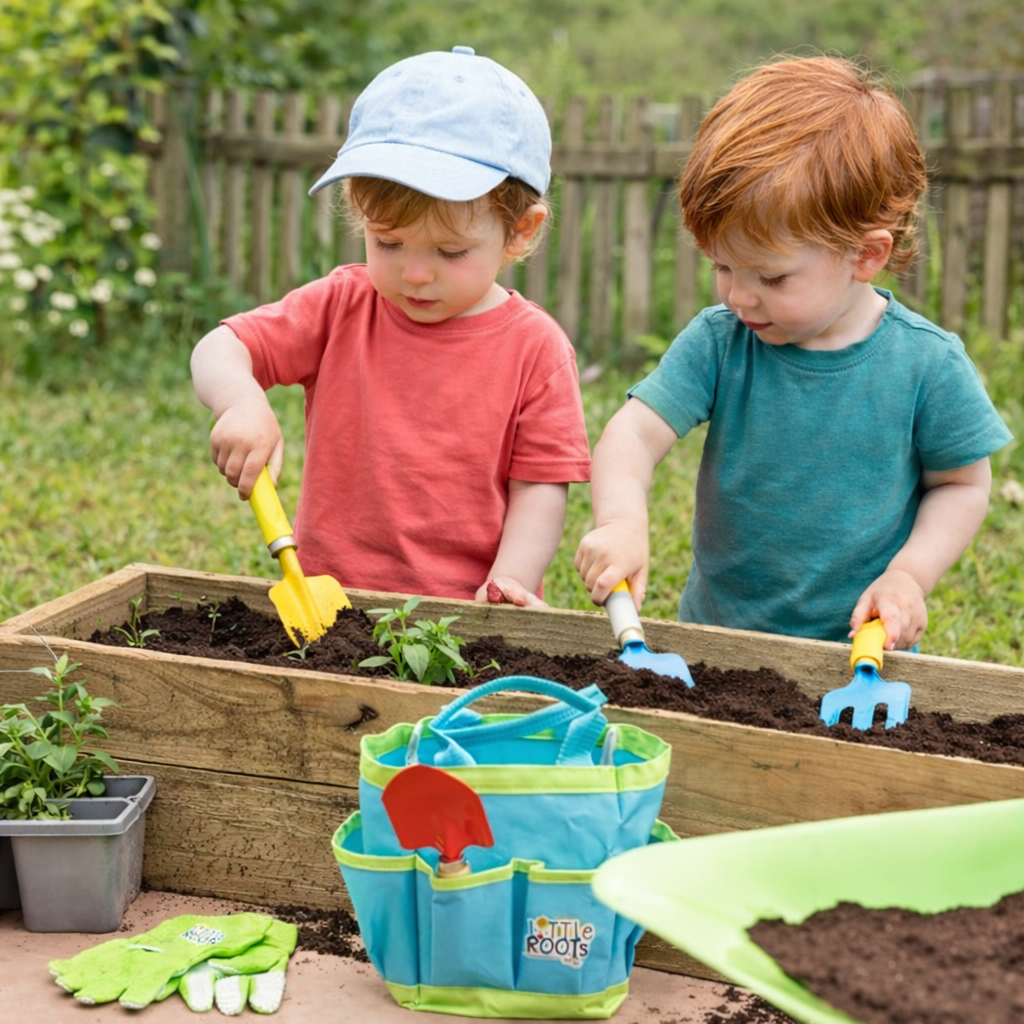
Toddlers are usually far more interested in digging holes, moving soil, carrying watering cans, and pouring water than they are in the end result.
And that’s perfectly fine.
At this age, gardening is less about growing things and more about participating.
Watering plants.
Digging in the soil.
Pulling a few weeds.
Helping move a pot from one place to another.
The process is often far more engaging than whatever eventually grows.
You also do not need a dedicated children’s garden or a complicated setup.
A few pots on a patio, a small patch of soil, or even helping care for existing plants can provide plenty of opportunities for involvement.
If your toddler enjoys gardening, child-sized tools can make it easier for them to participate independently because the materials are designed for small hands rather than adult-sized jobs.
Simple Montessori Summer Routines at Home
Summer is also the perfect time to slow down and involve toddlers in everyday routines.
Water Cleaning Activities (Indoors or Outside)
Water Cleaning Activities (Indoors or Outside)
One of the unexpected benefits of summer is that daily routines often become less rushed.
There is a little more time to let toddlers help.
And for many children, helping is far more engaging than being entertained.
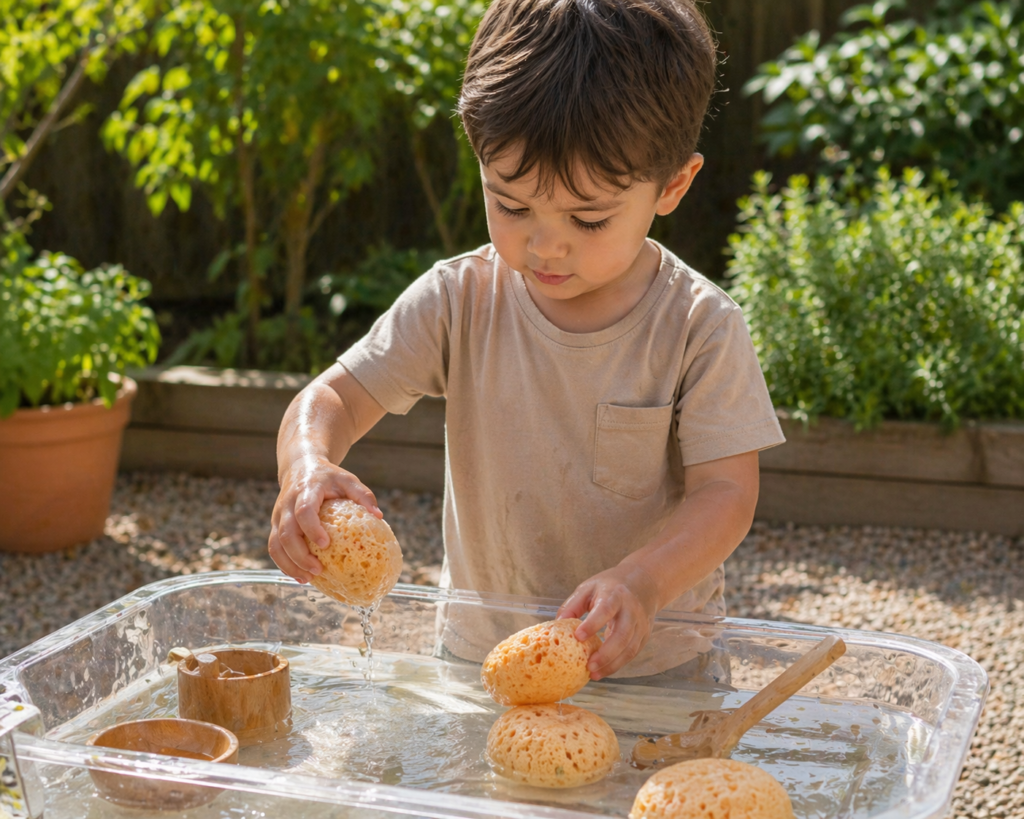
A bowl of water, a sponge, and a cloth can turn ordinary household tasks into an activity all by themselves.
Toddlers often enjoy:
- wiping tables
- washing fruit
- pouring water
- carrying snacks
- cleaning spills
- helping with laundry
Many of these simple tasks fall under what Montessori calls practical life activities — everyday opportunities for children to participate in caring for themselves and their environment.
→ Montessori Practical Life for Babies & Toddlers
None of these activities require elaborate preparation, but they allow children to participate in real family life.
I’ve often noticed that when toddlers are given meaningful ways to help, everyday routines become smoother. They feel involved rather than constantly being directed from one task to the next.
The activity itself is usually simple.
The feeling of contribution is what makes it so engaging.
A few high-quality small sponges (no harmful chemicals or dyes), child-sized jug, or low snack tray can make these routines easier because they allow toddlers to take part more independently.
Self-Serving Snacks & Drinks
Summer can be a surprisingly good time to encourage a little more independence around meals and snacks.
Without the usual rush of getting out of the house, toddlers often have more opportunities to practise everyday skills at their own pace.
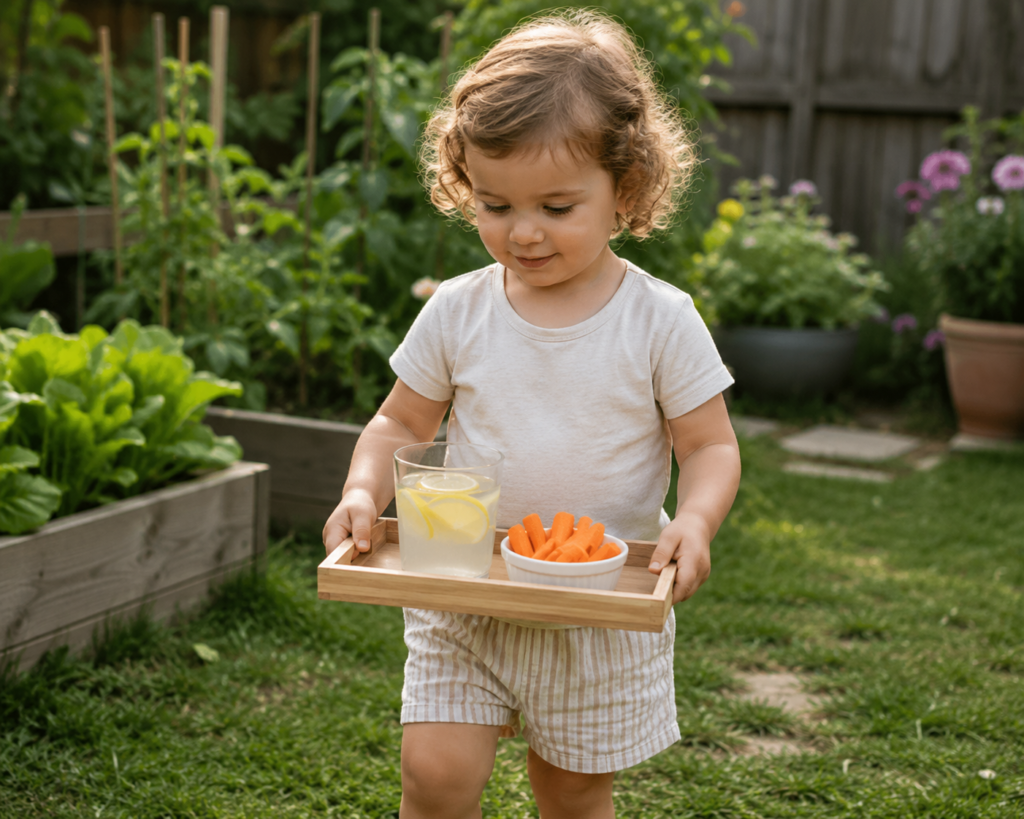
At ages 2–3, many children are capable of helping with simple tasks such as:
- pouring small amounts of water
- carrying their plate
- serving a snack
- helping prepare the table
What often makes the biggest difference is not teaching the skill itself, but making it possible.
A small tray, child-sized jug, accessible snacks, or easy-to-reach utensils allow toddlers to do more for themselves without needing constant help from an adult.
One thing many parents notice is that children are often more cooperative when they feel capable.
Being trusted to pour their own drink or carry their own snack may seem like a small thing, but for a toddler it can feel like meaningful participation in family life.
If you’re working on mealtime independence, this guide can help:
→ How to Teach Your Toddler to Eat Independently
Helping With Laundry
If there is one household job toddlers seem surprisingly drawn to, it is laundry.
They enjoy loading clothes into the machine.
Moving wet washing into a basket.
Handing over socks.
Carrying small items from one room to another.
The task itself is simple, but it gives toddlers a genuine way to contribute to family life.
During summer, when there are often more towels, swimwear, and outdoor clothes to wash, these small opportunities appear naturally throughout the day.
And unlike many activities, they require almost no preparation from the parent.
Simple Errands (Real Participation)
Many everyday errands become easier when toddlers are given a small role to play.
They can carry a lightweight item.
Help place groceries into a basket.
Hand something to the cashier.
Push a small trolley.
These jobs may seem insignificant, but they give toddlers a sense of purpose.
What often causes frustration is not the errand itself. It’s being expected to stand still while adults do everything around them.
Participation changes the experience completely.
A Quiet Shift That Makes Summer Easier
One of the biggest mindset shifts I experienced as a parent was realising that toddlers do not always need us to create more.
They rarely need a packed schedule.
They rarely need constant entertainment.
More often, they need time, space, and meaningful ways to participate in everyday life.
That might look like watering plants.
Washing toys.
Carrying a basket.
Helping with laundry.
Pouring a drink.
The activities themselves are simple.
But they allow toddlers to practise independence, concentration, and responsibility in ways that feel natural rather than forced.
And in my experience, those are often the activities children return to most.
Not because they are the most exciting.
But because they make toddlers feel genuinely involved in the world around them.
Many Montessori summer activities look simple because the learning happens through repetition itself.
At ages 2–3, toddlers are building coordination, concentration, sensory regulation, and independence through everyday experiences such as pouring, carrying, washing, and repeating familiar movements.
Research in early childhood development consistently shows that young children learn best through active participation and real-life experiences rather than passive entertainment alone.
In other words, the activities that seem simplest to us are often doing the most work.
Source: Selman & Dilworth-Bart, “Routines and Child Development: A Systematic Review” (2021).
FAQs
What are Montessori summer activities for toddlers?
Montessori summer activities focus on simple, real-life tasks like pouring, cleaning, gardening, and outdoor exploration that build independence and coordination.
What can I do with my 2-year-old in summer?
You can involve your toddler in water play, nature walks, gardening, and everyday routines like snack preparation and cleaning.
Do toddlers need structured activities in summer?
No, toddlers benefit more from simple, repeatable activities and real-life participation rather than structured or overly stimulating setups.
Are outdoor activities important for toddlers?
Yes, outdoor activities support movement, sensory development, and emotional regulation, making them especially important during summer.
You Might Also Find Helpful