How to Set Up A Calm Montessori Bedroom for Babies
A baby bedroom usually needs far less than modern nursery culture suggests.
In the early months, babies are adapting to light, sound, feeding, sleep and movement. A Montessori-inspired bedroom reflects that: calm, uncluttered and designed to give your baby space to move and develop at their own pace.
It doesn’t need to be perfectly minimalist. The best setup is simply one that feels safe, practical and easy for your family to live with.
Disclaimer: This post may contain affiliate links. As an Amazon Associate, I earn from qualifying purchases at no extra cost to you.
Start With How You’ll Use the Room
A Montessori baby bedroom doesn’t necessarily have to be where your baby sleeps overnight from the beginning. In fact, UK safer sleep guidance recommends that babies sleep in the same room as their parents for at least the first six months, in their own separate sleep space.
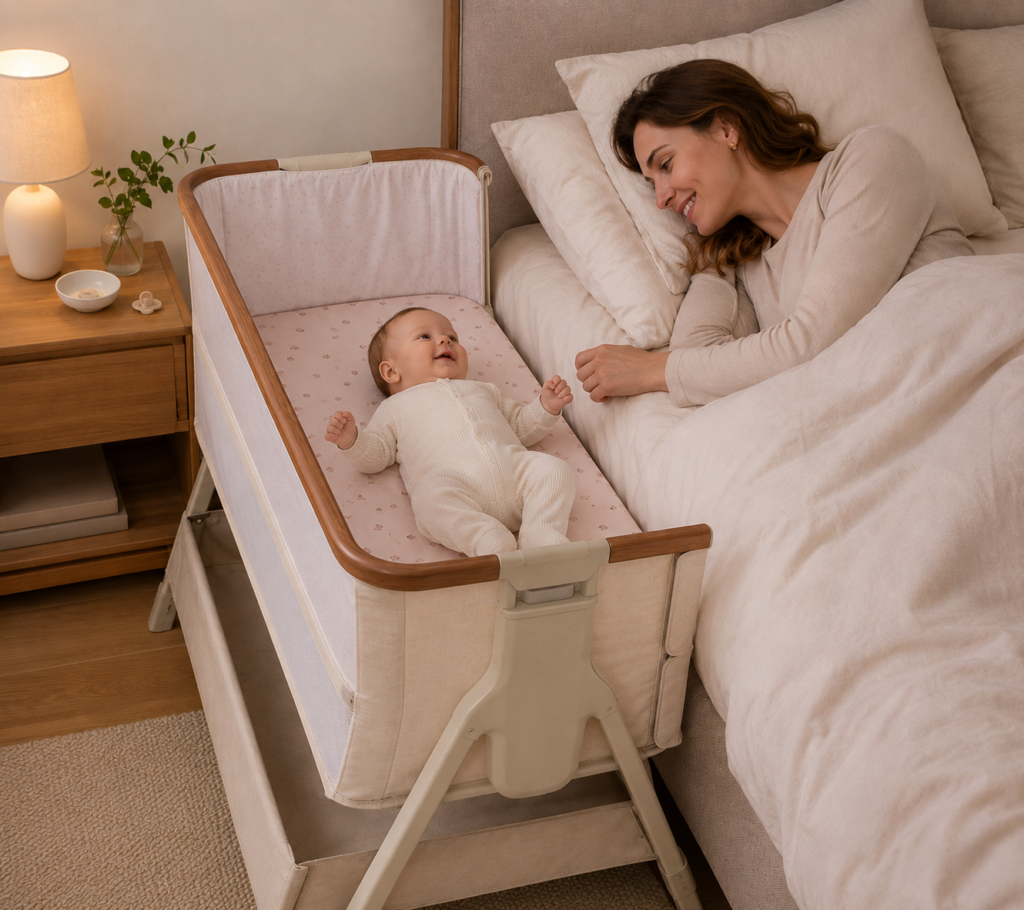
That’s what we did with our daughter. She slept beside us at night in a bedside crib, while her bedroom became a daytime space for naps, getting dressed, tummy time, floor play and quiet moments together.
This meant we could create the room around what she actually needed at that stage — plenty of room to move, simple storage and a calm environment — rather than trying to recreate a traditional nursery.
We personally used the Tutti Bambini CoZee® Breeze beside our bed and found it particularly useful during the frequent feeding, settling and disrupted sleep of those early months. It kept her close while still giving her a separate sleep space.
Setting Up the Room
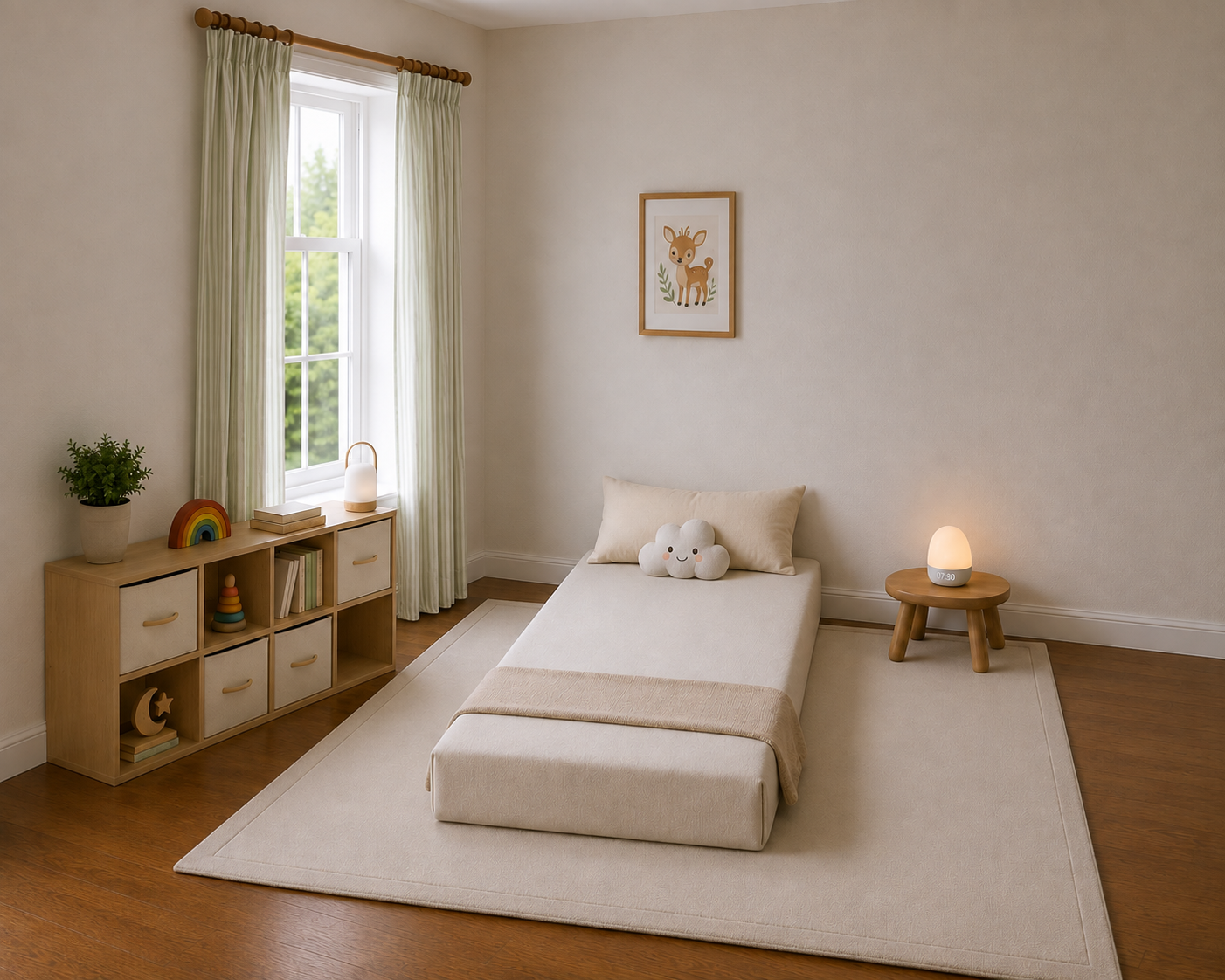
With that in mind, the room itself can stay surprisingly simple. Rather than filling it with traditional nursery furniture and decor, focus on a few practical areas that support safe sleep, movement and everyday care.
Here’s how to set it up:
1. Create a Simple and Safe Sleep Area
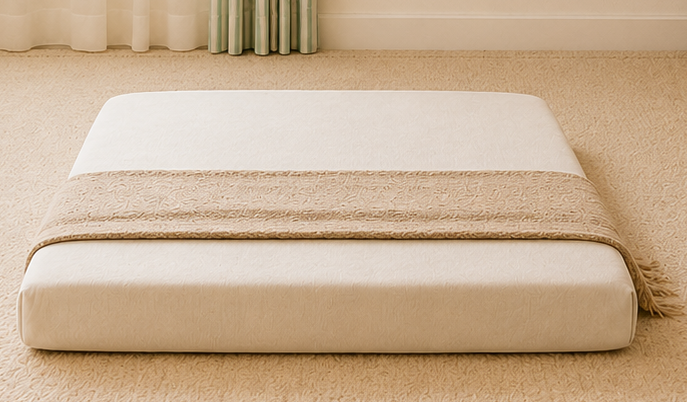
A floor-level sleep space is one of the features most commonly associated with a Montessori bedroom. The idea is simple: as children become more mobile, it gives them greater freedom to get in and out of bed independently.
For babies, however, safe sleep guidance should always come first. For the first six months, babies are safest sleeping in their own clear, flat sleep space in the same room as you, including for daytime naps.
Always place your baby on their back on a firm, flat and hypoallergenic, OEKO-TEX 100 certified mattress and keep their sleep space free from pillows, duvets, cot bumpers, soft toys and other loose or padded items. If using a floor mattress, leave a clear gap on all sides between the mattress and any walls or furniture to reduce the risk of your baby becoming trapped between them.
Once your baby becomes mobile or may have access to the room without you immediately beside them, think beyond the mattress and treat the whole room as part of their sleep environment:
- Secure furniture to the wall
- Keep blind and electrical cords out of reach
- Address accessible electrical hazards
- Remove anything that could be pulled down, trapped against or climbed on
- Consider a safety gate if your child could leave the room and access stairs or other areas that aren’t fully childproofed
You don’t necessarily need a dedicated Montessori bed frame, either. A suitable firm mattress at floor level can offer the same freedom of movement — what matters is that both the sleep surface and the surrounding room are appropriate for your child’s age and developmental stage.
If you’re considering a floor bed, you may find this guide helpful:
→ Best Floor Beds (UK) — Safe, Simple & Montessori-Inspired
2. Blackout Curtains for Sleep and Rest
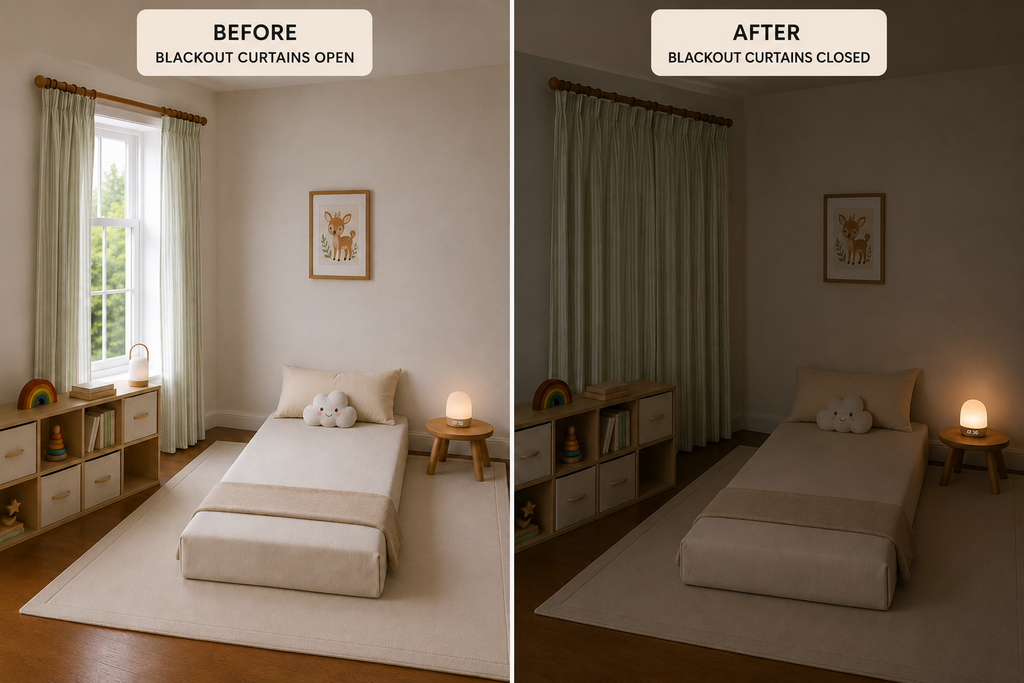
One thing we underestimated was how useful blackout curtains would be. We still wanted the room bright during the day, but being able to darken it for naps and bedtime helped create a more predictable sleep environment.
We chose 100% cotton blackout curtains, which felt softer and less nursery-like than many synthetic options while still blocking light effectively. They were particularly useful during bright summer evenings and early morning sunrises.
3. Add a Soft Night Light
When setting up a baby’s bedroom, simple products that serve more than one purpose can help keep the space calm and uncluttered.
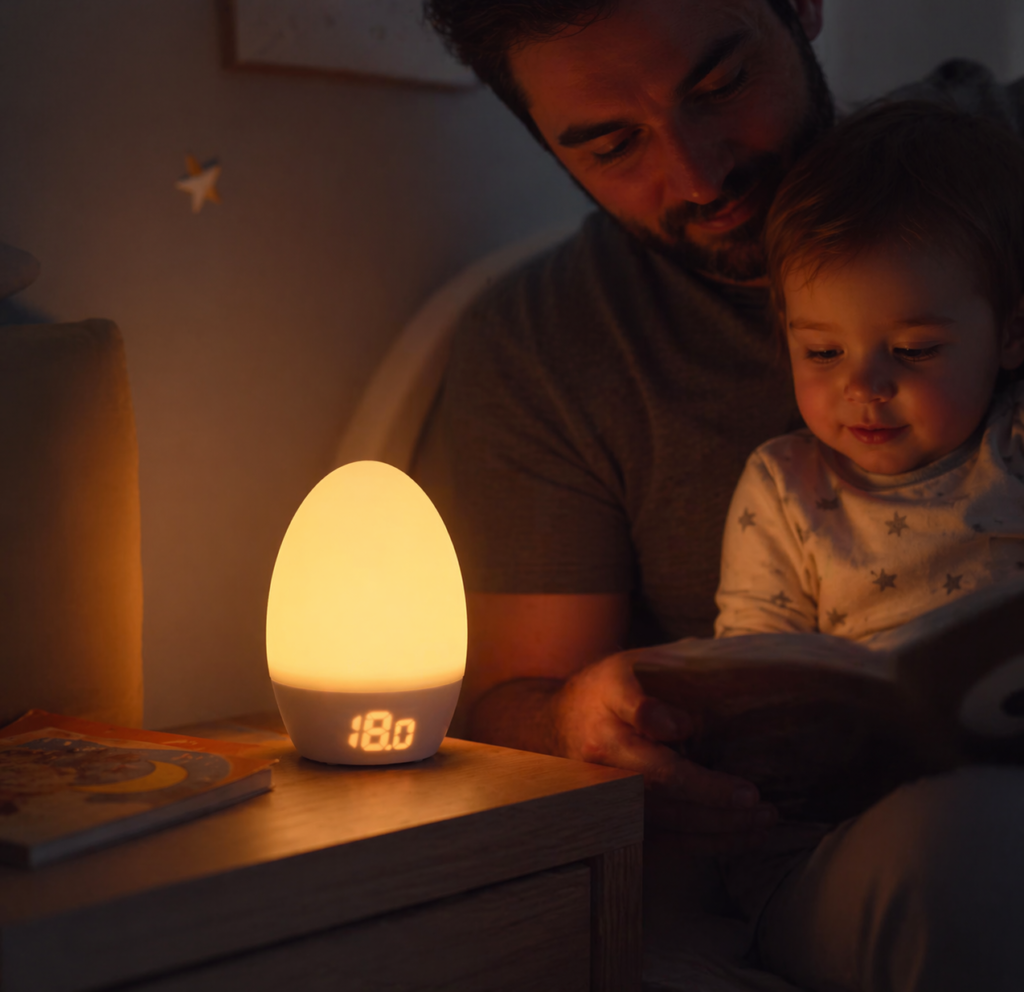
The Tommee Tippee Groegg2 combines a gentle night light with a room thermometer, making it easy to check the nursery temperature without needing a separate device. The soft glow provides enough light for overnight checks and feeds without fully waking your baby or disrupting the calm atmosphere of the room.
Tommee Tippee Groegg2 Night Light
4. Simple Clothing Storage
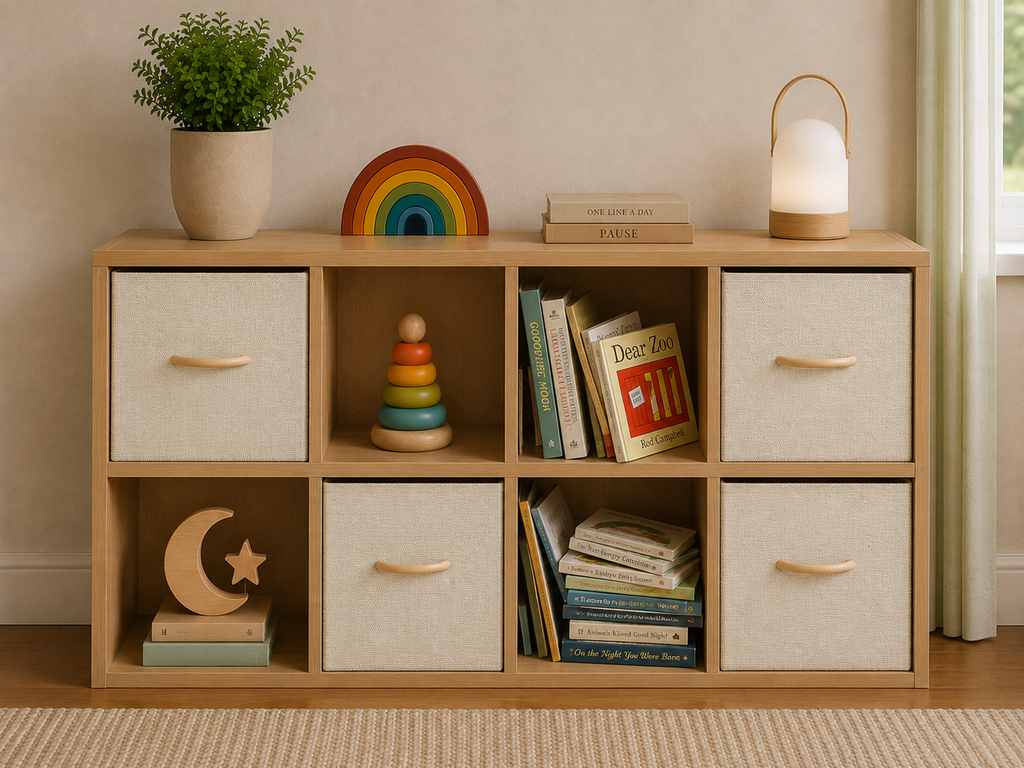
Babies need surprisingly little clothing storage. We used a low solid-wood cube shelf with baskets and kept the system very simple: pyjamas in one, tops in another, bottoms in another, and outerwear such as cardigans and jackets in another. That was essentially all we needed.
What made the shelf particularly useful was how easily it adapted as our daughter grew. Once we no longer needed it for baby clothes, it became an accessible toy and book shelf in our living room.
It ended up being one of the few nursery purchases we continued using for years rather than months.
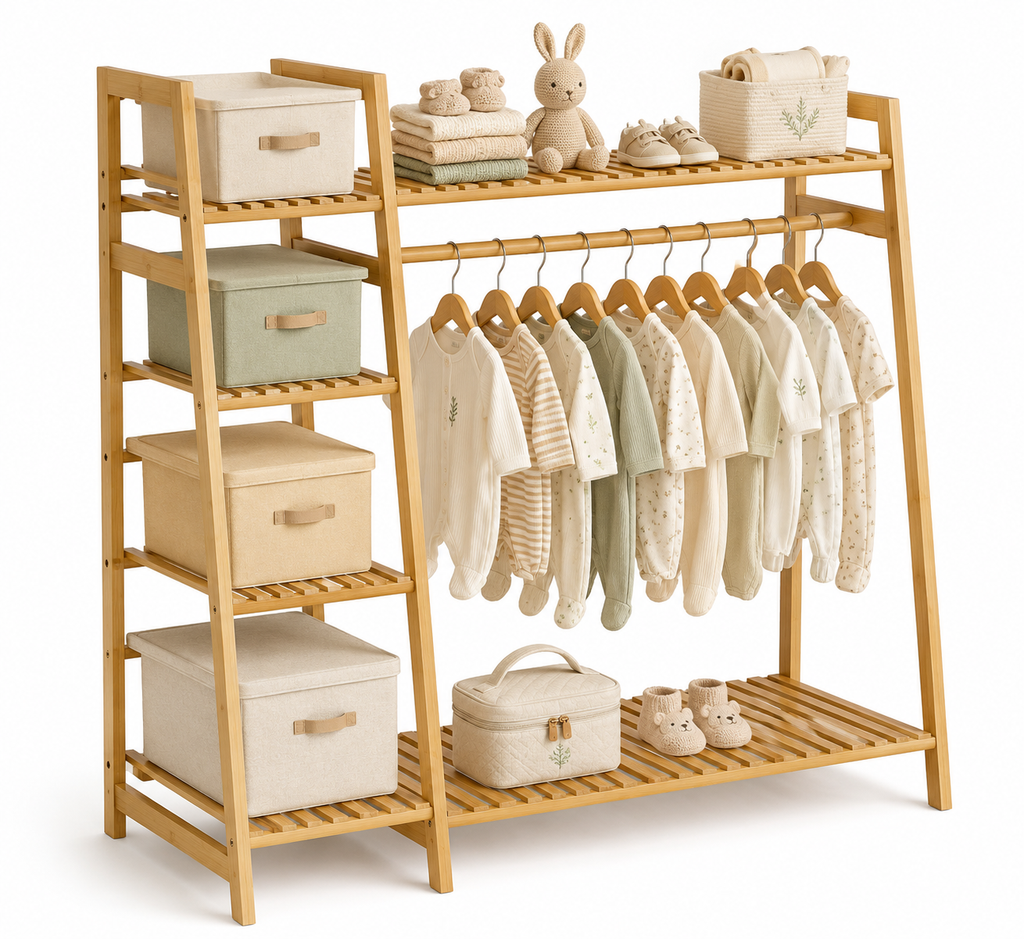
If you feel you’ll need a little more space for clothes, a larger bamboo clothes storage unit can be a practical alternative. It gives you plenty of room for hanging clothes as well as baskets for folded items, while still keeping everything easy to see and access. Although a unit like this is sturdy and difficult to tip during normal use, it should still be properly anchored to the wall, just like any other piece of furniture in a baby-proofed room.
5. A Simple Movement Area
One of the most useful parts of a Montessori baby room isn’t the bed or decor — it’s simply having somewhere your baby can move freely.
Stretching, kicking, rolling and eventually crawling all help babies explore their bodies and surroundings. You don’t need an elaborate activity area:
- a comfortable, supportive floor mat or rug
- enough open space to move
We initially imagined a much more elaborate nursery, but many of our daughter’s awake periods were simply spent on a floor mat beside us. We preferred neutral, wipable playmats that provided a comfortable surface without adding lots of visual stimulation.
View soft, baby-friendly playmat
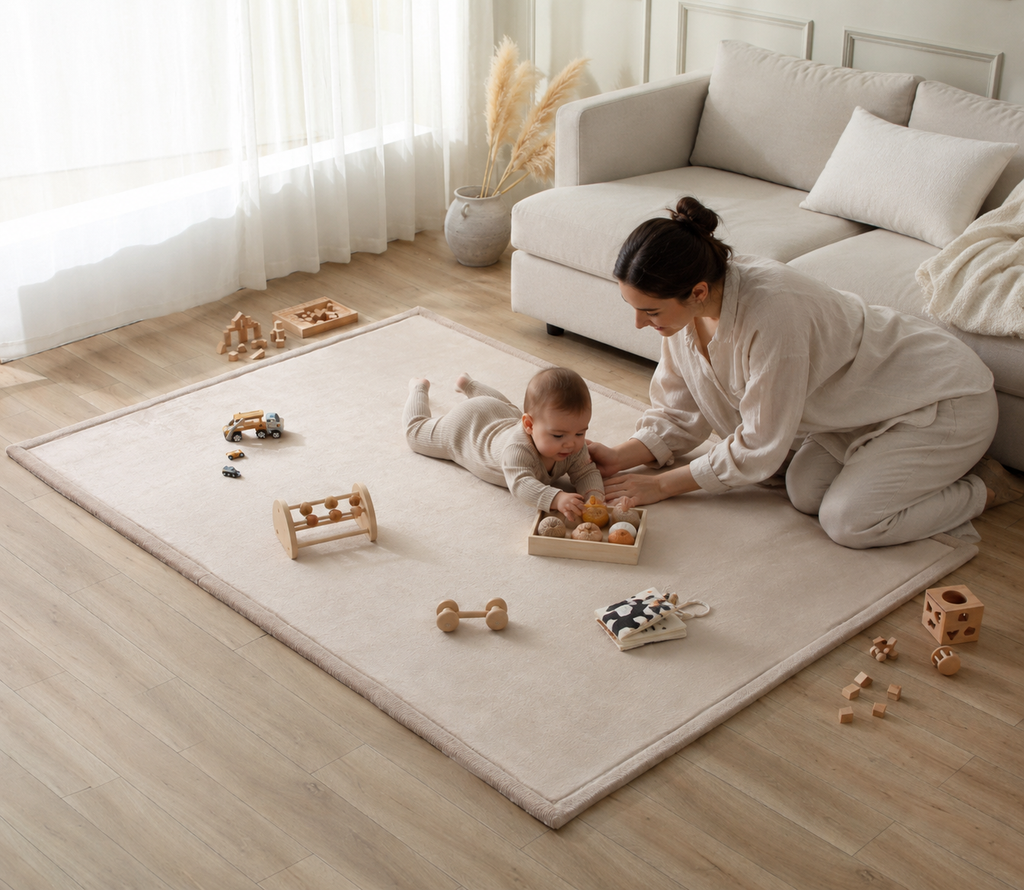
If you’re looking for something that blends into your home a little more easily, we’ve rounded up our favourite Playmats That Look Like Rugs. They’re soft enough for everyday floor play while still feeling like part of your living space rather than a typical baby product.
If you’re looking for simple tummy time ideas instead, we’ve shared some of the activities that worked well for us here:
→ Tummy Time Activities for Babies
If you want to add one activity, a simple play gym is enough. A wooden play gym gives young babies something to look at and reach towards while still leaving plenty of room for unrestricted movement. We preferred one with just a few hanging elements rather than lots of lights, sounds and attached activities.
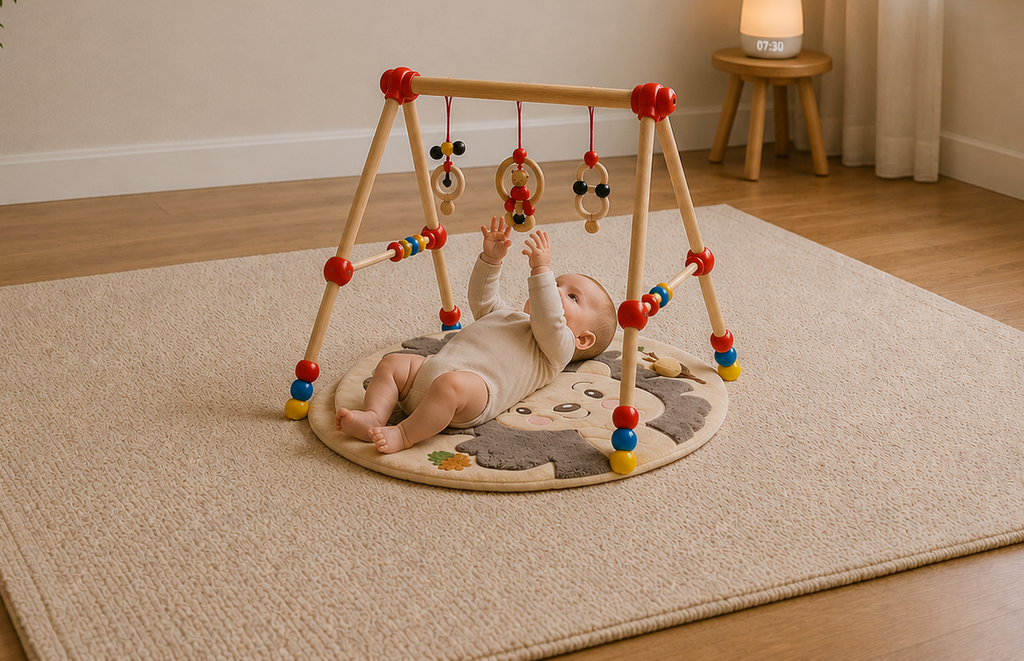
A smaller, washable play mat can also be useful for catching the inevitable dribbles and spit-up, especially if you have a regular rug underneath.
As babies become stronger and more mobile, many families also begin looking for toys and activities that encourage crawling and independent movement. If you’re approaching that stage, you may find our guide to Simple and Safe Montessori Toys That Encourage Crawling helpful.
What to Leave Out
A calm baby room is often as much about what you leave out as what you add.
Things you probably don’t need:
– decorative cushions
– busy wall decals or prints
– battery-operated toys
– constant background sound
– excess furniture or storage
– crib bumpers
– large toy bins
– swings as permanent sleep solutions
– overstimulating decor
– themed nursery sets
The Room Should Support Parents Too
During the first year, you may spend more time in the nursery than your baby does. Night feeds, changing and settling all become part of daily life.
Comfortable seating, soft lighting and easy-to-reach essentials can therefore matter far more than elaborate decor. If the room works well for you, it’s usually easier to keep it calm for your baby too.
Creating a calm sleep environment often extends beyond the nursery itself. If you’re currently navigating room-sharing, night feeds or safe bedsharing, you may also find this guide helpful:
→ Co-Sleeping With a Baby: Bedsharing Safety Guide for New Parents
Final Thoughts
A Montessori-inspired baby bedroom doesn’t need much: a safe place to sleep, space to move, soft lighting and a setup that’s easy to live with.
At this age, Montessori is less about encouraging independence and more about creating a calm, respectful environment in which development can unfold naturally.
Frequently Asked Questions About Montessori Baby Bedrooms
What is a Montessori bedroom for a baby?
A Montessori baby bedroom is designed to support natural development through freedom of movement, low sensory overwhelm and a calm, predictable environment. Rather than focusing on decorative themes or large amounts of equipment, Montessori spaces typically prioritise safe sleep, accessible movement areas and simple, practical furnishings.
Do babies need a Montessori nursery?
No. Babies do not need a dedicated Montessori nursery to benefit from Montessori principles.
Many families simply incorporate Montessori-inspired ideas into an existing nursery or bedroom by creating space for movement, reducing unnecessary clutter and choosing furniture that remains useful as their child grows.
Can a baby sleep on a Montessori floor bed?
Some families choose to use a Montessori floor bed from infancy, while others start with a bedside crib and transition later.
If using a floor bed, parents should carefully consider current safe sleep guidance, mattress firmness, room preparation, airflow and their child’s developmental stage before making any changes to their sleep setup.
When should you move from a bedside crib to a floor bed?
There is no single age that works for every child.
Many families continue using a bedside crib during the early months and consider a floor bed later in infancy or toddlerhood as mobility, sleep patterns and family preferences evolve.
What should be in a Montessori baby room?
Most Montessori baby rooms include only a few key elements:
- a safe sleep space
- a movement area with room for floor play
- simple clothing and toy storage
- soft lighting
- books and age-appropriate developmental materials
The goal is not to fill the room with equipment but to create an environment that feels calm and functional.
What colours are best for a Montessori nursery?
Montessori nurseries often use softer, natural colours because they create a calmer visual environment.
This does not mean everything needs to be beige or neutral. The goal is simply to avoid excessive visual clutter and overwhelming patterns that may compete for a baby’s attention.
Are play gyms Montessori?
Simple wooden play gyms are often used in Montessori-inspired spaces because they encourage visual tracking, reaching and independent exploration without relying on lights, sounds or electronic features.
However, the specific product matters less than providing opportunities for natural movement and exploration.
What flooring is best for a baby’s movement area?
Babies spend a significant amount of time on the floor during the first year.
Many parents find that a soft, supportive rug or washable play mat works well because it provides a comfortable surface for tummy time, rolling, crawling and everyday floor play while remaining practical for daily family life.
Do babies need toys in their bedroom?
Usually far fewer than many parents expect.
During the first year, babies often benefit more from interaction with caregivers, movement opportunities and simple developmental materials than from large collections of toys.
A small number of carefully chosen items is often enough.
Is Montessori expensive?
Not necessarily.
One of the biggest misconceptions about Montessori is that it requires expensive furniture or highly styled spaces. In reality, many Montessori-inspired baby bedrooms contain fewer items than traditional nurseries because the focus is on simplicity, function and long-term usability.
What is the most important part of a Montessori baby bedroom?
The most important goal is creating an environment that feels calm, safe and manageable for both baby and parent.
A simple sleep space, opportunities for movement, practical storage and a low-stimulation environment will often have a greater impact than specialised furniture or decorative features.
You Might Also Find Helpful