
Simple and Safe Montessori Toys That Encourage Crawling
One day, your baby reaches for something that’s just a little too far away.
They stretch. Rock forwards. Push backwards by accident. Then try again.
It might not look like crawling yet, but this is often where purposeful movement begins: there’s something they want badly enough to move towards.
That’s an idea that fits beautifully with Montessori: movement follows curiosity.
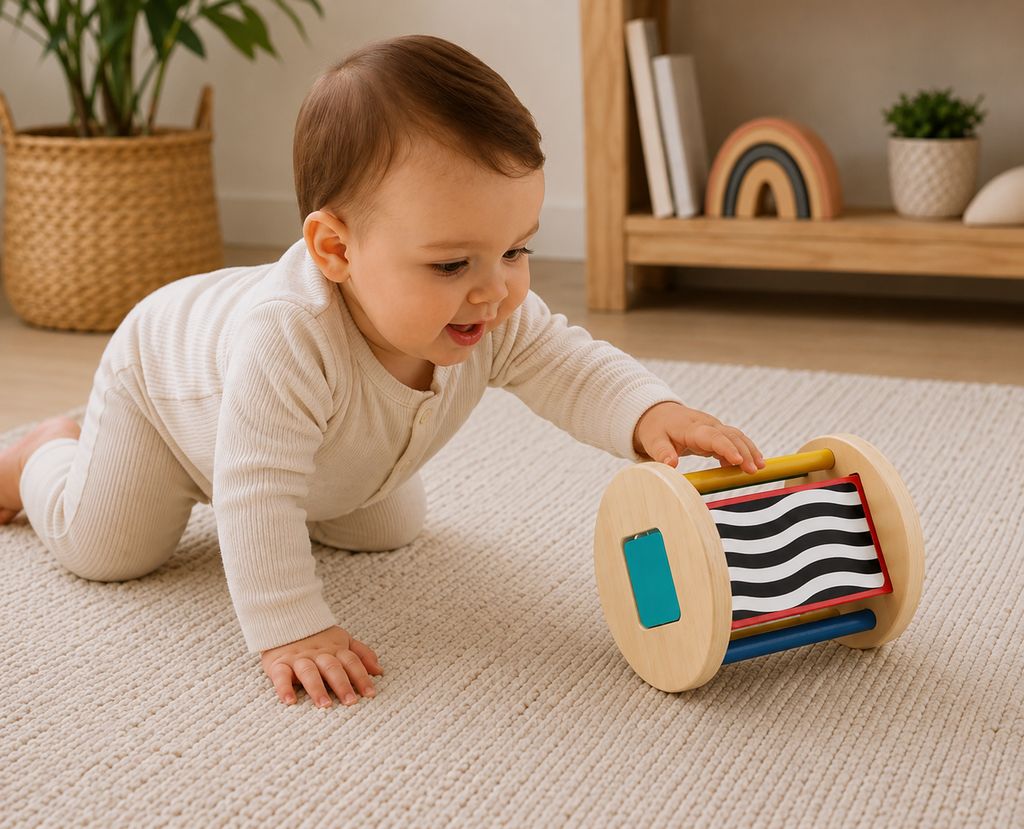
Babies don’t necessarily need us to teach them how to crawl. Instead, we can create an environment that gives them the freedom, opportunity and motivation to move — plenty of floor time, space to explore and interesting objects worth reaching for.
Sometimes that motivation is surprisingly simple: a wooden ball that rolls away, a mirror that catches their attention or a favourite toy just beyond their fingertips.
Most babies begin crawling somewhere between six and ten months, although there’s a wide range of normal, and some skip traditional crawling altogether. The goal isn’t to make it happen faster.
As babies reach, roll, pivot and eventually crawl, they’re developing coordination, spatial awareness, persistence and early problem-solving along the way.
That’s why the best Montessori toys for encouraging crawling don’t need to flash, move by themselves or constantly entertain. Sometimes they simply need to be interesting enough to make a baby think: I want to get over there.
Disclaimer: This post contains affiliate links. As an Amazon Associate I earn from qualifying purchases at no extra cost to you.
6 Montessori Toys That Encourage Crawling
We looked for toys that quietly encouraged movement rather than trying to entertain. These were the ones we kept coming back to.
1. Wooden Spinning Drum (Movement Invitation)
The first time we watched a baby play with a rolling drum, the interesting part wasn’t the drum itself — it was what happened when it rolled away.
Instead of losing interest, they shuffled forward and reached a little further to get it back.
That’s exactly what simple Montessori toys do well: they don’t perform for the baby; they invite the next movement.
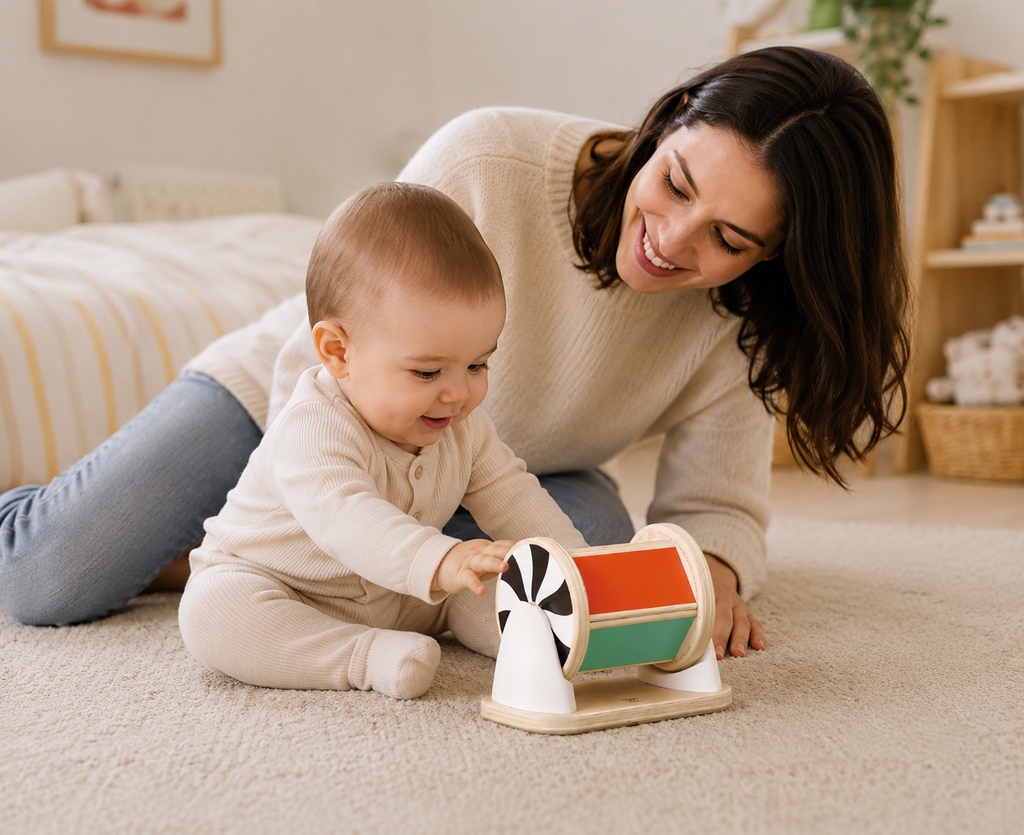
During tummy time, babies can reach for, bat and push the drum. As their movement skills develop, its gentle rolling action can encourage them to pivot, scoot and eventually crawl towards it when it moves just out of reach.
The soft rattling sound adds a little sensory feedback without making the toy overly stimulating.
2. Colourful Textured Sensory Balls (Reaching & Early Crawling)
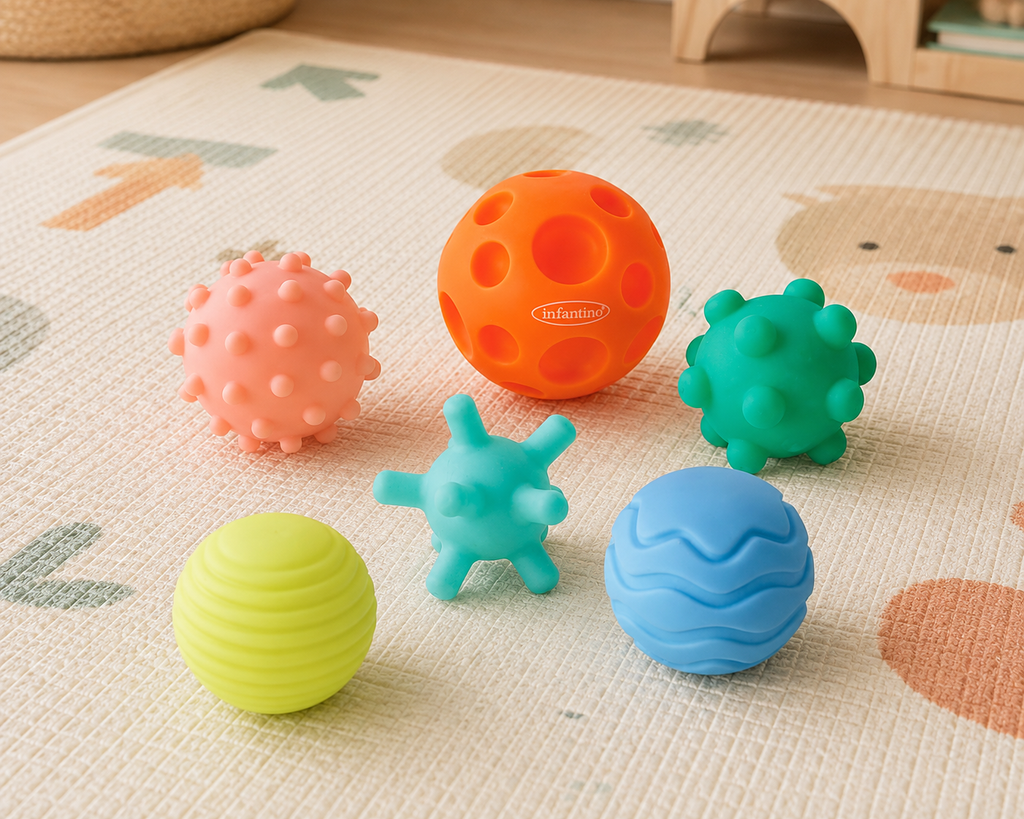
Bright sensory balls give babies an obvious target to reach for during tummy time. Their textured surfaces make them easier for little hands to grip and help stop them rolling too far away, so a small push can create just enough movement to encourage another reach rather than frustration.
As babies become more mobile, place one slightly beyond their fingertips to encourage stretching, pivoting and eventually moving towards it.
Best for: Tummy time, reaching, grasping and early crawling
Best for: Younger babies who need a little more visual motivation during tummy time
Age: 0–12 months
Good to know: Includes different textures, crinkle sounds, a rattle, mirror and silicone teether
3. Wooden Roller Rattle
Sometimes the simplest toys hold a baby’s attention the longest.
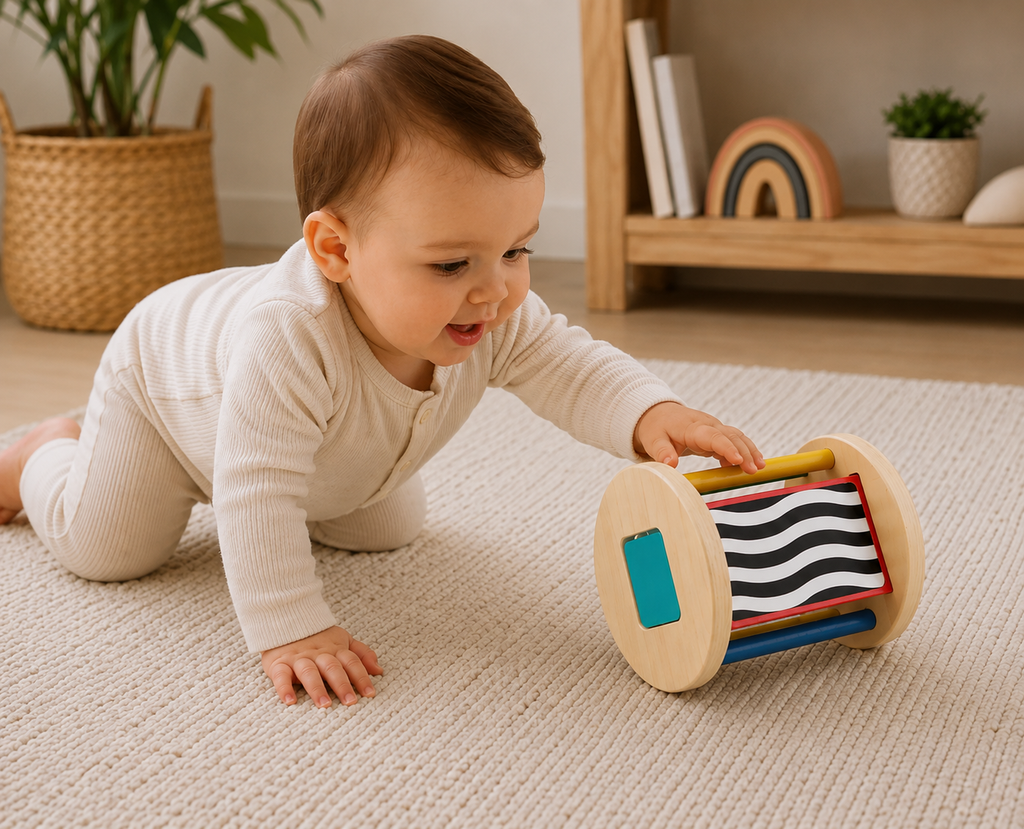
A wooden roller moves just enough to encourage another reach without disappearing across the room. The rattle adds another incentive: baby pushes it, it rolls, and they hear a sound in response.
As they become more mobile, that combination of movement and sound can encourage reaching, shifting forwards and eventually crawling after it.
4. Wooden Ball Track
Babies can watch the same wooden ball roll down a ramp ten times without getting bored.
Adults often find that surprising.
But predictable movement is fascinating to babies.
Eventually, watching isn’t enough anymore.
They want to follow it themselves.
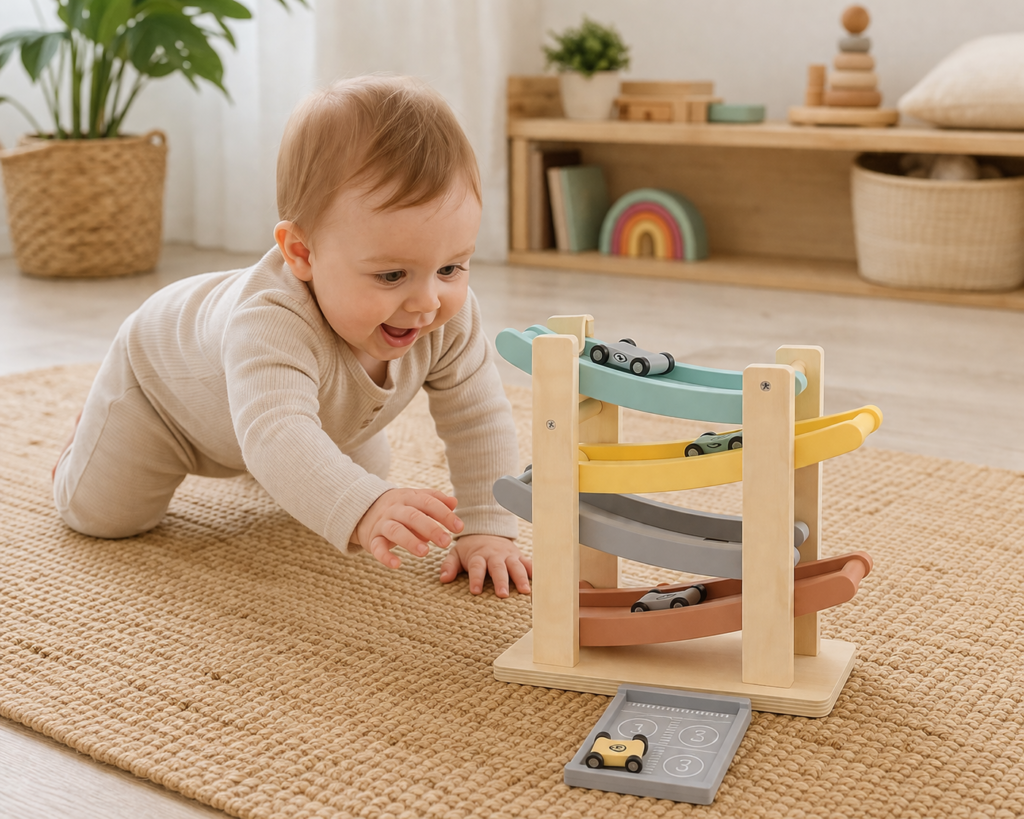
The repeated motion tends to hold attention naturally without needing lights, sounds, or overstimulation. Many babies become deeply focused on watching the balls roll down the ramp again and again.
Because the movement is predictable and repeatable, it supports concentration as much as physical movement.
5. Movement Mirrors and Pull-Up Bars
As babies begin crawling and exploring their environment more independently, many Montessori families introduce a low mirror near the floor.
A mirror doesn’t direct play or require a particular response. It simply gives babies something fascinating to observe — themselves.
Movement Mirror with Pull-Up Bar
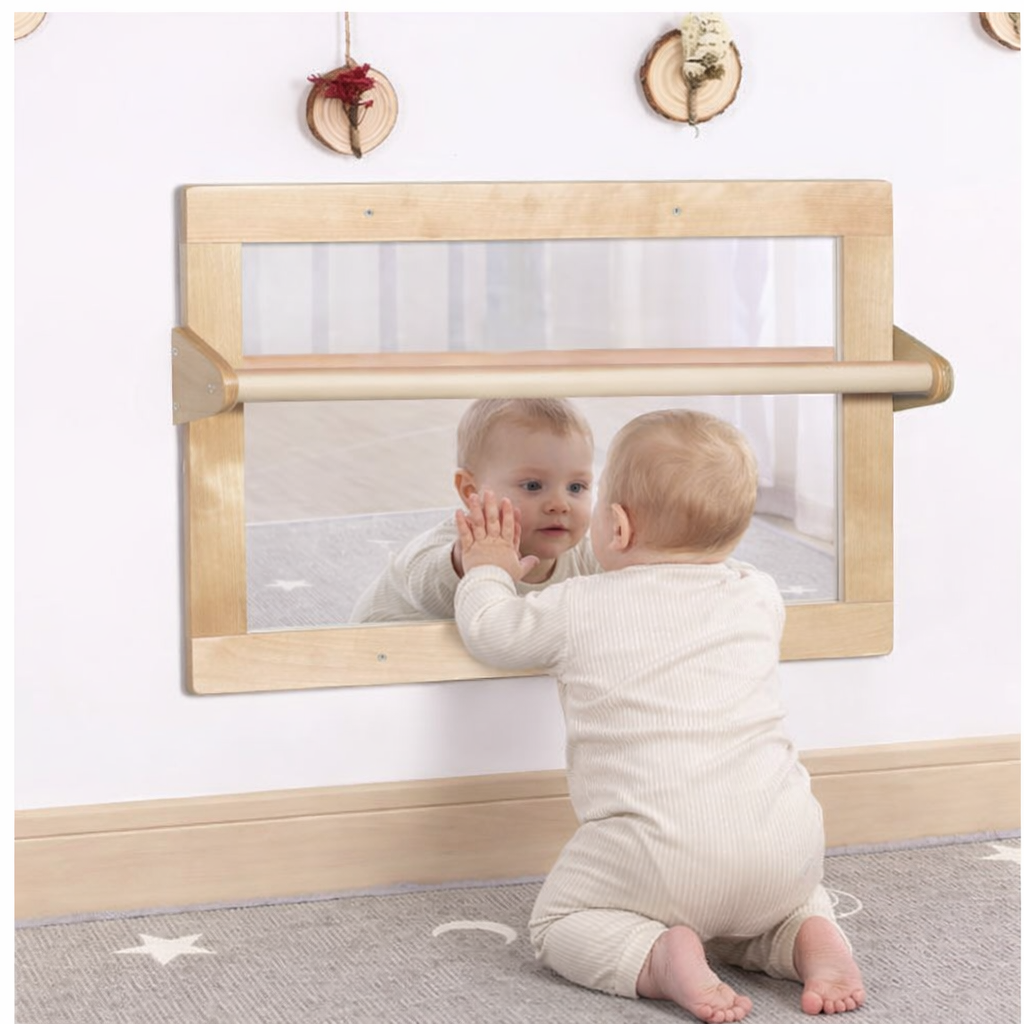
A movement mirror can encourage babies to lift their head, shift their weight and observe their own movements during floor time. For some babies, their reflection becomes a natural motivation to reach, turn or crawl towards the mirror.
As crawling develops into pulling up and cruising, a simple wooden pull-up bar provides a stable place to practise standing, balancing and those first sideways movements.
The real advantage is how long this setup can remain useful. The mirror that captures a baby’s attention during tummy time can later sit alongside them as they practise standing and cruising, extending its usefulness well into the movement stages that follow crawling.
6. Oball Classic Ball
Some of the best crawling toys barely look like toys at all.
The Oball has been around for years because babies seem to understand it almost instantly.
It’s light enough to grasp, hold and pass from one hand to the other. Because it rolls unpredictably across the floor, it naturally encourages babies to reach, pivot and eventually move towards it.
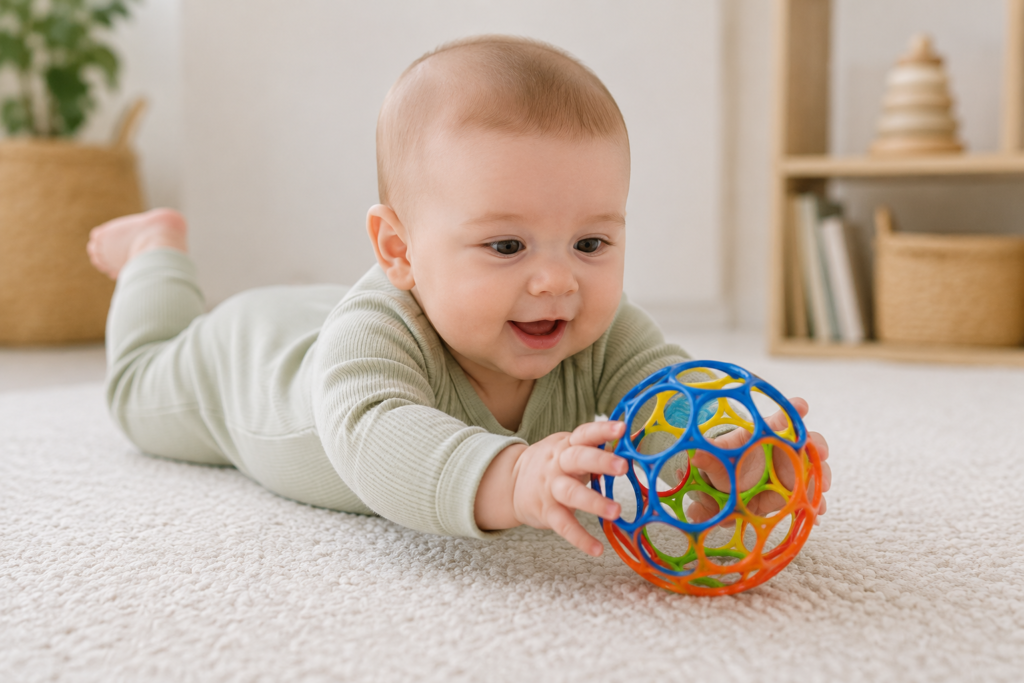
Unlike many baby toys, there’s very little for adults to demonstrate. Babies quickly work out what to do with it themselves, which is part of its appeal.
As movement skills develop, it often remains useful for rolling, throwing, carrying and simple games well beyond the crawling stage.
We Nearly Made This Mistake Ourselves
When you search for crawling toys, you’re shown flashing crabs, dancing dinosaurs and toys that race across the floor.
At first glance, they seem perfect.
Until you stop and ask:
Who’s doing the moving?
The toy…
…or the baby?
That single question completely changed what we looked for.
Why We Prefer Open-Ended Movement Toys
One thing all of these toys have in common is that they remain useful long after crawling begins. Rather than serving a single developmental purpose, they continue to support exploration, concentration and independent play as babies grow. For us, that longevity is often a better measure of value than any age recommendation printed on the box.
If Your Baby Isn’t Crawling Yet
If your baby isn’t crawling yet, it’s usually not something to rush.
Some babies:
- roll
- shuffle
- bottom-scoot
- or develop their own way of moving first
What matters most is having the freedom, space, and opportunity to move naturally over time.
Final Thoughts
Every baby eventually finds something worth moving towards.
Sometimes it’s a wooden roller.
Sometimes it’s a ball.
Sometimes it’s simply you sitting a little further away than yesterday.
Montessori isn’t about speeding that moment up.
It’s about making sure the opportunity is there when curiosity arrives.
Because crawling rarely begins with a milestone.
It usually begins with one small reason to reach just a little bit further.
Related
If you’re building movement and independence:
→ Independent Play Activities for Toddlers
→ Why Independent Play Is So Important for Toddlers
→ When and How to Use Visual Timers for Toddlers
Shopping on Amazon?
If you’re not already a Prime member, you can check whether you’re eligible for a free 30-day trial and enjoy Prime delivery on millions of eligible items.
FAQs
What are the best toys to encourage crawling in babies?
The best toys to encourage crawling are simple, movement-based objects that roll, move slowly, or invite reaching.
Toys like wooden rolling drums, roller rattles, and ball ramps work well because they give babies a clear reason to move forward without overwhelming them.
In many cases, even everyday objects like a soft ball or wooden spoon can encourage crawling just as effectively.
Do babies actually need toys to learn to crawl?
No — babies don’t need toys to learn to crawl.
Crawling develops naturally when babies have enough space, freedom, and motivation to move.
Toys can help by creating interest and encouraging movement, but they aren’t essential. A simple setup with floor space and a few objects placed just out of reach is often enough.
At what age should I use toys to encourage crawling?
Most babies begin to show interest in crawling between 6 and 10 months.
You can introduce simple crawling toys when your baby starts reaching, pivoting, or trying to move toward objects.
The key is to follow your baby’s development rather than introduce toys at a fixed age.
Why are simple toys better for encouraging crawling?
Simple toys are more effective because they allow babies to focus on movement without distraction.
Toys that are quiet, predictable, and easy to understand help babies concentrate on reaching, pushing, and following — which are the foundations of crawling.
Overstimulating toys can interrupt this process by pulling attention away from movement.
Do light-up or electronic toys help babies crawl?
Usually not.
Toys with flashing lights, loud sounds, or fast movement can overstimulate babies and reduce their focus on physical movement.
Babies may watch instead of moving toward the object, which can actually slow down the motivation to crawl.
How can I encourage my baby to crawl without forcing it?
The most effective way to encourage crawling is to create the right environment.
You can:
– give your baby daily floor time
– place objects slightly out of reach
– allow time for effort and problem-solving
– stay nearby without intervening too quickly
Crawling develops best when babies feel motivated, not pressured.
What if my baby isn’t crawling yet?
It’s completely normal for babies to develop movement in different ways.
Some babies roll, shuffle, or bottom-scoot instead of crawling.
As long as your baby is showing interest in movement and exploring their environment, there is usually no need to rush or force crawling.
Are Montessori toys better for encouraging crawling?
Montessori toys are often helpful because they are designed to be simple, natural, and movement-focused.
They avoid overstimulation and instead support curiosity, coordination, and independent exploration — all of which contribute to early movement like crawling.
However, the most important factor is not the toy itself, but the environment and opportunity to move.
How much time should babies spend on the floor to support crawling?
Babies benefit from regular floor time throughout the day.
There’s no exact time requirement, but frequent opportunities to move freely on a safe surface help build strength, coordination, and confidence.
Short, consistent periods of floor play are often more effective than long sessions.