
How to Make a Simple Crochet Baby Mobile
Preparing for a new baby has a way of convincing us we need more than we really do.
The internet is full of colourful mobiles that spin, flash and play music, each promising to capture a baby’s attention.
Yet in those first few months, babies rarely need more stimulation. More often, they benefit from the opposite: a few simple objects, gentle movement and enough time to look, wonder and focus.
That’s one of the reasons we love simple Montessori-inspired mobiles.
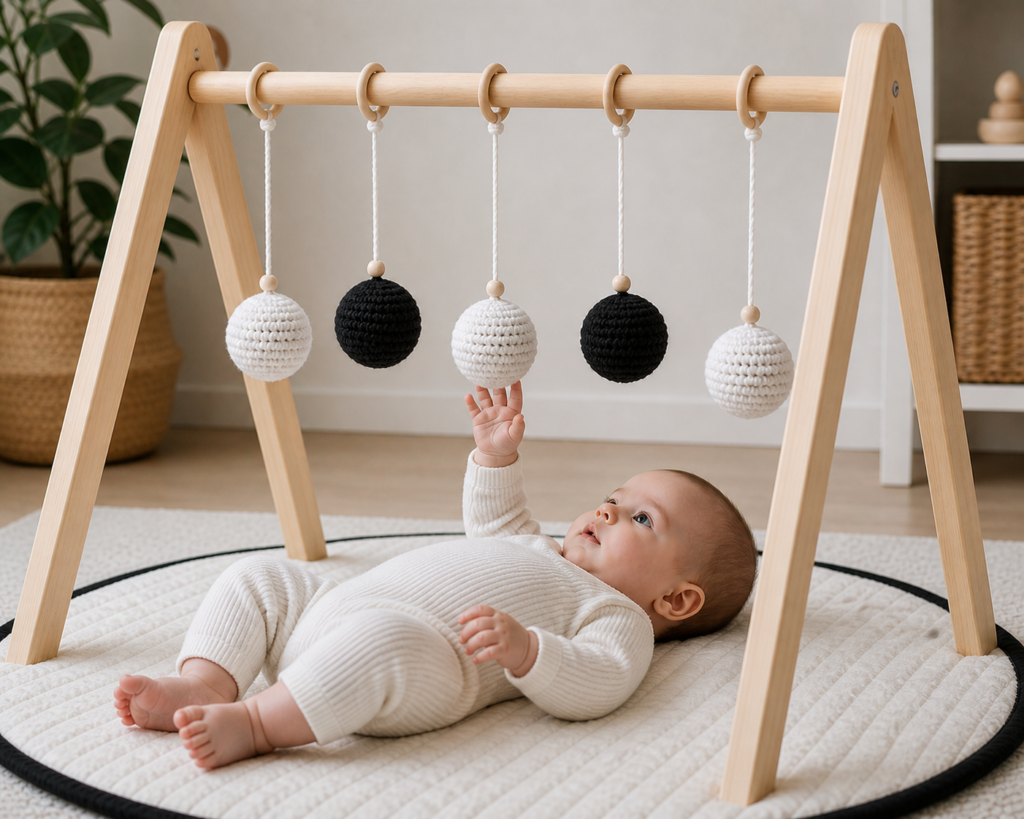
A handful of soft crochet balls suspended above a play space can be surprisingly engaging—and they’re much easier to make than they first appear.
Disclaimer: This post contains affiliate links. As an Amazon Associate I earn from qualifying purchases at no extra cost to you.
What Makes a “Good” Baby Mobile?
A good newborn mobile isn’t the one with the most colours, music or moving parts.
In the earliest months, babies are still learning to focus their eyes and follow movement. A few simple shapes moving slowly through the air are often far more engaging than something bright and busy.
That’s why many Montessori mobiles feel surprisingly minimal. Rather than trying to entertain, they quietly invite babies to observe, concentrate and follow movement at their own pac
How to Make a Montessori Crochet Baby Mobile
You don’t need advanced crochet skills to create something beautiful and useful.
We particularly like crochet balls because they’re lightweight, move gently and are easy to customise as your baby’s vision develops. Their simple shape creates a calm focal point without overwhelming young babies, making them an ideal choice for a first mobile.
Materials You’ll Need to Make a Simple Crochet Ball Mobile
One of the reasons we like this project is that you don’t need much to get started. If you already enjoy crafts, you may even have most of the materials at home.
For a simple crochet ball mobile, you’ll need:
- cotton yarn
- a crochet hook
- soft toy stuffing
- cotton string
- a wooden play gym or mobile stand
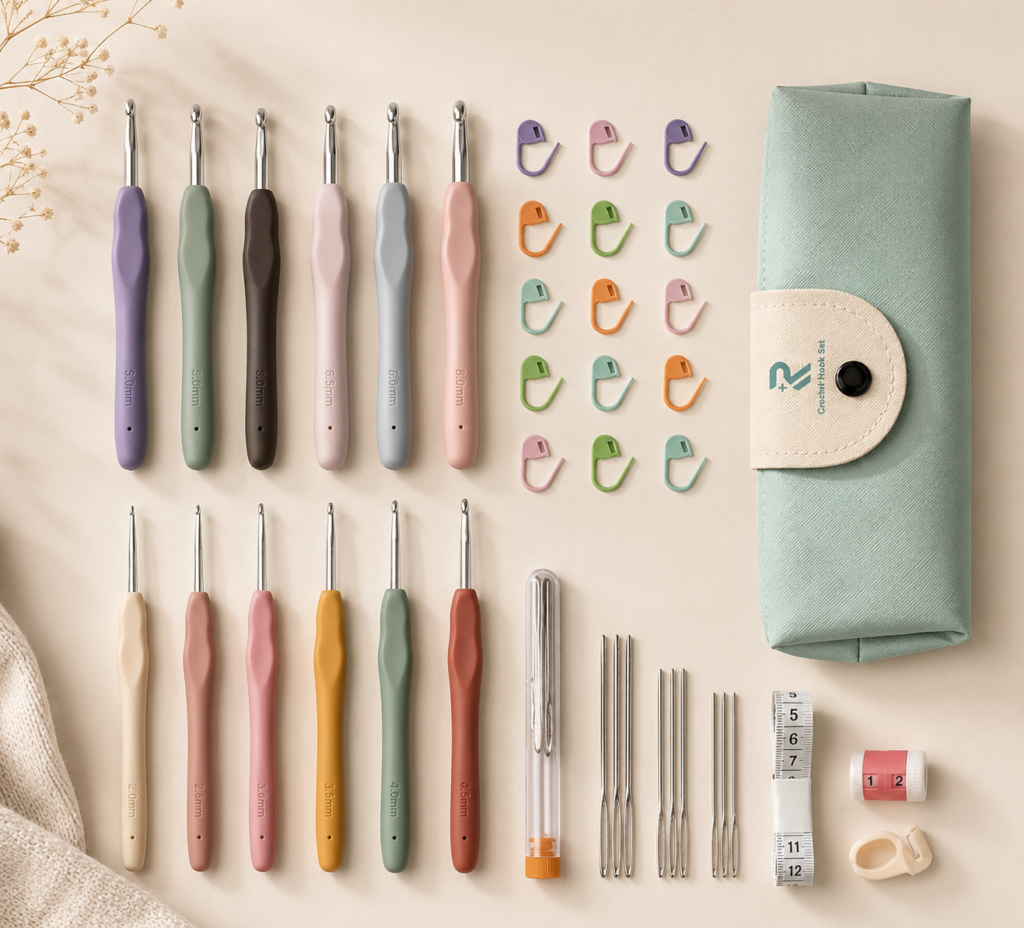
1. Beginner Crochet Kit (All-in-One Option)
If you’re starting from scratch, a beginner crochet kit is often the simplest option. Most include the essentials—hooks, stitch markers, yarn needles and a few useful accessories—so you don’t have to source everything separately.
2. Lightweight Cotton Yarn
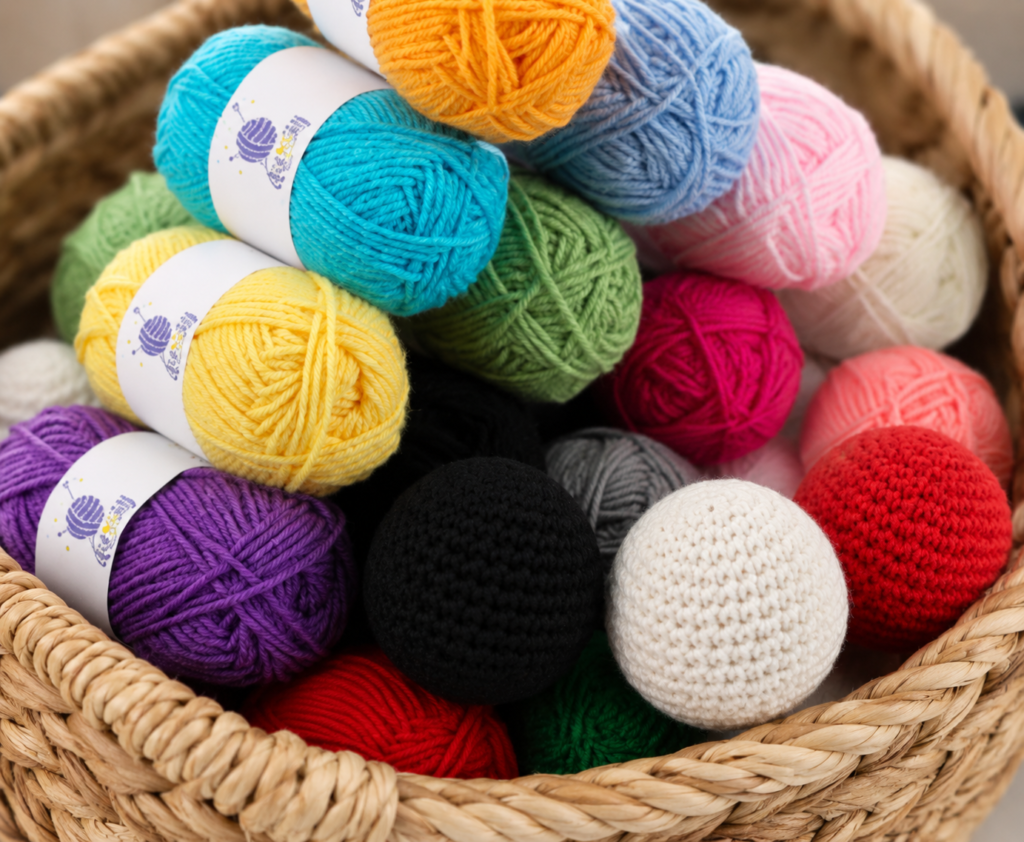
A smooth 100% cotton yarn (DK/4-ply) is our favourite choice because it creates neat, well-defined stitches and holds its shape beautifully.
For newborns, black, white and red offer the strongest visual contrast. As your baby’s vision develops, you can gradually introduce softer shades like cream, sage and beige.
3. Soft Stuffing
Use a lightweight cotton stuffing to keep the balls soft and gently rounded. Avoid packing them too firmly—the finished mobile should feel light enough to move naturally.
If you already have stuffing left over from another sewing or craft project, there’s no need to buy anything new.
4. Wooden Mobile Stand
A simple wooden frame keeps the mobile stable while fitting beautifully into a calm, uncluttered nursery. We generally prefer natural wood with a smooth finish and a sturdy base.
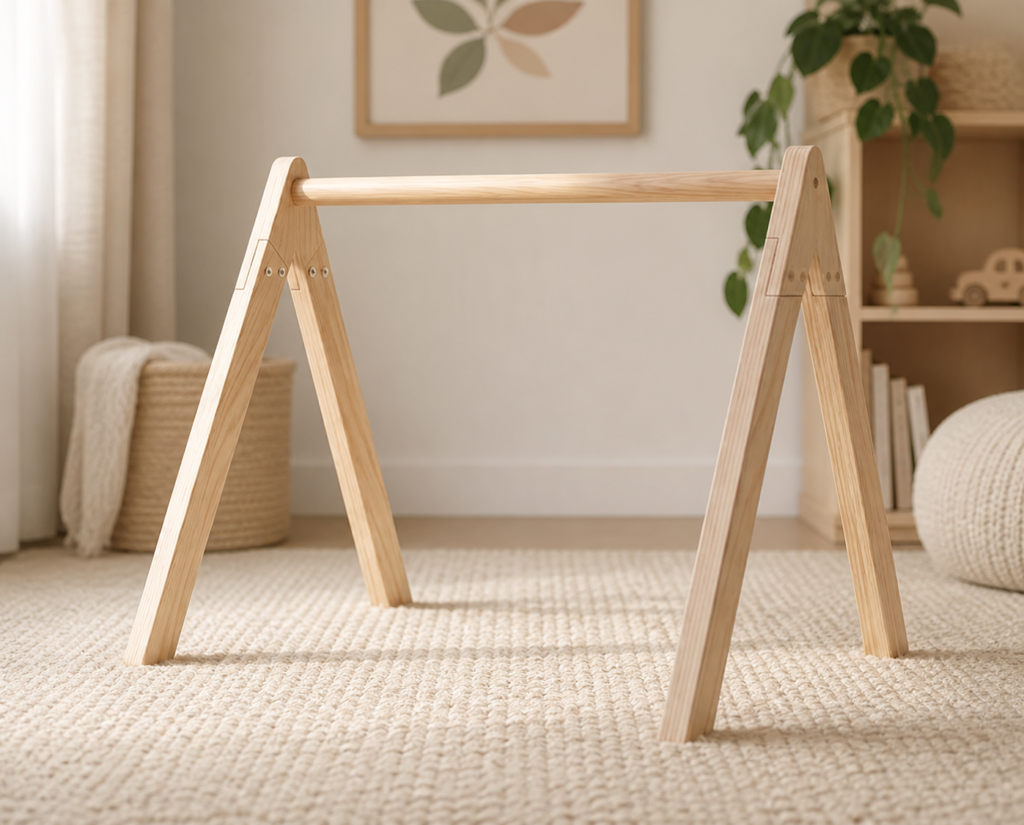
Natural Wooden Baby Play Gym Frame
5. Cotton String or Cord
A neutral cotton cord is all you need to suspend the crochet balls. Keeping the string simple helps the focus remain on the gentle movement of the mobile itself.
6. Wooden Rings (Optional)
If you’re hanging your crochet balls from a wooden play gym or stand, a few small unfinished wooden rings and wood hoops create a neat, natural way to attach each piece.
We like plain beech wood rings because they’re lightweight, beautifully simple and blend seamlessly into a understated nursery without drawing attention away from the gentle movement of the mobile.
A Simple Crochet Ball Design
We like to begin with just three to five small crochet balls suspended at slightly different heights. In the early weeks, high-contrast colours such as black, white and red are easiest for newborns to distinguish. Later, you can gradually introduce softer, natural tones like cream, sage and beige to complement a soothing nursery.
There’s no need to make it elaborate. A few simple shapes moving gently through the air are often more than enough.
The pattern below creates a lightweight crochet ball measuring approximately 5 cm in diameter—an ideal size for a simple baby mobile. If you’re new to crochet, don’t worry about making every stitch perfect; gentle movement matters far more than perfection.
The Crochet Pattern
Don’t worry if you’ve never crocheted before. This pattern uses just a handful of beginner-friendly techniques that many people learn in their very first project.
If you’re completely new to crochet, the only stitches you’ll need to look up are:
- Magic ring (MR)
- Single crochet (sc)
- Increase (inc)
- Decrease (dec)
Once you’ve learned those four techniques, the rest is simply repeating the same stitches until the ball gradually takes shape.
Here’s a simple step-by-step pattern you can follow:
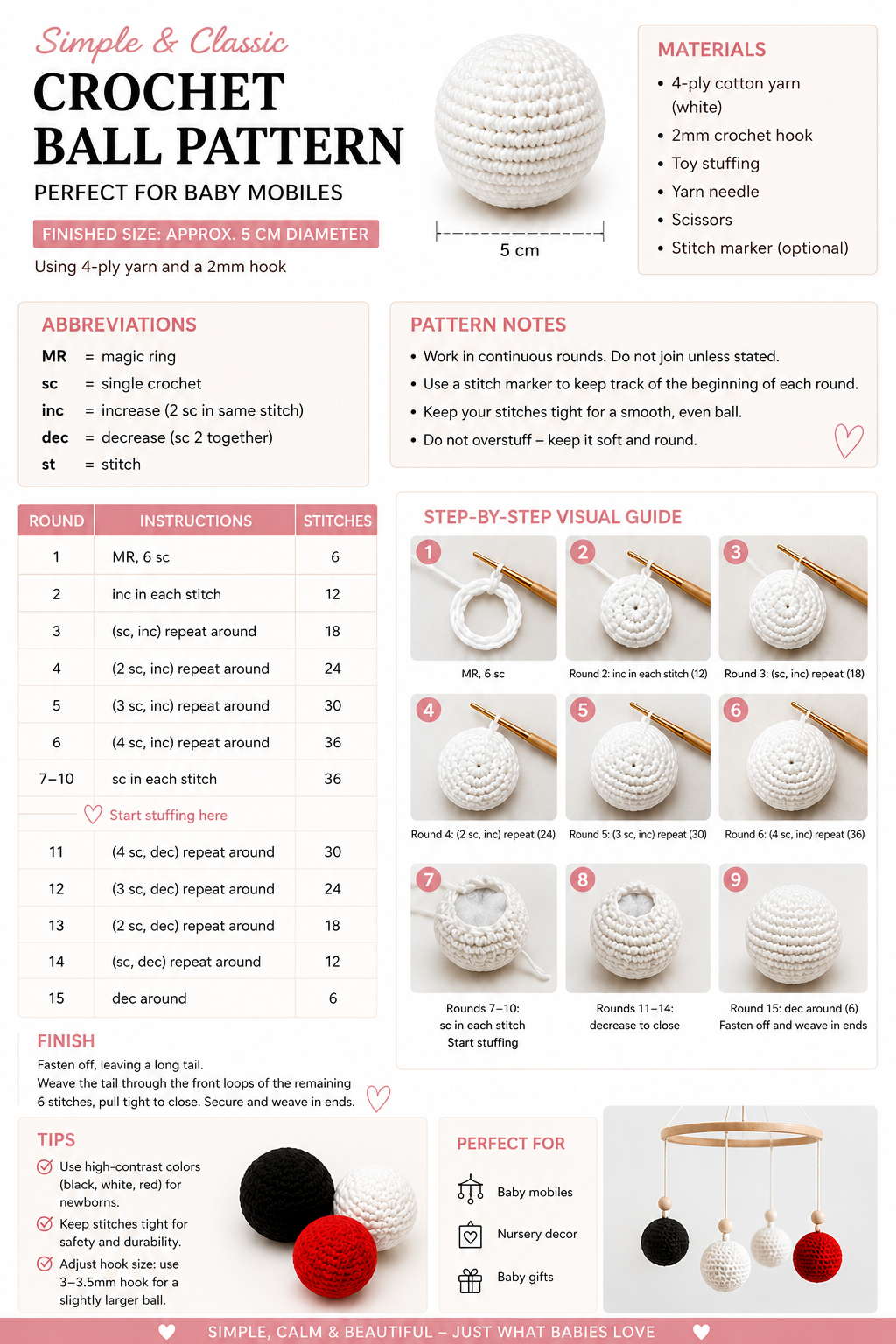
Finished size may vary slightly depending on yarn, hook size and crochet tension.
If Crochet Isn’t Your Thing
Sometimes the simplest ideas are also the easiest to put together. A few thoughtfully chosen objects can create the same gentle experience without picking up a crochet hook.
Black and White Ribbons
Black and white ribbons, polka dot ribbons and animal print ribbons tied securely to a wooden ring or mobile can create simple, high-contrast movement that newborns are naturally drawn to.
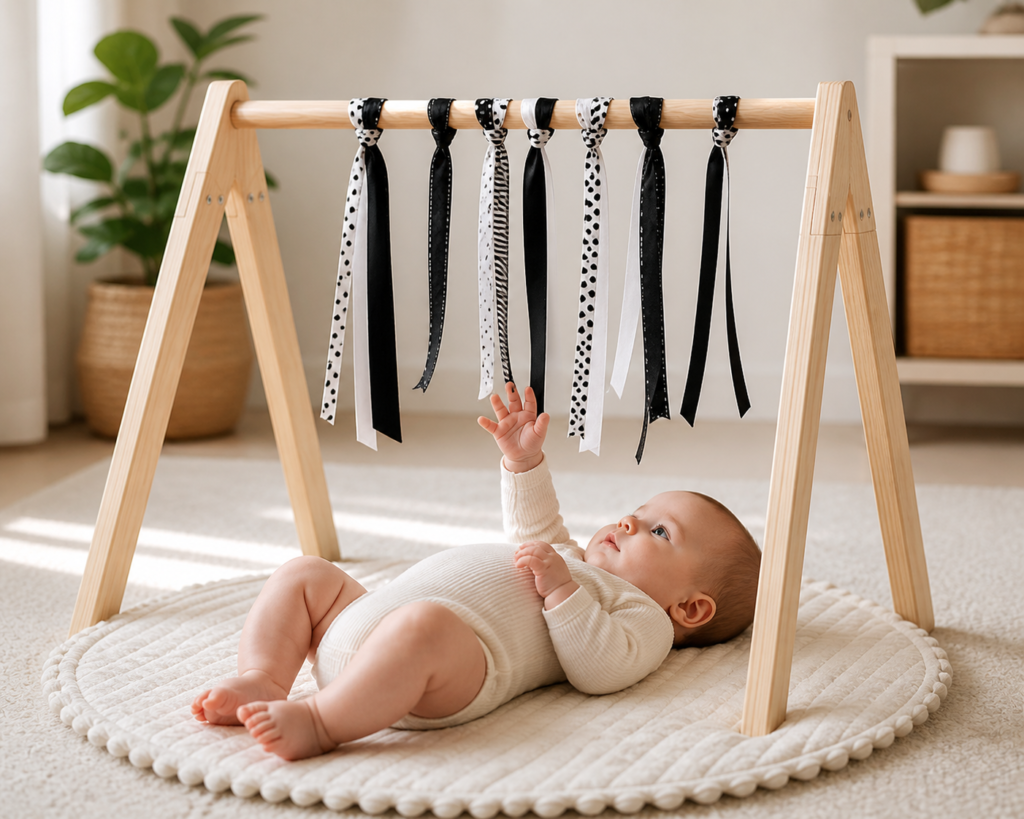
They move gently with air flow and are easy for babies to visually follow, especially in the early weeks when contrast matters most.
Keep ribbons short, securely attached, and always out of reach during use.
Minimal Rattles
A softly sounding wooden or fabric rattle can be just as engaging. We generally look for simple designs with a gentle sound rather than flashing lights or electronic features.
The principle stays the same: fewer objects, chosen thoughtfully, often create the calmest and most meaningful play.
How to Set Up a Mobile (This Matters More Than the Mobile)
We often spend far more time choosing a mobile than deciding where it should go. Yet the setup usually has a much bigger impact than the mobile itself.
Even a simple mobile works well when set up properly:
- position above the chest (not directly over the face)
- keep 20–30 cm distance
- use during calm, awake time
- rotate occasionally
You don’t need to leave it up all day — short, focused moments are enough.
Prefer Something Ready-Made?
The goal isn’t to recreate a particular Montessori mobile perfectly. It’s simply to offer your baby something calm, simple and interesting to observe.
If you’d rather skip the crochet altogether, there’s nothing wrong with choosing a beautifully made ready-to-use mobile instead.
We’d still look for the same qualities: simple shapes, gentle movement and a calm, uncluttered design rather than flashing lights or music. After all, it’s those thoughtful details—not whether you made it yourself—that tend to matter most.
If You Want to Keep Things Even Simpler
A traditional mobile isn’t essential.
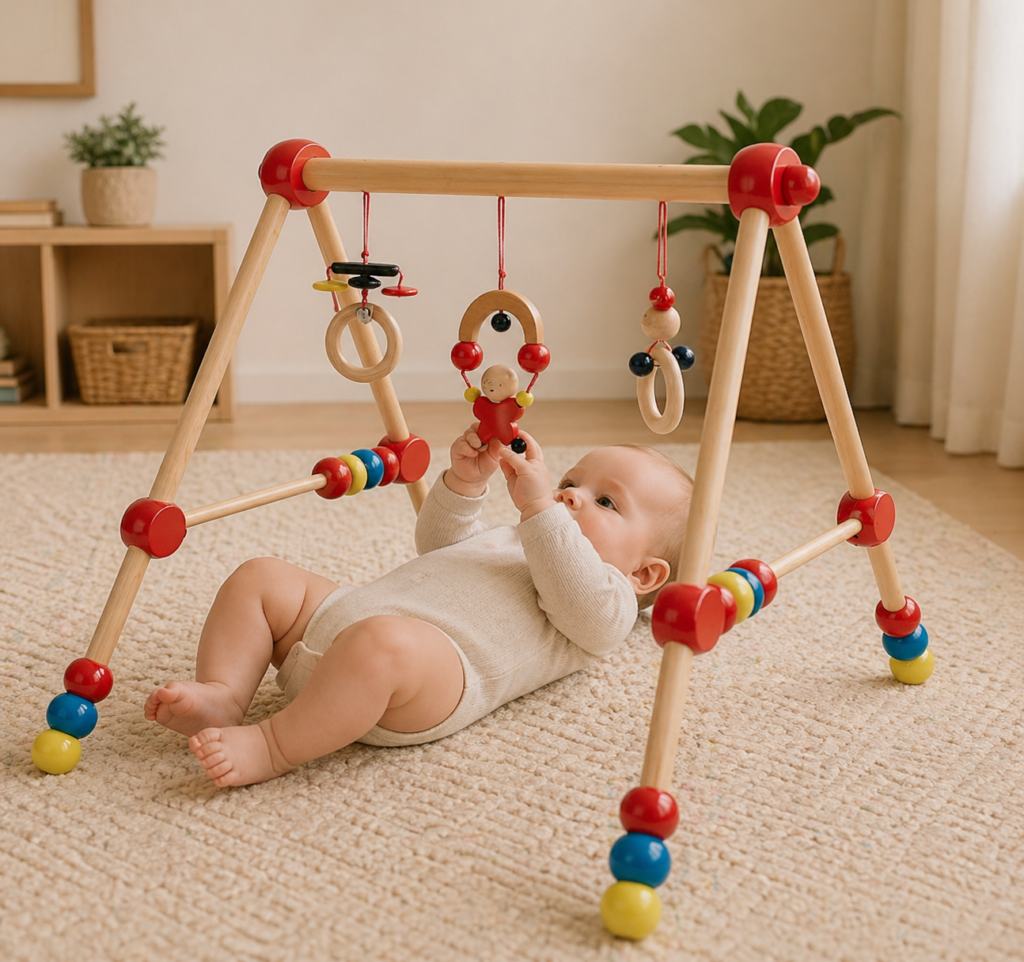
Many babies are just as captivated by one or two thoughtfully chosen objects moving gently in front of them. A simple grasping toy suspended from a wooden play gym, a few soft crochet balls or even a lightweight wooden ring can provide the same calm visual experience without needing an elaborate setup.
As with so much in the early months, it’s rarely about having more. A small number of simple, carefully chosen objects often hold a baby’s attention far better than something busy or overstimulating.
If your baby is starting to move more, you might also find these Simple and Safe Montessori Toys That Encourage Crawling and Tummy Time Ideas helpful — they support development in a similar calm, low-stimulation way.
What Actually Worked for Us
As we gradually simplified our baby’s play space, we found ourselves reaching for the simplest mobile far more often than we expected.
It didn’t flash, play music or have lots of moving parts. It simply offered a few gentle shapes to focus on, and that seemed to be enough. Rather than constantly searching for something more stimulating, our daughter was happy returning to the same quiet visual experience day after day.
Sometimes, it’s the simplest things that end up being used the most.
Final Thoughts
Preparing for a new baby has a way of convincing us we need more than we really do. In reality, a few thoughtfully chosen objects often become the ones we reach for every day.
Whether you make your own or choose a ready-made mobile, what matters most isn’t how much it does—it’s that it gives your baby something calm, simple and beautiful to explore.
FAQs: Simple Montessori Mobiles for Babies
What is a Montessori mobile for babies?
A Montessori mobile is a simple hanging object designed to support a baby’s early development through movement and visual focus.
Unlike typical baby mobiles, they:
- avoid lights and sound
- use simple shapes and colours
- move gently and slowly
The goal isn’t entertainment — it’s helping babies develop concentration, visual tracking, and calm awareness.
Are baby mobiles actually useful for development?
Yes — when used simply and correctly, mobiles can be very helpful.
They support:
- visual tracking
- focus and attention
- early coordination
The key is keeping them low-stimulation and using them during calm, awake periods rather than as constant background entertainment.
What kind of mobile is best for a newborn?
For newborns, the best mobiles are:
- high-contrast or very simple designs
- slow-moving
- uncluttered
In the early weeks, babies can’t process lots of detail, so simple shapes or gentle movement works best.
Can I use a crochet mobile for a baby?
Yes — simple crochet mobiles work very well.
Soft crochet balls or shapes:
- move gently
- are visually easy to follow
- create a calm, low-stimulation experience
Just make sure everything is securely attached and kept out of reach for safety.
How do you make a simple baby mobile at home?
You can make a simple mobile with just a few materials:
- lightweight yarn or fabric shapes
- a wooden ring or hoop
- string or cord
Even a few soft balls hung at different heights can create an effective, engaging setup.
What do I need to crochet a baby mobile?
To make a simple crochet mobile, you typically need:
- cotton yarn (soft, neutral colours)
- a crochet hook (around 2.5–3.5 mm)
- stuffing
- a wooden ring or frame
- string for hanging
Keeping everything simple makes it easier to use and more visually calming for your baby.
Where should a baby mobile be placed?
A mobile should be placed:
- above your baby’s chest (not directly over the face)
- about 20–30 cm away
- in a safe, secure position
It should always be out of reach to avoid pulling or tangling.
How long should a baby use a mobile each day?
You don’t need to use a mobile for long periods.
Short sessions during calm, awake time are enough — even just a few minutes at a time.
Quality of attention matters more than duration.
Are Montessori mobiles better than regular baby mobiles?
They’re not “better” in a strict sense — just different in purpose.
Montessori-style mobiles focus on:
- simplicity
- calm engagement
- development
Whereas many standard mobiles focus on:
- entertainment
- sound and lights
For many babies, simpler designs tend to hold attention longer.
Do babies get bored of mobiles?
Yes — and that’s completely normal.
Babies naturally move through stages quickly.
You can:
- rotate simple designs
- change positions
- swap in new objects
But you don’t need lots of options — just a few simple changes over time.
What can I use instead of a baby mobile?
You don’t need a traditional mobile at all.
Simple alternatives include:
- soft balls
- grasping toys
- a few hanging objects
- a play gym with one or two items
These often get used more consistently in real life.
Are baby mobiles safe?
Mobiles are safe when used correctly:
- keep them out of reach
- secure all attachments
- avoid small detachable parts
They should always be used for observation — not as something the baby can grab.