Tummy Time Ideas for 3 Month Olds (Simple Ways to Keep It Calm & Engaging)
At 3 months, tummy time often starts to feel very different.
Your baby is becoming more alert, more curious, and more aware of the world around them — but they may still tire quickly or become frustrated after only a few minutes.
And that’s completely normal.
At this stage, tummy time doesn’t need to look like long structured sessions or complicated activities. Small, calm moments repeated throughout the day are usually far more effective.
Disclaimer: This post contains affiliate links. As an Amazon Associate I earn from qualifying purchases at no extra cost to you.
What Tummy Time Looks Like at 3 Months
Around this age, many babies begin lifting their head more steadily, looking around intentionally, and pushing slightly through their arms during tummy time.
But most still need short sessions, frequent breaks, reassurance, and interaction nearby.
The goal is not to “train” your baby.
It’s simply to give them opportunities to gradually build strength, coordination, and confidence through movement.
As babies become stronger through floor play and tummy time, many naturally begin preparing for rolling and crawling too. If you’re thinking ahead, this may also help:
→ Simple and Safe Montessori Toys That Encourage Crawling
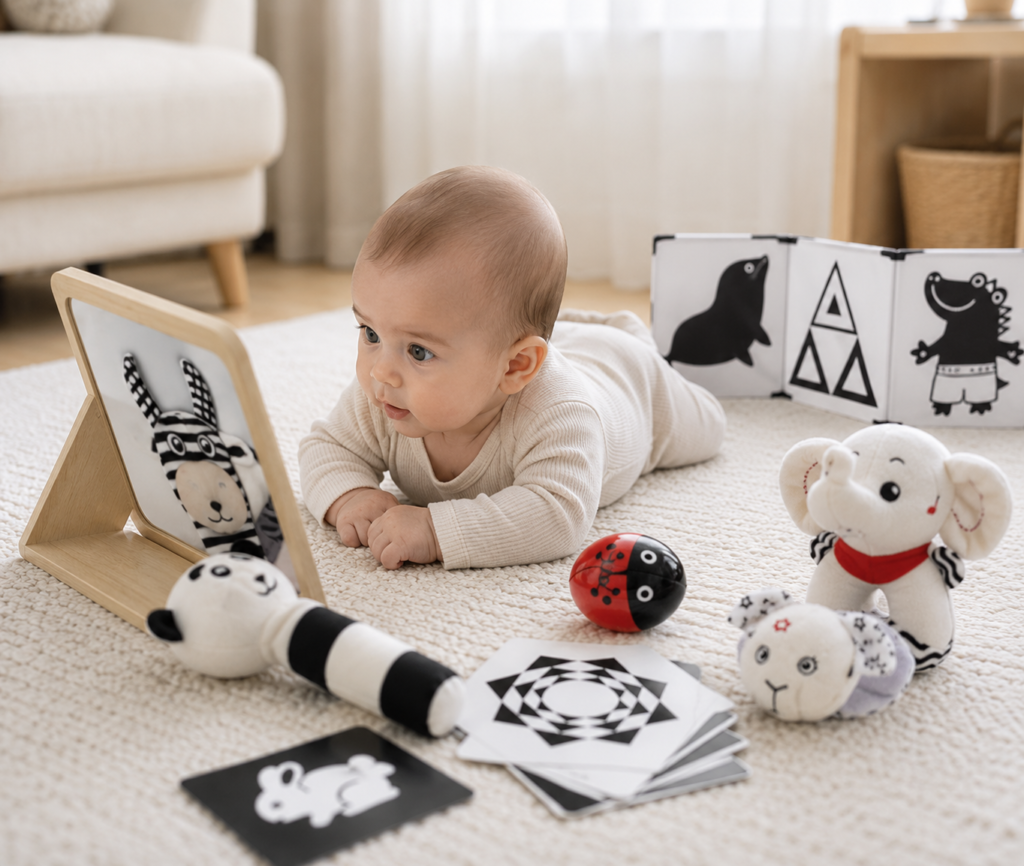
1. Floor Mirror Time
At 3 months, babies are often fascinated by movement — especially faces.
A simple baby-safe mirror can make tummy time feel far more engaging because babies naturally try to look, track, and lift their head toward what they see.
You do not need flashing toys or complicated setups. Very often, a mirror and a calm floor space are enough.
Floor Mirror and High Contrast Card Set
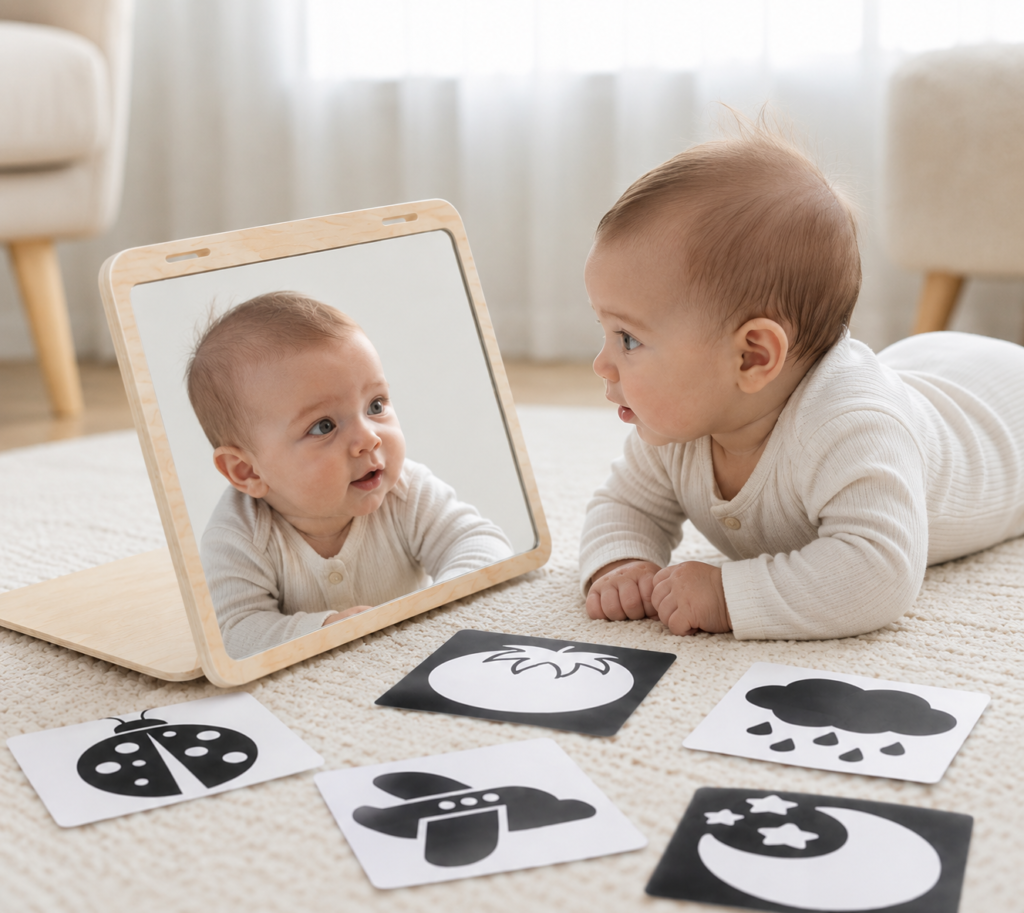
2. Black & White Cards and Sensory Toys
At this age, babies still respond strongly to simple high-contrast visuals.
Placing a few black-and-white cards nearby during tummy time can help encourage short periods of focus and visual tracking without overwhelming them.
A few minutes at a time is usually enough.
Simple really works best here.
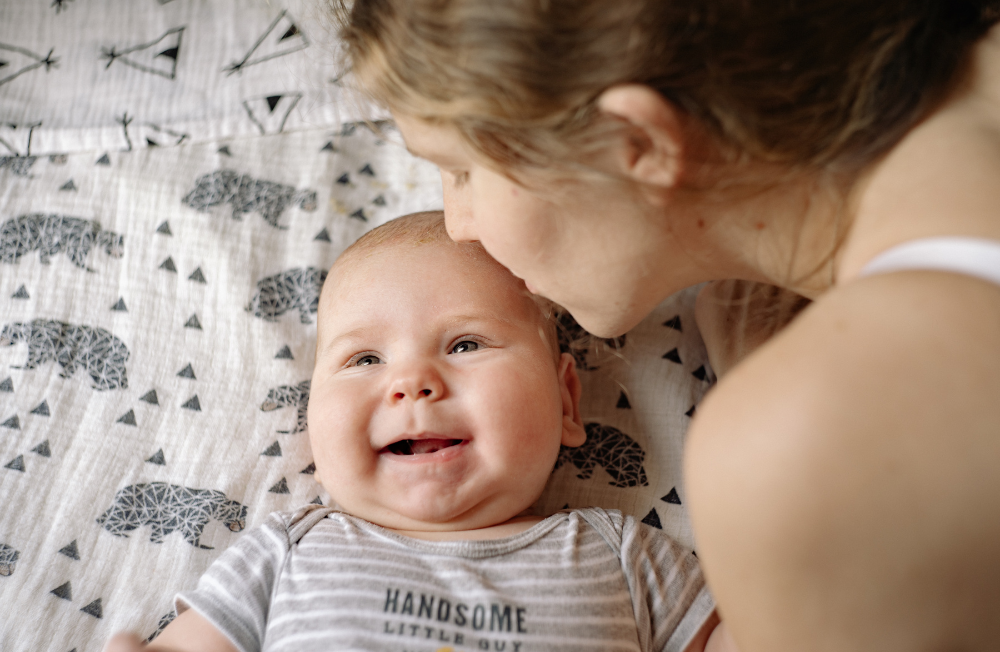
3. Lie Down Face-to-Face
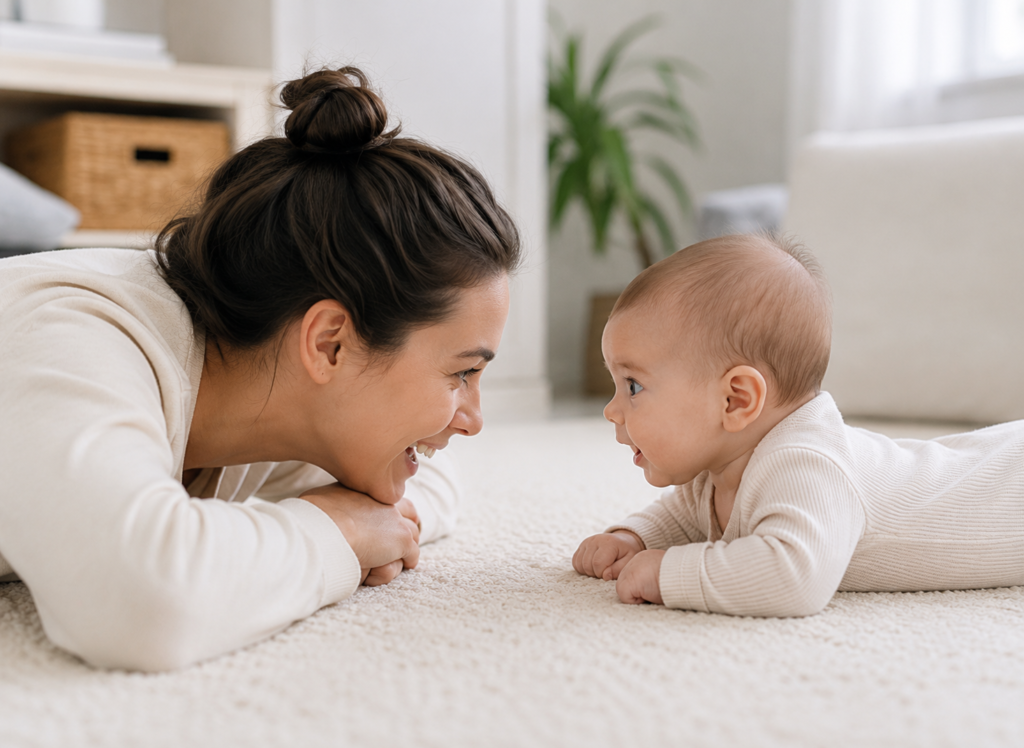
One of the most effective tummy time activities is also the simplest.
Lie down in front of your baby. Talk gently. Smile. Pause. Let them look at your face.
At this stage, your face is often more engaging than any toy.
Many babies tolerate tummy time for much longer when there’s connection involved rather than being placed down alone.
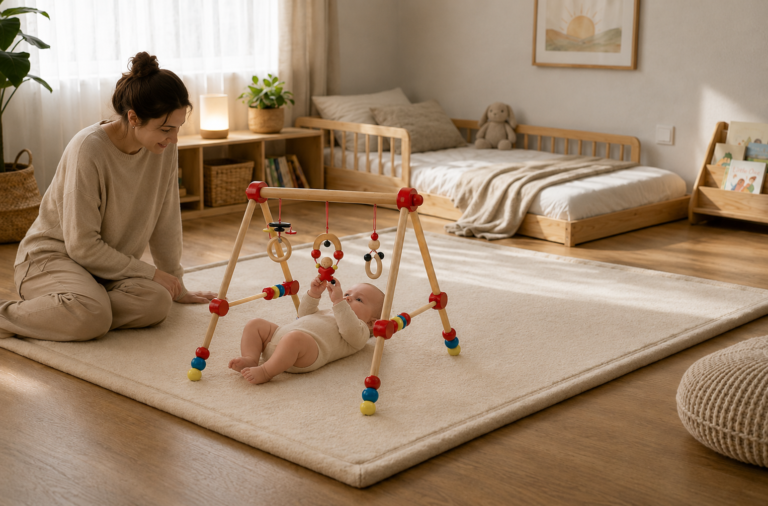
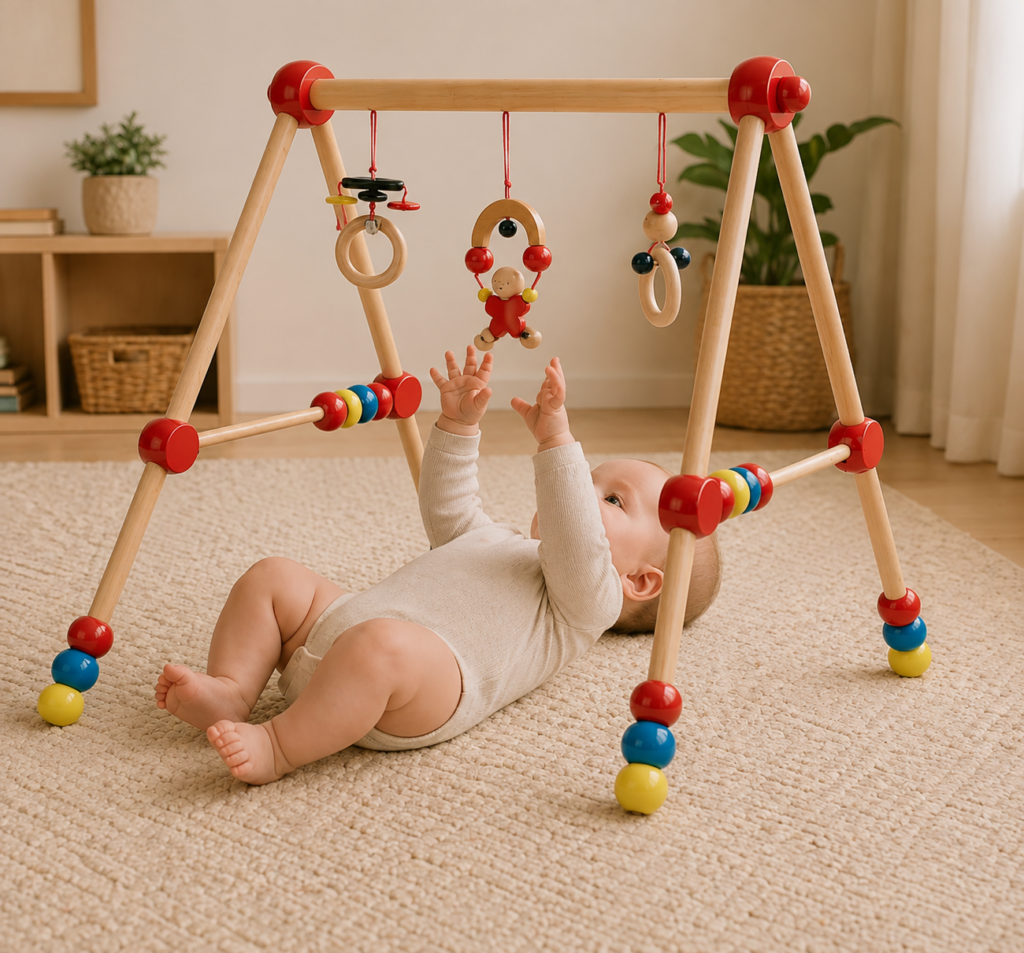
4. A Simple Play Gym
At this stage, some babies begin enjoying short periods under a simple play gym where they can look up, kick and gradually begin reaching.
The key is keeping it visually calm rather than overstimulating. Simple hanging objects and open space usually work far better than lights, sounds or crowded setups.
We also found it worthwhile investing in a sturdy wooden play gym rather than treating it as something only used for a few weeks. Ours became part of our daughter’s daily play from around three months of age and continued to be used well beyond her first birthday. As she grew, it evolved from a space for kicking and reaching to somewhere she practised pulling herself up, cruising around it and eventually taking those first wobbly steps. Choosing one built to last meant it remained useful through several important developmental stages, rather than being outgrown after a couple of months.
5. Tummy Time on Your Chest

If your baby dislikes floor tummy time, chest tummy time can be a much gentler place to start.
Lie slightly reclined and place your baby on your chest so they can look up at your face while gradually practicing lifting their head.
For many babies, this feels far more comforting because there’s connection involved. Your voice, facial expressions, and closeness naturally encourage them to stay engaged for longer without becoming as frustrated.
At 3 months, even these small moments help build:
- neck strength
- upper body control
- coordination
- confidence during movement
And importantly, it still counts as tummy time.
Many babies who strongly resist the floor tolerate chest tummy time much better because the position feels more secure and emotionally regulated.
You do not need long sessions here either.
A few calm minutes throughout the day can add up surprisingly quickly over time.
6. Roll Up a Small Towel Under the Chest
Some babies become frustrated during tummy time simply because the position still feels physically difficult.
A small rolled towel placed gently under the chest can sometimes make tummy time feel more manageable by slightly reducing the effort needed to lift their head.
This often helps babies stay calmer and more comfortable for longer stretches.
Keep Sessions Short
One of the biggest misconceptions about tummy time is that it needs to last a long time to “count.”
At 3 months, short sessions repeated throughout the day are usually much more realistic — and often more effective.
A few calm minutes after naps, during floor play, or after a nappy change can add up surprisingly quickly over time.
Consistency matters far more than intensity.
If your baby is becoming more alert throughout the day and you’re wondering how to fill awake windows simply, this may also help:
→ What to Do With a 4 Month Old All Day (Simple Activities)
What If My Baby Hates Tummy Time?
This is extremely common at 3 months.
Many babies still find tummy time physically demanding because they’re building strength they’ve never needed before.
That doesn’t mean you’re doing anything wrong.
Very often, tummy time becomes easier once babies gain more head control, sessions stay shorter, and pressure is reduced.
It’s completely okay to build gradually.
A Simple Rhythm That Often Works
Instead of one long session, many parents find it easier to weave tummy time naturally into the day.
A few minutes after a nappy change, a short floor session after naps, or some quiet mirror time in the evening is often more manageable than trying to force long stretches all at once.
Nothing complicated.
Just small repeated opportunities to move.
Final Thoughts
At 3 months, tummy time does not need to be elaborate.
Most babies benefit far more from calm repetition, simple visuals, face-to-face interaction, and short consistent practice than overstimulating toys or long sessions.
You do not need a complicated setup.
You just need a small calm space, a little consistency, and time for your baby to gradually build confidence through movement.
During tummy time, babies are not just strengthening muscles. They’re also developing proprioception — the brain’s understanding of where the body is in space. This awareness becomes important later for rolling, crawling, climbing, and coordination.
FAQs
How long should tummy time be for a 3 month old?
At 3 months, many babies tolerate tummy time in shorter stretches rather than one long session.
A few minutes at a time throughout the day is often more realistic and effective than trying to force long periods all at once. Consistency matters more than duration.
What are the best tummy time activities for a 3 month old?
Simple activities usually work best at this age.
Many 3 month olds enjoy:
- baby-safe mirrors
- black and white cards
- face-to-face interaction
- gentle talking
- short floor play sessions
Calm, repeated experiences are often more engaging than overstimulating toys.
What if my 3 month old hates tummy time?
This is very common.
At 3 months, tummy time is still physically demanding because babies are developing strength and coordination they have never used before.
Shorter sessions, more interaction, and reducing pressure often help tummy time become easier gradually over time.
Can a 3 month old do tummy time on a bed?
A firm floor surface is usually safest and most supportive for tummy time because it allows babies to move more freely and build strength properly.
Beds and softer surfaces can make movement more difficult and should always be supervised closely.
Do I need toys for tummy time?
No.
At 3 months, babies usually benefit more from simple interaction, mirrors, high-contrast visuals, and seeing your face than large amounts of toys.
A calm environment is often more effective than overstimulation.
Are black and white cards good for tummy time?
Yes. High-contrast black and white cards can help support visual tracking and short periods of focus during tummy time, especially around 3 months when babies are still developing visual awareness.
A few simple cards are usually enough.
Is tummy time still important at 3 months?
Yes.
At 3 months, tummy time continues helping babies build head control, upper body strength, coordination, and confidence with movement.
It also supports the early skills needed later for rolling, sitting, and crawling.
How many times a day should I do tummy time with my 3 month old?
Many parents find it easiest to include tummy time naturally throughout the day rather than following strict schedules.
Even a few short sessions during calm awake periods can add up well over time.
You Might Also Find Helpful