What to Do With a 4 Month Old All Day (Simple Activities)
Around 4 months, many babies suddenly seem more awake to the world.
They start noticing faces more clearly, reaching intentionally, reacting to movement, and becoming much more interested in what’s happening around them.
But despite this growing curiosity, they still don’t need constant entertainment.
In fact, the best activities at this age are usually the simplest ones repeated throughout the day.
Disclaimer: This post contains affiliate links. As an Amazon Associate I earn from qualifying purchases at no extra cost to you.
What Changes Around 4 Months
Around 4 months, many babies become noticeably more alert, social and physically engaged with the world around them.
At this stage, you may notice your baby:
- smiling to get your attention
- responding with coos and sounds during “conversations”
- turning towards your voice
- reaching for toys and beginning to grasp them
- bringing their hands to their mouth to explore
- pushing up onto their forearms during tummy time
- holding their head steady when supported
- becoming fascinated by their own hands and nearby objects
Every baby develops at their own pace, so it’s perfectly normal for some of these skills to appear a little earlier or later than others. Rather than trying to encourage every milestone, the goal is simply to provide plenty of opportunities for movement, interaction and gentle exploration throughout the day.
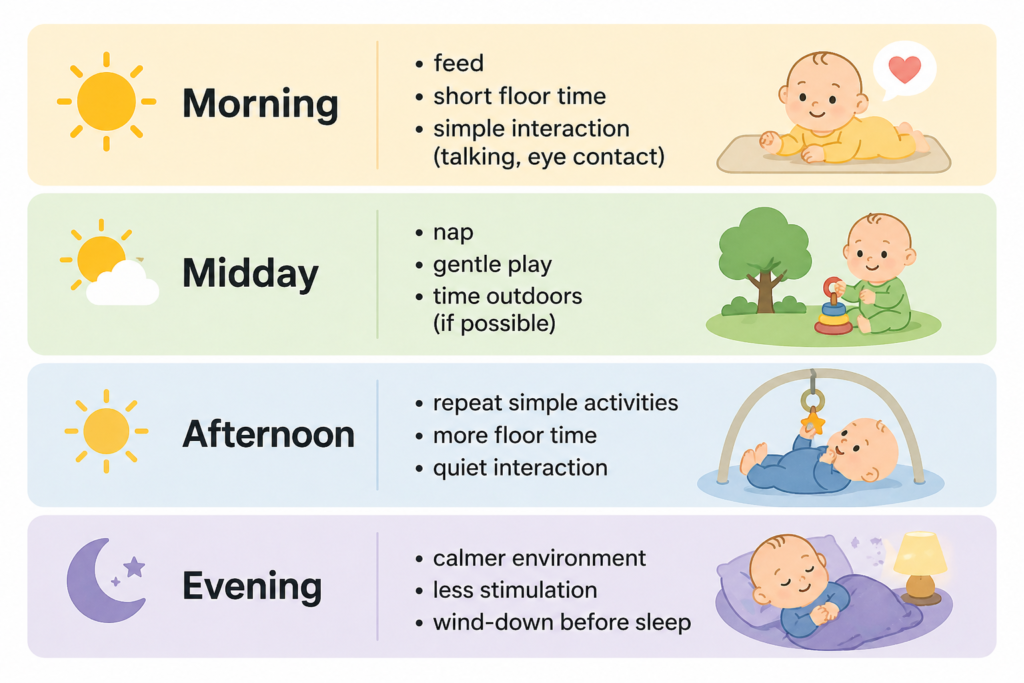
A Simple Daily Rhythm (Not a Strict Schedule)
At this age, your baby doesn’t need a busy schedule or constant entertainment.
Most babies need surprisingly little: space to move, connection with you, plenty of rest, and familiar daily rhythms that feel calm and predictable.
You don’t need complicated activities — just a handful of simple ideas you can return to throughout the day.
Instead of trying to fill the day with activities, it can help to think in gentle rhythms instead.
Simple Things to Do With a 4 Month Old
You don’t need a long list — just a few things that actually get used.
1. Floor Time
At this age, a lot of development happens simply through time on the floor.
As your baby stretches, reaches, pushes up, and begins experimenting with movement, they’re gradually building strength, coordination, and body awareness.
You don’t need to direct or constantly entertain them during this time. In most cases, a simple floor mat or soft rug is enough.
The goal isn’t stimulation — it’s freedom to move, observe, and practise naturally at their own pace.
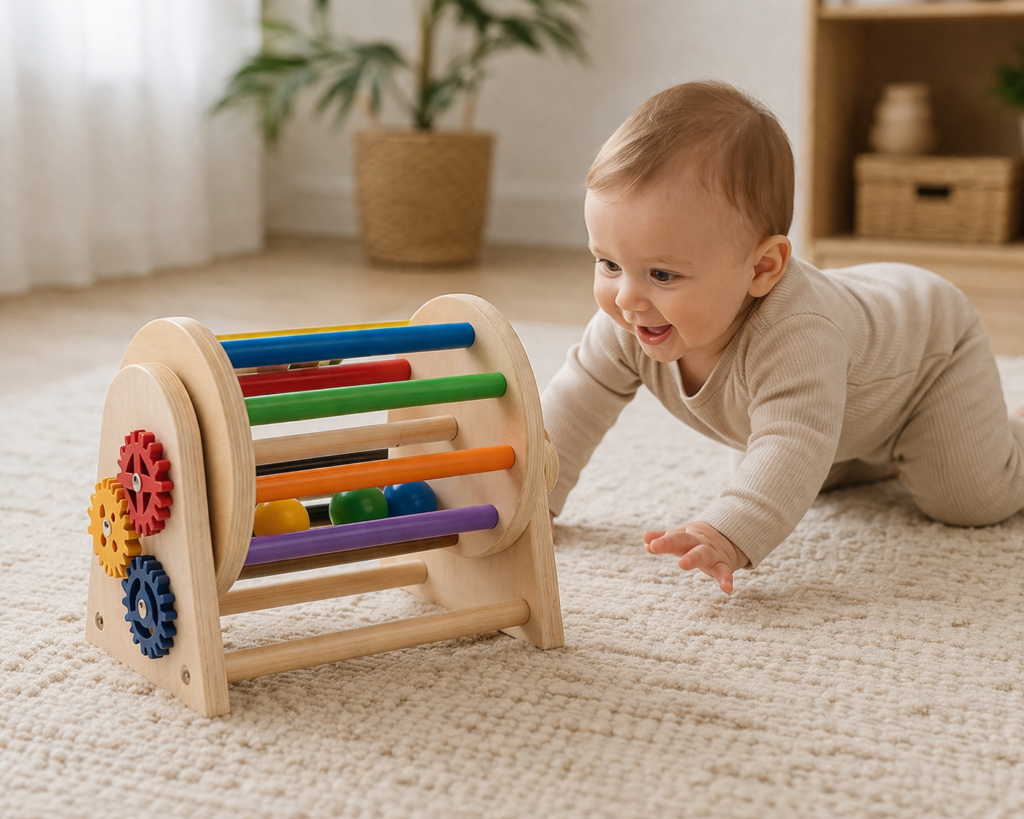
And as your baby gets closer to rolling and crawling, simple toys that encourage reaching and movement can gently support this stage without becoming overwhelming.
→ Simple and Safe Montessori Toys That Encourage Crawling
2. Everyday Sensory Exploration
At around 4 months, babies begin exploring the world through their hands, mouth and eyes.
Simple everyday objects often become the most interesting. A soft muslin cloth, a wooden teether, a silicone spoon or a knitted blanket all offer different textures to observe and explore.
There’s no need to introduce lots of new materials at once. Offering just one or two safe objects during floor time is often enough to encourage gentle sensory exploration without becoming overwhelming.
3. Mirror Play
Another simple activity many babies enjoy at this age is mirror play.
A low, baby-safe mirror gives your baby a chance to observe movement, expressions, and changes in their environment in a very natural way.
You may notice them watching their arms and legs more closely, reacting to their reflection, or becoming more active during tummy time in front of the mirror.
Over time, this gently supports visual tracking, coordination, and early body awareness — all through simple observation and movement.
If you don’t already have one, a baby-safe mirror from a simple sensory set works well for this stage.
This is one of the simplest setups that actually gets used daily — which is why many parents include it early on.
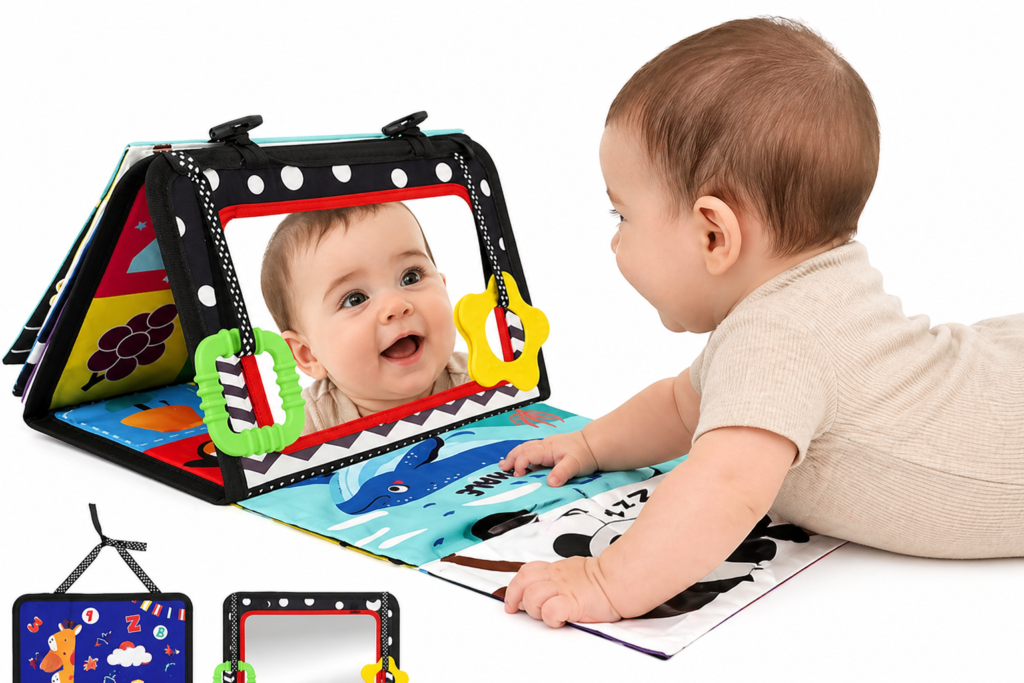
For more tummy-time ideas see → Tummy Time Ideas
4. Let Them Watch
One of the easiest activities requires almost no preparation at all.
Babies love watching everyday life unfold around them. Folding washing, preparing lunch, watering plants or simply moving around the kitchen can all be fascinating to a baby who is becoming more aware of the world.
You don’t always need to be entertaining them directly. Sometimes your baby is perfectly happy simply observing the people they love going about their day.
5. Simple Play Gym
If you want a more defined play space during the day, a simple play gym can work well at this age.
The key is keeping it fairly calm and uncluttered — just a few objects to observe, reach for, and gradually interact with over time.
You don’t need flashing lights, music, or lots of hanging toys. In fact, many babies focus better when there’s less competing stimulation around them.
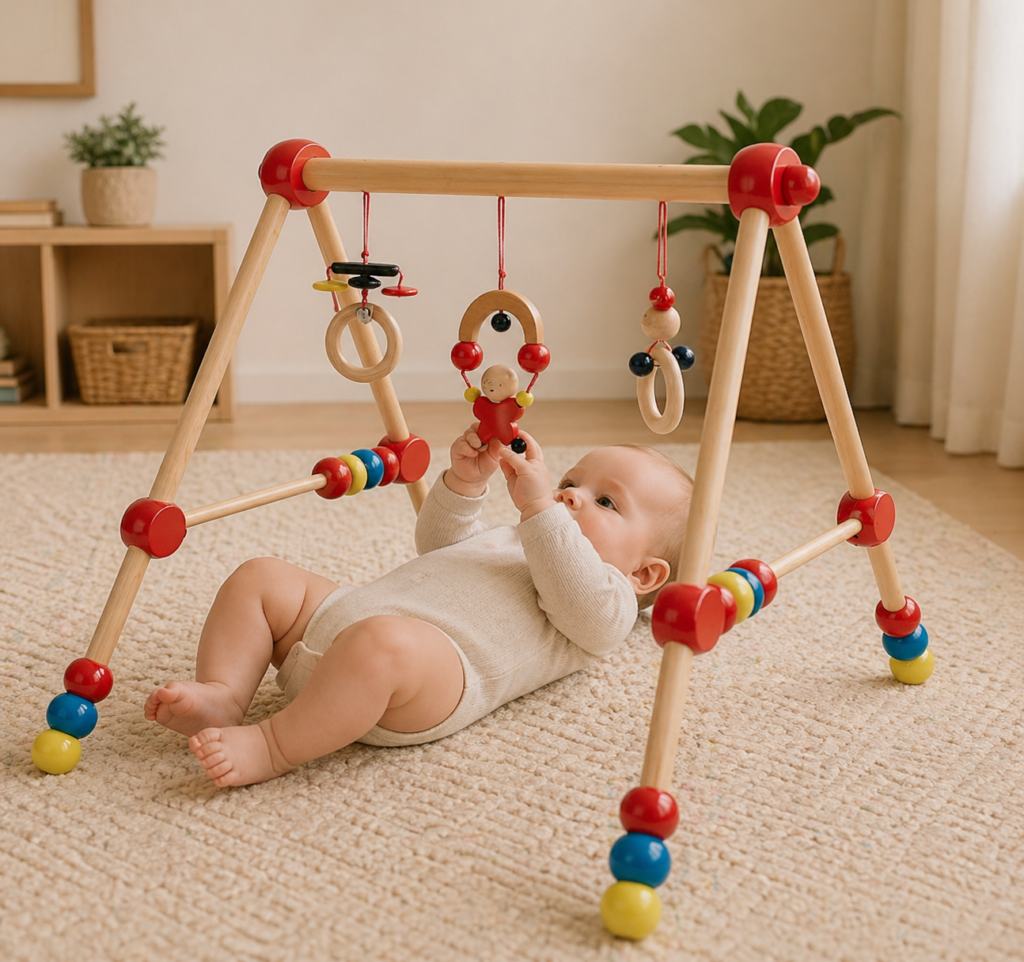
If you’d like to explore more options, take a look at our guide to Beautiful Wooden Baby Gyms That Support Early Development, where we compare our favourite calm, thoughtfully designed wooden baby gyms for every budget.
6. Talking & Face-to-Face Interaction

At this stage, your baby is learning constantly through everyday interaction with you.
Simple things often matter most: making eye contact, talking through what you’re doing, responding to their sounds, smiling, pausing, and giving them time to react.
These small back-and-forth moments help support connection, language development, and social awareness long before real conversation begins.
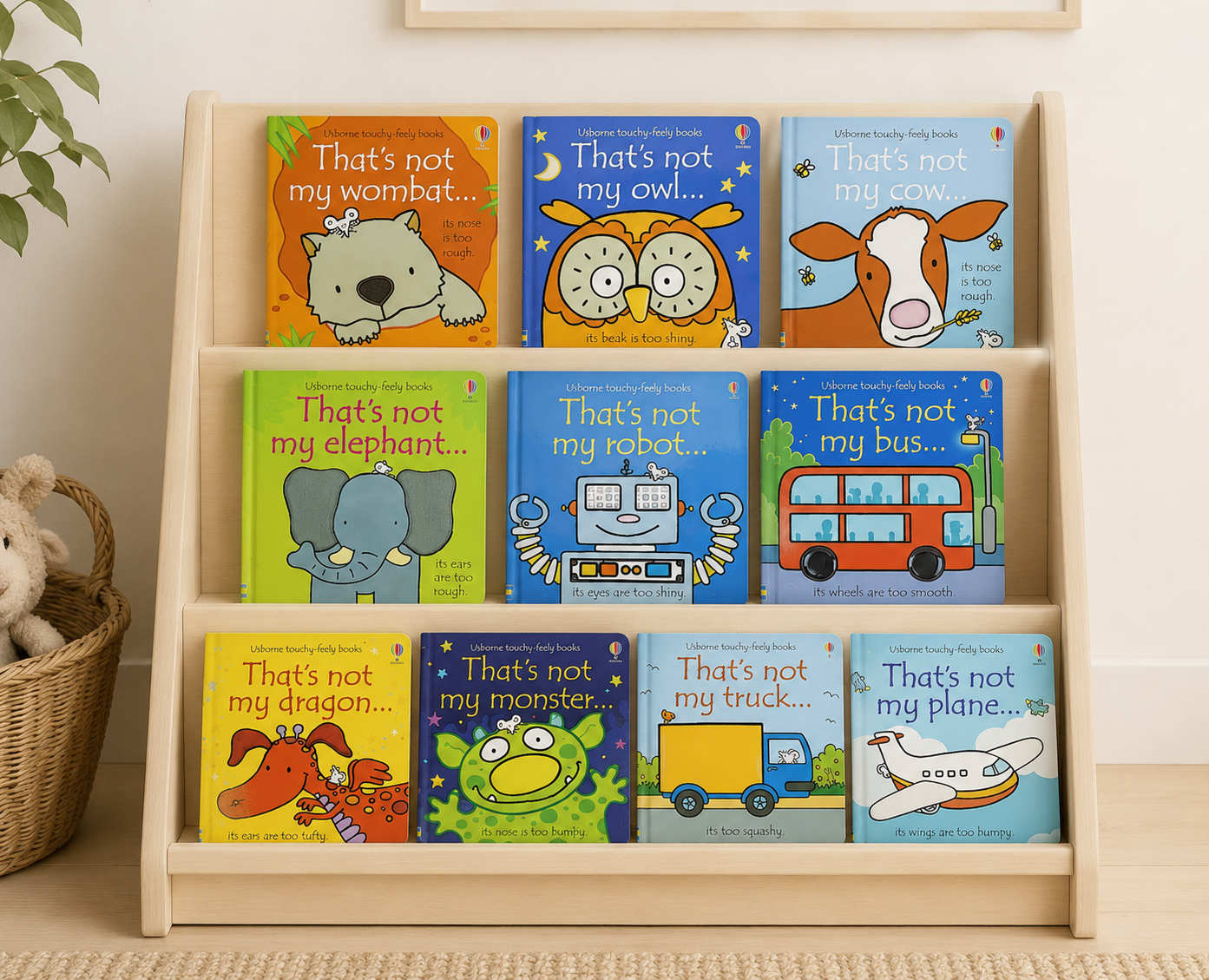
7. Reading & Singing
At this age, reading and singing are less about teaching and more about connection, rhythm, and familiarity.
Simple board books, familiar songs, and repeated rhymes are often enough. Your baby may not understand words yet, but they’re still learning through your voice, expressions, and repetition.
Even a few calm minutes at a time can become part of a comforting daily rhythm.
If you’re choosing a few to start with, these are the ones many parents end up using most often.
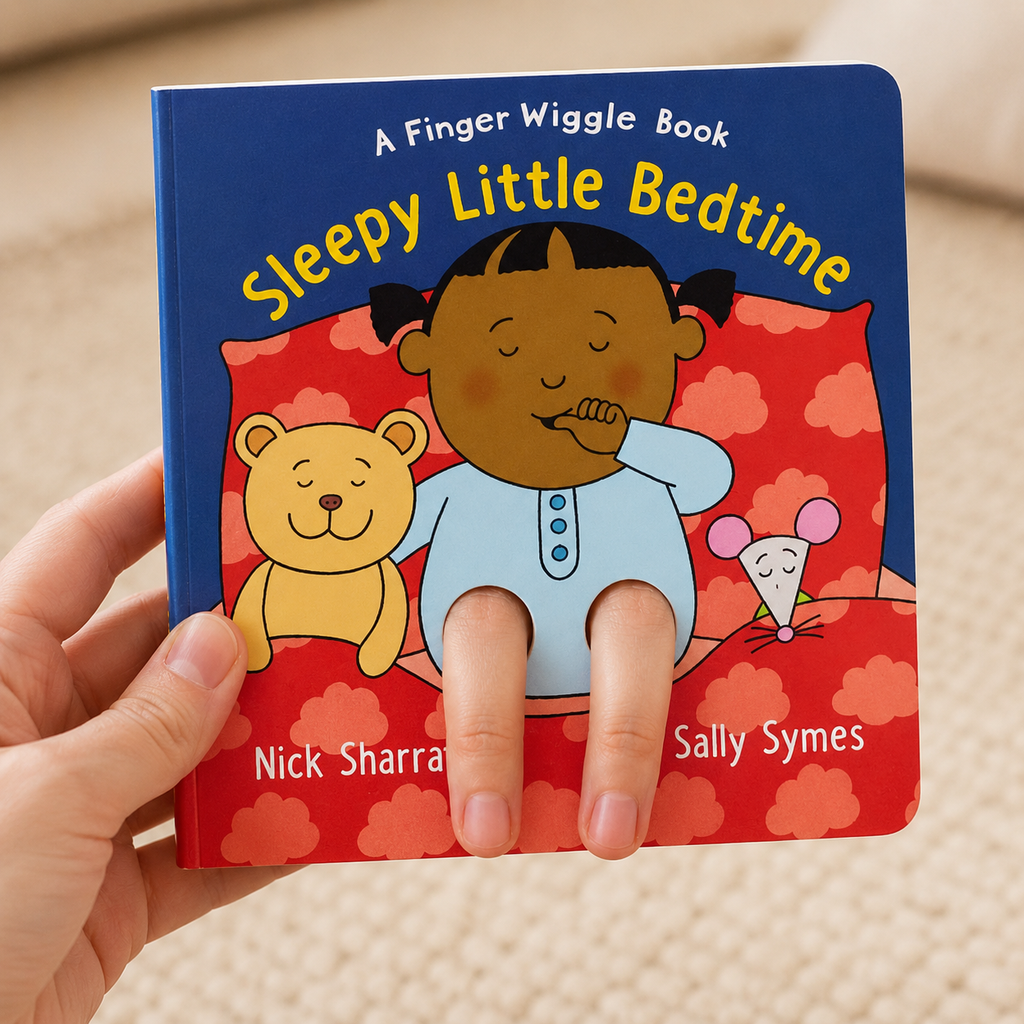
A Little Bedtime Wiggle
Sleepy Little Bedtime – Finger Wiggle Book
At four months, simple interactive books can turn reading into play. Sleepy Little Bedtime has finger holes that let you wiggle your fingers through the pages, giving baby something fun to watch and follow while you read. It’s an easy way to combine face-to-face interaction, visual tracking and early book time without needing a complicated activity.
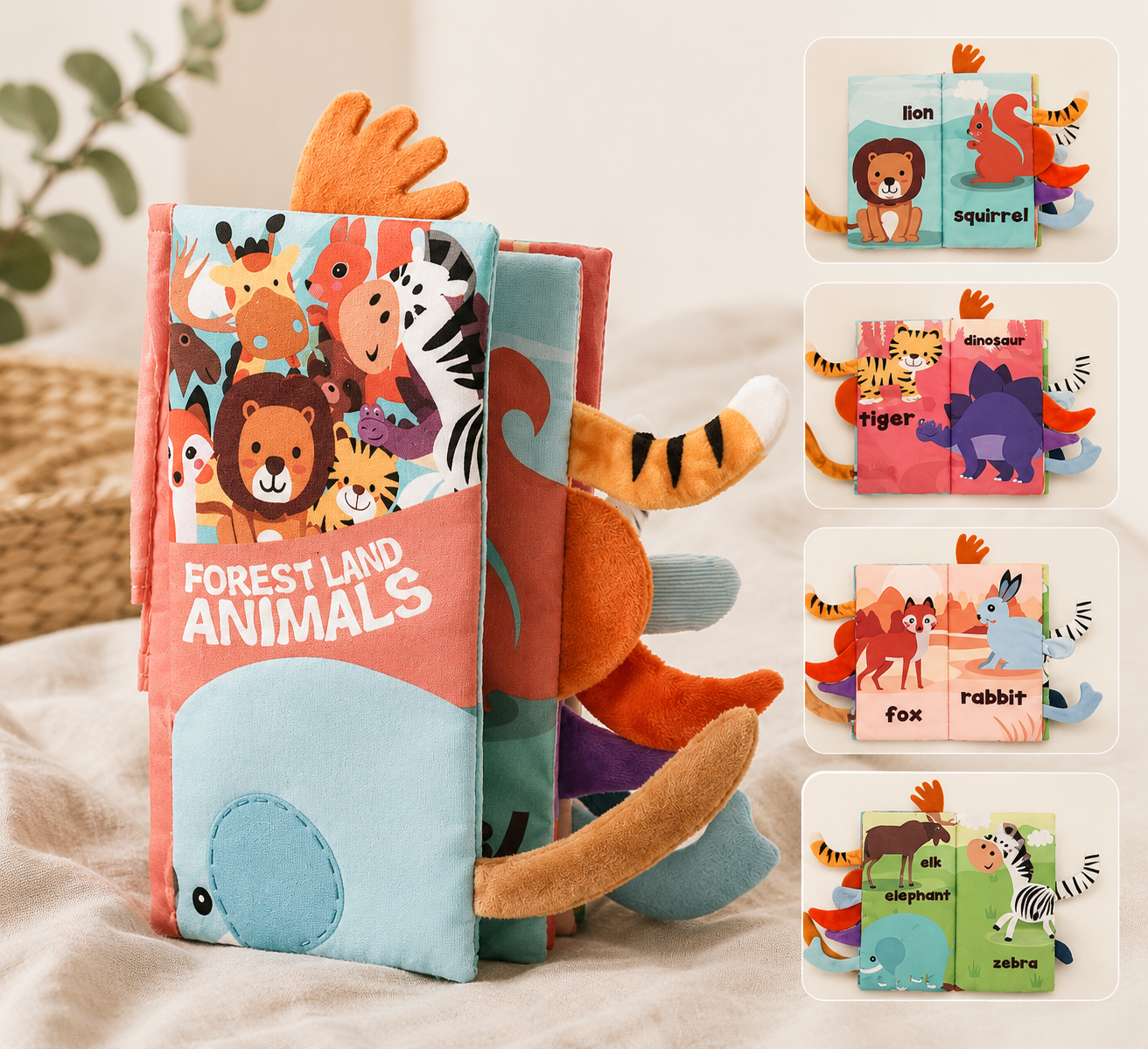
Sensory Cloth Book
A soft cloth book is ideal for four-month-olds who are beginning to explore everything with their hands and mouths. Bright animal pictures, different textures and gentle crinkle sounds give baby plenty to look at, grasp and listen to, while the soft, washable design makes it practical for everyday floor time or taking out in the pram.
8. Discovering Hands and Feet
Around this age, many babies become fascinated by their own hands.
You may notice them opening and closing their fingers, bringing their hands together, or spending long periods simply looking at them. Before long, they often discover their feet too.
Although it may not look like much is happening, these moments are an important part of learning how their body moves and where it is in space.
There’s no need to interrupt this quiet exploration—it is an activity in itself.
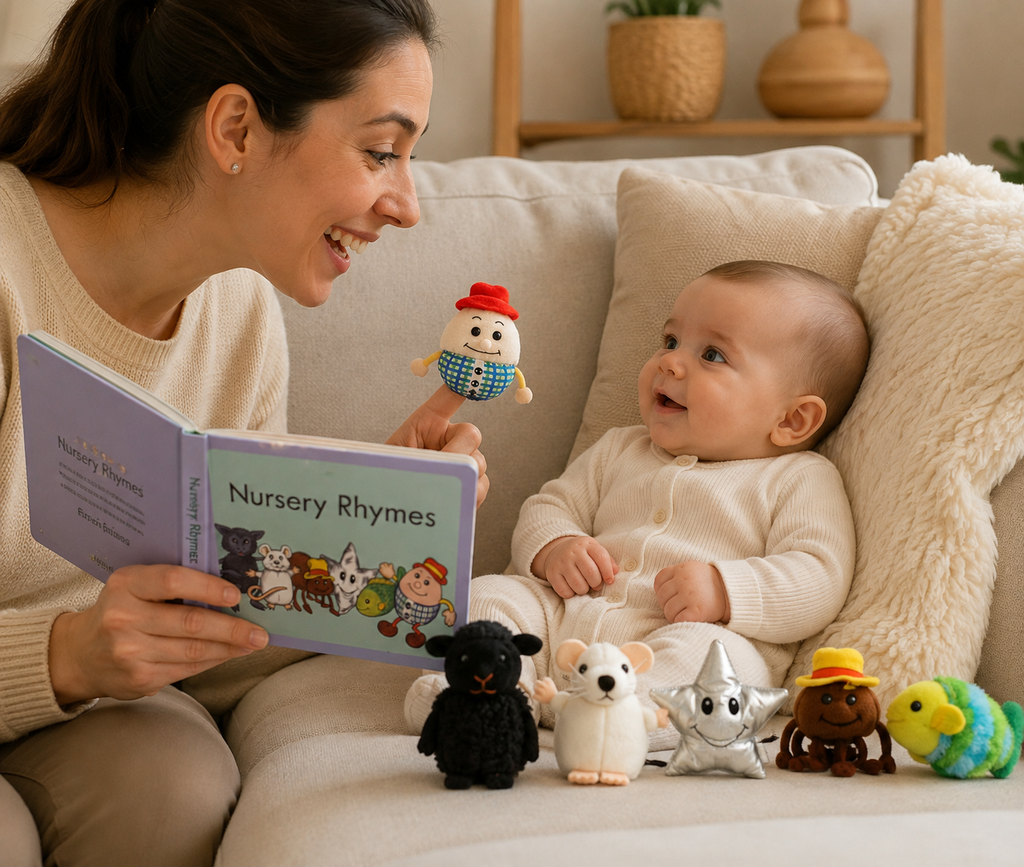
9. Nursery Rhyme Finger Puppets
At four months, nursery rhymes become even more engaging when you add something for your baby to watch. Use a finger puppet while you sing or read, moving it gently from side to side and bringing the rhyme to life with different voices and expressions. The combination of your voice, facial expressions and movement encourages visual tracking, attention and early communication — and makes a lovely little activity to repeat throughout the day.
View Finger Puppets and Book Set
10. Gentle Movement Together
Many babies enjoy gentle movement just as much as toys.
Holding your baby while swaying to music, gently bouncing them on your knees or slowly dancing around the room can be a lovely way to spend part of a wake window.
Alongside supporting balance and body awareness, these quiet moments often become some of the most enjoyable parts of the day for both parent and baby.
11. Getting Outside
Fresh air and natural light can make a surprisingly big difference at this stage — not just for your baby, but for you as well.
And it doesn’t need to be anything complicated. A short walk with a pram or baby carrier, sitting in the garden, or even spending time near an open window can help break up the day in a gentle way.
If you prefer carrying your baby for walks, our guide to the best baby carriers compares the options we found most comfortable and practical for everyday use.
12. Visiting a Baby Rhyme or Story Session in the UK
If you’re in the UK, programmes like Bookbug (Scotland) and Bookstart (England) offer free book packs, songs, and reading resources for babies and young children.
There’s also a free Bookbug app with a simple collection of songs, rhymes, and videos you can use at home or on the go.
Many local libraries also run free rhyme and story sessions, which can be a simple way to add variety to your week.
How Much Should You Be “Doing”?
This is the stage where many parents start wondering whether they should be doing more throughout the day.
But at 4 months, your baby doesn’t need constant entertainment or a packed routine. Most development at this age happens through simple things repeated consistently over time: movement, connection, observation, rest, and familiar daily rhythms.
Short periods of floor time, quiet interaction, reading, or simply watching the world around them are often more valuable than constantly switching activities.
And despite what social media can sometimes suggest, overstimulation is often more of a problem than boredom at this age.
If your baby has moments where they seem calm, alert, curious, or content simply observing their surroundings, you’re probably already doing enough.
Final Thoughts
At 4 months, your baby doesn’t need constant entertainment or a packed schedule.
Most babies benefit most from simple things repeated consistently: movement, connection, rest, and a calm environment where they can gradually explore the world around them.
Very often, a gentle rhythm, a bit of floor time, and everyday interaction are already enough.
What to Do Next
If you’re setting up your space to support your baby’s development, you might find this helpful:
→ How to Create a Montessori Bedroom for Babies
FAQs
What to do with a 4 month old all day?
You don’t need to fill every moment.
At this age, simple activities repeated throughout the day are enough — things like floor time, talking, short play, and rest.
A gentle rhythm works better than a full schedule.
How to entertain a 4 month old?
At 4 months, “entertaining” really means giving your baby the chance to explore.
Simple things work best:
- time on the floor
- face-to-face interaction
- looking at high-contrast books or objects
You don’t need constant stimulation — just the right kind.
What are simple things to do with a 4 month old?
You can keep it very simple:
- floor time
- mirror play
- talking and singing
- short walks outside
- looking at books
Repeating the same activities each day is often more effective than constantly adding new ones.
How long should a 4 month old play?
Most babies at this age have short wake windows (around 1.5–2 hours).
Play doesn’t need to fill all of that time — short periods of activity, followed by rest and feeding, are enough.
Do I need to entertain my baby all day?
No.
Independent movement, quiet observation, and simple interaction are all valuable.
If your baby is calm, alert, and occasionally content on their own, you’re already doing enough.
What toys are best for a 4 month old?
At this stage, simple is best:
- high-contrast books
- soft sensory toys
- a baby-safe mirror
- a simple play gym
You don’t need anything particularly bright, noisy or complicated — simple toys are often enough at this age.
How can I help my 4 month old develop?
Focus on:
- giving them space to move
- spending time interacting face-to-face
- repeating simple daily routines
Development at this stage comes from movement and connection, not complex activities.
Is it okay if my 4 month old gets bored?
Yes.
Short periods of “boredom” can actually help babies learn to explore their surroundings and develop focus.
You don’t need to constantly introduce new stimulation.
How much floor time should a 4 month old have?
As much as is comfortable throughout the day.
Frequent, short periods of floor time are more helpful than one long session.
This supports strength, coordination, and early movement skills.
What is a good daily routine for a 4 month old?
A simple pattern works well:
feed → short activity → nap
repeated throughout the day.
It doesn’t need to be exact — just consistent enough to feel predictable.
When do babies start crawling?
Many babies begin crawling between 7 and 10 months, although there’s a wide range of when it can happen. Some babies also skip crawling altogether and move on to other ways of getting around.
At 4 months, focus on giving your baby plenty of opportunities for natural movement — pushing up, reaching and rolling — rather than trying to encourage crawling directly.
What should a 4 month old be doing developmentally?
At this stage, many babies are:
- gaining head and upper body strength
- reaching and grasping
- becoming more aware of their surroundings
- interacting more socially
These early movements build the foundation for later skills like rolling and crawling.
You Might Also Find Helpful