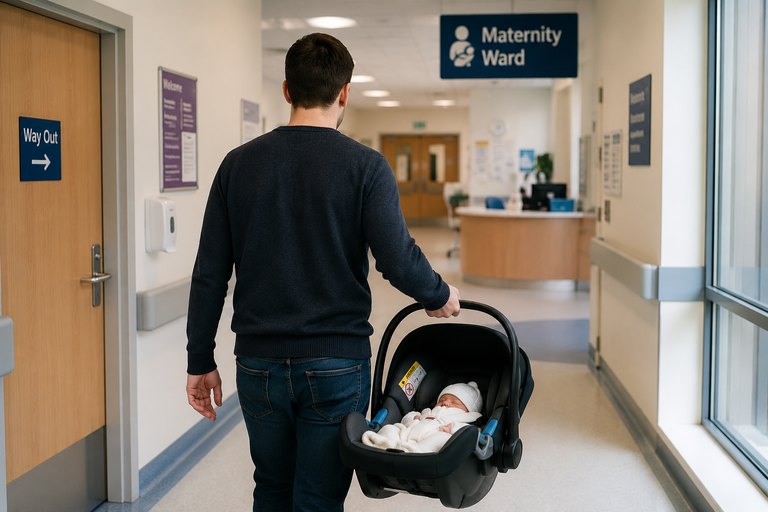
Floor Bed vs Crib for Newborns: What We’d Choose Again
One of the biggest misconceptions about Montessori is that babies need to sleep on a floor bed from the very beginning.
When we first started reading about Montessori, it was easy to feel as though choosing a crib somehow meant doing it “wrong”. Looking back, we don’t think that’s true at all.
Montessori has never been about following one rigid method. It’s about creating an environment that supports your child while also working for your family.
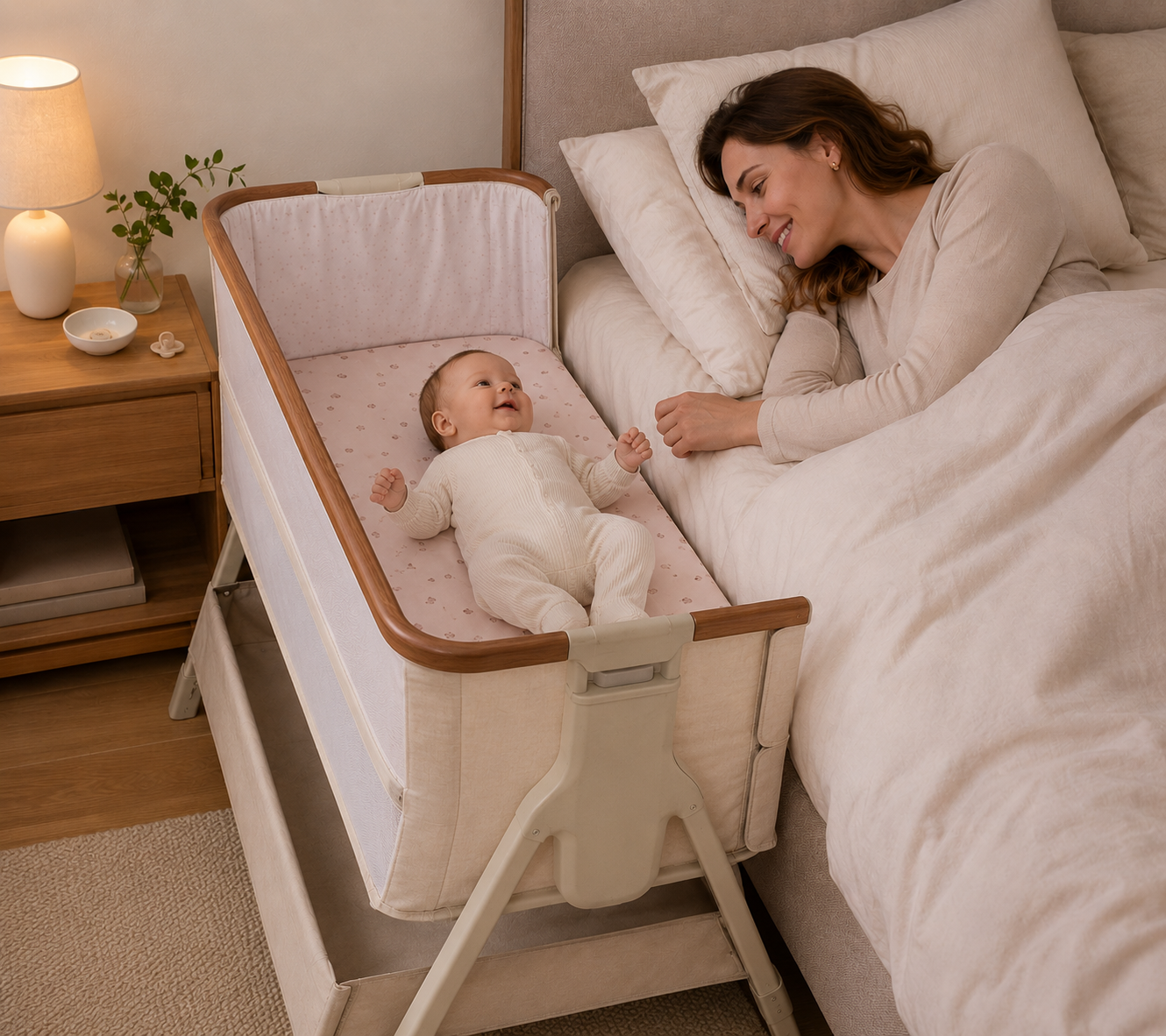
For us, that meant starting with a bedside crib—and we’d happily make exactly the same decision again.
Disclaimer: This post contains affiliate links. As an Amazon Associate I earn from qualifying purchases at no extra cost to you.
⚠ A Quick Note on Safe Sleep (UK Guidance)
| In the UK, the NHS recommends that babies sleep in the same room as their caregiver for at least the first 6 months. This reduces the risk of SIDS, makes night feeds easier and supports responsiveness. This applies whether you use: – a crib – a bedside sleeper – or a floor bed in the same room The key is safe, close sleep — not the specific setup |
Why We Didn’t Start With a Floor Bed
In the newborn months, practicality mattered more than philosophy.
Our daughter slept beside our bed in a bedside crib, making night feeds, settling and those frequent overnight checks much easier. She had her own safe sleep space while remaining close enough to respond quickly whenever she needed us.
Following NHS guidance to room-share for the first six months also felt reassuring during those early weeks.
At that stage, we never felt our daughter was “missing out” because she wasn’t sleeping on a floor bed.
Why We Still Love Montessori Floor Beds
That doesn’t mean floor beds aren’t wonderful.
As babies become more mobile, many of the reasons families choose Montessori floor beds begin to make much more sense.
A floor bed removes the need for climbing over cot rails, allows children to get in and out independently when they’re ready and creates a bedroom that evolves naturally through the toddler years.
Rather than being something your child eventually outgrows, a floor bed becomes part of the room itself.
At this stage, the mattress matters more than the frame — keeping it firm and breathable supports both safety and comfort. A standard UK single (90 × 190cm) firm mattress works well for floor bed setups and can continue into the toddler years.
When We Made the Transition
Once our daughter became more mobile, transitioning to a floor bed felt like the natural next step.
By then, her room had already been fully baby-proofed, and she was beginning to explore her environment much more independently.
The transition was far less dramatic than we’d imagined because it happened when the timing felt right rather than because we felt pressured to follow Montessori from birth.
Our daughter adapted far more quickly than we’d expected, perhaps because the move happened when she was developmentally ready rather than according to a particular timeline.
What We’d Do Again
If we were starting over tomorrow, we’d make exactly the same choice.
We’d begin with a bedside crib during the newborn months before moving to a Montessori floor bed once our baby was ready to explore more independently.
For us, it offered the best of both worlds: the practicality of a crib during the months when sleep was fragmented, followed by the long-term benefits of a floor bed as our daughter grew.
Things That Matter More Than the Bed
One thing we’ve learnt is that the bed itself is only a small part of the picture.
A calm bedroom, a firm mattress, predictable bedtime routines and a thoughtfully prepared environment have far more influence than whether your baby sleeps in a crib or on a floor bed.
Montessori has never been about buying a particular piece of furniture. It’s about creating an environment that encourages independence gradually and respectfully.
Who We’d Recommend Each Option For
We’d choose a bedside crib if…
- you plan to room-share during the newborn months
- you want night feeds to feel as straightforward as possible
- you’re not ready to baby-proof an entire bedroom yet
We’d choose a floor bed from birth if…
- you’re committed to preparing a fully baby-proofed room from day one
- you’re comfortable with a less conventional setup
- you’d prefer to avoid a later transition altogether
Final Thoughts
Looking back, we don’t think choosing a crib made our Montessori journey any less “Montessori.”
It simply reflected what our family needed at that moment.
If anything, it reminded us that Montessori isn’t about following one perfect path. It’s about observing your child, adapting as they grow and creating an environment that works for your family.
Whether you begin with a bedside crib or a floor bed, what matters most isn’t the furniture—it’s creating a calm, safe and responsive environment where your baby can sleep, grow and gradually become more independent.
What to Do Next
Once you’ve chosen your sleep setup, the next step is creating a space that supports your baby’s development.
Read next: → How to Create a Montessori Bedroom for Babies
If you’re planning ahead, you can also explore → Best Floor Beds (UK) — Safe, Simple & Montessori-Inspired
Shopping on Amazon?
If you’re not already a Prime member, you can check whether you’re eligible for a free 30-day trial and enjoy Prime delivery on millions of eligible items.
Floor Bed vs Crib for Newborns – FAQs
Is a floor bed safe for a newborn in the UK?
A floor bed can be safe for a newborn in the UK if the room is fully baby-proofed and safe sleep guidelines are followed. The mattress should be firm, breathable, and placed in a hazard-free environment. Many parents still choose a crib for the first few months due to NHS room-sharing recommendations.
Should I use a crib or floor bed for a newborn?
Both a crib and a floor bed can work for a newborn. A crib is often more practical in the early months, especially for night feeds and room-sharing. A floor bed is a longer-term solution that supports movement and independence but requires more preparation.
Can you use a Montessori floor bed from birth?
Yes, you can use a Montessori floor bed from birth, but it requires careful setup. The room must be fully baby-proofed, and the mattress must meet safe sleep standards. Some parents prefer to start with a crib and transition to a floor bed later.
When should you switch from a crib to a floor bed?
Most parents switch from a crib to a floor bed when their baby starts rolling, becoming more mobile, or showing signs of climbing. This typically happens between 4–8 months, depending on the child.
What size mattress is best for a Montessori floor bed in the UK?
A standard UK single mattress (90 × 190 cm) is commonly used for Montessori floor beds. It provides enough space for both baby and parent during the early months and can be used into toddlerhood.
Is a floor bed better than a crib for development?
A floor bed can support movement, independence, and body awareness as your baby grows. However, in the newborn stage, development is influenced more by the overall environment than the type of bed.
Do Montessori parents use cribs for newborns?
Yes, many Montessori parents use cribs or bedside sleepers during the newborn stage, especially when following safe sleep guidelines. Transitioning to a floor bed later is a common and practical approach.
Can a newborn sleep on a mattress on the floor?
A newborn can sleep on a mattress on the floor if it is firm, breathable, and placed in a safe, uncluttered environment. The surrounding space must be fully baby-proofed to reduce risks.
Is a bedside crib better than a floor bed for newborns?
A bedside crib is often more convenient for newborns because it allows for easy night feeds and keeps the baby close while maintaining a separate sleep surface. A floor bed may be more suitable later as the baby becomes mobile.
What are the disadvantages of a Montessori floor bed for newborns?
The main disadvantages include the need for full room baby-proofing, less convenience for night feeds, and the fact that it’s less commonly used during the newborn stage. It may also feel less reassuring for some parents initially.
You Might Also Find Helpful