
18 Month Old Hyper Before Bed? The Surprising Reason
If your 18 month old suddenly seems hyper before bed, you’re far from alone. Many parents spend the day with a tired, increasingly irritable toddler—only to watch them transform into a child who’s laughing hysterically, running laps around the living room and refusing every part of the bedtime routine.
It feels completely backwards.
Surely an exhausted toddler should become quieter, not more energetic?
The surprising truth is that hyperactivity before bed is often one of the clearest signs that a toddler has become overtired. Once they miss their natural window for sleep, the brain releases stress hormones that create a temporary “second wind”. Instead of looking sleepy, many toddlers become wired, impulsive and seemingly full of energy. These hormones are the body’s way of helping us stay awake a little longer when we’re extremely tired—almost like an emergency backup system.
The good news is that this behaviour is usually a normal response from an overwhelmed nervous system—not a sign that your toddler suddenly isn’t tired.
Here’s what’s really happening, why it happens so often around 18 months, and what actually helps.
A consistent, age-appropriate bedtime routine can often help prevent toddlers from reaching this overtired stage in the first place. If you’re looking to build a calmer evening routine, you may also find our guide to How to Build a Bedtime Routine That Fits Your Child helpful.

Disclaimer: This post contains affiliate links. I may earn a small commission at no extra cost to you. As an Amazon Associate I earn from qualifying purchases.
Why Overtired Toddlers Suddenly Become Hyper
The most common reason an 18-month-old becomes hyper before bed is surprisingly simple:
They’re overtired.
The confusing part is that overtired toddlers rarely look sleepy.
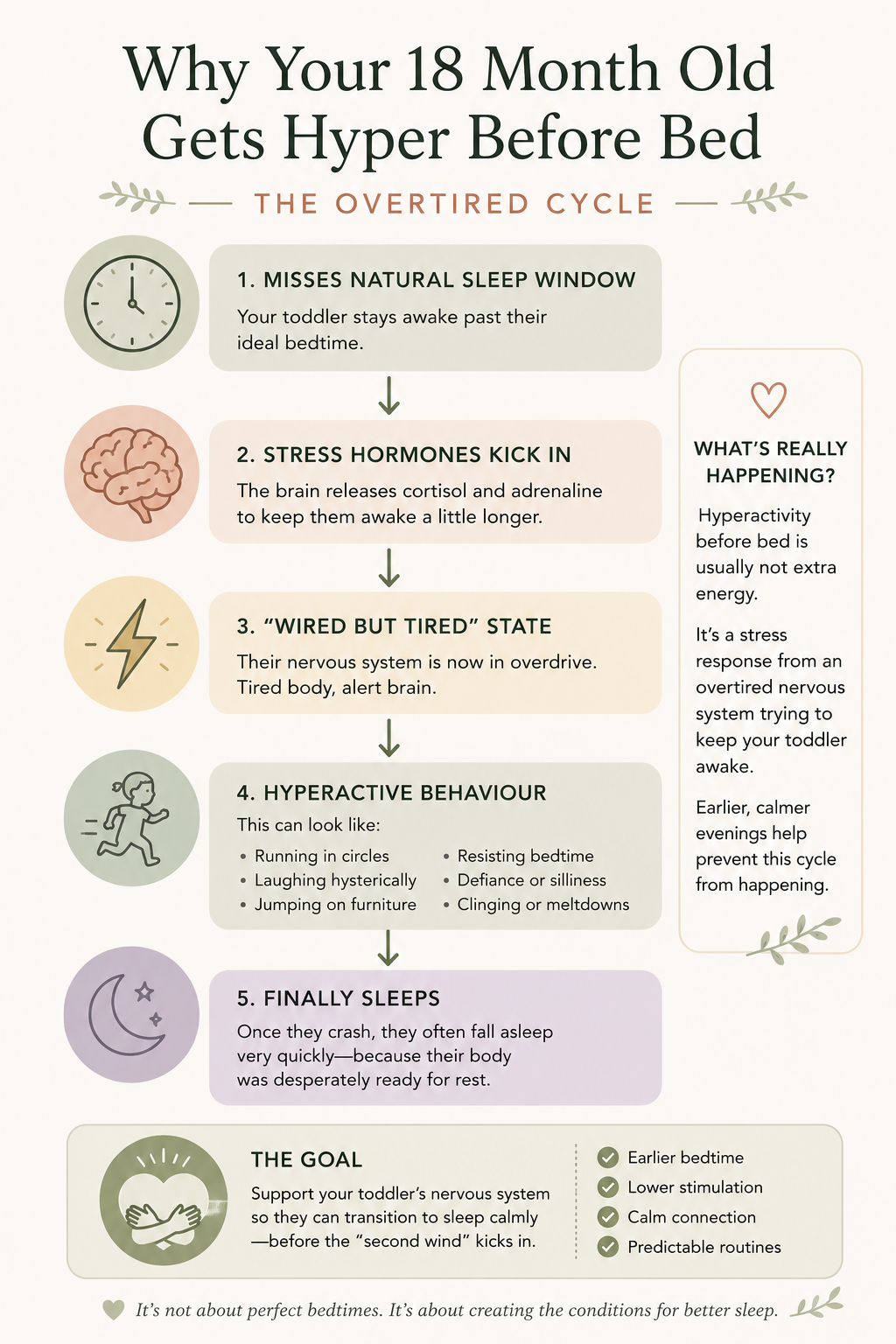
When a toddler stays awake beyond their natural sleep window, the brain doesn’t simply become more tired. Instead, it releases stress hormones such as cortisol and adrenaline to help them stay awake a little longer. This creates what’s often called a “wired but tired” state. Think of it as your toddler’s body pressing the accelerator just when it should be applying the brakes.
Rather than winding down, many toddlers suddenly seem to find a burst of energy.
Instead of slowing down, they may:
- Run in circles around the house.
- Laugh uncontrollably or become unusually silly.
- Jump on furniture or climb everything in sight.
- Resist putting on pyjamas or brushing their teeth.
- Seem unusually defiant or impossible to settle.
Their nervous system is working overtime to keep them awake, even though their body is desperately ready for sleep. What looks like endless energy is often the final stage of overtiredness rather than genuine excitement.
Understanding this changes the way many parents approach bedtime. Instead of trying to burn off the extra energy with more active play, it often helps to reduce stimulation, slow the pace and support the nervous system as it transitions towards sleep.
If you’re more of a visual learner, here’s a simple overview of what happens when a toddler becomes overtired before bed:
Why 18 Months Feels Especially Hard at Bedtime
Around 18 months, several developmental changes often happen at the same time, making evenings feel particularly challenging for many families.
Toddlers are learning new words at an incredible rate, discovering they can say “no” with confidence, becoming more aware that bedtime means separating from their parents, and experiencing much bigger emotions than they’re able to regulate on their own.
By the end of a busy day, their brains have processed an enormous amount of information. Add a missed sleep window into the mix, and it’s easy to see why bedtime can suddenly become chaotic.
This is also why many parents describe their toddler as becoming unusually silly in the evenings. Running away laughing, jumping on furniture or turning bedtime into a game isn’t usually a sign that they’re full of energy. More often, it’s an overwhelmed nervous system trying to cope with fatigue, excitement and the emotions of the day all at once.
If your toddler suddenly seems clingier, starts resisting bedtime or wakes more frequently overnight, you may also be experiencing the well-known 18-month sleep regression. This stage often combines developmental leaps, separation anxiety and overtiredness, making evenings feel particularly intense. The good news is that it’s a normal phase and, for most families, a temporary one.
If you’re also noticing increased clinginess during the day, our guide to Why Is My 18 Month Old So Clingy explores why this happens and how to respond calmly.
Signs Your Toddler Is Overtired at Bedtime
One of the easiest ways to tell whether bedtime hyperactivity is caused by overtiredness is what happens afterwards.
Your toddler may be overtired if they:
- Become hyper instead of sleepy.
- Seem unusually clumsy or accident-prone.
- Have bigger emotional outbursts than usual.
- Become noticeably clingier in the evening.
- Fall asleep within minutes once they finally settle.
Many parents are surprised that the child who spent thirty minutes running around the house falls asleep almost as soon as their head touches the pillow. That’s often a strong clue that the hyperactivity wasn’t extra energy at all—it was the body’s final attempt to stay awake.
Hyperactivity before bed is often just one example of how toddlers express dysregulation through their behaviour. We explore this in more detail in our Montessori Toddler Behaviour: A Calm, Practical Guide, where we look at why behaviour is often a form of communication rather than defiance.
What Actually Helps
Once we understood that our daughter’s bedtime hyperactivity wasn’t extra energy but overtiredness, our evenings started to make much more sense.
Rather than trying to “wear her out” with more activity, we found it far more helpful to focus on calming her nervous system before bed.
These are the simple changes that consistently made our evenings calmer.
1. Start Bedtime Earlier Than Feels Necessary
One of the biggest surprises was realising that waiting until our daughter looked tired was often too late.
Many 18-month-olds do best with bedtime somewhere between 6:30 and 7:30 pm, although every child is different. Even bringing bedtime forward by 20–30 minutes can be enough to prevent the “second wind” from appearing.
2. Create a Calmer Environment
Light has a surprisingly powerful effect on the body’s sleep hormones. Bright overhead lights tell the brain it’s still daytime, while softer, warmer lighting helps signal that bedtime is approaching.
We noticed a genuine difference after replacing our bright ceiling light with a warm, dimmable night light during the final hour before bed. Over time, simply switching on this particular light became a quiet signal that the day was coming to an end. Our daughter quickly began associating its warm glow with books, cuddles and bedtime, making the whole evening routine feel calmer and more predictable.
Recommended: JolyWell Night Light

If you’re unsure what to look for, we’ve put together a guide to the best low-stimulation night lights for toddlers, including the features that matter most for creating a calm bedtime environment.
3. Choose Calming Movement Instead of High-Energy Play
It sounds counterintuitive, but overtired toddlers rarely benefit from trying to “burn off” their energy.
Instead, activities that provide gentle resistance—often called heavy work—can help calm the nervous system.
Some favourites include:
- Carrying books to a shelf.
- Pushing a laundry basket.
- Helping wipe the table.
- Slow rocking.
- Deep-pressure cuddles.
The goal isn’t to eliminate movement. It’s to replace frantic stimulation with slower, more regulating activities.
4. Borrow Your Calm
One of the biggest lessons we learned was that toddlers often borrow calm from the adults around them. Lowering our voice, slowing our movements and speaking quietly almost always worked better than repeatedly telling our daughter to calm down.
5. Keep the Routine Predictable
At this age, familiarity feels safe.
Rather than introducing new bedtime tricks every evening, we found it much more helpful to keep the same simple sequence:
Bath → Pyjamas → Books → Song → Bed
The routine itself became a cue that sleep was approaching.
One of our favourite bedtime books is I Love You to the Moon and Back. It’s short, gentle and reassuring—perfect for helping the day end on a calm note.
When to Look at Your Schedule
If bedtime hyperactivity is becoming a daily pattern, it may be worth stepping back and looking at your child’s overall routine.
Small adjustments can make a surprisingly big difference, particularly if you notice:
- Hyperactivity lasting longer than an hour.
- Increasing bedtime battles.
- Frequent night wakings.
- Growing evening clinginess.
Sometimes the answer isn’t changing bedtime itself—it’s protecting naps, reducing late-afternoon overstimulation or starting the evening wind-down a little earlier.
If you’re also thinking about creating a calmer sleep environment, our guide to Montessori Bedroom Setup for Toddlers (1–3 Years) explores simple ways to support independence while keeping bedtime peaceful.
Common Mistakes to Avoid
When a toddler suddenly seems full of energy, it’s tempting to delay bedtime or encourage more active play.
Unfortunately, that usually has the opposite effect.
Try to avoid:
- Turning bedtime into another play session.
- Assuming hyperactivity means your toddler isn’t tired.
- Delaying bedtime in the hope they’ll become sleepier.
Overtired toddlers rarely need more stimulation.
They usually need earlier, calmer transitions into sleep.
The Reframe Every Parent Needs
An 18-month-old who becomes hyper before bed isn’t trying to be difficult.
More often, they’re:
- Overtired.
- Overstimulated.
- Emotionally overwhelmed after a busy day.
- Looking to you for connection and regulation.
One of the biggest mindset shifts for us was realising that bedtime hyperactivity wasn’t a sign our daughter wasn’t tired—it was often the clearest sign that she was too tired.
Once we stopped seeing the running, laughter and bedtime resistance as “bad behaviour” and started recognising them as signs of an overloaded nervous system, our evenings became much calmer. Instead of trying to correct the behaviour, we focused on helping her feel safe enough to slow down.
The goal isn’t a perfectly behaved toddler.
It’s creating the conditions that make sleep easier to reach.
For most families, that means earlier bedtimes, lower stimulation, predictable routines and plenty of calm connection before sleep.
Some evenings will still be chaotic—that’s simply part of parenting an 18-month-old. But understanding why the hyperactivity happens makes it much easier to respond with confidence rather than frustration.
Final Thoughts
If your 18-month-old is hyper before bed, you’re not failing — and neither are they.
This stage is incredibly common, especially during developmental leaps, sleep regressions and periods of rapid emotional growth.
You’ve probably heard people say, “It’s just a phase.” And while that can feel unhelpful when you’re living through bedtime chaos every evening, there’s truth in it. As your toddler’s nervous system matures and their sleep patterns become more settled, this intense bedtime hyperactivity usually begins to fade.
In the meantime, focus on what you can control:
- Earlier bedtimes.
- Lower stimulation.
- Calm connection.
- Predictable routines.
Small, consistent adjustments often make a much bigger difference than dramatic changes.
Toddlers feel safest when evenings follow a familiar rhythm. A simple bedtime routine helps them transition from a busy, stimulating day to a calmer state that’s ready for sleep. The goal isn’t a perfect bedtime every night—it’s creating an environment that makes winding down a little easier, one evening at a time.
FAQs
Why does my toddler get a burst of energy before bed?
A burst of energy before bed is often a sign that your toddler has become overtired rather than well-rested. When they stay awake beyond their natural sleep window, the body releases stress hormones such as cortisol and adrenaline, creating a temporary “second wind.” Instead of appearing sleepy, many toddlers become hyperactive, silly or unusually resistant to bedtime.
Is hyperactivity before bed a sign of ADHD?
Not usually. Hyperactivity in the evening is extremely common in toddlers, particularly around 18 months, and is often linked to overtiredness, overstimulation or normal developmental changes. If hyperactivity occurs throughout the day and affects multiple areas of your child’s life, discuss your concerns with your health visitor or GP.
Why does my toddler become silly before bed?
Many toddlers become unusually silly because they’re trying to cope with an overloaded nervous system. Running away laughing, making everything into a game or refusing bedtime often reflects tiredness, excitement and a need for connection rather than deliberate misbehaviour.
Should I let my toddler run around to burn off energy before bed?
Usually not. While gentle movement can help, high-energy play close to bedtime often increases stimulation instead of reducing it. Activities such as carrying books, helping with simple chores, cuddling or reading together are generally more effective at helping toddlers wind down.
How long does the 18-month sleep regression last?
The 18-month sleep regression typically lasts anywhere from two to six weeks, although every child is different. During this period, toddlers may fight bedtime, wake more frequently overnight, become clingier and appear unusually hyper before sleep. Consistent routines and an earlier bedtime often help the phase pass more smoothly.
What time should an 18-month-old go to bed?
Many 18-month-olds do well with a bedtime somewhere between 6:30 pm and 7:30 pm, depending on their nap schedule and individual sleep needs. If your toddler regularly becomes hyper before bed, moving bedtime 20–30 minutes earlier can sometimes prevent the overtired “second wind.”
Is it normal for my toddler to cry or fight bedtime every night?
Some bedtime resistance is very common around 18 months as toddlers develop greater independence and become more aware of separating from their parents. If evenings have suddenly become more difficult, it may be linked to a developmental leap, overtiredness or the 18-month sleep regression rather than a behavioural problem.
Why does my toddler fall asleep instantly after being hyper?
This is one of the strongest signs that the hyperactivity was caused by overtiredness rather than genuine energy. Once the stress hormones begin to settle, many toddlers fall asleep within minutes because they were actually ready for sleep all along.
You Might Also Find Helpful