14 Month Old Clingy Phase: Why Suddenly Clingy and What Helps
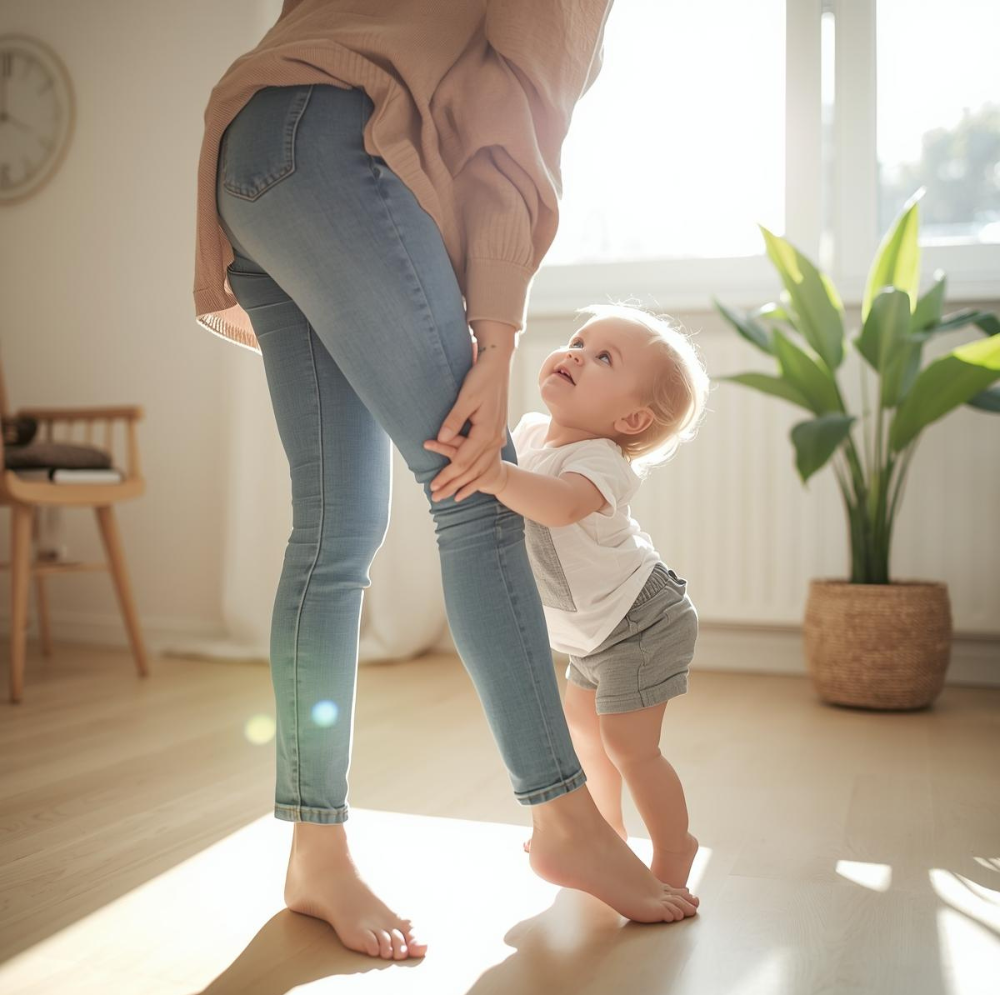
One day your toddler happily wanders off to explore the living room. The next, they cry the moment you stand up, insist on being carried everywhere and seem unable to let you out of their sight.
If this sounds familiar, you’re not imagining it. Around 14 months, many toddlers become noticeably clingier, even if they were previously happy to play independently.
While it can feel like a step backwards, it’s usually a sign that your child’s understanding of the world is becoming much more sophisticated. They’re beginning to understand that you can leave, but they can’t yet predict when you’ll come back. That uncertainty can feel overwhelming, even when you’re only stepping into the next room.
The good news is that this phase is incredibly common—and, for most children, temporary.
Why Does My 14 Month Old Suddenly Seem So Clingy?
Around 14 months, several developmental milestones tend to overlap.
Your toddler is becoming more mobile, more curious and far more aware of the people around them. At the same time, they’re developing a stronger understanding that you continue to exist even when you’re out of sight.
That growing awareness is important—but it can also feel unsettling.
Rather than simply forgetting about you when you leave the room, your toddler now understands that you’re somewhere else—they’re just not yet confident about when you’ll come back.
This is one reason separation anxiety often peaks between 12 and 18 months.
Clinginess Is Often a Sign of Healthy Attachment
It can be tempting to worry that you’ve somehow made your toddler “too dependent.”
In reality, the opposite is often true.
Children who feel securely attached to their caregivers use them as a safe base from which to explore the world. When something feels uncertain, they naturally come back for reassurance before heading off again.
You might notice your toddler walking a few steps away, turning back to check you’re still there, then carrying on playing.
That constant back-and-forth is a normal part of development—not a problem to fix.
In fact, feeling able to come back to you for reassurance is exactly what gives many toddlers the confidence to explore in the first place.
What Clinginess Can Look Like
Every child shows it differently, but common signs include:
- following you from room to room
- asking to be carried more often
- crying when you leave the room
- wanting extra cuddles
- resisting independent play
- becoming more upset at bedtime or nursery drop-off
Some days they’ll seem confident again. Other days they’ll barely let you put them down.
Both are normal.
If your toddler also seems unusually emotional or unsettled around this age, you might find our guide to Why 18 Months Is So Hard reassuring too.
What Actually Helps
The aim isn’t to make your toddler less attached.
It’s to help them feel secure enough that independence develops naturally.
1. Stay emotionally available
Toddlers usually become more confident when they know you’re nearby.
Rather than encouraging independence from a distance, try sitting beside them while they play. Often, simply knowing you’re there is enough.
2. Practise short separations
Instead of disappearing without warning, let your toddler know where you’re going.
“I just need to get a drink. I’ll be right back.”
Then follow through.
Small, predictable separations gradually build trust.
3. Keep familiar routines
When toddlers know what comes next, the day feels more predictable.
Simple routines around meals, naps and bedtime often reduce anxiety because they provide a reassuring rhythm.
This builds trust over time.
If you’re unsure how to structure this, a simple routine can help → A Simple Montessori Toddler Daily Routine for Calm Days
4. Encourage independence without expecting it
At 14 months, independence doesn’t mean playing alone for an hour.
It might simply mean stacking blocks while you’re sitting beside them or carrying toys across the room before coming back for reassurance.
These small moments build confidence over time.
If your toddler is resisting independent play altogether, these activities can help them build confidence gradually → Best Montessori Toys for 2 Year Olds That Build Focus & Independent Play
5. Expect clinginess after big changes
Many toddlers become noticeably clingier after:
- illness
- travel
- starting nursery
- disrupted sleep
- developmental leaps
Needing extra reassurance during these periods is completely normal.
What Usually Doesn’t Help
When you’re exhausted, it’s understandable to want the phase to end quickly.
But pushing independence before your toddler feels ready often has the opposite effect.
Instead of:
- ignoring crying
- leaving without saying goodbye
- forcing independent play
try offering reassurance first.
Children who feel secure usually become independent more naturally over time.
When Does the Clingy Phase End?
Every child is different, but many parents notice things gradually becoming easier over the following months.
Your toddler may begin:
- playing independently for longer
- coping better with short separations
- exploring unfamiliar places with more confidence
There’s rarely a single day when the clinginess disappears.
Instead, it slowly fades as their confidence grows.
A Thought That Helped Us
It can be easy to see clinginess as something you need to stop.
But another way to look at it is this:
Your toddler isn’t asking you to prevent them from becoming independent.
They’re asking you to stay close while they practise becoming independent.
Those are two very different things.
It often feels contradictory, but children who feel safest coming back to their parents are often the ones who become most confident walking away. Security doesn’t hold children back. It gives them the confidence to step away when they’re ready.
Frequently Asked Questions
Is it normal for a 14 month old to suddenly become clingy?
Yes. Many toddlers become noticeably clingier between 12 and 18 months as they develop a stronger awareness of separation. Although it can feel sudden, this phase is usually a normal part of healthy emotional and cognitive development.
How long does the 14 month clingy phase last?
Every child is different, but for many toddlers the most intense clinginess gradually eases over a few weeks or months. You may notice good days and difficult days rather than a sudden end to the phase.
Why is my 14 month old crying when I leave the room?
Around this age, toddlers understand that you can leave, but they don’t yet have the confidence to know exactly when you’ll return. Crying when you walk away is often a sign of separation anxiety rather than a sign that something is wrong.
Should I encourage my 14 month old to be more independent?
Yes—but gently. At 14 months, independence develops best when toddlers feel emotionally secure first. Staying nearby while they play, offering reassurance and allowing them to explore at their own pace often builds confidence more effectively than pushing them to separate before they’re ready.
Can teething make a 14 month old more clingy?
Yes. Teething, illness, disrupted sleep and developmental leaps can all temporarily increase clinginess. During these times, many toddlers simply need a little more comfort and reassurance than usual.
Why is my 14 month old suddenly refusing to play alone?
Independent play often becomes more difficult during periods of separation anxiety. Your toddler may still enjoy exploring toys, but they want the reassurance of knowing you’re nearby. This is usually temporary and becomes easier as their confidence grows.
Does starting nursery make toddlers more clingy?
It can. Starting nursery, travelling or any significant change in routine may temporarily increase clinginess as your toddler adjusts to a new environment. Keeping routines predictable and offering plenty of reassurance at home can help them feel more secure.
When should I worry about clinginess?
Clinginess on its own is usually a normal developmental phase. However, if your child seems persistently distressed, stops meeting developmental milestones, loses skills they previously had, or you’re worried about their behaviour for any reason, it’s worth discussing your concerns with your health visitor or GP.
You Might Also Find Helpful