Best Learning Towers for Toddlers — Safe and Practical Options
Many toddlers reach a stage where simply watching is no longer enough.
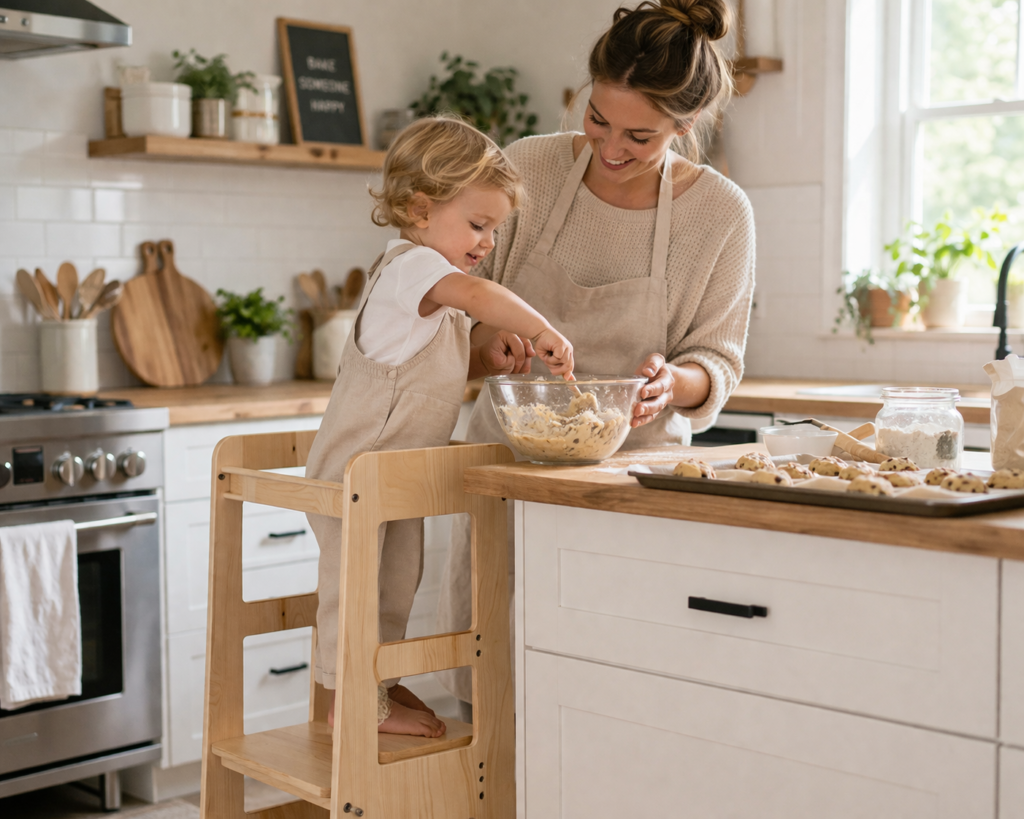
They want to stir the pancake batter, wash vegetables, help prepare snacks and see what you’re doing on the kitchen counter.
A learning tower gives them a safe way to join everyday routines at counter height, encouraging the kind of independence and participation that Montessori calls practical life. Rather than relying on unstable chairs or constantly asking to be picked up, toddlers can observe, help and gradually become more involved in everyday family life.
It quickly became one of the most-used pieces of furniture in our home. We bought ours for baking, but our daughter soon used it for washing her hands, helping prepare meals, watching us cook and inspecting absolutely everything happening on the worktop. Although it permanently occupied a corner of our kitchen, that felt like a small trade-off compared with constantly lifting her up every few minutes so she could see what we were doing.
If you’d like to learn more about the everyday skills Montessori calls practical life, you might enjoy our guide to → Montessori Practical Life for Babies & Toddlers
Disclaimer: This post contains affiliate links. As an Amazon Associate I earn from qualifying purchases at no extra cost to you.
Why Do Montessori Families Use Learning Towers?
Montessori environments are designed to help children participate in real life rather than simply observe it.
Imagine spending every day watching the people you love cook, prepare snacks and wash fruit—but never being able to see or join in. That’s often what the kitchen looks like from toddler height.
It’s no wonder so many toddlers ask to be picked up.
A learning tower safely brings children up to counter level so they can wash vegetables, stir pancake batter, prepare snacks and help with everyday tasks alongside you. Over time, these small moments help build confidence, coordination and independence.
What to Look for in a Learning Tower
The best learning tower isn’t necessarily the one with the most features. It’s the one that fits naturally into your home and makes it easier to say “yes” when your toddler wants to get involved.
When comparing learning towers, we’d look for:
Quality materials – Simple wooden designs tend to be durable, timeless and fit naturally into most homes.
Stability and safety – A wide base, enclosed sides and a sturdy design that feels secure during everyday use.
Size – Consider where it will live. If space is limited, a foldable model may be a better choice.
Adjustable height – Allows the tower to grow with your child over several years.
Best Learning Towers (UK)
After comparing dozens of learning towers, we found that the models families tend to use most are rarely the ones with the most features. Stability, ease of use, and how naturally a tower fits into daily life often matter far more than extras.
Best Learning Tower Overall
COSYLAND Learning Tower
A sturdy, well-balanced learning tower that feels practical enough for everyday use without dominating the kitchen. If you’re looking for one tower that does everything well without taking over the room, this is the one we’d start with.
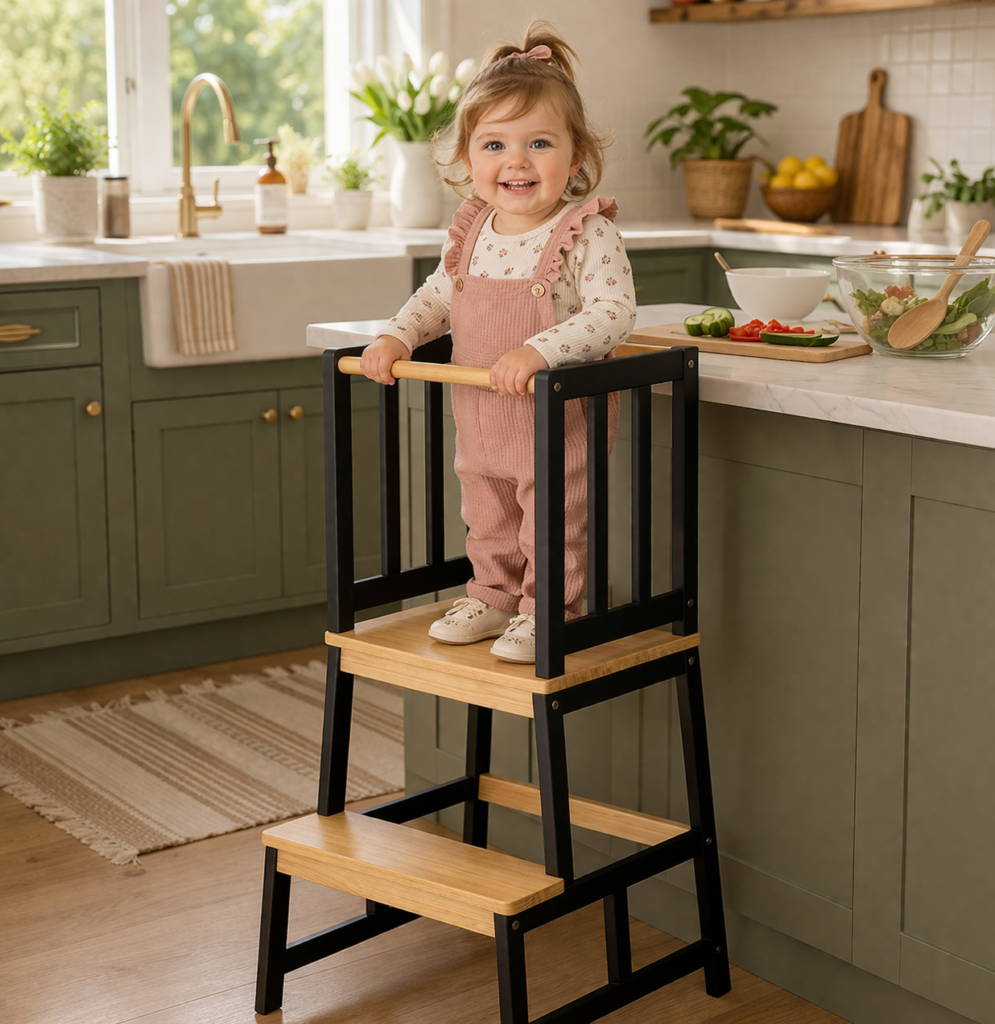
Best for: Families who want one learning tower that balances stability, practicality, and everyday use.
✔ durable bamboo construction
✔ stable wide-base design
✔ compact footprint for everyday use
Premium Learning Tower for Small Kitchens
Learning Tower Company
Our premium design pick for smaller kitchens — a folding learning tower that measures just 8 cm when folded.
If aesthetics matter as much as practicality, this is the one we’d choose.
Made from birch plywood, it feels more like a considered piece of furniture than toddler equipment and folds down to an impressively slim 8 cm (11 cm at the protruding step) — ideal for smaller or open-plan kitchens.
With two adjustable platform heights and a design intended for ages 1–6, it’s also made to stay useful as your child grows.
Learning Tower Company Helper Tower
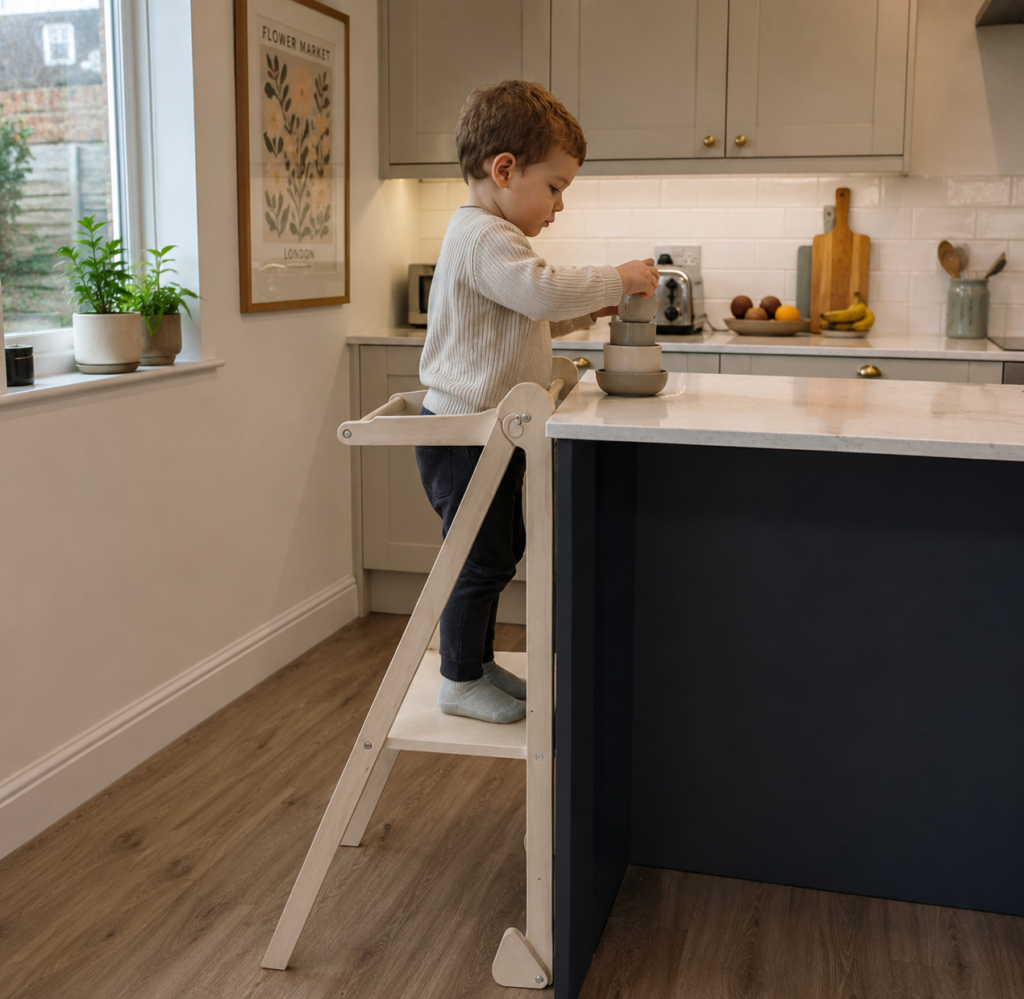
Best for: families who want a learning tower that’s as beautiful as it is practical.
✔ clean, furniture-inspired design
✔ folds away to 8 cm when not in use
If your kitchen is on the smaller side, you might also find our guide to → Best Foldable Learning Towers That Don’t Take Over Your Kitchen
Best Foldable Learning Tower for Small Spaces
FUNLIO Folding Toddler Step Stool
Designed for smaller kitchens and homes where space matters. The foldable design makes it easier to store between uses while still providing a secure platform for toddlers who want to be involved in daily routines. For families without space for a permanently positioned learning tower, this is one of the most practical options we’ve found.
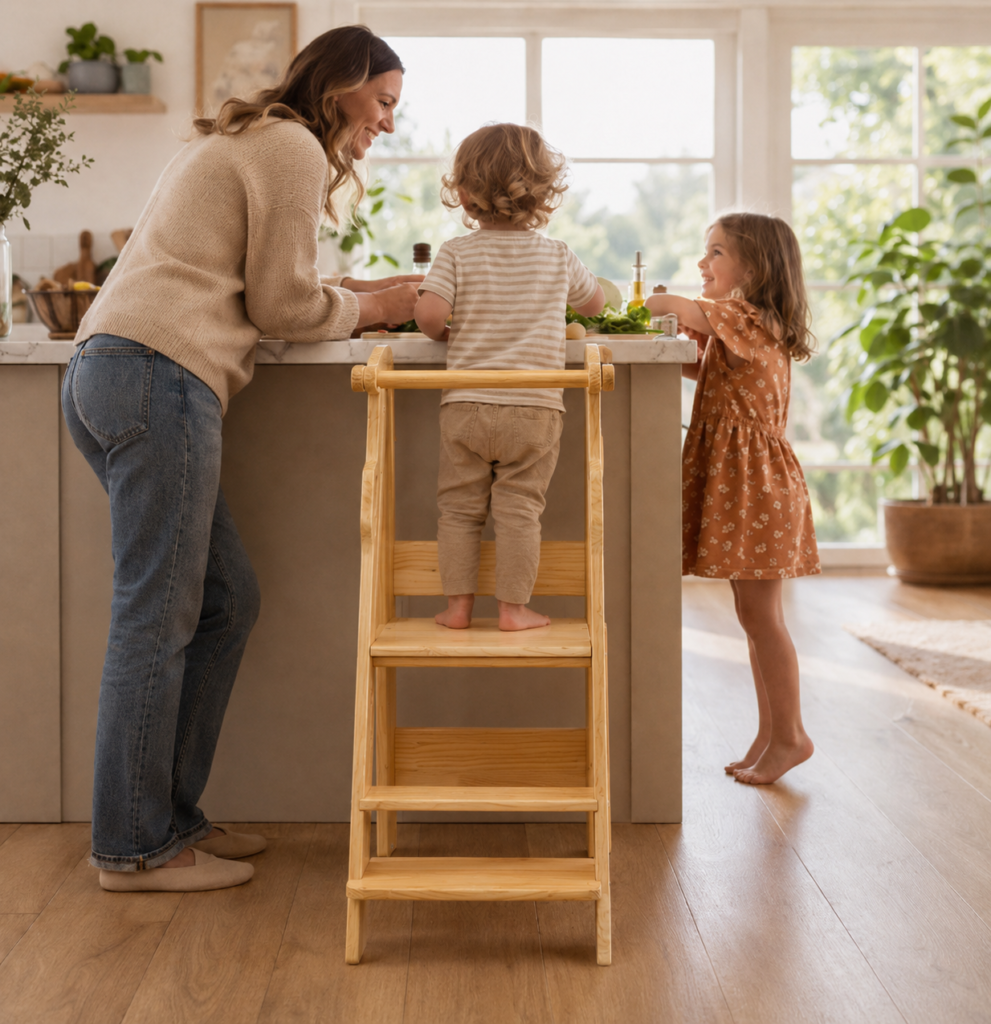
Best for: Families who need a learning tower that can be folded away between uses.
✔ folds flat for storage
✔ adjustable platform height
✔ lightweight and easy to move
✔ enclosed standing area
Best Budget Learning Tower
Urbanliving Kitchen Helper
A straightforward option for families who want the benefits of a learning tower without spending more than necessary. While it doesn’t include extra features or conversion functions, it provides a practical way for toddlers to participate more safely in everyday kitchen routines.
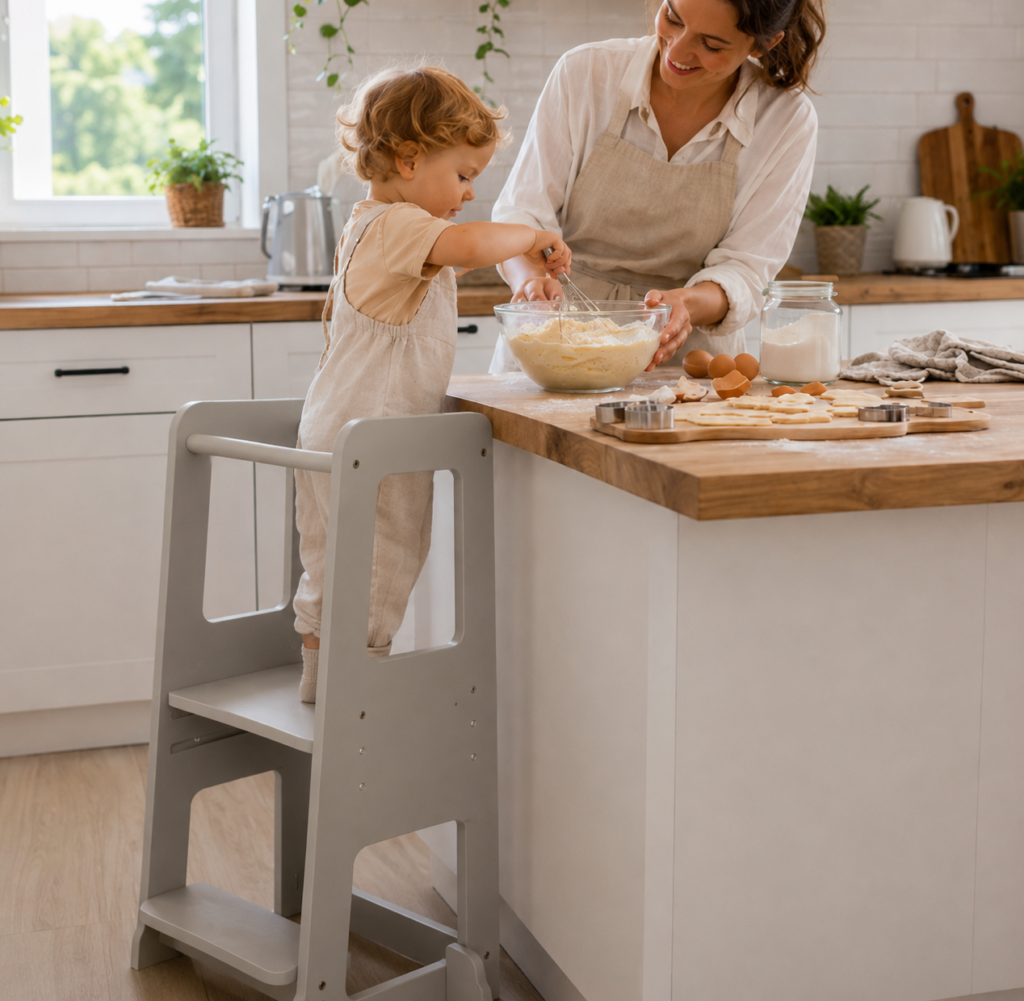
Best for: Families looking for a practical entry-level learning tower.
✔ budget-friendly price point
✔ simple, functional design
✔ easy to incorporate into daily routines
✔ no unnecessary extras
Best Premium Wooden Learning Tower for Toddlers
Tutti Bambini Helping Hands Montessori Learning Tower
Designed to become part of everyday family life, the Tutti Bambini Helping Hands Learning Tower combines a simple, solid wooden design with the stability needed for daily kitchen use. Rather than simply giving toddlers a better view of the worktop, it creates opportunities for them to participate in everyday routines alongside you—from washing vegetables and stirring pancake batter to helping prepare snacks.
One thing we particularly like is that it focuses on what matters most: bringing children safely to counter height while encouraging independence through real-life participation rather than adding unnecessary features.
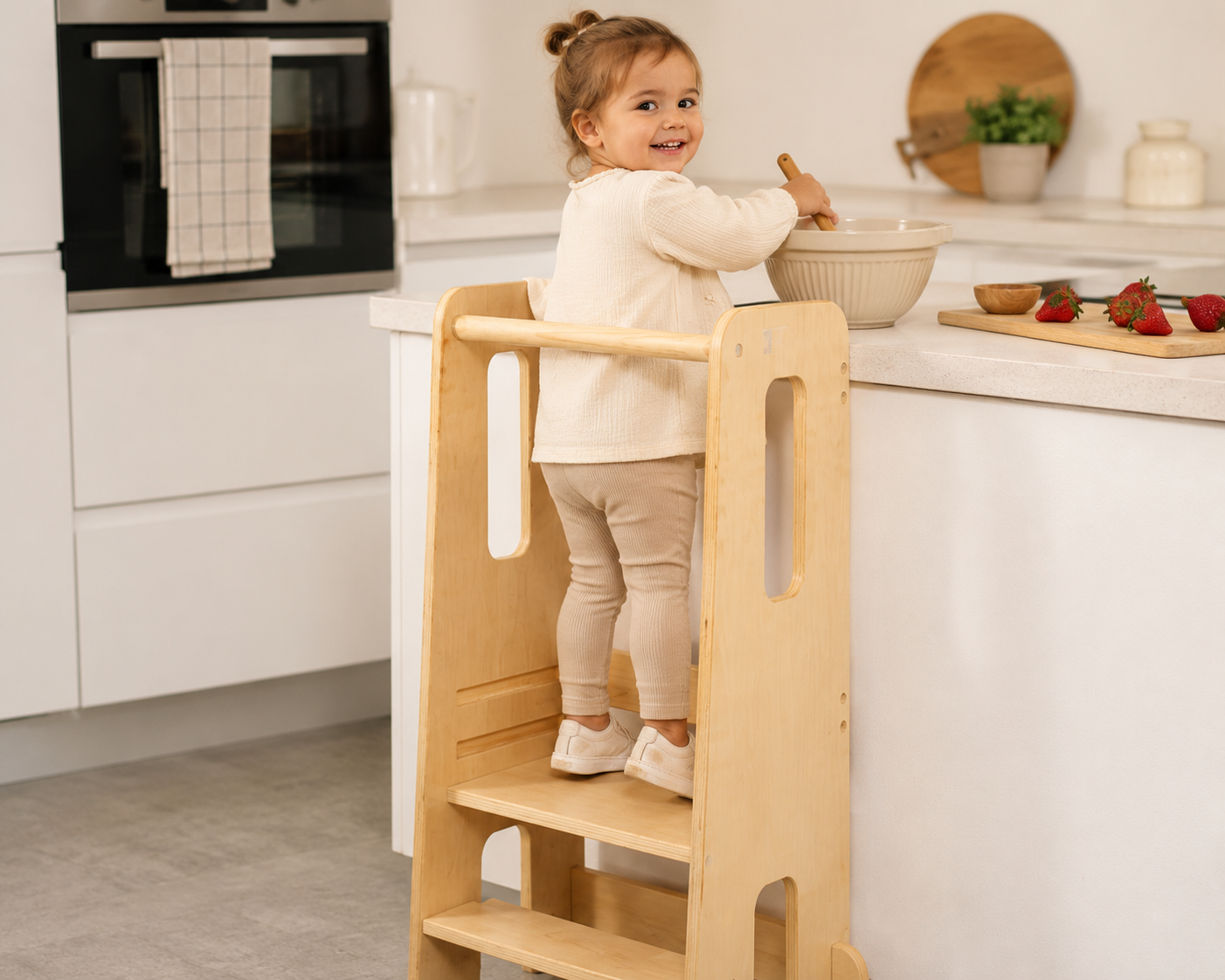
Best for: Families looking for a beautifully made wooden learning tower from a trusted nursery furniture brand.
✔ solid wooden construction
✔ encourages practical life activities
✔ stable counter-height platform
Best Heavy-Duty Learning Tower
Kywai Adjustable to 3 Heights with Double Safety Rail
A more substantial option for families looking for something especially sturdy and long-lasting. The reinforced design, solid wood construction, and adjustable platform make it well suited to years of everyday kitchen use.
One thing that stood out to us is that Kywai focuses almost exclusively on Montessori-inspired children’s furniture. That focus shows in the thoughtful design, with practical safety features, a durable build, and an emphasis on long-term usability rather than short-lived toddler trends.
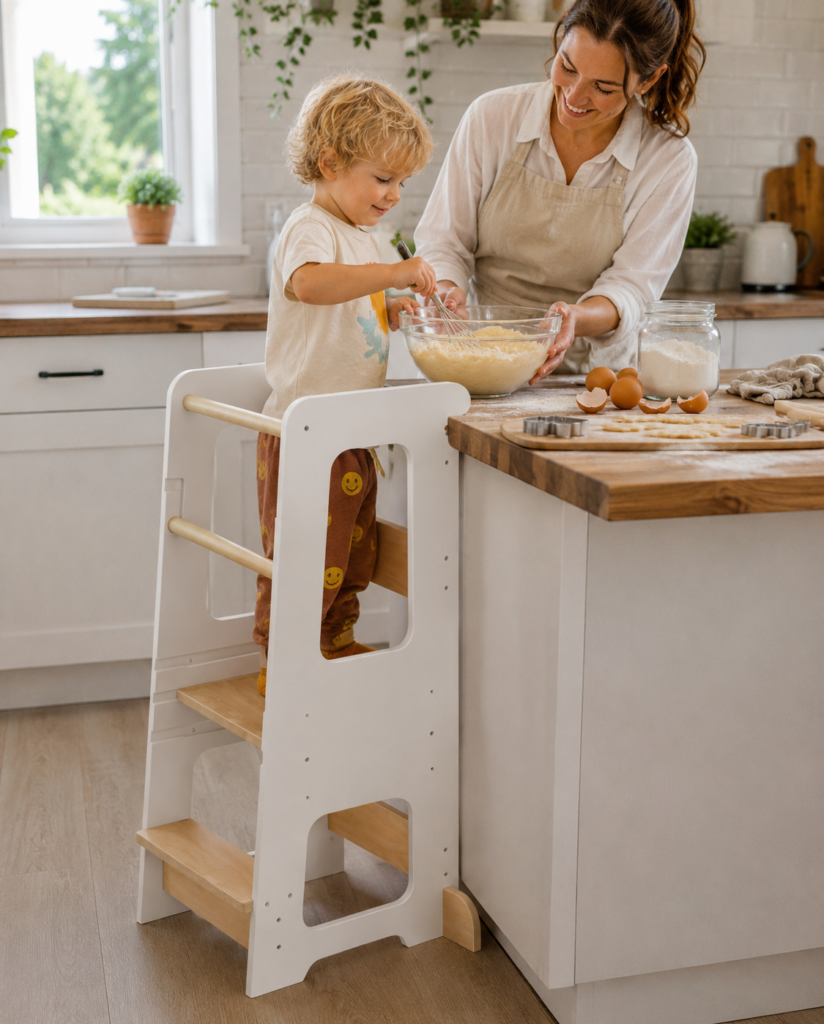
Best for: Families looking for a long-term investment piece.
✔ reinforced anti-tip construction
✔ adjustable height settings
✔ enclosed safety rails
✔ solid wood design
Is a Kitchen Tower Worth It?
For many families, a learning tower quickly becomes part of everyday life rather than something used occasionally.
Toddlers naturally want to be where things are happening. A learning tower provides a safer way for children to join everyday routines without relying on unstable chairs or constant lifting.
For parents, the biggest benefit is often practical. Instead of repeatedly redirecting a toddler away from the kitchen, you’re creating a safe space where they can observe, help, and participate alongside you.

When Do You Need a Montessori Learning Tower?
Many families begin using a learning tower between 12 and 18 months, often around the time toddlers become determined to do things for themselves.
You may notice your child trying to climb onto chairs to see what you’re doing, reaching for ingredients while you cook, or becoming frustrated when they are unable to participate in everyday routines.
This growing desire for involvement is a normal part of development. Toddlers are becoming more aware of the world around them and increasingly want to imitate the people they love.
A learning tower can provide a safer way to support that independence by bringing children up to counter height and allowing them to observe, help, and participate more confidently alongside you.
In many ways, a learning tower is simply an extension of a broader Montessori principle: adapting the environment so children can do more for themselves. Rather than constantly lifting, carrying, or managing every interaction, parents create opportunities for toddlers to participate more independently in everyday family routines.
→ How to Encourage Independence in Toddlers at Home (Montessori Approach)
When a Learning Tower Might Not Be Necessary
Not every family needs a learning tower.
If you have very limited space, rarely cook at home, or already have a safe way for your toddler to participate in daily routines, you may find other solutions work just as well.
A learning tower is most useful for families whose toddlers constantly want to be involved in what is happening at counter height. If your child is always asking to be picked up while you cook, wash dishes, prepare snacks, or bake, that’s often when a learning tower starts to make sense.
Final Thoughts
The goal isn’t to raise a toddler who stands in a tower.
The goal is to raise a child who feels capable of participating in everyday life.
Whether they’re washing strawberries, helping prepare lunch, or simply watching you cook, these small moments of involvement often become the foundation of confidence, independence, and practical life skills later on.
A good learning tower simply makes those moments easier to say yes to.
Shopping on Amazon?
If you’re not already a Prime member, you can check whether you’re eligible for a free 30-day trial and enjoy Prime delivery on millions of eligible items.
Frequently Asked Questions
What is a learning tower?
A learning tower is a raised platform designed to help toddlers safely reach counter height during everyday routines. It allows children to observe, help, and participate more independently in activities such as cooking, food preparation, washing vegetables, and other practical life tasks.
You might also see learning towers referred to as kitchen helpers, kitchen helper stools, toddler kitchen towers, standing towers, or Montessori step stools. While the names vary, they all describe the same basic idea: a safer way for young children to join everyday family routines at counter height.
What age is a learning tower suitable for?
Many learning towers are marketed from around 18 months, although this varies by model, so always check the manufacturer’s age and developmental guidance.
Are learning towers safer than chairs or stools?
earning towers are specifically designed to give toddlers a supported platform at counter height, typically with a wider base and surrounding rails. Unlike a standard chair or stool, they’re designed with this type of standing use in mind — although toddlers should still be closely supervised.
Is a learning tower worth it?
For many families, a learning tower becomes part of everyday life quite quickly. It allows toddlers to stay involved in routines more safely while supporting independence and reducing the need for constant lifting or supervision.
Can I use a step stool instead of a learning tower?
A step stool can work occasionally with close supervision, especially for older toddlers. But for regular kitchen routines, many parents find a learning tower feels more stable, practical, and secure.
What should I look for before buying a learning tower?
The most practical options are usually stable, simple to use, appropriate for your kitchen space, and easy for your child to climb in and out of safely as they grow.
Do I need extra accessories with a learning tower?
Not necessarily. But simple additions like non-slip kitchen mats or child-friendly food prep tools can sometimes make kitchen routines feel calmer, safer, and easier to manage.
You Might Also Find Helpful