How to Encourage Independence in Toddlers at Home (Montessori Approach)
Many parents want to encourage independence in toddlers at home, but aren’t always sure where to start.
It’s easy to assume independence is something we teach. We encourage it, praise it, and wait for children to become more capable over time.
But Montessori takes a slightly different view.
Rather than asking how we can make children more independent, it asks how we can make independence easier.
At this stage, toddlers are naturally driven by a simple desire:
“Help me do it myself.”
The challenge is that most homes aren’t designed for toddlers.
Coats hang too high to reach. Shoes are stored out of sight. Sinks are too tall. Everyday routines move quickly because adults are trying to get through the day.
As a result, children often become dependent not because they lack ability, but because participation isn’t easily available to them.
One of the simplest ways to encourage independence is to look at everyday routines through a toddler’s eyes and ask a simple question:
“What could my child do here if the environment made it possible?”
What “Independence” Actually Means for Toddlers
Independence in toddlerhood isn’t about doing everything alone.
It isn’t about perfect self-sufficiency, and it certainly isn’t about expecting adult-level responsibility from a two-year-old.
Instead, independence begins with participation.
A toddler who carries their shoes to the door, helps wipe a spill, places a spoon on the table, or chooses a bedtime book is already practising independence.
These moments may seem small, but they help children develop coordination, confidence, and a growing sense of capability.
Most importantly, they help children see themselves as someone who can contribute.
Why the Home Environment Matters
Many toddler struggles have less to do with behaviour than opportunity.
Children are often eager to participate, but the environment makes participation difficult.
A coat hook placed at adult height sends a very different message than one positioned where a child can reach it.
The same is true for low shoe storage, accessible towels, child-sized tools, and simple routines that allow children enough time to try things for themselves.
When the environment changes, behaviour often changes too.
Children who previously resisted routines may become more cooperative. Children who seemed frustrated may become more focused. Tasks that once caused conflict can gradually become opportunities for participation.
This is one of the reasons the Montessori approach places so much emphasis on the prepared environment.
7 Everyday Opportunities to Encourage Independence in Toddlers
These are simple, everyday areas where toddlers can begin building independence.
1. Taking Off Shoes and Coats (Hallway)
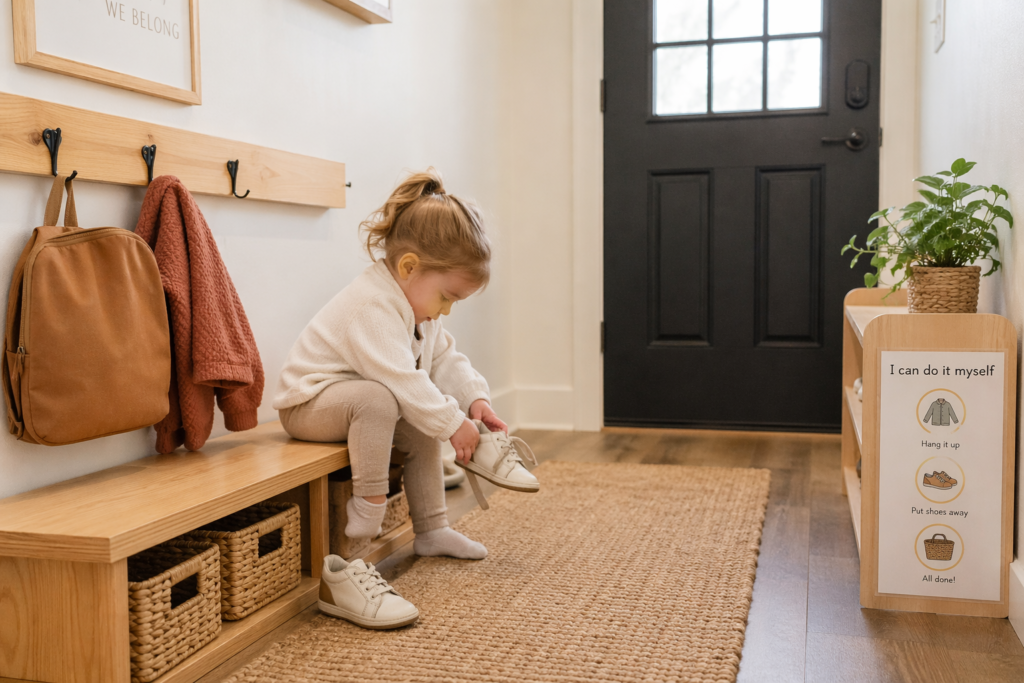
The hallway is often one of the first places where toddlers can begin developing independence.
In many homes, getting ready to leave or coming back inside is managed entirely by adults. Shoes are handed over, coats are removed for the child, and bags are placed out of reach. But with a few small adjustments, these routines can gradually become opportunities for participation instead.
A low shoe rack, accessible hooks, and a simple basket for everyday items allow toddlers to begin taking ownership of small responsibilities. They may start by carrying their shoes to the door or hanging up a coat with help, but over time these routines often become part of what they do naturally.
Simple transitions like taking off shoes and putting belongings away are often a child’s first experience of contributing to family life. They help create a calmer shift between outside and inside while building confidence through repetition.
→ Read: How to Set Up a Toddler-Friendly Hallway
2. Feeding Themselves (Mealtime)
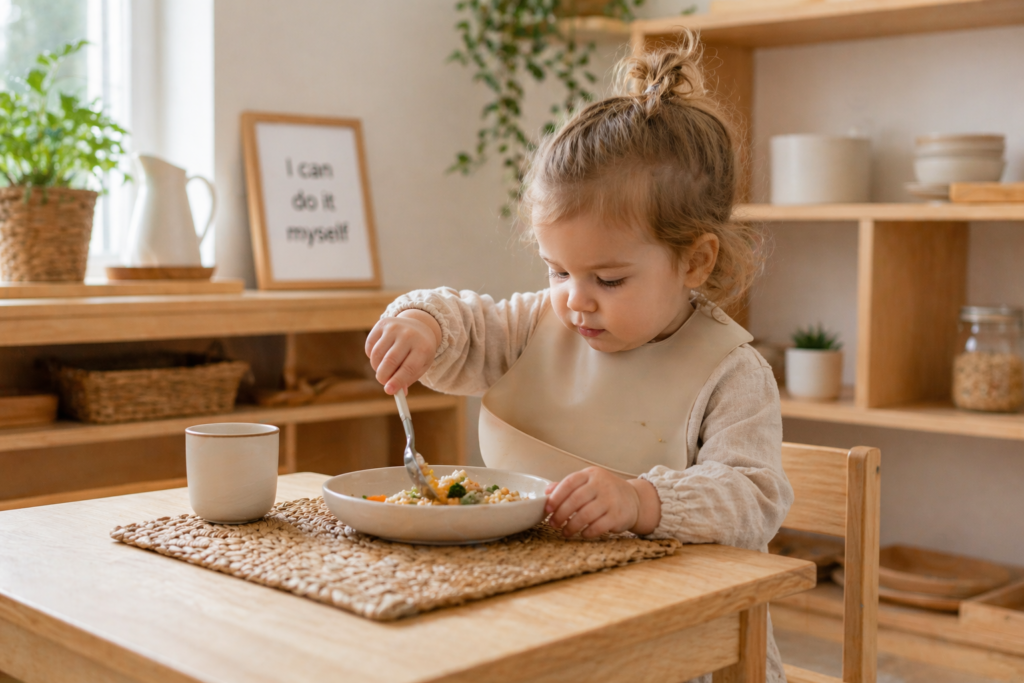
Mealtimes provide some of the most frequent opportunities for toddlers to practise independence.
Rather than simply being served and helped through every step of the meal, children can gradually begin taking a more active role. Learning to drink from a cup, use utensils, carry a plate, or help clean a small spill may seem like ordinary tasks, but they allow toddlers to develop coordination, confidence, and a growing sense of capability.
Montessori places a strong emphasis on participation during everyday routines, and mealtimes are one of the easiest places to start. The goal is not perfect table manners or perfectly clean meals. It is allowing children to practise real skills and contribute in meaningful ways.
Over time, these small opportunities help toddlers feel more confident and independent at the table while reducing the need for constant adult assistance.
→ Read: How to Teach Your Toddler to Eat Independently
3. Participating in the Kitchen (Practical Life)

The kitchen is often one of the most engaging places in the home for a toddler.
Children are naturally curious about what adults are doing. They want to wash vegetables, stir ingredients, carry items to the table, pour water, and help prepare simple snacks. These activities may seem ordinary, but they provide valuable opportunities to develop coordination, concentration, and independence.
Montessori refers to many of these everyday tasks as practical life activities because they allow children to contribute to real family routines rather than activities created purely for entertainment.
Many families find a learning tower especially helpful during this stage because it allows toddlers to participate more safely at counter height.
→ Read: Best Learning Towers for Toddlers — Safe and Practical Options
→ Read: Montessori Practical Life for Babies & Toddlers
4. Washing Hands and Brushing Teeth (Bathroom)
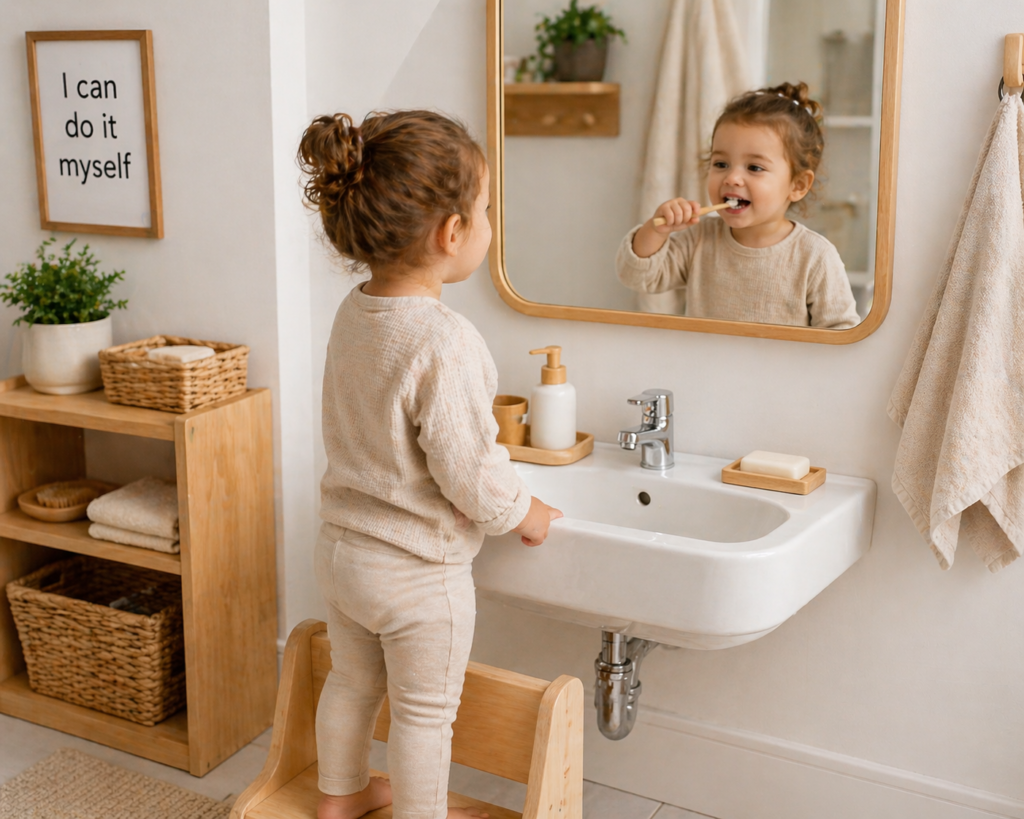
The bathroom is another place where small environmental changes can make a big difference to a toddler’s independence.
When a sink is accessible, a towel is within reach, and there is enough time to participate, children can gradually begin taking ownership of simple self-care routines. Washing hands, brushing teeth, and drying their hands afterwards become opportunities to practise real-life skills rather than tasks that are always done for them.
Like many areas of Montessori, the goal is not immediate independence.
It is participation.
Toddlers may still need support for much of the process, but being actively involved helps them build confidence and familiarity with routines that they will eventually manage more independently.
A child-sized step stool, low mirror, and accessible towel are often enough to make these routines feel far more manageable for young children.
→ A full guide to Creating a Montessori bathroom setup is coming soon.
5. Getting Dressed (Clothing Area)
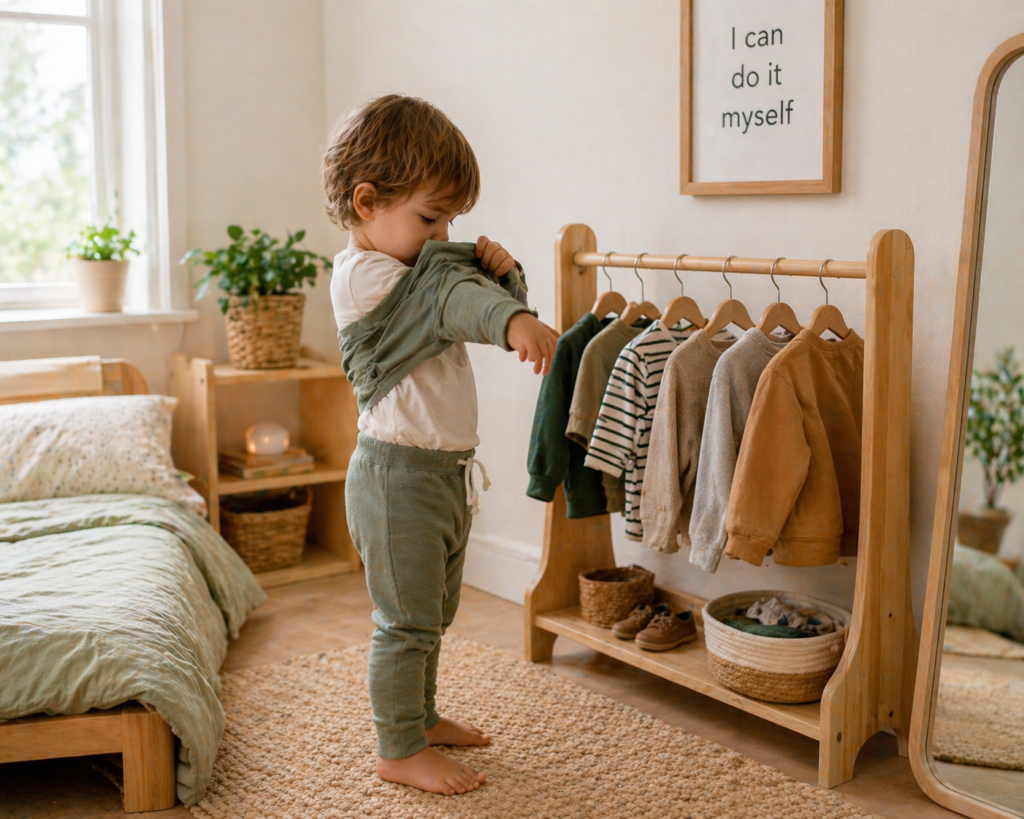
Getting dressed is one of the most repeated opportunities for independence in a toddler’s day.
For adults, it can be tempting to step in and do everything quickly. But when children are given time to participate, even simple parts of the dressing process become valuable learning experiences. Choosing between two outfits, pulling on trousers, attempting socks, or fastening simple clothing all help build coordination and confidence.
Like many Montessori activities, dressing is less about achieving a perfect result and more about allowing children to practise. What takes a toddler several minutes today may become second nature after weeks of repetition.
One of the simplest ways to support dressing independence is to make clothing accessible. Low drawers, limited choices, and easy-to-manage clothing help children participate more successfully without becoming overwhelmed.
Over time, these small daily opportunities help toddlers develop both practical skills and a growing sense of capability.
→ A Step-by-step guide to helping toddlers dress independently is coming soon.
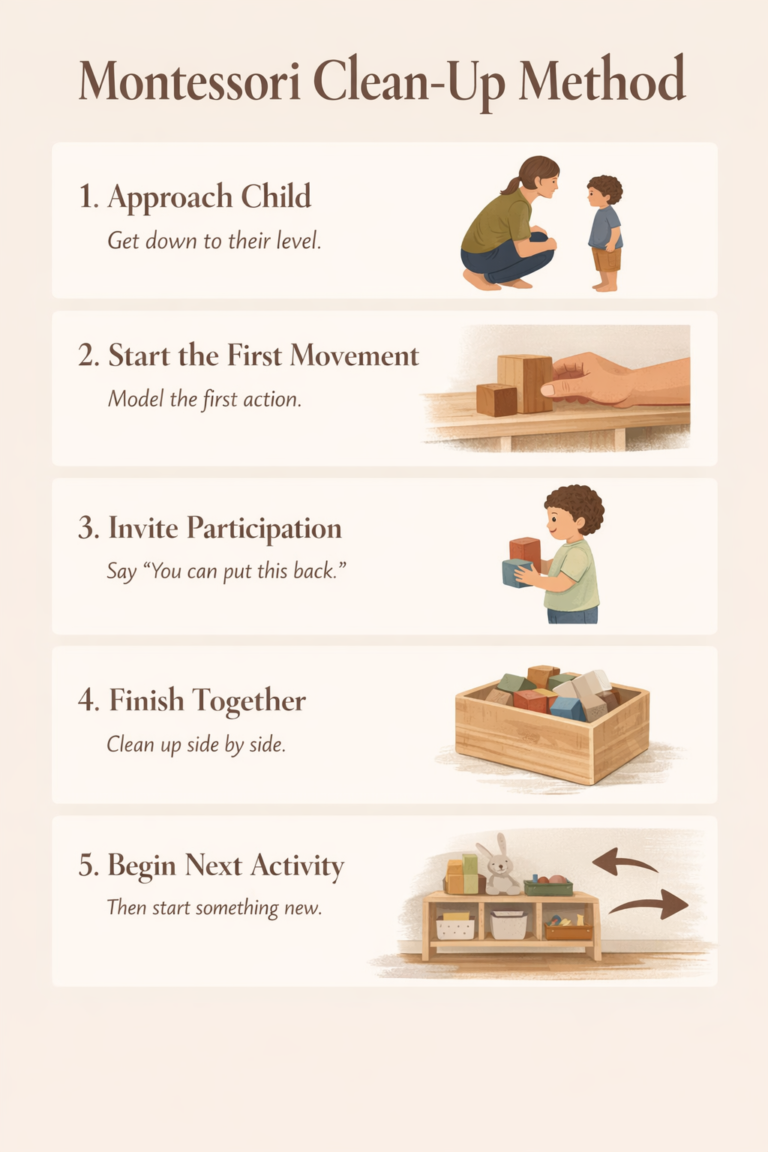
6. Cleaning Up and Tidying
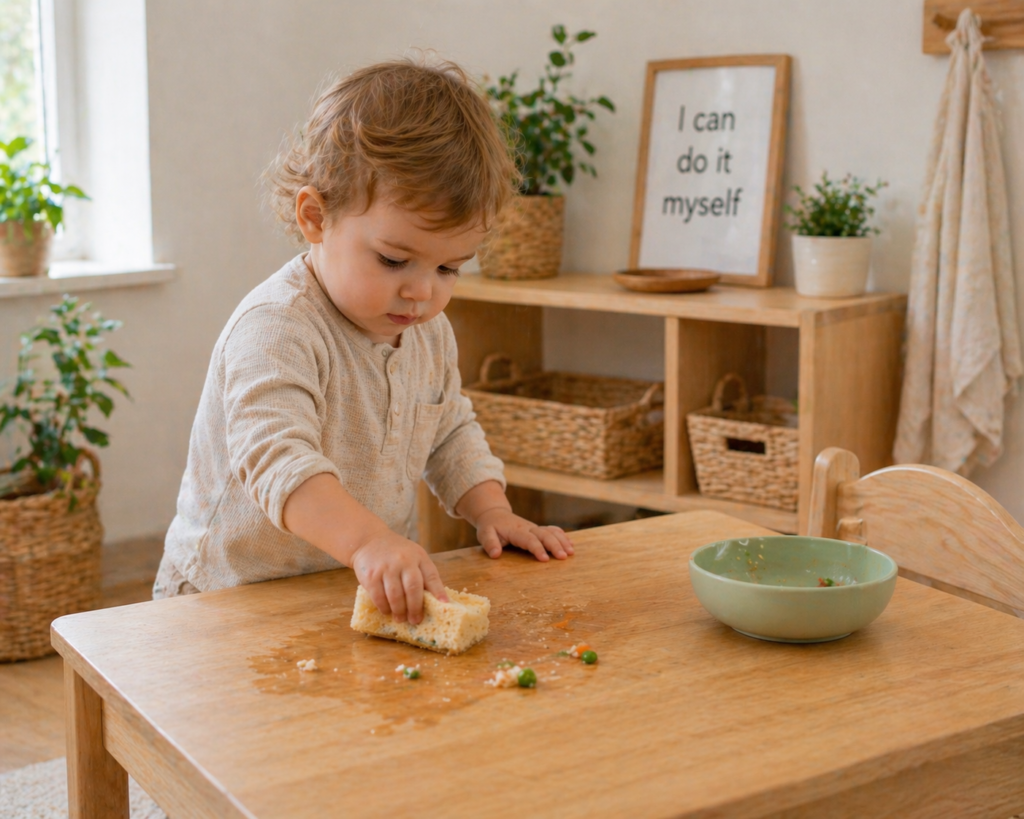
Cleaning up is often one of the first ways toddlers begin contributing to family life in a meaningful way.
What looks like a simple task to an adult can feel deeply satisfying to a young child. Wiping a spill, returning a toy to a shelf, carrying laundry to a basket, or putting a book back in its place all allow toddlers to participate in caring for their environment.
In Montessori, these moments are valued because they help children understand that activities have a natural beginning, middle, and end. A puzzle is chosen, completed, and returned to the shelf. A drink is poured, enjoyed, and any spills are cleaned up afterwards.
Over time, these small routines help children develop responsibility, concentration, and a growing sense of ownership over the spaces they use every day.
Just as importantly, they reinforce the idea that toddlers are capable contributors rather than passive observers.
→ A Guide to simple cleaning activities for toddlers is coming soon.
7. Preparing for Sleep (Bedroom)
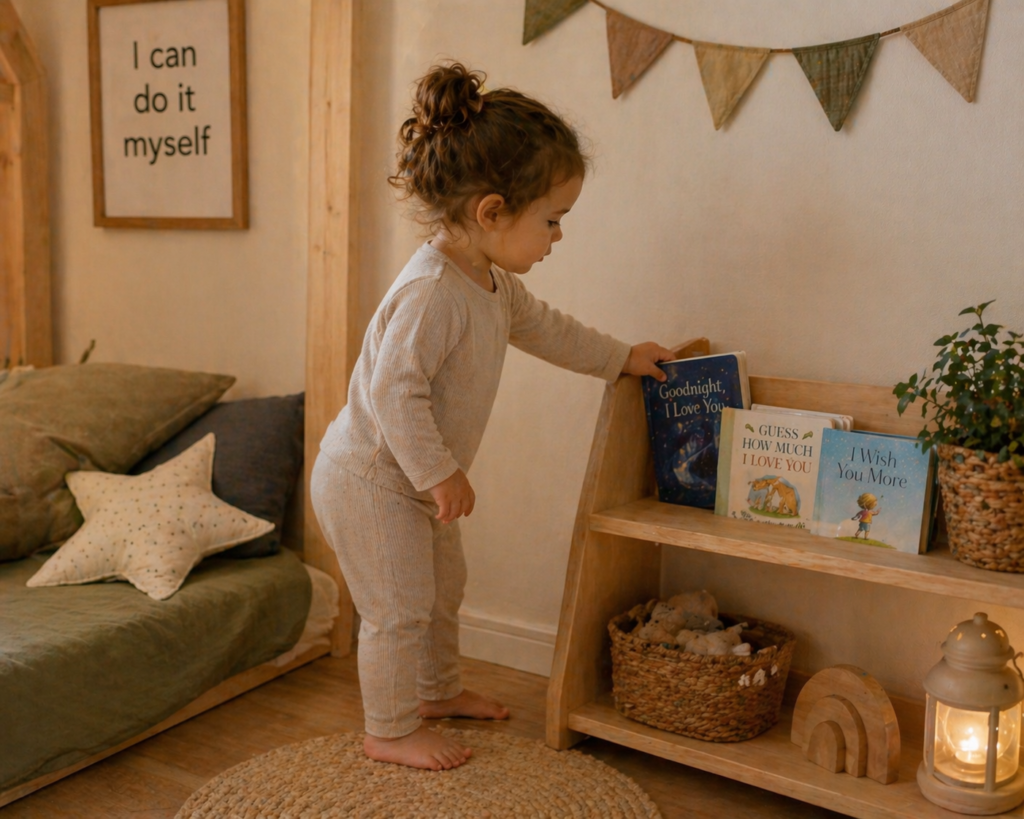
Bedtime routines offer another valuable opportunity for toddlers to practise independence in small, meaningful ways.
As the day begins to wind down, children can gradually take part in preparing for sleep by choosing a bedtime book, helping tidy their room, collecting comfort items, or following familiar parts of the bedtime routine alongside an adult.
These moments may seem simple, but they help toddlers develop a sense of ownership over the routine while making the transition to sleep feel more predictable and secure.
This is one reason Montessori places so much emphasis on creating calm, accessible sleep environments. When children understand what comes next and are able to participate in the process, bedtime often feels less like something being done to them and more like a routine they are actively part of.
Like independence throughout the day, bedtime independence develops gradually through repetition rather than expectation.
If sleep has been a challenge for your toddler, these guides may help:
→ Best Night Lights for Toddlers Who Won’t Sleep (Montessori-Friendly Picks)
→ How to Design a Montessori Bedroom for 12–18 Month Olds
Independence Looks Different at Every Age
A 12-month-old carrying a spoon to the table is practising independence. A two-year-old hanging up their coat is practising independence. A three-year-old pouring their own drink is practising independence.
The goal is not to compare children or rush milestones. It is simply to create opportunities for participation that match your child’s current stage of development.
The Montessori Shift
One of the biggest shifts Montessori encourages is moving away from the idea that independence must be formally taught.
Children do not usually learn independence through lessons.
They learn it through participation.
When adults slow down, make routines accessible, and allow children opportunities to contribute, independence often develops naturally.
The goal is not to create perfect results.
The goal is to create opportunities to practise.
There will be spills.
There will be delays.
Shoes will end up on the wrong feet.
But those imperfect attempts are often where the most meaningful learning happens.
Final Thoughts
Independence doesn’t come from telling toddlers what to do.
It comes from giving them genuine opportunities to take part.
When everyday routines become accessible, children begin developing the skills, confidence, and sense of capability that Montessori values so deeply.
And over time, those small moments of participation become something much bigger.
They become the foundation of independence itself.
FAQs: Encouraging Independence in Toddlers
How can I encourage independence in toddlers at home?
You can encourage independence in toddlers by involving them in daily routines like dressing, self-feeding, and tidying. These practical life skills help toddlers build confidence, coordination, and independence over time.
What are the most important toddler independence skills?
Key toddler independence skills include self-feeding, dressing, hand washing, and helping with simple tasks. These everyday life skills support fine motor development, confidence, and responsibility.
What are Montessori practical life activities for toddlers?
Montessori practical life activities for toddlers are everyday tasks like pouring, cleaning, dressing, and preparing food. These activities help toddlers develop independence, coordination, and real-life skills in a natural way.
How do I make my toddler more independent without forcing it?
To make your toddler more independent, focus on creating simple routines and an accessible environment. When toddlers can reach tools and participate in daily activities, independence develops naturally without pressure.
What responsibilities can toddlers have at home?
Toddlers can take on small responsibilities at home such as putting away shoes, wiping surfaces, carrying items, and choosing clothes. These simple responsibilities build independence and a sense of capability.
When should toddlers start learning independence skills?
Toddlers can begin learning independence skills from around 12–18 months. At this stage, they naturally want to participate in daily routines and develop practical life skills through repetition and practice.
Do daily routines help toddler independence?
Yes, consistent daily routines help toddlers understand what to expect and give them opportunities to practise independence skills. Routines like mealtime, dressing, and bedtime support confidence and self-reliance.
What is the Montessori approach to toddler independence?
The Montessori approach focuses on teaching toddlers independence through real-life activities and a prepared environment. By using child-sized tools and allowing participation, toddlers develop practical life skills naturally.
You Might Also Find Helpful