
Flying With A Toddler: Realistic Preparation That Actually Helps
Flying with a toddler can feel overwhelming long before you even reach the airport.
The packing, the transitions, the disrupted routines, the fear of disturbing other passengers, the pressure to keep a small child calm in a completely unfamiliar environment — it is a lot.
And toddlers struggle with flying for understandable reasons.
Movement becomes restricted. Noise levels increase. Sleep routines shift. Familiar environments disappear. Adults around them often become stressed too.
This is why flying with a toddler is usually less about “perfect behaviour” and more about regulation, preparation, and realistic expectations.
The goal is not a flawless flight.
It is simply helping your toddler feel as safe, calm, and connected as possible throughout the experience.
Disclaimer: This post contains affiliate links. As an Amazon Associate, we earn from qualifying purchases at no extra cost to you.
Travelling with a younger baby too? A supportive baby carrier can make airports much easier than constantly folding and unfolding a pushchair. See our guide to The Best Baby Carriers for Newborns.
Prepare the Environment, Not Just the Suitcase
One of the biggest mindset shifts that helps with toddler travel is understanding that preparation matters far more than perfection.
Toddlers cope better when they understand what is happening around them, even if they cannot fully grasp time or schedules yet.
Simple narration before and during the journey can genuinely help:
“First we wait at the airport.”
“Then we sit on the plane.”
“After we land, we’ll collect our bags.”
Looking through the in-flight brochure together, watching luggage trucks outside the window, or playing simple games like “I Spy” can help toddlers feel more connected to what’s happening around them.
When children feel involved in the experience, they’re often calmer and more cooperative throughout the journey.
Dress for Comfort, Not Aesthetics
Flights are rarely the moment for complicated outfits.
Soft, comfortable layers that are easy to remove make spills, toilet trips, temperature changes, and accidents much easier to manage under pressure.
And yes:
always pack spare clothes for both your toddler and yourself.
At some point, someone usually ends up covered in something unexpected.
Organisation Helps More Than Most “Travel Hacks”
One thing that makes flying with toddlers noticeably less stressful is reducing how often you need to search for things quickly.
Simple mesh zipper pouches have honestly been more useful for us than many official toddler travel products because they allow everything to stay grouped and easy to grab during transitions.
We usually separate ours into:
- snacks
- activities
- spare clothes
- small toys
- airplane essentials.
We also keep one pouch permanently “bathroom ready” with:
- wipes
- disposable toilet seat covers
- hand sanitiser
- spare pull-up or underwear.
That single pouch becomes surprisingly valuable during rushed airport bathroom trips or mid-flight emergencies when you need to move quickly without unpacking your entire bag.
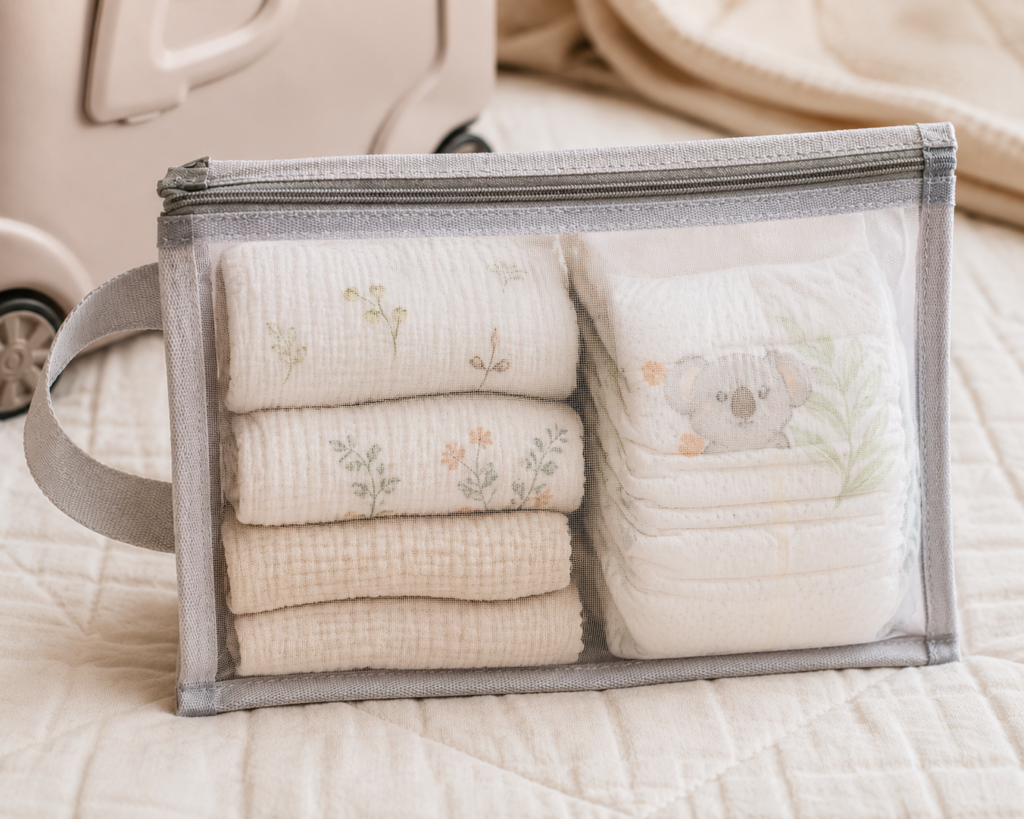
These simple mesh pouches made airport transitions dramatically less stressful for us because everything stayed organised and easy to grab quickly.
Movement Matters More Than Constant Entertainment
One of the hardest parts of flying for toddlers is the expectation to stay still for long periods of time.
Toddlers are designed to move.
Whenever possible, allow movement before boarding:
- walking through terminals
- climbing where appropriate
- carrying small bags
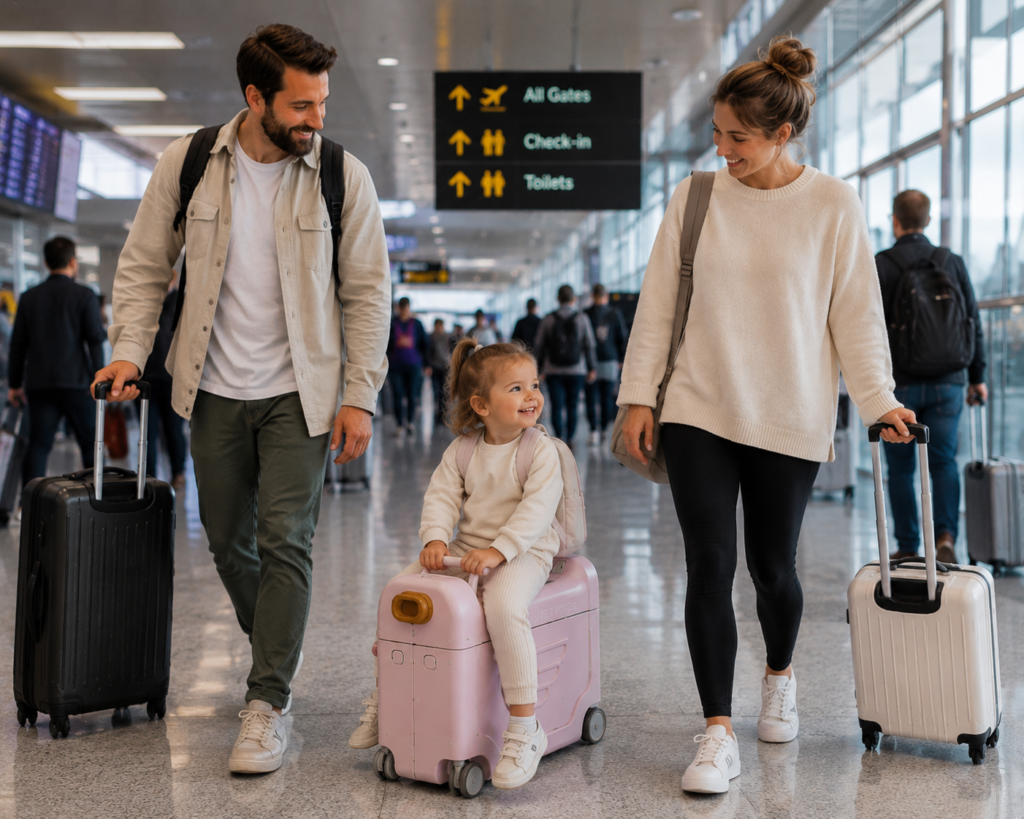
- helping push suitcases
- taking slow walks through the airport.
Movement is often regulation for toddlers — not misbehaviour.
Even during flights, short walks up and down the aisle can help reset a dysregulated toddler far more effectively than introducing another toy or snack immediately.
Ear Pressure Can Feel Frightening for Toddlers
Takeoff and landing can be genuinely uncomfortable for small children, especially because they often cannot explain what feels wrong yet.
Slow sucking, chewing, or drinking movements help regulate ear pressure naturally, which is why we always keep something ready specifically for ascent and descent.
We personally use sugar-free vitamin C lollipops because they last longer than snacks and encourage continuous swallowing without much effort. For toddlers who are old enough to use them safely, they can make a surprisingly big difference during pressure changes.
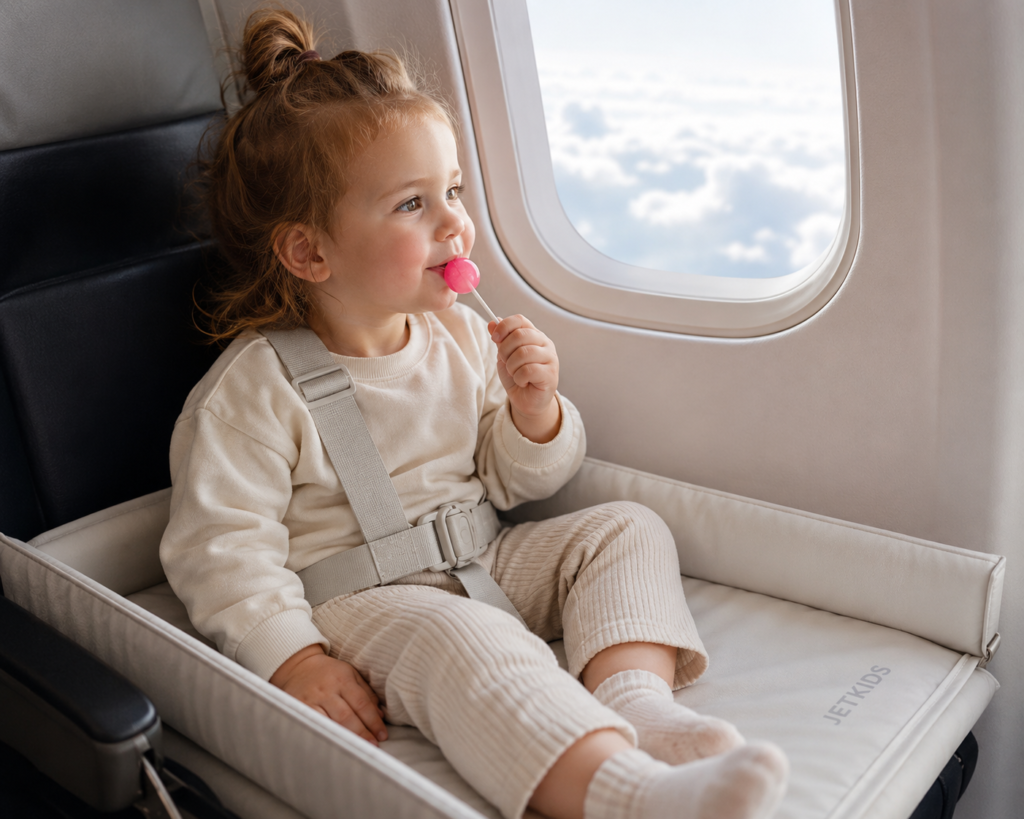
We keep a few lollipops specifically for takeoff and landing because the slow sucking motion helps toddlers manage ear pressure changes much more comfortably during flights.
Why We Chose the Stokke JetKids BedBox
Long flights usually become easier when toddlers can stretch, move, and eventually rest more comfortably.
You may be tempted to buy one of the inflatable toddler beds online — we nearly did too — but many airlines either restrict them entirely or ask families to remove them during the flight depending on safety rules and seat configuration.
The main reason we preferred the Stokke JetKids BedBox was predictability.
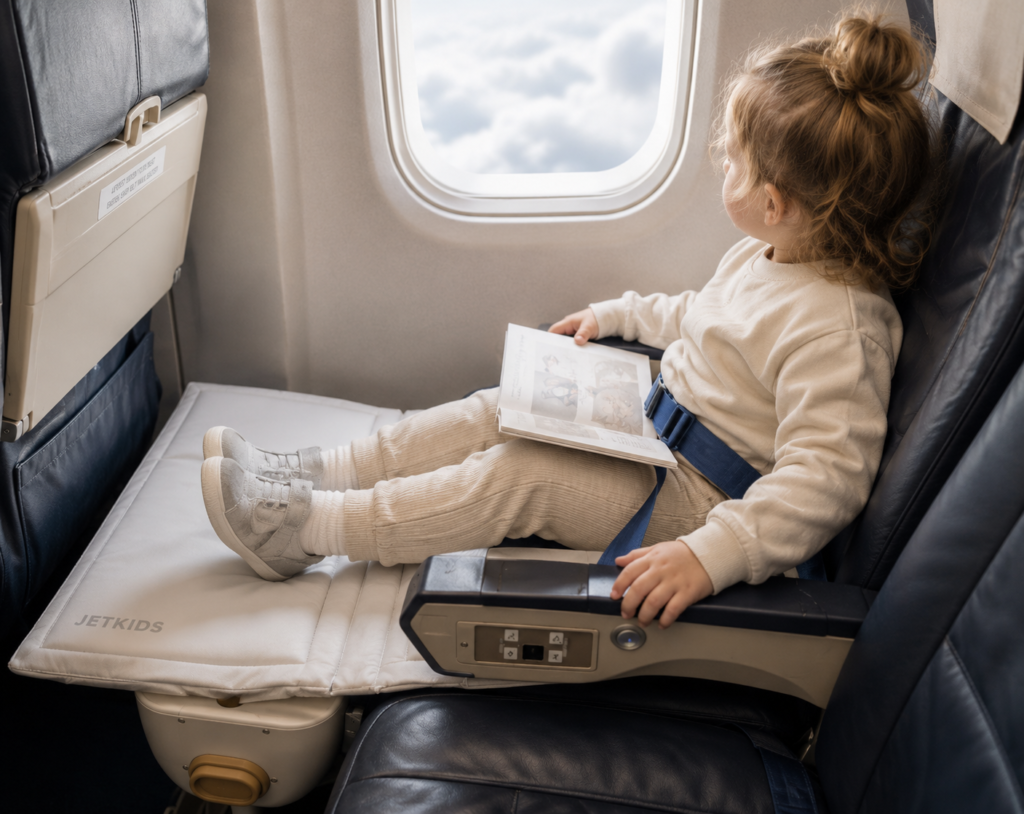
Because it is accepted by many airlines and packs away immediately if needed, it removes a lot of uncertainty and stress during busy flights or emergency situations. Inflatables can take time to deflate and repack quickly, which is often when cabin crew become understandably frustrated.
It also doubles as ride-on luggage in airports, which unexpectedly helps a lot with long waits and transitions between terminals. Because the mattress folds inside the case itself, there is still enough room to pack a toddler pillow, a few small books, snacks, and a couple of quiet activities — though not a huge amount — which makes it surprisingly practical for flights.
Save One “New” Activity for the Flight
Toddlers do not necessarily need dozens of activities while flying.
In fact, too many options can sometimes increase overstimulation rather than reduce it.
What usually works better is: novelty + simplicity.
One thing that consistently helps us is packing one activity book that stays completely hidden until the flight itself.
If you’re looking for more ideas, we’ve put together a dedicated guide to the travel toys that repeatedly earned a place in our hand luggage after multiple flights, airport delays and family holidays.
→ Best Travel Toys for Toddlers (Ages 2–5) That Earned Their Place in Our Hand Luggage
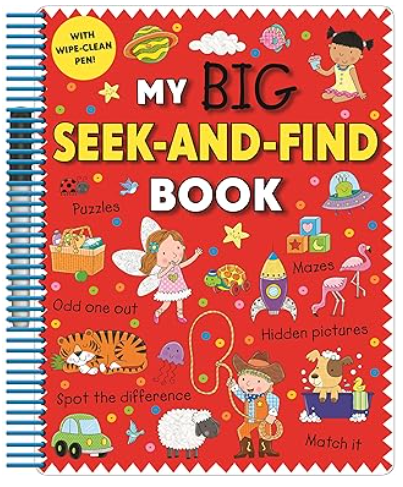
Wipe-clean activity books work especially well because toddlers can repeat them over and over again without needing constant adult help. We usually pack ours directly inside the BedBox so it feels genuinely new once it appears.
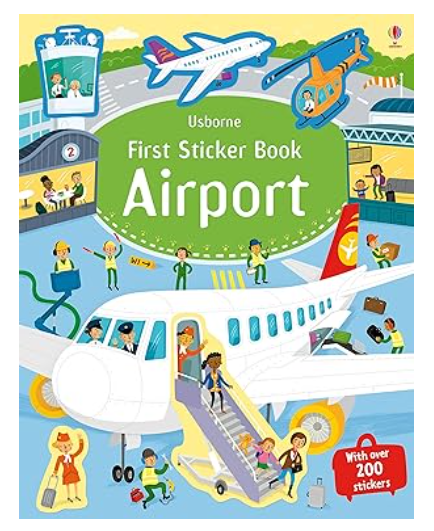
Sticker books also tend to work surprisingly well during flights, particularly if adults resist the urge to direct the activity constantly.
Instead of correcting where stickers “should” go, try allowing your toddler time to figure things out independently first. That sense of ownership often keeps toddlers engaged much longer.
Headphones Are Not Just for Screens
Flights can be intensely sensory environments:
- engine noise
- announcements
- unfamiliar voices
- crowded spaces
- disrupted routines
- constant transitions.
For some toddlers — especially sensitive or neurodivergent children — familiar music can feel very regulating during long waits or overwhelming moments.
We keep lightweight children’s headphones packed mainly for calming music playlists rather than films (though honestly, no judgement if you do — travel days are not the moment for perfection, and sometimes anything goes!). Familiar songs often help our toddler settle much faster than introducing more visual stimulation when they are already overwhelmed.
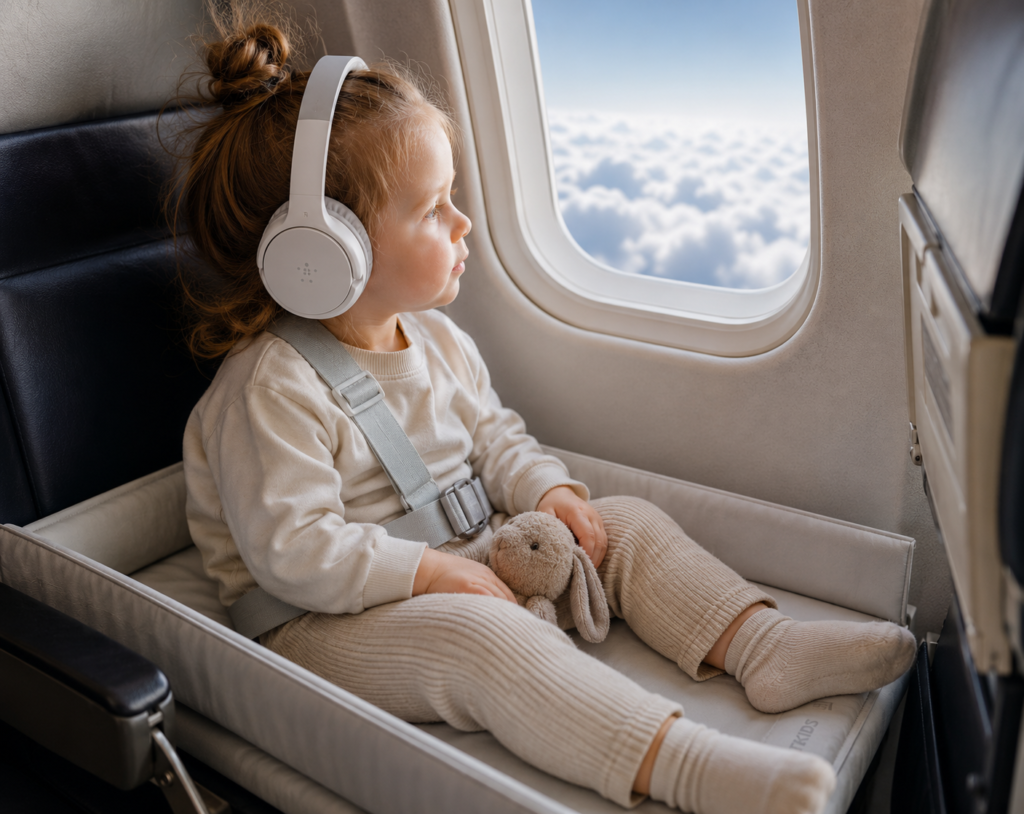
These toddler headphones have a child-safe volume limit, spillproof durability for messy travel days, and feel comfortable enough for longer flights, music, and quiet moments in overstimulating environments.
A Water Bottle That Actually Survives Flights
This sounds small until it leaks once mid-flight.
Many water bottles struggle with cabin pressure changes, which quickly becomes frustrating when everything else already feels overstimulating.
We eventually switched to a spillproof insulated stainless steel bottle that can be emptied before security, refilled afterwards, and — most importantly — stays sealed properly during takeoff and landing.
Keeping water cold for long travel days also helps more than expected, especially during delays or long waits at airports.
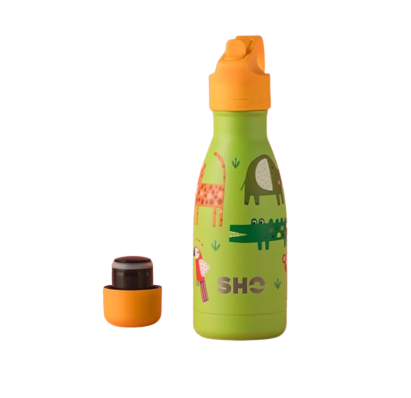
It is definitely on the expensive side, but after trying several ‘spillproof’ bottles over the years, this is the one we always recommend to our friends and family — especially knowing it will last well beyond the toddler stage.
A Gentle Note About Screen Time
Many families who normally limit screens make exceptions while travelling.
Flights are not everyday life.
Supporting regulation during a difficult and unfamiliar experience is not the same thing as relying on screens constantly at home.
Sometimes survival mode is simply survival mode.
And honestly, a calmer parent often helps toddlers regulate more effectively than holding rigid expectations during stressful travel days.
One reason flights can feel genuinely uncomfortable for toddlers is simply anatomy.
Young children have much smaller, more horizontal Eustachian tubes than adults, which makes it harder for their ears to naturally regulate pressure changes during takeoff and landing. This is why many toddlers suddenly become distressed, tearful, or inconsolable during descent in particular.
Cabin air also tends to be extremely dry, which can contribute to dehydration, nasal irritation, and blocked ears — especially during longer flights.
Interestingly, simple actions like sucking, drinking, chewing, swallowing help activate the muscles that open the Eustachian tubes and relieve pressure more comfortably.
Which is partly why lollipops, snacks, water bottles, straws, or breastfeeding during takeoff and landing can make such a noticeable difference for many toddlers.
The goal is not preventing every uncomfortable moment.
It is simply helping young children regulate an unfamiliar physical experience with as much comfort and predictability as possible.
Final Thoughts
Flying with a toddler is rarely seamless.
There will probably still be snacks on the floor, disrupted naps, tired tears, unexpected delays, and moments where everyone feels overstimulated.
The goal is not a perfectly behaved child.
It is simply helping your toddler feel as secure, connected, and regulated as possible inside an unfamiliar environment.
And honestly, that is already enough.
Shopping on Amazon?
If you’re not already a Prime member, you can check whether you’re eligible for a free 30-day trial and enjoy Prime delivery on millions of eligible items.
Frequently Asked Questions
How do I prepare my toddler for their first flight?
One of the simplest ways to prepare a toddler for flying is to talk through the journey beforehand. Explaining what will happen at the airport, on the plane and after landing can help the experience feel more predictable. Looking at photos of airports, aeroplanes and luggage handling can also help toddlers understand what to expect.
What should I pack in my toddler’s hand luggage?
We usually pack snacks, spare clothes, wipes, a water bottle, a few carefully chosen activities, headphones and one or two comfort items. The goal is generally to have enough variety without carrying an entire toy shop through the airport.
How do I keep a toddler entertained on a plane?
Novelty often works better than quantity. We usually save one activity that remains completely hidden until the flight itself. Sticker books, wipe-clean activity books, drawing boards and simple travel toys tend to work particularly well because they encourage independent play without creating a mess.
Are flights difficult for toddlers?
Flights can be challenging because they involve unfamiliar environments, disrupted routines, restricted movement and sensory overload. Most difficulties are not caused by misbehaviour but by toddlers trying to regulate an experience they do not fully understand yet.
What helps with toddler ear pressure during flights?
Drinking, sucking, chewing and swallowing can all help regulate ear pressure during takeoff and landing. Many parents use snacks, water bottles, straws, breastfeeding or age-appropriate lollipops to encourage these movements naturally.
Is it better to fly during nap time with a toddler?
It depends on the child. Some toddlers sleep well during flights that coincide with nap time, while others become overtired because the environment is unfamiliar. We generally find it more helpful to focus on flexibility rather than trying to engineer the perfect flight time.
Should I bring toys on a plane for my toddler?
Yes, but fewer is often better. A small number of carefully chosen activities usually works better than bringing dozens of toys. Independent, reusable and mess-free activities tend to perform best during travel.
How early should I arrive at the airport with a toddler?
Most families benefit from allowing extra time. Travelling with a toddler often involves more bathroom trips, snack stops, slower walking and unexpected delays. Arriving early can significantly reduce stress for both parents and children.
Are screens okay during flights?
Many families who normally limit screens make exceptions while travelling. Flights are unusual situations that involve long periods of waiting, unfamiliar environments and disrupted routines. For many parents, maintaining regulation and reducing stress becomes more important than following everyday screen-time rules.
What is the most important thing when flying with a toddler?
In our experience, the goal is not perfect behaviour. The most helpful mindset is focusing on regulation, connection and realistic expectations. A toddler who feels safe, understood and supported is usually far more likely to cope well with the journey.