Considering Montessori for Autistic Children? See What the Research Says
If you’re parenting an autistic child, you may be wondering whether Montessori for autistic children is a good fit.
Montessori classrooms are often calm and structured. They allow children to work at their own pace. For some families, that sounds promising.
But what does the research actually say?
Montessori classrooms are often described as calm, structured, and child-led. For children who thrive on predictability and hands-on learning, that can sound promising.
But is there actual research supporting Montessori for autistic children?
The short answer: there is limited but growing evidence, and many Montessori principles align with evidence-based supports for autistic learners — but Montessori is not a therapy, and it is not automatically the right fit for every child.
Let’s look at what research suggests, where the evidence is strong, and where caution is needed.
What Is Montessori Education?
Montessori education was developed by Maria Montessori in the early 20th century. It is based on several core principles:
- A prepared, orderly environment
- Hands-on, concrete learning materials
- Independence and self-directed activity
- Mixed-age classrooms
- Respect for individual pace
- Repetition and mastery through practice
Montessori is an educational philosophy — not a therapeutic intervention.
That distinction matters when discussing autism.
What Does Research Say About Montessori and Autism?
Direct research specifically examining Montessori education for autistic children is still limited.
One frequently cited study by Lillard and Else-Quest (2006) found that children in Montessori programs showed stronger executive function and social understanding compared to peers in conventional education settings. While this study was not specific to autism, executive functioning differences are commonly discussed in autism research, making this area relevant.
Another small-scale study by Odom et al. (2010) examined structured teaching methods for autistic students and found that predictable routines and structured environments improved engagement and reduced anxiety. While not specifically Montessori, these characteristics are foundational to Montessori classrooms.
More broadly, decades of autism research show that autistic children often benefit from:
- Predictable environments
- Visual supports
- Clear routines
- Concrete, hands-on learning
- Reduced sensory overload
- Opportunities for focused interest
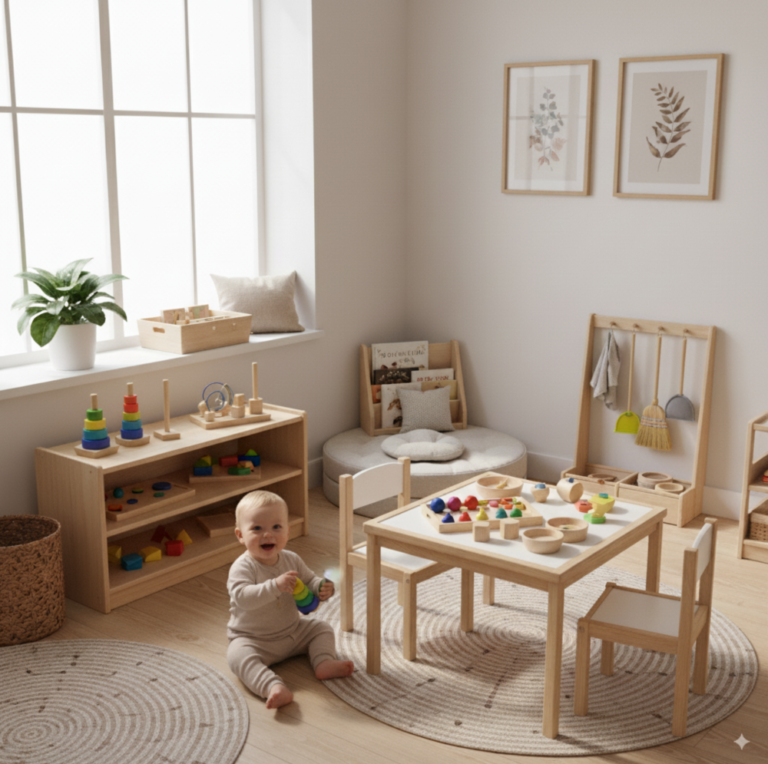
Creating structured opportunities for independent play in a Montessori home can support this need for autonomy and deep focus.
Many of these features overlap with Montessori environments.
However, large randomized controlled trials directly comparing Montessori and other educational approaches for autistic children are still lacking.
So while the alignment is promising, the evidence base remains developing.
Why Montessori May Support Some Autistic Children
1. Predictable Structure and Order
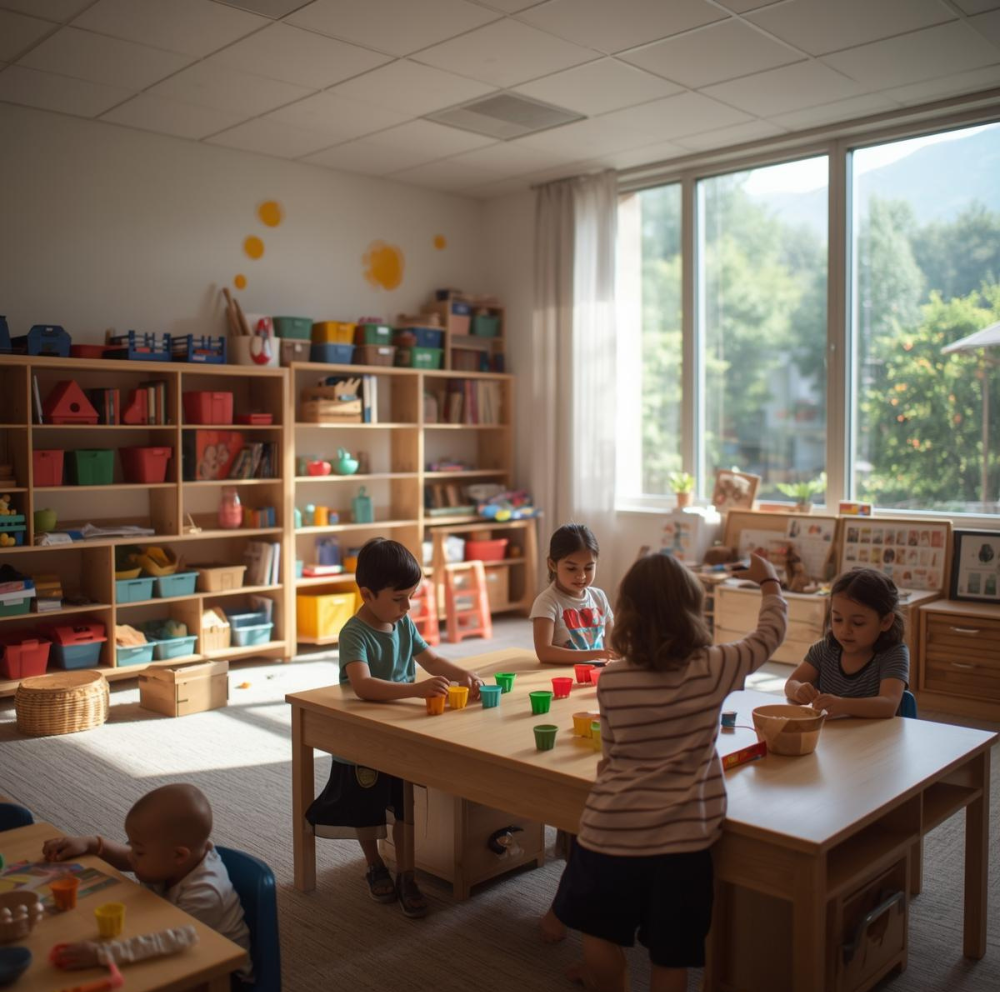
Montessori classrooms are intentionally structured.
Materials are arranged sequentially.
Activities follow clear progression.
The environment is uncluttered and purposeful.
Research consistently shows that predictability reduces anxiety in autistic individuals (South & Rodgers, 2017). When environments are structured and expectations are consistent, cognitive load decreases.
For many autistic children, unpredictability increases stress. A well-prepared Montessori classroom can provide a stable framework.
However, the quality of implementation matters. Not all Montessori classrooms maintain low sensory stimulation or predictable transitions.
2. Hands-On, Concrete Learning
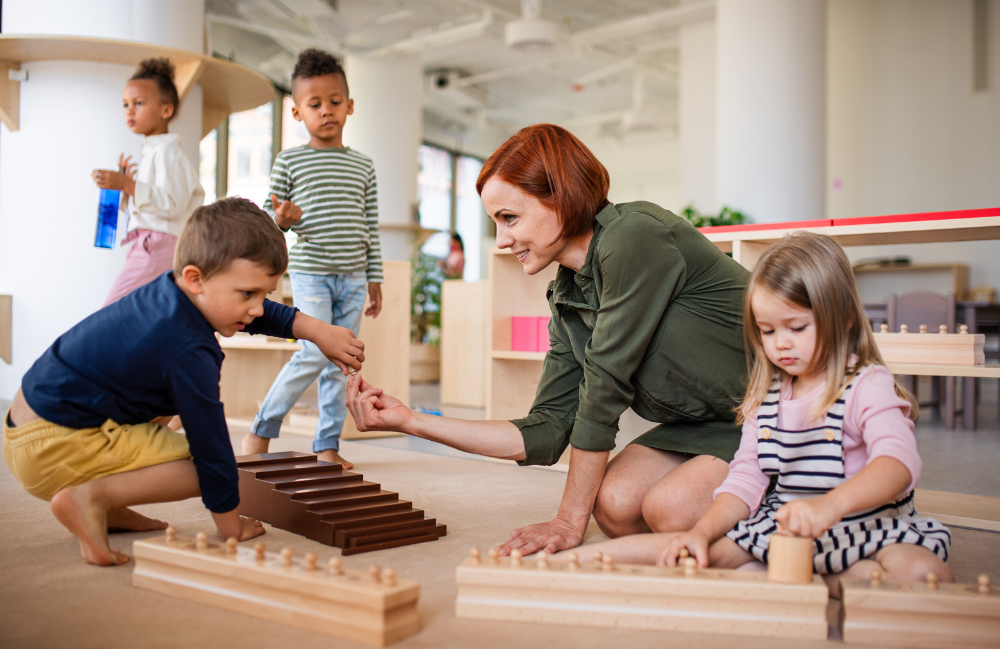
Montessori materials are tactile and multisensory.
Children manipulate objects rather than relying solely on verbal instruction. For many autistic learners, concrete, visual information is easier to process than abstract explanation (Hodgdon, 1995).
Visual and tactile supports are widely recommended in autism education. The TEACCH model, for example, emphasizes structured, visual learning environments — a principle that overlaps significantly with Montessori design (Mesibov & Shea, 2010).
When learning is hands-on rather than lecture-based, some autistic children show higher engagement and sustained attention.
3. Self-Paced Work and Repetition
Montessori allows children to:
- Repeat activities
- Work independently
- Focus for extended periods
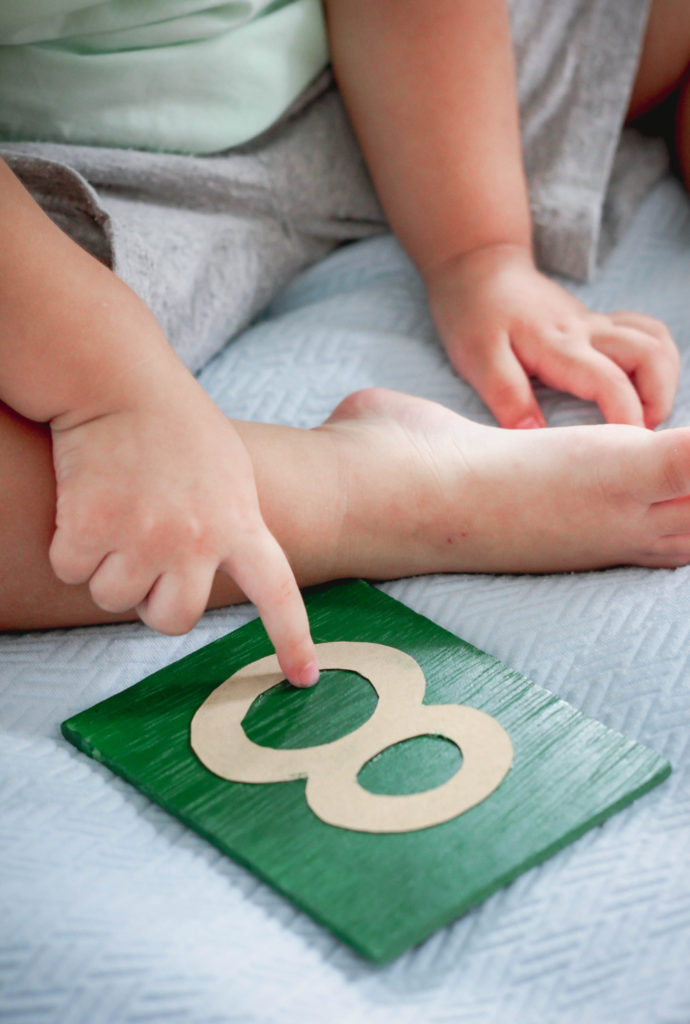
Repetition is often deeply regulating for autistic children. Research on restricted and repetitive behaviors suggests that repetition can serve self-regulatory functions (Turner, 1999).
Rather than interrupting repetition, Montessori environments allow it within purposeful activity. This can support concentration and mastery.
However, some autistic children may need more explicit teaching of certain skills — especially social communication skills — than Montessori traditionally provides.
4. Reduced Whole-Group Pressure
Many Montessori classrooms emphasize individual work over constant whole-group instruction.
For autistic children who experience social overwhelm, reduced forced interaction can lower stress.
Research shows that high sensory and social demands increase anxiety for many autistic individuals (Ben-Sasson et al., 2009). Environments that allow autonomy and quieter engagement can support regulation.
That said, social development still requires intentional support. Montessori alone may not provide sufficient structured social skills instruction for some children.
Important Limitations
Montessori is not a substitute for:
- Speech and language therapy
- Occupational therapy
- Behavioural support
- Individualised education planning
Some autistic children may require:
- Explicit social communication teaching
- Augmentative and alternative communication (AAC) support
- Individualised behavioural plans
- Sensory integration therapy
Not all Montessori schools are equipped to provide these supports.
Teacher training varies widely. Some Montessori educators have additional training in neurodiversity and inclusive education; others may not.
The label “Montessori” does not guarantee autism-informed practice.
Montessori at Home for Autistic Toddlers
Even outside formal schooling, many Montessori-inspired strategies align with evidence-based supports:
Clear Visual Schedules
Visual schedules are strongly supported in autism research for reducing anxiety and increasing independence (Knight et al., 2015).
Montessori’s emphasis on orderly routines pairs well with visual supports.
Low-Clutter Environments
Research shows that sensory overload can increase stress and behavioural dysregulation (Ben-Sasson et al., 2009).
Montessori environments typically limit visual clutter and excessive noise.
For families implementing this at home, learning how to set up a calm Montessori bedroom can be a helpful starting point.
Defined Activity Zones
Clear boundaries between work, rest, and play areas help create predictability.
Concrete, Practical Life Activities
Activities like pouring, transferring, sorting, and practical tasks support motor development and executive functioning.
These tasks can also provide regulating sensory input.
A Neurodiversity-Affirming Perspective
It is essential not to frame Montessori — or any educational method — as something that “fixes” autism.
Autism is a neurological difference, not a disorder to eliminate.
The goal is not to remove autistic traits.
The goal is to support:
- Communication
- Emotional regulation
- Autonomy
- Access to learning
- Well-being
Montessori philosophy, at its best, emphasizes respect for the child as an individual. That alignment with dignity and autonomy resonates with neurodiversity-affirming approaches.
However, respect alone is not sufficient without appropriate support.
Questions to Ask When Considering Montessori for an Autistic Child
If exploring a Montessori school, consider asking:
- What training do teachers have in autism support?
- How are sensory needs accommodated?
- Is AAC supported if needed?
- How are transitions handled?
- What happens when a child needs more direct instruction?
- Is collaboration with therapists encouraged?
Philosophy is important.
Implementation is critical.
If You’re Supporting an Autistic Toddler at Home
You may also find these helpful:
- Using calm, clear language during dysregulation
- Creating independent play opportunities at home
- Setting up a low-stimulation Montessori bedroom
The Bottom Line
Creating independent work opportunities at home
Setting up a low-stimulation Montessori bedroom
The research directly studying Montessori education for autistic children is still limited.
However, many core Montessori principles — structured environments, hands-on learning, repetition, autonomy, and predictability — align with evidence-based practices known to support autistic learners.
Montessori may be a good fit for some autistic children.
It may not be ideal for others.
The deciding factor is not the label of the school, but whether the environment:
- Respects your child’s neurology
- Provides appropriate support
- Reduces unnecessary stress
- Encourages autonomy
- Supports communication
Every autistic child is different.
The best environment is one that understands that.
References
Ben-Sasson, A., Hen, L., Fluss, R., Cermak, S. A., Engel-Yeger, B., & Gal, E. (2009). A meta-analysis of sensory modulation symptoms in individuals with autism spectrum disorders. Journal of Autism and Developmental Disorders, 39(1), 1–11.
Hodgdon, L. Q. (1995). Visual strategies for improving communication: Practical supports for school and home. QuirkRoberts Publishing.
Knight, V., Sartini, E., & Spriggs, A. D. (2015). Evaluating visual activity schedules as evidence-based practice for individuals with autism spectrum disorders. Journal of Autism and Developmental Disorders, 45(1), 157–178.
Lillard, A. S., & Else-Quest, N. (2006). The early years: Evaluating Montessori education. Science, 313(5795), 1893–1894.
Mesibov, G., & Shea, V. (2010). The TEACCH program in the era of evidence-based practice. Journal of Autism and Developmental Disorders, 40(5), 570–579.
South, M., & Rodgers, J. (2017). Sensory, emotional and cognitive contributions to anxiety in autism spectrum disorders. Frontiers in Human Neuroscience, 11, 20.
Turner, M. (1999). Repetitive behaviour in autism: A review of psychological research. Journal of Child Psychology and Psychiatry, 40(6), 839–849.