14 Month Old Clingy Phase: Why Suddenly Clingy and What Helps
If your child is around 14 months, you might be noticing a sudden clingy phase — this guide explains exactly what’s happening and what helps.
One moment they’re happily exploring.
The next, they won’t leave your side.

You may notice:
- wanting to be held constantly
- crying when you leave the room
- resisting independent play
- needing more comfort than usual
It can feel confusing — especially if your child was previously more independent.
The good news is:
👉 this phase is very common
👉 and it usually has a clear developmental reason
Why 14 Month Olds Suddenly Become Clingy
Around this age, several important developmental changes happen at once.
Your child is:
- becoming more aware of separation
- forming stronger emotional attachments
- understanding that you can leave (and not always return immediately)
This is closely linked to separation awareness, which often peaks between 12–18 months.
Before this stage, your baby experienced closeness without fully understanding distance.
Now, they do.
And that awareness can feel overwhelming.
It’s Not Regression — It’s Development
This phase can feel like a step backwards.
But it’s actually a step forward.
Your child is developing:
- emotional awareness
- attachment security
- memory and anticipation
They’re not “being difficult.”
They’re learning:
👉 “You can leave… and I don’t like that yet.”
Why It Can Feel So Intense
At 14 months, toddlers are in a unique stage:
They want independence…
but still rely heavily on connection.
This creates tension:
- they want to explore
- but also stay close
- they move away
- then come back quickly
This push-pull behaviour is completely normal.
What Clinginess Often Looks Like
You might notice:
- following you from room to room
- crying when put down
- wanting to be carried more often
- refusing to play alone
- increased upset at bedtime or naps
Some days will feel easier than others.
That’s part of the phase.
What Actually Helps (Without Forcing Independence)
The goal is not to “fix” clinginess.
The goal is to support your child through it.
1. Stay Close Before Encouraging Independence
Counterintuitive — but important.
Children often become more independent when they feel secure first.
Try:
- sitting nearby while they play
- offering reassurance without immediately picking them up
- staying emotionally available
👉 connection builds confidence
2. Use Small, Predictable Separations
Instead of sudden distance, try short, gentle separations.
For example:
- “I’m just going to the kitchen, I’ll be right back”
- leave briefly
- return as promised
This builds trust over time.
3. Create Simple, Familiar Routines
Predictability reduces anxiety.
Daily rhythms help your child feel safe because they begin to expect what comes next.
Even simple routines like:
- meals
- naps
- bedtime
can make a big difference.
If you’re unsure how to structure this, a simple routine can help → A Simple Montessori Toddler Daily Routine for Calm Days
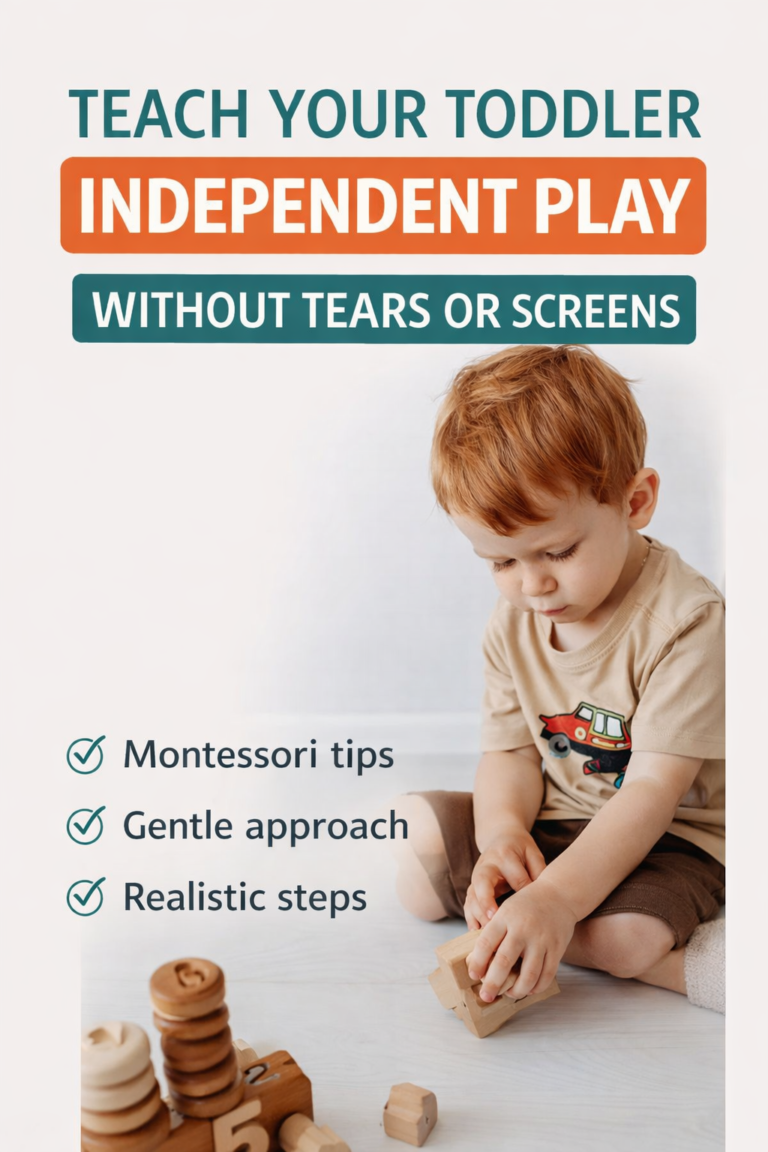
4. Offer Opportunities for Safe Independence
At this age, independence doesn’t mean being alone.
It means:
👉 being able to do something with you nearby
Simple activities help:
- stacking objects
- putting items into containers
- carrying small objects
If you’re looking for simple ways to support this stage,
→ Explore Montessori tools that support independent toddler play
5. Expect More Clinginess During Transitions
Clinginess often increases during:
- illness
- sleep changes
- travel
- developmental leaps
This doesn’t mean something is wrong.
It just means your child needs more reassurance temporarily.
What Not to Do
It can be tempting to:
- push independence too quickly
- ignore crying
- “test” separation
But this often increases anxiety rather than reducing it.
At this stage, responsiveness builds security.
And security supports independence later.
When Does This Phase End?
For most children, this phase gradually eases over time.
You might notice:
- slightly longer independent play
- less distress when you leave
- more confidence in familiar environments
It doesn’t disappear overnight.
It fades slowly.
The Bigger Picture
Clinginess at 14 months is not a problem to solve.
It’s a sign of:
- healthy attachment
- emotional development
- growing awareness
Your child isn’t trying to make things difficult.
They’re trying to feel safe in a world that suddenly feels bigger.
One Simple Perspective Shift
Instead of asking:
👉 “How do I stop this?”
Try asking:
👉 “How can I support them through it?”
That shift changes everything.
Final Thoughts
This phase can feel exhausting.
But it’s temporary.
And it’s meaningful.
Because the same child who needs you so closely right now
is building the foundation for independence later.
Often, without you even noticing the moment it begins.