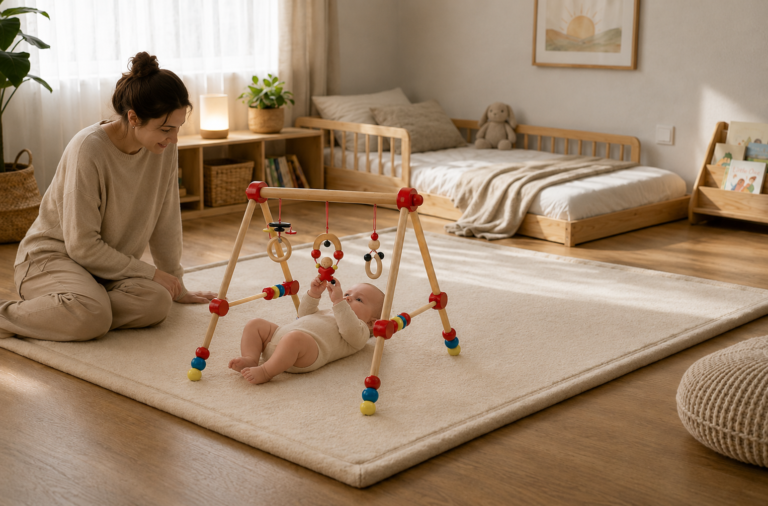
6 Month Old Suddenly Won’t Sleep Through the Night
If your 6-month-old suddenly isn’t sleeping the way they used to, it can feel as though you’ve gone backwards overnight.
A baby who happily slept long stretches may suddenly wake every couple of hours.
Bedtime becomes unpredictable.
Naps become shorter.
And the routines that worked perfectly a few weeks ago seem to stop working altogether.
It’s easy to assume you’ve done something wrong.
In reality, something much more interesting is happening.
Around six months, your baby’s sleep begins changing into something that looks much more like yours.

Disclaimer: This post contains affiliate links. As an Amazon Associate I earn from qualifying purchases at no extra cost to you.
Things to Check First
Before assuming this is purely developmental, it’s worth ruling out a few simple factors first.
Things like teething, illness, congestion, feeding changes, overtiredness or changes in the sleep environment can all affect sleep more noticeably around this age.
If your baby seems unusually distressed, uncomfortable or in pain, it’s always worth speaking with your GP or health visitor.
Once physical discomfort or environmental changes are ruled out, the most likely cause is usually development rather than something being “wrong.”
Your 6-Month-Old’s Sleep Isn’t Getting Worse
If your baby’s sleep suddenly feels less predictable around six months, it can seem as though everything has gone backwards. In reality, this stage is usually a sign of rapid development rather than worsening sleep.
Around six months, your baby’s sleep begins to mature and gradually becomes more like an adult’s. Instead of staying in deep sleep for long stretches, they move more frequently between lighter and deeper sleep cycles, making brief wake-ups much more common.
Think about how you sleep.
You don’t sleep deeply all night.
You naturally move between lighter and deeper sleep several times, briefly waking to roll over or adjust your pillow before drifting back to sleep.
Most mornings, you don’t even remember it.
Around six months, your baby begins developing similar sleep cycles.
The difference is that they haven’t yet learned how to move between them quite so easily.
At the same time, they’re becoming far more aware of the world around them. New sounds, familiar faces and changes in their surroundings are much more noticeable than they were just a few weeks earlier. They’re also learning new physical skills such as rolling and sitting, and it’s not unusual for that daytime practice to continue in the cot at night.
Another important milestone is object permanence—your baby is beginning to understand that people still exist even when they’re out of sight. As a result, they may become more unsettled when they wake and realise you’re no longer nearby, leading to a greater need for reassurance overnight.
Although this stage can feel exhausting, it’s usually a sign that your baby’s brain, body and understanding of the world are developing exactly as expected. Sleep often reflects that progress before it settles again.
If your baby also wakes immediately when put down, this is often closely connected to lighter sleep cycles and increased awareness:
→ Baby Wakes Up When Put Down — Here’s Why (And What Actually Helps)
What Actually Helps
The goal at this stage is usually not “fixing” sleep overnight.
More often, it’s about helping your baby move through this period of rapid development with as much calm and predictability as possible.
And interestingly, the things that help most are often surprisingly simple:
less stimulation, more consistency and realistic expectations for this age.
1. Keep Evenings Lower-Stimulation
Around 6 months, babies become much more sensitive to their environment before sleep.
Bright rooms, loud activity, screens or busy evenings can make it harder for the nervous system to settle fully.
Often, a slower final hour before bed helps more than adding complicated routines.
Soft lighting, quieter play and calmer transitions into sleep usually work best at this age.
Some parents also find that a dimmable night light helps overnight feeds and settling feel less disruptive without fully waking the room.
If you’re looking for one, we’ve rounded up our favourite options in → Best Low-Stimulation Night Lights for Babies & Toddlers
2. Try Not to Overtire Them
Overtiredness can build surprisingly quickly around this age.
And interestingly, babies who seem suddenly “wide awake” at bedtime are sometimes actually overstimulated or overtired rather than under-tired.
If sleep has become particularly difficult, a slightly earlier bedtime for a few nights can sometimes help things feel more manageable again.
3. Keep Night Waking Boring
When babies wake overnight, the goal is usually helping them return to sleep without fully activating the nervous system.
Keeping interactions quieter and more predictable often helps:
- dim lighting
- slower movements
- calm responses
- minimal stimulation during feeds or changes
At this age, less stimulation overnight often leads to easier resettling.
4. Avoid Constantly Changing Approach
When sleep suddenly becomes unpredictable, it’s very easy to start changing everything at once:
- new schedules
- new routines
- new sleep advice
- new expectations
But often, constant adjustment creates more stress for both the parent and the baby.
Usually, consistency matters more than perfection.
What Not to Do
You don’t need to rush into “fixing” sleep, remove comfort, or push independence before your baby is ready.
At this stage, responsiveness and consistency often support sleep more effectively than constant adjustment.
When Does This Phase End?
For most babies, this stage gradually settles.
You may notice:
- longer stretches returning
- easier settling
- fewer night wakings
It doesn’t happen overnight.
But it does shift.
Final Thoughts
Six months is often one of the biggest turning points in infant sleep.
Ironically, many of the behaviours that worry parents most—lighter sleep, increased awareness and more frequent waking—are actually signs that your baby’s brain is developing exactly as expected.
That doesn’t make the sleepless nights any easier.
But it can make them feel a little less mysterious.
The very changes disrupting your baby’s sleep today are also helping them develop the awareness, movement and independence they’ll rely on over the months ahead.
…even if it doesn’t feel like it at 3am.
As this phase settles, many families also find that a simple, predictable bedtime routine helps make evenings feel calmer for everyone. If you’re not sure where to start, take a look at → How to Build a Bedtime Routine That Fits Your Baby
Frequently Asked Questions About 6 Month Sleep Changes
Why is my 6 month old suddenly waking at night?
Night waking often increases around 6 months due to development.
Your baby is becoming more aware, learning new physical skills, and transitioning into more mature sleep cycles.
This can make sleep lighter and more easily disrupted — even if they previously slept well.
Is the 6 month sleep regression real?
What’s often called a “sleep regression” is actually a developmental shift.
Your baby’s sleep is becoming more structured and adult-like, which can temporarily lead to more waking.
It’s not a step backwards — it’s a sign of progress.
Why does my 6 month old wake every 2 hours?
Frequent waking can happen when sleep cycles change.
Your baby may now wake more fully between cycles and need support to settle again.
Other factors like hunger, development, or overtiredness can also contribute.
Should a 6 month old be sleeping through the night?
Some babies do — but many don’t.
Night waking at this age is still very normal.
Sleep patterns vary widely, and waking doesn’t mean something is wrong.
Why is my 6 month old harder to settle at bedtime?
Increased awareness can make bedtime feel different.
Your baby may notice more about their surroundings, resist separation, or feel more alert.
This can make settling take longer than before.
Could teething cause night waking at 6 months?
Yes — teething can affect sleep.
Discomfort, even mild, can make it harder for your baby to settle or stay asleep.
This is often temporary and tends to pass as symptoms ease.
How long does the 6 month sleep phase last?
This stage doesn’t have a fixed timeline.
For many babies, sleep gradually improves over a few weeks as they adjust to developmental changes.
It tends to ease rather than suddenly stop.
What helps a 6 month old sleep better at night?
Simple, consistent support makes the biggest difference:
- a calm, predictable sleep environment
- consistent routines
- responding gently to night waking
- avoiding overstimulation
Over time, this helps your baby feel secure and settle more easily.
You Might Also Find Helpful