
How to Avoid Unwanted Baby Gifts (A Gentle Guide for Parents)
Most people mean well when they buy baby gifts.
But well-intentioned doesn’t always mean useful.
You might end up with piles of newborn clothes in the wrong size, toys you’ll never use, or items that simply don’t fit your space, routines, or parenting style.
And when you’re already adjusting to life with a baby, managing extra clutter can feel surprisingly overwhelming.
The good news is that you can gently guide what you receive — without awkwardness or hurting anyone’s feelings.
Disclaimer: This post contains affiliate links. As an Amazon Associate I earn from qualifying purchases at no extra cost to you.
Why Unwanted Baby Gifts Happen
Unwanted gifts are rarely given thoughtlessly.
Usually, people are simply guessing what might be helpful, buying things they once used themselves, or choosing what looks cute rather than what’s genuinely practical.
Two groups often need a little more guidance:
Friends without children
They often choose based on appearance rather than usefulness — because they simply haven’t experienced daily life with a baby yet.
Older family members
They may buy items they loved or wished they had, which don’t always match how things are done now — or how you want to do things.
Understanding this makes it easier to respond with clarity, not frustration.
You’re Allowed to Guide It
There’s often an unspoken feeling that you should simply accept whatever you’re given. But setting gentle boundaries isn’t ungrateful — it’s practical.
You’re the one living in your home, using these items every day. And especially during the newborn stage, less clutter often means more calm.
Simple Ways to Prevent Unwanted Gifts
You don’t need a strict registry or long list.
Small, natural guidance is often enough.
1. Share What You Actually Use or Prefer
Instead of listing what you don’t want, talk about what’s genuinely helpful.
For example:
“We’ve realised we use muslins constantly.”
“We keep reaching for muslins, zipper sleepsuits, and burp cloths every single day.”
“Practical things like muslins, baby towels, and everyday basics have been the biggest help.”
“Books, muslins, and practical everyday things have honestly been the biggest help.”
This gives people direction without pressure.
2. Be Clear About Your Approach (Especially if You Prefer Montessori)
If you’re following a Montessori approach — or simply trying to keep things calmer and more intentional — it helps to communicate that early.
Montessori-style spaces tend to focus on simplicity, natural materials, fewer but more purposeful items, and calmer, less cluttered environments.
That means some traditional baby gifts may not fit particularly well — especially heavily electronic toys, overstimulating items, or things that don’t support independent play and movement.
You can communicate this gently with simple comments like:
“We’re trying to keep things fairly calm and low-stimulation.”
“We’re leaning more towards simple wooden toys and practical everyday things.”
“We’re trying to avoid anything too noisy or flashy and keep things a little simpler overall.”
This helps people understand why you’re being thoughtful about gifts, rather than feeling like you’re rejecting them personally.
And if you’re unsure what to suggest instead, practical everyday items are usually the safest direction.
If you need inspiration, try:
→ Best Gifts for 1 Year Olds
→ Best Montessori Toys for 2 Year Olds
3. Create a Simple Baby Wishlist (So People Know What You Need)
If people keep asking what you need, a simple baby wishlist can make things much easier — both for you and for everyone else.
Even a small wishlist helps reduce duplicates, avoid unnecessary clutter, and gently guide people towards things you’ll actually use day to day.
It also removes some of the pressure of constantly answering: “What do you still need?”.
Having a small wishlist ready can make those conversations much easier — while also helping you avoid unnecessary clutter and duplicates.
Amazon’s Baby Wishlist also includes things like completion discounts, group gifting, and easy sharing with family and friends.
If you’re trying to keep things calmer, simpler, or more Montessori-inspired, a wishlist can also help gently guide people towards more thoughtful choices — like natural materials, simpler toys, and practical everyday essentials — rather than leaving everything completely open-ended.
And if you’re not sure what’s actually useful in the early weeks, this may help: → Preparing for a Newborn: Essentials You’ll Actually Use Daily
4. Suggest Practical Categories Instead of Specific Products
Instead of naming exact products, it can sometimes feel easier to guide people towards broader categories that you know you’ll genuinely use.
For example:
“Books, muslins, and practical everyday bits are always helpful.”
“We’re trying to keep toys fairly simple and low-stimulation.”
“Useful things we’ll use every day honestly make the biggest difference.”
“We’re focusing more on practical essentials than lots of extra stuff.”
“Simple wooden toys, books, or everyday essentials are always appreciated.”
“We’re trying to avoid anything too noisy or flashy and keep things a little calmer overall.”
This keeps things flexible while still steering them in the right direction.
5. Mention What You Already Have
This prevents duplicates without awkwardness.
For example:
“We’re sorted for clothes, but essentials are always helpful.”
Simple and clear.
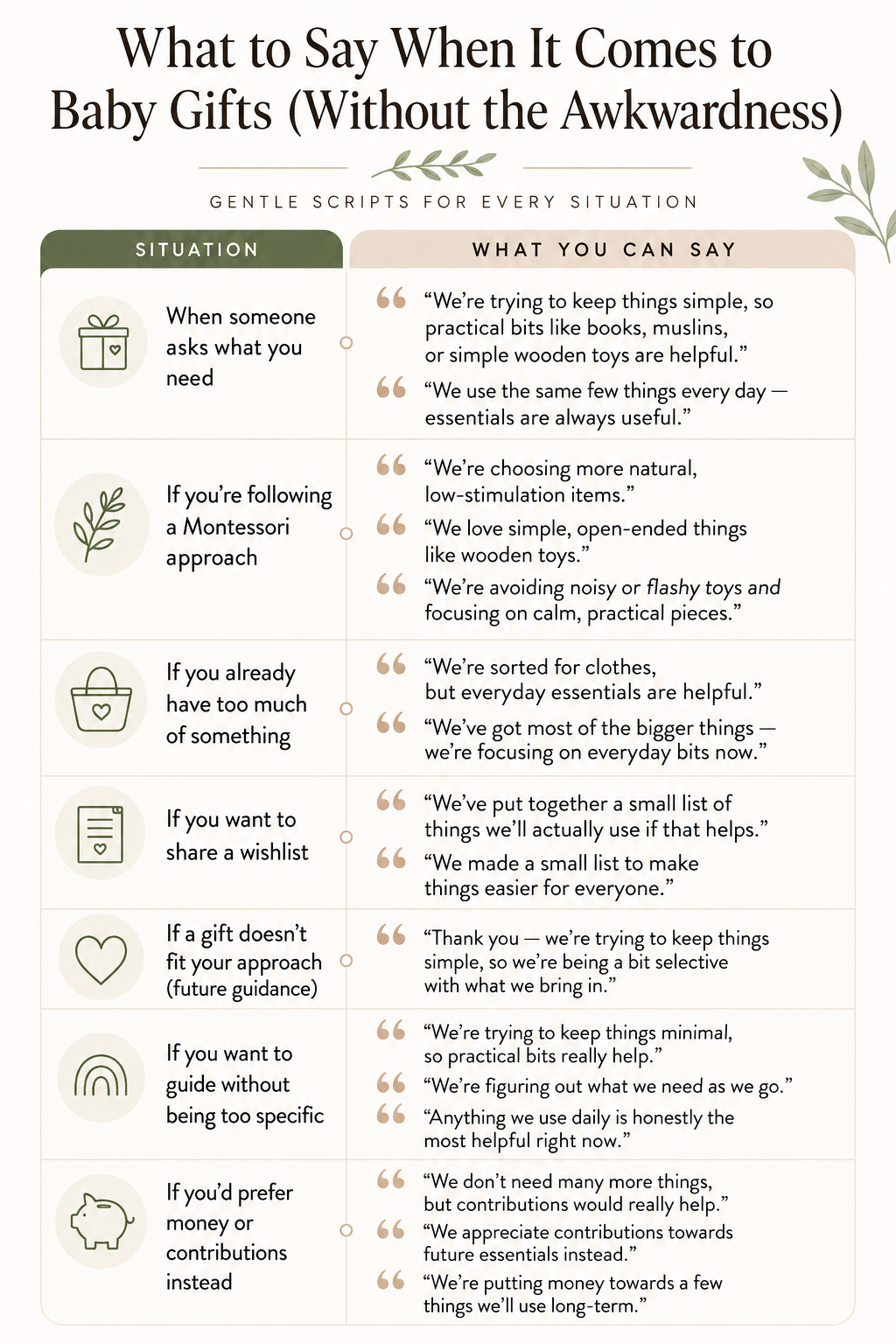
What to Say: Simple Scripts for Baby Gifts
If You Still Receive Unwanted Gifts
Even with guidance, it will still happen sometimes.
That’s okay.
You can:
– keep a few meaningful items
– quietly exchange or return when possible
– pass things on to someone who will use them
You don’t need to keep everything to be grateful.
Final Thoughts
Avoiding unwanted baby gifts isn’t about controlling what others give.
It’s about creating an environment that works for you and your baby.
Most people want to help — they just need a little direction.
And when you give that direction gently, you make it easier for everyone.
Including yourself.
FAQs: Unwanted Baby Gifts (For New Parents)
What are the most common unwanted baby gifts?
Some of the most common unwanted baby gifts include newborn clothes in the wrong size, large soft toys, duplicate items, and toys that are overstimulating or rarely used. Many new mums find that practical, everyday essentials are far more useful than novelty gifts.
How can I avoid unwanted baby gifts?
You can avoid unwanted baby gifts by gently guiding friends and family before they buy anything. Sharing a simple wishlist, mentioning what you already have, and suggesting practical items you use daily can help others choose gifts that are actually useful.
What should I tell people to buy instead of baby gifts I don’t need?
Instead of saying what not to buy, it’s often more helpful to suggest what you do need. You can mention categories like everyday essentials, feeding items, or simple toys. This approach keeps things positive while still reducing the chances of receiving unwanted baby gifts.
Is it rude to ask for specific baby gifts?
No — it’s not rude to be clear about what you need. Most people appreciate guidance, especially when buying for a new baby. Framing it gently, such as sharing a small wishlist or mentioning practical items, helps avoid awkwardness while ensuring gifts are useful.
Should I create a baby registry or wishlist in the UK?
Yes — many UK parents now use simple Amazon wishlists instead of formal registries. A short list of practical items can make it easier for friends and family to choose something helpful, while still giving them flexibility.
What baby gifts do new mums actually need?
New mums usually benefit most from simple, practical items used every day. These can include muslin cloths, feeding essentials, and basic care items. Gifts that support daily routines tend to be far more helpful than decorative or one-off items.
How do I tell family I don’t want certain baby gifts?
The easiest way is to keep it positive and indirect. Instead of saying what you don’t want, you can say things like, “We’re trying to keep things simple,” or “Practical items are really helpful for us.” This gently guides choices without creating tension.
What baby gifts should be avoided for a Montessori approach?
If you’re following a Montessori approach, it’s best to avoid toys with lights, sounds, and overstimulation. Instead, you can guide people toward simple, natural materials and open-ended items that support independent play and a calm environment.