
What to Do When Your Toddler Hits Another Child
It happens fast.
One moment they’re playing… the next, they’ve hit another child.
You’re suddenly aware of everything — the other child crying, the parent watching, and that sinking feeling of what do I do now?
If this has happened to you, you’re not alone.
Toddler hitting is incredibly common — but knowing how to respond in the moment can make a big difference.
Is Hitting a Phase in Toddlers?
Yes — for many children, hitting is a phase.
Toddlers are still learning how to:
- manage big emotions
- communicate needs
- control impulses
So when they feel overwhelmed, frustrated, or overstimulated, hitting can happen.
That doesn’t mean it should be ignored — but it does mean it’s something they need help learning through, not punishment.
Why Do Toddlers Hit Other Children?
There’s usually a reason behind it, even if it doesn’t look like it.
Common triggers include:
- frustration (wanting a toy, not getting a turn)
- overwhelm (busy environments, noise, too much stimulation)
- lack of language (not knowing how to express feelings)
- impulse (acting before thinking)
Understanding this helps you respond calmly instead of reacting emotionally.
What to Do When Your Toddler Hits Another Child
This is the most important part — what you do in the moment.
Short on time? Here’s exactly what to do 👇
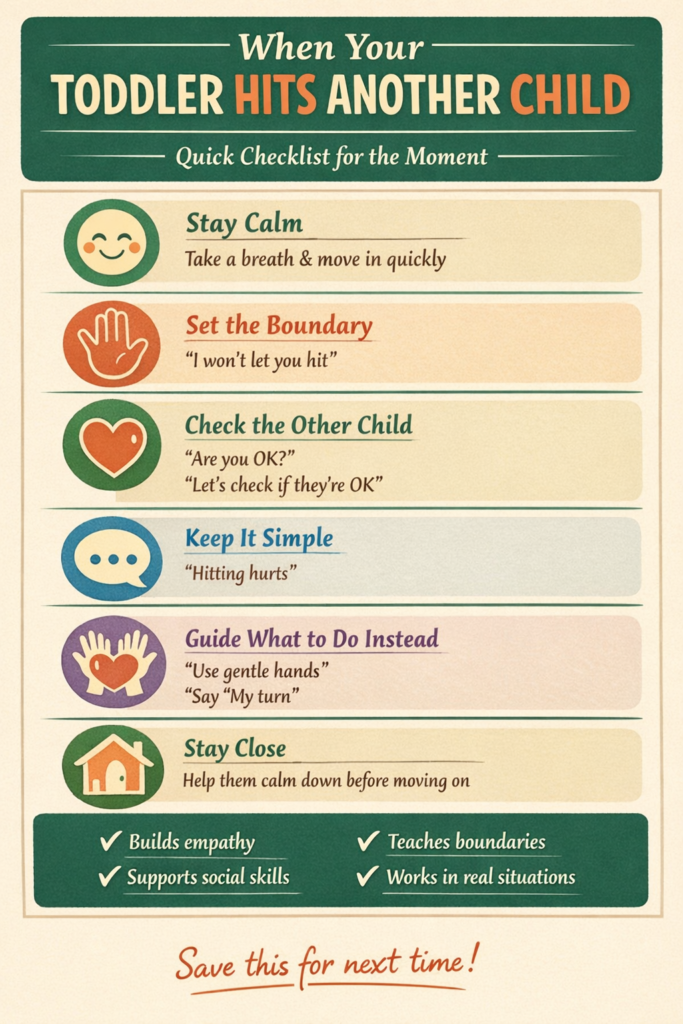
1. Stay calm and move in quickly
Go to your child straight away.
Keep your voice calm and steady.
👉
“I won’t let you hit.”
This sets a clear boundary without escalating the situation.
2. Check on the other child
This step is often missed — but it matters.
👉
“Are you OK?” (to the other child)
“Let’s check if they’re OK” (to your toddler)
This helps your child begin to understand the impact of their actions. Also builds empathy and shows others you’re handling it calmly.
3. State the boundary simply
Keep it short and clear:
👉
“Hitting hurts. I won’t let you hit.”
Avoid long explanations — toddlers can’t process them in the moment.
4. Redirect or guide
Show what they can do instead:
- “Use gentle hands.”
- “You can say ‘my turn’.”
5. Stay close
Instead of sending them away immediately, stay nearby.
This helps them:
- calm down
- feel supported
- learn what to do next
What to Do When Your Toddler Hits at the Playground or Nursery
Public situations can feel harder.
There’s often:
- pressure
- embarrassment
- other adults watching
But the approach stays the same.
Focus on:
- staying calm
- stepping in quickly
- guiding your child
You don’t need to over-explain or apologise excessively.
A simple, calm response is enough.
👉 You’re modelling how to handle the situation — not performing for others.
What Not to Do When Your Toddler Hits
In the moment, it’s easy to react — but some responses can make things worse.
Try to avoid:
❌ shouting
❌ forcing apologies
❌ ignoring the behaviour
❌ long lectures
These can:
- overwhelm your child
- increase frustration
- miss the learning opportunity
What to Say When Your Toddler Hits
Having a few simple phrases ready can help you stay calm.
👉 “I won’t let you hit.”
👉 “You’re feeling frustrated.”
👉 “Hitting hurts.”
👉 “Let’s use gentle hands.”
Keep it:
- short
- calm
- consistent
These moments add up over time.
How to Reduce Toddler Hitting Over Time
You can’t stop it instantly — but you can reduce it.
🌿 1. Stay close in busy situations
Toddlers need more support in stimulating environments.
🧠 2. Build simple language
Help them express needs:
- “my turn”
- “help please”
🧸 3. Practice gentle play
Show what “gentle” looks like during calm moments.
⏰ 4. Watch for patterns
Notice when hitting is more likely:
- tired
- hungry
- overstimulated
Over time, these small changes make a big difference.
If Your Toddler Is Hitting You at Home
You might notice similar behaviour at home too.
If your toddler is hitting you, the approach is slightly different — and you can read more about it in our guide to what to do when your toddler hits you.
Final Thoughts
Toddler hitting can feel overwhelming — especially in public.
But it’s not about “bad behaviour.”
It’s a skill your child is still learning.
With calm responses, clear boundaries, and a bit of consistency, these moments can become opportunities to teach something important.
And over time, things do get easier.