Best Wooden Toys for 1 Year Olds That Actually Get Used
Choosing toys for a one-year-old can feel surprisingly overwhelming. There are endless flashing, singing and button-filled options, but some of the toys children return to most are often much simpler.
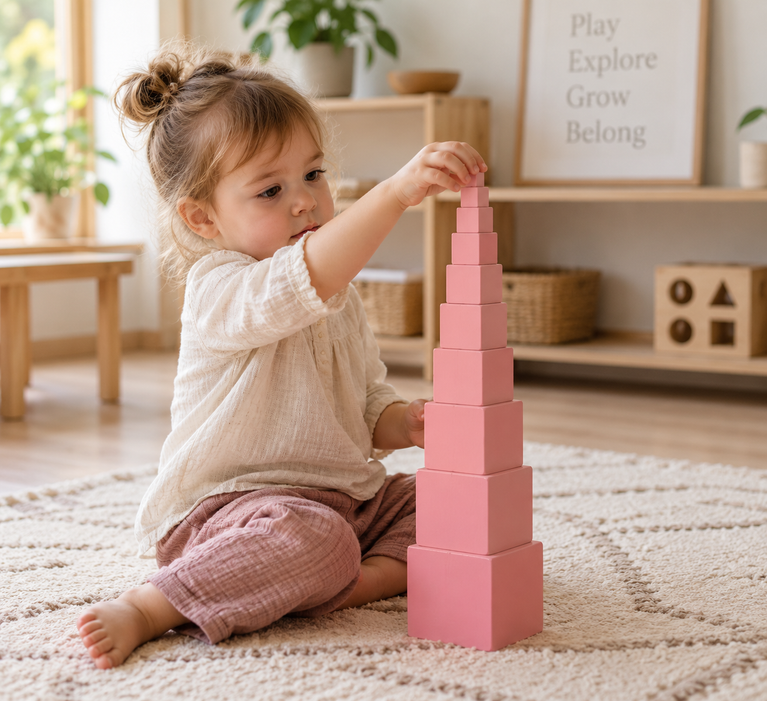
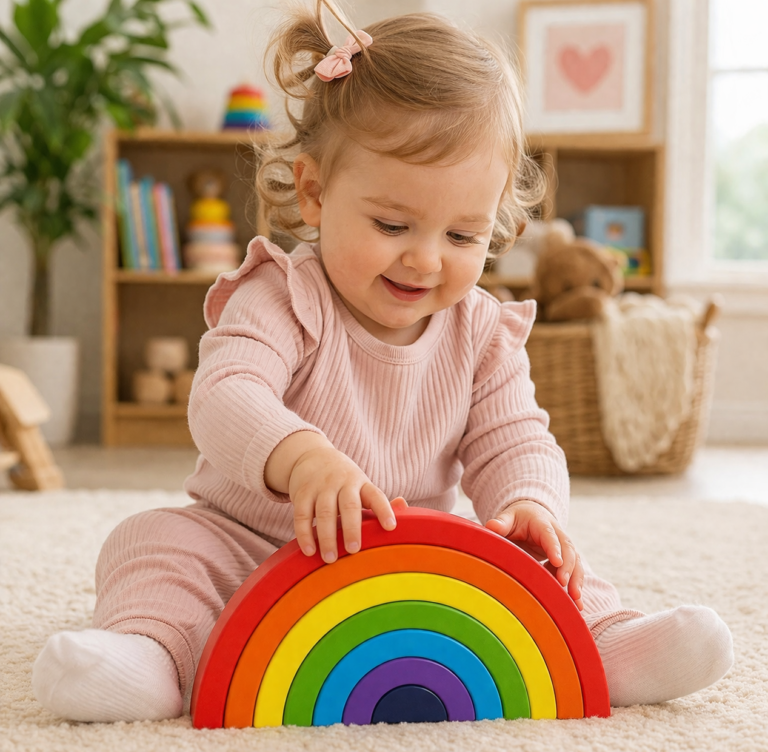
The best wooden toys for 1 year olds encourage the things toddlers naturally want to do at this age — stacking, posting, pulling, pushing, climbing and experimenting through repetition. Many are also Montessori or Montessori-inspired toys, with simple designs that encourage hands-on exploration, concentration and independent play.
In this guide, we’ve chosen some of our favourite wooden and Montessori toys for 1 year olds, from classic stacking toys and puzzles to walkers and open-ended playsets. Most offer plenty to explore now while still having play value beyond the first birthday.
Disclaimer: This post contains affiliate links. I may earn a small commission at no extra cost to you. As an Amazon Associate I earn from qualifying purchases.
What Makes a Toy “Montessori”?
Montessori toys are usually much simpler than many modern toddler toys.
Rather than relying on lights, sounds and lots of features, they tend to focus on one clear activity at a time — allowing toddlers to explore through movement, repetition and hands-on play.
Many Montessori-inspired toys are also made from natural materials, which is why there is so much crossover between Montessori toys and simple wooden toys.
At this age, the emphasis is less on being entertained and more on exploring, repeating and gradually mastering an activity.
What Toys Should a 1 Year Old Have?
At around one year old, toddlers are naturally drawn to activities they can repeat independently:
stacking, posting, sorting, opening, closing and simple cause-and-effect play.
And interestingly, the toys that tend to get used most are often the simplest.
At this age, children are developing:
- hand-eye coordination
- balance
- fine motor control
- early problem-solving
Toys that focus on one clear activity at a time usually work especially well because they allow toddlers to repeat movements successfully without becoming overwhelmed or overstimulated.
That repetition is often where concentration and confidence begin to grow naturally.
Best Wooden Toys for 1 Year Olds
Many of our favourite wooden toys for 1 year olds also happen to be Montessori or Montessori-inspired.
Not highly stimulating.
Not filled with buttons or sounds.
Instead, they focus on repetition, movement and clear cause-and-effect play — the kinds of activities toddlers naturally return to again and again.
These are our favourites.
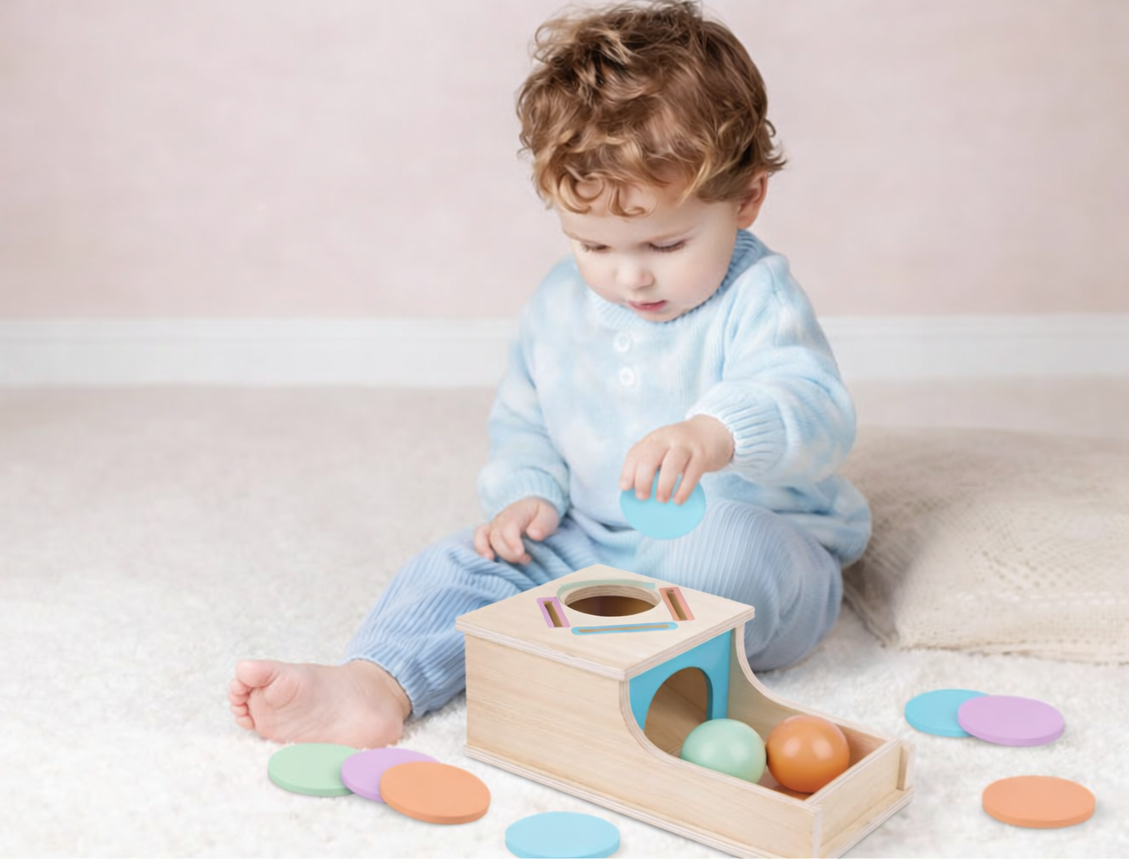
1. Object Permanence Box
An object permanence box is a classic Montessori toy for a reason.
Toddlers drop a ball into a hole and watch it reappear in the tray below — a simple, predictable action that can be deeply satisfying to repeat.
Focusing on one clear action also encourages independent concentration while supporting:
- hand-eye coordination
- cause-and-effect understanding
- early problem-solving
- slower, more focused play
Toddlers often repeat it again and again simply because mastering the movement itself feels satisfying.
2. Wooden Stacking Rings
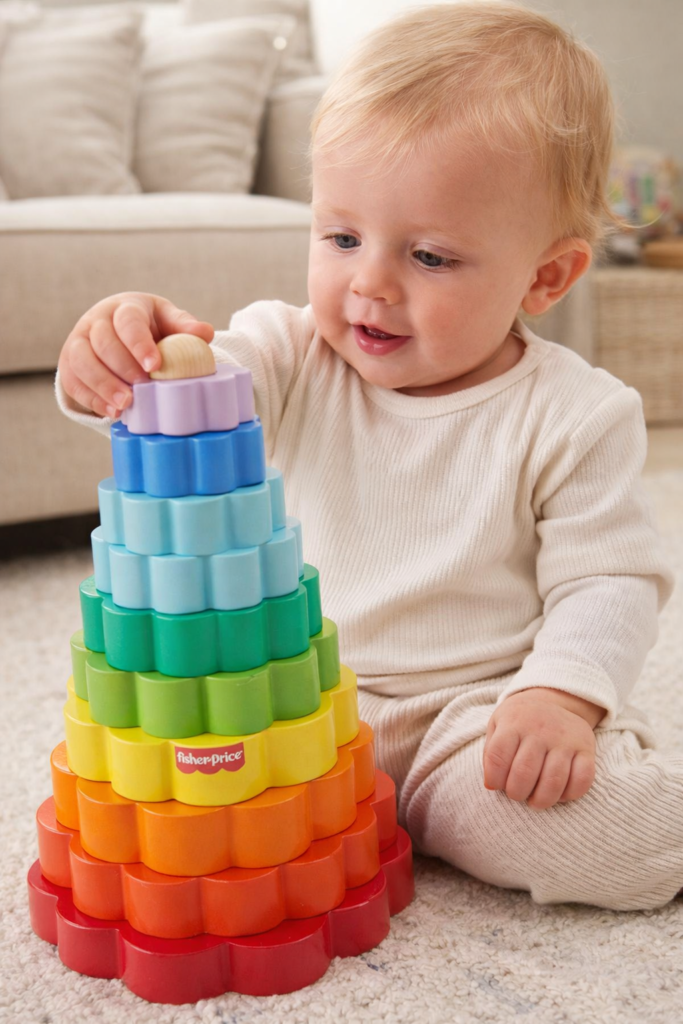
Stacking rings are simple, repetitive and satisfying — exactly the kind of play toddlers often return to naturally.
At first, children may simply remove the rings or place them randomly on the peg. Over time, they begin experimenting with size, balance and sequencing more intentionally.
This simple activity supports:
- fine motor control
- hand-eye coordination
- early problem-solving
- sequencing through repetition
Simple wooden versions work particularly well, keeping the focus on the movement itself without unnecessary lights, sounds or distractions.
3. Wooden Shape Sorter
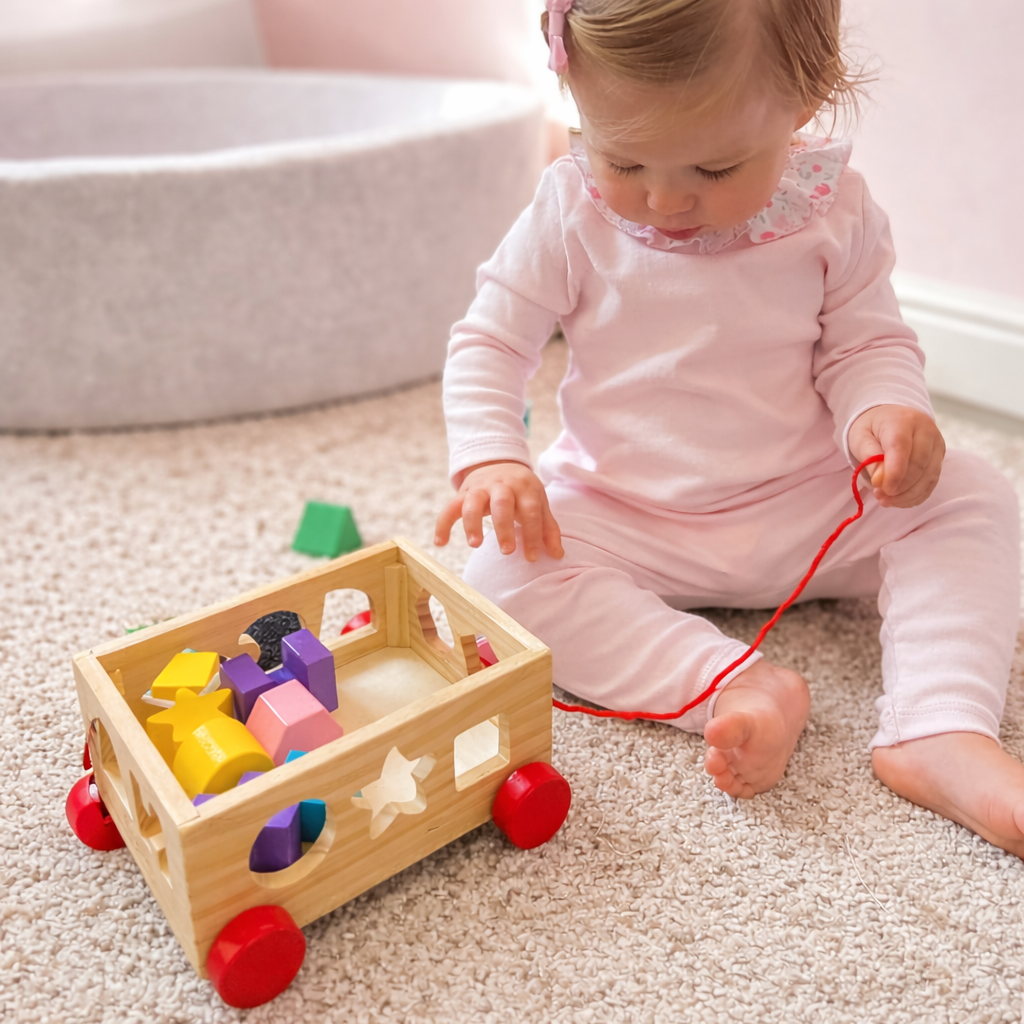
Shape sorters combine problem-solving with the kind of repetition toddlers naturally enjoy.
At first, children experiment by turning and testing different shapes through trial and error. Over time, they begin recognising patterns, matching shapes and understanding how objects fit together, while the self-correcting design encourages independent exploration.
Shape sorters support:
- coordination
- spatial awareness
- early logic skills
- concentration through repetition
Simple wooden versions with large pieces work particularly well for younger toddlers, as they’re easier for little hands to grasp and manipulate.
Pull Along Wooden Shape Sorter
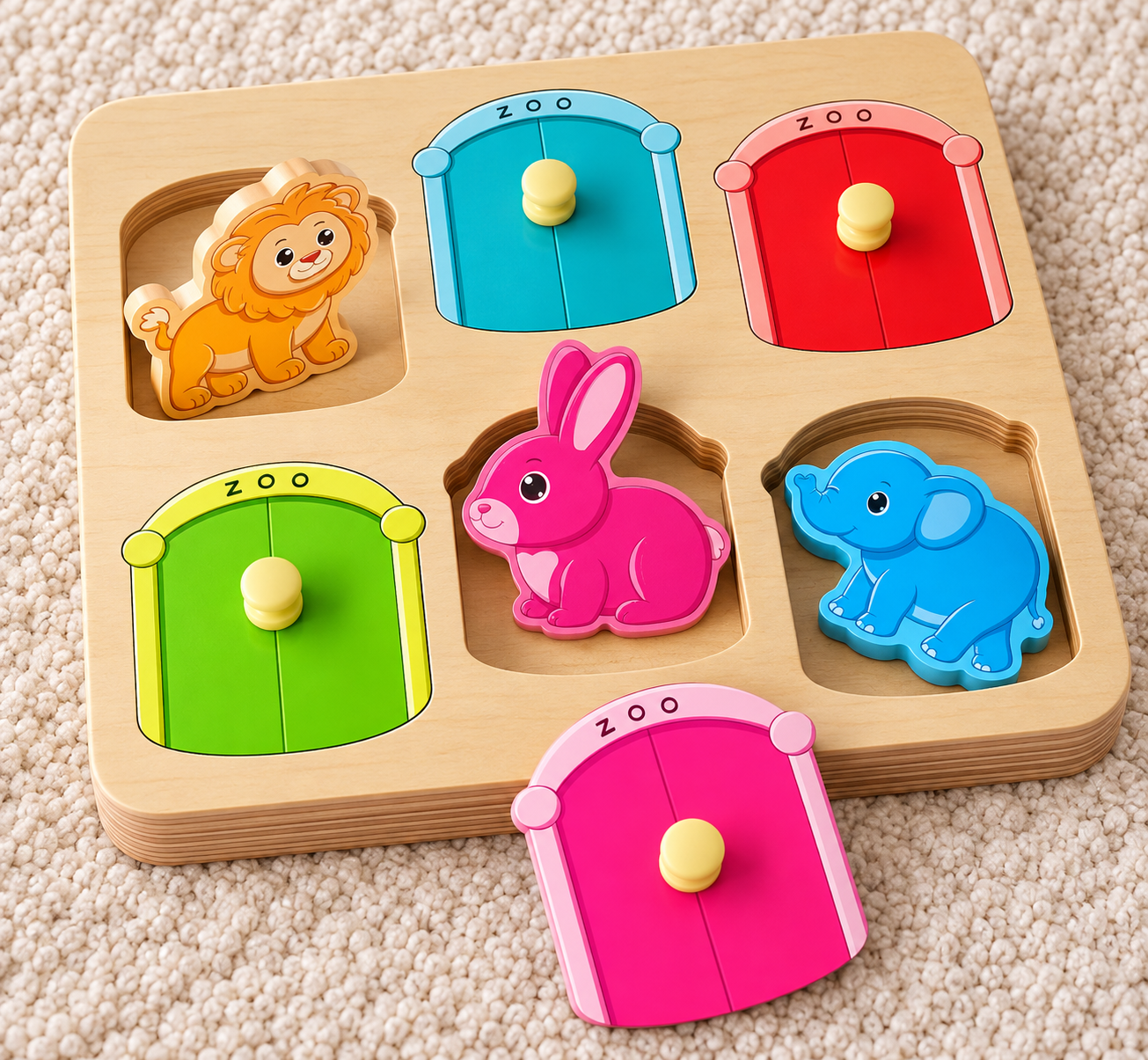
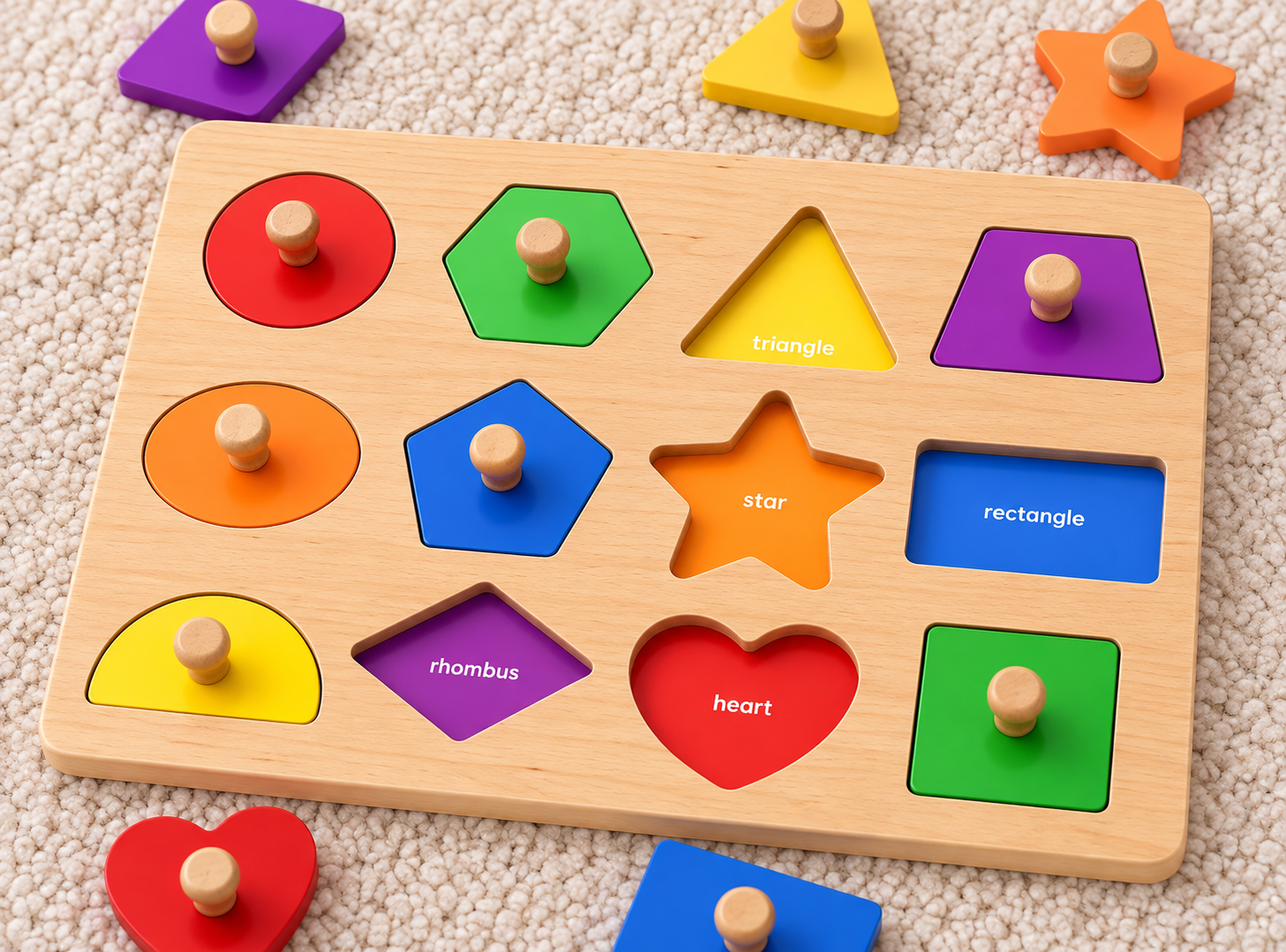
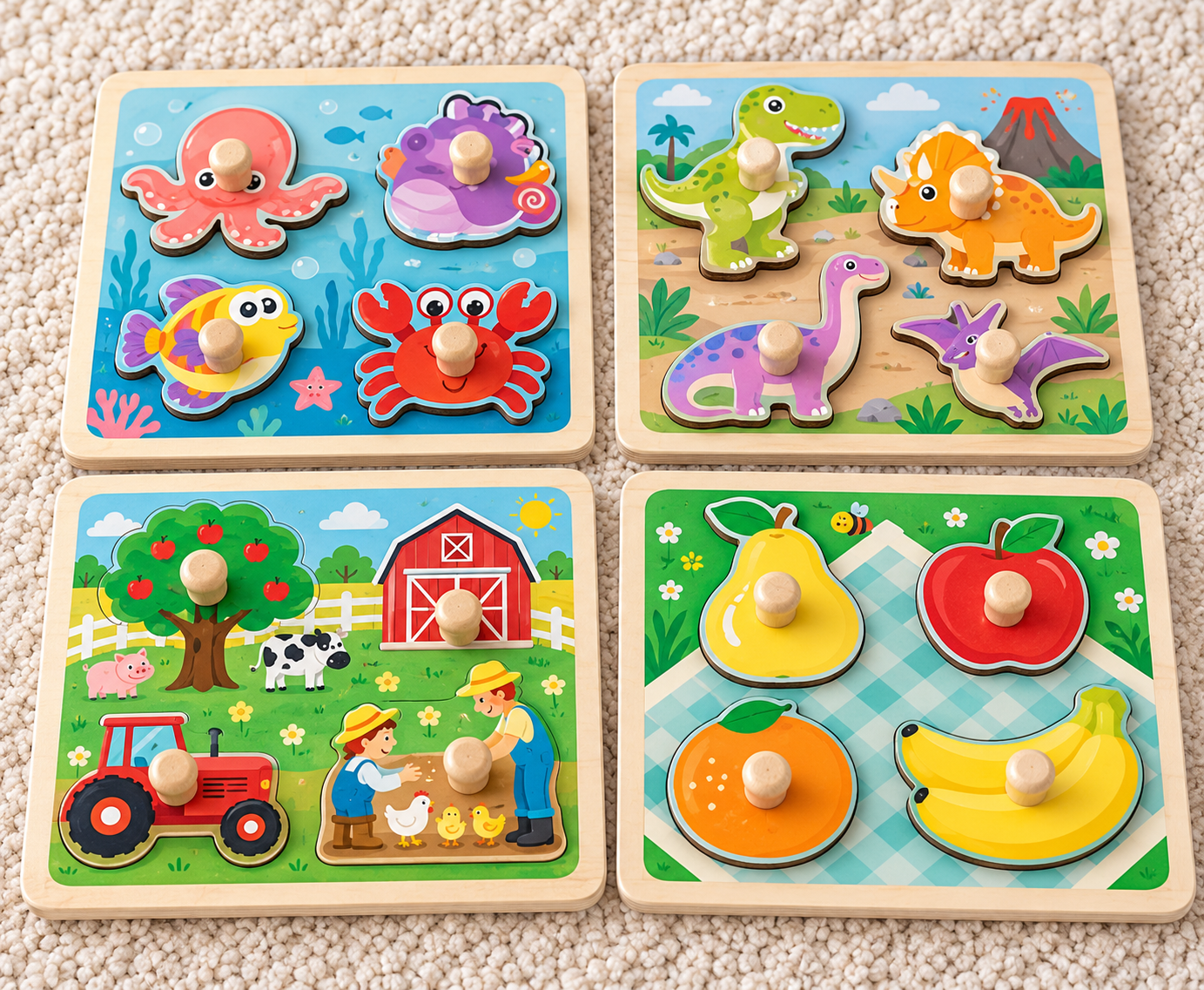
4. Simple Wooden Peg Puzzles
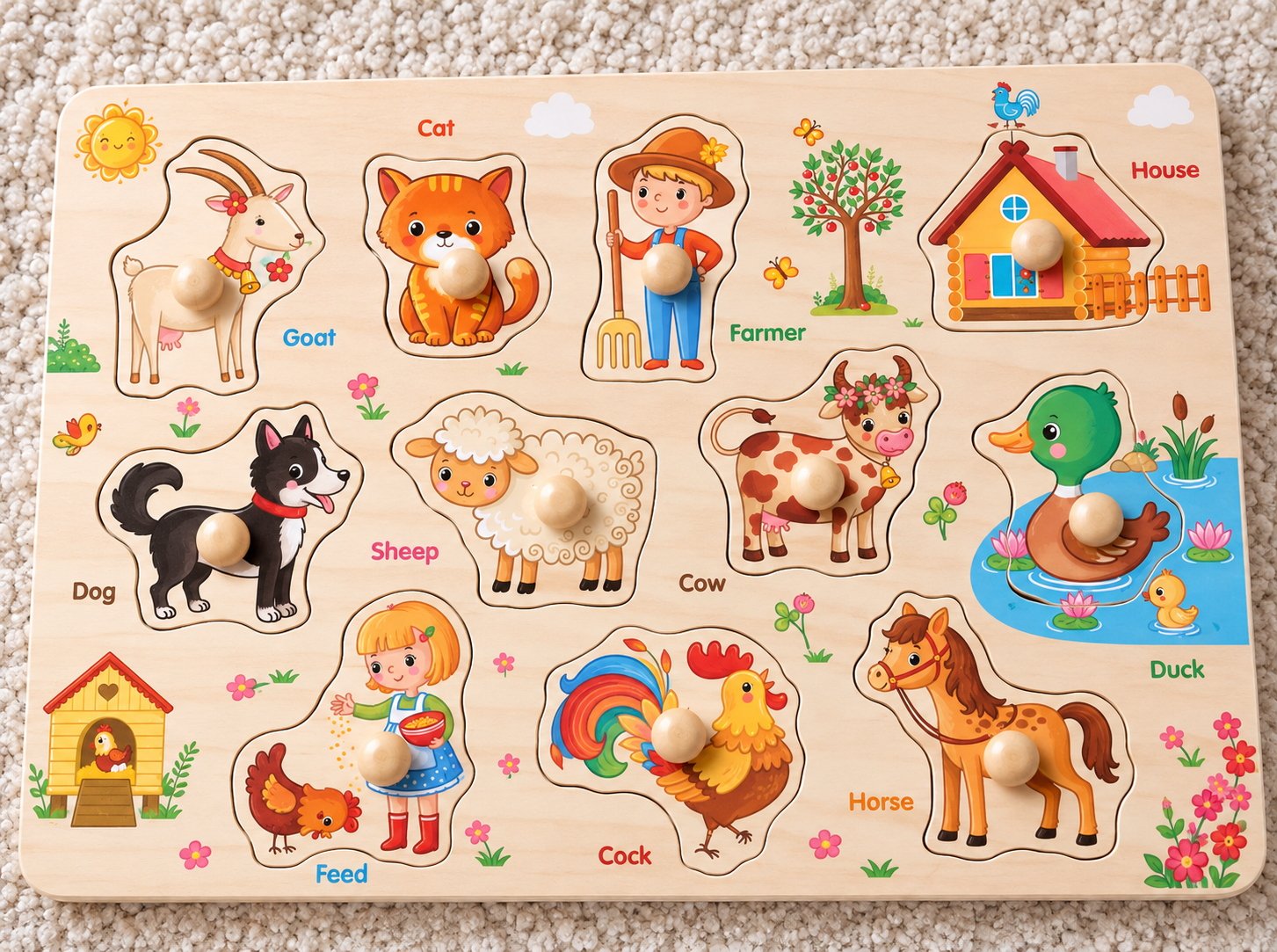
Peg puzzles are often a toddler’s first introduction to puzzles and problem-solving.
The small wooden knobs make pieces easier to grasp, remove and replace. At first, toddlers may simply take them out and put them back randomly, gradually learning to recognise shapes, images and where each piece belongs.
They encourage:
- fine motor control
- hand strength
- coordination
- early problem-solving
Simple animal, vehicle and farm puzzles work particularly well because the familiar images are easy for toddlers to recognise.
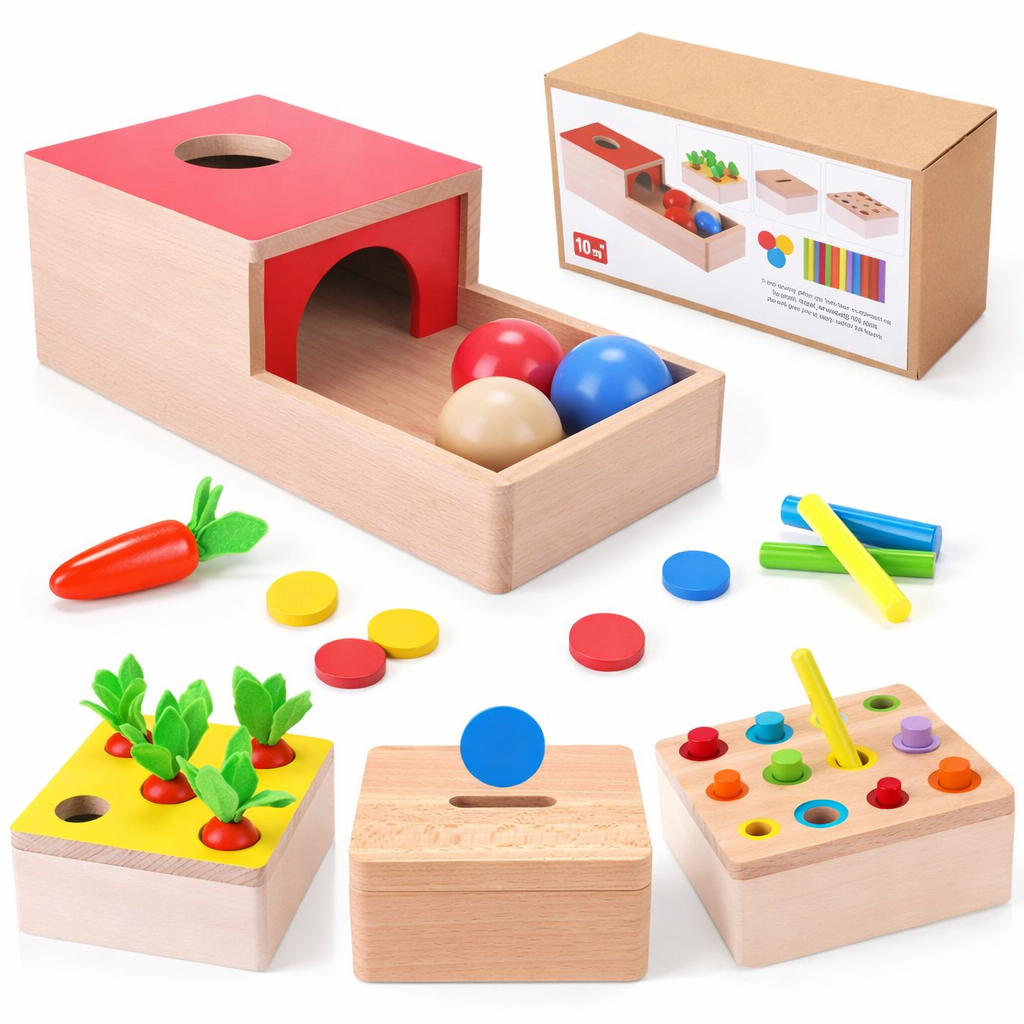
5. Multi-Activity Ball Drop Box
This activity box brings several simple hands-on activities into one compact set, including:
- a ball drop box
- coin posting
- peg matching
- simple sorting or harvesting tasks
Although not a traditional Montessori material, the individual activities draw on similar principles: simple movements, repetition and hands-on exploration.
The activities can also be offered separately, allowing toddlers to focus on one at a time while practising hand control, coordination and concentration.
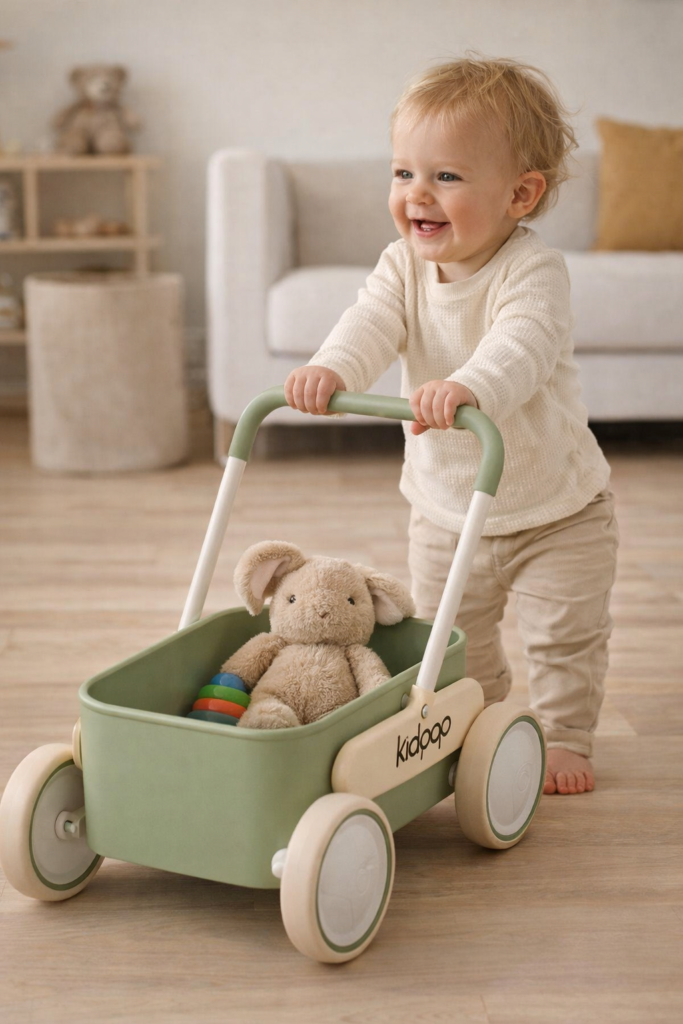
6. Montessori-Inspired Push Walker
A practical first-years toy that supports movement while giving toddlers something to do with all that newfound mobility.
As walking develops, a push walker gives one-year-olds a sturdy object to push around while practising balance and coordination. We particularly like designs with space for transporting things too — toddlers can fill them with toys, books or other treasures and wheel them around the house.
Why we like it: The transporting element gives it a purpose beyond learning to walk. Our daughter is three now and still takes real pride in using hers to tidy up and move her things around the house — so it has lasted well beyond those first steps.
Alternative Wooden Montessori Push Walker
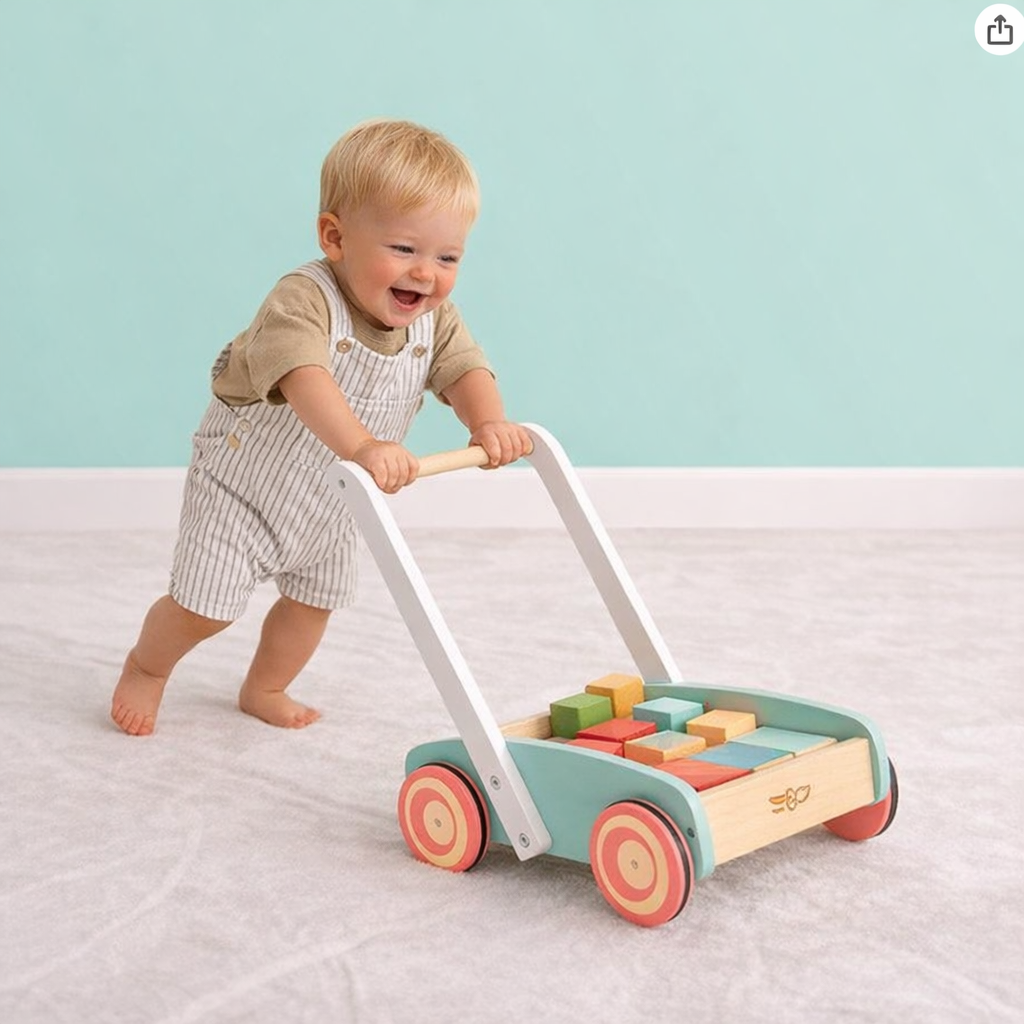
For parents who prefer a simpler wooden option, there are also traditional push carts available. One example is the Owl & Fox Wooden Baby Walker, which offers a classic Montessori-style design made from FSC-certified wood.
7. Bunny Pop Up Toy
A wonderfully simple cause-and-effect toy that one-year-olds can play with again and again.
Children press the little bunnies down, then discover what happens when they push and release them. It’s an immediately understandable action with a satisfying result — exactly the kind of simple repetition that tends to work so well at this age.
There’s plenty of development happening in the background too, from hand-eye coordination and finger control to learning about cause and effect, but none of it feels like a structured activity. As they get more confident, toddlers can also begin matching the different coloured bunnies to their spaces.
Why we like it: It’s simple enough for younger one-year-olds to explore but still offers something to master as their coordination improves.
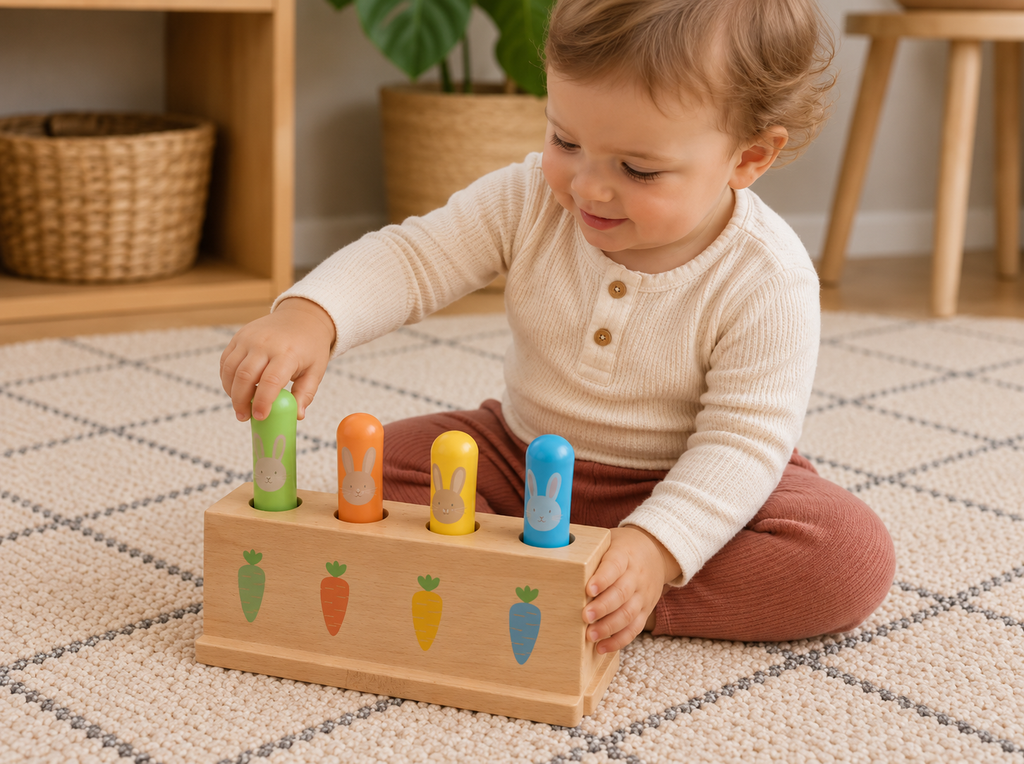
Children press the little bunnies down one by one, then eagerly wait to see which one pops back up next. The simple cause-and-effect action naturally encourages repetition, giving little fingers plenty of opportunities to practise precise movements without the activity ever feeling like work.
It’s one of those deceptively simple toys that many toddlers
8. Pull-Along Toy
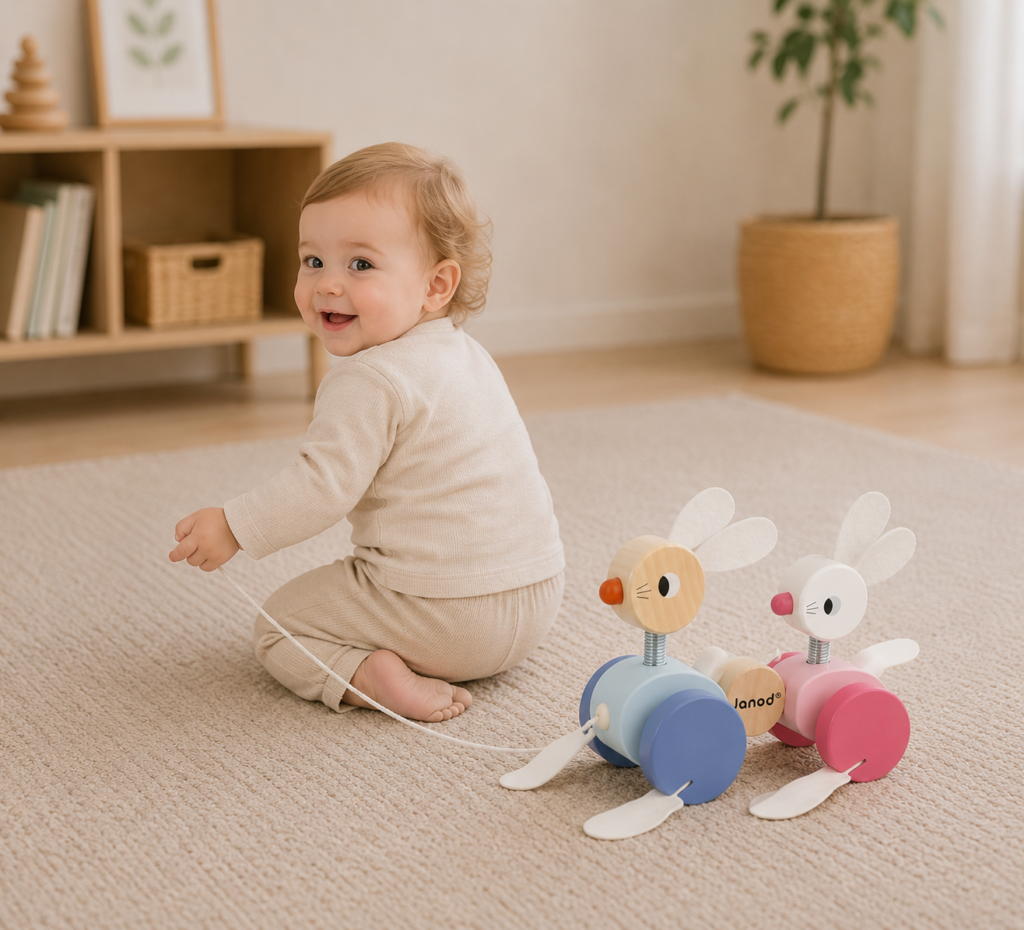
A classic toy that becomes especially fun once those first steps turn into confident walking.
This wooden bunny is one of the few toys that has genuinely stood the test of time in our house. Our daughter is almost three and still reaches for it several times a week. Watching the bunnies wobble behind her — with their little feet flapping as they roll — never seems to lose its charm.
Why we like it: Simple, beautifully made and surprisingly long-lasting.
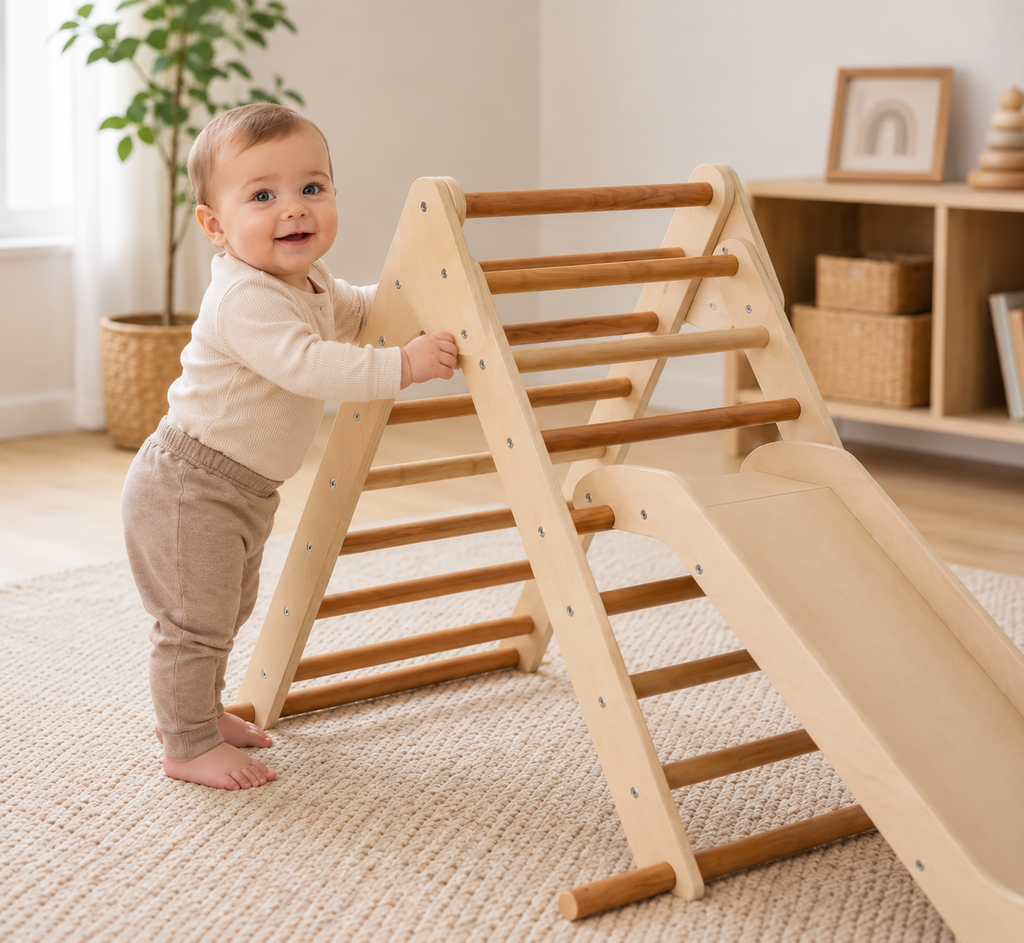
9. Pikler Triangle
A brilliant larger toy for active one-year-olds, with plenty of room to grow with them.
As toddlers become more confident standing and climbing, a Pikler triangle gives them a place to explore movement at their own pace. It supports balance, coordination and gross motor skills, while offering much more longevity than many toys aimed specifically at one-year-olds.
Why we like it: A bigger investment, but one that can stay interesting well beyond the first year.
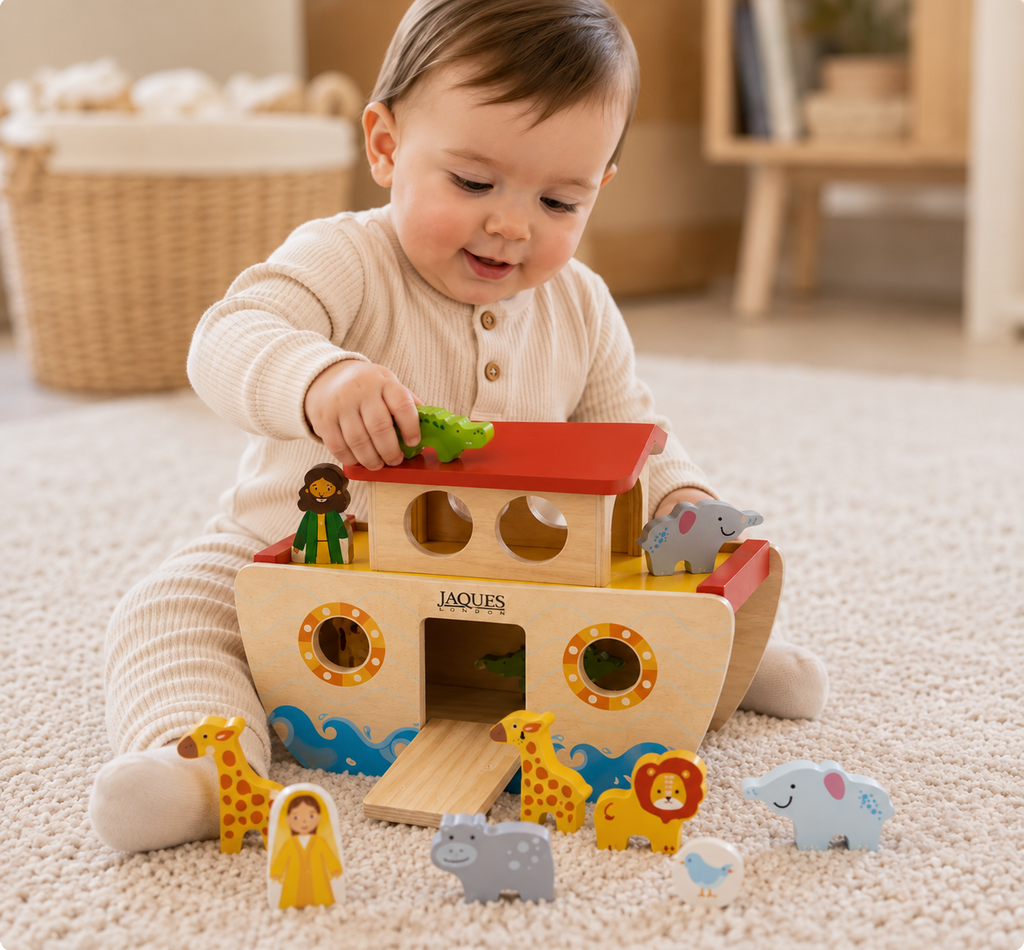
10. Wooden Noah’s Ark
A beautiful wooden playset that offers much more than one way to play.
The ark comes with pairs of colourful wooden animals and people that one-year-olds can load into the boat, take back out and move around. At first, that simple posting and filling-and-emptying play is likely to be the attraction; later, the animals can become part of pretend play and storytelling.
Why we like it: A lovely open-ended toy that can evolve with their play rather than having one fixed activity.
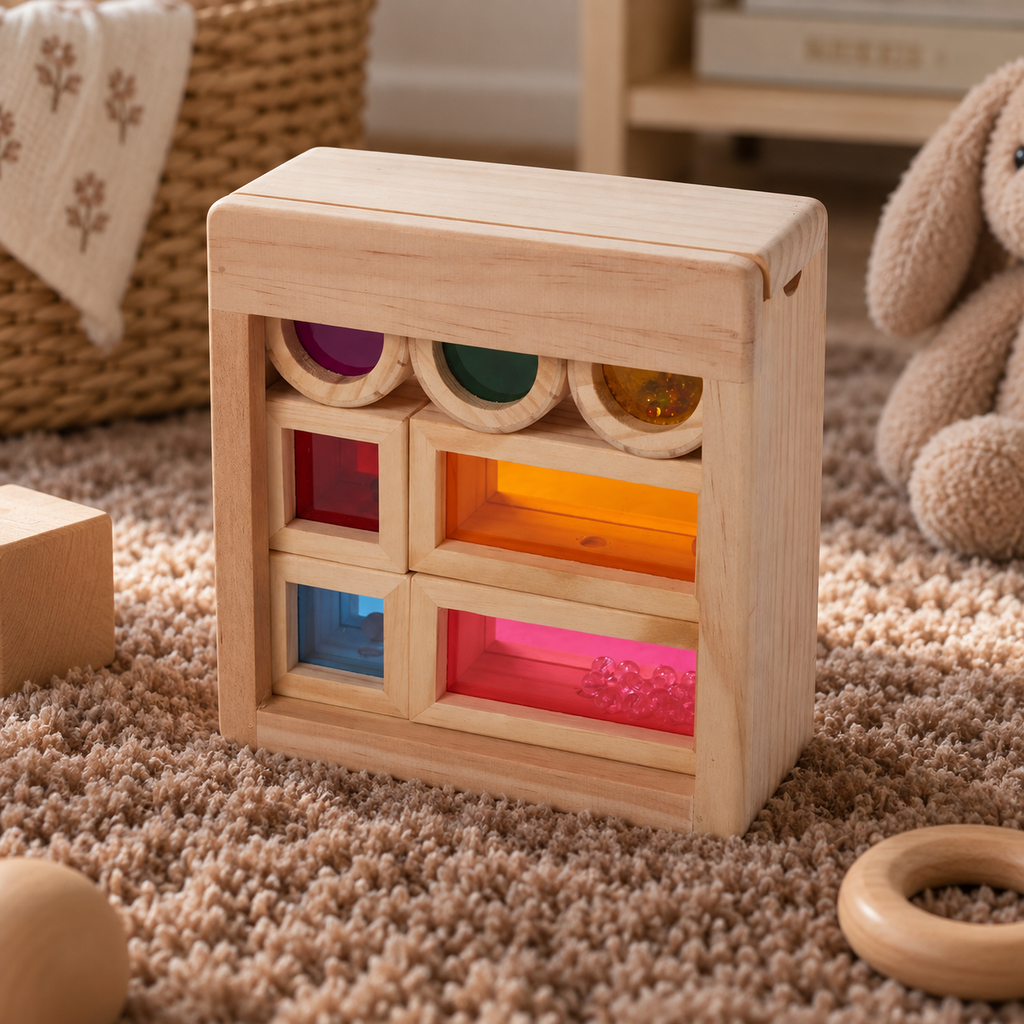
11. Wooden Sensory Blocks
A more engaging take on classic wooden blocks, combining stacking and building with colour, light and gentle sound.
These wooden sensory blocks contain coloured transparent panels, beads and other visual elements that give one-year-olds more to discover as they pick them up, turn them over and stack them. Hold them up to the light and the colours change what they see; shake or move some of the pieces and they create different sounds.
Why we like it: They add sensory interest without relying on buttons, flashing lights or electronic sounds. Children still have to create the experience themselves by picking up, examining, shaking and stacking the blocks. We also like that the natural wooden frames keep the set relatively simple visually while the coloured inserts provide something interesting to investigate.
How Many Toys Should a 1 Year Old Have?
Montessori approaches usually recommend fewer toys, not more.
At this age, too many visible toys can quickly become overwhelming. Instead of concentrating deeply, toddlers often move rapidly from one activity to another without settling into play for very long.
A smaller, more intentional setup usually works far better.
Many Montessori homes keep just a few activities available at once, rotating materials gradually over time rather than displaying everything together.
Often, 6–8 well-chosen toys on a low shelf is more than enough.
And interestingly, reducing visible toys often increases concentration rather than reducing it.
You might also enjoy our guide to Montessori toy rotation for toddlers.
Final Thoughts
The best Montessori toys for 1 year olds are usually the simplest ones.
Toys that encourage:
- repetition
- movement
- problem-solving
- independent exploration
often stay engaging far longer than highly stimulating toys filled with lights and sounds.
At this age, toddlers do not need endless entertainment.
They need activities that feel manageable, repeatable and satisfying to explore independently.
And often, with just a few well-chosen materials and a calmer play environment, concentration begins to develop naturally.
Doing your Christmas shopping on Amazon?
If you’re not already a Prime member, you can check whether you’re eligible for a free trial — useful if you’re ordering several little Christmas gifts and want Prime delivery.
Try Amazon Prime Free for 30 days
Frequently Asked Questions
What are the best toys for a 1 year old in the UK?
The best toys for a 1 year old are usually simple enough to explore independently but interesting enough to repeat. Shape sorters, stacking toys, posting activities, push-and-pull toys, simple puzzles and climbing equipment can all work well at this age. Look for toys appropriate for your child’s age and developmental stage, and always check the manufacturer’s age and safety guidance.
What are the best toys for a 1 year old’s birthday?
For a first birthday, we particularly like toys with some longevity rather than something a child will quickly outgrow. A wooden shape sorter, pull-along toy, push walker, Pikler triangle or simple wooden playset can continue offering new ways to play as their skills develop.
Are Montessori toys good for 1 year olds?
They can be. Montessori-inspired toys often focus on one clear activity, such as stacking, posting, matching or manipulating objects, which suits the repetitive way many one-year-olds naturally explore. They don’t have to be wooden or officially labelled “Montessori” to encourage this kind of hands-on, independent play.
What toys help a 1 year old develop fine motor skills?
Stacking rings, peg puzzles, shape sorters and simple posting toys all give one-year-olds opportunities to practise grasping, placing, turning and releasing objects. The best choice will depend on what your child can already comfortably manage, so start with larger, easy-to-hold pieces and follow the toy’s age guidance.
You Might Also Find Helpful