A Realistic UK Hospital Bag Checklist: Essentials, Extras & What to Skip
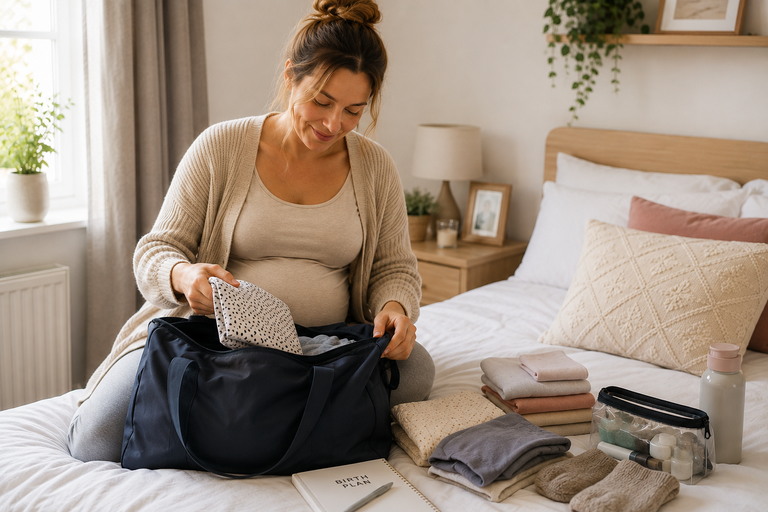
Packing a hospital bag is one of those pregnancy jobs that sounds simple until you actually start doing it.
A few baby grows. Something comfortable to wear. Toiletries. Done.
And then you search for a hospital bag checklist and suddenly you’re wondering whether you need three bags, your own towel, six different outfits and half the contents of your bathroom.
The NHS hospital bag checklist is genuinely a very good place to start. It covers the essentials for you and your baby, as well as useful things for your birth partner, and recommends having your bag packed around three weeks before your due date.
But having actually packed the bag, gone into hospital and discovered which things mattered once we were there, there are a few things I’d do differently.
Some seemingly insignificant items turned out to be incredibly useful. There were things I’d take more of, things I’d choose differently and things that barely left the bag.
If you’re still getting everything ready beyond the hospital bag, our guide to preparing for a newborn covers the baby essentials you’ll actually use during those first few weeks.
Disclosure: This article contains affiliate links. If you purchase through these links, we may earn a small commission at no extra cost to you. As an Amazon Associate, we earn from qualifying purchases. We only recommend products we genuinely believe offer value to families.
The NHS Hospital Bag Checklist
The NHS checklist is a sensible place to start. Rather than reinventing it, here’s what the NHS recommends packing for you, your baby and your birth partner:
What to Pack for You
- Your birth plan and hospital notes
- Loose, comfortable clothing for labour
- Dressing gown
- Slippers or flip-flops
- Nightwear
- 3 changes of comfortable clothes
- Socks
- 5–6 pairs of knickers or disposable underwear
- 2–3 bras, including nursing bras if breastfeeding
- Breast pads
- 2 packets of super-absorbent maternity pads
- Toiletries
- Eye mask
- Towels
- Your own pillow
- Healthy snacks and drinks
- Water bottle
- Fan or water spray
- Any regular medicines
- TENS machine and spare batteries, if using one
- Books, magazines, podcasts or playlists
- Phone and charger — an extra-long cable can be useful
- Spare glasses or contact lenses, if needed
- Spare bag for washing
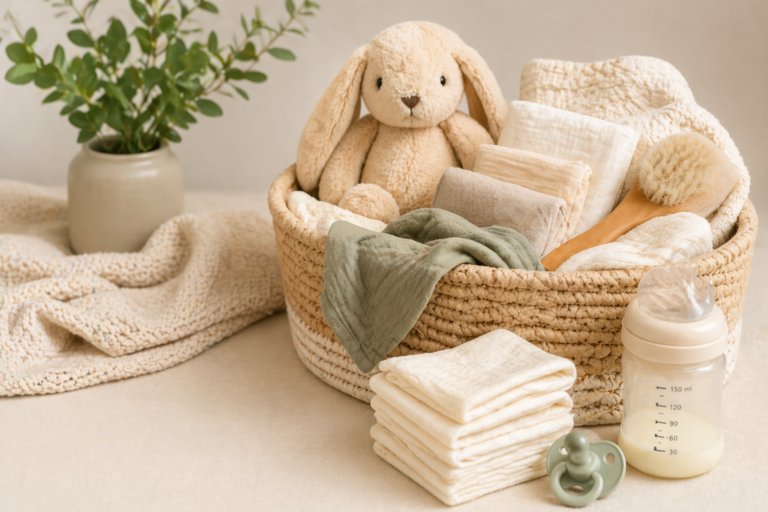
What to Pack for Baby
- Bodysuits, vests and sleepsuits
- Going-home outfit
- Hat, scratch mittens, socks or booties
- Snowsuit in cold weather
- Nappies
- Cotton wool or wipes
- Muslin squares
- Blanket or shawl
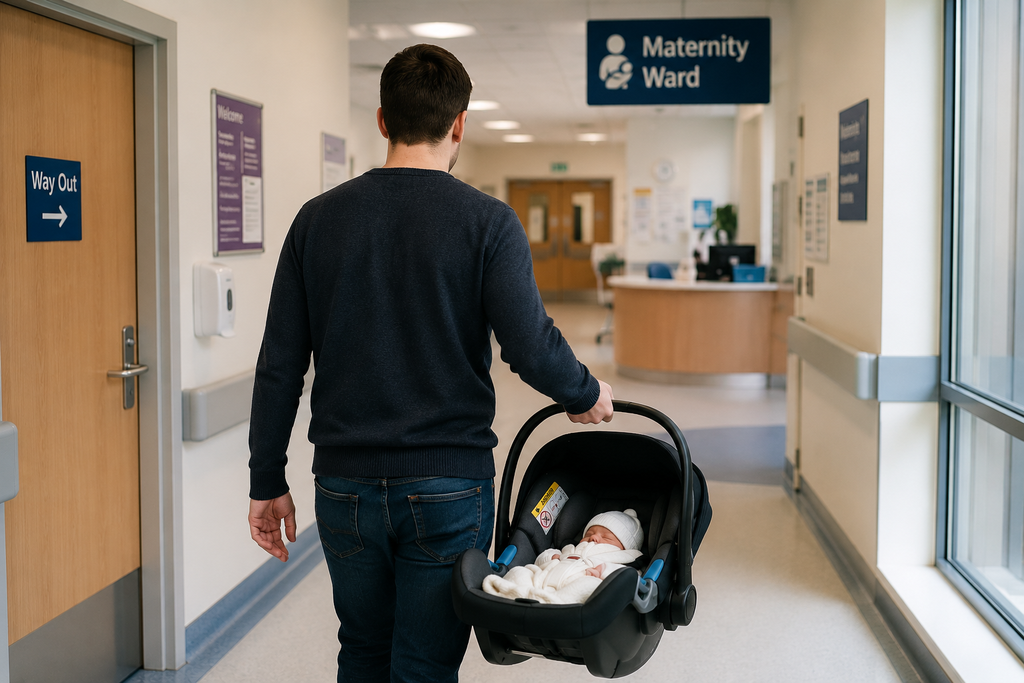
- Car seat for the journey home
If you haven’t chosen yours yet, we’ve compared the best infant car seats from birth in the UK, including the options we’d consider for safety, everyday practicality and travel-system compatibility.
What Your Birth Partner May Need
- Change of clothes
- Toothbrush, toothpaste and deodorant
- Phone and charger
- Camera, if wanted
- Snacks and drinks
- Swimwear if using a birth pool
- Any regular medicines
- Spare glasses or contact lenses, if needed
- Change for parking and vending machines
Hospital Bag Essentials You Might Not Think to Pack
The NHS list covers the essentials remarkably well. But there are a few things that only really make sense once you’ve spent time on a maternity ward — including several we were very glad we’d packed and others I wish someone had told me about.
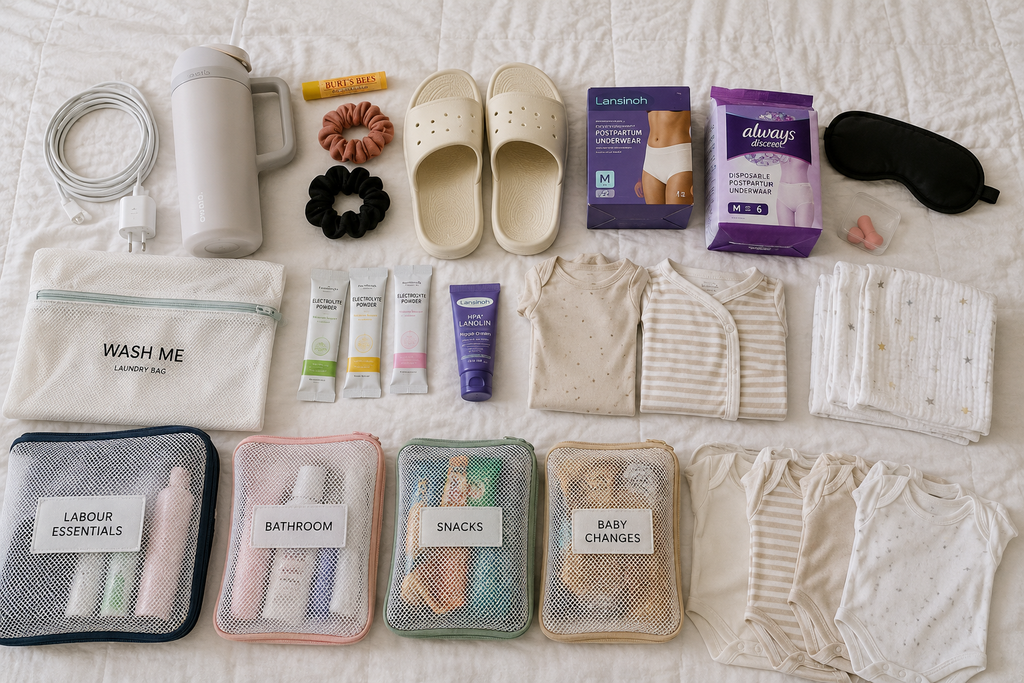
A few extras worth packing:
– Extra-long phone charger — hospital sockets aren’t always conveniently placed.
– Large water bottle with a straw — much easier to drink from during labour or while lying down.
– Lip balm + hair bobbles — tiny things, but surprisingly useful on a hot, dry maternity ward.
– Handheld fan — surprisingly useful during labour and on a warm postnatal ward. Ours has had plenty of life beyond the hospital bag too — I still use the same one to cool down my 3-year-old’s food.
– Washable sliders or Crocs — for the shower and walking around the ward.
– Large, high-waisted post-birth underwear — comfortable after birth and particularly useful after a C-section, as they can sit above the incision rather than rubbing against it. Pair them with good quality maternity pads whether you’ve had a vaginal birth or a C-section, as postpartum bleeding happens after both.
– Disposable postpartum underwear — I found these particularly useful for the first few days, when bleeding was heaviest. They’re comfortable, convenient and mean you don’t have to worry about staining or washing underwear.
– Eye mask + earplugs — maternity wards can be bright and noisy overnight.
– Dirty-laundry bags that are washing machine-ready — for wet or stained clothes and sending washing home.
– Electrolyte sachets — easy to pack and useful during a long labour.
– Nipple cream if you’re planning to breastfeed — this was one of my essentials. I also found the lanolin useful as a simple barrier during nappy changes, so one little tube ended up doing two jobs.
– Inexpensive baby clothes in two sizes — newborn size estimates aren’t always accurate, so pack a couple of newborn and 0–3 month options. This is also one of the rare occasions I wouldn’t recommend splashing out on beautiful, long-lasting baby clothes: those first vests and sleepsuits have a very good chance of ending up covered in meconium and other post-birth mess. Save the lovely outfits for home.
– A few extra muslins — they take up almost no room and disappear remarkably quickly. If you’re still choosing which ones to buy, see our Best Muslin Cloths for Babies (UK) guide.
– Mesh zip wallets — keep labour, bathroom, snack and baby essentials organised and easy to grab without rummaging through your bag.
– Peri bottle —particularly useful after a vaginal birth. It lets you rinse with warm water after using the toilet without having to wipe sore or stitched areas, and can make those first few days considerably more comfortable.
– Pure Natural Witch Hazel Spray — this ended up being surprisingly useful for me. During labour, I used it simply as a cooling face mist when I was hot and needed something to help calm me down. Afterwards, I used it externally for the cooling sensation on perineal soreness, swelling and bruising, and it can also be useful for haemorrhoid discomfort after birth. I’d initially tried one of the ready-made postpartum sprays containing additional ingredients such as tea tree and lavender, but it didn’t agree with me, so I very quickly switched to plain witch hazel instead. You can simply decant pure, alcohol-free witch hazel into a small spray bottle rather than buying a dedicated postpartum spray.
One food tip I wish I’d known
Definitely bring snacks — for your birth partner as well as yourself — but based on my own experience, I’d also pack a few things that your maternity team may allow when normal food isn’t appropriate.
For me, after around 10 hours of labour I had no appetite at all. Then my epidural started working and I suddenly felt absolutely starving — only to discover I wasn’t allowed to eat any of the snacks I’d brought.
So next time I’d add a few simple options such as gummy bears, sugar-free jelly and bone broth, particularly if an epidural or C-section seems likely.
Hospital policies around eating and drinking during labour, epidurals and before surgery vary, so check with your maternity team before eating anything. But having a few potentially suitable options with you is much better than discovering that your entire snack bag is suddenly useless.
Don’t overpack
You can probably skip the books and magazines, make-up, yoga mat, breast pump/Haakaa unless specifically needed, pregnancy pillow, lots of outfits and multiple bulky comfort items. A couple of comfortable nursing-friendly outfits or PJs are usually more useful than a wardrobe.
I also wouldn’t rely on the hospital providing nappies, maternity pads, towels or a baby hat. Provision varies considerably between NHS trusts, so bring the essentials unless your own maternity unit tells you otherwise.
For nappies and wipes, we were probably fairly typical nervous first-time parents and wanted something that felt as gentle and newborn-friendly as possible and also chlorine-free and hypoallergenic. After looking at the options, we chose Mama Bamboo Nappies and Mama Bamboo Water Wipes, which we continued using for the first few months. They worked really well for us, so they’re what I’d pack again.
Pack two smaller bags, not one enormous one
This may be the most useful packing tip of all. Have a small labour bag containing everything you might want quickly — water, snacks, electrolytes, lip balm, charger and so on — and a separate after-birth bag containing your clothes, toiletries, pads, feeding items, nappies and baby clothes.
Inside them, mesh zip wallets or packing pouches are incredibly handy. Rather than having someone rummage through your entire bag, group things by when you’ll need them. You could have one for labour essentials, one for snacks, one for baby changes and, particularly useful after birth, a bathroom pouch already stocked with pads, disposable underwear and toiletries. When you need the loo, you can simply grab the whole pouch rather than searching for individual things.
Multiple mesh pouches ended up being one of those surprisingly useful purchases that lasted well beyond the hospital bag. We later used ours for days out with the baby, travelling abroad, organising spare clothes and nappies, containing loose toys and countless other things. They’re one of the few hospital-bag purchases I’d happily buy again.
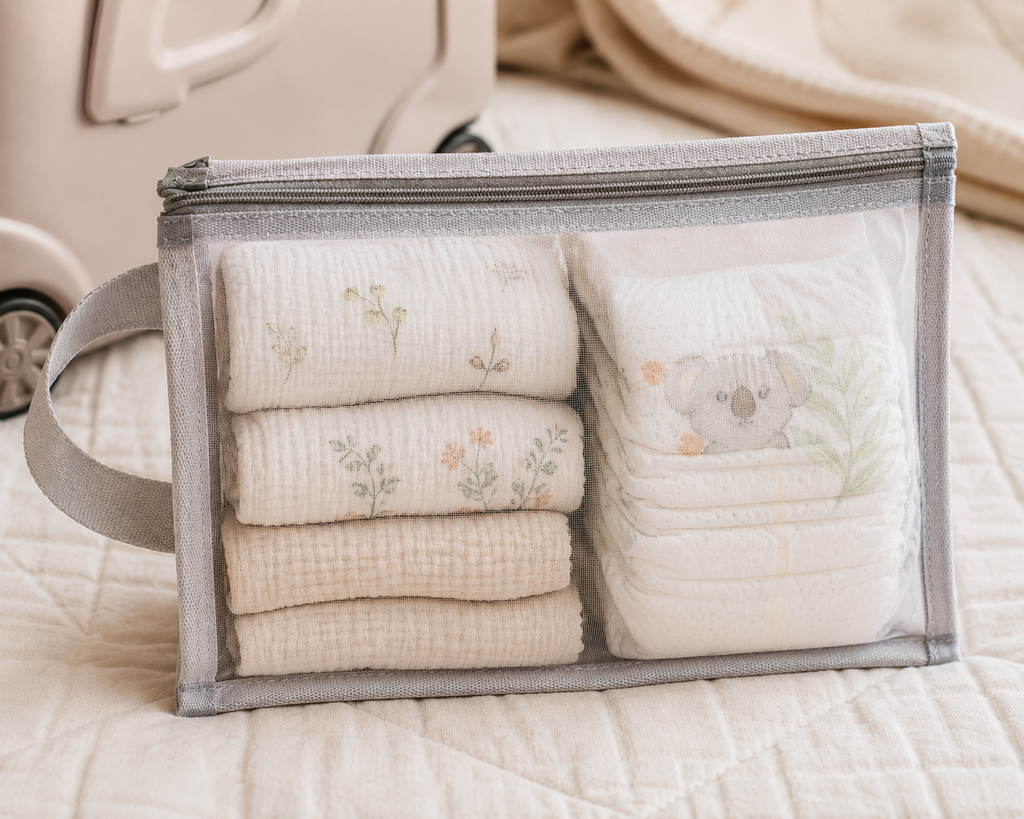
Then keep a backup bag in the car with extra nappies, maternity pads and clothes for you and baby. If you unexpectedly stay several nights, someone can simply fetch it.
Finally, make a short last-minute list for the things you can’t pack in advance — phone, charger, toothbrush, hairbrush, glasses and anything else you’re still using at home. Share the list with your birth partner too, so either of you can do the final sweep before leaving.
Download the Editable Hospital Bag Checklist
If you’d rather not piece everything together as you read, I’ve turned this guide into a printable and fully editable UK hospital bag checklist.
It’s organised into 1- labour essentials, 2- after-birth items, 3- baby essentials, 4- birth partner supplies, 5- a backup car bag and 6- a last-minute checklist, with space to add your own notes too.
You can edit it in Word, remove anything that doesn’t apply to you, then print it and tick things off as you pack.
Download the Hospital Checklist
Shopping on Amazon?
If you’re not already a Prime member, you can check whether you’re eligible for a free 30-day trial and enjoy Prime delivery on millions of eligible items.
Hospital Bag FAQs
When should I pack my hospital bag?
The NHS recommends having your hospital bag ready at least three weeks before your due date. You can pack most things earlier and keep a short last-minute list for your phone, charger, toothbrush, medication and anything else you still use daily.
What does the NHS provide when you give birth?
It varies considerably between NHS trusts and hospitals. Some maternity units provide things such as maternity pads, towels, baby blankets or hats, while others expect you to bring almost everything yourself.
Unless your maternity unit specifically tells you otherwise, I’d bring your own nappies, maternity pads, towel and baby hat.
How many nappies should I take to hospital?
Bring enough for your expected stay and keep an extra supply in your backup bag or car. Newborns can get through nappies surprisingly quickly, and you shouldn’t assume your hospital will provide them.
How many baby clothes should I pack for hospital?
A few vests and sleepsuits are usually enough for a short stay, with extras in your backup bag. I’d pack both newborn and 0–3 month sizes, as estimated birth weights aren’t always accurate.
What should I pack in my hospital bag for a C-section?
Alongside the usual essentials, prioritise large high-waisted underwear, loose clothing or PJs, slip-on shoes, maternity pads, a straw water bottle and an extra-long phone charger. You want as little as possible rubbing against your incision or requiring you to bend and stretch.
What snacks should I pack for labour?
Pack familiar, easy-to-eat snacks for both you and your birth partner, plus drinks or electrolyte sachets. I’d also bring a few options such as gummy sweets, jelly and clear broth in case normal food becomes restricted.
What you’re allowed to eat or drink during labour, after an epidural or before a possible C-section depends on your circumstances and hospital policy, so always follow your maternity team’s instructions.
Should I bring ready-to-feed formula to hospital?
Check with your maternity unit. What hospitals provide — and what they ask parents who plan to formula or combination feed to bring — varies.
If you’re considering taking ready-to-feed newborn formula, ask whether you’ll also need to provide sterile bottles or teats.
What should I NOT pack in my hospital bag?
I’d skip lots of books and magazines, make-up, multiple outfits, a yoga mat, bulky comfort items and a breast pump or Haakaa unless you specifically expect to need one.
Pack for what you’re realistically likely to use and keep additional supplies at home or in the car.
The same applies at home. Before buying everything on the standard newborn lists, have a look at what you don’t actually need for a newborn — and when you might need it later.
Is it better to take one hospital bag or two?
I found two smaller bags much more practical than one enormous suitcase. Keep immediate labour essentials together in one bag and your post-birth clothes, toiletries, maternity supplies and baby’s things in another.
Mesh pouches inside the bags make it even easier for you or your birth partner to grab exactly what’s needed.
What should I keep in a backup hospital bag?
Keep extra nappies, wipes, maternity pads, underwear, clothes for you, baby clothes and muslins in a small backup bag at home or in the car. If an expected six-hour stay turns into several nights, your birth partner can simply fetch it.
You Might Also Find Helpful