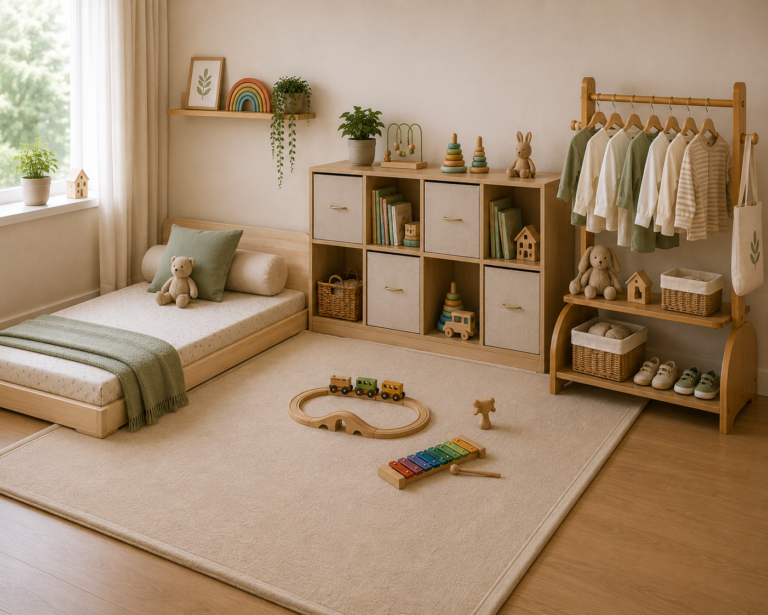
Best Toddler Floor Beds (UK) — Beautiful, Safe & Parent-Approved
Floor beds have become one of the most recognisable parts of Montessori bedrooms—but choosing one is often more confusing than it needs to be.
Some families spend hundreds on elaborate house-frame beds. Others place a mattress directly on the floor and call it a day.
The truth is that most toddlers do not need an elaborate bed to sleep well.
A good floor bed should be low, sturdy, safe and easy to live with day after day.
In this guide, we’ll look at a few practical options available in the UK, what actually matters when choosing one, and the mistakes that are easy to avoid.
Disclaimer: This post contains affiliate links. As an Amazon Associate I earn from qualifying purchases at no extra cost to you.
What is a Montessori floor bed?
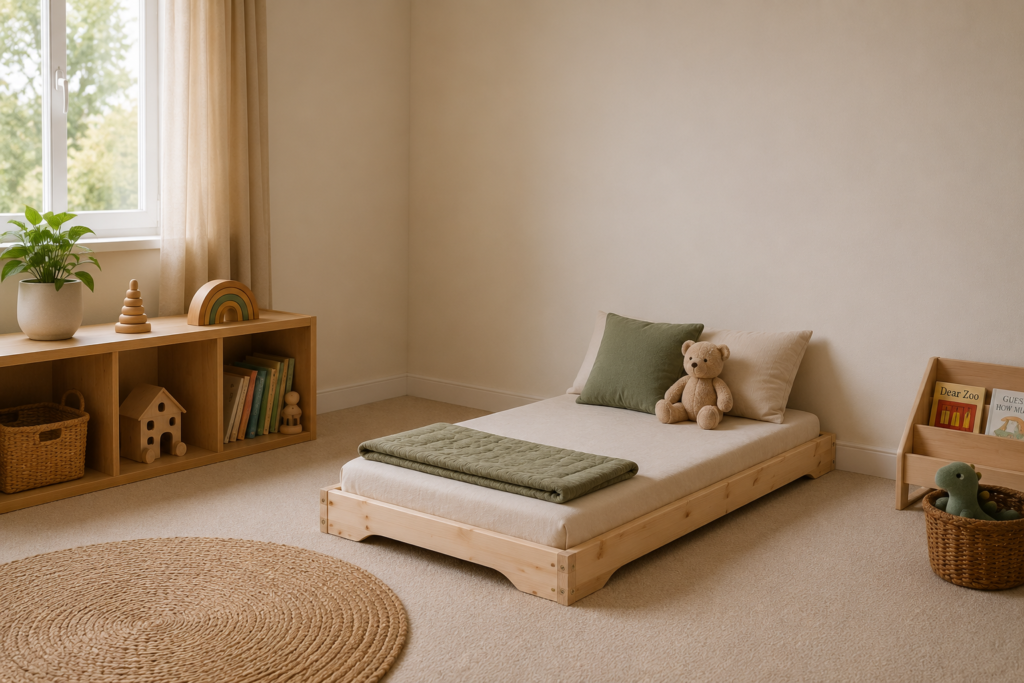
A Montessori floor bed is simply a mattress or low bed frame placed close to the floor, allowing a child to get in and out independently.
Unlike traditional cots or higher toddler beds, the idea is to support freedom of movement within a safe, prepared environment rather than relying on physical barriers to keep a child in bed.
Why Do Montessori Families Use Floor Beds?
Floor beds aren’t really about the bed itself.
They’re about giving children the opportunity to move independently within their environment.
Rather than waiting to be lifted in and out of bed, toddlers can begin developing confidence and autonomy around sleep, rest and movement in a way that feels natural and age-appropriate.
Do You Even Need a Bed Frame?
Not always.
Many families start with something even simpler: a firm mattress placed directly on the floor in a fully childproofed room.
That is already a Montessori floor bed setup.
In fact, starting with just a mattress can make the transition easier—especially between 12 and 18 months when toddlers are still learning to move confidently in and out of bed.
A low-profile frame can be a helpful next step, but it isn’t essential.
If you’d prefer to keep things simple, a good-quality firm mattress is often all you need to begin. A frame can always be added later once your child is more settled and confident in the space.
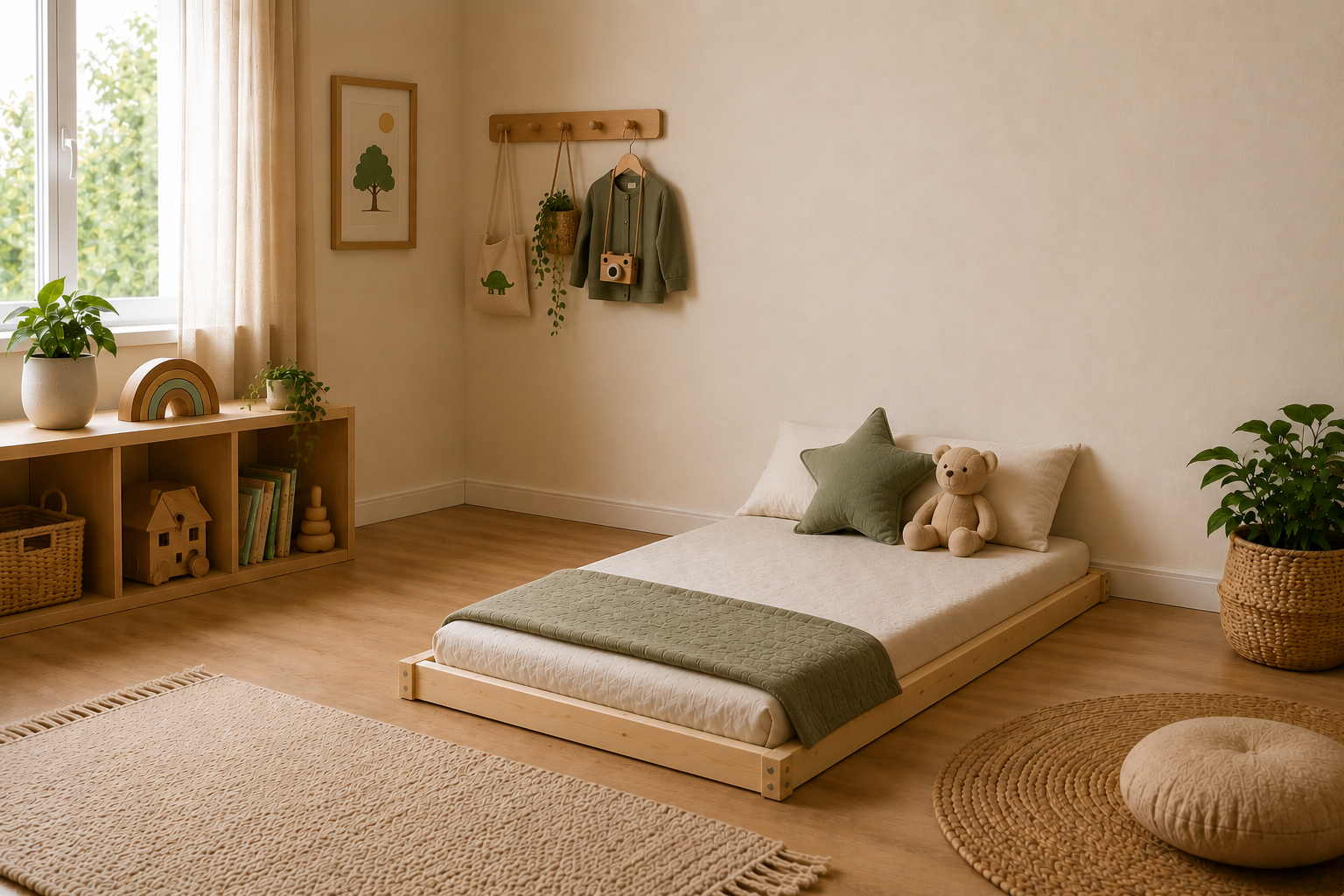
Simple Wooden Montessori Floor Bed Frame
This is the floor bed we chose for our own daughter, and we’d happily choose it again.
Some furniture quietly becomes part of everyday family life. Rather than drawing attention to itself, a simple floor bed gives children the freedom to climb in and out independently while creating a bedroom that feels calm, open and easy to move around. That’s exactly what we were looking for when choosing our daughter’s first bed.
We deliberately chose a design that prioritised longevity over novelty. Made from solid wood with a timeless, low-profile frame, it feels just as at home in a minimalist nursery as it does in an older child’s bedroom. It’s the kind of piece that grows naturally with your child rather than feeling like a short-term toddler purchase.
Even after living with it, we’d still choose this style over many of the more elaborate house-frame beds. It quietly supports independent sleep, blends effortlessly into the room and is simply easy to live with every day.
Best for: Families looking for a beautifully simple wooden floor bed they’ll be happy with for years.
Smartwood Wooden Montessori Floor Bed
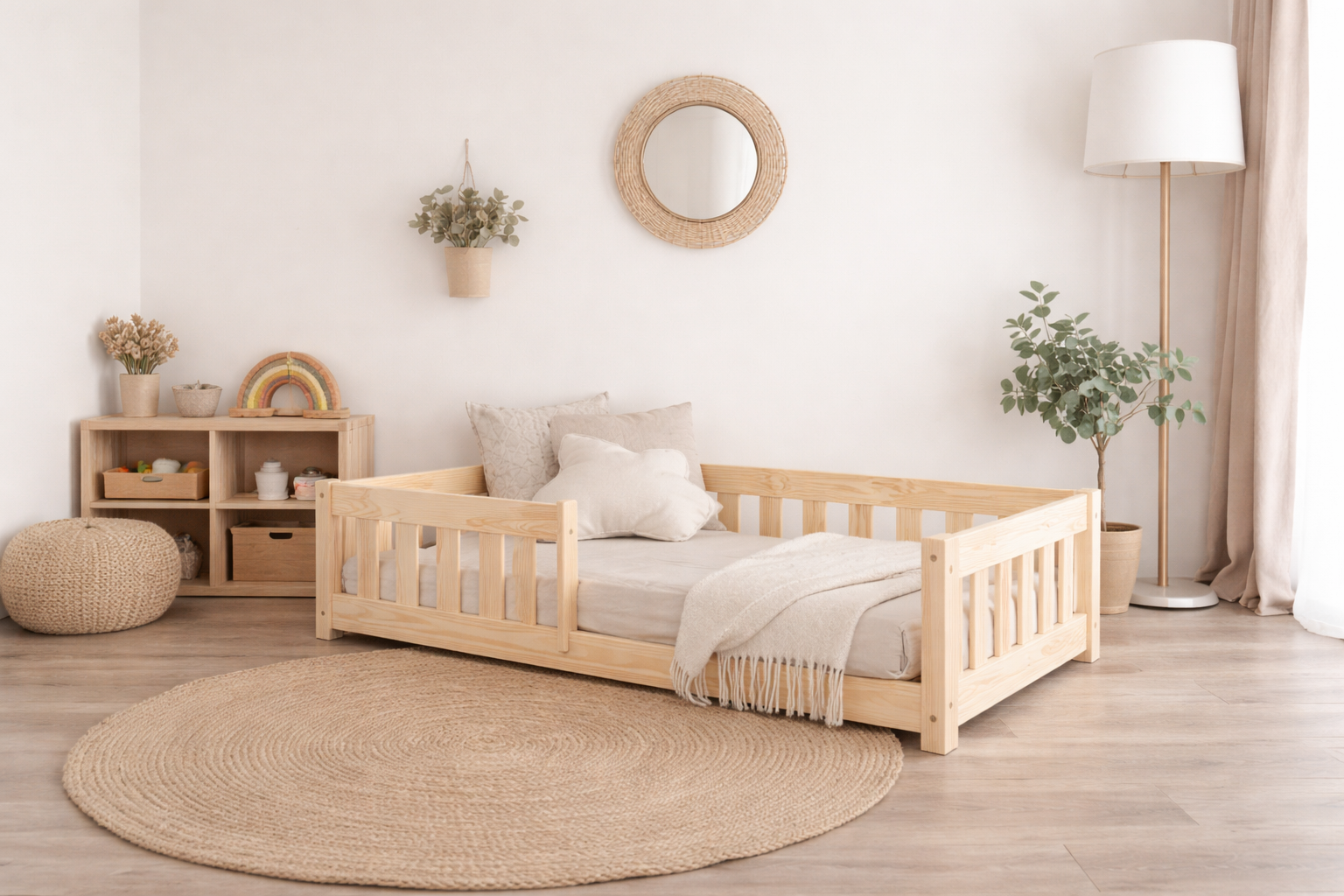
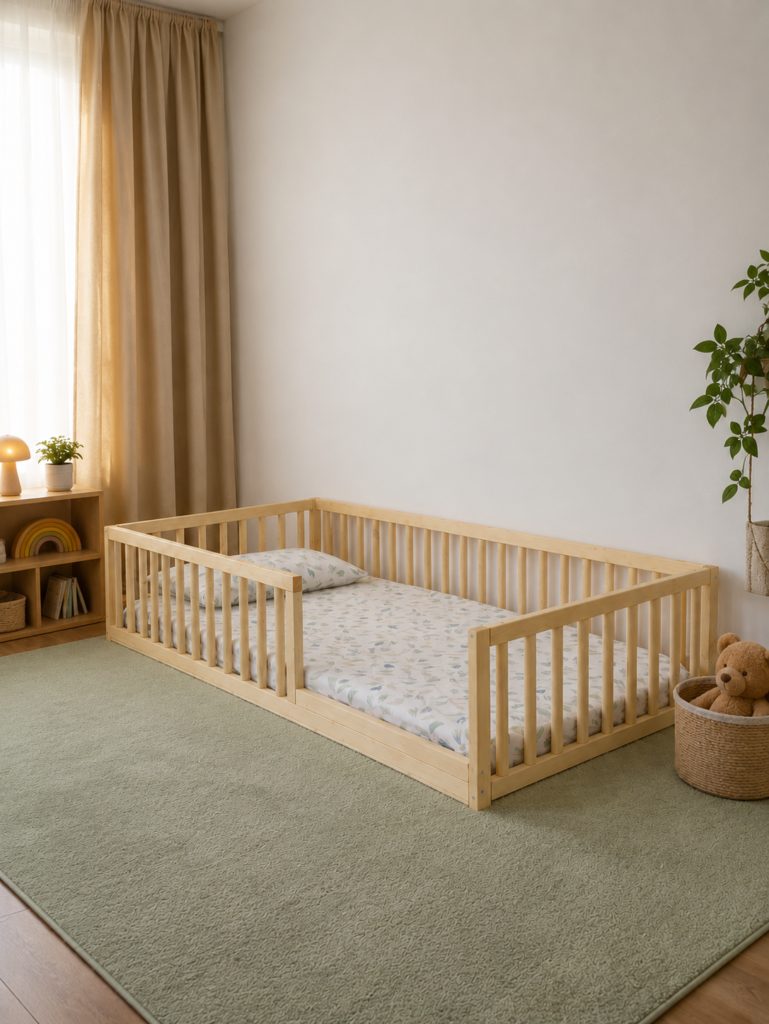
Montessori Floor Bed With Guard Rails
If moving straight from a cot to an open floor bed feels like a big step, we’d start here.
Not every child — or parent — feels ready to make the transition overnight. A floor bed with low guard rails offers a reassuring middle ground, maintaining the freedom and independence of a Montessori-style bed while providing a little extra confidence during those first few months.
Rather than recreating the enclosed feeling of a cot, the low rails simply add gentle reassurance. Children can still climb in and out independently, explore their room safely and begin building confidence at their own pace, making the transition feel far less daunting for the whole family.
Like any well-designed floor bed, its simplicity is part of the appeal. It supports independence without overcomplicating the room, giving families a practical solution that can adapt naturally as their child grows.
Best for: Families looking for a gentler, more reassuring transition from a cot to a floor bed.
Montessori Floor Bed with Extra-High Rails
For families who’d like a little more reassurance without giving up the benefits of a floor bed, this is an excellent middle ground.
Some children need a little more time to settle into the freedom of a floor bed, and that’s perfectly okay. The taller guard rails provide extra security during the early stages while still allowing children to climb in and out independently. It offers many of the same Montessori principles, simply with a little more confidence for parents.
Thoughtful details make it practical for everyday family life too. Raised wooden slats encourage airflow beneath the mattress, helping to keep the sleeping environment fresh, while the sturdy handmade construction and European safety standards provide extra peace of mind. It’s a reassuring choice that still supports your child’s growing independence.
Best for: Families who want the reassurance of higher guard rails while introducing the independence of a Montessori floor bed.
Montessori Floor Bed with Extra-High Rails
House Frame Floor Bed
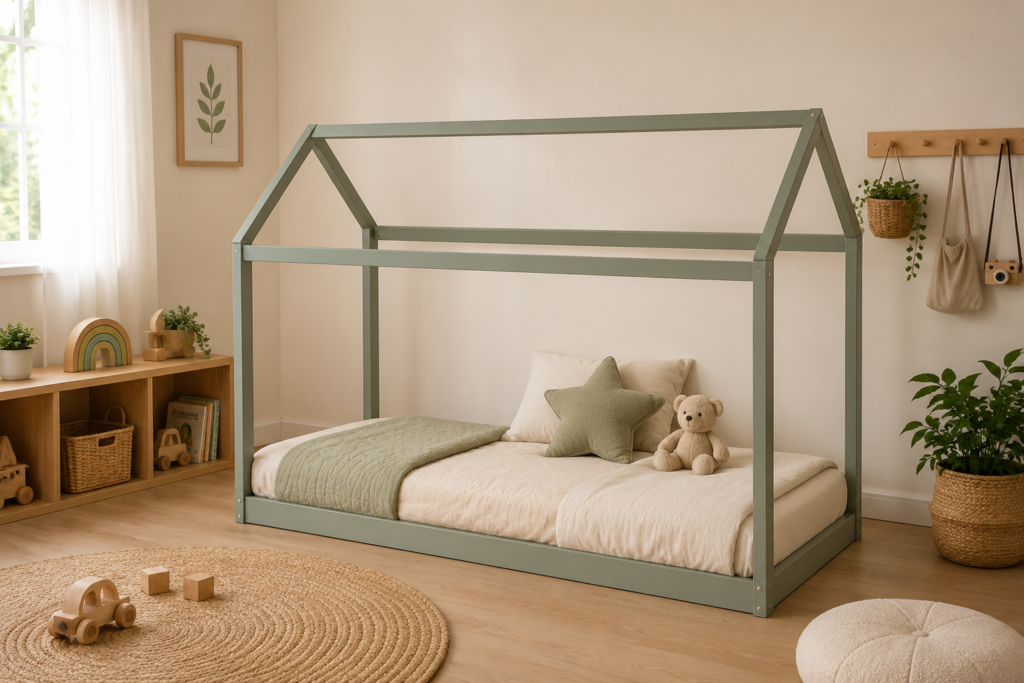
House-frame floor beds have become one of the most popular Montessori bedroom choices, and it’s easy to understand why.
For many families, the bed becomes more than somewhere to sleep. A simple house frame creates a cosy little space that feels inviting without taking away the independence of a floor bed. For some children, that sense of familiarity can help bedtime feel less like a routine and more like a space that’s truly their own.
When kept simple, a house-frame bed adds warmth and character while still fitting beautifully within a calm, child-led bedroom. We particularly like designs with clean, open frames that complement the room rather than dominating it.
The only thing we’d consider carefully is practicality. Some designs include additional roof crossbars that can make changing bedding or leaning in for bedtime cuddles surprisingly awkward. If this is the style you love, we’d look for a more open design that keeps the timeless look while making everyday family life that little bit easier.
Best for: Families who love the cosy look of a house-frame bed without compromising on simplicity or independence.
Tutti Bambini Grande Casa
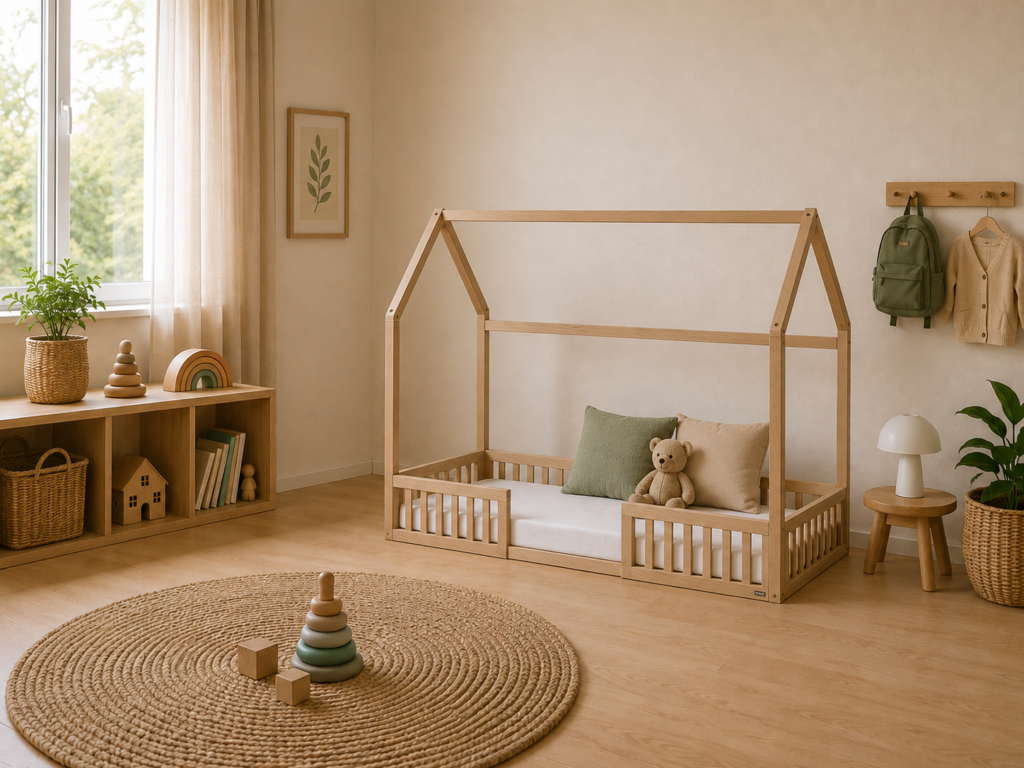
If your budget stretches a little further, this would be our premium choice.
Some designs show that every detail has been carefully considered. The Tutti Bambini Grande Casa captures everything we like about a house-frame bed while feeling noticeably more refined. It creates the same cosy, child-friendly space without becoming visually heavy, making it a beautiful centrepiece for a calm bedroom.
One feature we particularly appreciate is the open roof design. Unlike many house-frame beds, there’s no additional crossbar overhead, giving the whole bed a lighter feel while also making everyday moments—changing the sheets, reading bedtime stories or leaning in for a cuddle—just that little bit easier.
It’s the sort of bed that feels designed for family life rather than simply following a trend. Beautifully made, thoughtfully considered and built to last, it’s a piece we could easily imagine remaining in a child’s room for many years.
Best for: Families looking for a premium Montessori floor bed that combines timeless design with everyday practicality.
View Tutti Bambini Grande Casa
Choosing a Mattress
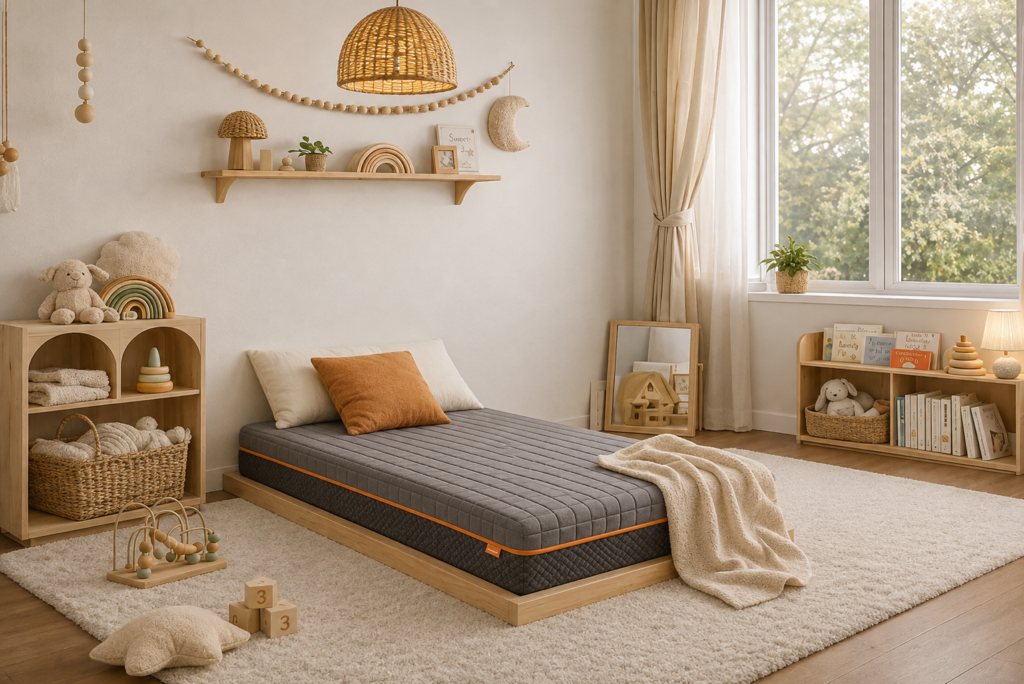
If there’s one place we’d prioritise quality, it’s the mattress. A firm, supportive sleep surface made from breathable materials is usually the most important consideration, especially during the early years.
If you’re buying with the future in mind, choosing a standard UK single mattress (90 × 190 cm) can save you replacing it again as your child grows. We also looked for certifications such as OEKO-TEX® Standard 100 and CertiPUR-US® for extra reassurance about the materials used.
Which One Would We Choose?
If you’re feeling overwhelmed, we’d start with one of two options:
- A firm mattress directly on the floor.
- A simple, low wooden floor bed.
Both provide the core Montessori principles without adding unnecessary complexity, and for most families they’re the easiest options to live with for years.
What Actually Matters
It’s easy to spend hours comparing bed frames, but the bed itself is only one small part of the picture. A calm bedroom, predictable bedtime routine and a thoughtfully prepared environment will usually have a far greater impact on your child’s sleep than any particular design feature.
That’s why we’d always prioritise simplicity over novelty. A low, sturdy bed in a peaceful room gives children the freedom to move, explore and settle independently without unnecessary distractions. Because floor beds allow children to access their whole room, the space itself becomes part of the sleep environment, making childproofing and a calm layout just as important as the bed you choose.
If you’re planning the whole room, our guide to creating a Montessori bedroom for toddlers walks through the setup step by step.
In the end, the best Montessori floor bed isn’t necessarily the most expensive or the most elaborate. It’s the one that fits naturally into your family’s daily life and continues to support your child’s growing independence for years to come.
When to Switch to a Floor Bed
There isn’t a single “right” age to move to a floor bed. Some families make the transition around their child’s first birthday, while others decide it’s time once climbing out of the cot becomes a concern.
For us, the transition happened much earlier. We moved our daughter from a bedside crib to a floor bed at around six months and continued sleeping alongside her for a while as she became familiar with her new room. Rather than feeling like a dramatic change, it became an opportunity to establish the bedtime rituals we still value today—reading stories, changing into pyjamas and winding down together before sleep.
Every child adapts differently. What matters most isn’t the age on the calendar, but creating a safe, childproofed environment where your child can explore their room confidently. In our experience, a calm bedtime routine and a thoughtfully prepared space make far more difference than the bed itself.
If you’re considering co-sleeping at any stage, it’s important to understand current safe sleep guidance and how to do it as safely as possible, read → Co-Sleeping Safety: Bedsharing Safety Guide for New Parents
Final Thoughts
A Montessori floor bed isn’t really about the bed.
It’s about creating a bedroom that supports independence while still feeling calm, safe and easy to live with every day. Whether you choose a mattress on the floor, a simple wooden frame or a house-style bed, the principles remain the same: keep the space accessible, uncluttered and thoughtfully prepared.
Many parents spend weeks comparing bed frames. In reality, the routines you build, the atmosphere you create and the confidence your child develops within their own space will usually have a much greater impact than the bed itself.
The best Montessori bedroom isn’t the one with the most features or the highest price tag. It’s the one that fits naturally into your family’s life and continues to support your child—and your family—for years to come.
Shopping on Amazon?
If you’re not already a Prime member, you can check whether you’re eligible for a free 30-day trial and enjoy Prime delivery on millions of eligible items.
FAQs
Are floor beds safe for toddlers?
Yes — when the room is properly childproofed.
The biggest risk isn’t the bed itself, but the surrounding environment.
It’s a similar principle to co-sleeping — safety comes from how the space is prepared, not just where your child sleeps. → Co-Sleeping Safety: Bedsharing Safety Guide for New Parents
Will my toddler get out of bed constantly?
At first — possibly.
Most toddlers go through a short phase of exploring the room. Over time, they usually learn to settle on their own.
Consistency matters more than the bed itself.
Do floor beds help sleep?
They can.
Because they reduce:
- power struggles
- dependence on being placed in bed
This often leads to a more relaxed bedtime over time.
What mattress should I use?
Use:
- a firm toddler or single mattress
- breathable materials
Avoid very soft adult mattresses for younger toddlers.
What age is best to switch to a floor bed?
Most parents switch between 12–18 months, especially once climbing starts.
Some children transition earlier or later. What matters most is that your child can move safely and independently within the space.
What size mattress do you need for a floor bed in the UK?
Most floor beds use a standard UK single mattress (90 x 190 cm).
Some smaller frames use cot-bed sizes, but a single mattress gives more room to grow and tends to be the more practical choice.
Do you need rails on a floor bed?
Not always.
Rails can help during the early transition, especially for younger toddlers or parents moving from a cot.
But many families choose to go without once the room is fully childproofed.
What do you put around a floor bed?
Keep the space simple and calm.
Most setups include:
- a soft rug or mat
- minimal furniture
- a clear, uncluttered area
The goal is to support independent movement without overstimulation.
Should the room be fully childproofed?
Yes — this is essential.
With a floor bed, your child can move freely, so the entire room becomes the safe space.
Focus on:
- securing furniture
- covering sockets
- removing hazards within reach
What if my toddler won’t stay in bed?
This is very common at the beginning.
Most toddlers will explore first, then gradually learn to settle.
A consistent routine and a calm environment usually make more difference than restricting movement.
Is a floor bed just a mattress on the floor?
It can be.
Many families start with a simple mattress on the floor and add a frame later if needed.
A frame can help with airflow and structure, but it isn’t essential.
Are expensive floor beds worth it?
Not usually.
Simple, low, sturdy designs tend to work just as well as more expensive options.
The overall setup matters more than the price of the bed itself.
You Might Also Find Helpful