Comforting and Safe Night Lights for Babies and Toddlers (UK)
Most parents don’t start out planning to buy a night light.
Usually, it happens after a few evenings of second-guessing.
“Maybe the room’s just too dark.”
“Maybe a little light would help.”
We found ourselves asking exactly the same questions.
What surprised us was that choosing a night light wasn’t really about adding more light at all.
It was about deciding how little light was actually needed.
Some toddlers feel unsettled in complete darkness.
Others seem more distracted by the light itself than reassured by it.
Which is why choosing a night light isn’t really about finding the most popular product.
It’s about creating a sleep environment that feels calm, predictable and comfortable for your particular child.
In this guide, we’ll explain what actually matters when choosing a toddler night light—and share a few simple options that stood out to us.
Disclaimer: This post contains affiliate links. As an Amazon Associate I earn from qualifying purchases at no extra cost to you.
Does Your Toddler Actually Need a Night Light?
Not necessarily. Many toddlers sleep perfectly well in complete darkness, so there’s no need to introduce a night light simply because they’ve reached a certain age.
But if darkness has started to make bedtime or night wakings feel unsettling, a very soft night light can offer a little reassurance. If your toddler is already happy in the dark, we’d leave things exactly as they are.
What to Look for in a Toddler Night Light
We initially assumed more features would be better. In practice, we found ourselves looking for the opposite: a night light that does its job without becoming part of the entertainment.
For us, that means a warm-toned, dimmable light, simple controls and a design that quietly blends into the room. We’d generally avoid very bright white or blue-toned lights, constant colour changes and interactive features that might encourage play at bedtime.
Of course, some children genuinely find comfort in a favourite character or colour. The important thing is that the light feels reassuring rather than stimulating.
For Families Looking for One Simple, Flexible Night Light
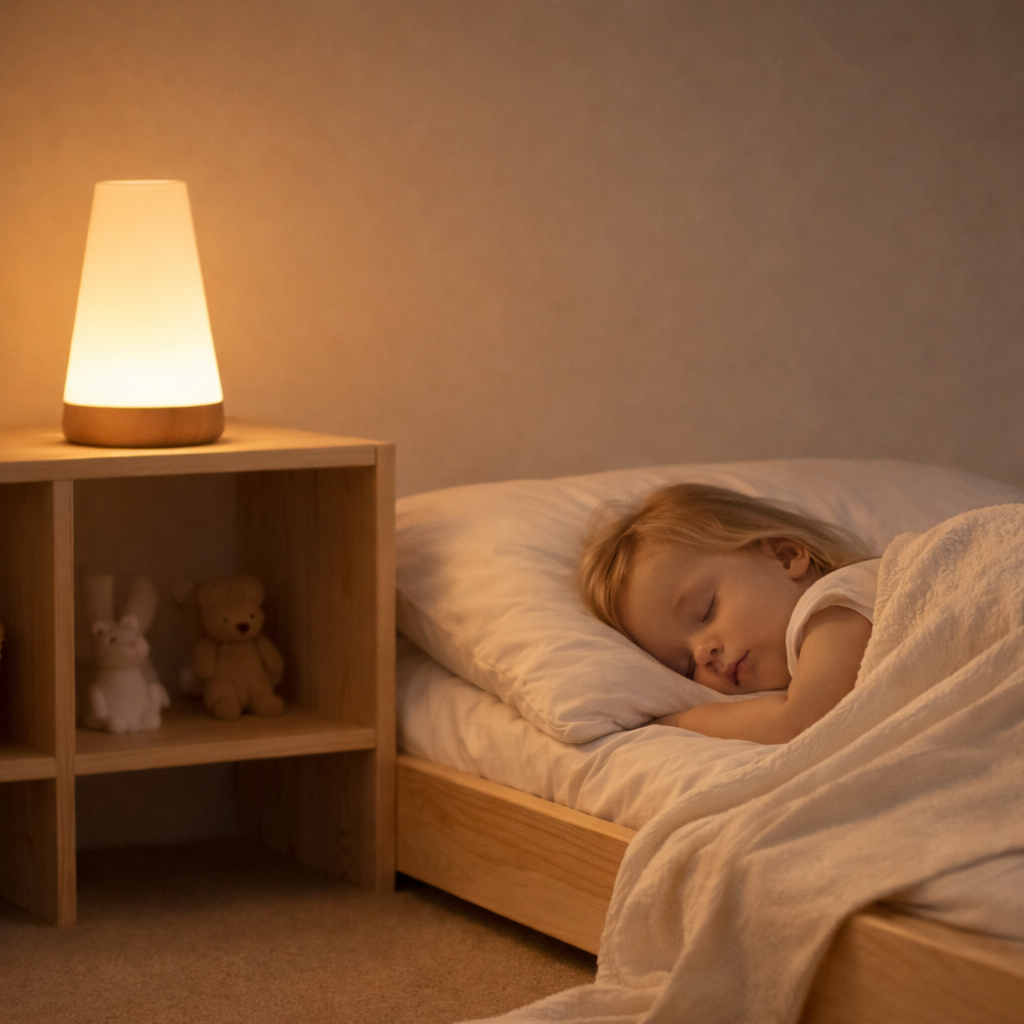
If we were only going to buy one night light, this is probably where we’d start.
One thing quickly became clear while comparing different models: the products with the longest feature lists weren’t necessarily the ones we’d want in our daughter’s room every night.
What appealed to us about the Auxmir was almost the opposite. It feels calm, understated and easy to forget about once bedtime begins. The soft, adjustable glow provides just enough light for bedtime routines, overnight checks and those inevitable middle-of-the-night wake-ups without flooding the room with brightness.
The dimmable design also means it can adapt as your child’s needs change. A level that feels reassuring during the toddler years can easily be adjusted later on, making it a product that’s likely to stay useful for longer.
For families looking for a straightforward night light without excessive features, this felt like one of the most practical all-round options.
For Families Who Prefer Simplicity
View Tommee Tippee Groegg2 Night Light
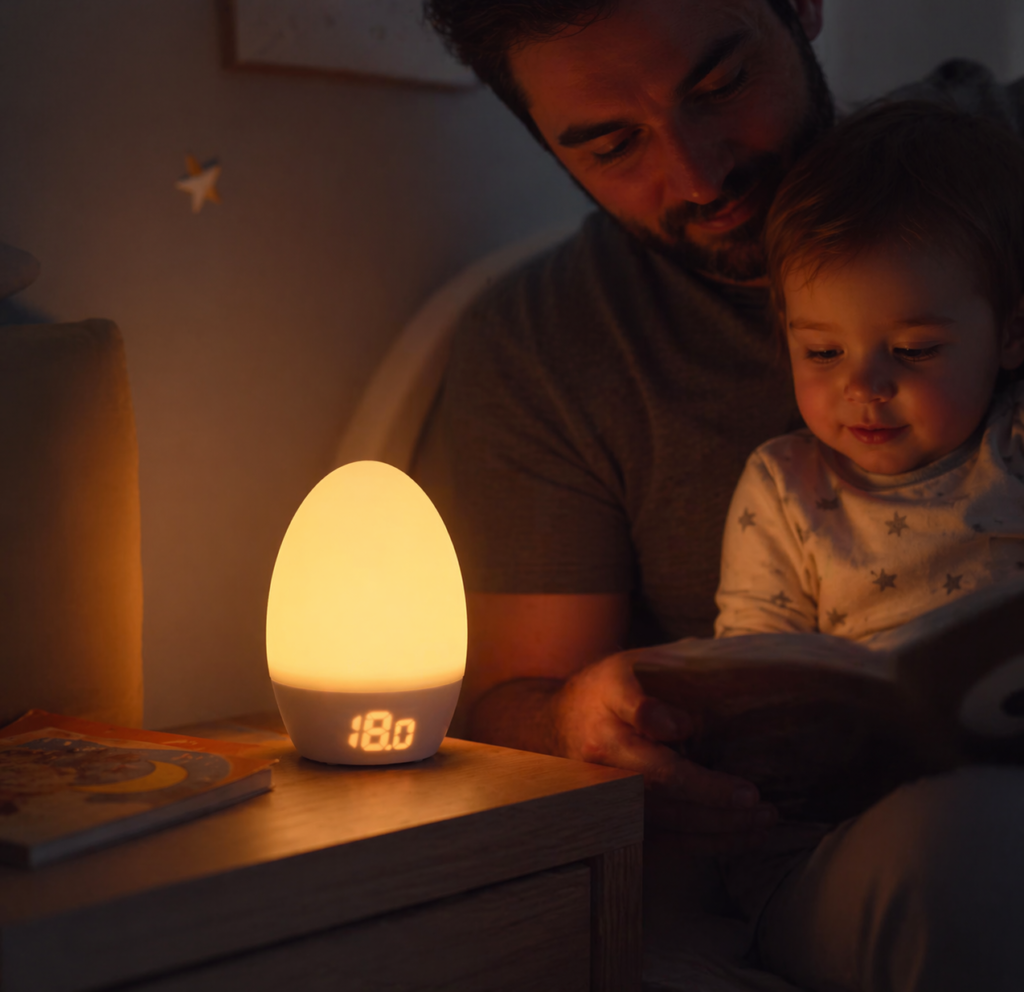
Not every nursery product needs to do just one job.
One thing we found ourselves appreciating more and more was products that quietly solved two problems at once. The Tommee Tippee Groegg2 combines a gentle overnight glow with a room thermometer, making it easy to check that the room feels comfortable without introducing another device.
We also liked how understated it feels. There are no flashing lights, sounds or interactive features competing for attention—just a soft light that blends naturally into the sleep environment.
| Why we recommend it: ✔ soft low lighting that feels calm rather than overstimulating ✔ includes a simple room temperature display for overnight checks ✔ minimal design without distracting sounds or features |
For families who appreciate a more minimal approach, this can be a practical way to add a small amount of light without introducing unnecessary stimulation.
For Toddlers Who Like a Little Reassurance
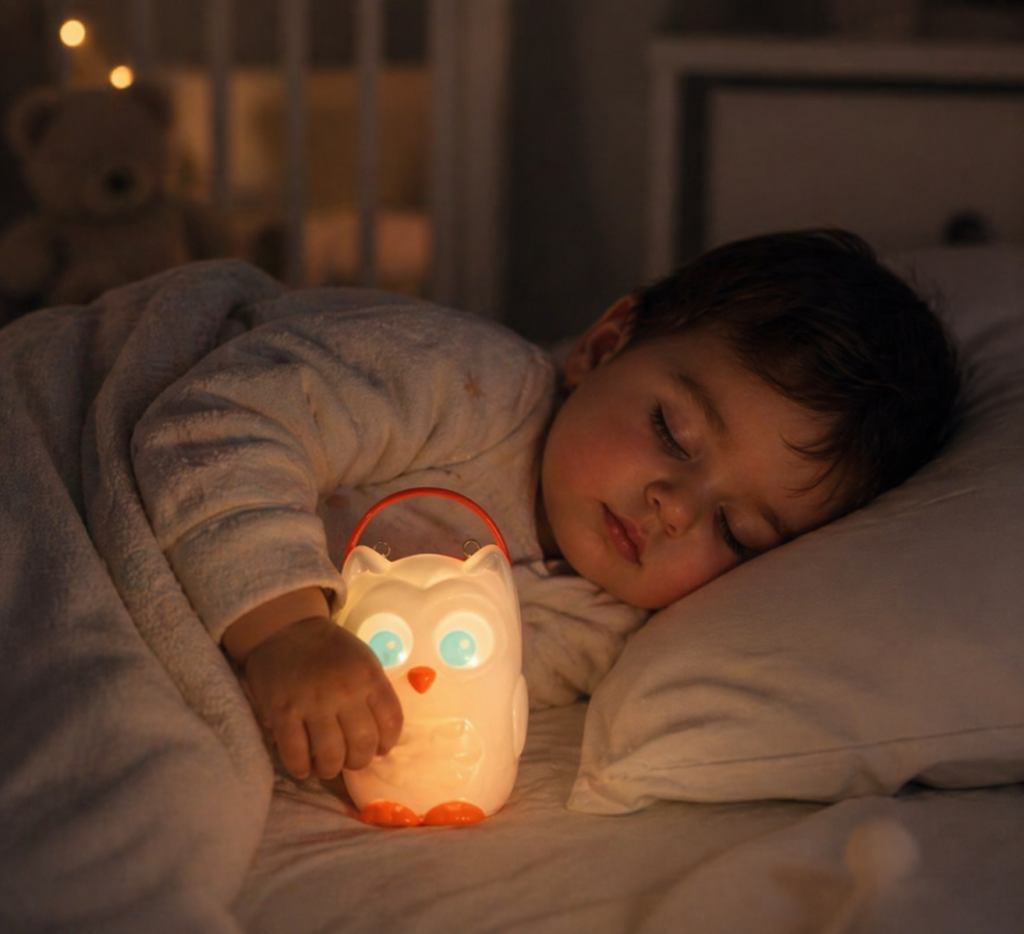
As toddlers grow, something else often changes too.
A child who was once happy sleeping in complete darkness may suddenly start asking for a light, wanting to see familiar objects around them or feeling unsettled when they wake during the night.
That doesn’t always mean they need a brighter bedroom. Sometimes they simply need a little reassurance.
That’s what appealed to us about the Munchkin Owl. Rather than simply lighting the room, it gives toddlers a gentle source of comfort that can move with them between the bedroom, hallway or bathroom if needed.
| Why we recommend it: ✔ portable and easy to carry around independently ✔ simple design that toddlers can use themselves ✔ soft, gentle glow that provides reassurance without feeling overly bright ✔ useful for children navigating night waking, toilet training or bedtime worries |
For toddlers who seem to take comfort from having a familiar light nearby, this can feel like a reassuring middle ground between complete darkness and a brightly lit room.
Bird-Shaped Rechargeable Night Light
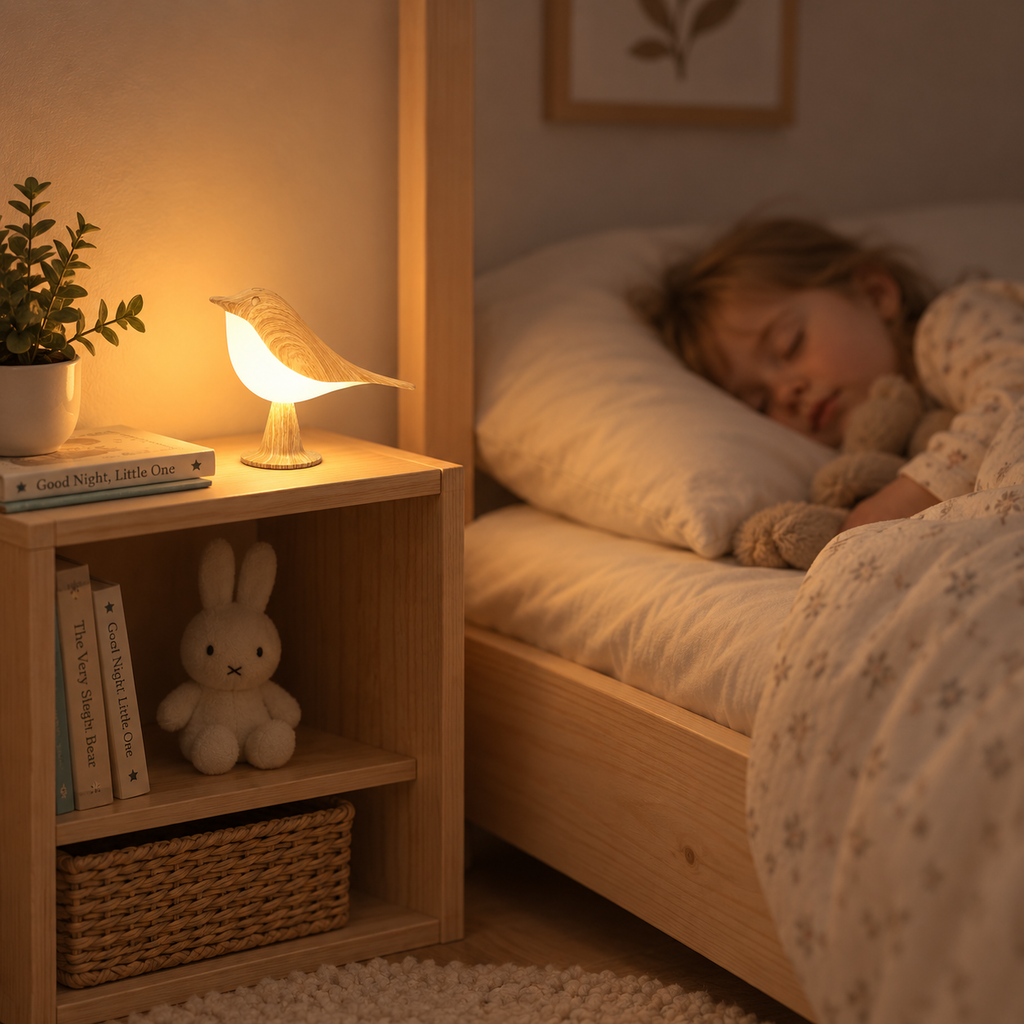
One of the more unusual designs we found, this little bird lamp feels more like a piece of bedroom décor than a traditional children’s night light. The warm wood-effect finish and softly illuminated body would sit particularly nicely in a calm, natural bedroom.
It’s touch-controlled, with adjustable brightness and a choice of white-to-warm light tones. We particularly like that the simple touch control gives children some independence at bedtime — they can turn their own light off when they’re ready to sleep, or leave it dimmed during those phases when the dark suddenly feels a little less comfortable. The bird can also be lifted from its base and carried or hung using the integrated ring, while the rechargeable battery means it doesn’t need to stay beside a socket.
Why we like it: A lovely way to give children a little more control over their bedtime environment, without making the night light itself feel overly childlike.
View Touch Control Night Light
For Families Who Just Want Something Simple
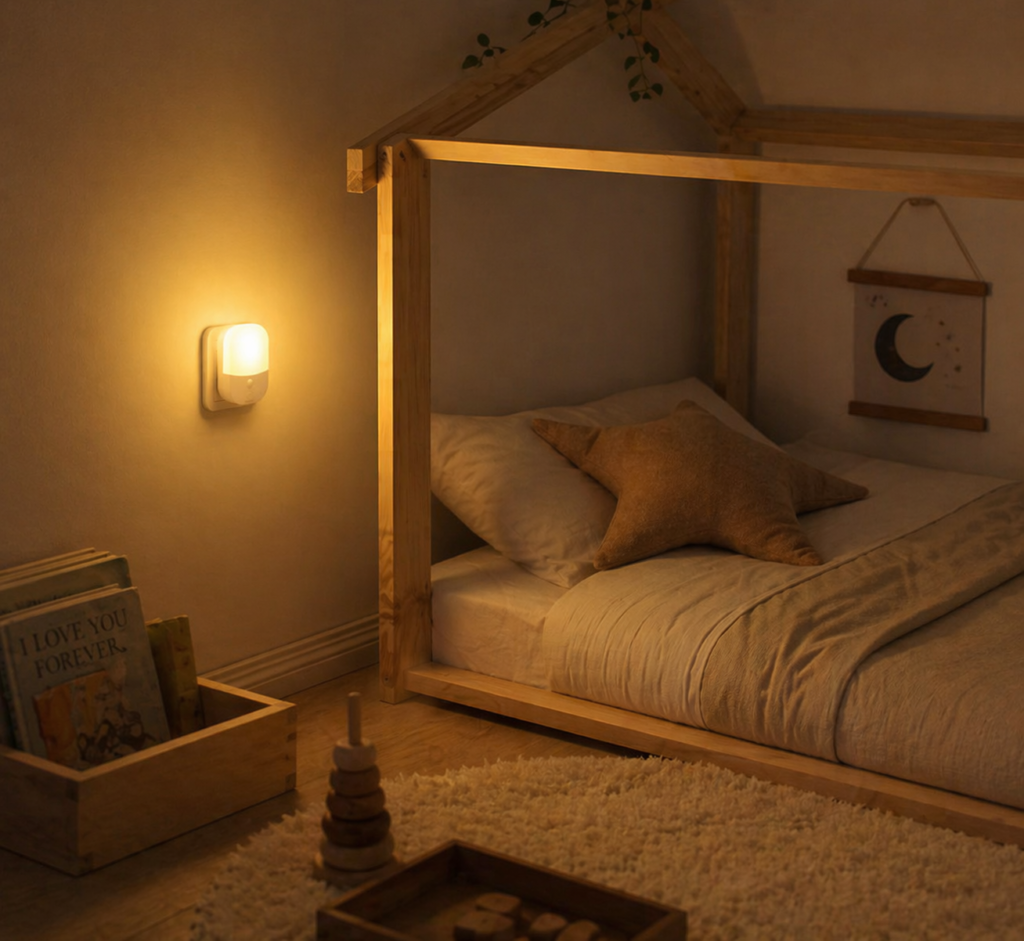
Sometimes the best night light is the one you hardly think about.
Not every family needs rechargeable batteries, multiple brightness settings or extra features. Sometimes all you’re looking for is a small amount of gentle light that quietly does its job every evening.
That’s exactly why simple plug-in night lights continue to appeal. Once they’re in place, there’s no charging, moving them between rooms or remembering to switch them on before bed—they simply become part of the bedtime routine.
| Why we recommend it: ✔ affordable without feeling flimsy or overly complicated ✔ automatic light sensor (not motion sensor) that turns the light on when needed ✔ soft, warm glow that feels gentle at bedtime ✔ straightforward setup with no extra features to manage |
For families who simply want a little reassurance during night wakings or bedtime routines, this can be an easy and budget-friendly solution that blends into the background.
Another night light we use ourselves is the PURSNIC Night Light, which lives in our hallway leading to the bathroom. Like the option above, it plugs directly into the wall and switches on automatically when the surrounding light gets low.
What we particularly like is how far you can dim it down. The brightness is adjustable from 5% to full brightness, and at its lowest setting it gives off only a very faint, warm glow. If you’re worried about a night light being too bright or intrusive around your baby’s sleep space, this is a particularly useful option.
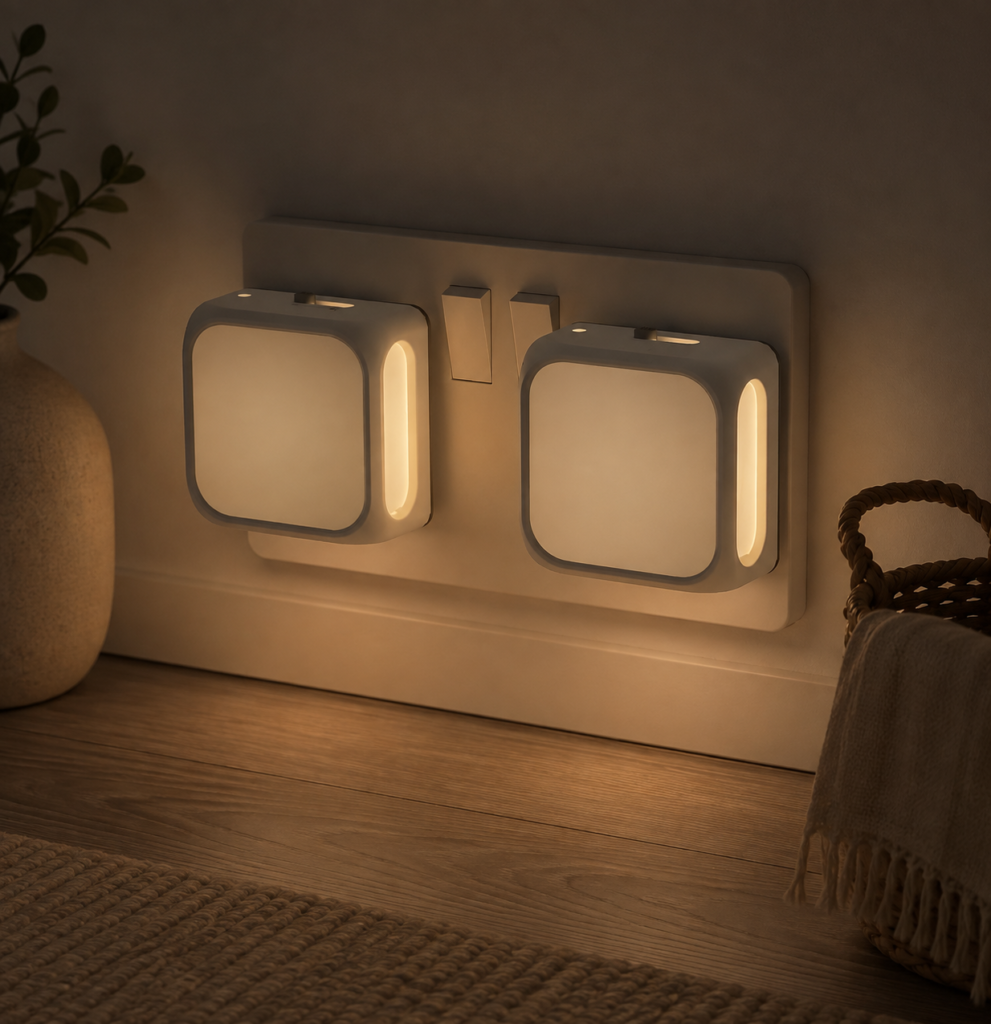
It’s worth knowing that this is light-activated rather than motion-activated, so it stays on when the room is dark and switches itself off again when there’s sufficient daylight. The manufacturer also recommends keeping multiple units at least one metre apart to prevent the light sensors interfering with one another.
Shopping on Amazon?
If you’re not already a Prime member, you can check whether you’re eligible for a free 30-day trial and enjoy Prime delivery on millions of eligible items.
Montessori Perspective on Night Lights
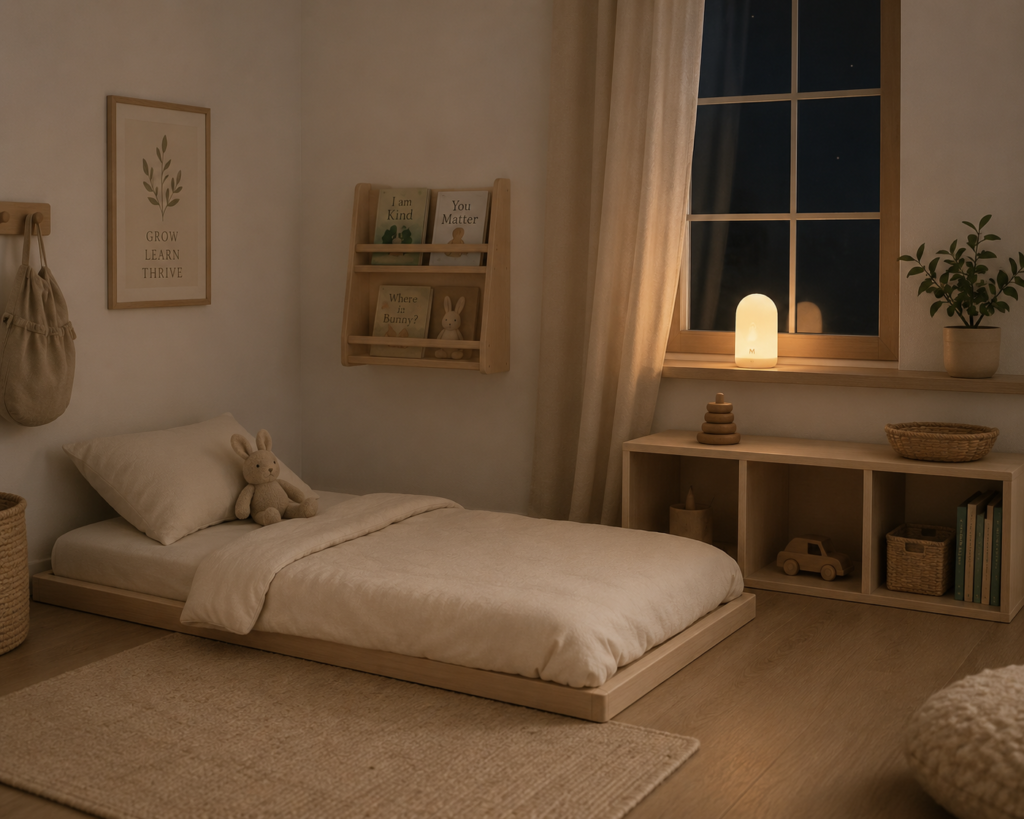
From a Montessori perspective, the goal isn’t to rely on a night light, but to create a sleep environment that feels calm, predictable and easy for a child to navigate independently.
If a night light is used, it should quietly support the environment rather than become the focus of it.
A Few Things We’d Avoid
Many toddlers settle best with lighting that feels soft, predictable and low stimulation.
When choosing a night light, we generally try to avoid:
✘ Lights that are brighter than necessary
✘ Colour-changing or flashing settings at bedtime
✘ Placing the light directly beside the bed
✘ Frequently changing different parts of the sleep environment at once
In our experience, simpler and more consistent usually works better.
Sometimes the Problem Isn’t the Light
When bedtime becomes difficult, it’s natural to start looking for something to change.
A new bedtime routine.
A different night light.
A new sleep product.
But in many cases, the challenge has very little to do with lighting.
Overtiredness, inconsistent routines, developmental changes, separation anxiety, room temperature and major life transitions can all affect sleep far more than the presence or absence of a night light.
For some toddlers, a soft light provides reassurance and helps the room feel more predictable. For others, sleep difficulties persist because the underlying challenge lies elsewhere.
That’s why we think it’s most helpful to see a night light as one small part of the sleep environment rather than a solution in itself.
If bedtime has become a daily struggle, you may also find this guide helpful:
→ Why Your Toddler Won’t Go to Sleep (And How to Make Bedtime Easier)
Final Thoughts
When we first started looking at toddler night lights, we assumed the question was:
“Which one is best?”
Looking back, we think the better question was:
“Does our child actually need one?”
For some toddlers, a soft night light becomes a reassuring part of the bedtime routine.
For others, complete darkness works just as well.
The goal isn’t to make bedtime brighter.
It’s simply to make it feel calmer.
FAQs
Do toddlers need a night light to sleep?
Not all toddlers need a night light, but some feel more secure with a soft, dim glow — especially during phases of separation anxiety or fear of the dark. A simple night light can help create a calmer, more predictable sleep environment.
What is the best night light for toddlers who won’t sleep?
The best night light for toddlers is one that provides a soft, warm glow without being too bright or stimulating. Montessori-friendly options tend to be simple, dimmable, and free from flashing lights or interactive features that can disrupt sleep.
Are night lights safe for babies and toddlers?
Yes, night lights are generally safe when used correctly. Choose a low-brightness, warm-toned light and place it away from the sleep surface. Avoid overheating devices or lights that are too bright, as these can affect sleep quality.
What colour night light is best for sleep?
Warm colours like amber, red, or soft orange are best for sleep. These tones are less likely to interfere with melatonin production compared to bright white or blue light, which can make it harder for toddlers to settle.
Can a night light help with toddler sleep problems?
For some toddlers, a night light can help reduce fear of darkness and make bedtime feel more predictable. While it’s not a solution on its own, it can support a calmer sleep environment when used alongside a consistent bedtime routine.
What type of night light is best for a nursery?
A simple, dim night light is usually best for a nursery. Look for options that provide a gentle glow for night feeds or checks without fully waking the baby or overstimulating the room.
Are colour-changing night lights good for toddlers?
Colour-changing or interactive night lights can be overstimulating for some toddlers, especially at bedtime. Simpler, single-colour lights are usually more effective for creating a calm sleep environment.
Should I leave a night light on all night?
Some toddlers sleep better with a low, consistent light, while others prefer complete darkness. If you use a night light overnight, keep it dim and warm-toned to avoid disrupting sleep cycles.
What is the best night light for toddler separation anxiety?
A soft, warm night light can help toddlers feel more secure during phases of separation anxiety. Simple, non-distracting lights work best, as they provide reassurance without becoming a source of stimulation.
What features should I look for in a toddler night light?
Look for:
– low brightness
– warm colour tones
– simple controls
– stable, safe design
Avoid features that encourage interaction at bedtime, such as flashing lights or multiple colour modes.
You Might Also Find Helpful