Montessori Activities for Autistic Toddlers (Age 2-3) to Support Focus
Toddlers between ages 2 and 3 are naturally curious, active, and eager to explore their environment. For autistic toddlers, this stage can also include sensory sensitivities, communication differences, and a strong need for predictability.
Montessori activities can be especially supportive at this age because they emphasize:
- Hands-on learning
- Repetition
- Independence
- Calm, orderly environments
- Respect for each child’s pace
When thoughtfully adapted at home, Montessori-inspired activities can help autistic toddlers build focus, confidence, and self-regulation in a safe and predictable setting.
Below are age-appropriate Montessori activities designed specifically for autistic toddlers ages 2–3.
Why Montessori Works Well for Autistic Toddlers
At ages 2–3, toddlers are developing:
- Fine motor control
- Early language skills
- Independence (“I do it myself”)
- Emotional regulation
- Sensory awareness
Montessori activities are short, concrete, and repetitive — which often suits autistic toddlers who benefit from clear structure and hands-on experiences.
At home, you can further reduce overstimulation and tailor activities to your child’s unique sensory profile.
The key is observation: notice what calms your child and what overwhelms them.
Many parents exploring Montessori activities for autistic toddlers also wonder whether Montessori is truly a good educational fit long term. If you’re still considering the bigger picture, you may find it helpful to explore what research says about Montessori and autism, including how structure, independence, and sensory design affect autistic learners in different settings.
Practical Life Activities for Autistic Toddlers
Practical life work is ideal for this age group because it builds coordination and independence through real-world tasks.
Simple, child-sized tools make these activities more accessible for toddlers. Low shelves, lightweight trays, and developmentally appropriate materials allow autistic toddlers to work independently without becoming frustrated. Choosing the right Montessori tools can significantly increase engagement and success at home.

1. Simple Pouring with Large Items
Use two small bowls and allow your toddler to transfer:
- Large dry pasta
- Wooden blocks
- Big beans
Why it works (Ages 2–3):
The movement is repetitive and soothing. Large items are easier for developing fine motor skills.
Adaptation tip:
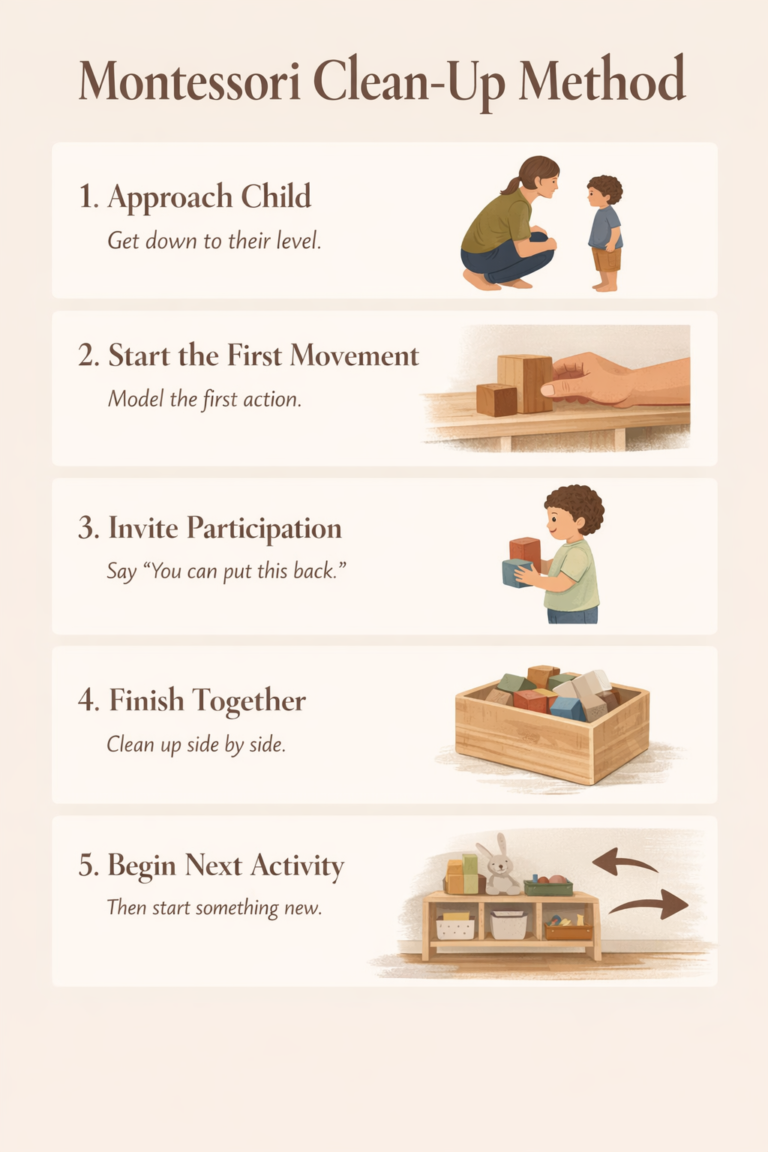
Sit beside your toddler and model slowly before inviting participation.
2. Transferring with a Spoon
Provide a tray with small objects and a child-sized spoon.
Why it works:
Strengthens hand-eye coordination and concentration.
Keep it simple:
One material only. Avoid cluttered trays.
3. Water Play with a Sponge
Place a small bowl of water and demonstrate squeezing water from sponge to bowl.
Why it works:
Provides calming sensory input and builds hand strength.
If water is overstimulating:
Start with dry sponges first.
4. Wiping a Table
Give your toddler a damp cloth to wipe a small surface.
Why it works:
Repetitive motion can be regulating. It also supports independence.
Toddlers love purposeful work.
Sensory-Supportive Montessori Activities (Ages 2–3)
Many autistic toddlers are still learning how to process sensory input. Activities should be gentle and controlled.
5. Texture Exploration (Limited Choices)
Offer 2–3 textures only:
- Soft cloth
- Smooth wood
- Large felt square
Why it works:
Encourages exploration without overwhelming.
Important:
Never force touch. Respect avoidance.
6. Large Knobbed Puzzles
Choose simple wooden puzzles with big knobs.
Why it works:
Clear visual boundaries and predictable outcomes reduce frustration.
Start with 3–4 pieces only.
7. Sound Awareness Bottles
Fill sealed bottles with:
- Rice
- Sand
- Beads
Shake gently and compare sounds.
Why it works:
Supports auditory awareness in a controlled way.
Keep volume low.
8. Object-to-Object Matching
Match identical objects (spoon to spoon, block to block).
Why it works:
Concrete matching is developmentally appropriate for 2–3 year olds.
Avoid abstract picture matching at first.
Movement & Regulation Activities
Many autistic toddlers need movement to stay regulated.
9. Carrying “Heavy” Objects

Let your toddler:
- Carry small books
- Push a toy cart
- Move a small laundry basket
Why it works:
Heavy work provides deep pressure input that can calm the nervous system.
10. Movement Mat Time
Create a small floor area for:
- Crawling
- Rolling
- Gentle animal walks
Why it works:
Supports body awareness and coordination.
Keep instructions simple and brief.
11. Simple Yoga Imitation

Demonstrate easy poses like:
- Stretching arms up
- Touching toes
At this age, imitation is more important than perfection.
Even with thoughtful preparation, toddlers can still experience moments of frustration or sensory overload. When that happens, calm language and predictable responses can make a significant difference in helping them regulate and feel safe.
Early Cognitive Montessori Activities
Toddlers ages 2–3 are beginning to classify and organize.
12. Color Sorting (Two Colors Only)
Start with just two contrasting colors.
Example:
- Red blocks
- Blue blocks
Why it works:
Simple categories reduce overwhelm.
13. Shape Posting
Use a basic shape sorter with large pieces.
Why it works:
Clear cause-and-effect supports problem solving.
If frustration appears, reduce to one shape.
14. Simple Visual Schedule
Create a short daily sequence:
- Breakfast
- Play
- Snack
- Outside
Use picture cards.
Why it works:
Predictability reduces anxiety at this age.
Keep it very short (3–4 steps only).
Nature-Based Montessori Activities for Toddlers

Outdoor environments are often naturally regulating.
15. Collecting Natural Objects
On a short walk, collect:
- One leaf
- One rock
- One stick
Examine them at home.
Why it works:
Natural textures are often less overwhelming than plastic materials.
Keep outings short and predictable.
How to Adapt Montessori for Autistic Toddlers (Ages 2–3)
Because toddlers are still developing communication and regulation skills, adaptation is essential.
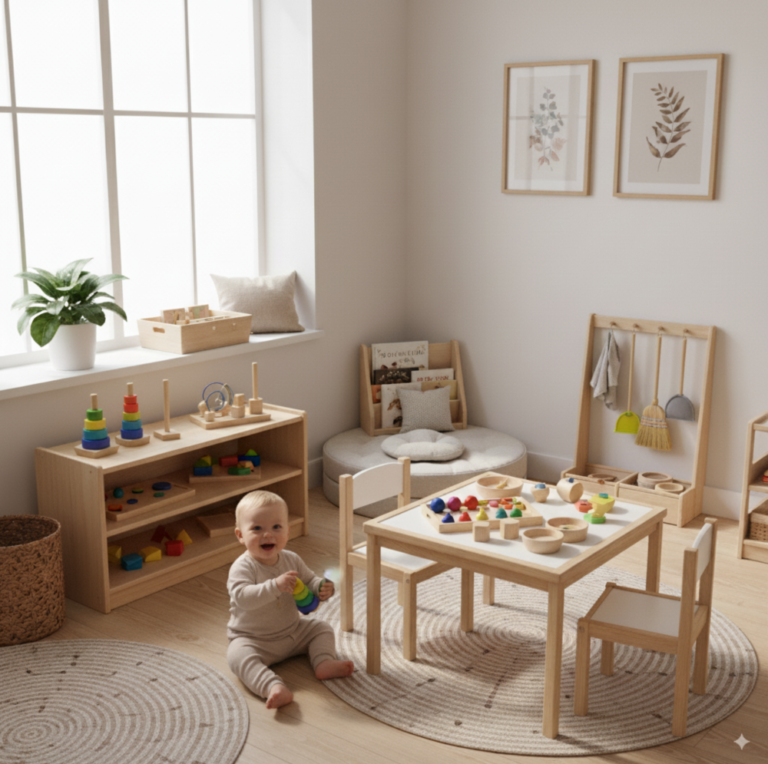
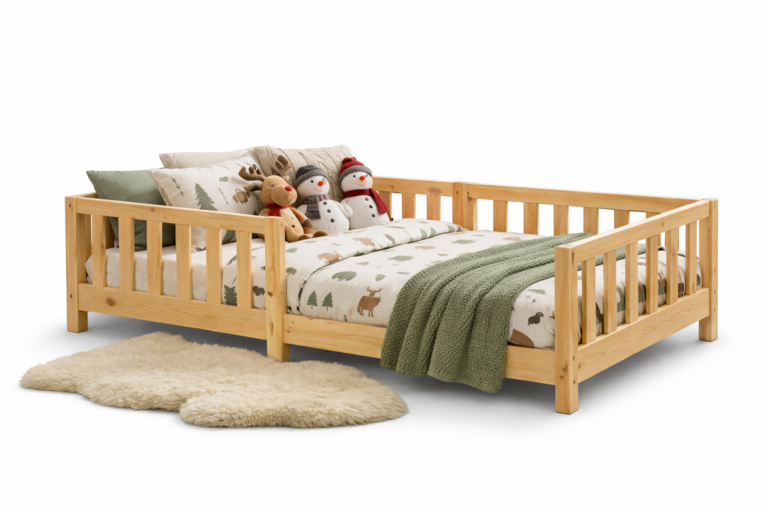
The physical environment matters just as much as the activity itself. A calm, organized bedroom or play space can reduce sensory overload and support better focus during work periods. Creating a Montessori-inspired setup at home often starts with simplifying furniture, reducing clutter, and designing predictable spaces.
Reduce Visual Clutter
Only display a few materials at a time.
Offer Limited Choices
Two options are usually enough.
Keep Activities Short
5–10 minutes may be ideal at this age.
Use Clear Demonstrations
Model slowly and quietly.
Respect Sensory Boundaries
If your toddler avoids an activity, remove it without pressure.
Frequently Asked Questions
Is Montessori good for autistic toddlers?
Montessori can be very supportive for autistic toddlers because it emphasizes hands-on learning, repetition, and independence in a calm environment. The flexibility of home adaptation makes it especially helpful.
How long should Montessori activities last for a 2–3 year old?
At this age, 5–15 minutes is typical. Follow your toddler’s attention span rather than forcing longer sessions.
What if my toddler refuses most activities?
Start with what they already enjoy. Observe interests and build from there. Montessori is child-led and flexible.
Can Montessori help with sensory processing at this age?
When activities are simple and thoughtfully adapted, they can provide structured sensory input that supports regulation and focus.
Final Thoughts
Between ages 2 and 3, autistic toddlers are learning how to move, communicate, regulate emotions, and explore their world. Montessori activities at home do not need to be elaborate or expensive.
Focus on:
- Calm spaces
- Simple materials
- Predictable routines
- Gentle repetition
- Respect for your child’s cues
When adapted thoughtfully, Montessori can offer autistic toddlers a sense of independence and confidence during a crucial developmental stage.
Start small. Observe carefully. Follow your toddler’s lead.gently. And most importantly, follow your child.