Why Your 18–24 Month Old Toddler Won’t Play Alone
A practical, realistic guide for 18-24 month old toddlers who won’t play alone (with simple setups that actually work)
Independent play sounds beautiful in theory.
A toddler quietly focused. Deeply engaged. Calm. Content.
But if your 18–24 month old won’t play alone, you’re not doing anything wrong.

Many parents quietly wonder:
- Why won’t my 18 month old play independently?
- Why does my toddler need me constantly?
- How do I encourage independent play without screens?
- Are there specific Montessori toys for 18–24 months that actually help?
Why Your Toddler Won’t Play Alone at 18–24 Months
At this stage of development, toddlers are only beginning to build the skills required for independent play.
It’s very common for parents to worry when their 18 month old won’t play alone, but at this stage independent play is still a developing skill that needs the right environment and materials.
If your toddler won’t play independently, there’s usually a reason.
Common causes include:
- Overstimulation
- Too many toys available
- Lack of clear structure
- Underdeveloped focus skills
- Need for connection first
- Overtiredness
- Dysregulation
Toddlers are not wired for independence without support.
They build it gradually.
Montessori understands this deeply — which is why the environment matters so much.
If your toddler won’t play alone, the issue is rarely motivation.
It’s usually environment, regulation, or developmental readiness.
This guide explains why toddlers between 18 and 24 months resist independent play — and which Montessori tools actually help build focus, confidence, and autonomy at home.
Because independent play isn’t about ignoring your child.
It’s about helping them feel capable enough to explore without you.
Many parents start searching for answers when their 18 month old won’t play alone or constantly asks for attention. This stage often overlaps with emotional development as well. If you’ve also noticed clinginess or sudden mood changes, you may find it helpful to read why toddlers become very emotional or moody around 18 months. At this stage, toddlers are still developing concentration and emotional regulation, so independent play often needs gentle support and the right environment. Understanding what helps toddlers between 18 and 24 months focus independently can make daily life calmer for both you and your child.
If your toddler won’t play independently at this age, there is usually a developmental reason.
Between 18 and 24 months, children are experiencing enormous growth in:
- language
- independence
- emotional awareness
- movement
- curiosity about the world
But their ability to sustain attention is still developing.
Common reasons toddlers at this age resist independent play include:
- overstimulation
- too many toys available
- lack of clear structure
- underdeveloped focus skills
- strong need for connection
- overtiredness
- nervous system dysregulation
Toddlers do not automatically know how to play independently.
They build the skill gradually through repetition and experience.
This is why the Montessori environment focuses so strongly on simplicity, order, and accessible materials.
Why Independent Play Matters for Toddlers (Montessori Perspective)
In Montessori philosophy, independent work is one of the most important foundations of learning.
When toddlers can focus on meaningful activity independently, they develop:
- concentration
- problem-solving skills
- emotional regulation
- persistence
- confidence
- internal motivation
Montessori classrooms for toddlers are carefully designed to support this through:
- low accessible shelves
- limited material choices
- real and purposeful activities
- repetition
- calm, predictable environments
The encouraging news is that you can recreate many of these conditions at home, even in a small space.
Often, the difference comes from changing the environment rather than changing the child.
What Makes a Montessori Toy Good for Independent Play (18–24 Months)
If your toddler won’t play alone, adding more toys usually makes the problem worse.
Instead, focus on tools that support deep engagement.
The best Montessori tools for toddlers between 18 and 24 months are:
- open-ended rather than electronic
- purposeful rather than purely entertaining
- low in noise and stimulation
- focused on one clear task
- self-correcting when possible
- easy to repeat without adult help
These kinds of materials naturally invite concentration and repetition, which are the foundations of independent play.
If you’re setting up an environment specifically for independent play, you may also find this complete guide to Montessori tools for independent play helpful, including shelf setup ideas and activity rotations.
Montessori Tools That Help 18–24 Month Olds Play Independently
1. Fine Motor Activities
Fine motor work is ideal for toddlers because it requires precision and repetition.
Examples include:
- large wooden threading beads
- peg boards
- coin posting boxes
- lacing cards
- screw-top containers
Disclaimer: This post contains affiliate links. I may earn a small commission at no extra cost to you. As an Amazon Associate I earn from qualifying purchases.
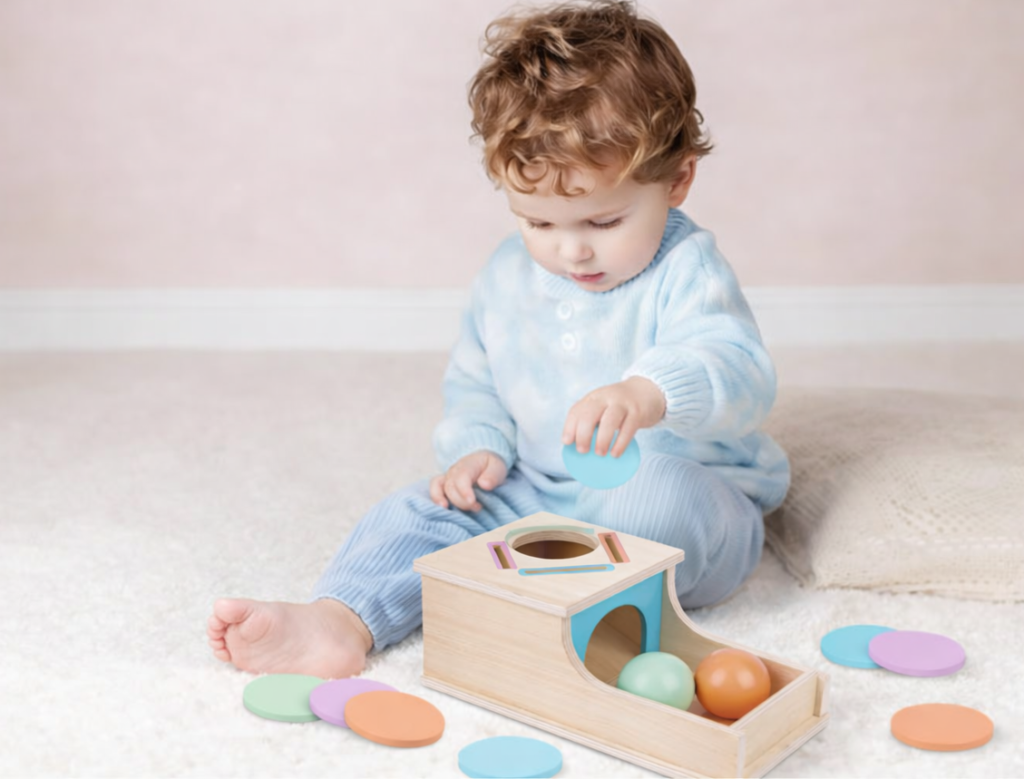
Montessori coin boxes are a simple but powerful activity for toddlers learning to focus independently. Children between 18 and 24 months often enjoy dropping the coins repeatedly, watching them disappear and reappear while developing fine motor skills and concentration.
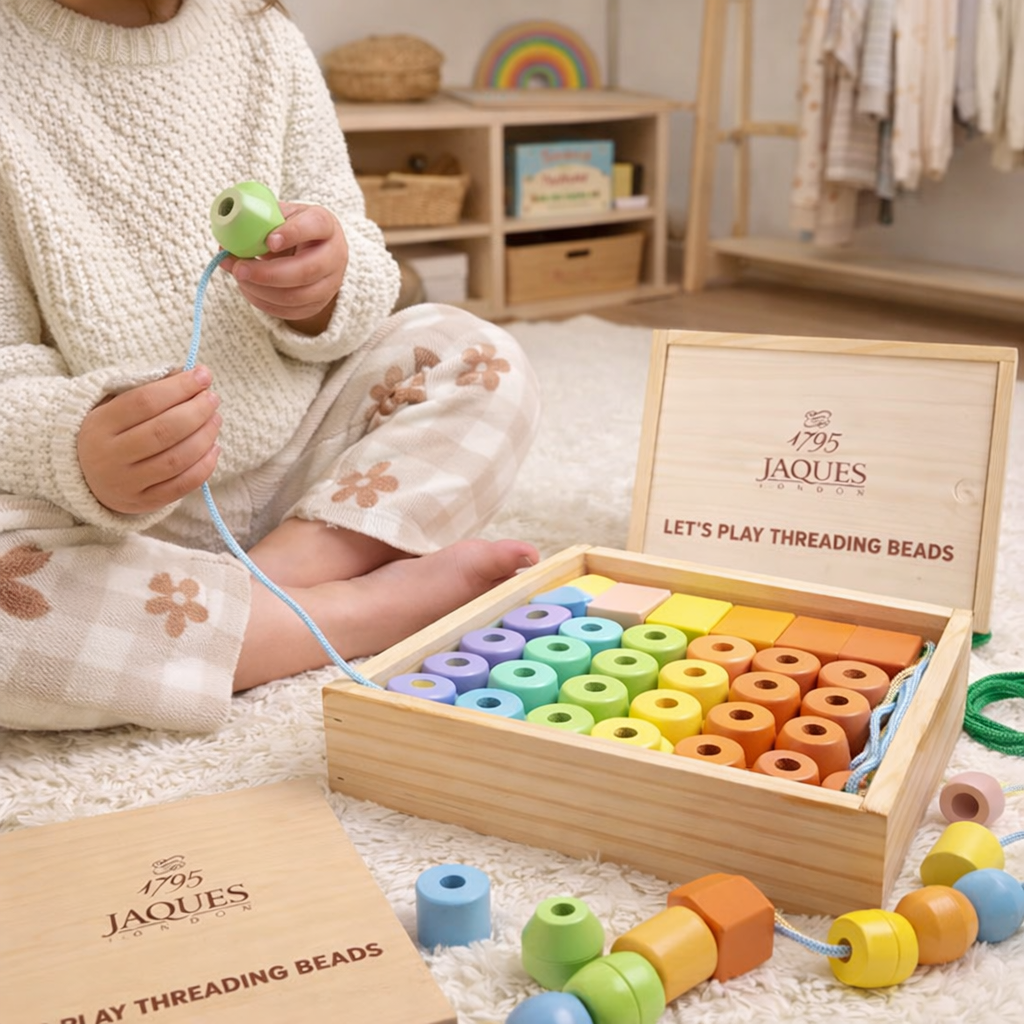
Fine motor activities are especially helpful for toddlers learning to focus independently. Threading beads encourage slow, careful movement and repetition, which naturally strengthens hand-eye coordination and concentration for children between 18 and 24 months. Interestingly, threading beads are also sometimes used by health professionals — our Health Visitor actually brought a set with her during a developmental check to observe our daughter’s fine motor skills and hand-eye coordination milestones.
We particularly love the Jaques London threading beads, as they come in a beautiful wooden storage box that keeps everything organised and makes the set easy to pass down to younger siblings, resell later, or donate when your child has outgrown it. The beads can also double up as simple stacking toys, giving toddlers another open-ended way to explore and play with them.
Why these work
Fine motor activities slow the body and organize attention.
Many toddlers will repeat these activities 10–20 times in a row, which is exactly how concentration develops.
2. Practical Life Activities
If your toddler won’t play alone, they may not want toys.
They want real work.
Practical life activities are some of the most powerful Montessori tools for encouraging independence.
Examples include:
- pouring water between small pitchers
- scooping dry beans or rice
- transferring with tongs
- wiping a small table
- folding cloths
- matching socks

Why they work
These activities feel meaningful to toddlers.
When children feel useful, they often stay engaged much longer.
3. Cause-and-Effect Materials
Toddlers between 18 and 24 months are deeply fascinated by how things work.
Examples include:
- object permanence boxes
- shape sorters
- wooden puzzles
- stacking rings
- ball drop boxes
Why they work
These materials provide immediate feedback.
The ball drops.
The shape fits.
The lid screws on.
The material itself teaches the child, which reduces the need for adult guidance.
4. Open-Ended Building Materials
Open-ended building materials are excellent for encouraging independent play because they give toddlers freedom to experiment without a fixed outcome.
Examples include:
- Wooden blocks
- Magnetic tiles (used in small sets)
- Wooden stacking stones
- Simple train tracks
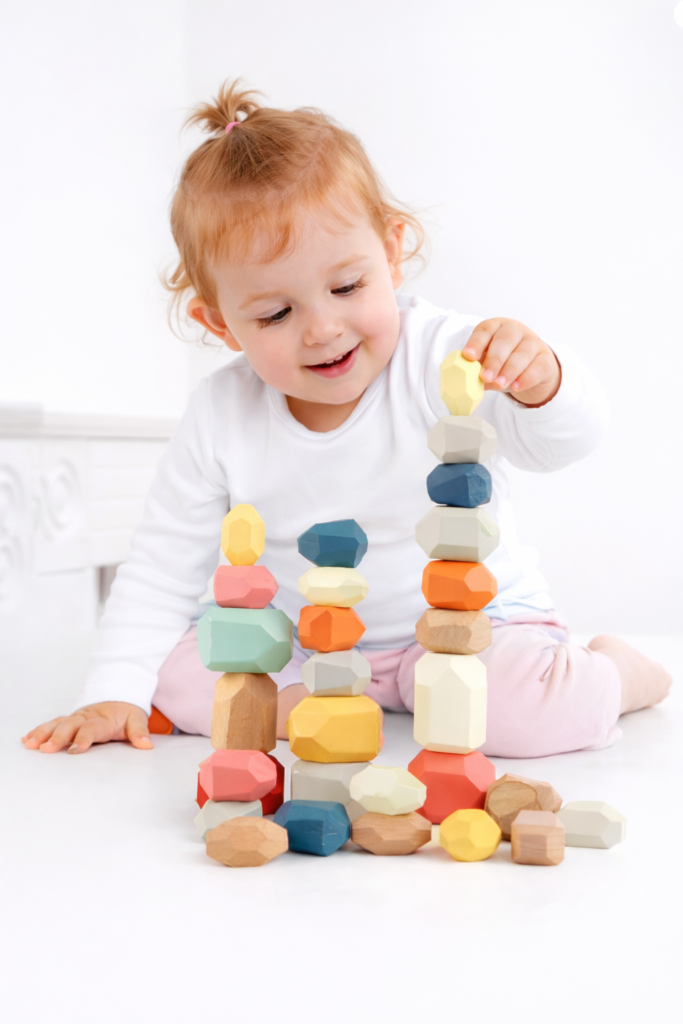
One of our favourite options for this stage is wooden balancing stones. These irregular shapes challenge toddlers to experiment with balance, positioning, and stability, which naturally strengthens problem-solving and fine motor control.
Because the pieces don’t stack perfectly like traditional blocks, toddlers need to slow down, adjust their movements, and try again — all of which supports concentration.
Another reason Montessori families often love balancing stones is their durability and longevity. Unlike many toddler toys that are quickly outgrown, stacking stones remain engaging well beyond age two. Younger toddlers enjoy simple stacking, while older children begin building towers, bridges, and more creative structures.
This makes them a toy that can grow with your child for several years rather than being replaced after a short stage.
👉 You can check the current price of the Wooden Balance Blocks here. They’re one of those simple Montessori toys that toddlers return to again and again.
Why they work
There is no single correct outcome.
The child directs the play, which encourages autonomy and experimentation.
5. Matching and Sorting Activities
Toddlers have a strong natural drive for order and categorization.
Examples include:
- colour matching trays
- shape boards
- animal matching cards
- size sorting activities
Why they work
Pattern recognition feels satisfying and predictable.
That sense of order often increases concentration.
6. Regulation-Supporting Materials
Sometimes toddlers struggle with independent play because they feel dysregulated.
Calming materials can help support their nervous system.
Examples include:
- play dough
- water play
- simple sensory bins
- large floor puzzles
- soft building blocks
- simple jigsaw/matching activity
When the body feels calmer, independent exploration becomes much easier.
Some toddlers need additional support with emotional regulation before they can focus independently. Sensory-based activities can help build these skills gradually. You may also find these Montessori activities for autistic toddlers helpful for supporting regulation and calm concentration, many of which can be adapted for children from around 18 months through age 3 and beyond.
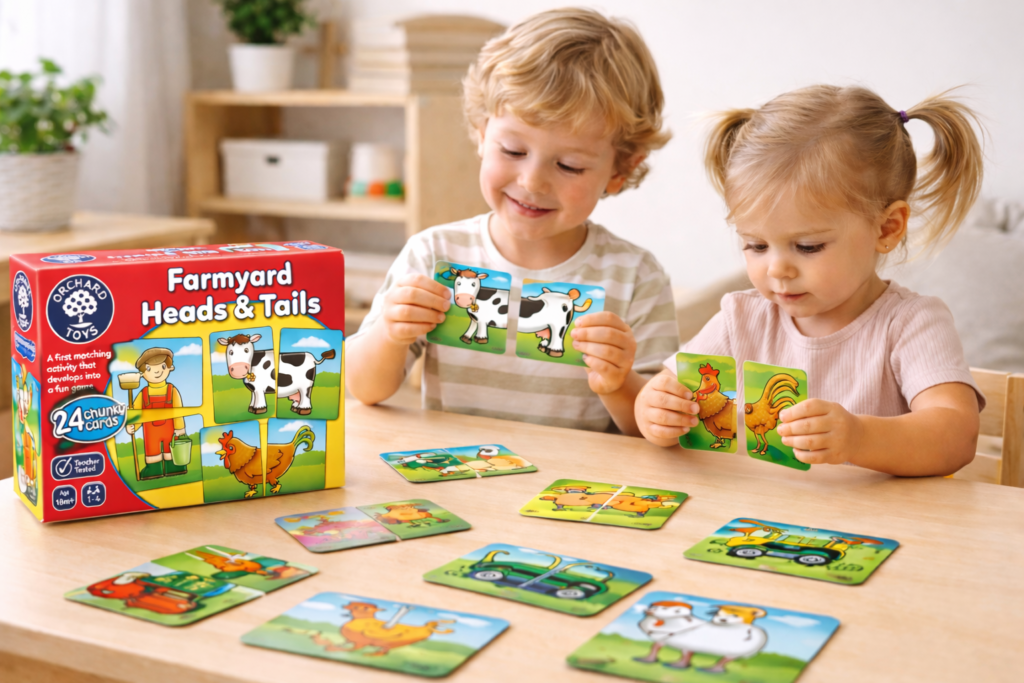
Simple matching games can also help toddlers build concentration and early problem-solving skills. The Orchard Toys Farmyard Heads & Tails matching game is a lovely example for children around 18–24 months, with large chunky cards that are easy for little hands to hold. Toddlers match farm animal heads to their tails, which encourages observation, hand-eye coordination, and early memory skills. As your child grows, the cards can also be used as a simple memory game, making it a toy that adapts with their development rather than being quickly outgrown.
👉 You can see the Farmyard Heads & Tails matching game here.
Some toddlers need additional sensory support before they feel ready to focus independently. These Montessori activities for autistic toddlers can help support regulation and calm concentration. Many of the recommendations can be adapted for children from around 18 months through age 3 and beyond, making them a helpful starting point for supporting independent play at different developmental stages.
How to Encourage Independent Play for 18–24 Month Olds
The materials matter.
But the environment matters even more.
Limit the Shelf
Too many toys overwhelm toddlers.
Start with 4–6 activities only.
Rotate them weekly.
Fewer options often lead to deeper concentration.
Make Materials Accessible
Use:
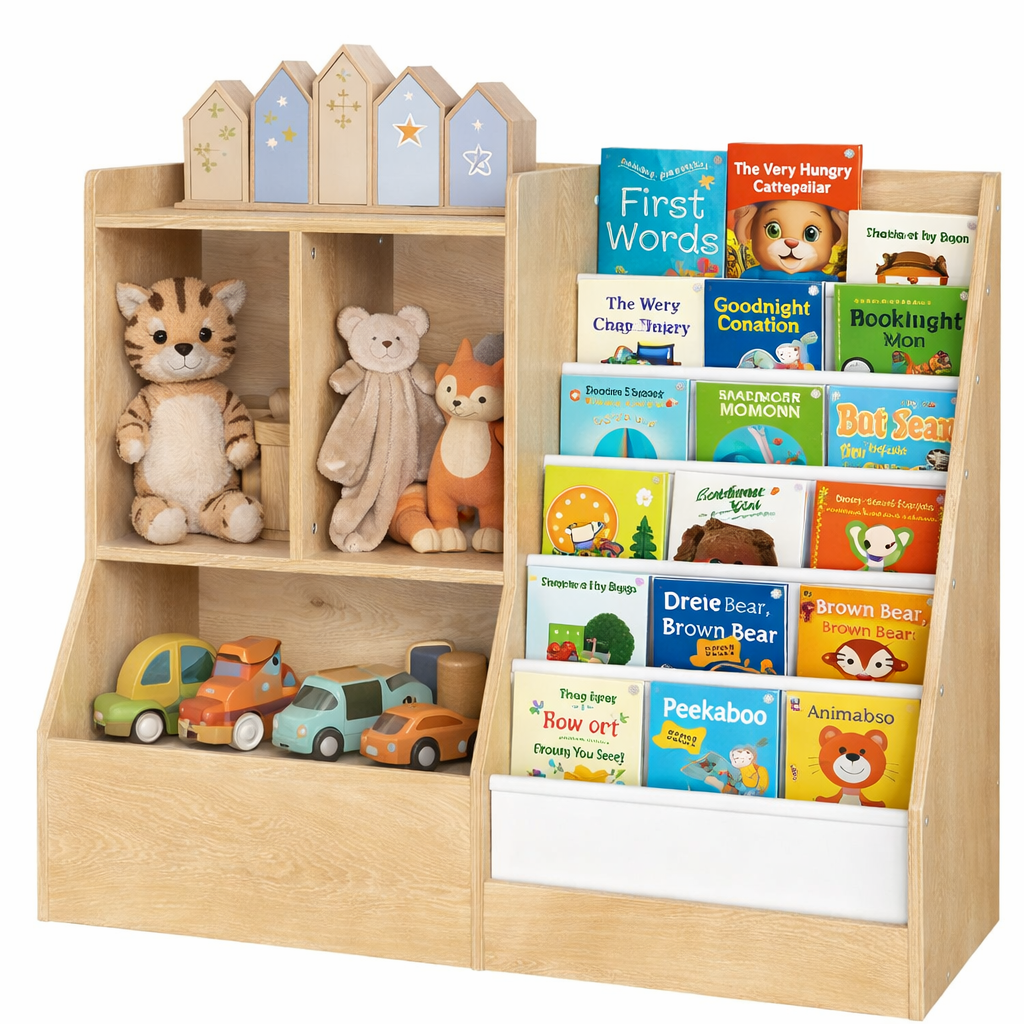
- low shelves
- small trays
- clear baskets
If your toddler constantly needs help reaching or opening materials, independent play becomes difficult.
Demonstrate Once, Then Step Back
Show the activity slowly.
Use very few words.
Then allow the child to explore.
In Montessori environments, observation replaces constant instruction.
Start Small
If your toddler won’t play alone yet, begin with 2–5 minutes of independent play.
Stay nearby at first.
Gradually increase distance as their confidence grows.
What Not to Do If Your Toddler Won’t Play Alone
To support independent play, try to avoid:
- interrupting concentration
- introducing new toys too frequently
- constantly praising or correcting
- rotating materials daily
- using independent play as emotional withdrawal
Montessori independence is relational and supportive, not detached.
Connection fuels independence.
Not the other way around.
Language also plays a role in encouraging independence. Using calm, clear phrases can reduce power struggles and support cooperation. You can find examples in this guide on what to say instead of “no” to your toddler.
Quick Montessori Setup for Independent Play (18–24 Months)
If your toddler won’t play alone, a small environmental shift can make a huge difference.
Here’s a simple Montessori-inspired setup that often encourages toddlers between 18 and 24 months to play more independently.
Start with just 4–6 activities on a low shelf:
• One fine motor activity (threading beads or posting coins)
• One practical life activity (pouring, scooping, or wiping)
• One puzzle or cause-and-effect toy
• One open-ended building material
• One sorting or matching activity
Keep everything visible and easy to reach so your toddler can choose work independently.
Rotate activities once a week, not daily. Toddlers build concentration through repetition.
Many parents notice that when the environment is simplified this way, toddlers naturally begin exploring activities on their own.
Why Your 18–24 Month Old Toddler Won’t Play Alone
Most toddlers begin showing short periods of independent play between 18 and 24 months, though the length of time varies widely. Some children may focus for only two or three minutes at first, while others may stay engaged with an activity for ten minutes or more. What matters most is not the length of time, but the opportunity to repeat meaningful activities without constant interruption. With the right environment and simple Montessori materials, many toddlers gradually extend their concentration and begin choosing activities independently.
Final Thoughts: Independent Play Takes Time
If your 18–24 month old won’t play alone, it does not mean something is wrong.
Independence is still developing.
The right Montessori tools — combined with a calm, structured environment — help that development happen naturally.
Independent play grows from:
- security
- repetition
- structure
- trust
And when toddlers feel capable in their environment, they begin exploring on their own.
Not because they were pushed away.
But because they feel ready.