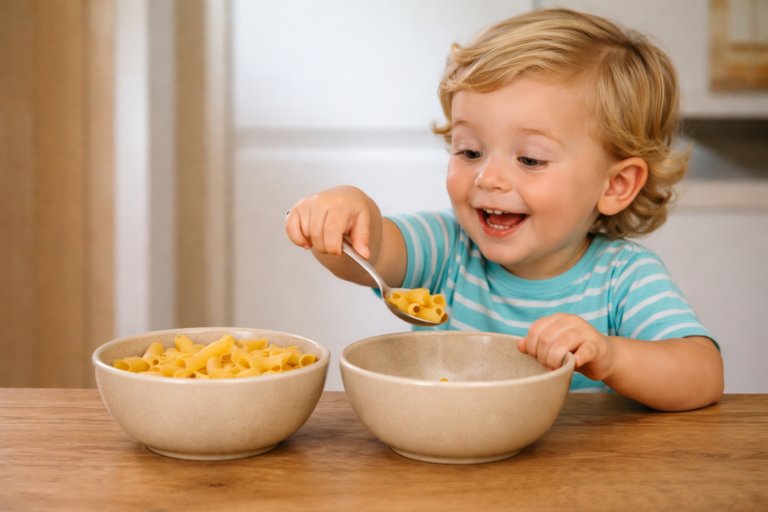
Why Toddlers Throw Things (And What They’re Learning)
“One minute they’re calmly eating, the next the spoon is flying across the room…”
You freeze.
They stare.
Gravity does its thing.
You sigh, retrieve the spoon, and hand it back.
It flies again.
If you live with a toddler, you have likely participated in this quiet daily ritual — the endless loop of pick up, drop, pick up, drop — wondering at what point you accidentally enrolled in a part-time catering job for a very small but very determined scientist.
Because that’s exactly what is happening.
Your toddler is not trying to ruin dinner.
They are running experiments.
If you’re wondering how to respond in the moment, here’s a simple step-by-step response to toddler throwing.
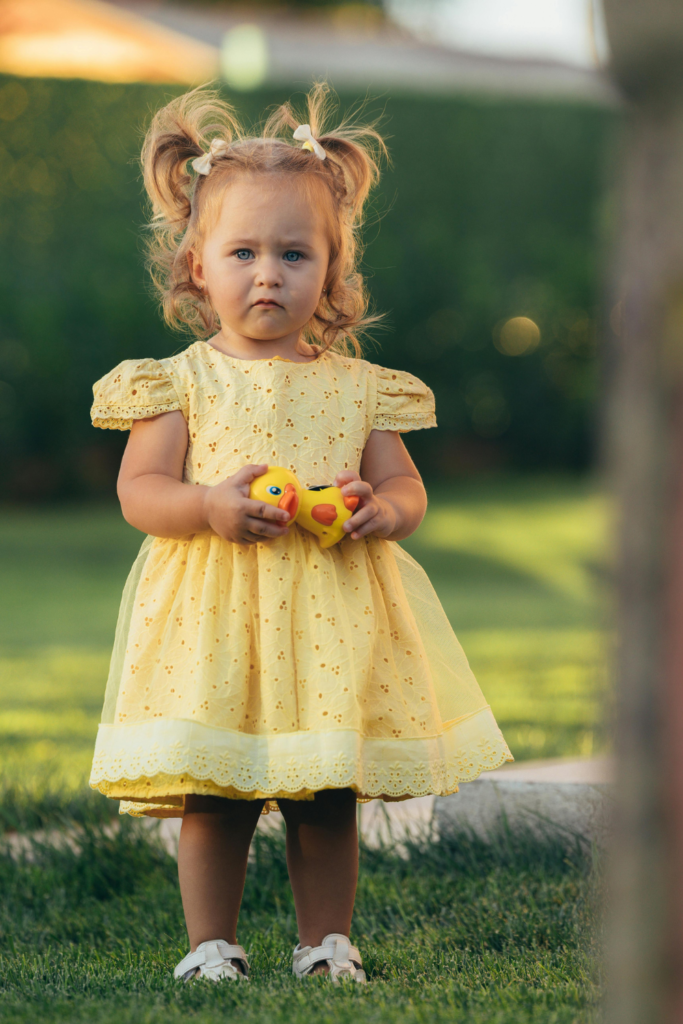
The great gravity research project
Toddlers spend much of their early life discovering one shocking truth:
The world reacts when they act on it.
When a baby drops something at six months, it’s accidental.
When a toddler drops something at eighteen months, it’s data collection.
They’re asking questions like:
- What happens every time?
- Does it always make that sound?
- Does the dog come running?
- Do adults react differently if I look at them first?
They repeat not to annoy you, but to confirm a pattern. The brain at this stage is building prediction — and prediction is the foundation of understanding.
From their perspective, throwing a spoon isn’t misbehaviour.
It’s physics.
And frankly, the floor is very reliable. It never fails to catch things.
Learning to release is a skill
We often celebrate when babies learn to grab objects.
We forget that letting go is equally complex.
Releasing requires timing, control, and coordination. A toddler is figuring out:
- how wide to open their fingers
- how much force to use
- when to release
- how objects feel as they leave the hand
So they practice.
Again.
And again.
Unfortunately, the highchair offers the perfect laboratory — elevated platform, captive audience, excellent acoustics.
The brain behind the throw
Impulse control lives in a part of the brain that is still under construction for several years.
Your toddler cannot yet pause and think:
“I should not throw this because it will inconvenience my caregiver.”
They think:
“I wonder what happens if…”
The action comes before reflection.
Sometimes throwing also communicates something the child doesn’t yet have words for:
- I’m finished
- I’m tired
- I want attention
- I’m frustrated
- I need movement
The object leaves the hand because the feeling needs somewhere to go.
Many toddler behaviours are forms of communication before language develops. This guide on how to respond when your toddler hits (Montessori-based strategy) explains a similar pattern.
What they’re actually learning
Every drop teaches something.
They learn:
- objects fall downward
- heavier items land faster
- different surfaces make different sounds
- their actions influence the environment
- adults respond predictably
To us it looks repetitive.
To them it’s building a mental map of how reality behaves.
This is why they look so satisfied afterward — not because chaos is fun, but because the world just made sense again.
So… what should you do?
You don’t need to cheer every throw like a proud science mentor.
But you also don’t need to treat it like defiance.
The goal is calm guidance, not emotional negotiation with gravity.
If you’re looking for a calm, practical way to respond in the moment, this guide on what to do when your toddler throws things (a step-by-step response) walks you through it.
Stay neutral
Big reactions make experiments interesting.
If the throw earns gasps, lectures, or dramatic eye contact, the research becomes social as well as physical.
A calm response:
“You dropped your spoon.”
is surprisingly powerful.
Give meaning to the action
Often toddlers throwing things is communication.
Instead of asking why did you do that?
translate it:
“You’re telling me you’re finished.”
Now you’ve acknowledged the need without rewarding the behaviour.
Offer a better option
Children repeat behaviours when they lack an alternative.
Provide one:
- a small bowl to place finished items
- a napkin to put utensils on
- a place on the tray for unwanted food
You’re not stopping the impulse — you’re redirecting the action.
Adjust the environment
Sometimes prevention is simpler than correction.
Helpful changes:
- smaller food portions
- heavier cups
- shorter mealtimes
- fewer items on tray
A tired toddler with a full tray is basically holding a basket of future projectiles.
Creating a calm, structured environment can reduce overstimulation and repetitive behaviours. These Montessori tools for independent play can help support that.
When to hold a firm boundary
Throwing is learning until it becomes unsafe.
Food? Usually communication.
Spoon? Experimentation.
Glass cup aimed at your forehead? Different conversation.
Calm boundary:
“I won’t let you throw that. I’ll move it away.”
No anger. No long explanation. Just clear cause and effect.
Reducing the endless loop
You cannot eliminate throwing entirely — development insists on its experiments — but you can reduce it.
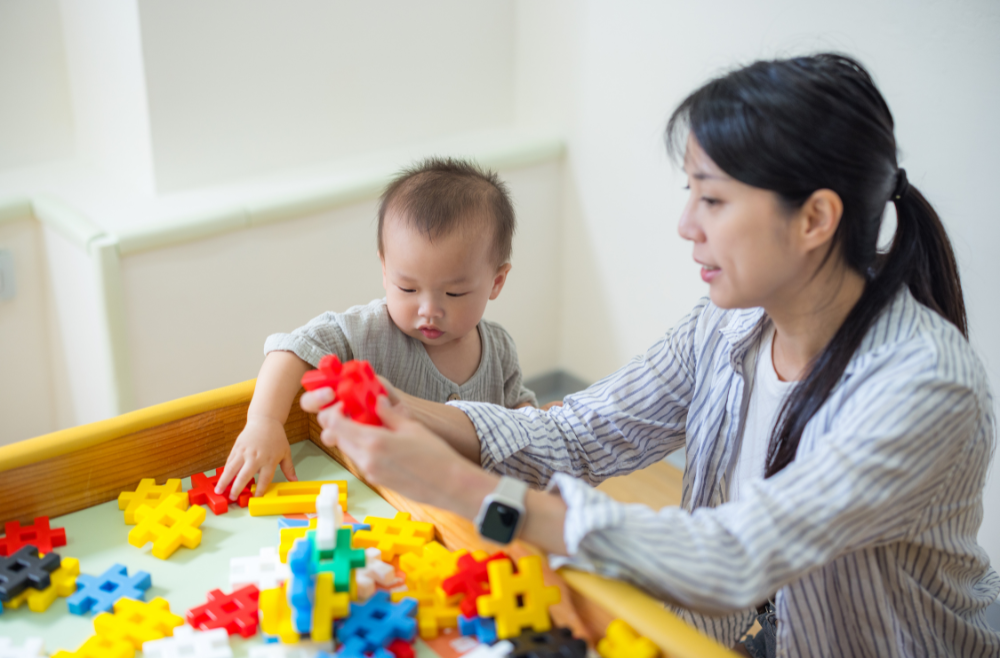
Provide opportunities to drop appropriately:
- ball play
- filling and dumping containers
- posting objects into a box
- transferring items between baskets
The urge to release objects doesn’t disappear; it just finds a safer outlet.
Activities like posting, transferring, and container play are part of how toddlers explore movement and repetition. You can find more ideas in this guide to independent play ideas for toddlers.
A different way to see it
It’s easy to interpret throwing as deliberate mischief.
But most toddler behaviour looks personal only because it happens to us.
In reality, your child is not thinking about your patience, your schedule, or your freshly mopped floor.
They are thinking:
“The world changed because of me.”
And that discovery is deeply important.
Because before a child can control their actions, they must first understand they have impact.
Throwing is often the first proof.
The quiet shift
When we recognise the purpose behind behaviour, our response softens.
We still guide.
We still set limits.
But frustration changes into translation.
Instead of seeing a small human creating mess, we see a mind building order.
You will still pick up the spoon many times.
But it may feel slightly less like defeat — and slightly more like participation in a very early stage of understanding how the world works.
And eventually, the experiments change.
One day they stop throwing…
and start asking why things fall instead.
Which, honestly, is much harder to answer over dinner.
If throwing is happening alongside big emotions, it can also help to know what to say in those moments. These 10 things to say during a toddler meltdown can support connection without escalating behaviour.