2 Year Old Waking Up Crying and Saying No to Everything? Here’s Why
If your 2 year old is waking up crying, pushing everything away, and saying “no” to everything — it can feel intense.
You might be noticing:
- sudden crying after waking
- refusing comfort
- saying “no” to everything you offer
👉 and nothing seems to help in the moment
It can feel confusing — especially when it seems to come out of nowhere.
But in most cases:
👉 this isn’t defiance
It’s overwhelm.

Why Your 2 Year Old Wakes Up Crying and Says No to Everything
In most cases, this comes down to a few overlapping things happening at once.
Your toddler isn’t trying to be difficult.
👉 they’re trying to cope with a moment that feels overwhelming
Waking up is a transition.
And at this age, transitions can feel bigger than we expect.
Add in tiredness, developing independence, and limited language…
And it can quickly turn into:
👉 crying + pushing everything away
👉 even when they still need comfort
What’s Actually Happening When Your Toddler Wakes Up Crying
At this age, a few different things are happening at once — and together, they can make waking up feel surprisingly difficult.
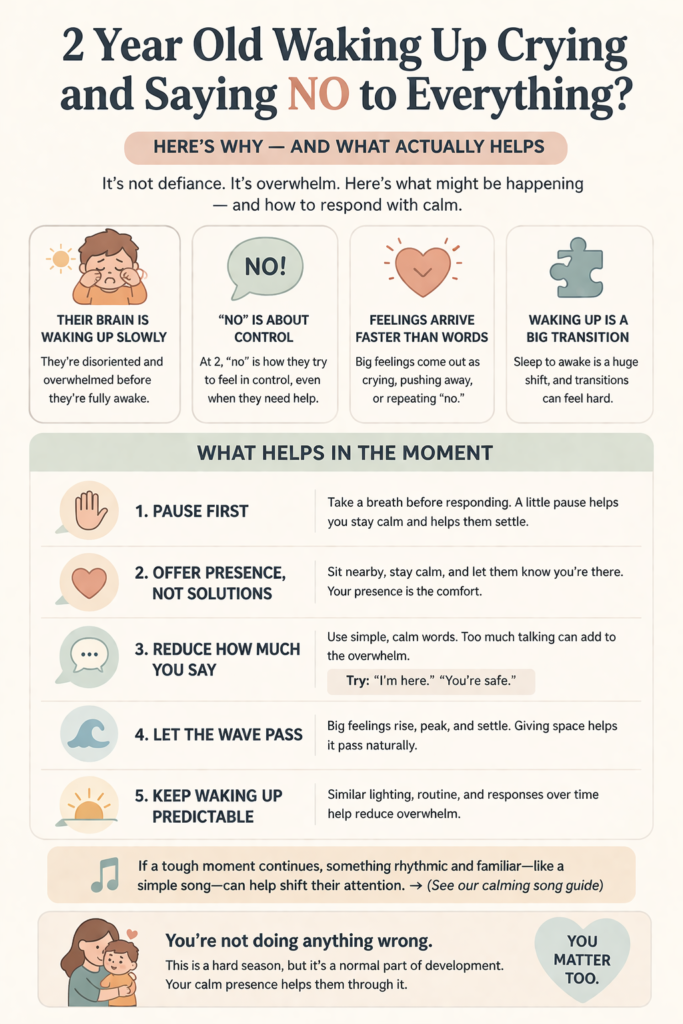
1. Their Brain Isn’t Fully Awake Yet
When toddlers wake up, their body might be awake…
But their brain is still catching up.
This is sometimes called sleep inertia.
They can feel:
- disoriented
- overwhelmed
- unsure of what’s happening
👉 before they’re fully able to process it
And when that happens, crying is often the first response.
2. “No” Is About Control — Not Rejection
Around 2 years old, “no” becomes a big part of communication.
Even when they want help.
Even when they need comfort.
Saying “no” is often their way of:
👉 trying to feel in control
In a moment that feels confusing or overwhelming.
3. Feelings Arrive Faster Than Words
At this age, toddlers understand far more than they can say.
But when they’re upset:
👉 language is often the first thing to go
So instead of explaining what’s wrong, you might see:
- crying
- pushing away
- repeating “no”
Not because they don’t need you.
But because they don’t yet have the words.
4. Waking Up Is a Big Transition
Transitions can be hard for toddlers.
And waking up is one of the biggest ones.
They’re moving from:
👉 sleep → awareness → interaction
All at once.
For some children, that shift feels overwhelming — especially if they wake suddenly.
Why It Can Feel So Intense
You might notice:
- it happens suddenly
- it feels out of proportion
- nothing seems to work
That’s because in that moment:
👉 your toddler isn’t being logical
They’re dysregulated.
And when a child is dysregulated:
👉 solutions don’t land straight away
If this kind of sudden emotional response is happening at other times of day too, this can help explain why:
→ Why 18 Months Is So Hard (Full Breakdown)
What Actually Helps
In the moment, less is usually more.
1. Pause Before Responding
It’s natural to try to fix it quickly.
But rushing in with:
- questions
- solutions
- distractions
can sometimes add more overwhelm.
👉 a brief pause helps you respond more calmly
2. Offer Presence, Not Solutions
Instead of trying to “solve” it straight away:
- sit nearby
- stay calm
- let them feel supported
This often helps more than trying to change the situation immediately.
3. Reduce How Much You Say
When your toddler is upset, too many words can make things harder.
Simple, calm phrases work best:
- “I’m here”
- “you’re safe”
👉 or even just quiet presence
4. Let the Wave Pass
These moments often come in waves.
They rise quickly…
And then slowly settle.
Trying to stop it instantly can sometimes prolong it.
👉 allowing space often helps it pass more naturally
5. Keep Waking Up Predictable
Over time, a simple, consistent wake-up rhythm can help:
- similar lighting
- similar response from you
- familiar environment
👉 predictability reduces overwhelm
A Simple Tool That Sometimes Helps
If your toddler struggles to calm once they’re upset, something rhythmic and familiar can sometimes help shift their attention.
For some children, a simple song can work surprisingly well — especially during moments of overwhelm.
→ The One Song That Calms Babies and Toddlers Instantly (And Why It Works)
What Not to Worry About
It can feel like something is “wrong” when this happens regularly.
But in most cases, it’s not a behavioural issue.
It’s not something you’ve caused.
And it’s not something you need to fix immediately.
👉 it’s part of development
When It Gets Easier
This stage doesn’t disappear overnight.
But over time, you may notice:
- shorter episodes
- easier settling
- more communication
As your toddler’s language and emotional regulation develop, these moments usually become less intense.
Final Thoughts
Waking up crying and rejecting everything can feel exhausting — especially when nothing seems to help.
But underneath it, your toddler isn’t pushing you away.
👉 they’re overwhelmed
And in those moments, what helps most isn’t fixing.
It’s:
- staying calm
- staying close
- giving them space to settle
Even when it doesn’t feel like it in the moment, that’s what supports them through it.