Sensory Toys for Autistic Toddlers: Toys We’ve Genuinely Found Helpful
If you’re looking for sensory toys for an autistic toddler, it’s natural to wonder which ones are actually worth buying.
We certainly did.
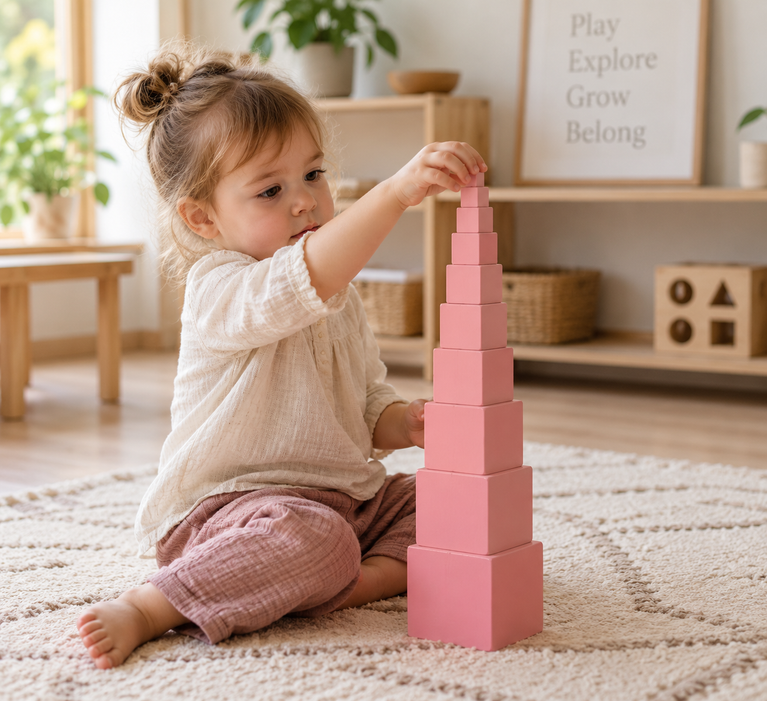
What surprised us was that our daughter rarely gravitated towards the toys with the most features. Instead, she kept returning to the same simple activities—pulling, stacking, sorting, threading and repeating familiar movements that seemed to help her feel calm and engaged.
If you’re still trying to understand why your child seeks certain sensory experiences or avoids others, our guide to How to Choose Sensory Toys for Autistic Children explains how different sensory preferences can influence the kinds of toys children naturally enjoy.
Many autistic toddlers seem to thrive when play feels calm, predictable and free from unnecessary distractions. Rather than constantly introducing new toys, we’ve often found that simple, thoughtfully chosen materials encourage longer periods of exploration, repetition and independent play.
This is one reason we appreciate many Montessori-inspired toys. They’re not designed to entertain children with lights, sounds or endless features. Instead, they leave room for children to explore at their own pace and return to activities again and again as their confidence grows.
Disclaimer: This post contains affiliate links. I may earn a small commission at no extra cost to you. As an Amazon Associate I earn from qualifying purchases.
A Gentle Note Before We Begin
Autism is not something that needs to be corrected.
Every autistic toddler experiences the world differently, and there is no single toy, method or approach that works for every child.
The ideas in this guide are not intended to change who a child is. They are simply intended to support play experiences that feel comfortable, engaging and respectful of individual sensory needs.
Most importantly, your child’s own responses, interests and comfort will always matter more than any parenting philosophy or toy recommendation.
What Makes a Sensory Toy Feel Supportive?
The sensory toys that tend to work best are often much simpler than people expect.
Rather than relying on constant stimulation, they usually offer clear cause and effect, predictable feedback and opportunities for repetition. The child knows what will happen next, and that sense of predictability can make play feel easier to engage with and return to independently.
1. Tactile & Fine Motor Materials
Many toddlers enjoy activities that involve texture, movement and hands-on exploration.
When play feels predictable and self-directed, tactile activities can provide a gentle way to explore sensory input at a child’s own pace.
In our experience, some of the activities toddlers return to again and again are surprisingly simple: opening and closing doors, posting objects into containers, threading, sorting, pushing and pulling. These repetitive actions combine movement, sensory feedback and clear cause-and-effect in a way that many children find satisfying.
That is one reason Montessori-inspired materials often work well. Rather than entertaining a child, they invite the child to do something.
Busy Boards
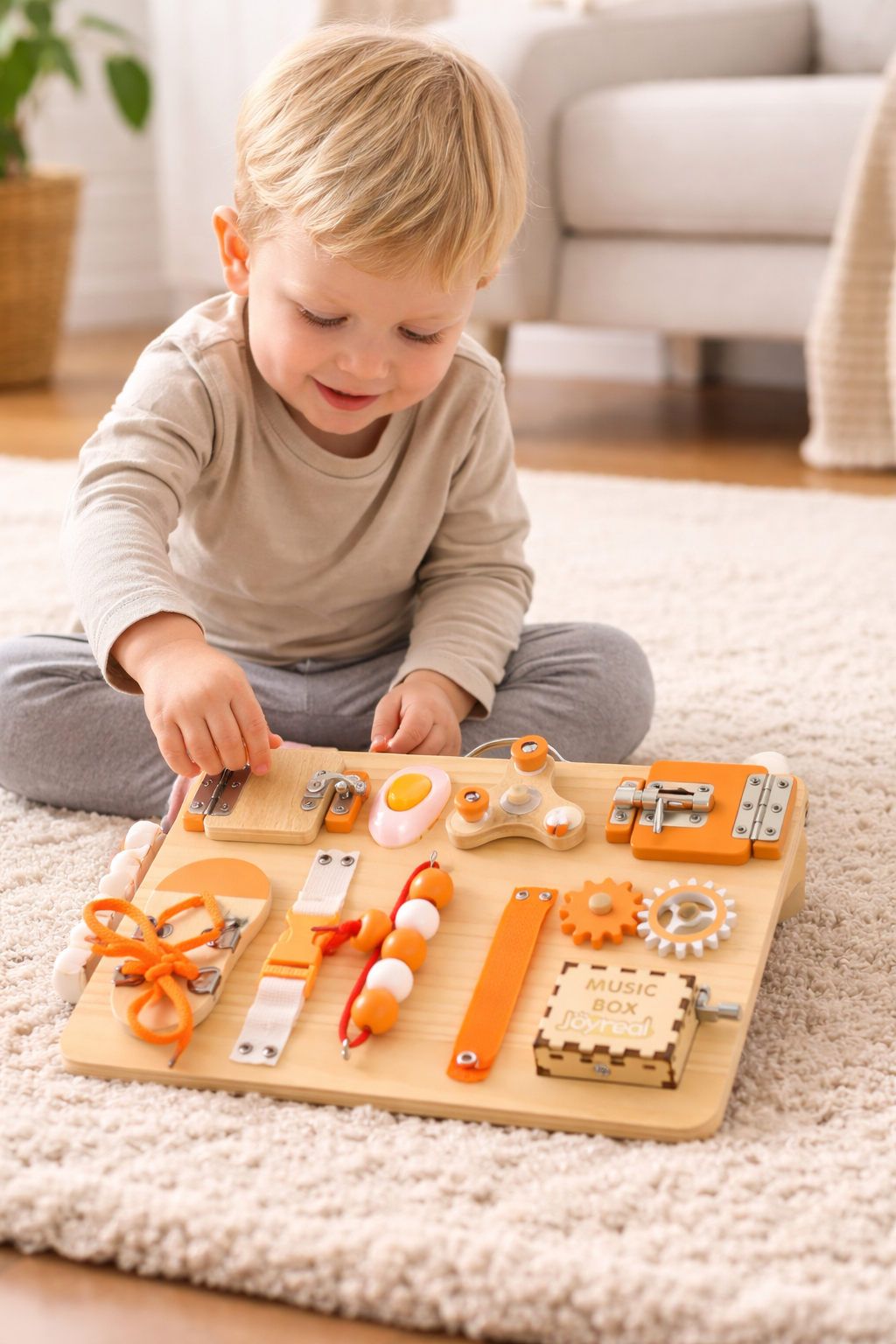
We particularly liked wooden busy boards because the movements feel purposeful without becoming overly noisy or overstimulating. Turning gears, opening latches and sliding locks provide predictable feedback, while still allowing plenty of freedom to explore independently.
This is also one of the very few toys that has remained permanently available in our toy rotation rather than being swapped in and out.
Our daughter first started exploring it at around 18 months old and kept returning to it regularly as her skills developed. By the time she was approaching her third birthday, she had completely mastered every latch, switch and lock on the board. Around the same time, we noticed her becoming much more confident with everyday fine motor tasks too—she even started attempting to tie my shoelaces and could open many of the doors around our home by herself.
While every child develops at their own pace and we can’t attribute those milestones to a single toy, having so many opportunities to practise turning, twisting, sliding and manipulating different mechanisms gave her meaningful fine motor practice in a way that simply felt like play.
Threading Beads
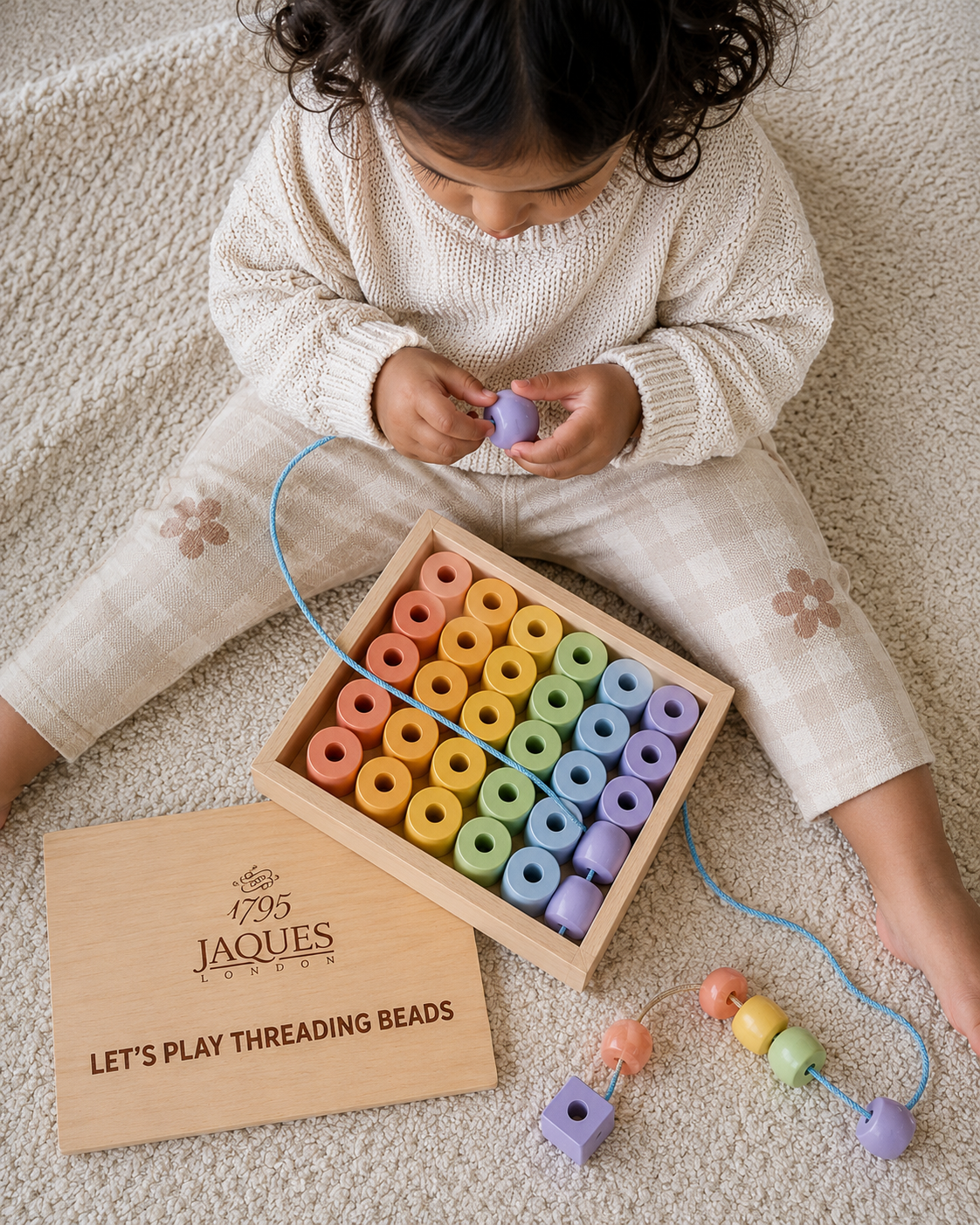
Threading beads can also work beautifully for children who enjoy slower, more focused tactile play. The repeated hand movements often feel calming and engaging without becoming overly demanding.
Interestingly, a very similar threading activity was used by our NHS health visitor during one of our daughter’s routine developmental reviews as part of observing her fine motor skills and hand-eye coordination. Watching her carefully thread the pieces onto the lace highlighted just how much concentration, precision and bilateral coordination these seemingly simple activities involve. While threading beads aren’t designed as an assessment tool, that experience certainly gave us a new appreciation for how much practice they provide through play.
Pull-String Toys
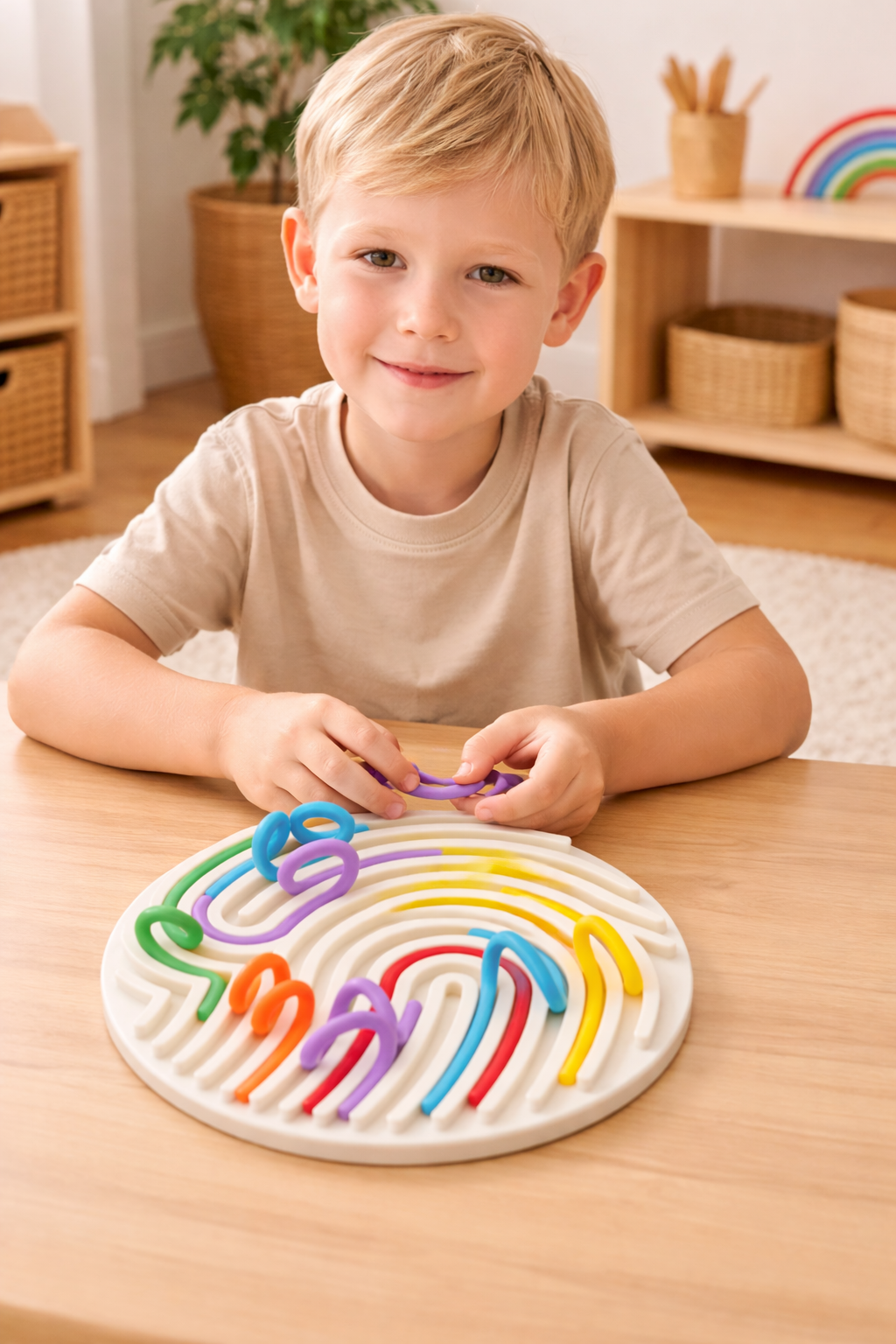
For toddlers who enjoy stronger tactile feedback, silicone pull-string toys provide gentle resistance through pushing, pulling and stretching movements while remaining visually simple and easy to use independently.
This was actually one of the quickest toys our daughter ever took to. She usually spends a few days simply observing or gradually warming up to a new toy before incorporating it into her play, but with this one she started exploring it almost immediately. The combination of pulling, pushing and stretching seemed to capture her attention straight away, and she kept returning to it throughout the day. That immediate engagement surprised us, especially as she’s typically quite cautious when introduced to new toys.
Push and Pop Bubble Fidget Toy
Some of the most useful sensory toys are also the simplest.
Push-and-pop fidget toys provide predictable tactile feedback through repetitive pressing movements. Many children enjoy the familiar pattern of pushing and popping the bubbles, often returning to the activity repeatedly during quieter moments.
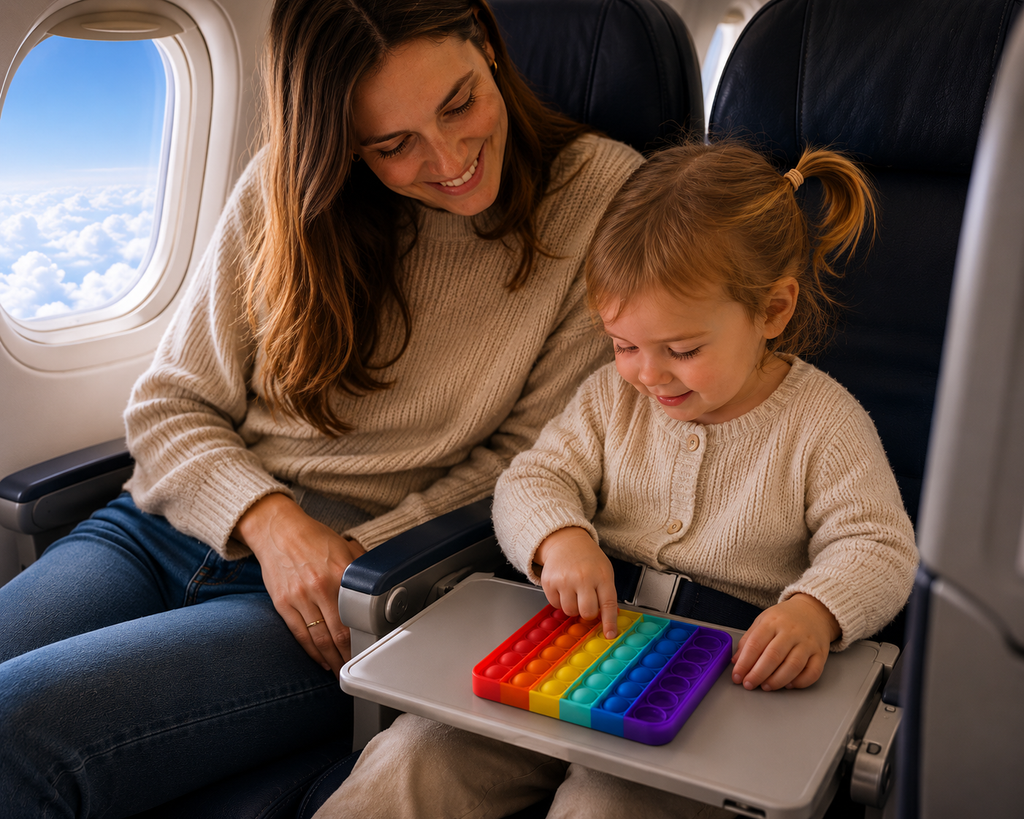
We’ve found this type of toy particularly useful in situations where our daughter needs something familiar to focus on. It regularly comes out during shopping trips while she’s sitting in the trolley, on longer car journeys, during play dates or when guests are visiting. Because it’s lightweight and easy to carry, it can simply be pulled out of a bag whenever she seems to need a little extra sensory support.
On a recent flight, she ended up playing with one alongside the passenger sitting behind us and happily stayed engaged for almost half an hour. Moments like that are a good reminder that sometimes the simplest toys become the most useful.
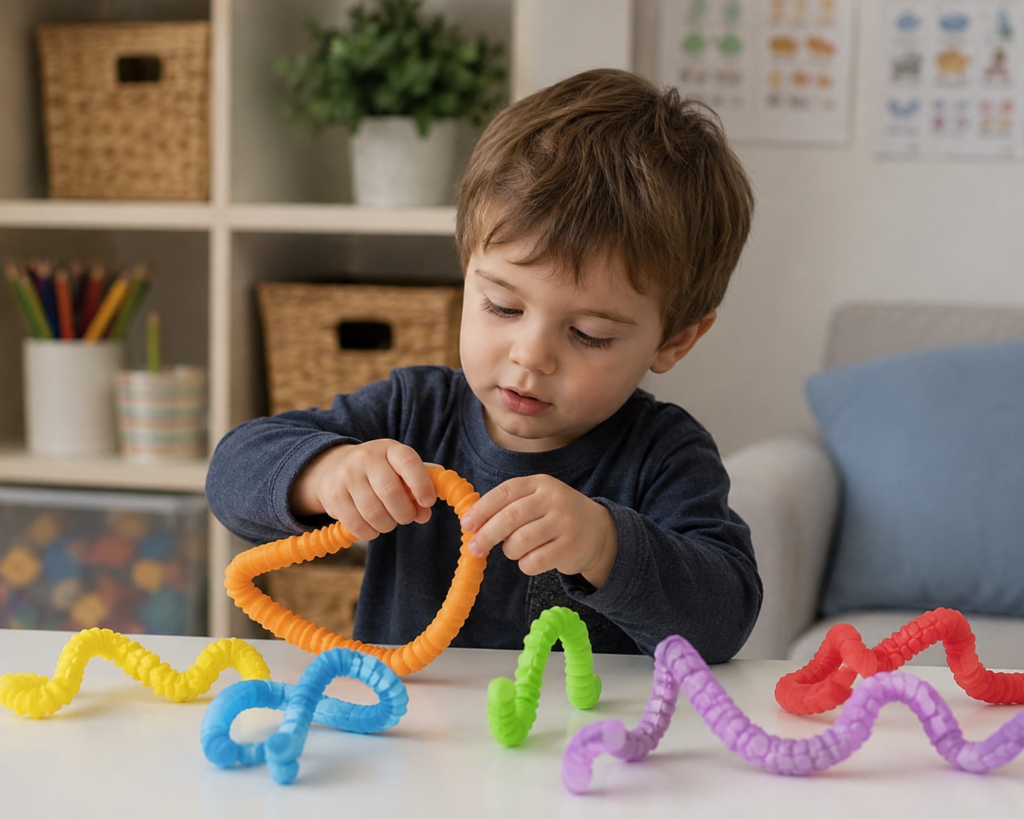
Flexible Sensory Tubes
Flexible sensory tubes can be bent, twisted, stretched and connected in different ways, making them an appealing option for children who enjoy manipulating objects with their hands.
Unlike toys with a single purpose, they remain open-ended and can be explored in countless ways. Many children enjoy repeatedly reshaping them, linking them together or experimenting with different movements and patterns.
Their lightweight design also makes them easy to carry between home, school and outings, making them a practical addition to a sensory toy collection.
Pop Tubes
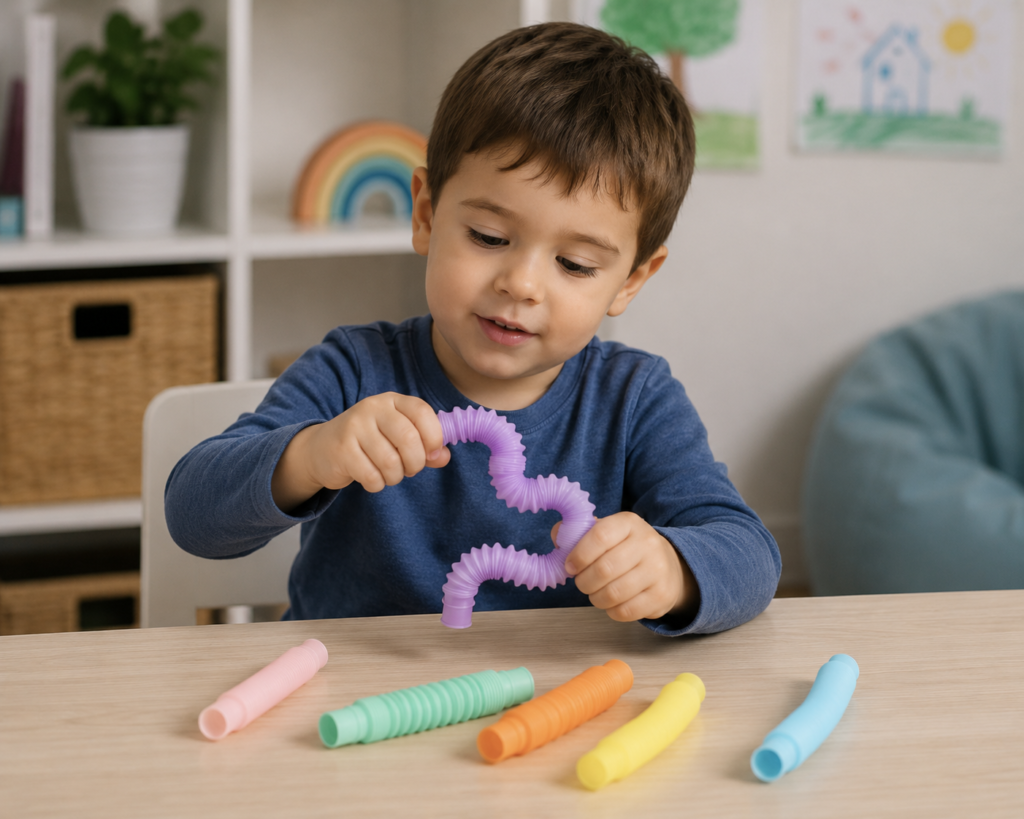
Pop tubes add an additional sensory element through gentle popping sounds and resistance when stretched or compressed.
The combination of touch, sound and repetitive hand movements makes them particularly engaging for children who enjoy exploring sensory feedback through play. Many children naturally experiment with different shapes, lengths and movements, often returning to the same actions repeatedly.
Because they combine tactile and auditory feedback, pop tubes can provide a richer sensory experience while still remaining simple, open-ended and child-led.
Repetition is not something that needs to be interrupted or redirected.
For many autistic toddlers, repetition is part of how play begins to feel safe, predictable and manageable. Activities that adults may view as “doing the same thing over and over” are often the very activities children return to because they feel comfortable, rewarding and familiar.
2. Movement-Supporting Toys
For many autistic toddlers, movement is not simply play — it can also be an important way of exploring and interacting with the world.
Climbing, carrying, pushing, pulling and balancing all provide proprioceptive input: the deep sensory feedback that helps the body feel more grounded, organised and aware in space.
That is also one reason Montessori-inspired environments often work well for movement-seeking children. Rather than constantly encouraging children to sit still, they create opportunities for purposeful movement within a calm and structured environment.
In practice, many toddlers naturally gravitate towards activities that involve climbing, transporting objects, balancing or navigating obstacles. These experiences often provide both physical challenge and a sense of accomplishment while allowing children to move at their own pace.
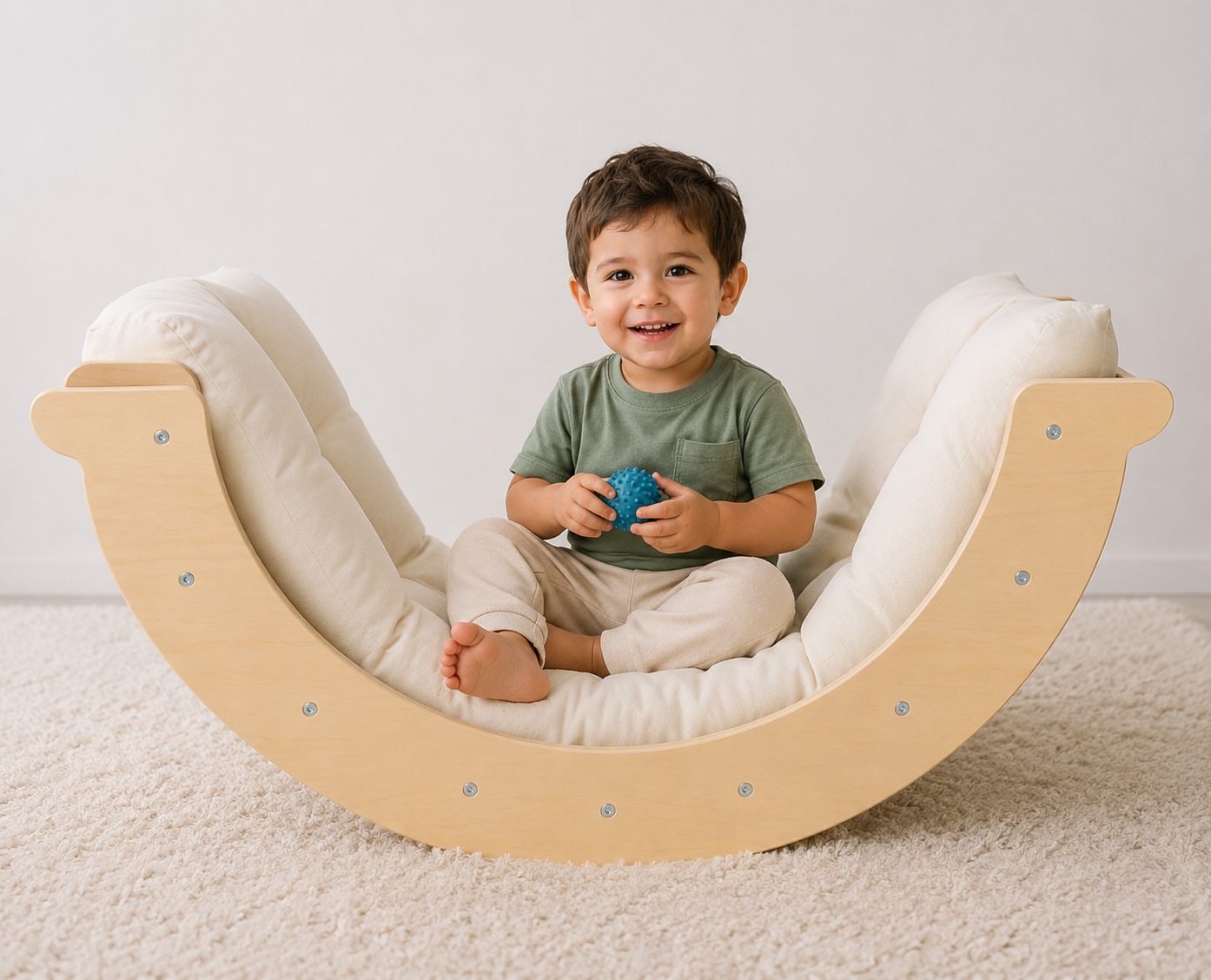
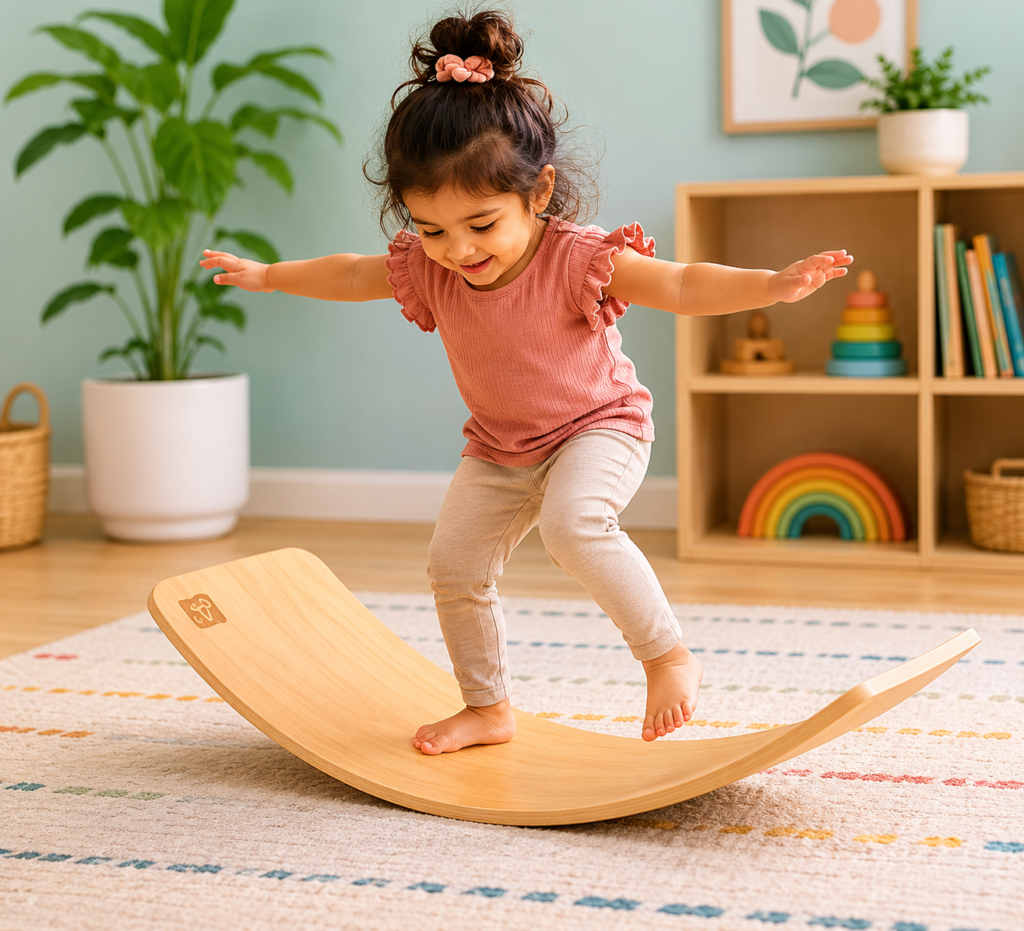
Wooden Arch Rocker Climber
One of our favourite larger investments is a wooden arch rocker because it grows with your child and can be used in far more ways than it first appears.
Some days it’s a rocker, gently providing calming vestibular input. Other times it’s climbed over, crawled underneath or incorporated into imaginative play. Add a cushion, and it quickly becomes a cosy reading nook or quiet retreat when a child needs a calmer space.
That versatility keeps it interesting without filling your home with multiple large toys. Rather than serving a single purpose, it adapts as your child’s interests and sensory needs change.
For autistic children who frequently seek movement, the gentle rocking motion and climbing opportunities can provide safe, predictable ways to explore balance, coordination and body awareness. Many parents also find that having access to purposeful movement can make it easier for some children to settle into quieter activities afterwards.
Sit and Spin Chair
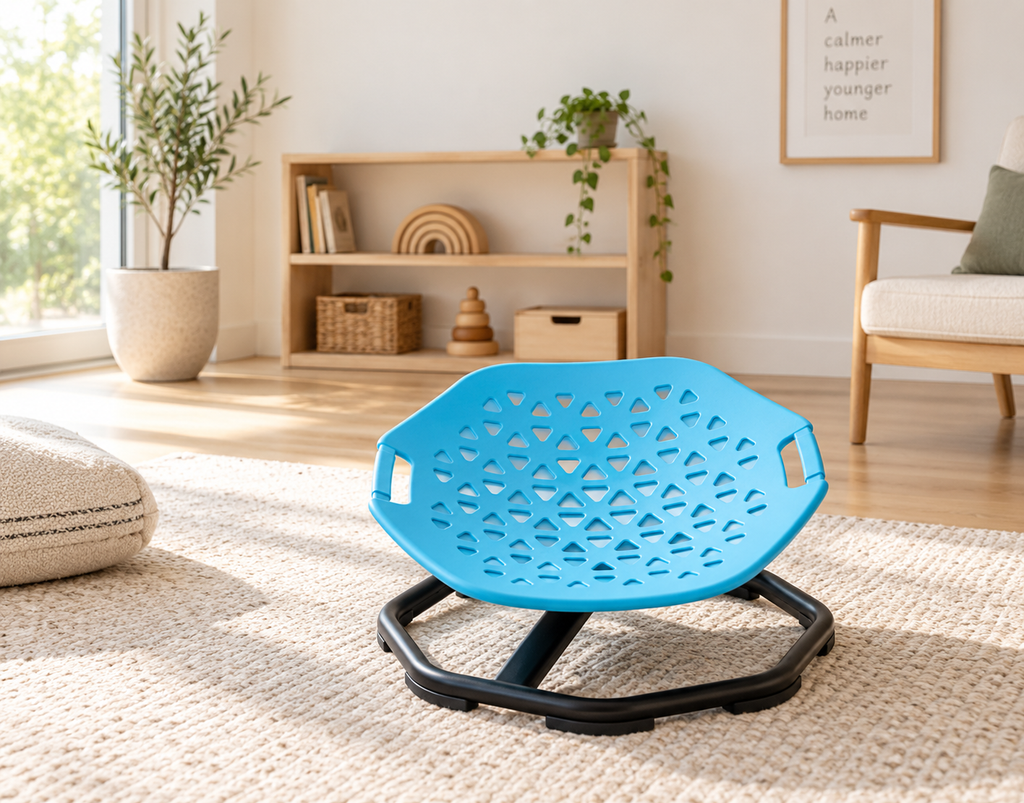
Sit and spins offer a fun, simple way for toddlers to explore spinning, balance and body awareness through active play. Children can control the movement themselves, turning at their own pace and experimenting with how their body responds to different speeds and directions.
For movement-seeking toddlers, the spinning motion can provide plenty of vestibular input, making it an engaging option for indoor gross-motor play when they need an outlet for physical energy.
Balance Board
Balance boards offer a simple, open-ended way for toddlers to explore movement, coordination and body awareness. Whether rocking, balancing, climbing over or incorporating it into imaginative play, the same piece of equipment can be used in countless ways as a child’s confidence grows.
Many movement-seeking toddlers naturally return to balance boards because they provide gentle physical challenge while still allowing complete freedom to explore at their own pace.
3. Sorting, Patterns & Organisation
Some children enjoy activities that involve sorting, matching, organising and creating patterns.
You might notice them grouping objects by colour, arranging items into lines, matching similar objects or spending long periods repeating the same categorisation activity.
For many children, these activities feel satisfying because they combine repetition with a sense of order and predictability.
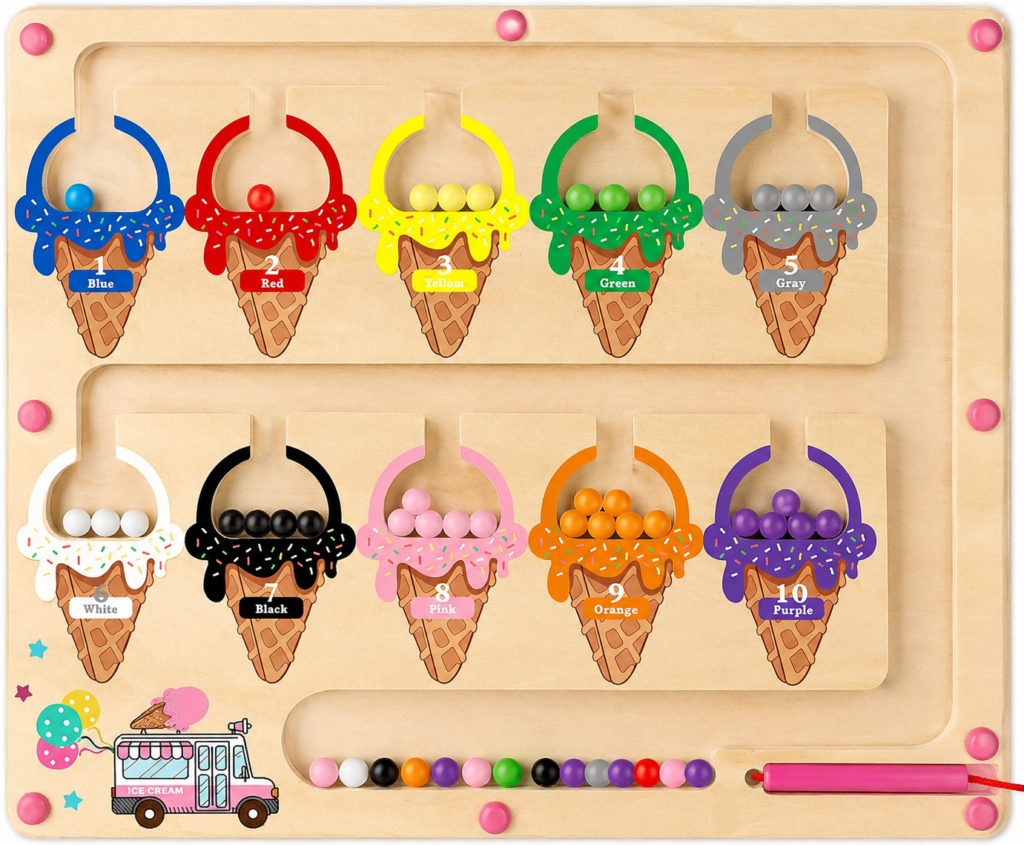
We particularly liked the Magnetic Color and Number Maze because it combines sorting, matching and problem-solving in a visually calm format. Many toddlers enjoy repeating the same movements again and again as they guide the coloured balls into place, gradually becoming more precise and confident over time.
Magnetic Color and Number Maze
Object permanence boxes or colour sorting toys can also be particularly appealing because they combine repetition with clear cause and effect. The action remains the same each time, but that predictability is often exactly what makes the activity enjoyable.
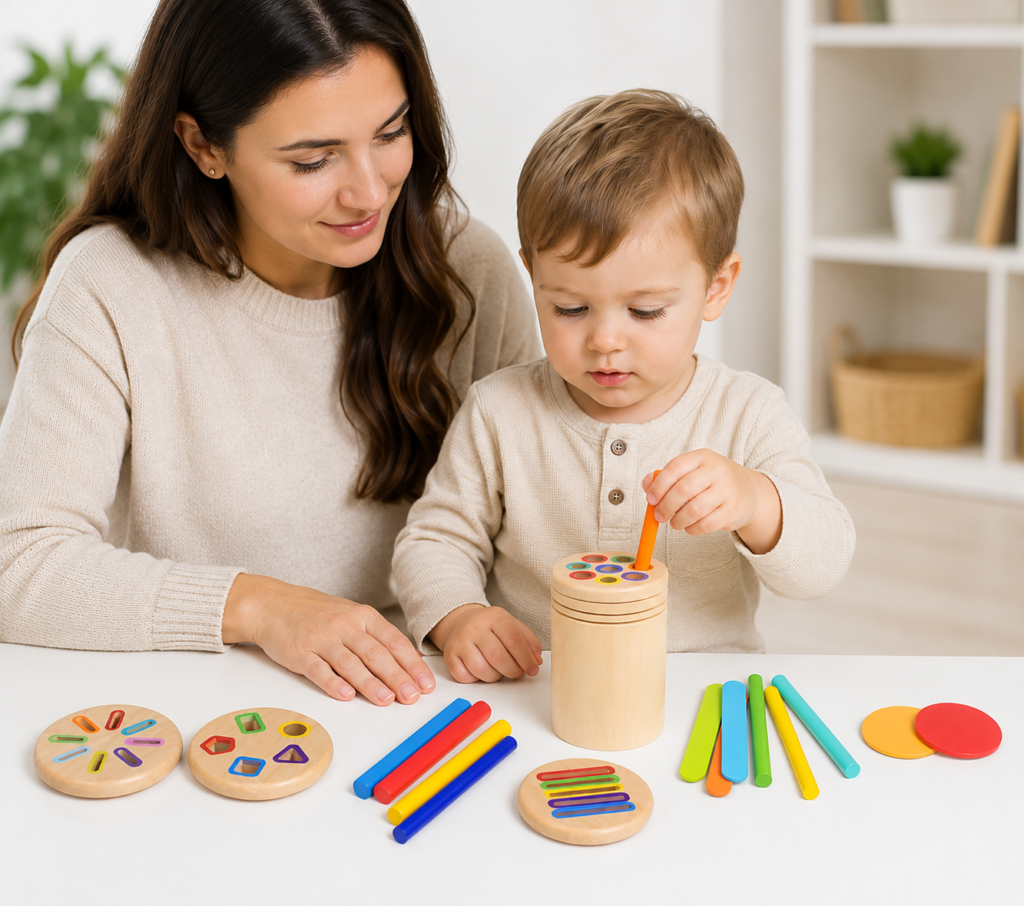
For many autistic toddlers, the appeal is not necessarily the toy itself but the opportunity to create order, recognise patterns and engage with an activity that feels comfortably familiar.
Repetition is often part of the appeal. Many children enjoy returning to the same sorting or matching activity repeatedly, gradually refining the movements while still experiencing the comfort of familiarity.
4. Visual Sensory Toys
For some children, visual sensory experiences can become a favourite part of play.
Visual sensory tools provide predictable movement and visual feedback that many children find calming and engaging. For some children, simply watching an activity unfold can be just as enjoyable as actively participating in it.
In our experience, visual sensory tools often work best as part of a calm environment rather than as a constant source of stimulation.
Lava Lamp
Lava lamps provide slow, predictable movement and changing visual patterns that many children find relaxing to watch. Because the motion is gentle and repetitive, they can create a calming visual focal point during quiet time or independent play.
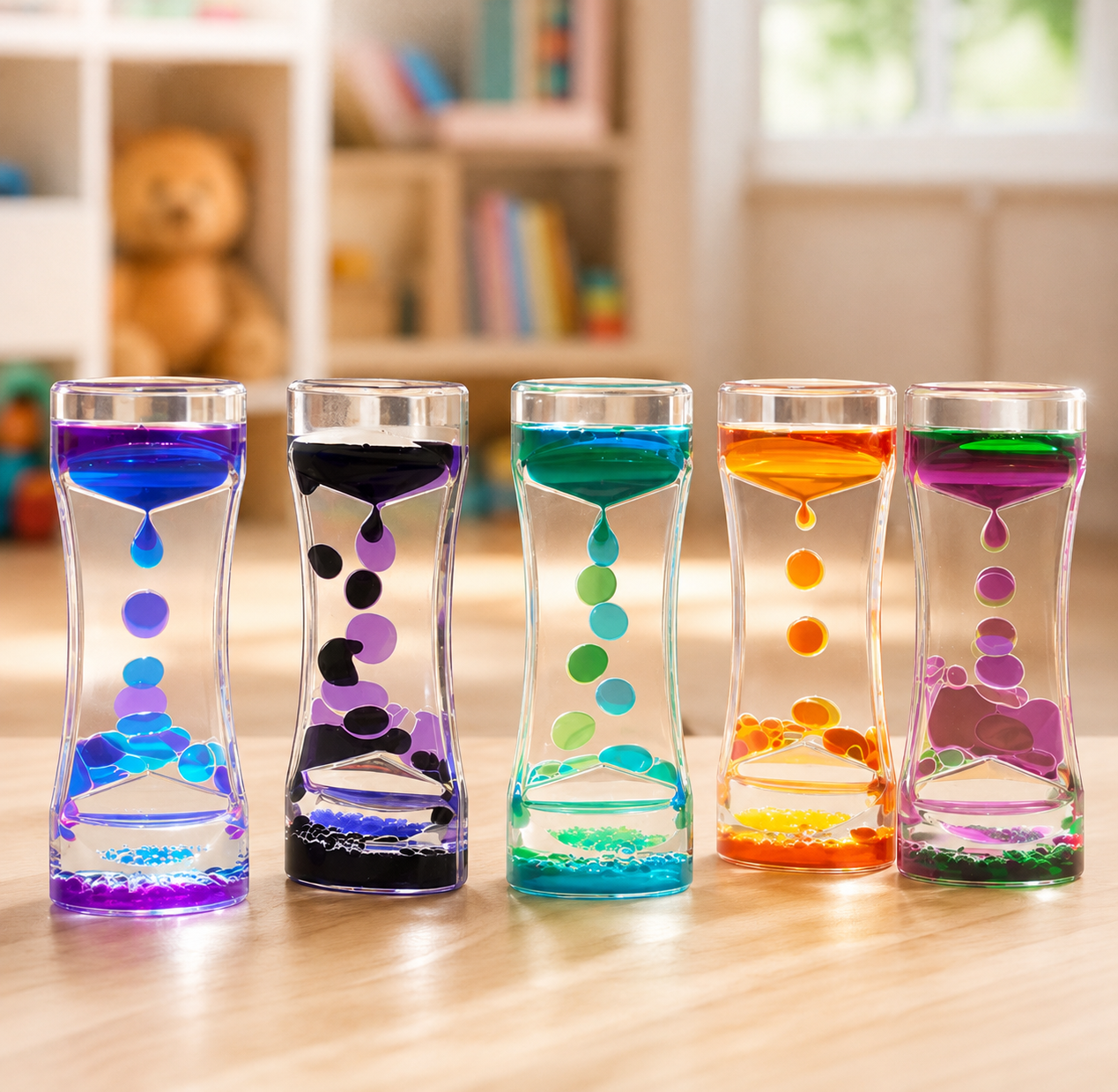
Sensory Bubble Tube
Sensory bubble tubes offer a similar experience, combining coloured lights with the slow rise and fall of bubbles. Many children enjoy returning to the same visual experience repeatedly, making them a popular addition to sensory-friendly spaces.
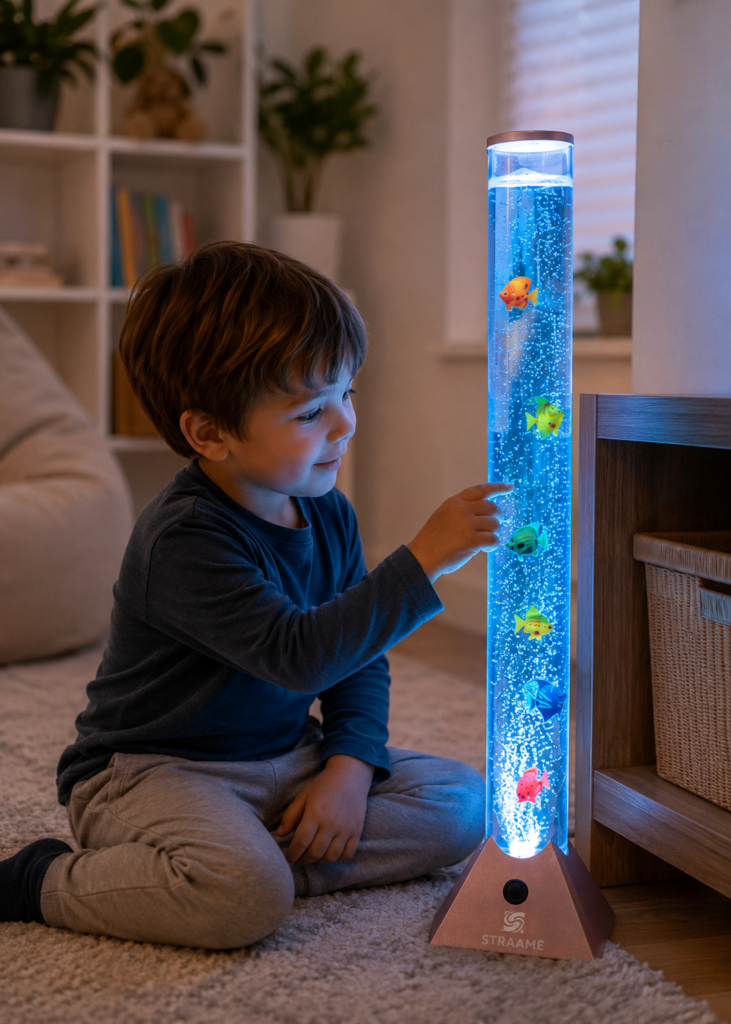
As with all sensory tools, preferences vary considerably. Some children find visual sensory experiences calming, while others show little interest. The most useful tools are the ones that match a child’s individual sensory preferences rather than simply providing more stimulation.
5. Oral Sensory Materials
Chewing is one of those behaviours many parents notice during everyday life.
Whether it’s clothing, blanket corners, toy straps or other household items, some toddlers naturally return to chewing during quieter moments, while concentrating or when navigating new situations.
While it can sometimes be frustrating, many parents find that offering a dedicated chewable sensory tool provides a more practical alternative than constantly redirecting the behaviour.
We found simple, 100% food-grade silicone, non-toxic silicone chew necklaces particularly useful because they are easy to carry and can be offered when needed without disrupting play. Some children use them only occasionally, while others naturally return to them during quieter moments, car journeys or unfamiliar environments.
Like many sensory materials, preferences vary considerably. Some children prefer softer textures, while others seek firmer resistance. It can take a little experimentation to find something that feels comfortable and appealing.
6. Noise-Reducing Tools for Sound-Sensitive Children
For some toddlers, busy environments can make play, travel and everyday outings feel more challenging.
Busy shops, restaurants, family gatherings, public transport and other everyday environments can sometimes feel overwhelming when there is simply too much happening at once.
For children who find busy environments challenging, noise-reducing headphones can provide a simple way to make these situations feel more manageable. Rather than changing the environment itself, they help reduce the intensity of background noise so children can focus on what they are doing without becoming as overwhelmed by everything happening around them.
We’ve found headphones especially useful when travelling, shopping or visiting busy places where controlling the environment isn’t possible. Having them available often makes it easier to participate in activities that might otherwise feel difficult or exhausting.
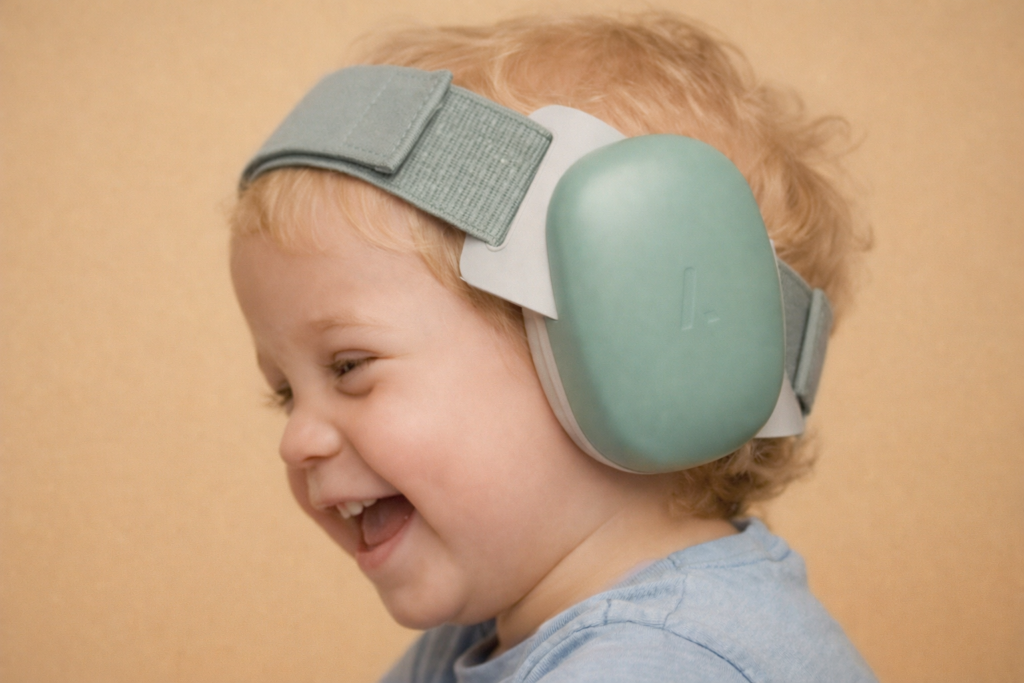
Alpine Muffy Baby Comfort (4 months – 4 years)
For younger toddlers, we liked the Alpine Muffy Baby Comfort headphones because the soft headband feels less restrictive than traditional earmuffs. The lightweight design can make them easier for younger children to tolerate during shorter outings, travel or busier environments.
They’re also particularly useful in situations where you can’t control the environment or unexpected noise, such as fireworks displays, busy shopping centres, sporting events or public transport. Having a comfortable pair close by can make these experiences feel much more manageable for noise-sensitive children.
Many families choose this style as an introduction to noise-reducing headphones because the fit feels gentle and comfortable while still helping to reduce background noise.
Alpine Muffy Baby Comfort Headphones
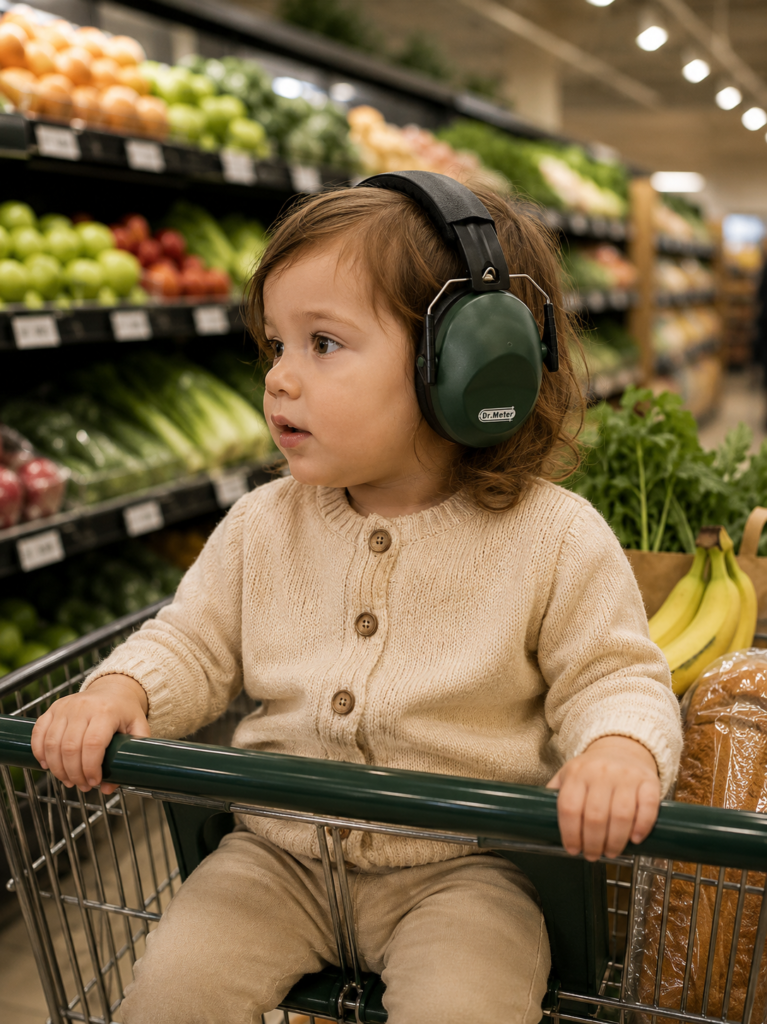
Dr. Meter Noise-Reducing Earmuffs (3 years old+)
For older toddlers and young children, the Dr. Meter earmuffs offer a more traditional over-ear design with an adjustable fit.
They are often a practical option for shopping trips, family gatherings, travel and other situations where background noise can quickly become overwhelming. The sturdy design and stronger noise reduction make them a popular choice for families looking for an everyday pair of sensory headphones.
Dr. Meter Noise-Reducing Earmuffs
Like all sensory tools, headphones are not something every child will enjoy or need. But for children who are sensitive to sound, they can sometimes make a noticeable difference to comfort, participation and overall enjoyment of an outing.
7. Deep Pressure & Calming Sensory Tools
Some toddlers seem to enjoy activities and environments that feel cosy, enclosed and reassuring.
You may notice them wrapping themselves in blankets, squeezing into small spaces, burrowing under cushions or seeking close physical contact during busy or overwhelming moments.
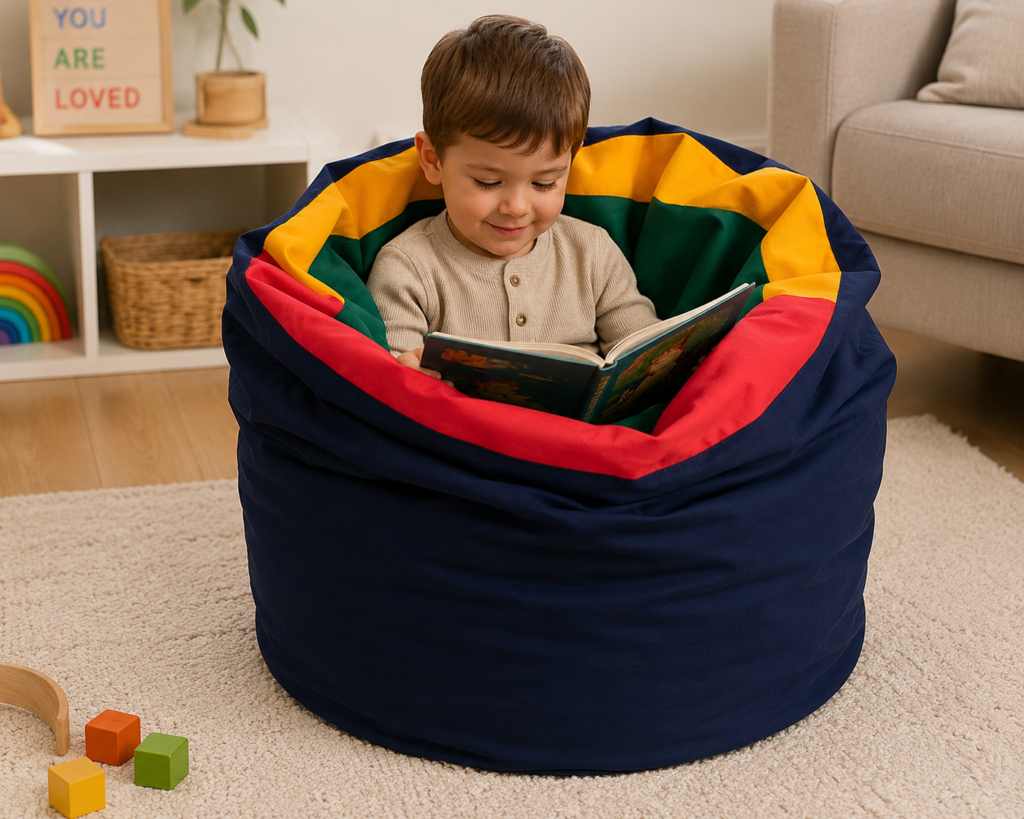
For children who enjoy this type of sensory input, deep-pressure sensory tools can sometimes provide a calming and reassuring experience. Many families use them as part of quiet time, travel, reading time or other situations where a child may benefit from additional comfort and predictability.
Sensory Play Tunnel
Play tunnels combine movement, enclosure and deep-pressure input in a way that many toddlers naturally enjoy. Crawling through a tunnel creates a small, predictable space that can feel both fun and comforting, while the gentle pressure of the tunnel around the body provides additional sensory feedback.
Many children return to tunnels repeatedly, incorporating them into obstacle courses, imaginative play or simply crawling back and forth for the enjoyment of the movement itself. Because they encourage active play while still providing a sense of enclosure, they can be a particularly appealing option for toddlers who enjoy both movement and deep-pressure input.
Weighted Lap Pad
Weighted lap pads offer a smaller and more portable option for children who enjoy deep pressure input. They are often used during quieter activities such as reading, travelling or sitting for meals, providing a simple source of sensory feedback without restricting movement.
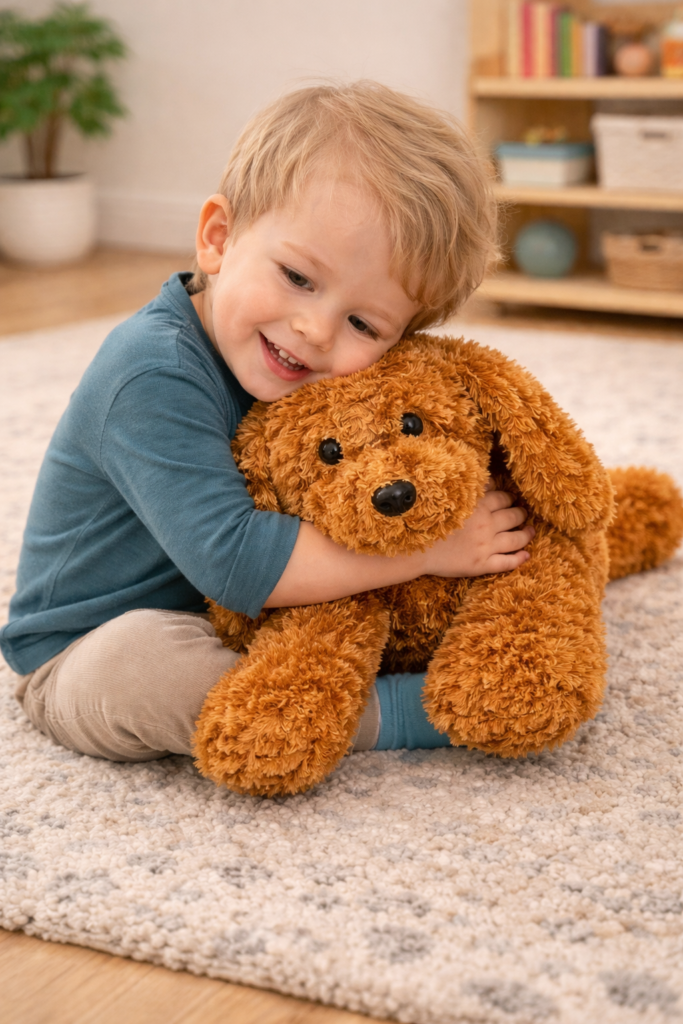
| ⚠️ Weighted sensory products are not suitable for every child and should always be used according to the manufacturer’s guidance. If you’re unsure whether a weighted item is appropriate for your child, speak with an occupational therapist or other qualified professional. |
As with all sensory tools, responses vary considerably from child to child. Some children seek deep pressure frequently, while others show little interest. The most useful tools are usually the ones that match a child’s individual sensory preferences rather than the ones that appear most impressive.
Respecting Special Interests
Many autistic toddlers naturally develop strong or highly focused interests.
Rather than constantly redirecting those interests, Montessori-inspired approaches often encourage using them as a starting point for connection, exploration and learning.
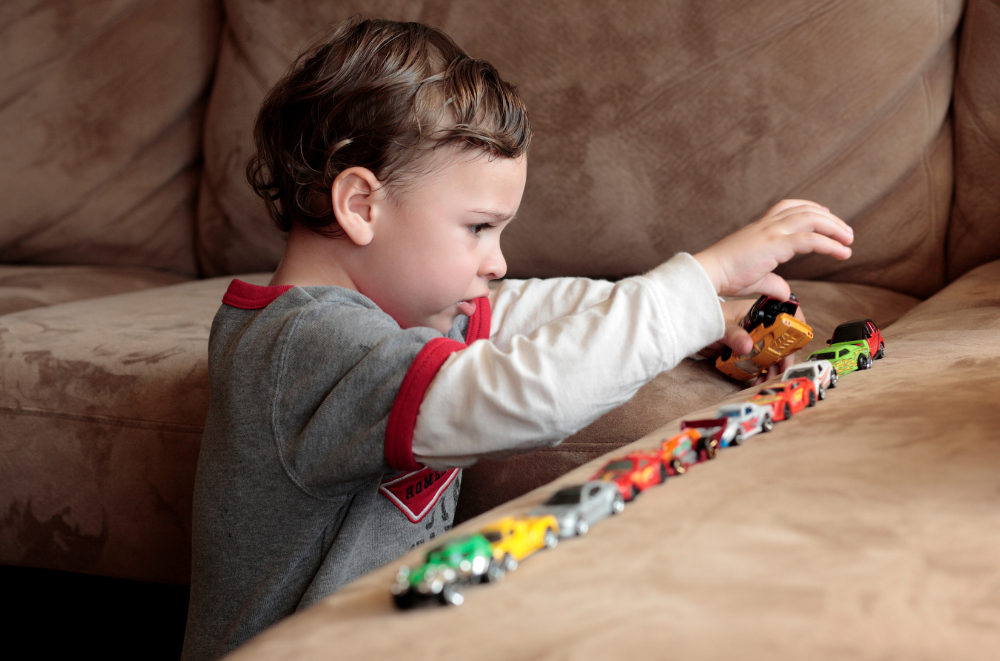
Whether a child is fascinated by trains, numbers, sorting, lining objects up, spinning objects or repetitive movement, those interests can become part of the environment rather than something that needs to be corrected.
For many autistic children, familiar interests help play feel more predictable, manageable and emotionally safe. That sense of comfort is often what allows deeper engagement and concentration to emerge naturally.
In our experience, some of the longest periods of independent play happen when a child is given the freedom to explore materials connected to their existing interests rather than activities chosen entirely by adults.
Many autistic toddlers show remarkable focus when working with materials that genuinely capture their attention. If you’re looking for simple, low-stimulation activities that encourage independent play without overwhelm, I share several practical ideas in our How to Design a Play Space That Encourages Independent Play article.
A Brief Note on Stimulation
This is not about avoiding bright toys or creating a perfectly “Montessori” environment.
Some autistic toddlers genuinely enjoy lights, music and highly stimulating play — and that is completely okay.
The more helpful question is simply whether a toy helps your child feel engaged and comfortable, or whether it regularly seems to contribute to frustration and overwhelm.
Your child’s own responses will always matter more than any toy category or parenting philosophy.
Creating a Sensory-Aware Play Space
The environment often matters just as much as the toys themselves.
For many autistic toddlers, a calmer and more predictable play space can make independent play feel easier and more enjoyable. This doesn’t require a perfectly minimal home. Often, small changes such as reducing visual clutter, limiting the number of toys available at once and creating consistent play areas can make a noticeable difference.
When the environment feels easier to navigate, many children naturally engage more deeply with the materials available to them.
If you’re looking for practical ways to create a calmer play environment, our guide to designing a Montessori bedroom for 12–18 month olds shows how small changes to layout, storage and toy presentation can support more independent play. You may also find our guide to creating a calm corner for toddlers helpful, particularly if your child benefits from having a predictable space to relax, regulate and take a break from sensory input when needed.
Final Thoughts
If you are choosing sensory toys for an autistic toddler, the goal is not to find a perfect toy or the “right” sensory profile.
It is simply learning to observe what helps your child feel calmer, safer, more engaged and more comfortable in their own way of playing and exploring.
Montessori-inspired principles can offer helpful structure and predictability for some children.
But your child’s cues, interests and sensory needs will always matter more than any method or philosophy.
Those responses are the real guide.
FAQs
What kinds of sensory toys are best for autistic toddlers?
The best sensory toys vary from child to child, but many autistic toddlers enjoy toys that provide calming tactile, visual or movement-based sensory input without being overly bright or noisy. Simple toys that encourage repetition, cause and effect, fine motor skills or quiet exploration are often a good place to start.
Do sensory toys help autistic toddlers?
Sensory toys don’t treat autism, but they can help some autistic children regulate their sensory experiences, stay engaged in play and explore different textures, movements and sounds in a way that feels comfortable. Every child has different sensory preferences, so what works well for one toddler may not suit another.
Should sensory toys be quiet or stimulating?
That depends on your child’s sensory profile. Some toddlers actively seek movement or stronger sensory input, while others become overwhelmed by flashing lights, loud sounds or busy toys. Many families find that simpler, low-stimulation toys encourage longer periods of calm, focused play.
How many sensory toys does an autistic toddler need?
Often, fewer is better. A small collection of well-chosen sensory toys that match your child’s interests is usually more valuable than a large number of toys competing for attention. Rotating toys regularly can also help maintain interest.
Can sensory toys help with communication?
Some sensory toys naturally encourage shared attention, turn-taking and conversation during play. Activities like pull-string toys, pretend play, books and simple puzzles can create opportunities for language and interaction without placing pressure on the child.
How do I know which sensory toys my child will enjoy?
Observation is often the best guide. Notice whether your child enjoys pulling, pushing, spinning, stacking, chewing, squeezing or watching movement. Choosing toys that build on interests they already have is often more successful than buying toys simply because they’re labelled as sensory.
Are expensive sensory toys better?
Not necessarily. Many of the most engaging sensory experiences come from simple, thoughtfully designed toys. The goal isn’t to buy the most expensive product, but to find materials that suit your child’s interests, sensory preferences and stage of development.
Can everyday household items provide sensory play?
Yes. Safe household items such as measuring cups, wooden spoons, scarves, silicone kitchen utensils and textured fabrics can offer valuable sensory experiences alongside purpose-made toys. Everyday activities like baking, gardening and water play can also provide rich sensory opportunities.
You Might Also Find Helpful