
Montessori Practical Life for Babies & Toddlers: Independence Begins at Home
Montessori practical life begins much earlier than most people expect.
It doesn’t start when a child can follow instructions or tidy independently.
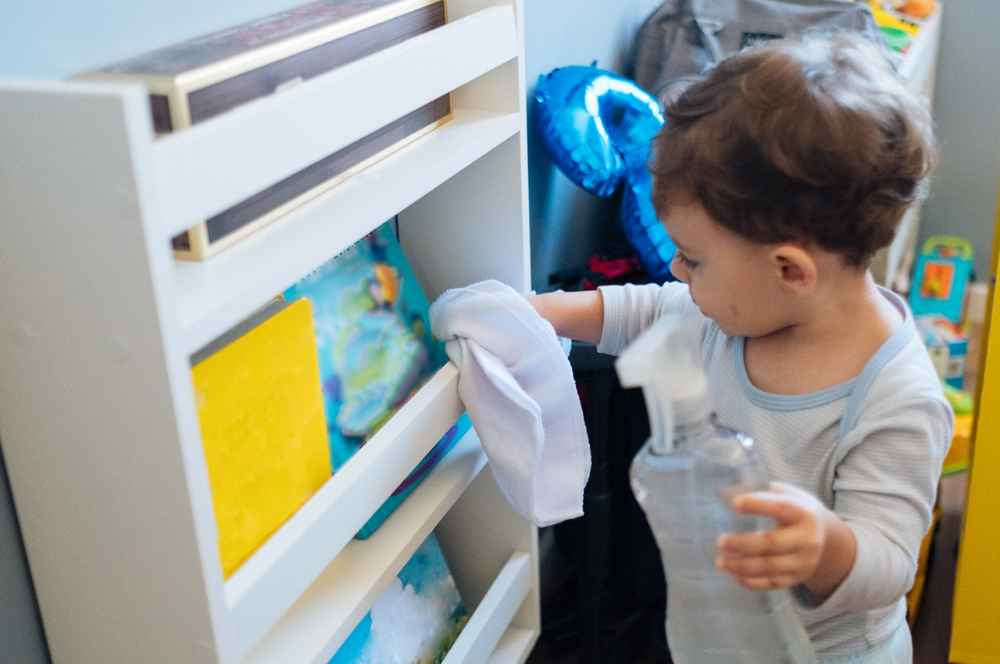
It starts in the smallest everyday moments — wiping a face, washing hands, cleaning a spill.
In Montessori, these are not chores.
They are how children begin to understand their world.
Why Practical Life Matters in the Early Years
One of the most surprising things about young children is how often they want to do exactly what you’re doing.
They want the cloth you’re using to wipe the table.
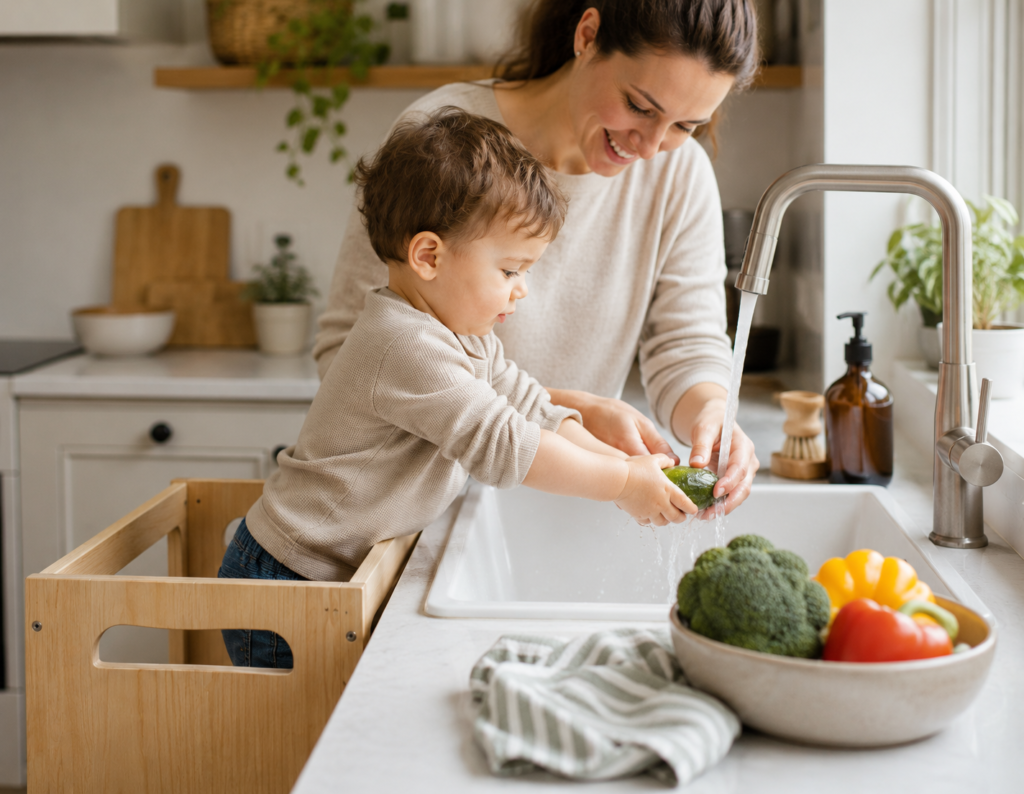
They want to help wash vegetables at the sink.
They want to carry the shopping bag that is clearly too heavy for them.
And sometimes they become far more interested in household tasks than the toys you’ve carefully chosen for them.
When a toddler wipes up spilled water or stands beside you washing their hands, they are doing much more than helping.
They are learning how everyday life works.
Through these small repeated experiences, children gradually develop confidence, coordination, concentration, and a sense of independence.
This is why practical life activities sit at the heart of Montessori.
Rather than creating separate activities for children, Montessori encourages us to notice where they already want to participate and make space for it.
Over time, these simple opportunities often lead to longer concentration, calmer behaviour, and greater independence in other areas of daily life.
Research suggests that predictable routines and repeated daily activities can help reduce stress and behavioural difficulties over time by making life feel more consistent and easier for children to anticipate. Repetition and routine are not just habits for toddlers — they are part of how young children build emotional security and confidence in their environment. (K Hatherly et al. 2023)
Stage 1: 0–12 Months — Experiencing Care
When we think about Montessori practical life, it’s easy to picture toddlers washing tables, pouring water, or helping prepare snacks.
But practical life begins long before a child can do any of those things.
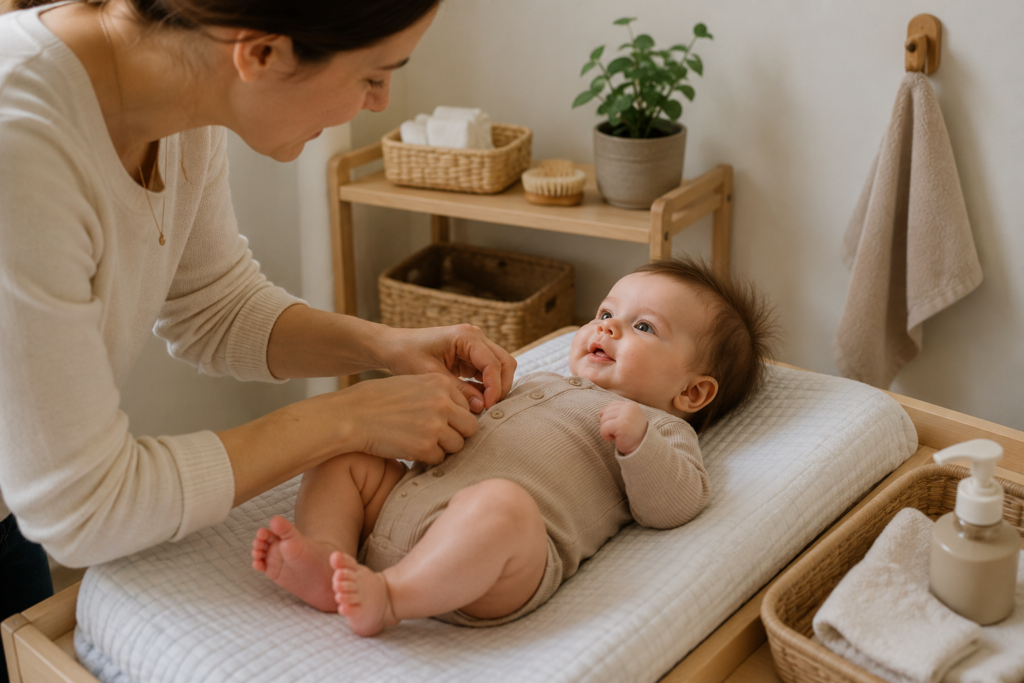
In the first year, your baby is learning about daily life by experiencing it.
They are carried through the same routines each day. They begin to recognise what happens before a feed, what comes next after a nappy change, and what it feels like to be gently cared for by the same familiar people.
Washing hands.
Wiping faces.
Changing nappies.
Bath time.
Getting dressed.
These moments may seem ordinary to us, but for a baby they are some of the first experiences that help the world feel predictable and safe.
One of the simplest Montessori ideas is that care routines deserve the same attention and respect as play. Rather than rushing through them, we can slow down slightly, talk through what we’re doing, and involve our baby in the process as much as their age allows.
Over time, these repeated experiences help build trust, connection, and a sense of security.
At this stage, practical life is not about independence.
It is about helping your baby feel cared for, included, and confident in the rhythms of everyday life.
What This Might Look Like
- Talking through nappy changes and dressing routines
- Offering a washcloth to hold during bath time
- Moving slowly through feeding and self-care routines
- Keeping daily routines predictable where possible
- Allowing your baby to observe everyday household tasks
The goal is not to teach practical life activities yet.
It is simply to create calm, consistent routines that your baby can gradually come to recognise and trust.
Stage 2: 12–24 Months — From Observation to Participation
This post contains affiliate links. If you purchase through them, I may earn a small commission at no extra cost to you.
This is often the stage where practical life becomes much more visible.
Your toddler is no longer content to watch from the sidelines.
They want the cloth you’re using to wipe the table.
They want to carry things from one room to another.
They want to stand beside you at the sink and see what you’re doing.
And they are often far more interested in joining in than playing with a toy nearby.
This is one of the biggest shifts of the toddler years.
Children begin moving from experiencing daily routines to participating in them.
What This Might Look Like
At this age, practical life activities do not need to be planned or complicated.
In many homes, they appear naturally throughout the day.
Your toddler might:
- wipe their hands after a meal
- help clean up a small spill
- carry a cloth to the table
- stand at the sink while you wash hands together
- help put clothes into the washing machine
- carry lightweight items from one place to another
To an adult, these tasks can seem insignificant.
To a toddler, they are meaningful opportunities to contribute.
Over time, these small moments help children develop confidence, coordination, concentration, and a growing sense of independence.
One thing many parents notice is that toddlers become much more willing to help when the tools actually fit their hands.
A small sponge for soaking up spills, drying surfaces, or helping with simple water-based cleaning activities.
An easy-push, small water spray bottle for helping dampen cloths, clean tables, or care for plants alongside you.
A brush and a dustpan for sweeping crumbs and helping care for their environment.
A dedicated child-sized cloth for wiping hands, faces, and small messes independently.
Simple materials often make participation easier because children can use them successfully without constant assistance.
That might mean keeping a cloth within reach, storing a brush on a low shelf, or making handwashing easier to access.
If your toddler is eager to help in the kitchen or at the sink, a learning tower can also make everyday routines more accessible by allowing them to participate safely at counter height.
→ Best Learning Towers for Toddlers
As children become more confident, you can gradually introduce tools that allow them to take a more active role in caring for their environment.
A child-sized brush and cleaning set can make sweeping, wiping, and tidying more manageable because the tools are designed for small hands. What feels like a chore to an adult often feels purposeful and satisfying to a young child.
Many toddlers genuinely enjoy helping care for the spaces they use every day when they have the tools to do so successfully.
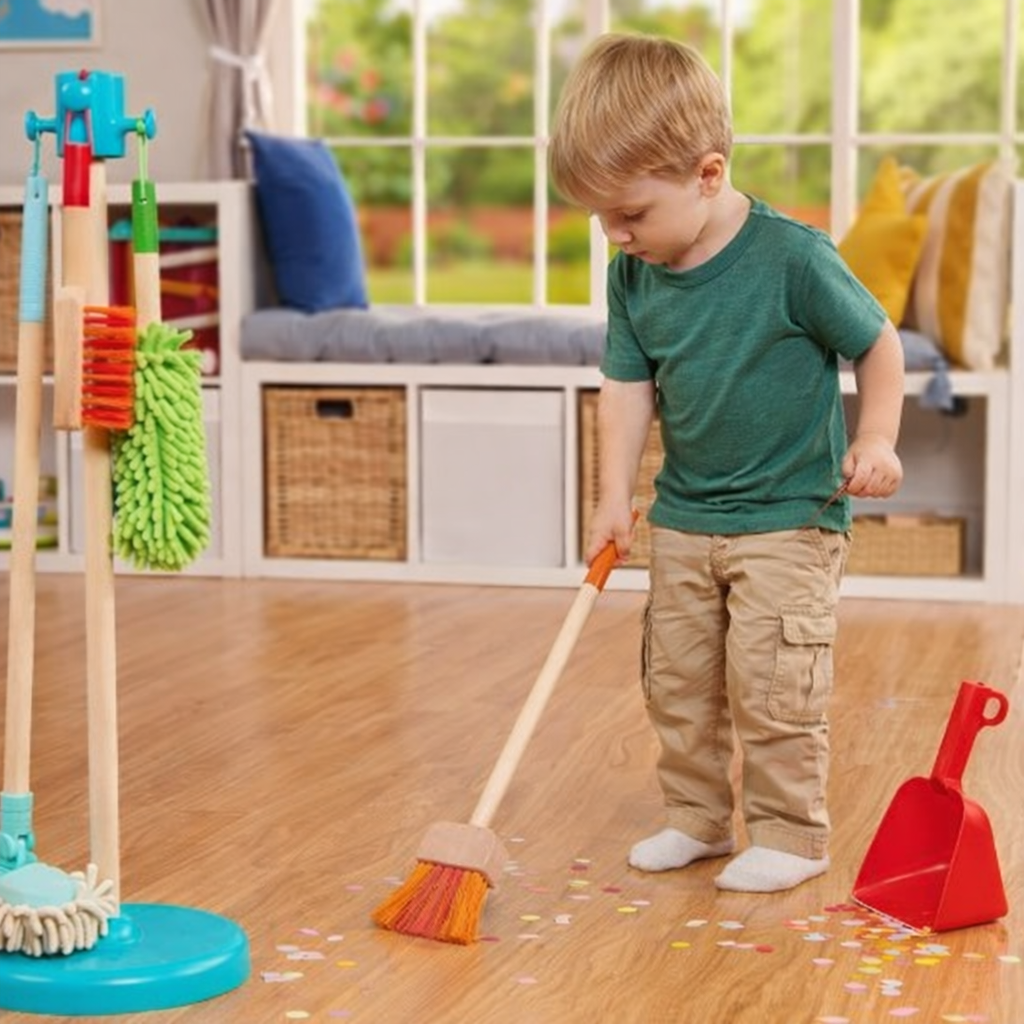
View the cleaning set we’ve been using
As children move through this stage, they gradually shift from being cared for to becoming active participants in daily life.
This is where independence begins to grow.
Stage 3: 2+ Years — Building Independence
By this stage, practical life often becomes part of everyday family routines rather than a separate activity.
Your child is no longer just joining in occasionally.
They are beginning to take ownership of simple tasks themselves.
You might notice them:
- wiping their own hands and face
- cleaning up a small spill
- helping tidy after meals
- washing their hands with minimal support
- fetching a cloth when something needs cleaning
One of the most rewarding parts of this stage is watching toddlers begin to repeat these routines without being prompted.
Not every time, of course.
But often enough that you realise they no longer see these tasks as something adults do. They see them as something they can do too.
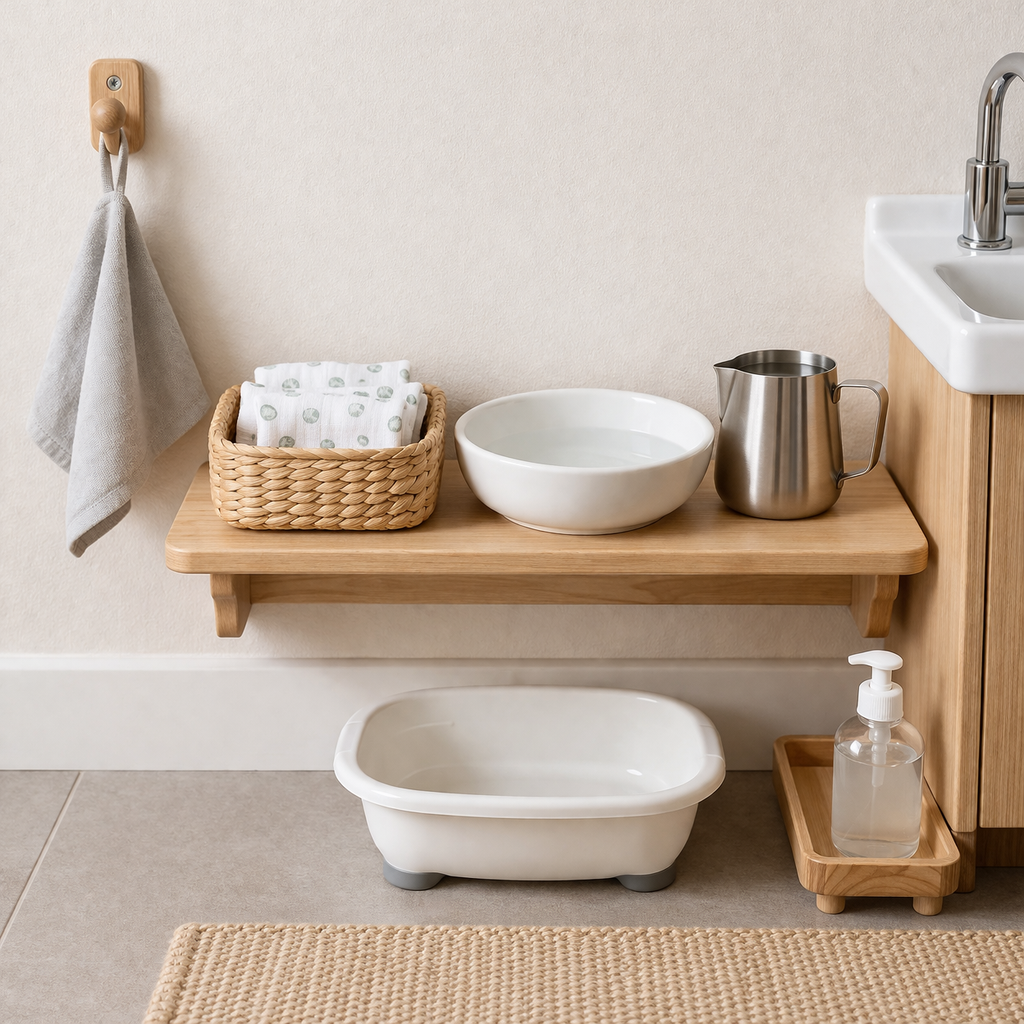
Creating a Simple Practical Life Setup
You do not need anything elaborate.
A small basket with child-sized muslin cloths.
A child-sized hairbrush for brushing hair independently.
A low shelf or hook.
A bowl or basin.
Easy access to water.
Often, the biggest difference comes from making helpful tools easy to reach.
When materials are always available, toddlers are far more likely to use them independently as part of everyday life. A cloth can be fetched when a drink spills. A brush can be used after a meal. A step stool can make handwashing possible without constant help from an adult.
The biggest change at this stage is that practical life activities begin to feel like part of your child’s daily routine rather than something an adult has organised for them.
The environment supports independence, and children begin using it naturally throughout the day.
The Key Montessori Shift
One of the simplest ways to understand Montessori practical life is this:
In the early months, the tools support the parent.
A wipe helps you clean a face.
A cloth helps you manage a spill.
A changing basket helps you move through daily care routines.
As your child grows, those same kinds of tools begin to support the child instead.
The cloth becomes something they can use.
The stool becomes something they can climb.
The brush becomes something they can hold.
That shift sits at the heart of Montessori practical life.
It is not really about cleaning or tidying.
It is about gradually making participation possible.
Start Simple
You do not need a dedicated Montessori space or expensive materials to begin.
Most practical life activities start with simply noticing where your child already wants to participate and making room for it.
That might look like:
- one small cloth
- one accessible shelf
- one simple daily routine
Independence rarely arrives all at once.
It grows through hundreds of ordinary moments that help children feel trusted, capable, and included.
FAQs About Montessori Practical Life for Babies & Toddlers
What are Montessori practical life activities for toddlers?
Montessori practical life activities are simple everyday tasks that help toddlers participate in real life. This can include wiping a table, washing hands, carrying a cup, helping with cleaning, or putting clothes into a basket.
The goal is not perfection — it’s participation, independence, coordination, and confidence.
When should Montessori practical life activities start?
Montessori practical life can begin from birth through calm, predictable care routines.
In the early months, practical life focuses on:
- consistent routines
- gentle caregiving
- connection and participation through observation.
As toddlers grow, they gradually begin taking a more active role in everyday tasks themselves.
What are simple Montessori practical life activities for 1 year olds?
Simple Montessori practical life activities for 1 year olds might include:
- wiping spills with a cloth
- helping clean a table
- carrying small objects
- washing hands with support
- placing clothes into a laundry basket.
At this age, activities should be simple, repeatable, and easy to access independently.
Why do toddlers enjoy cleaning activities?
Many toddlers naturally enjoy cleaning activities because they provide:
- repetition
- movement
- structure
- a clear purpose.
Real-life tasks also help toddlers feel capable and involved in the world around them, which is why practical life activities are often calming and engaging.
Do you need special Montessori equipment for practical life?
No — most Montessori practical life activities can be created using simple everyday household items.
A small cloth, low shelf, child-sized brush, or accessible basket is often enough to begin.
The most important part is creating an environment where toddlers can participate consistently and independently.
How does Montessori practical life support independence?
Montessori practical life activities help toddlers gradually build:
- coordination
- concentration
- confidence
- independence through repetition and real-world experience.
Instead of being entertained passively, children actively participate in caring for themselves and their environment.
You Might Also Find Helpful