How to Set Up a Toddler-Friendly Hallway that Encourages Independence
Most hallways are designed entirely for adults.
Shoes are stored out of reach, coats hang too high, and everyday routines depend on constant adult help. Even simple things like getting ready to leave the house can quickly become stressful.
But a toddler-friendly hallway doesn’t need a full redesign.
With a few small adjustments, your child can begin participating more independently in everyday routines — finding their shoes, hanging their coat, putting things away, and gradually taking more ownership of their environment.
And often, the simplest setups work best.
Hallways are often one of the busiest parts of family life — which is exactly why simple systems matter so much.
Disclaimer: This post contains affiliate links. As an Amazon Associate I earn from qualifying purchases at no extra cost to you.
What Makes a Hallway Toddler-Friendly?
A toddler-friendly hallway doesn’t need to be perfectly designed or filled with special furniture.
In most cases, it simply means creating a space your child can actually use themselves — where shoes are accessible, coats are within reach, and everyday items have a simple, consistent place.
The goal isn’t perfection. It’s making daily routines feel more manageable and participatory for your child over time.
Many families also find it helps to keep only a small number of items accessible at once — for example, one or two pairs of shoes, a single coat, or a small basket with only the items currently needed.
Fewer visible choices often makes it easier for toddlers to participate independently without the space feeling overwhelming or becoming overly chaotic.
A simpler setup is also usually easier to maintain consistently over time.
What Actually Helps in a Toddler-Friendly Hallway
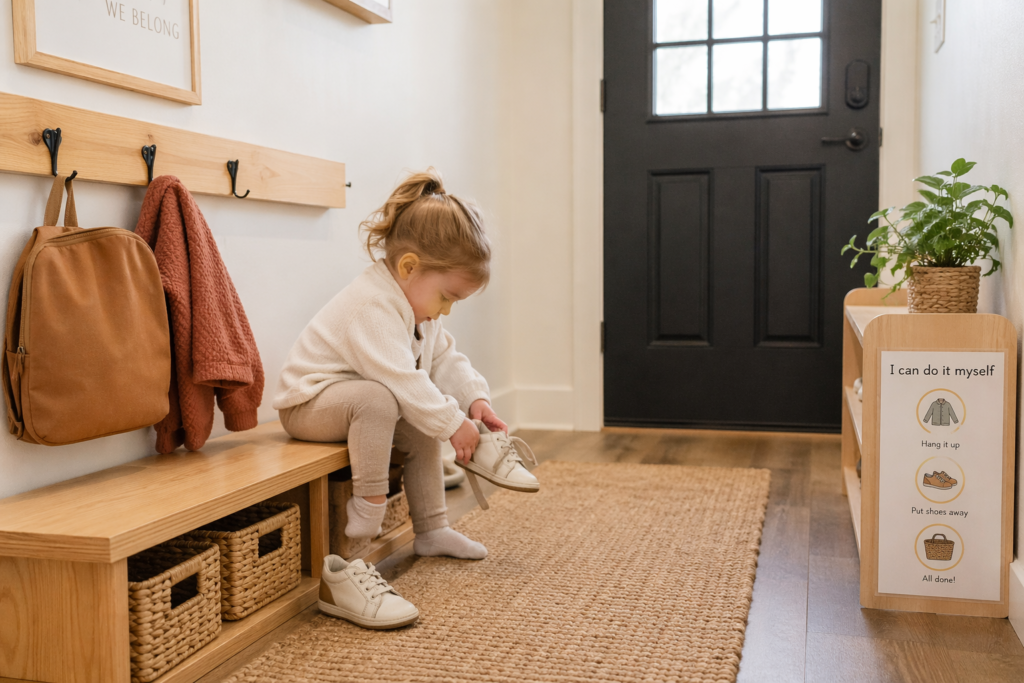
A Low Shoe Area They Can Use Themselves
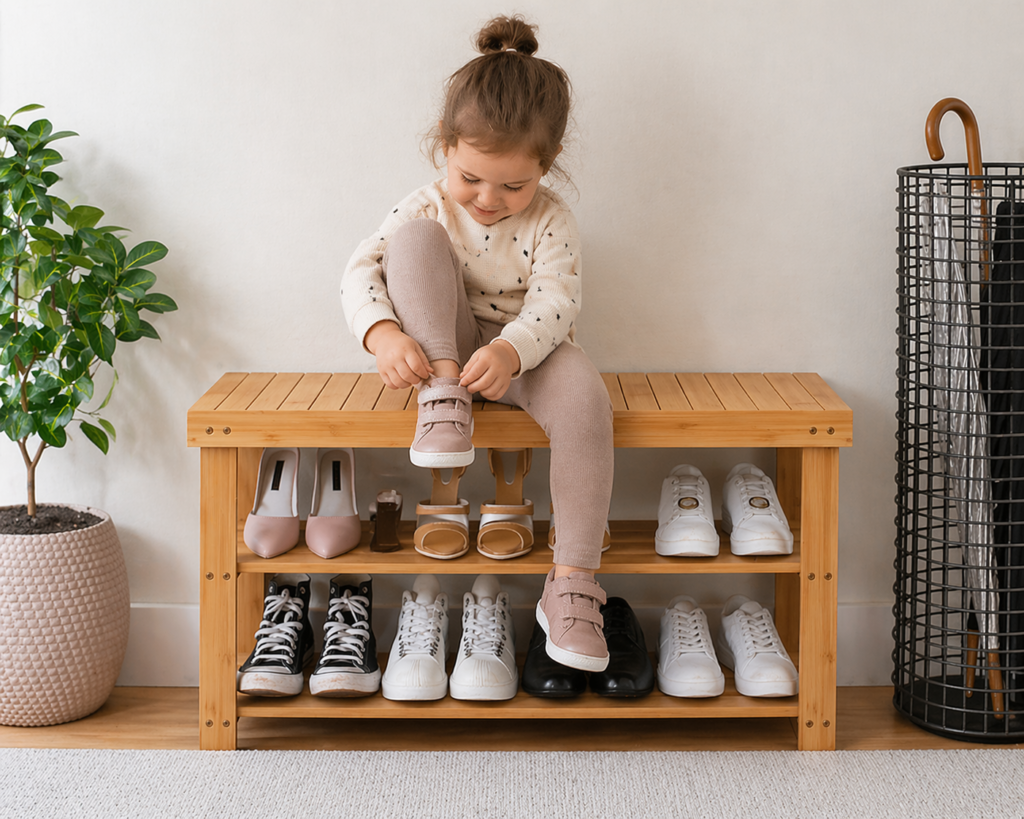
One of the easiest ways to support independence is creating a simple place where your toddler can access their own shoes.
Instead of constantly handing shoes to your child, they’re able to choose a pair, carry them independently, and gradually begin practising everyday routines themselves.
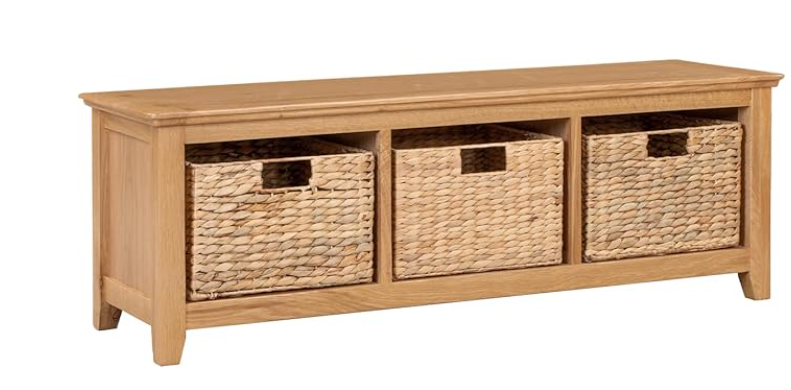
A small open shoe rack, low shelf, or even a simple basket often works well. The goal isn’t perfection — just accessibility.
We use a simple open shoe rack because it keeps shoes visible, easy to put away, and manageable for toddlers to use independently without constant reminders.
We use a small open shoe rack because:
- it’s easy for toddlers to see and choose from
- encourages putting shoes away after use
- it is well made enough to grow with our family rather than needing to be replaced after a short stage
Budget-Friendly Option
You don’t need to buy anything new to create a toddler-friendly hallway setup.
A low shelf, repurposed bookcase, small bench, or even a low crate can work just as well — the most important thing is simply that your child can access it independently.
Child-Height Hooks for Coats and Bags
Many toddlers learn to hand over their coat simply because they can’t reach where it belongs.
Most hallway hooks are positioned entirely for adults, which means toddlers quickly learn to hand things over rather than manage them independently.
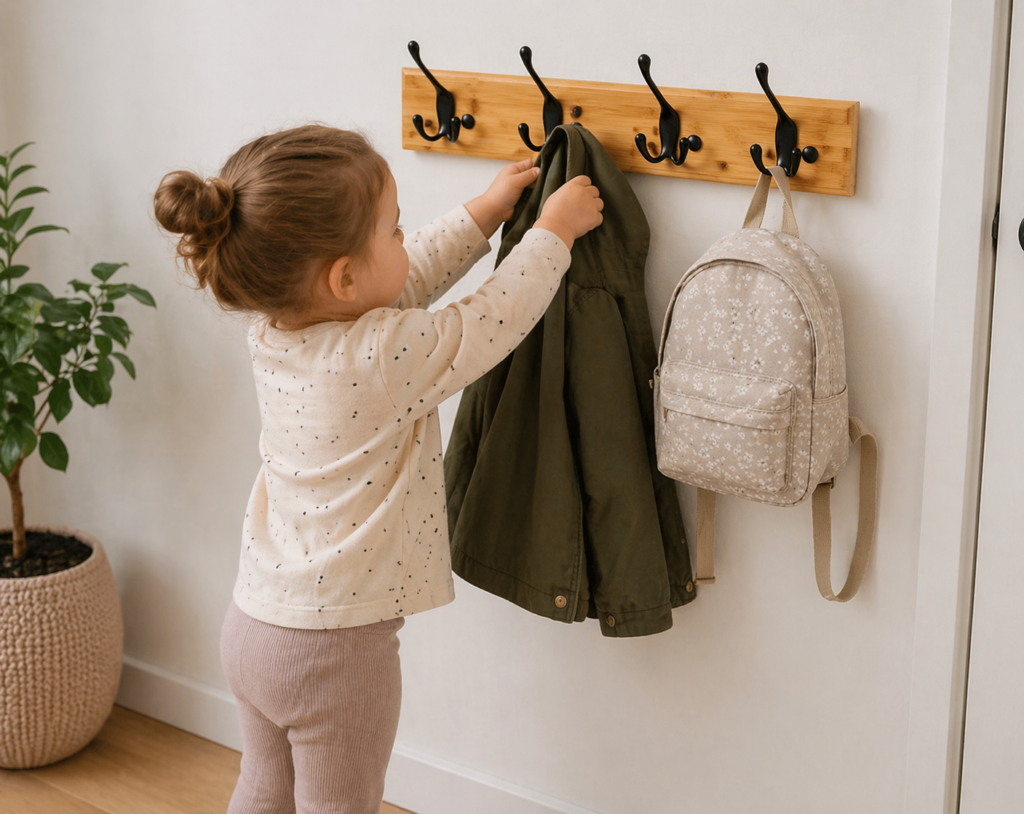
Lowering just one or two hooks can make a surprisingly noticeable difference. Instead of dropping coats or bags on the floor, your child gradually begins learning where things belong and how to put them away themselves.
You don’t need to redesign the whole hallway either — even a single accessible hook is often enough to support more participation in everyday routines.
We use simple wall hooks placed at toddler height because they’re easy to reach, encourage consistent habits naturally, and help keep the space feeling calmer and more organised overall.
A Small Basket for Everyday Items
Toddlers usually manage spaces more easily when everyday items are simple, visible, and predictable.
A small open basket creates a clear place for things like hats, gloves, scarves, or other small items you regularly need before leaving the house. It also makes it easier for toddlers to both find things independently and gradually begin putting them away afterwards.
Keeping smaller items contained in one consistent place often helps the hallway feel calmer, less overwhelming, and easier for children to navigate themselves.
We use an open basket because it keeps everyday items visible and easy for toddlers to manage independently.
Helpful extras
A Mirror at Their Level
A low mirror is one of the simplest additions to a toddler-friendly hallway, but it often becomes surprisingly useful over time.
It allows toddlers to observe themselves while getting ready, check their shoes or coat, and become more aware of their own movements and routines independently.
For younger children, many families prefer lightweight acrylic or plexiglass mirrors because they’re shatterproof, simpler to mount at child height, and feel a little more practical for everyday family spaces.
These small moments of self-awareness gradually help children build more confidence and ownership over everyday tasks without needing constant adult involvement.
A Place to Sit (Optional, but Helpful)
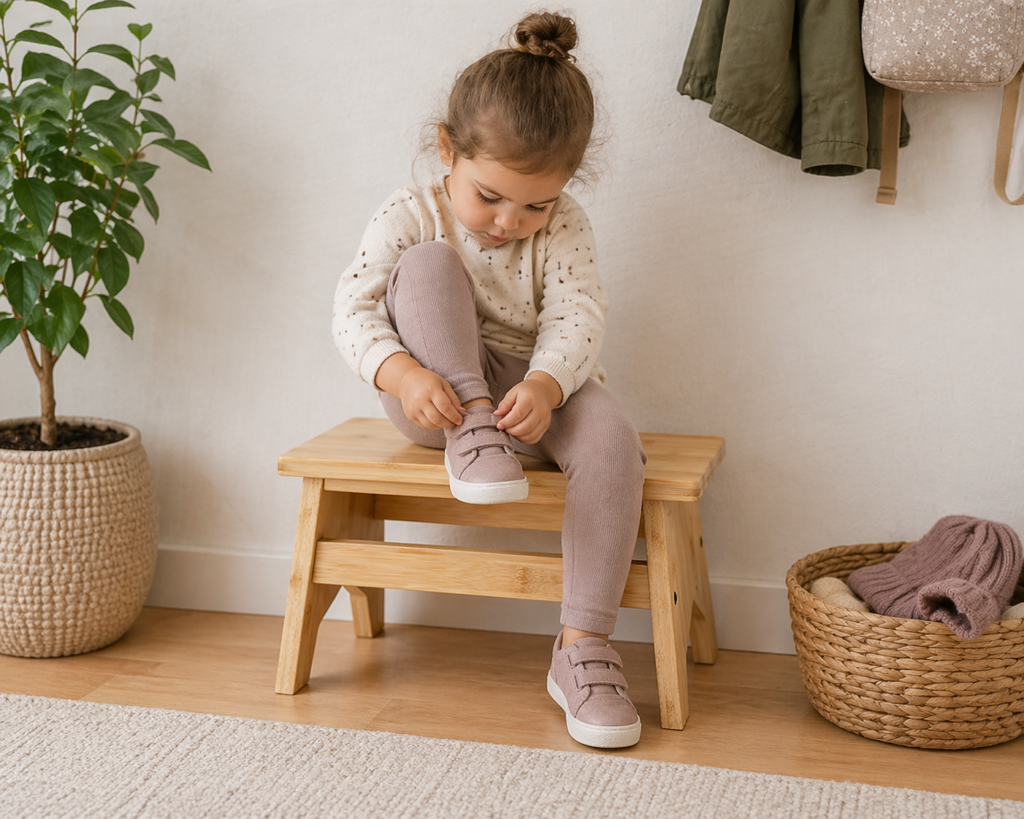
A small place to sit can make hallway routines feel much easier and calmer for toddlers, especially when putting shoes on or getting ready to leave the house.
It creates a simple, predictable spot where your child can pause, sit comfortably, and participate more independently in the routine rather than constantly moving around the hallway.
We use a small bench, but any low, stable option works well. Many families prefer wooden stools because they’re lightweight, child-sized, easy to move around, and useful in other areas of the home too.
Small Changes That Make a Big Difference
If you’re not sure where to begin, start small.
Often, just one or two adjustments are enough to make everyday routines feel noticeably easier for toddlers to participate in more independently.
That might be:
- lowering a single hook
- creating a dedicated shoe area
- adding one accessible basket for everyday items
Small systems tend to work best because they’re easier to maintain consistently over time — especially in busy family spaces like hallways and entryways.
It’s also important to remember that independence at this age is gradual.
Toddlers may not use the space perfectly at first. Shoes may still get scattered around, coats may end up on the floor, and routines will still need support and repetition over time.
The goal isn’t immediate independence or a perfectly tidy hallway.
It’s simply creating small opportunities for participation that gradually become more familiar and manageable over time.
Final Thoughts
Most toddlers don’t need a perfectly organised hallway. They simply need a space they can actually use.
When shoes are within reach, coats have a place to go, and everyday items are accessible, children can begin taking part in routines that once depended entirely on adults.
And those small moments of participation are often where independence begins.
Shopping on Amazon?
If you’re not already a Prime member, you can check whether you’re eligible for a free 30-day trial and enjoy Prime delivery on millions of eligible items.
FAQs: Toddler-Friendly Hallway & Entryway Setup
How do I make my hallway or entryway toddler-friendly?
The simplest way to make a hallway kid-friendly is to lower key items so your child can access them independently.
This might include:
- a low shoe area
- child-height hooks
- a small basket for everyday items
The goal is to create a space where your toddler can take part in getting ready, rather than relying on an adult.
What should a toddler have in an entryway?
A child-friendly entryway doesn’t need much. In most cases, a few simple items are enough:
- a place for shoes
- a hook for coats or bags
- a basket for small items
- a space to sit (optional)
Keeping the setup practical helps your child focus and use the space independently.
At what height should coat hooks be for toddlers?
Coat hooks for toddlers should be low enough that your child can reach them comfortably without help.
For most toddlers aged 2–3, this is usually around:
- chest height
- or slightly above shoulder height
The exact height will depend on your child, but the key is that they can hang and remove items themselves.
Do I need to buy special furniture for a toddler hallway?
No, you don’t need to buy anything new to create a toddler-friendly hallway or entryway.
Many parents use:
- existing shelves
- small benches
- baskets they already have
The most important thing is accessibility, not specific products.
What is a Montessori hallway or entryway?
A Montessori hallway or entryway is designed to support independence.
Instead of everything being out of reach, the space is adapted so the child can:
- get their own shoes
- hang their coat
- put things away
It focuses on real-life skills rather than entertainment.
How do I organise shoes for a toddler in a hallway?
The easiest way to organise toddler shoes is to keep them visible and within reach.
You can use:
- a low shoe rack
- a basket
- a small section of an existing shelf
Limiting the number of shoes available also helps reduce overwhelm.
Is a bench or stool better for toddlers in an entryway?
Both work well, and it often depends on your space.
- A bench provides more stability and can stay in one place
- A stool is more flexible and can be moved around the home
The most important thing is that it is low, stable, and easy for your toddler to use independently.
How can I encourage my toddler to put things away?
Start by making the hallway or entryway simple and accessible.
Then:
- keep items in the same place
- model the routine consistently
- give your child time to try
Toddlers are much more likely to tidy up when the environment supports them.
What is the best storage for hats and gloves in a toddler entryway?
A small open basket is usually the best option.
It allows your toddler to:
- see what’s inside
- take items out easily
- put them back without help
Closed storage can make it harder for toddlers to manage independently.
Can a small hallway still be toddler-friendly?
Yes — small spaces can work very well.
In fact, a smaller hallway or entryway often makes it easier to keep things simple.
You only need:
- one shoe area
- one hook
- one basket
A few well-placed items are enough to support independence.
You Might Also Find Helpful