What You Don’t Need for a Newborn (And When You Actually Will)
Bringing a new baby home often comes with long shopping lists — but the reality is much simpler.
If you’re wondering what you don’t need for a newborn, you’re not alone. Many products are marketed as essential, but most aren’t necessary in the early weeks.
In fact, starting with fewer items often makes life easier. It keeps your space calmer, your routines simpler, and helps you focus on what really matters — your baby.
In this guide, we’ll walk through what you can skip, what you can delay, and when certain items actually become useful.
Disclaimer: This post contains affiliate links. As an Amazon Associate I earn from qualifying purchases at no extra cost to you.
At a glance
Here’s a simple overview of what most families don’t need immediately — and when these items often become more useful.
| Item | What you don’t need yet | When you might want it |
|---|---|---|
| Baby wash & shampoo | Plain water is usually enough | Around 4–6 weeks |
| Baby bath | Sink or bowl works fine at first | Around 4–6 weeks |
| High chair | Not needed for newborns | Around 6 months |
| Weaning sets | No plates or cutlery needed yet | Around 6 months |
| Toys & activity products | Minimal in the early weeks | Around 2–3 months (minimal) |
| Play gym | Usually unnecessary at first | Around 6–8 weeks |
| Feeding products | Best not to overbuy | Once you know what works |
| Cleaning gadgets | Usually unnecessary | Rarely needed |
| Clothes | Large quantities rarely needed | Add as needed |
If you’re unsure where to start, this may also help:
→ Newborn Essentials You’ll Actually Use Every Day
Why Starting Simple Often Works Better
One of the biggest surprises for new parents is how little you actually use from long “must-have” lists.
In the beginning, life is usually simpler than expected.
You feed your baby. Change them. Hold them. Help them sleep.
And very quickly, you begin to notice which items genuinely make daily life easier — and which ones mostly take up space.
Starting with fewer things often means:
- less clutter
- less overwhelm
- less unnecessary spending
- more flexibility as your baby grows
You can always add later.
But you rarely need everything immediately.
Things You Usually Don’t Need Right Away
Many products are marketed as “essential” — but aren’t needed right away.
Here’s what you can confidently wait on.
1. Baby Wash & Shampoo
In the early weeks, plain water is usually enough for your baby’s skin.
According to NHS guidance, bathing a newborn can be very simple:
- warm water
- a towel
- clean clothes
- a clean nappy
That’s often all you need.
Many families wait several weeks before introducing washes, shampoos, or dedicated bath products.
When you do eventually add one, a gentle option used sparingly is usually enough.
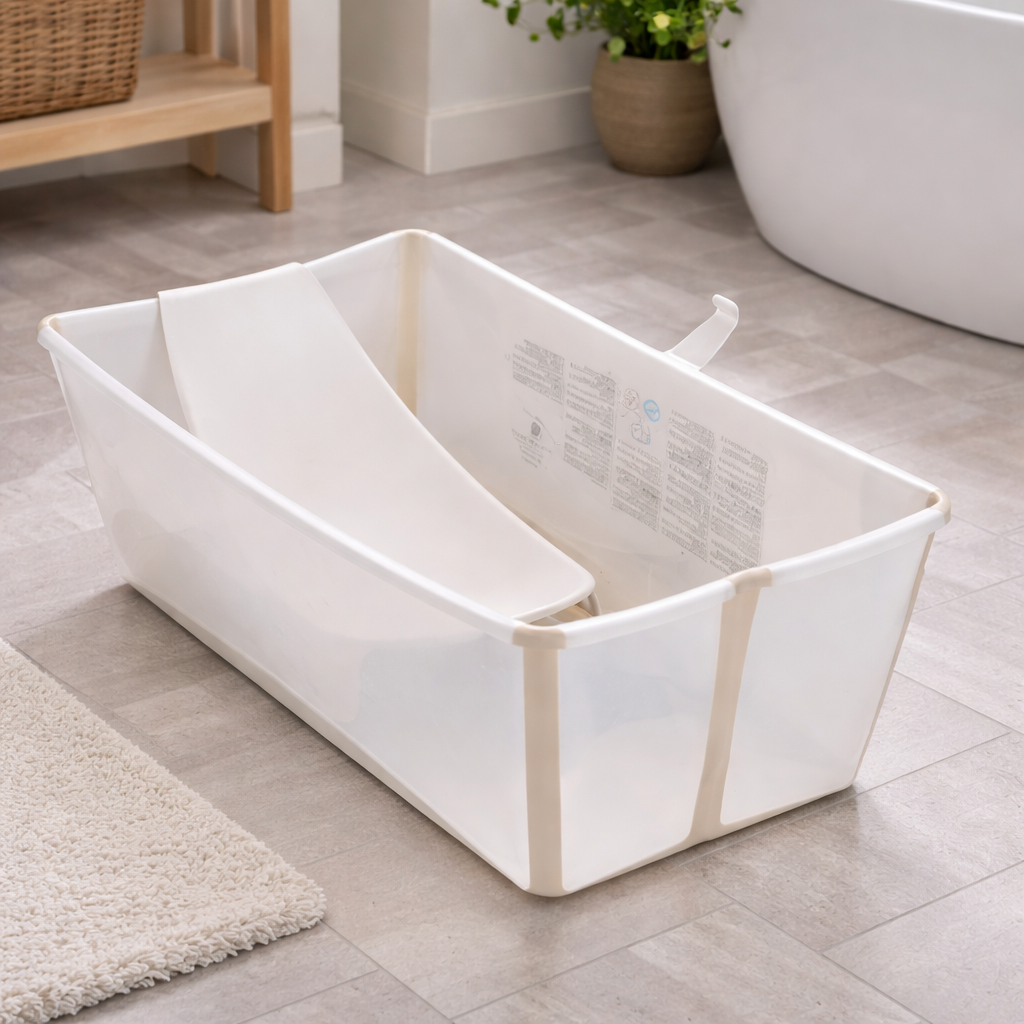
2. A Simple Bath That Grows With Your Child
A sink, bowl, or simple bath setup often works perfectly at first.
Some families later choose a foldable bath because it stores easily and works long-term without adding clutter.
3. High Chair and Weaning Sets
These are some of the most overbought newborn items.
Your baby will not need:
- plates
- cutlery
- cups
- bib collections
- high chairs
for several months.
And when the time comes, simpler setups are often easier anyway.
Many families find they only use a small number of feeding items repeatedly.
A high chair only becomes useful once your baby is ready to sit and explore food more independently — usually around 6 months.
Many families find they only use a small number of feeding items repeatedly.
4. Toys & Activity Products
Newborns do not need shelves full of toys.
In the beginning, babies benefit most from closeness, simple interaction, rest, looking at faces, and short periods of calm observation.
A few simple high-contrast cards or visual items are usually more than enough once your baby becomes slightly more alert.
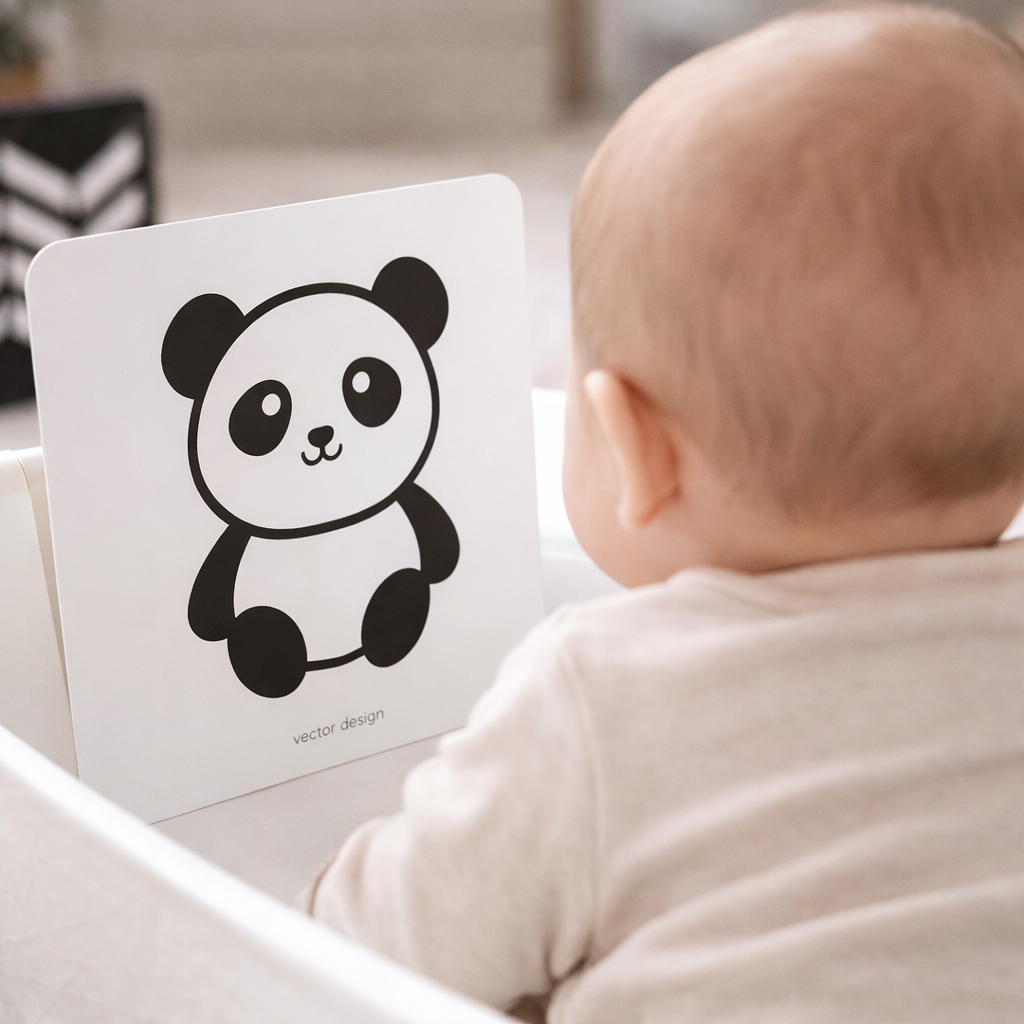
See simple black and white flashcards
If you’re wondering what babies actually need in the early weeks, we’ve shared the baby essentials you’ll truly use every day. And if you’re looking for a few things to safely add to your baby wishlist, here are some simple tools that support newborn development, movement, and crawling.
5. Play Gyms
Play gyms can become useful later on, but most newborns do not need structured play setups immediately.
You can always introduce a good quality play gym later once your baby begins spending slightly longer periods awake and alert.
f you’re unsure what to look for, our guide to Beautiful Wooden Baby Gyms That Support Early Development explores what actually makes a baby gym engaging during the first few months.
There’s no rush to buy one before your baby is ready.
6. Specialised Cleaning Gadgets
Many newborn products solve problems you may never actually have.
In most cases, simple setups with cloths, warm water, baskets, and a few essentials within reach are more than enough.
A Simple Way to Avoid Overbuying
If you’re trying to keep things minimal, one helpful approach is to create a baby wishlist instead of buying everything upfront.
It also makes things easier later — you can save items as you go, share your list with family or friends, and avoid ending up with duplicates.
Some parents also find it helpful that there can be small perks or discounts on certain items once they’re ready to buy — but it’s just as useful as a simple planning tool.
You can always start simple and add things gradually as your routine becomes clearer.
Creating a Calm, Practical Setup
A calm newborn setup doesn’t come from having more.
It comes from having what you actually use nearby and easy to access.
That might look like:
- a small changing area
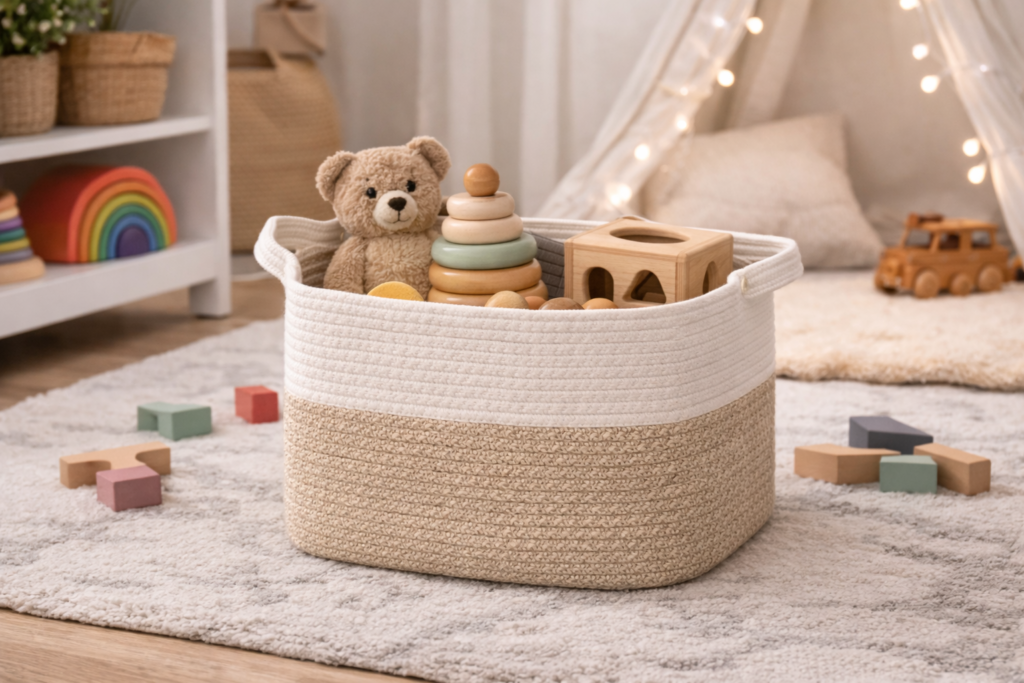
- a basket for essentials
- a few everyday items kept within reach
- simple routines that work for your home
You do not need a perfectly designed nursery from day one.
Most newborns are happiest simply being close to you.
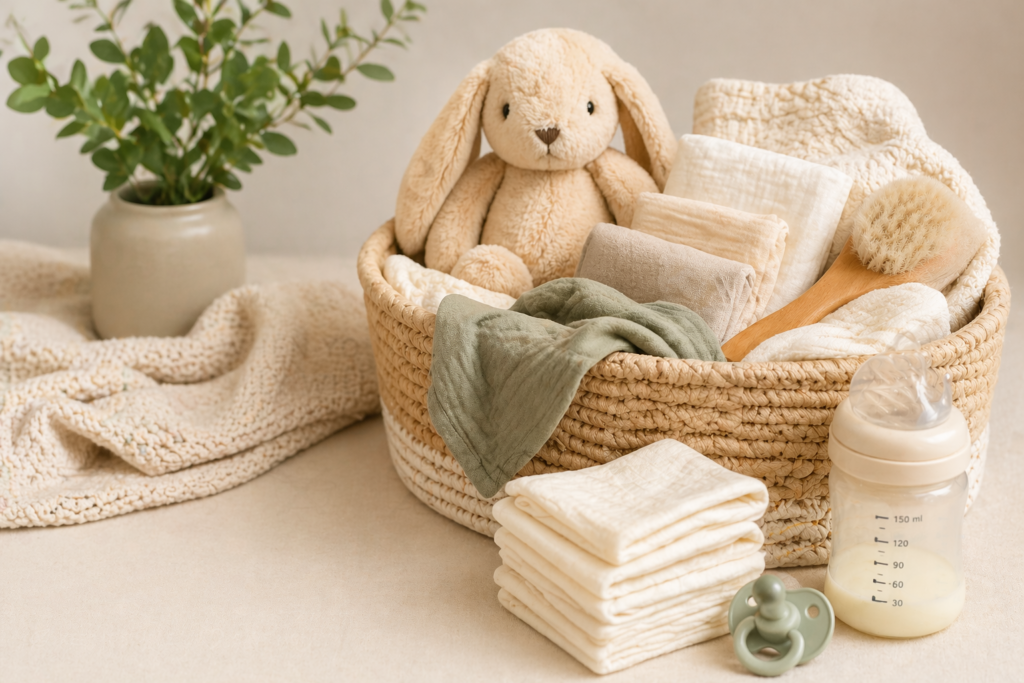
If you’re trying to keep things calmer and less cluttered, a simple basket system can help keep essentials contained without overcomplicating things.
Final Thoughts
It’s easy to feel like you need everything before your baby arrives — but in reality, you don’t.
Most newborns need very little in the beginning. A few simple, well-chosen items will support your daily routines far more than a long list of “essentials.”
Starting with less gives you space to figure out what actually works for you and your baby.
You can always add later — but you don’t need to start with more.
If you want a simple list of what to start with, you can read our newborn essentials you’ll actually use guide here.
FAQs
What do you actually need for a newborn?
Very little. Most parents rely on a small number of everyday items like muslin cloths, nappies, and simple clothing. Everything else can be added later as needed. If you’re starting simple, muslin cloths are one of the few items used every day — you can read our guide to the best muslin cloths for babies here.
What should I not buy before my baby is born?
You can usually skip things like high chairs, large toy collections, weaning sets, and multiple feeding products. These aren’t needed in the early weeks.
Do newborns need bath products?
No. In the first few weeks, plain water is usually enough for your baby’s skin. Gentle products can be introduced later if needed.
When do you need a high chair for a baby?
Most babies don’t need a high chair until around 6 months, when they start exploring solid foods.
Do newborns need toys?
Not really. In the early weeks, babies benefit most from closeness, rest, and simple interaction. A few simple items can be introduced later.
Is it better to buy everything before the baby arrives?
Not usually. Starting with fewer items makes it easier to figure out what you actually need and avoid unnecessary spending.
What are the most unnecessary baby items?
Common ones include large wardrobes, specialised cleaning gadgets, too many products, and items designed for later stages.
How can I keep my newborn setup simple?
Focus on a few essentials, keep items within reach, and avoid overbuying. You can always add more as your routine becomes clearer.
You Might Also Find Helpful