What to Do When Your Toddler Throws Things: A Calm Step-by-Step Response
Toddler throwing phase…
You hand them the cup.
It drops.
You hand it back.
It drops again.
And suddenly you’re stuck in that moment — wondering if this is a game, a phase… or something you’re handling wrong.

When toddlers throw things, the hardest part isn’t the mess.
It’s not knowing what you’re supposed to do next.
Ignore it?
Stop it?
Take everything away?
Explain gravity for the tenth time?
If you’ve ever wondered what to say when your toddler throws things, you’re not alone.
Here’s the part most parents don’t realise: your response matters more than the behaviour itself.
And you don’t need a perfect reaction —
you just need a consistent one.

Step 1: Pause before reacting
The first reaction teaches more than the words that follow.
Toddlers learn from emotional energy first, language second.
If the response is loud, fast, or dramatic, the behaviour suddenly becomes interesting.
Instead:
- take one breath
- move slowly
- keep your voice low
You’re showing: nothing exciting happened here.
This alone often reduces repeat throwing.
Step 2: Set a clear, short boundary
Long explanations don’t work in the moment.
Toddlers can’t process reasoning while emotional or curious.
Use one calm, repeatable sentence every time:
“I won’t let you throw the cup.”
“Food stays on the table.”
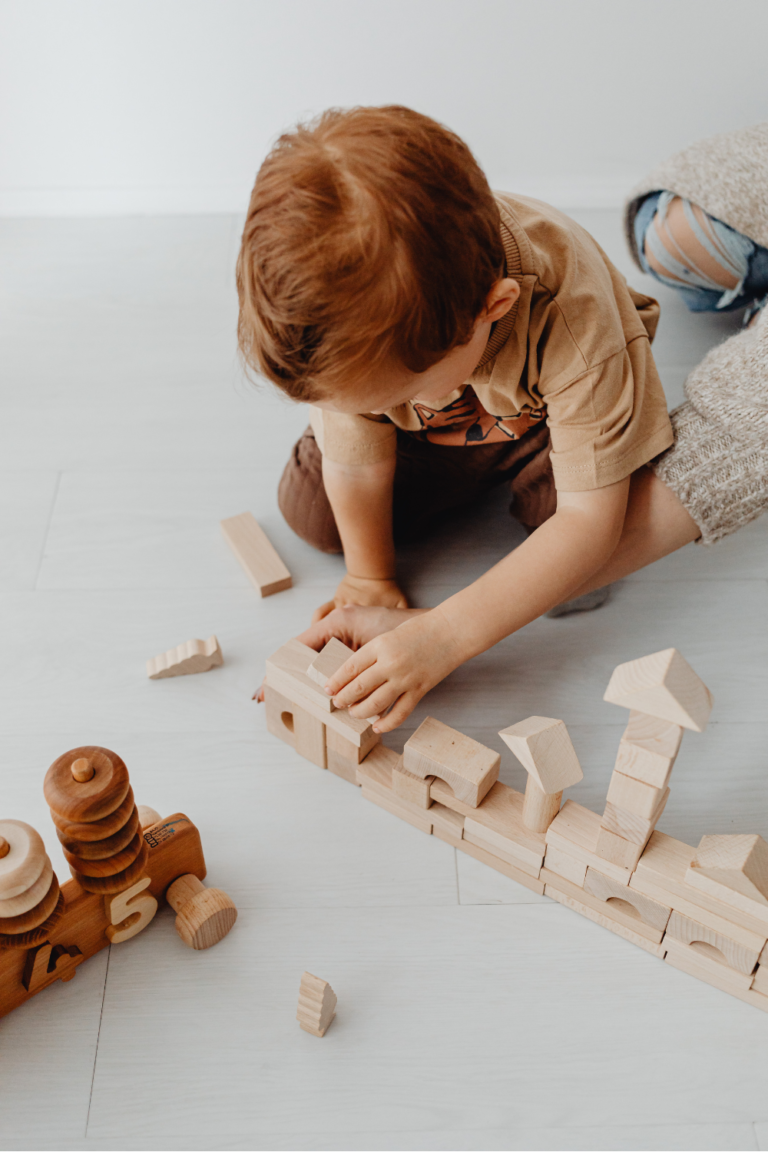
“Blocks are for building.”
Not angry.
Not pleading.
Just predictable.
Consistency matters more than wording.
Step 3: Before You Respond, Ask What They’re Telling You
Before reacting, pause for a second and look at the situation rather than just the throw itself.
Did they throw the spoon because they’re finished eating?
Did they throw the toy because they’re frustrated it wouldn’t work?
Are they tired, overwhelmed or simply looking for movement?
You don’t have to solve every feeling before setting a boundary. But understanding the message helps you respond to the need, not just the behaviour.
You might calmly say:
“You’re telling me you’re finished.”
or
“You’re feeling frustrated.”
Then continue with the same calm boundary.
As your toddler’s language develops, many of these moments become easier because they gradually gain more ways to tell you what they need. Encouraging communication through everyday play can make a real difference. You might also enjoy Simple Montessori Activities for Speech Delay and Late Talkers. Although it’s written with late talkers in mind, the activities are equally valuable for toddlers who are developing language typically, helping them build vocabulary, confidence and more ways to express their needs before frustration turns into behaviour.
Step 4: Act, don’t lecture
After the boundary, follow through immediately.
If the object is thrown again:
Remove it calmly.
No countdown.
No warning speech.
No negotiation.
You’re teaching cause and effect through action — the language toddlers actually understand.
Step 5: Show the correct action
Toddlers don’t eliminate behaviours — they replace them.
So instead of only stopping the throwing, demonstrate what to do instead.
Examples:
- roll the ball across the floor
- place the spoon back in the bowl
- drop laundry into a basket
- stack blocks gently
You’re giving them something they can do instead.
Step 6: Offer a safe place to throw
Sometimes the urge to throw is physical, not behavioural.
Rather than banning it completely, redirect it:
Create a “yes” space.
You might say:
“You want to throw. Let’s throw the ball here.”
Now the child learns:
Throwing isn’t wrong — there’s just a right place.
Over time, this reduces the need for daily power struggles.
For younger toddlers, throwing is often physical exploration rather than behaviour. They’re testing gravity and movement, not trying to ignore you — but they also can’t control force yet.
During this stage, reducing risk works better than constant correction. Using softer materials during play helps you hold the boundary while keeping everyone safe. Lightweight cork building blocks, for example, allow children to drop and toss without damage while you continue teaching that harder objects aren’t for throwing.
You’re not allowing the behaviour — you’re making learning safer while the skill develops.
Step 7: Stay neutral if it repeats
Repetition doesn’t always mean your toddler is challenging you.
They’re checking:
Does the rule still exist?
Each calm, identical response strengthens understanding.
Each emotional reaction restarts the experiment.
Predictability ends the cycle faster than punishment.
Step 8: End the activity if needed
If throwing continues, the activity is finished.
You’re not ending the activity because your toddler has been “bad.”
You’re simply showing that throwing changes what happens next.
“Looks like you’re done eating.”
“Blocks are resting now.”
Then move on.
No frustration required.
The boundary is the teacher.
Make Throwing Less Likely
Sometimes prevention is simpler than correction.
Small changes often make a surprising difference:
• offer smaller portions
• keep only one utensil on the tray
• end meals before tiredness takes over
• use sturdy cups that are harder to throw accidentally
A tired toddler with a full tray is basically holding a basket of future projectiles.
Creating a calm, structured environment can reduce overstimulation and repetitive behaviours. These Montessori tools for independent play can help support that.
When to Hold a Firm Boundary
Throwing is part of learning—until someone could get hurt.
Food? Usually communication.
Spoon? Experimentation.
Glass cup aimed at your forehead? Different conversation.
Calm boundary:
“I won’t let you throw that. I’ll move it away.”
No anger. No long explanation. Just clear cause and effect.
Give the Throwing a Better Outlet
You probably won’t stop the throwing overnight—and that’s okay.
Provide opportunities to drop appropriately:
- ball play
- filling and dumping containers
- posting objects into a box
- transferring items between baskets
The urge to release objects doesn’t disappear; it just finds a safer outlet.
Activities like posting, transferring, and container play are part of how toddlers explore movement and repetition. You can find more ideas in this guide to independent play ideas for toddlers.
Many of these activities are inspired by Montessori practical life and give toddlers safe ways to repeat movements they naturally enjoy. → Montessori Practical Life for Babies & Toddlers: Independence Begins at Home
What if my toddler laughs when I say no?
It can feel as though they’re laughing at you.
Most toddlers aren’t.
Young children often laugh when they’re excited, uncomfortable, surprised or unsure what comes next.
The laugh isn’t permission to abandon the boundary.
Continue exactly as before.
Calm.
Predictable.
Consistent.
Smiling doesn’t always mean they’re enjoying the situation. Sometimes it’s simply how a young child copes with uncertainty or big emotions.
What not to do
These reactions accidentally encourage throwing:
- big reactions
- long explanations
- bargaining
- repeatedly handing objects back instantly
- laughing (even unintentionally)
To a toddler, these all equal attention — and attention equals success.
The bigger picture
Throwing is temporary.
What your child remembers long-term isn’t whether they were allowed to drop a spoon —
it’s whether you felt predictable when they didn’t yet understand the world.
Calm repetition builds trust.
The same calm, predictable response also reduces other physical behaviours like toddler hitting — especially when you pair clear boundaries with teaching what to do instead.
→ How to Respond When Your Toddler Hits (Montessori-Based Strategy)
And trust quietly builds cooperation.
If today involved picking up the same object twelve times, you didn’t do anything wrong.
You were teaching cause and effect, patience, and boundaries —
all before lunch.
You Might Also Find Helpful