Independent Play Tools for Toddlers (Simple Montessori Ideas That Work)
Independent play doesn’t begin with entertainment.
It begins with purpose.
Many toddler toys are designed to excite — lights, sounds, buttons — but those features can actually make it harder for children to stay engaged without an adult. The child waits for the toy to perform instead of acting themselves.
What helps toddlers concentrate is surprisingly simple:
Objects that respond directly to their movement.
Not flashing lights.
Not music.
Not endless buttons.
Just cause and effect.
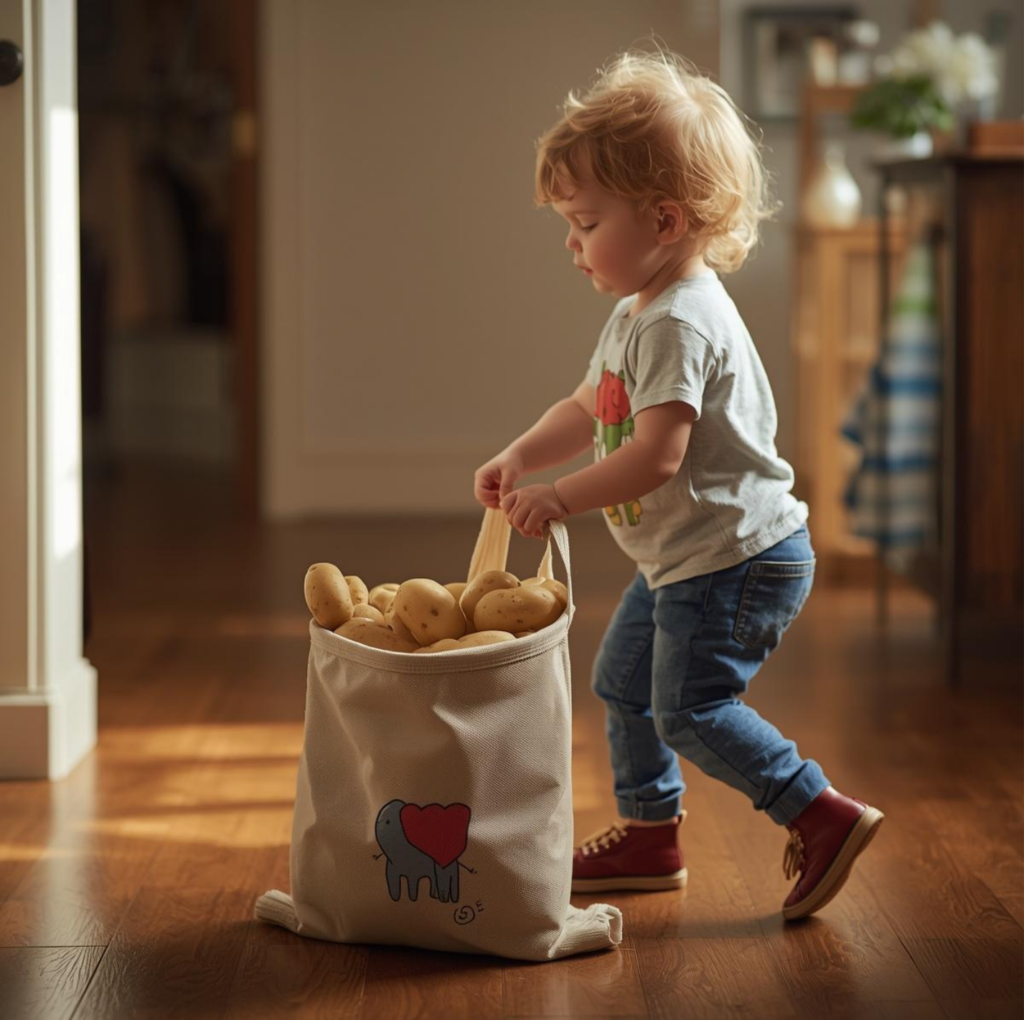
You don’t need to buy everything. In fact, household items work beautifully. But a few well-chosen tools can make independent play easier to repeat — and easier to sustain. If you prefer a few ready-made options, these Montessori tools for independent play can make it easier to set up repeatable activities.
Below are simple activities you can set up in minutes, with home alternatives and optional tools that support longer focus.
If you’re trying to build longer stretches of focus at home, this guide on how to help your toddler play independently (Montessori approach) explains how the environment makes the biggest difference.
1. Posting (Putting Objects Into a Slot)
What toddlers need: repetition and hand control
Why they repeat it: predictable success builds concentration
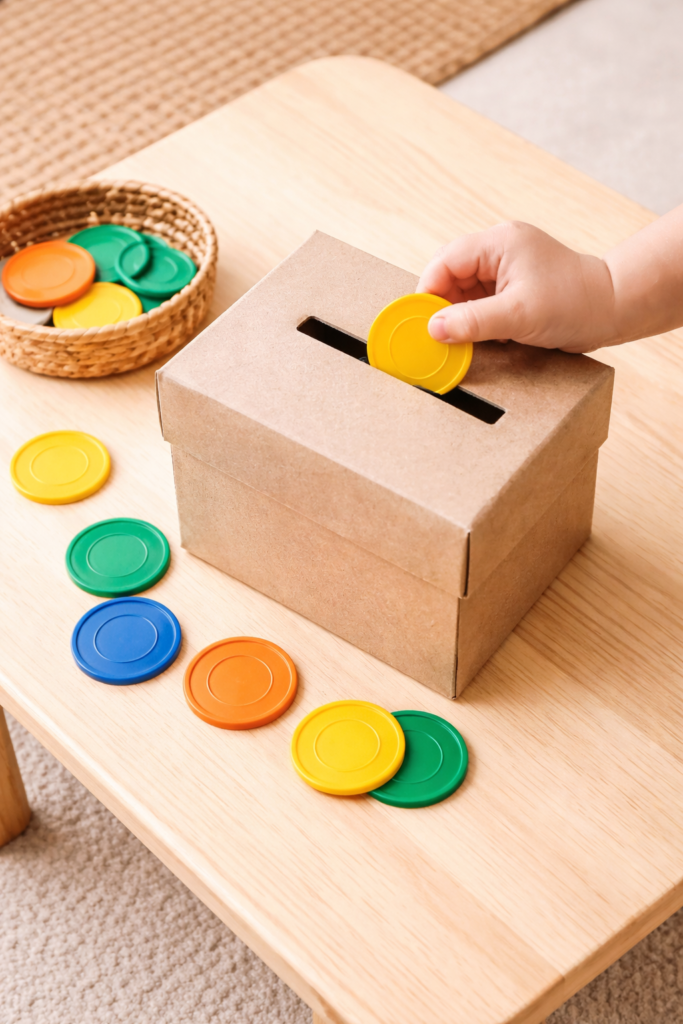
Posting activities satisfy a deep developmental urge:
“My hand can control the world.”
Disclaimer: This post contains affiliate links. I may earn a small commission at no extra cost to you. As an Amazon Associate I earn from qualifying purchases.
A toddler isn’t just dropping objects — they’re refining:
- wrist rotation
- finger release
- visual judgement
This is the foundation for writing later.
You can start with everyday household items
You don’t need a toy to begin.
Try:
- a spice jar + poker chips or large buttons
- a yogurt tub + wooden craft sticks
- an oatmeal container + jar lids
- a wipes container + cards
- a tissue box + folded socks
- a shoe box + playing cards
- a coffee tin + wooden pegs
- a plastic food container + large pasta (rigatoni)
Cut one simple slot. Nothing fancy.
Tip: If the opening is too big, toddlers dump instead of post.
A slightly snug fit creates concentration.
What can toddlers post?
Rotate objects — not the container.
New objects = new challenge.
Good options:
- large buttons
- wooden coins
- jar lids
- milk bottle caps
- corks
- jumbo craft sticks
- felt squares
- large washers
- playing cards
- big pasta pieces
- folded fabric scraps
- popsicle sticks
- poker chips
Avoid anything they can swallow — always larger than a toilet paper roll diameter.
When children lose interest
Usually the problem isn’t boredom.
It’s chaos.
If objects scatter, toddlers shift from concentration → collecting → wandering.
A contained setup prevents this.
This is the same reason Montessori toy rotation works so well — fewer, clearly presented materials make it easier for children to stay focused and return to the activity independently.
A small posting box simply creates that same sense of order within a single activity.
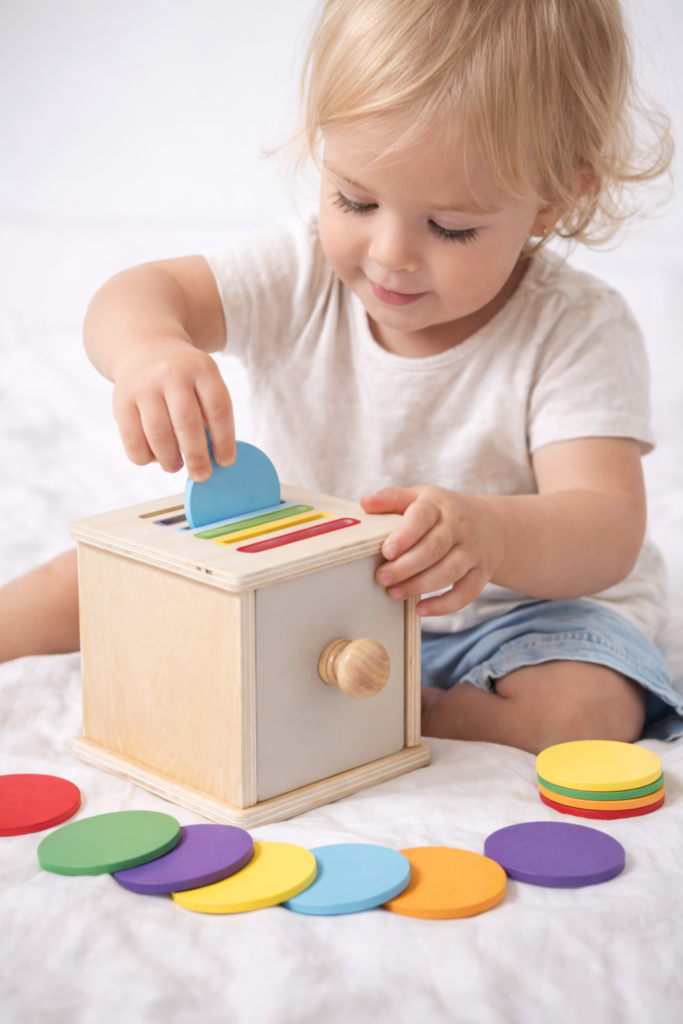
Optional tool: a simple wooden posting box.
If your child is still mouthing objects, use large wooden coins instead of real coins to keep the activity safe.
↗ Check the current price on Amazon a simple wooden posting box
What you’ll notice
At first: drop and walk away
Then: repeat 20–40 times
After: slow, careful placement
Finally: deep focus (this is concentration forming)
Do not interrupt here — this is real learning.
2. Transferring (Moving Objects Between Containers)
What toddlers need: coordination and sequencing
Why they repeat it: they are learning precision
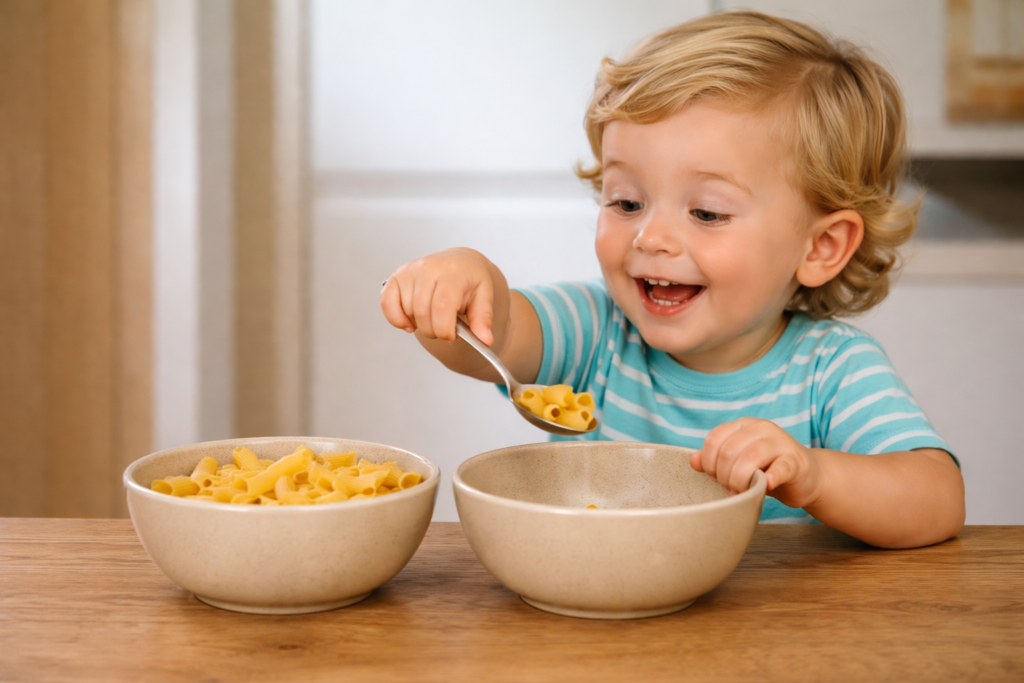
At home:
- two bowls
- dry pasta
- a spoon
That’s enough.
A small child-sized pitcher or scoop can make movements smoother and reduce frustration. When the movement works, toddlers stay with the task longer.
3. Carrying and Placing
What toddlers need: controlled movement
Why they repeat it: body + brain coordination
Try:
- folded washcloths
- small books
- wooden blocks
A shallow tray defines the workspace and helps toddlers carry successfully — without constant dropping.
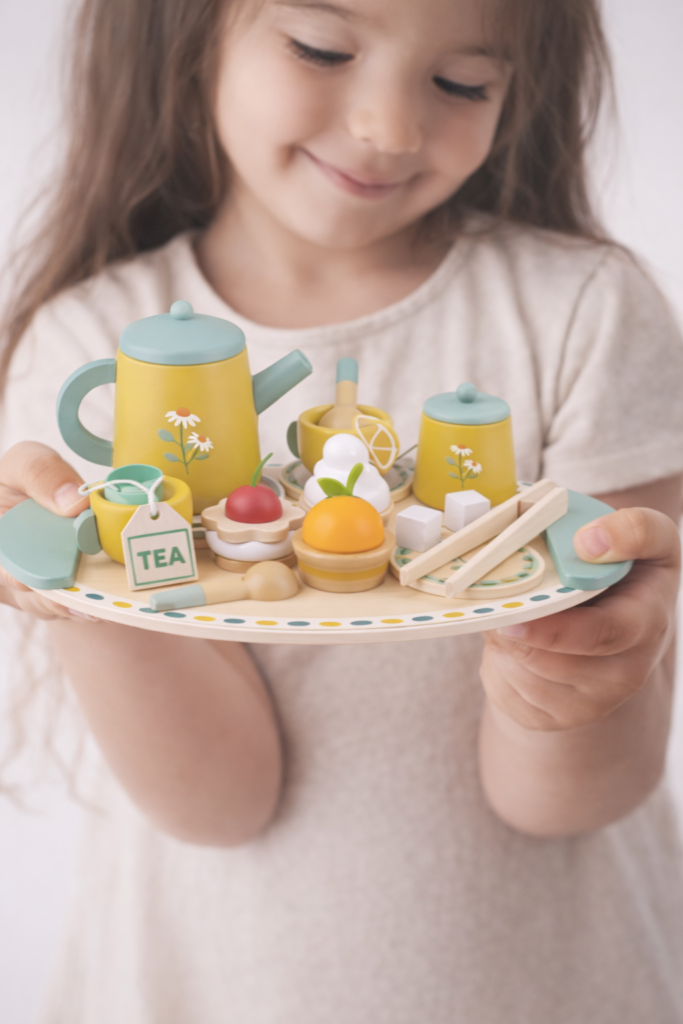
Optional tool: a lightweight wooden tray or a wooden tea set to support careful carrying.
This encourages careful movement and independence around the home.
↗ Check the current price on Amazon: Wooden tea set
4. Opening and Closing Containers
What toddlers need: problem solving
Why they repeat it: visible progress
At home:
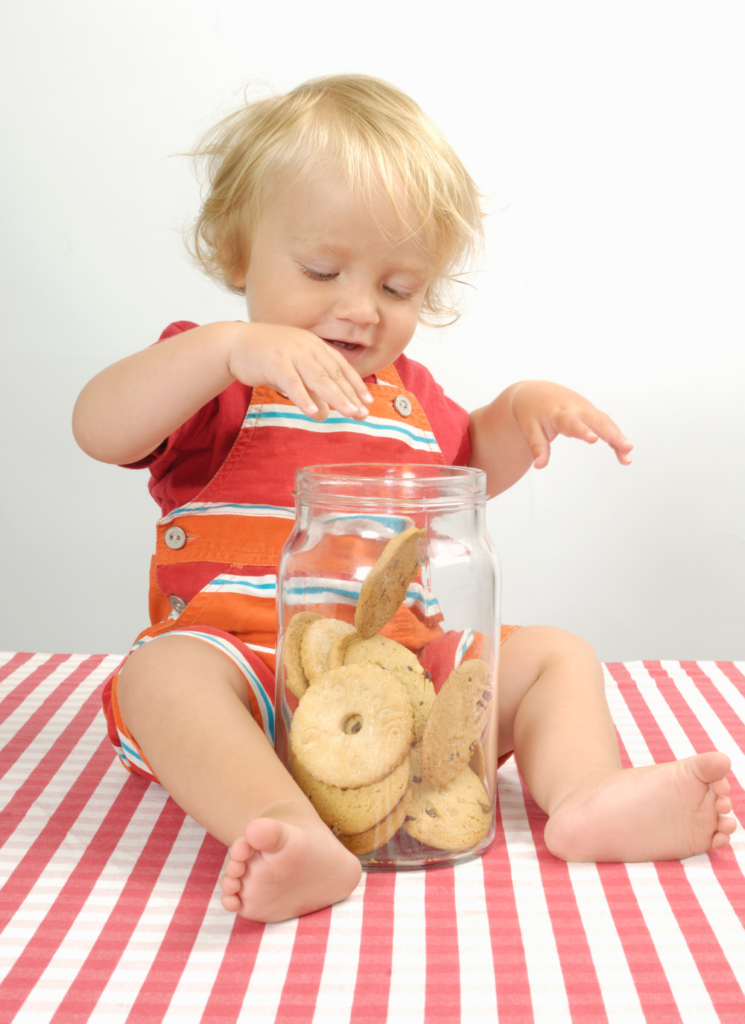
- spice jars
- plastic containers
- reusable tubs
Variety matters more than quantity.
A small basket keeps everything accessible and invites repetition.
5. Water Transfer (Advanced Toddlers)
What toddlers need: control and patience
Why they repeat it: sensory feedback + mastery
Start with:
- a sponge
- two bowls
- a small amount of water
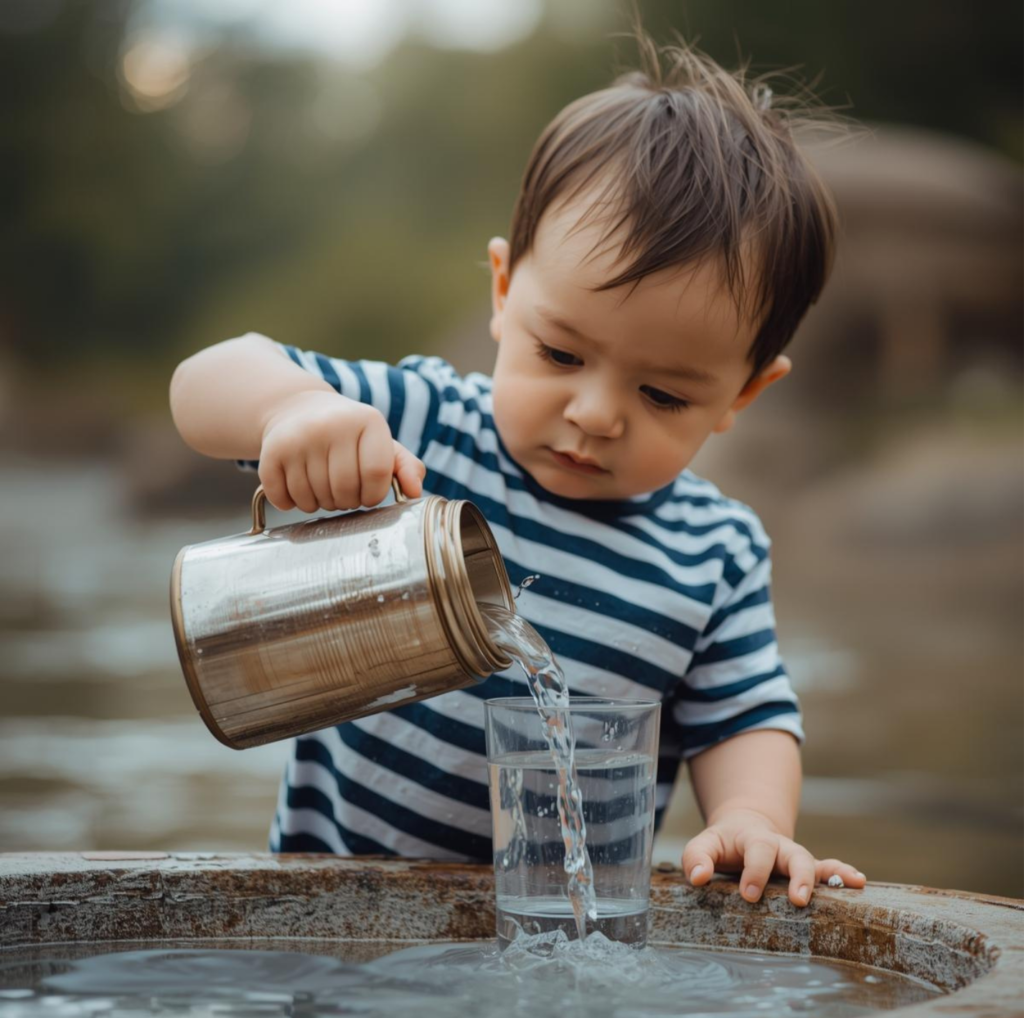
Later, introduce a small pouring jug.
The added weight slows movement and improves control.
Optional tool: small glass or training pitcher
The weight slows movement and improves control.
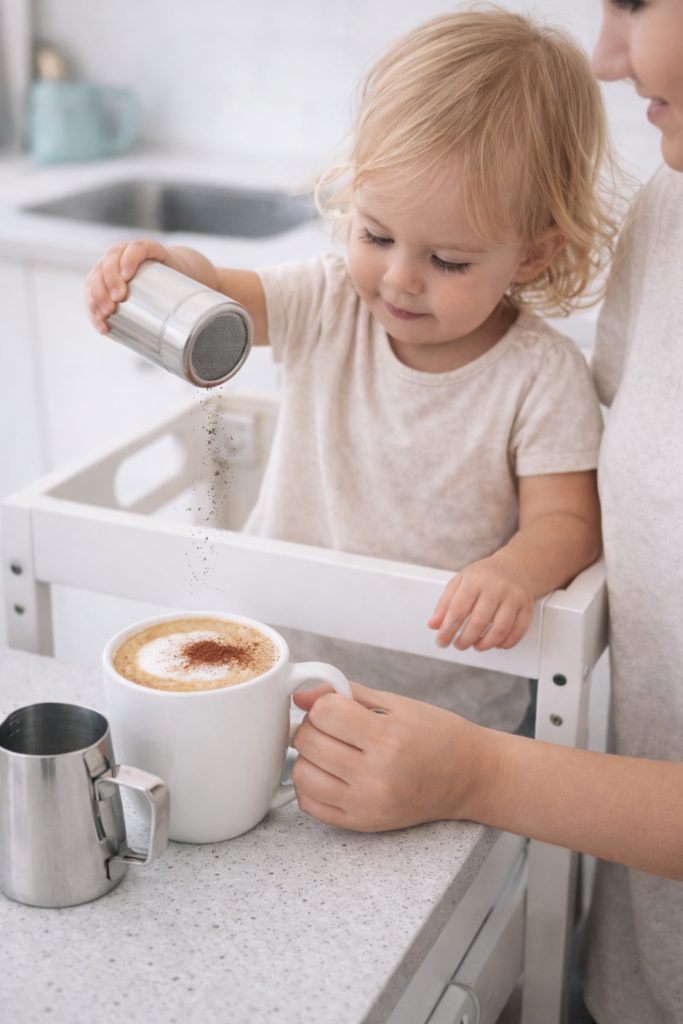
We personally prefer to avoid plastic where possible, so we often use small stainless steel barista jugs — they’re durable, easy to handle, and help toddlers slow their movements naturally.
As a bonus, they can also be used later for simple kitchen play — like helping sprinkle cocoa powder when you’re making a cappuccino together.
↗ Check the current price on Amazon: Small stainless steel barista jug
Why simple tools matter
Independent play doesn’t come from leaving a child alone.
It grows when:
- the task is clear
- success is possible
- repetition feels satisfying
Household items are often enough.
But well-sized tools reduce frustration — and frustration is usually what ends independent play, not boredom.
You don’t need more toys.
You need the right level of challenge.
When a child can succeed without help,
they continue without help.
And that’s where independence begins.
You’ll likely notice your child returning to the same activity again and again — not because it’s exciting, but because it’s meaningful.
Repetition is how toddlers build understanding.
What looks simple on the surface is actually deep work:
refining movement
building control
creating prediction
And when the activity is clear, achievable, and satisfying, something shifts.
They don’t need you to lead.
They begin to continue on their own.
Independent play doesn’t start when a child is left alone — it starts when the work makes sense to them.