A Gentle Guide to Montessori Parenting: Behaviour and Everyday Life
A gentle guide to behaviour, independence, and everyday life from a Montessori perspective
Montessori is often misunderstood.
From the outside, it can look like wooden toys, tidy shelves, and unusually calm children. It can seem quiet. Structured. Even a little strict.
But from toddler height, Montessori feels entirely different.
It feels like being trusted.
At its core, Montessori parenting is based on a simple but powerful idea: children are not empty cups waiting to be filled. They are already whole people, actively working to understand the world around them.
A toddler isn’t “making a mess” when they pour water again and again — they are refining coordination.
They aren’t stalling when they insist on putting on their own shoes — they are building independence.
They aren’t ignoring us when they focus deeply — they are concentrating.
Montessori invites adults to slow down long enough to notice this.
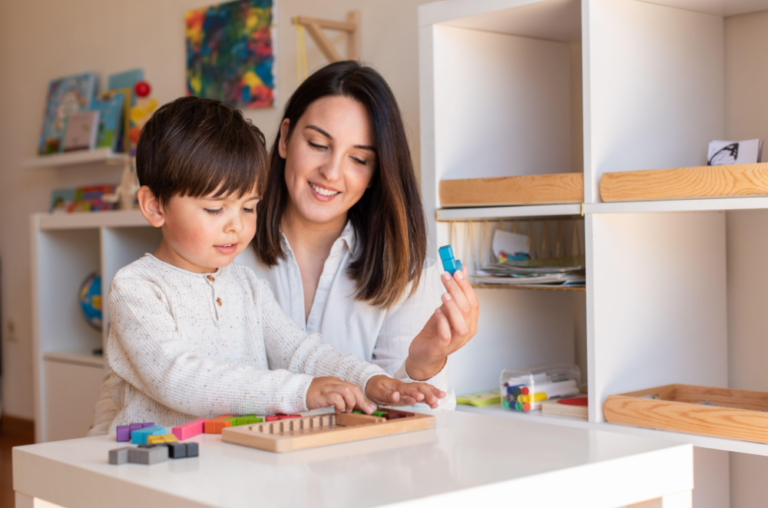
Instead of rushing to entertain, fix, or correct, we prepare an environment where a child can participate in real life. Low shelves so they can choose. Child-sized tools so they can contribute. Time so they can repeat. Patience so they can struggle safely.
The goal is not perfection.
It is confidence born from experience.
Understanding Toddler Behaviour Through a Montessori Lens
Many parents come to Montessori because of behaviour challenges. Tantrums. Power struggles. Endless repetition. Strong wills.
Montessori doesn’t promise perfectly behaved toddlers.
It offers a different way to understand toddler behaviour.
A tantrum becomes communication.
A refusal becomes a need for autonomy.
A scattered room becomes evidence of exploration.
In Montessori philosophy, behaviour is information. When toddlers throw, test limits, or insist on doing everything “by myself,” they are expressing developmental needs — not trying to be difficult.
This perspective shifts the adult’s role.
We move from director to guide.
From controlling to observing.
From asking, How do I make this stop?
To asking, What is my child trying to learn right now?
Over time, something subtle changes.
Children who are trusted begin to trust themselves. They pour carefully. They help willingly. They concentrate longer than we expect — not because they were taught obedience, but because they were given ownership.
Montessori parenting is not about raising advanced children.
It is about raising secure ones — children who feel capable in their own small bodies and safe in a world that respects their pace.
The Prepared Environment: Where Independence Begins
From toddler height, Montessori does not look impressive.
It looks respectful.
One of the foundations of Montessori at home is the prepared environment — a space intentionally arranged to support independence.
When a child pours water, wipes a table, fastens a button, or cracks an egg, they are doing more than helping. They are constructing understanding.
Hands learn weight and pressure.
Eyes judge distance.
Fingers refine control.
The mind begins to predict cause and effect.
In one ordinary moment at the counter, there is physics in the pressure, biology in the shell, and chemistry in what happens next in the pan.
Long before formal academics begin, the child has already felt how the world works.
These everyday experiences quietly build coordination, concentration, and confidence — the foundations of early childhood development.
Why Montessori Materials Are Simple
Montessori spaces tend to favour natural, open-ended materials — and for good reason.
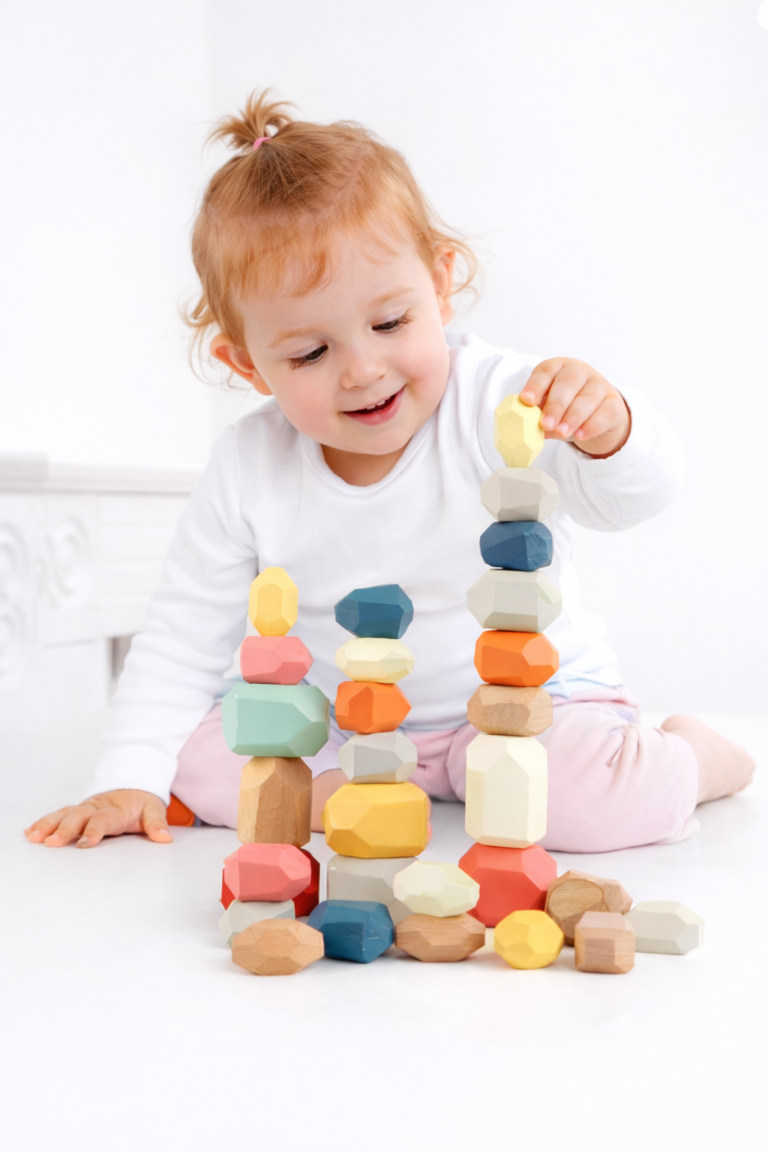
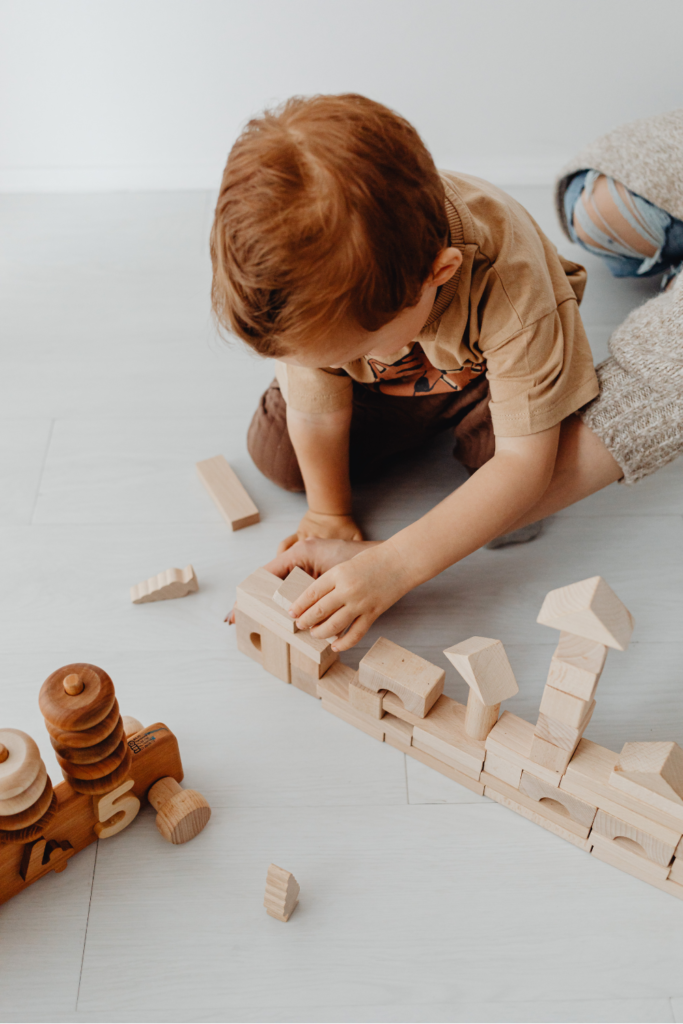
A wooden block does not tell a child what it should be. It becomes a bridge, a loaf of bread, a phone, or a tiny world balanced carefully in two hands.
Because the toy does less, the child does more.
The weight, texture, and simplicity invite deeper focus. Attention lasts longer. Imagination stretches further. The mind stays engaged instead of moving quickly from one flashing stimulus to another.
Rather than entertaining the child, Montessori materials leave room for thinking.
And in that quiet space, creativity grows.
Montessori at Home: Small Shifts, Real Impact
Montessori at home does not require a classroom transformation.
It often begins with one thoughtful adjustment:
A low shelf.
A reachable hook.
A small table near a window.
Somewhere a toddler can act independently and feel capable.
When the environment fits the child, daily life softens.
Cooperation grows more naturally. Frustration decreases. Confidence settles in quietly.
Montessori is not about aesthetics or perfection. It is about accessibility and respect. When children can participate in their own environment without constant help, power struggles reduce — not because rules changed, but because the child’s needs were acknowledged.
Rethinking Everyday Challenges
Many common toddler struggles — throwing, refusing, climbing, repeating, testing limits — are not signs of defiance. They are signs of development.
When we understand the stage behind the behaviour, our response changes.
Instead of reacting with frustration, we respond with guidance.
Instead of shutting behaviour down immediately, we look for the skill underneath it.
Montessori parenting does not eliminate challenges.
It changes how we meet them.
By adjusting the environment, offering real responsibilities, and speaking with clarity and respect, everyday moments become calmer and more connected.
The goal is not perfect parenting.
It is clearer understanding.
Because when we see the child more clearly, guiding them becomes steadier, simpler, and more respectful.
Montessori Is a Shift in Perspective
Montessori feels less like a strict method and more like a gentle shift in how we see children.
When we look from toddler height, behaviour makes sense. Independence feels urgent. Repetition feels purposeful.
Children are not trying to control us.
They are trying to control themselves.
And when we prepare the environment, trust the process, and respond with respect, something powerful happens:
Children begin to trust themselves too.
That trust becomes concentration.
That concentration becomes competence.
That competence becomes confidence.
Montessori is not about raising extraordinary children.
It is about raising children who feel secure, capable, and respected in the ordinary rhythms of everyday life.
Final Thoughts: Montessori Parenting in Real Life
Montessori parenting is not about perfection, aesthetics, or raising unusually advanced children. It is about understanding toddler development deeply enough to respond with clarity and respect.
When we view toddler behaviour through a Montessori lens, we begin to see independence where we once saw defiance. We see concentration where we once saw stubbornness. We see communication where we once saw chaos.
A prepared environment at home does not eliminate challenges — but it often softens them. When children can reach their own belongings, participate in daily routines, and repeat meaningful tasks, power struggles decrease naturally. Confidence grows because capability grows.
Montessori at home is not a rigid system. It is a steady shift in perspective.
It asks us to:
- Slow down.
- Observe before correcting.
- Prepare the space instead of controlling the child.
- Trust that development unfolds through real experiences.
In ordinary moments — pouring water, putting on shoes, wiping a table — toddlers are building coordination, focus, and self-belief. These small acts of independence become the foundation for emotional regulation, problem-solving, and lifelong learning.
Montessori parenting does not promise an easier child.
It offers a clearer understanding.
And when we understand our toddlers more deeply, everyday life becomes calmer, more connected, and far more respectful — for both of us.