
Baby Wakes Up When Put Down — Here’s Why And What Helps
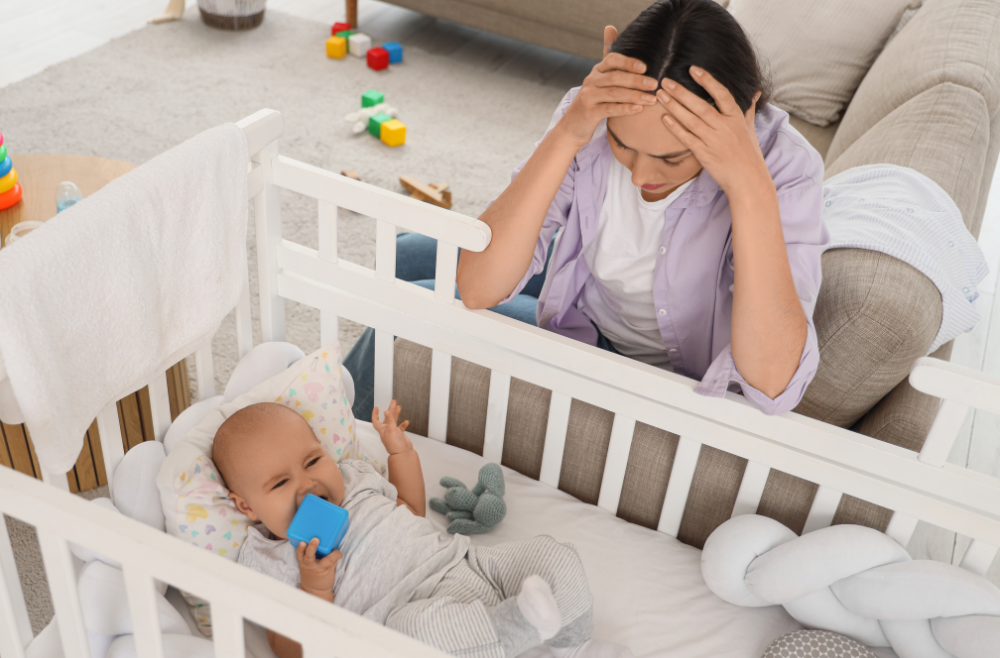
If your baby wakes when you put them down, it’s usually because their brain senses a sudden change in safety. Being transferred from warm, moving arms to a still surface can trigger the startle reflex and light sleep cycles. This is normal in the early months and usually improves as the nervous system matures.
You finally get your baby asleep.
You lower them carefully into the bassinet…
…and their eyes open instantly.
Sometimes before you even let go.
You try again.
Same result.
It can feel exhausting—especially when your baby sleeps peacefully in your arms but wakes the moment they touch the mattress.
Many parents start to wonder if they’ve already created a bad habit.
You haven’t.
In the early months, this reaction is completely normal.
Newborn sleep simply isn’t designed for separation yet.
This stage often overlaps with an increased need for contact and reassurance, which can feel especially intense during the first few months.
→ Why Toddlers Cling to Mum — Especially When She’s Exhausted
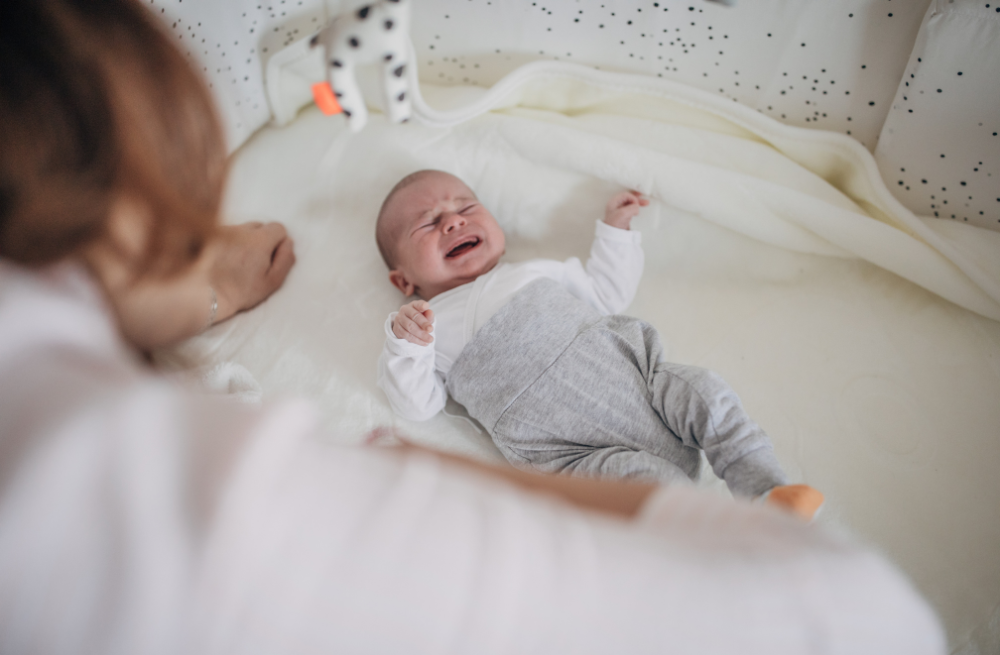
Why Babies Wake Up When You Put Them Down
Your baby spent months sleeping in constant contact inside the womb.
They were surrounded by warmth, movement, gentle pressure and the constant rhythm of your breathing and heartbeat.
When you place them into a cot, several things change at once.
Warmth becomes cooler.
Movement stops.
Your arms disappear.
The mattress feels firm and still.
For an adult, these changes barely register.
For a newborn nervous system, they can feel enormous.
Your baby’s brain briefly checks:
“Am I still safe?”
At the same time, babies spend much more time in light sleep than adults.
During these lighter stages they’re easily disturbed, making transfers especially difficult.
Many babies also still have a strong startle (Moro) reflex.
Being lowered away from your chest can briefly feel like falling, causing their arms to fling outward and their eyes to open—even though they were asleep only moments earlier.
None of this means your baby dislikes the cot.
It’s simply their nervous system responding exactly as it was designed to.
Think about falling asleep on the sofa.
Imagine falling asleep curled up on the sofa and briefly waking a few minutes later in your own bed without remembering being moved.
For a moment, you’d probably feel confused too.
Your baby experiences something similar. They fall asleep in one place and briefly wake in another—but unlike adults, they don’t yet understand what has changed.
That sudden difference is often enough to wake them fully.
How to Make Baby Transfers Smoother
The goal isn’t necessarily deeper sleep.
The goal is a gentler transition.
Small changes can make a big difference.
Wait for deeper sleep
Wait until your baby’s breathing slows and their body becomes completely loose.
That relaxed, floppy stage is often the best moment to transfer.
Signs Your Baby Is Ready to Be Put Down
Before attempting the transfer, look for a few signs that your baby has moved into deeper sleep:
✓ breathing has become slow and steady
✓ hands are relaxed rather than clenched into fists
✓ arms feel heavy when gently lifted
✓ eyelids stay closed if you slightly reposition them
✓ their body feels loose rather than tense
Waiting just a few extra minutes can make transfers much more successful.
Lower them gradually
Try lowering the body gradually:
- feet
- hips
- shoulders
- head
The final head drop is where most transfers fail.
Move slowly.
Keep a hand on their chest
After the transfer, leave a hand on your baby’s chest for 20–30 seconds.
That warmth and pressure help soften the transition from contact to mattress.
Then slowly remove your hand.
Some babies also settle more easily after a few minutes in a baby carrier before being transferred to bed. If you’re choosing one, our guide to the Best Baby Carriers (UK) compares the options we’d genuinely recommend.
When Your Baby Still Wakes
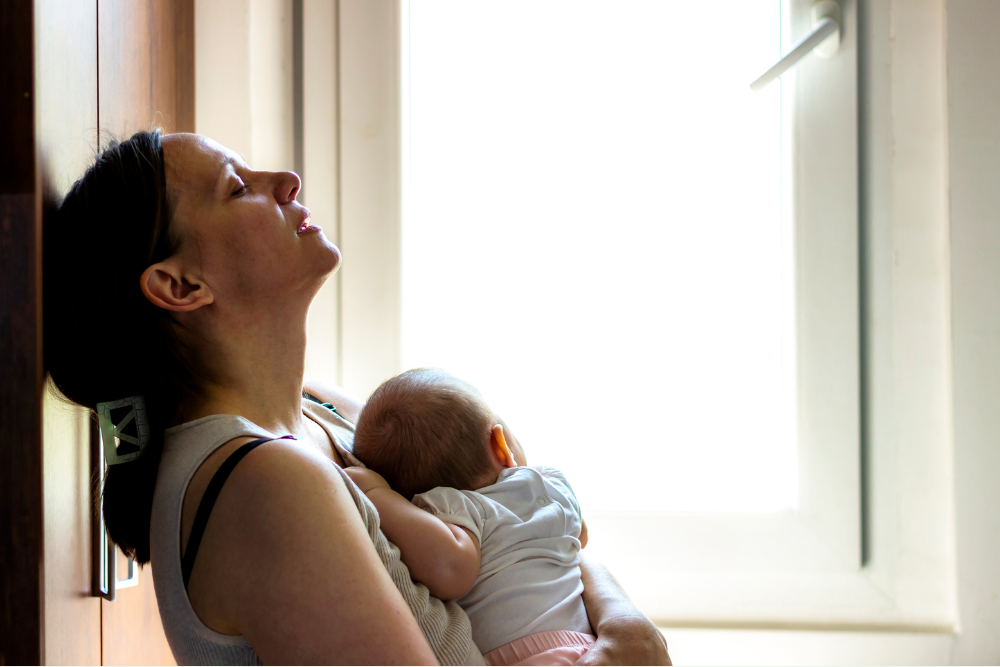
Sometimes babies wake no matter how careful you are.
That does not mean you did anything wrong.
In the early months, many babies simply need movement or contact to stay regulated.
The crib feels unfamiliar.
The stillness feels unfamiliar.
Their brain hasn’t learned yet that a separate surface is safe.
That learning happens gradually — through repeated experiences, not training.
If your baby wakes again after only 10–20 minutes, that’s often a normal “false start” rather than a sign they weren’t tired. Young babies spend much of their sleep in lighter stages, making them much more sensitive to changes in their environment.
During awake time, opportunities to explore a calm floor space can gradually build confidence away from your arms. Our guide to Baby Play Mats That Look Like Rugs shares some of our favourite low-stimulation options.
Making the Sleep Space Feel Safer
A calm, predictable environment helps babies settle more easily.
Try to keep the sleep space simple and consistent:
- same location
- similar lighting
- consistent background sounds
- minimal visual stimulation
Babies relax faster when the environment feels predictable rather than stimulating.
Some parents also find that simplifying the sleep space makes transfers noticeably easier. A calm, low-stimulation environment helps babies settle more quickly and stay asleep for longer.
If you’re setting up your baby’s room, a simple, development-friendly approach can make a big difference.
→ See How to Create a Calm Montessori Bedroom for Babies

Some parents also find that slightly warming the mattress beforehand or keeping a hand on the baby for a few moments after transfer helps reduce the sudden sensory change.
A simple play space during the day can also help babies experience calm, predictable surroundings. We share some of our favourite options in Beautiful Wooden Baby Gyms That Support Early Development.
Are You Creating Bad Sleep Habits?
Many parents worry that holding their baby to sleep will create long-term sleep problems.
In the early months, babies do not form habits the way older children do.
Their sleep behaviour is driven by nervous system development, not learned preference.
Responding consistently builds security—and over time, that security becomes the foundation for independence.
Holding your baby now does not prevent independent sleep later.
Development shapes sleep far more than training in the early months.
When Transfers Start Getting Easier
Around 3–5 months, many babies begin tolerating transfers more easily as:
- the startle reflex fades
- sleep cycles lengthen
- body awareness improves
Most babies gradually tolerate transfers more easily as their nervous system matures. The change usually happens little by little rather than overnight.
As your baby grows, their sleep environment will evolve too. If you’re thinking ahead, you might enjoy our guide to Montessori Bedroom for 12–18 Month Olds.
Not because you forced it —
but because your baby’s brain became ready.
The Important Thing to Remember
If your baby wakes the moment you put them down, nothing is broken.
They aren’t fighting sleep.
They’re responding to one of the biggest transitions they’ve ever experienced—from sleeping in your arms to sleeping on a separate surface.
With time, their nervous system learns that the cot is safe too.
One day you’ll lower them into the cot, wait for the familiar cry… and it won’t come. Not because you finally found the perfect technique, but because your baby was ready.
Frequently Asked Questions
Why does my baby wake up the moment I put them down?
If your baby wakes when put down, it is often because their brain senses a sudden change in safety. Moving from warm, moving arms to a still surface can trigger the startle reflex or lighter sleep stages. This is very common in newborns and usually improves as the nervous system matures.
Is it normal for newborns to only sleep when held?
Yes. In the early months many babies sleep best when held because it mimics the environment they experienced in the womb — warmth, movement, and close contact. This does not mean you are creating bad habits. As babies grow, they gradually learn that other sleep spaces are safe too.
At what age do babies tolerate transfers better?
Many babies begin tolerating transfers more easily around 3 to 5 months, when the startle reflex begins to fade and sleep cycles lengthen. However, every baby develops at their own pace.
How long should I wait before putting my baby down?
It often helps to wait until your baby reaches deeper sleep. Signs include slower breathing, relaxed muscles, and a floppy or loose body. This stage usually appears 10–20 minutes after falling asleep, though it can vary between babies.
Does holding my baby to sleep create bad habits?
No. In the early months, babies do not form sleep habits the same way older children do. Their sleep patterns are primarily shaped by neurological development. Responding to your baby’s need for comfort and closeness helps build security, which eventually supports independent sleep.
Why does my baby startle when I put them down?
Young babies have a strong Moro (startle) reflex that activates when their body senses falling or sudden space. Being lowered from your chest into a crib can trigger this reflex, causing arms to fling outward and waking the baby. This reflex fades naturally as the nervous system develops.
When do babies grow out of waking when put down?
Many families notice transfers becoming easier sometime after the first few months as the startle reflex fades and the nervous system matures. Every baby develops at their own pace.
You Might Also Find Helpful