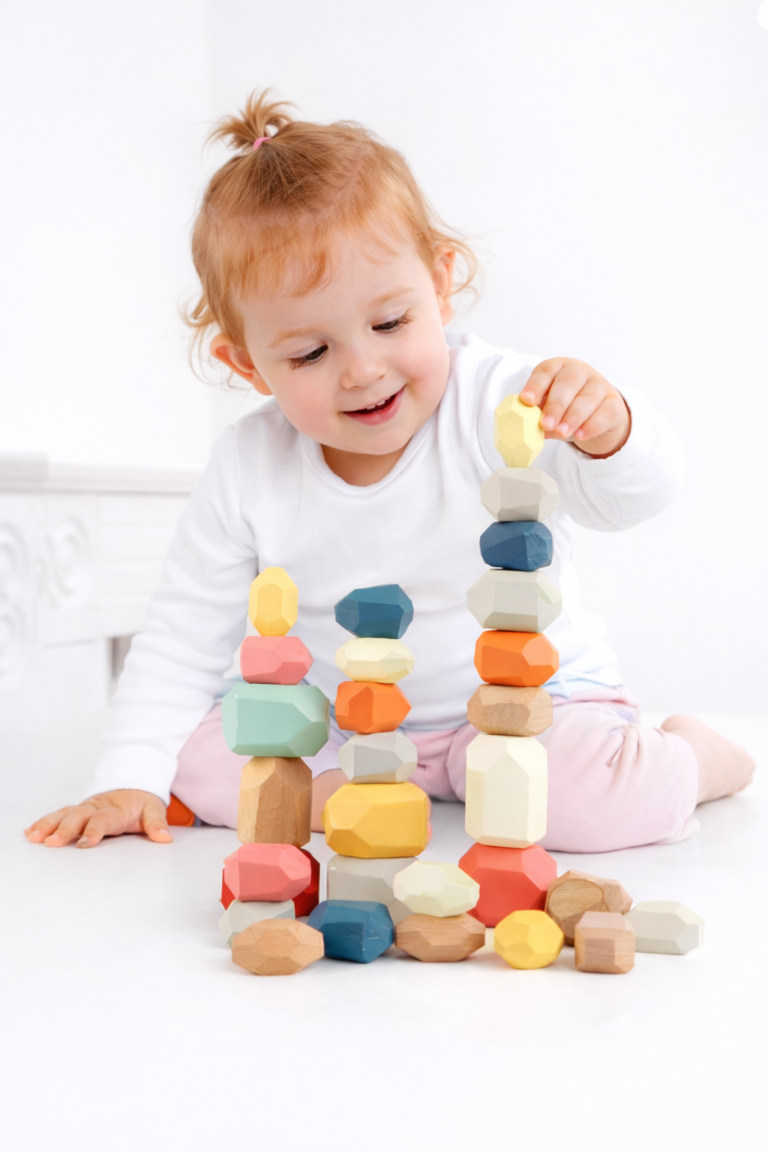
Montessori Bedroom for 12–18 Month Olds: What Changes at This Stage?
Between 12 and 18 months, many parents notice a shift.
The bedroom that felt calm and manageable a few months ago suddenly feels much harder to navigate.
Your toddler starts climbing everything.
Toy dumping becomes a daily event.
Bedtime feels less predictable.
And the room that once seemed to work perfectly now creates unexpected friction.
This is often a natural result of development rather than a sign that something is wrong.
At this stage, toddlers become significantly more mobile, curious and independent. As their needs change, the environment sometimes needs to evolve alongside them.
That does not mean buying more furniture or creating a picture-perfect Montessori space.
In fact, the most helpful changes are often surprisingly simple.
In this guide, we’ll look at what typically changes between 12 and 18 months, why certain behaviours become more common, and how small adjustments to the environment can help daily life feel calmer for both toddlers and parents.
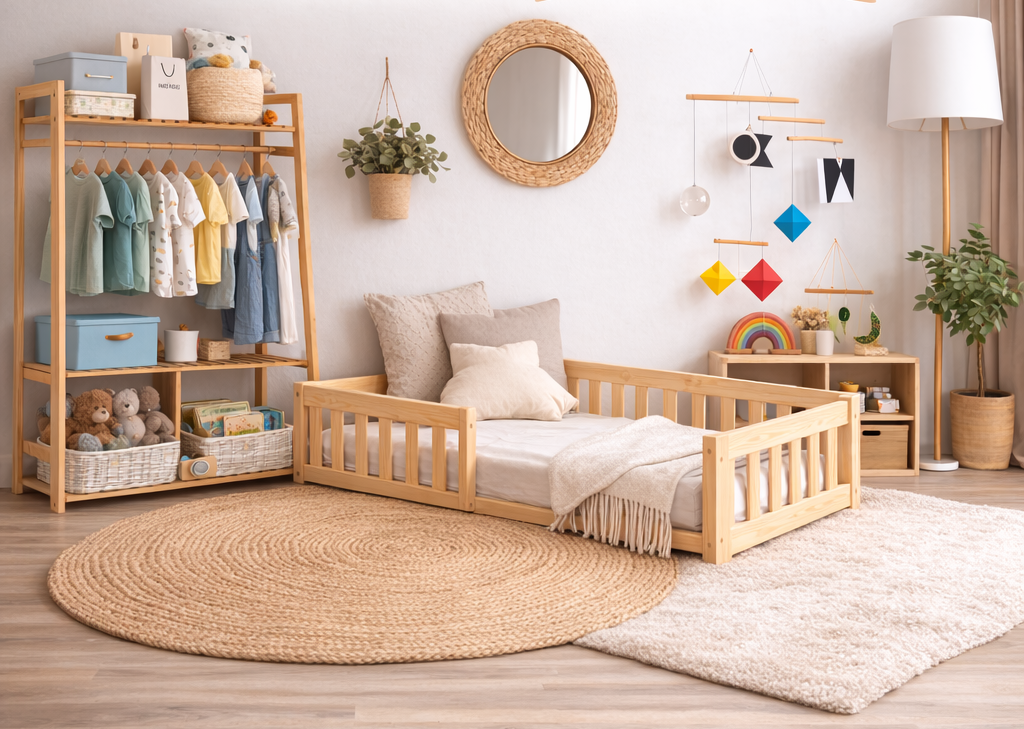
Disclaimer: This post contains affiliate links. I may earn a small commission at no extra cost to you. As an Amazon Associate I earn from qualifying purchases.
Why This Stage Is So Often Misunderstood
Between 12 and 18 months, many toddlers go through a noticeable shift.
They become more mobile, more curious and far more determined to interact with their environment independently.
At the same time, many bedrooms remain set up for an earlier stage of development.
What worked well for a younger baby can suddenly start creating friction. Toy dumping becomes more common. Climbing increases. Bedtime may feel less predictable. The room that once felt calm can begin to feel surprisingly chaotic.
This is also the age when many parents begin looking for Montessori bedroom ideas online. But some of the most visually appealing setups are actually designed for older toddlers with greater impulse control and environmental awareness.
When copied too early, they can sometimes create more overwhelm, more distractions and less focused engagement than parents expect.
This is one reason Montessori bedrooms often look very different at 14 months than they do at 3 years. The environment needs to evolve alongside the child, not stay frozen around an idealised version of Montessori.
The goal at this stage is not creating a perfectly styled Montessori room.
It is creating an environment that matches the child you have right now.
And between 12 and 18 months, that usually means keeping things simpler than most parents expect.
Why Climbing Suddenly Increases
One of the biggest surprises between 12 and 18 months is how quickly climbing seems to appear.
A toddler who was happily crawling a few weeks ago may suddenly be attempting to climb furniture, shelves, sofas and anything else within reach.
This is not usually a sign that something is wrong.
At this stage, toddlers are actively developing balance, coordination and body awareness. Climbing is often part of how they learn where their body is in space and what it is capable of doing.
The challenge is that many bedrooms are still set up for a less mobile child.
Furniture that felt harmless a few months earlier can suddenly become much more interesting.
Rather than trying to eliminate movement, it is often more helpful to make the environment safer for movement. Clear floor space, anchored furniture and realistic expectations usually go much further than repeatedly saying “don’t climb.”
Why Toy Dumping Becomes More Common
Many parents notice that play begins looking less focused during this stage.
Toys are pulled off shelves, baskets are emptied onto the floor and activities seem to last only a few moments before attention moves elsewhere.
It is easy to assume this means a child needs more toys or more entertainment.
Often, the opposite is true.
Between 12 and 18 months, toddlers are still learning how to organise their attention. When too many materials are visible at once, the environment can quickly become overwhelming.
What looks like boredom is often simply a child trying to process too many choices.
Many families find that reducing visible toys actually improves concentration. A small number of carefully chosen activities often creates more meaningful engagement than shelves filled with options.
If toy overwhelm has become a daily struggle, a simple toy rotation system can make a noticeable difference → Montessori Toy Rotation: The Simple System That Keeps Toddlers Engaged
And if you’re unsure what to actually keep out → Best Montessori Toys for 2 Year Olds That Actually Build Focus & Independent Play
Why Bedtime Often Gets Harder
This is also the age when many parents begin noticing changes around sleep.
Bedtime routines that once felt predictable may suddenly involve more resistance, more movement and more attempts to delay sleep.
Part of this is developmental.
Toddlers are becoming more aware of their environment, more capable of expressing preferences and more interested in maintaining control over what happens next.
At the same time, rapid physical and cognitive development can leave the nervous system feeling overstimulated by the end of the day.
This is often why calmer environments become increasingly important during this stage.
A predictable bedtime routine, low stimulation and a bedroom that feels easy to understand can help support smoother transitions into sleep.
The Environment Often Shows Up as Behaviour
One of the most useful Montessori ideas is that behaviour is often information.
Constant shelf clearing, toy dumping, climbing, wandering at bedtime or increasing frustration can sometimes be signs that the environment is no longer matching the child’s developmental needs.
That does not mean the environment is causing every challenge.
But it is often worth looking at the room before assuming the behaviour itself is the problem.
Toddlers between 12 and 18 months usually regulate better when spaces feel simpler, calmer and easier to navigate independently.
Sometimes reducing visible toys, clearing more floor space or simplifying routines creates a surprisingly noticeable shift.
The Floor Bed Question
This is often the age when parents begin wondering whether a floor bed might make sense.
For some children, increased mobility makes the transition feel natural. A floor bed allows greater freedom of movement and can support growing independence around sleep.
In our own home, we transitioned from a bedside crib to a floor bed at around six months and continued sleeping alongside our daughter for a period while she became familiar with her new environment. Looking back, the success of the transition had far more to do with the overall room and bedtime routine than the bed itself. Reading books together, getting changed and following the same evening rhythm each night ended up mattering far more than the furniture in the room.
A floor bed is not a Montessori requirement.
And it is not a solution to bedtime challenges on its own.
What matters most is whether the wider environment feels calm, safe and manageable for your child.
If you do decide to make the transition, simple floor beds are often the easiest place to start. We generally prefer low wooden frames that support independent movement without becoming the main feature of the room.
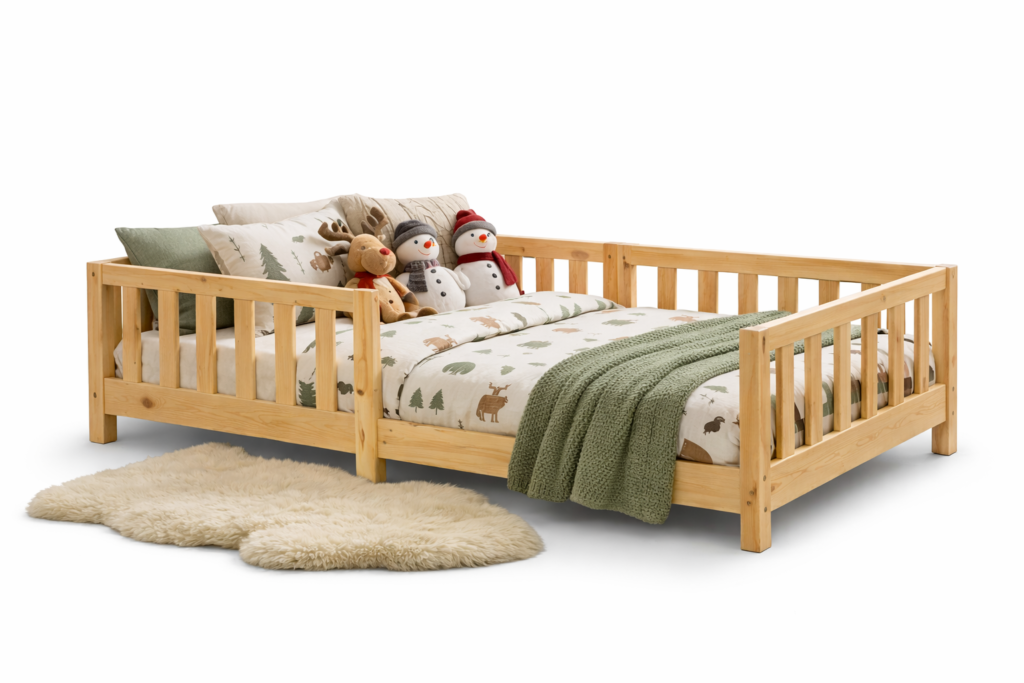
If you’re exploring different options, you can compare a few practical choices here:
→ Best Floor Beds for Toddlers (UK) — Safe, Simple & Montessori-Inspired
Final Thoughts
Between 12 and 18 months, toddlers change quickly.
The room that worked beautifully a few months ago may no longer support the child standing in front of you today.
That does not mean you need a complete bedroom makeover.
More often, it means simplifying what is already there, making space for movement and recognising that behaviour is often shaped by the environment around it.
At this stage, the most effective Montessori bedrooms are rarely the most elaborate.
They are usually the ones that feel calm, manageable and easy for both toddlers and parents to live in day after day.
FAQs
Why does my toddler suddenly start climbing everything?
Climbing often increases between 12 and 18 months because toddlers are developing balance, coordination and body awareness. In many cases, climbing is a normal part of learning how their body moves rather than a behaviour that needs to be stopped entirely.
Is toy dumping a sign my toddler is bored?
Not necessarily. Between 12 and 18 months, toy dumping is often part of exploration and can also be a sign that there are too many materials available at once. Many toddlers engage more deeply when fewer toys are visible and the environment feels simpler to navigate.
Why does my toddler keep dumping out all their toys?
Toy dumping is often linked to curiosity and exploration, but it can also be a sign that there are too many choices available at once. Many toddlers focus better when fewer toys are visible and the environment feels simpler to navigate.
Why has bedtime become harder between 12 and 18 months?
This stage often brings increased independence, stronger preferences and greater awareness of the environment. Many toddlers begin testing boundaries around sleep while also becoming more sensitive to stimulation, making bedtime feel less predictable than it did a few months earlier.
Does a Montessori bedroom need to change as my toddler grows?
Yes. A Montessori environment is designed to adapt alongside the child. What works well for a younger baby may no longer support a toddler who is climbing, exploring independently and seeking more autonomy.
Is a floor bed necessary in a Montessori bedroom?
No. A floor bed is one option, not a requirement. The most important factor is creating an environment that feels safe, calm and developmentally appropriate for your child.
Can the bedroom environment affect toddler behaviour?
Sometimes, yes. Constant toy dumping, climbing, frustration or bedtime struggles can occasionally be signs that the environment has become overwhelming or no longer matches the child’s developmental needs. Small changes to the room can sometimes have a surprisingly positive effect.
You Might Also Find Helpful