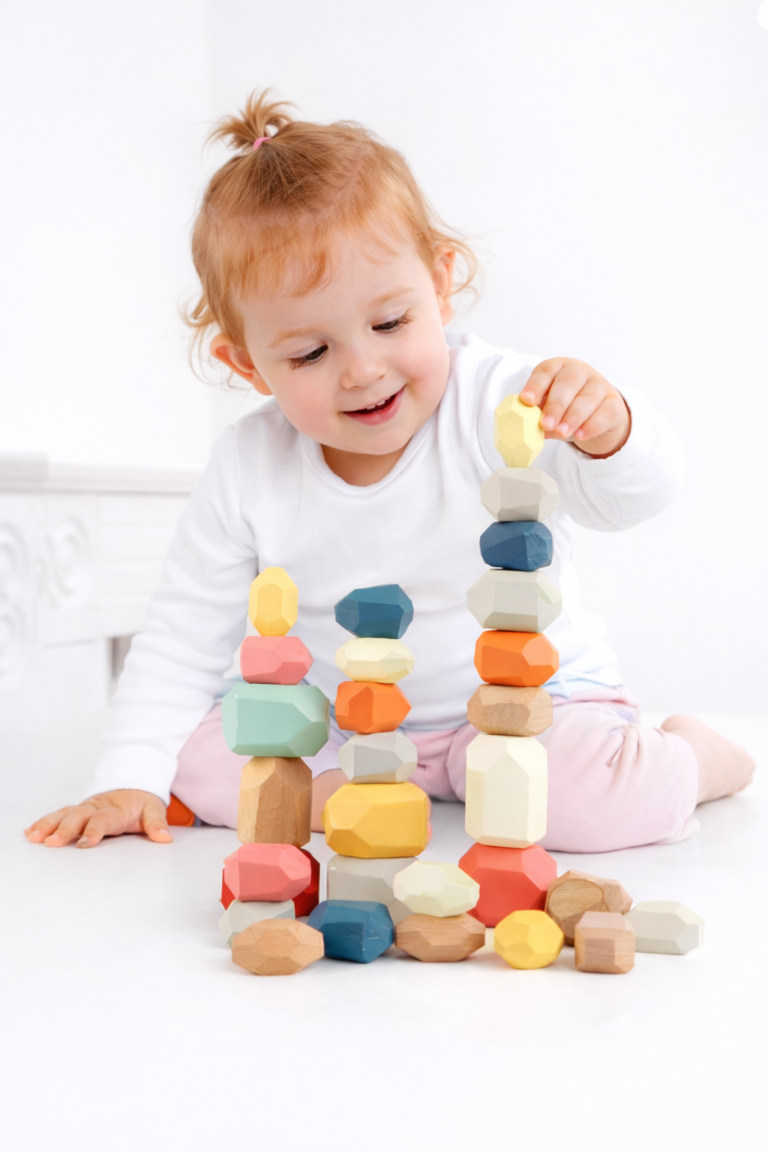
Montessori Activities for Autistic Toddlers (Ages 2–3)
If you’ve ever searched for Montessori activities for autistic toddlers, you’ve probably found endless lists of crafts, sensory bins, and Pinterest-perfect setups.
The reality is often very different.
Many autistic toddlers aren’t looking for constant novelty. In fact, some are drawn to repetition, predictability, and activities that feel calm rather than exciting. While one child may happily spend twenty minutes transferring objects between bowls, another may be fascinated by opening and closing containers or carrying the same basket around the room.
This is one of the reasons many families find Montessori principles helpful.
Montessori isn’t about keeping children busy. It’s about observing what interests them, preparing a supportive environment, and allowing learning to happen through meaningful, hands-on experiences.
For autistic toddlers between ages two and three, Montessori activities are often most effective when they are simple, structured, and easy to repeat—qualities that many autistic children naturally gravitate towards.
The ideas below focus on supporting concentration, independence, sensory regulation, and confidence without overwhelming your child or your home.
Why Montessori Can Work Well for Autistic Toddlers
Between ages two and three, autistic toddlers are developing rapidly.
Many are learning to:
- communicate their needs
- understand routines
- develop fine motor skills
- regulate emotions
- navigate sensory experiences
- build independence
Montessori activities naturally support these areas because they are concrete and predictable.
Unlike many toys that encourage passive entertainment, Montessori activities invite children to participate actively in their environment.
Just as importantly, Montessori encourages adults to follow the child rather than forcing participation.
For autistic toddlers, this can remove much of the pressure that often accompanies structured activities.
Montessori Activities for Toddlers Who Love Repetition
Many autistic toddlers find comfort in repetition.
While adults may feel tempted to introduce something new, repeated actions are often where learning and regulation happen.
1. Pouring Between Bowls or Cups

Use two bowls and allow your toddler to transfer:
- large pasta shapes
- wooden blocks
- large pom-poms
- chunky beads
- water
The repetitive movement can be calming while also developing coordination and concentration.
2. Spoon Transfer Activity
Place large objects in one bowl and provide a child-sized spoon.
This simple activity encourages focus, hand-eye coordination, and independence.
Many toddlers will repeat it far longer than adults expect.
3. Wiping a Table
Offer a damp cloth and demonstrate slowly.
This often appeals to toddlers who enjoy predictable movements and real-life tasks.
Unlike many toys, practical life activities have a clear purpose, which can feel reassuring for autistic children.
4. Water and Sponge Transfer
Using a sponge to move water between containers provides both sensory input and purposeful work.
If your child is sensitive to water, begin with dry sponge transfers before introducing liquids.
Simple, child-sized tools can make Montessori activities far more accessible for autistic toddlers. Low shelves, lightweight trays, and developmentally appropriate materials often help children engage independently without becoming overwhelmed. If you’re building a calm Montessori space at home, these are some of the best Montessori toys recommended for autistic children.
Montessori Activities for Toddlers Who Need Movement
Focus doesn’t always look like sitting still.
For many autistic toddlers, movement is what helps them regulate and engage.
5. Carrying Heavy Objects

Allow your child to:
- carry books
- move a small basket
- transport folded towels
This type of “heavy work” provides deep-pressure input that many children find calming.
6. Pushing a Laundry Basket
A lightly loaded basket can provide valuable resistance and body awareness.
Many toddlers naturally enjoy moving objects around the house.
7. Simple Movement Mat

Create a safe floor space for:
- crawling
- rolling
- stretching
- animal walks
The goal is not exercise but body awareness and freedom of movement.
Even with thoughtful preparation, toddlers can still experience moments of frustration or sensory overload. When that happens, calm language and predictable responses can make a significant difference in helping them regulate and feel safe. If you’re navigating frequent meltdowns, you may also find these simple phrases helpful: → 10 Things to Say During a Toddler Meltdown
Montessori Activities for Sensory-Sensitive Toddlers
Some autistic toddlers become overwhelmed when too many sensory experiences are presented at once.
Less is often more.
8. Texture Exploration with Limited Choices
Instead of offering ten textures, start with two or three.
Examples:
- soft fabric
- smooth wood
- felt squares
Allow your child to engage at their own pace.
Never force touch.
9. Sound Bottles
Fill sealed bottles with different materials such as:
- rice
- sand
- beans
Shake gently and compare sounds.
Keep volume low and predictable.
10. Nature Basket

Collect a few natural objects together:
- leaves
- pinecones
- smooth stones
Natural materials often feel calmer and less overwhelming than brightly coloured plastic toys.
Montessori Activities That Build Focus and Independence
These activities encourage problem-solving without creating unnecessary frustration.
11. Object-to-Object Matching
Match identical household items:
- spoon to spoon
- brush to brush
- block to block
This is often easier and more meaningful than picture matching for younger toddlers.
12. Large Knobbed Puzzles
Choose puzzles with:
- clear shapes
- large pieces
- minimal distractions
Start with only a few pieces and gradually increase complexity.
13. Shape Posting
Simple shape sorters provide clear feedback and predictable outcomes.
If your child becomes frustrated, begin with a single shape.
14. Simple Visual Schedule
Create a short daily sequence:
- breakfast
- play
- snack
- outside
Many autistic toddlers feel more secure when they can anticipate what comes next.
Observation Matters More Than the Activity
One of the biggest misconceptions about Montessori is that children are supposed to engage with every activity presented to them.
Autistic toddlers often remind us that this simply isn’t true.
If a child repeatedly ignores a tray, walks away from an activity, or becomes distressed, that isn’t failure. It’s information.
Sometimes the material is too difficult.
Sometimes it’s too easy.
Sometimes the sensory experience isn’t comfortable.
Sometimes the child simply isn’t interested that day.
Montessori begins with observation. Instead of asking, “How can I make my toddler do this activity?” it can be more helpful to ask, “What is my toddler trying to show me?”
This shift in perspective can be especially valuable for parents of autistic toddlers. Progress doesn’t always look like completing an activity as intended. Sometimes the greatest insight comes from noticing what your child returns to naturally, what helps them feel calm, and what captures their attention without prompting.
Sometimes a toddler’s refusal to engage has nothing to do with the activity itself. Sensory overload, transitions, communication frustrations, or simply too much happening in the environment can all make it difficult for a child to participate. Understanding the signs of overwhelm can make Montessori observation much more effective. If this is something you’re navigating, you may find it helpful to read: → What It Feels Like When Your Autistic Toddler Is Overwhelmed and How to Help
What Focus Really Looks Like in an Autistic Toddler
Focus doesn’t always look the way adults expect.
It may not involve sitting quietly at a table.
It may not involve making eye contact.
It may not even look like using an activity “correctly.”
An autistic toddler who repeatedly pours water between containers, lines up objects, carries books around the room, or opens and closes a box may be demonstrating intense concentration.
Montessori encourages us to value that concentration rather than interrupt it.
When children are deeply engaged in meaningful work, they are developing confidence, coordination, independence, and self-regulation.
Final Thoughts
The most effective Montessori activities for autistic toddlers are often the simplest.
You don’t need expensive materials or elaborate setups.
A few carefully chosen activities, a calm environment, and a willingness to observe can go a long way.
Focus on:
- simple materials
- predictable routines
- freedom of movement
- repetition without pressure
- respect for your child’s interests
Most importantly, remember that Montessori is not about getting children to perform activities in a particular way.
It’s about creating an environment where they can learn, explore, and develop at their own pace.
FAQs
Are Montessori activities good for autistic toddlers?
Many autistic toddlers enjoy Montessori activities because they are hands-on, predictable, and easy to repeat. Montessori also encourages adults to follow the child’s interests rather than forcing participation, which can reduce frustration and support confidence.
What Montessori activities help autistic toddlers focus?
Simple activities such as pouring, spoon transfers, object matching, wiping a table, and carrying objects often encourage concentration because they provide clear goals and repetitive movements. The best activity is usually the one your child chooses to return to repeatedly.
How long should Montessori activities last for a 2-year-old autistic child?
There is no ideal length of time. Some toddlers may engage for only a few minutes, while others may repeat the same activity for much longer. Focus on your child’s level of engagement rather than the clock.
What if my autistic toddler ignores Montessori activities?
Ignoring an activity is not a sign of failure. Montessori encourages observation. If your toddler consistently avoids a material, it may be too difficult, too easy, sensory-uncomfortable, or simply not interesting to them at that moment.
Can autistic toddlers do Montessori activities independently?
Yes. Many Montessori activities are designed to encourage independence through simple, child-sized materials and clear steps. Some autistic toddlers may initially need support or modelling before becoming comfortable working on their own.
What are the best sensory-friendly Montessori activities for autistic toddlers?
Water transfer, sponge squeezing, object matching, nature exploration, carrying heavy objects, and texture exploration with limited choices are often well suited to autistic toddlers because they provide controlled sensory experiences without overwhelming stimulation.
Should Montessori activities be adapted for autistic children?
Absolutely. Montessori is not about following a strict method. Activities can be simplified, shortened, or adjusted to suit a child’s communication style, sensory needs, and developmental stage. The goal is to support the child, not the activity.
What is the difference between Montessori and sensory play for autistic toddlers?
Montessori activities are typically structured, purposeful, and based on real-world skills, while sensory play often focuses on exploring different sensory experiences. Both can be valuable for autistic toddlers and can work well together when adapted to the child’s needs.
You Might Also Find Helpful