Co-Sleeping With a Baby: Bedsharing Safety Guide for New Parents
Sleep with a newborn rarely looks the way parents expect.
Many families begin with plans for a crib or bedside bassinet, only to discover that frequent night waking, feeding, and sheer exhaustion can make nighttime arrangements far more complicated than anticipated.
As a result, co-sleeping with a baby — particularly bedsharing — is something many parents encounter, whether they planned to or not.
Sometimes it happens intentionally.
Sometimes it happens unexpectedly during a late-night feed.
Because bedsharing is so common, healthcare organisations increasingly emphasise the importance of providing parents with clear, evidence-based information about safer sleep environments and the factors that can increase or reduce risk.
Understanding the difference between co-sleeping, bedsharing, and current safer sleep recommendations can help families make informed decisions that prioritise both safety and rest during the early months.

Disclosure: This article may contain affiliate links. As an Amazon Associate I earn from qualifying purchases at no extra cost to you.
What Is Co-Sleeping vs Bedsharing?
The terms are often used interchangeably, but they describe slightly different arrangements.
Co-sleeping generally refers to a parent sleeping close to their baby. This might include:
- a bedside crib next to the bed
- a bassinet within arm’s reach
- a side-car crib attached to the adult bed
Bedsharing, on the other hand, means a baby sleeps on the same sleep surface as a parent, usually the adult mattress.
Current UK guidance states that the safest place for a baby to sleep during the first six months is in a separate cot or crib in the parents’ room, positioned close to the bed.
At the same time, research and clinical guidance acknowledge that bedsharing is common during the newborn period, both in hospital and at home.
Why Many Parents End Up Bedsharing
Parents often bring their babies into bed for very practical reasons, including:
- breastfeeding during the night
- comforting and settling a baby
- skin-to-skin contact
- soothing frequent waking
NHS maternity guidance notes that parents may bring their baby into bed to feed, comfort or spend time with them, even if they did not originally intend to fall asleep together.
For breastfeeding mothers in particular, sharing a sleep space can make night feeds easier and more manageable. Research has also found that babies who share a bed with their mother are more likely to still be breastfeeding at three months, partly because feeding becomes more convenient overnight.
Because bedsharing is so common, healthcare professionals increasingly emphasise the importance of honest conversations about nighttime care rather than assuming it never happens. Providing parents with realistic information helps families understand both the potential risks and the factors that can help create safer sleep environments.
What Research Says About Bedsharing
Research examining infant sleep environments highlights a complex relationship between breastfeeding, sleep proximity and infant safety.
Studies have found that many parents share a sleep space with their baby at some point during the first year, whether intentionally or accidentally. Because of this, organisations such as UNICEF’s Baby Friendly Initiative and healthcare professionals increasingly emphasise the importance of providing parents with balanced, evidence-based information about nighttime care.
Rather than assuming bedsharing never happens, current guidance focuses on helping families understand both the factors that increase risk and the steps that can help create safer sleep environments when babies are sleeping close to their parents.
Research has also found that breastfeeding appears to reduce the risk of Sudden Infant Death Syndrome (SIDS), although infant sleep safety is influenced by many different factors.
Safer Sleep Guidance for Babies
Current UK safer sleep guidance recommends:
- a firm, flat sleep surface
- a clear sleep space without pillows, toys or loose bedding
- placing babies on their back to sleep
- avoiding overheating
Healthcare guidance also highlights that sofas and armchairs are particularly dangerous places to fall asleep with a baby due to the increased risk of suffocation or entrapment.
Many parents are extremely tired during the newborn period, which is one reason healthcare professionals increasingly discuss safer sleep arrangements before families leave hospital and during postnatal care.
Situations Where Bedsharing Carries Higher Risk
Research consistently identifies certain situations where bedsharing may carry increased risk.
These include when:
- either parent smokes or smoked during pregnancy
- alcohol or drugs are involved
- the baby was born prematurely
- the baby has a low birth weight
- the sleep surface is a sofa or armchair
If any of these factors apply, NHS guidance recommends avoiding bedsharing and using a separate sleep space for your baby.
If You Think You Might Fall Asleep While Feeding
One of the most important realities recognised by modern safer sleep guidance is that bedsharing is not always planned.
Many parents begin feeding or comforting their baby in bed and fall asleep unexpectedly, particularly during the exhausting early weeks after birth.
Because this happens so frequently, healthcare professionals increasingly encourage open, non-judgemental conversations about sleep arrangements rather than assuming it never happens.
If you think there is a possibility you might fall asleep while feeding or settling your baby, it can be helpful to prepare your sleep environment in advance.
Current safer sleep guidance generally recommends:
- keeping pillows, loose bedding and soft objects away from the baby
- using a firm, flat mattress
- avoiding sofas and armchairs for feeding or settling
- ensuring your baby is sleeping on their back
- avoiding overheating
- avoiding bedsharing if smoking, alcohol, drugs, or other risk factors are involved
The goal is not to encourage bedsharing.
The goal is to help parents understand the factors that influence risk and make informed decisions during a stage of life when exhaustion is often unavoidable.
Creating a Safer Sleep Environment
Many families choose to keep their baby close at night while still providing a separate sleep surface.
A bedside crib is one of the most common ways to achieve this. It allows babies to sleep alongside their parents while remaining on their own firm mattress and within easy reach for nighttime feeds.
We used the Tutti Bambini CoZee Bedside Crib during the newborn stage and found it particularly helpful for nighttime feeding and settling, as it kept our baby close without requiring a separate sleep surface.
Sleep sacks can also help create a safer sleep environment by reducing the need for loose blankets, which may cover a baby’s face during sleep.
Over time, we ended up using a mixture of both the Tommee Tippee Swaddle Bag Baby Sleep Bag and the Ergobaby Swaddler. We liked different aspects of each. The Tommee Tippee sleep bag worked well once our daughter moved beyond the swaddling stage, while the Ergobaby swaddler was particularly useful during the early newborn weeks when she still benefited from the secure feeling of being gently wrapped.
As with any sleep product, it’s important to follow the manufacturer’s guidance and ensure it is used appropriately for your baby’s age, size and stage of development.
Choosing the Right Baby Sleeping Bag (TOG Guide)
When using sleep sacks, understanding TOG ratings can help you choose the most appropriate option for your room temperature.
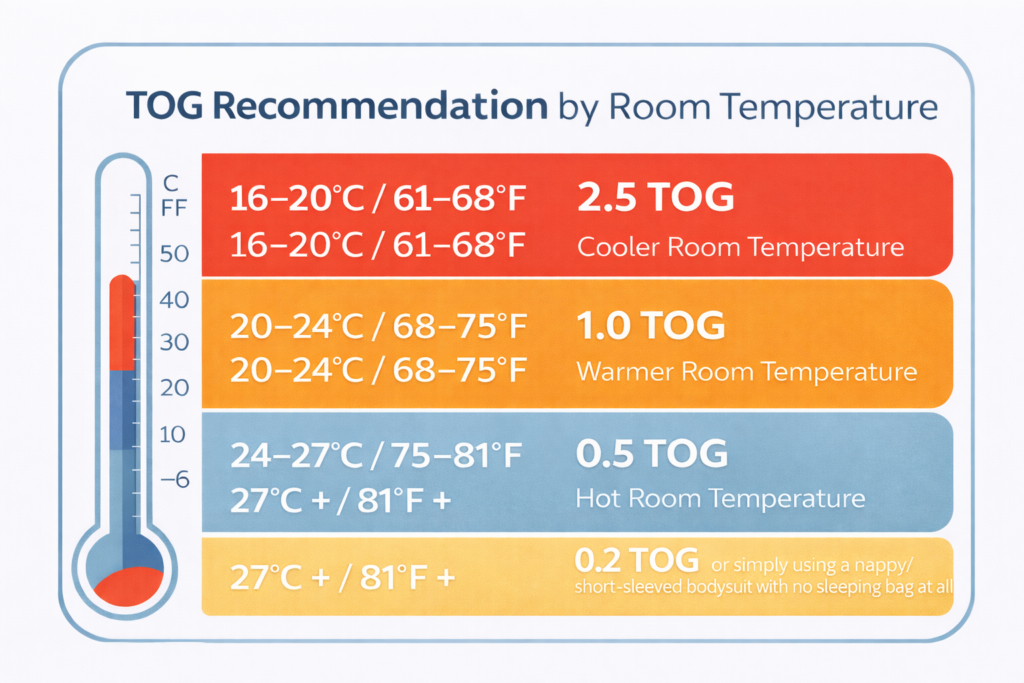
The ideal TOG depends on the temperature of the room rather than the season.
Recommended TOG Ratings
• 2.5 TOG – Suitable for cooler rooms around 16–20°C (typical UK nursery temperature).
• 1.0 TOG – Suitable for warmer rooms around 20–24°C.
• 0.5 TOG – Suitable for hot weather or rooms around 24–27°C.
Rather than adding blankets, adjust what your baby wears underneath the sleeping bag. A simple rule is to dress your baby in one more light layer than an adult would feel comfortable wearing in the same room.
Always check that your baby does not feel too hot, particularly around the back of the neck or chest.
If you’re considering using a night light during feeds or nappy changes, this guide explains what to look for and when a night light may (or may not) be helpful.
→ Best Low-Stimulation Night Lights
Final Thoughts
Sleep with a new baby is rarely simple.
Some families use bedside cribs.
Some share a room with a cot.
Some end up bedsharing unexpectedly during a late-night feed.
Research and healthcare guidance increasingly recognise that many parents will share a sleep space with their baby at some point, whether intentionally or accidentally.
Because of this, providing clear, balanced information about safer sleep environments allows parents to make informed decisions that prioritise their baby’s wellbeing.
And in the early months of parenting, finding a balance between safety, closeness, and rest is something every family continues to learn.
Quick Guide: Safer Co-Sleeping and Bedsharing
Many parents end up sharing a sleep space with their baby at some point — whether intentionally or unexpectedly during a night feed. Understanding a few key safer sleep principles can help reduce risks and support informed decision-making during the newborn months.
Safer Sleep Reminders
✔ The safest place for a baby to sleep during the first six months is in a separate cot or crib in the parents’ room
✔ Always place babies on their back to sleep
✔ Use a firm, flat sleep surface free from pillows, toys, loose bedding, and other soft items
✔ Avoid falling asleep with a baby on a sofa or armchair
✔ Keep the sleep environment cool and avoid overheating
✔ Avoid bedsharing if smoking, alcohol, drugs, prematurity, or low birth weight are factors
✔ If you think you may fall asleep while feeding, prepare the sleep environment in advance rather than assuming it won’t happen
Many families also find that bedside cribs, appropriately fitted sleep sacks, and simple nighttime routines help make overnight care easier while supporting safer sleep practices.
Ultimately, the goal is not perfection. It is understanding the factors that influence risk and creating the safest sleep environment possible for your family’s circumstances.
Frequently Asked Questions About Co-Sleeping and Bedsharing
Is it safe to co-sleep with a newborn?
Current UK safer sleep guidance states that the safest place for a newborn to sleep is in a separate cot or crib in the parents’ room for the first six months.
However, many parents find themselves sharing a sleep space with their baby at some point, whether intentionally or unexpectedly during a nighttime feed. Because of this, healthcare professionals increasingly focus on helping parents understand the factors that influence risk, rather than assuming bedsharing never occurs.
What is the difference between co-sleeping and bedsharing?
The terms are often used interchangeably, but they describe different arrangements.
Co-sleeping generally refers to a baby sleeping close to their parents, usually in the same room.
Bedsharing means a baby sleeps on the same mattress or sleep surface as a parent.
Room-sharing with a separate cot, crib, or bedside bassinet is widely recommended because it allows parents to remain close while maintaining a separate sleep space for the baby.
Why do many parents end up bedsharing?
Many parents bring their baby into bed for practical reasons such as nighttime feeding, comforting a waking baby, skin-to-skin contact, or settling their baby back to sleep.
For breastfeeding mothers in particular, sharing a sleep space can make night feeds easier and more manageable. Because bedsharing is so common, healthcare professionals increasingly encourage honest conversations about sleep arrangements and safer sleep practices.
What should I do if I accidentally fall asleep while feeding my baby?
Many parents unintentionally fall asleep while feeding or comforting their baby, particularly during the newborn months when sleep deprivation is common.
Because this happens frequently, healthcare professionals encourage parents to think about safer sleep arrangements in advance rather than assuming they will always remain awake. Understanding the factors that increase risk and preparing a safer sleep environment can help families make more informed decisions during nighttime feeds.
When is bedsharing more dangerous for babies?
Research consistently identifies certain situations where bedsharing may carry increased risk.
These include when:
- a parent smokes or smoked during pregnancy
- alcohol or drugs are involved
- the baby was born prematurely
- the baby has a low birth weight
- the baby is sleeping on a sofa or armchair
Understanding these risk factors can help parents make safer decisions about nighttime care.
Does breastfeeding reduce the risk of SIDS?
Several studies have found that breastfeeding is associated with a reduced risk of Sudden Infant Death Syndrome (SIDS).
Breastfeeding is also one reason many parents bring babies into bed during nighttime feeds, as it can make feeding and settling easier. Because of this, many healthcare professionals recommend discussing both breastfeeding and sleep safety together when supporting new parents.
What is the safest sleep setup for a newborn?
For most families, the recommended sleep setup includes:
- a firm, flat sleep surface
- a clear sleep space without loose bedding, pillows, or toys
- the baby sleeping on their back
- the baby sleeping in the parents’ room for the first six months
Many families use bedside cribs or bassinets to keep their baby close while maintaining a separate sleep surface.
What should parents avoid when sleeping near a baby?
Parents should avoid:
- sleeping with a baby on a sofa or armchair
- loose bedding or pillows near the baby
- overheating the baby
- bedsharing when alcohol, drugs, smoking, or other risk factors are involved
These situations are consistently associated with increased sleep-related risks.
Medical Disclaimer
This article is for informational purposes only and does not replace professional medical advice. Always consult your midwife, health visitor, or healthcare provider regarding safe sleep practices for your baby.
Sources and Research Referenced
This article summarises guidance from UK health organisations including the NHS, UNICEF Baby Friendly Initiative, and the Royal College of Midwives.
- UNICEF Baby Friendly Initiative – Caring for Your Baby at Night
- Royal College of Midwives (2021) – Safer Sleep Guidance for Maternity Healthcare Professionals
- Marinelli K., Ball H., McKenna J., Blair P. (2019) – Maternal-Infant Sleep and SIDS Research, Journal of Human Lactation
- Academy of Breastfeeding Medicine (2019) – Bedsharing and Breastfeeding Protocol
- NHS Safer Sleep Guidance
You Might Also Find Helpful