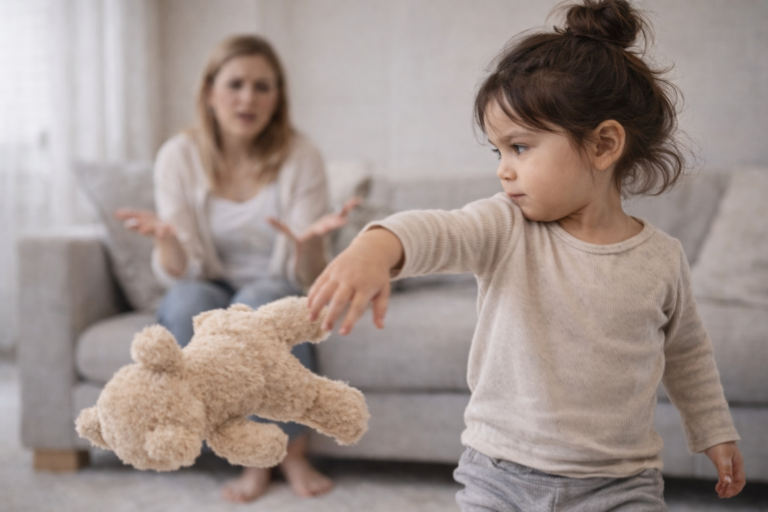
Why Toddlers Cling to Mum — Especially When She’s Exhausted
It always seems to happen at the worst possible moment.
You’ve barely slept.
The kitchen still needs tidying.
Dinner needs cooking.
You finally sit down…
…and suddenly your toddler needs you more than they have all day.
The child who was happily playing five minutes ago now wants to be carried.
They follow you from room to room.
They cling to your legs while you make a cup of tea.
Many parents notice the same confusing pattern.
The more exhausted they feel…
…the more their toddler seems to need them.
It can feel overwhelming.
Sometimes even frustrating.
You find yourself wondering:
“Why now, when I have the least energy to give?”
The surprising answer is that your toddler probably isn’t choosing the moment at all.
In many cases, they’re responding to something they’ve quietly noticed long before you have.

Why Toddlers Stay Close to the People They Trust
Young children are biologically wired to stay close to the people who help them feel safe.
When a toddler feels uncertain, overwhelmed or upset, their brain instinctively encourages them to move closer to the person they trust most.
Psychologists refer to this as the attachment system.
It often shows up as behaviours like:
- crying
- calling for a parent
- wanting to be held
- physically clinging
These are sometimes described as proximity-seeking behaviours because they’re your child’s way of reducing uncertainty by staying close to their safe person.
In simple terms, when the world feels a little uncertain, your toddler’s brain isn’t telling them to cope alone.
It’s telling them to come closer to you.
When the world feels uncertain… your toddler’s instinct is to come closer to you.
Why Your Presence Matters So Much
Young children aren’t yet able to calm themselves in the way older children and adults can.
Instead, they rely on the people they trust to help them feel safe again.
Psychologists call this co-regulation.
It simply means that your presence, your voice and your touch help your child’s nervous system settle when they’re feeling overwhelmed.
That’s why toddlers often want to be held, cuddled or stay physically close when they’re tired, upset or unsure.
From your toddler’s perspective, staying close isn’t creating the solution.
It is the solution.
If they could put it into words, it might sound something like:
“Stay close to the person who helps me feel safe.”
Why It Often Happens When You’re Exhausted
This is the part many parents find surprising.
Young children are incredibly sensitive to the people they depend on most.
When you’re exhausted, stressed or mentally overwhelmed, small changes can naturally creep into the way you interact.
You might:
- respond a little more slowly
- seem quieter than usual
- appear distracted
- have less emotional energy
Your toddler isn’t analysing these changes or thinking,
“Mum looks tired today.”
They simply notice that something feels different.
And when something feels different…
…their instinct is often to move closer to the person who usually helps them feel safe.
Ironically, the moments when you most need a few quiet minutes to yourself can be the moments your child feels they need you most.
Why Children Often Cling Specifically to Their Mother
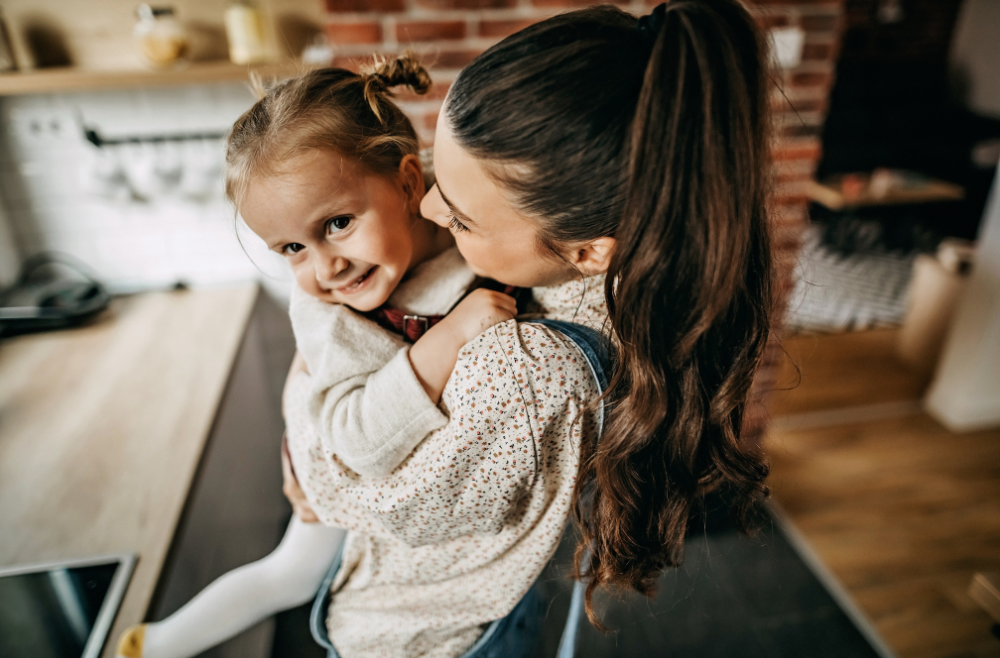
Many families notice that when a toddler is upset, tired or overwhelmed, they seem to want mum more than anyone else.
In many families, that’s because mum has been the person providing comfort, feeding and reassurance since the very beginning.
Over time, your toddler’s brain begins to associate that familiar person with safety.
So when life feels uncertain, they instinctively seek the person who has helped them feel calm so many times before.
Of course, this isn’t unique to mothers.
For children whose primary caregiver is a father, grandparent or another trusted adult, that person often becomes the one they turn to instead.
The important thing isn’t who the caregiver is.
It’s the strong, consistent relationship they’ve built together.
Why Being Close Really Helps
Young children aren’t simply looking for comfort when they ask to be held.
Their brains genuinely respond to the presence of a trusted caregiver.
Research has found that when young children experience something stressful, being close to a parent can help their bodies return to a calmer state more quickly.
In other words, your presence isn’t just emotionally reassuring.
It’s biologically reassuring too.
That’s one of the reasons toddlers often reach for a cuddle when they’re overwhelmed, tired or unsure.
They’re not being dramatic.
They’re using one of the most effective ways they know to feel safe again.
Toddlers Notice More Than We Realise
Young children are remarkably sensitive to the people they love.
They notice far more than we often give them credit for.
A slight change in your tone of voice.
A more distracted expression.
The way you respond a little more slowly after a difficult night.
Research suggests that children are highly attuned to these small changes, even if they don’t understand what is causing them.
They aren’t thinking,
“Mum seems stressed today.”
They simply notice that something feels different.
And when it does, their instinct is often to move closer to the person who usually helps them feel safe.
From your toddler’s perspective, staying close is a way of restoring that sense of security.
What This Means in Everyday Life
Seen through this lens, the pattern many parents describe starts to make much more sense.
When your toddler suddenly follows you from room to room…
…asks to be carried…
…or bursts into tears the moment you leave…
they’re rarely trying to make your day harder.
More often, they’re looking for reassurance from the person who helps them feel safest.
What looks like clinginess is often your child’s way of saying:
“I need you a little more right now.”
That doesn’t mean encouraging independence should stop.
It simply means recognising that confidence grows best when children feel secure enough to explore.
What Children Are Actually Seeking
When your toddler clings to you, it can sometimes feel like they’re simply demanding your attention.
More often, they’re looking for something much deeper.
They may be seeking:
- reassurance
- physical closeness
- help calming big emotions
- confidence that you’re still there
In other words, they’re looking for the person who helps the world feel safe again.
Although these moments can feel demanding, they’re usually a sign that your child sees you as their secure base—the person they trust to help them through uncertainty.
That doesn’t mean you need to solve every feeling or prevent every tear.
Often, simply responding with calm, predictable reassurance is enough.
If you’re looking for gentle ways to respond during these moments, you might also enjoy our guide to what to say instead of saying no to toddlers.
How to Respond Without Feeling Overwhelmed
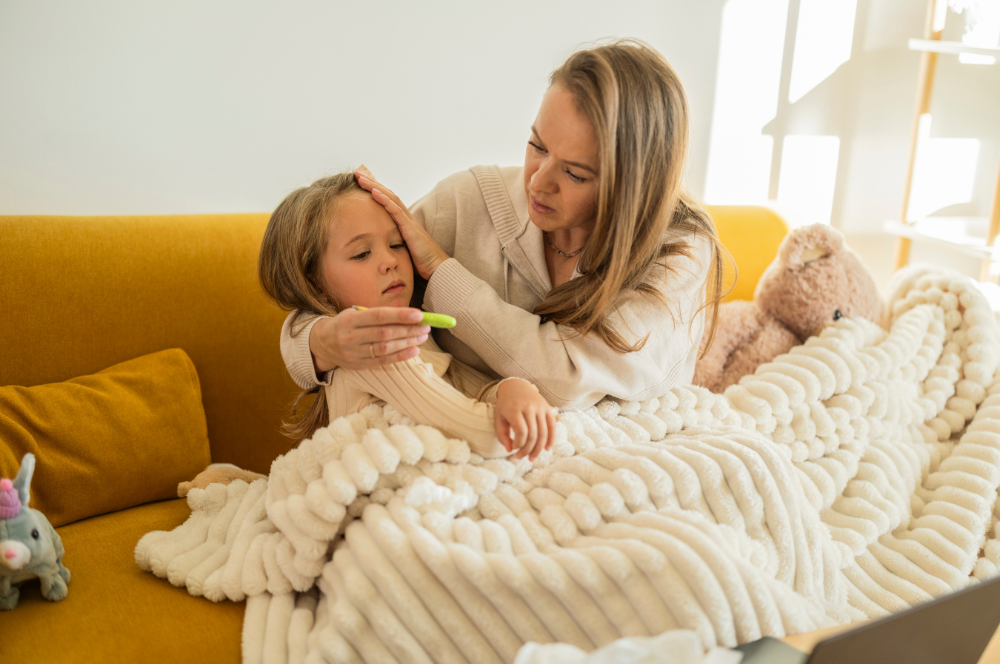
Understanding why your toddler is clinging doesn’t suddenly make you feel less tired.
But it can change the way you respond.
Instead of seeing the behaviour as something to stop, it helps to see it as a need for reassurance.
That doesn’t mean carrying your toddler all day or never encouraging independence.
It simply means recognising that a small moment of connection often comes before confidence.
A quick cuddle.
Holding their hand for a minute.
Getting down on the floor to play together before encouraging them to continue on their own.
These small moments of reassurance can often help toddlers feel secure enough to separate again.
Predictable routines can help too.
When children know what comes next, the world feels a little less uncertain, which can make separations easier to manage.
And whenever possible, encourage independent play when your toddler already feels calm and connected, rather than expecting it during moments of distress.
Independence grows from feeling safe—not from being pushed away before they’re ready.
When Clinginess Is Developmentally Normal
Clingy phases are a completely normal part of early childhood.
They often appear during times when your toddler’s world is changing or growing in some way.
For example, you might notice them during:
- developmental leaps
- illness or tiredness
- changes to familiar routines
- starting nursery or childcare
- periods of separation anxiety
You may also notice that your toddler becomes particularly attached later in the day, when they’re simply running out of emotional energy. Overtiredness can sometimes look surprisingly different from what we expect, with some toddlers becoming more energetic rather than sleepier.
If that sounds familiar, you might also enjoy our guide to why some toddlers become hyper before bed.
For most toddlers, these phases come and go.
As they grow, and as they experience more predictable separations and reunions, their confidence gradually grows too.
The Bigger Picture
The next time your toddler follows you into the kitchen…
…or asks to be carried just as you finally sit down…
…it may help to remember what their behaviour is really saying.
Not:
“Don’t leave me.”
But:
“You’re my safe place.”
Clinginess isn’t usually a sign that your toddler is becoming less confident.
Quite often, it’s a sign that they know exactly where to turn when life feels uncertain.
Ironically, the moments when children cling most intensely are often the moments they trust us the most.
Not because we’re perfect.
Not because we always know the right thing to say.
But because, in that moment, we’re the person who helps their world feel safe again.
And as children experience that reassurance over and over again, something quietly begins to change.
They learn that you leave.
You come back.
The world feels safe.
And little by little, confidence grows.
Sources and Research Referenced
Bowlby, J. – Attachment and Loss
Ainsworth, M. – Patterns of Attachment
Seltzer et al. (2010) – Maternal Contact and Stress Hormones in Children
Feldman, R. (2012) – Parent–Infant Synchrony and Stress Regulation
Gunnar & Donzella (2002) – Social Regulation of the Cortisol Stress Response
You Might Also Find Helpful