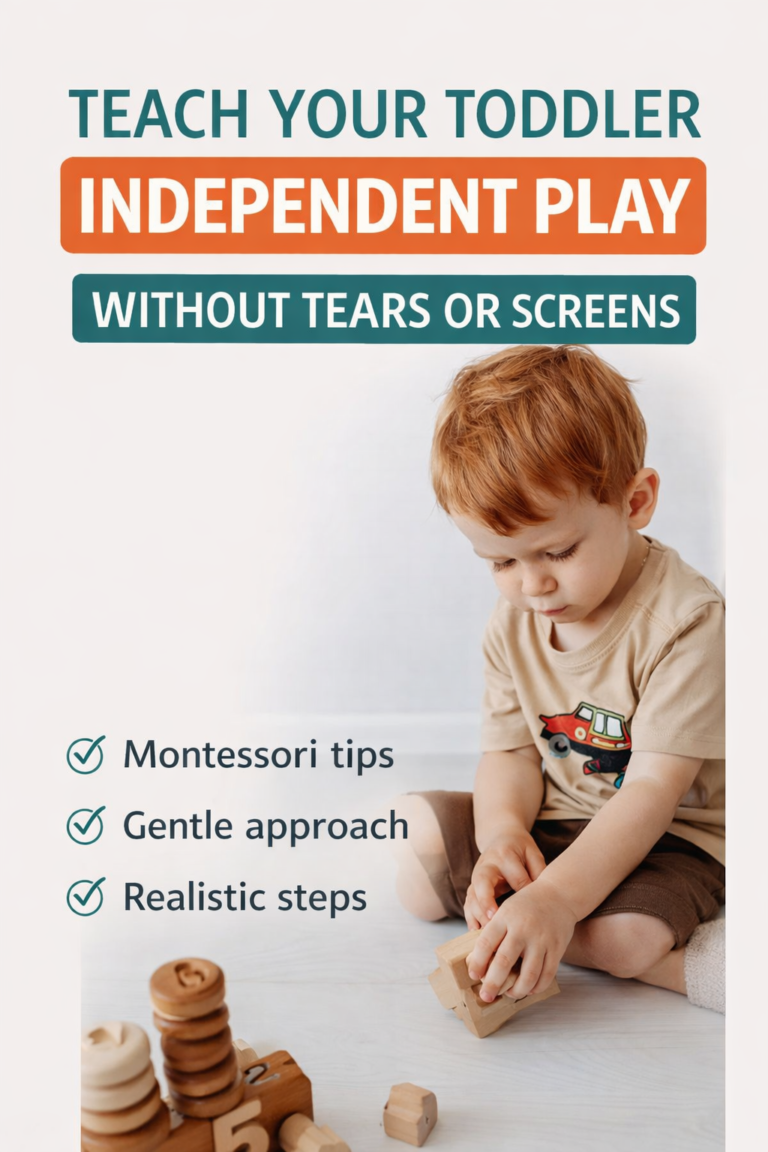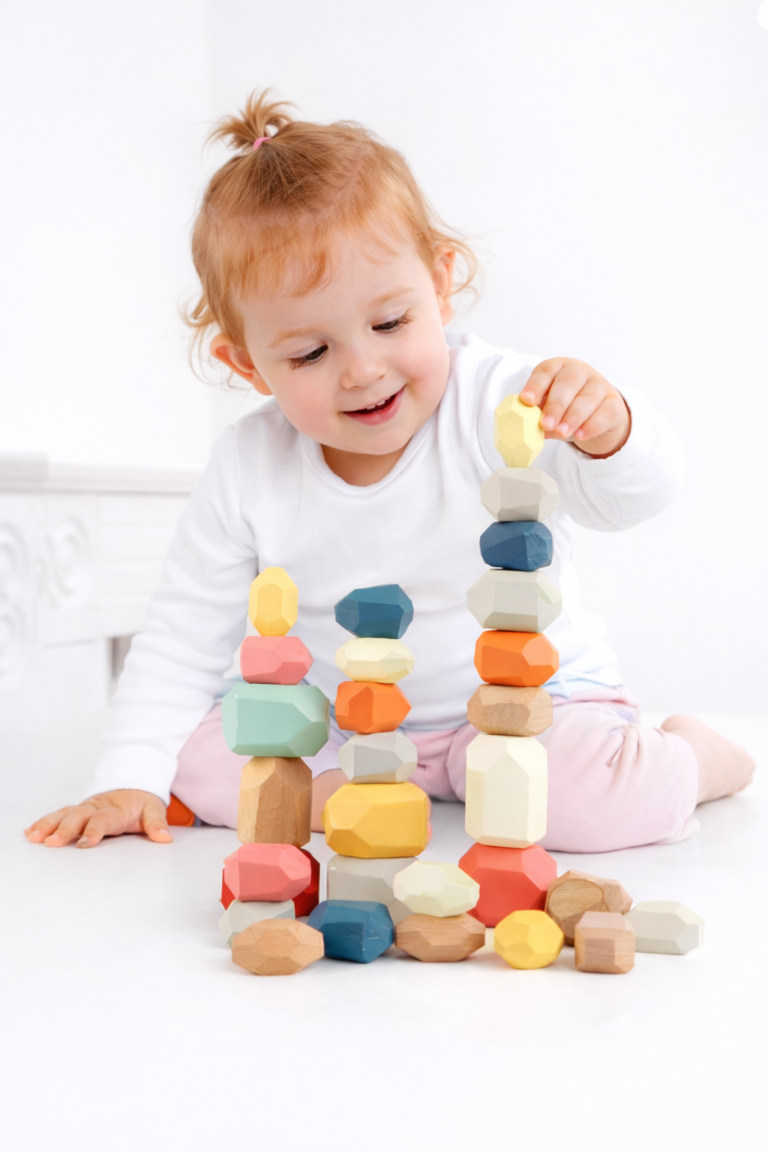
Coin Slot Activities for Toddlers: A Simple Montessori Focus Builder
Montessori Coin Slot Activity for Toddlers: Why Simple Posting Work Builds Focus
There are moments in every day when you need your toddler to engage with something independently for a few minutes.
You need to prepare lunch.
Reply to a message.
Feed the baby.
Or simply finish a cup of coffee while it’s still warm.
The challenge is that toddlers are not naturally drawn to activities adults consider entertaining. What captures their attention is often much simpler: repetition, movement, precision, and the satisfaction of mastering a skill.
This is why some of the most effective Montessori activities look surprisingly ordinary.
A simple posting activity — sometimes called a coin slot activity — is a perfect example. To an adult, it may look almost too basic to be interesting. To a toddler, it offers exactly the kind of challenge their developing brain is seeking.
The goal isn’t to distract your child.
It’s to offer meaningful work that meets a genuine developmental need.
And when that happens, concentration often follows naturally.
Disclaimer: This post contains affiliate links. As an Amazon Associate I earn from qualifying purchases at no extra cost to you.
It looks almost too simple.
And yet toddlers will repeat it for a surprisingly long time.
Why Toddlers Love Posting Activities
Between roughly 12 and 30 months, many children become fascinated by activities that involve putting objects into containers, removing them again, and repeating the process over and over.
While it can look repetitive from an adult perspective, something important is happening beneath the surface.
Toddlers are refining hand movements, developing coordination, and learning how their actions affect the world around them. Each successful attempt strengthens neural pathways related to concentration, problem solving, and fine motor control.
Maria Montessori observed that young children are often drawn to activities that allow them to repeat a movement until they have mastered it. Posting activities satisfy this urge beautifully.
This is one reason a toddler may ignore an expensive electronic toy yet spend fifteen minutes completely absorbed in a simple box with a slot.
The attraction isn’t the object itself.
It’s the opportunity to practise a skill that feels meaningful and achievable.
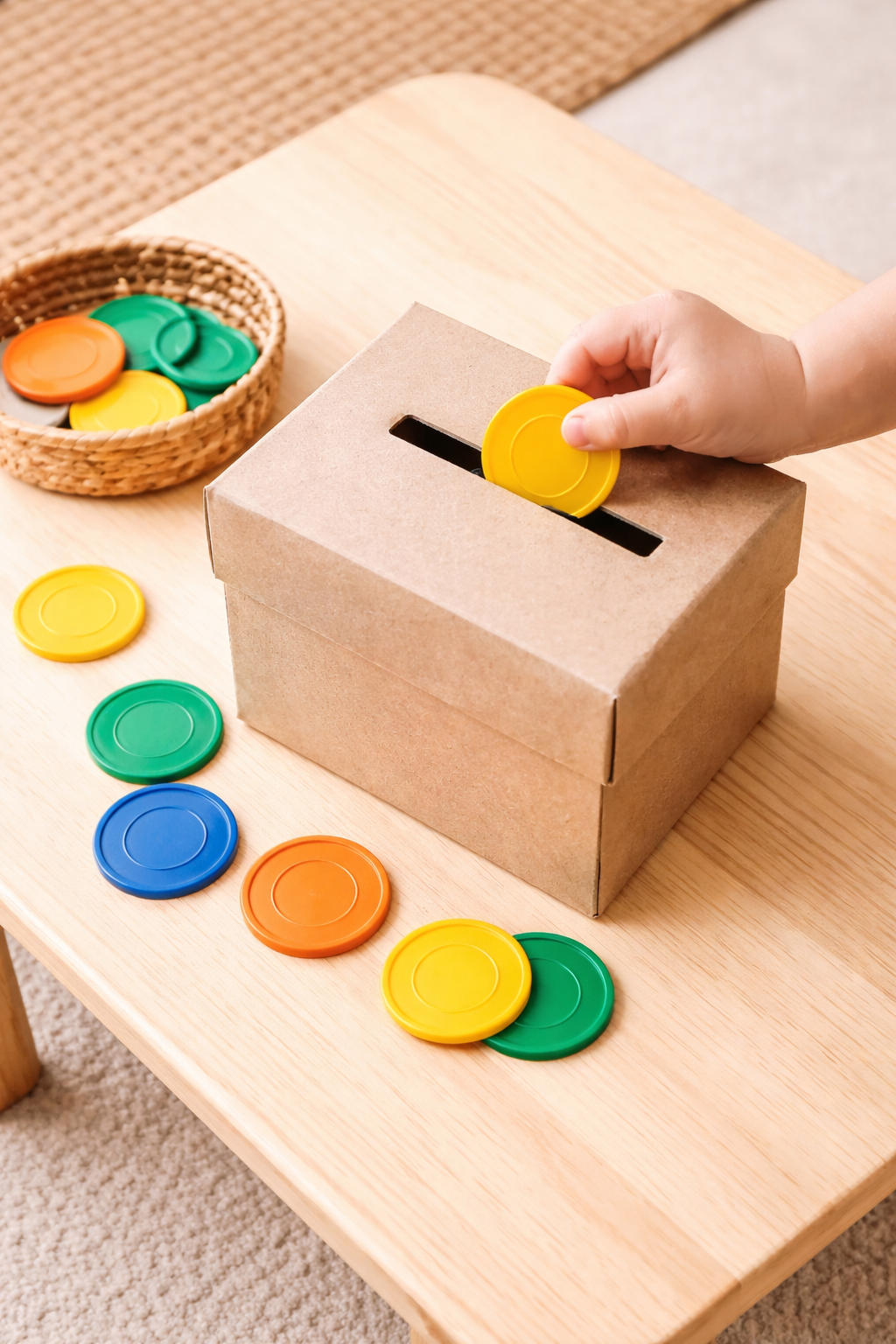
How to set up the coin slot activity
You only need two things:
- A container with a slot
- Objects to post inside
Place the container on a tray or small mat and sit beside your child the first time.
Slowly demonstrate:
Pick up one object
Post it
Pause
No instructions.
No explaining.
Then slide the objects toward your child.
Let them begin.
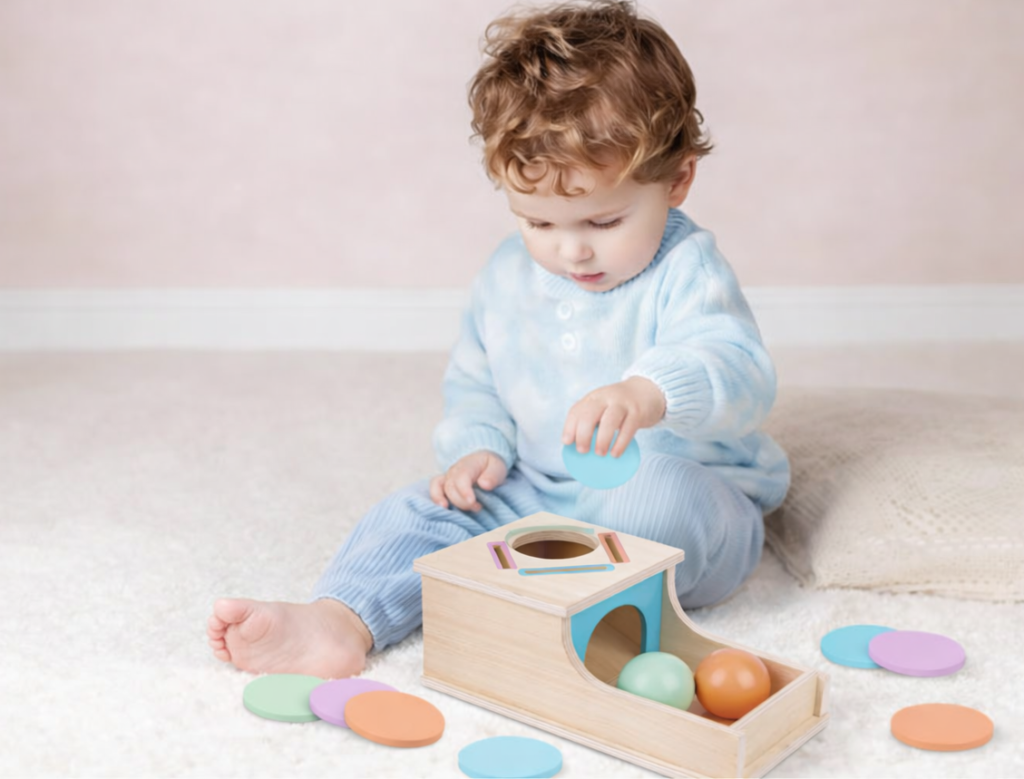
If you prefer a ready-made option, a simple wooden posting box can make this easier to set up and repeat consistently. The opening is sized correctly, and everything stays contained — which helps toddlers stay focused without frustration.
Check current price on Amazon UK
What to say (and what not to say)
Avoid questions:
“Can you put it in?”
“Where does it go?”
“Show mummy!”
Instead, name reality:
“The coin goes in.”
Then stay quiet.
Too much language pulls them out of concentration.
Calm observation invites it.
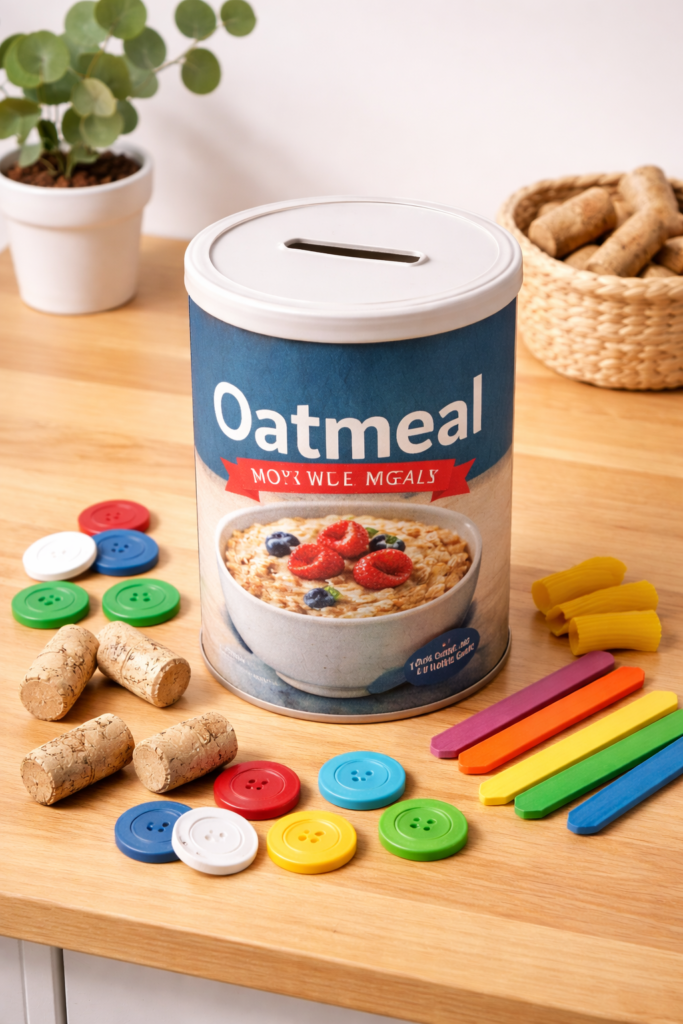
Everyday objects you can use
You don’t need a toy — in fact, real objects often work better.
Containers
- Spice jar
- Oatmeal tub
- Tissue box
- Coffee tin
- Yogurt pot
- Takeaway container
- Plastic bottle (cut slot)
Objects to post
- Poker chips
- Milk bottle lids
- Wooden blocks
- Corks
- Large buttons
- Craft sticks
- Cards
- Large pasta
- Pom poms
- Lego bricks
Adjusting difficulty by age
12–18 months
- Wide opening
- Large objects
- Soft materials
18–24 months
- Medium slot
- Mixed objects
2+ years
- Thin slot
- Coins/cards
- Sorting by type
Increasing challenge keeps concentration growing.
How this builds independence
This activity develops:
- hand control
- focus
- persistence
- problem solving
- internal satisfaction
Most importantly, the child experiences success without adult correction.
That is the beginning of true independent play.
Montessori activities are not designed to keep children busy. They are designed to help children become capable. When a toddler can complete an activity independently, repeat it successfully, and experience the satisfaction of mastery, genuine confidence begins to grow.
If your toddler struggles to stay engaged for long periods, you may also find this helpful:
→ How to Help Your Toddler Play Independently (Montessori Guide)
How long should it last?
The first time may only be 2 minutes.
Do not interrupt.
Repeat it daily and you’ll often see 10–15 minutes of deep focus within a week.
Consistency creates familiarity.
Familiarity creates confidence.
Confidence creates independence.
When to use it
This works beautifully during predictable busy moments:
- preparing meals
- feeding a baby
- phone calls
- morning routines
- transition times before outings
Instead of occupying the child, you are supporting their developmental need — which naturally keeps them engaged.
You can also combine simple activities like this with a calm, organised setup:
→ Montessori Toy Rotation: The Simple System That Keeps Toddlers Engaged
The goal
Independent play is not taught by telling a child to play alone.
It grows when the environment gives them something meaningful to do.
Simple, real, repeatable work builds concentration — and concentration builds calm.
Start small.
A box.
A slot.
A handful of objects.
Sometimes the simplest activities create the deepest focus.
Many parents are surprised that the simplest activities are often the ones their child returns to again and again.
You Might Also Find Helpful