How to Burn Toddler Energy Indoors (Without Screens)
Some days toddlers wake up ready to move — run, climb, jump, push, crash — all before breakfast.
When they can’t use that energy outside, it shows up as:
- climbing furniture
- throwing toys
- constant whining
- hitting or crashing into people
- refusing quiet activities
This isn’t misbehaviour.
Toddlers have a biological need for gross motor movement.
When the body can’t work, the behaviour does.
Instead of trying to calm the child first, meet the movement need first.
If you’re seeing this pattern daily, it can feel overwhelming — especially when nothing seems to “work.”
👉 Here’s how to handle those overwhelmed toddler days
Why Toddlers Need Movement Before Calm
A toddler’s nervous system regulates through action, not stillness.
Climbing, pushing, pulling and carrying are called heavy work.
They help the brain organise sensory input and make focus possible.
That’s why after playground time toddlers:
- listen more
- sit longer
- cooperate more easily
Indoors, we need to recreate that opportunity — even in small ways.
You’ll find more low-effort ideas here: Simple activity ideas for toddlers at home
Simple Indoor Energy Burn Activities
You don’t need complicated setups — just intentional movement.
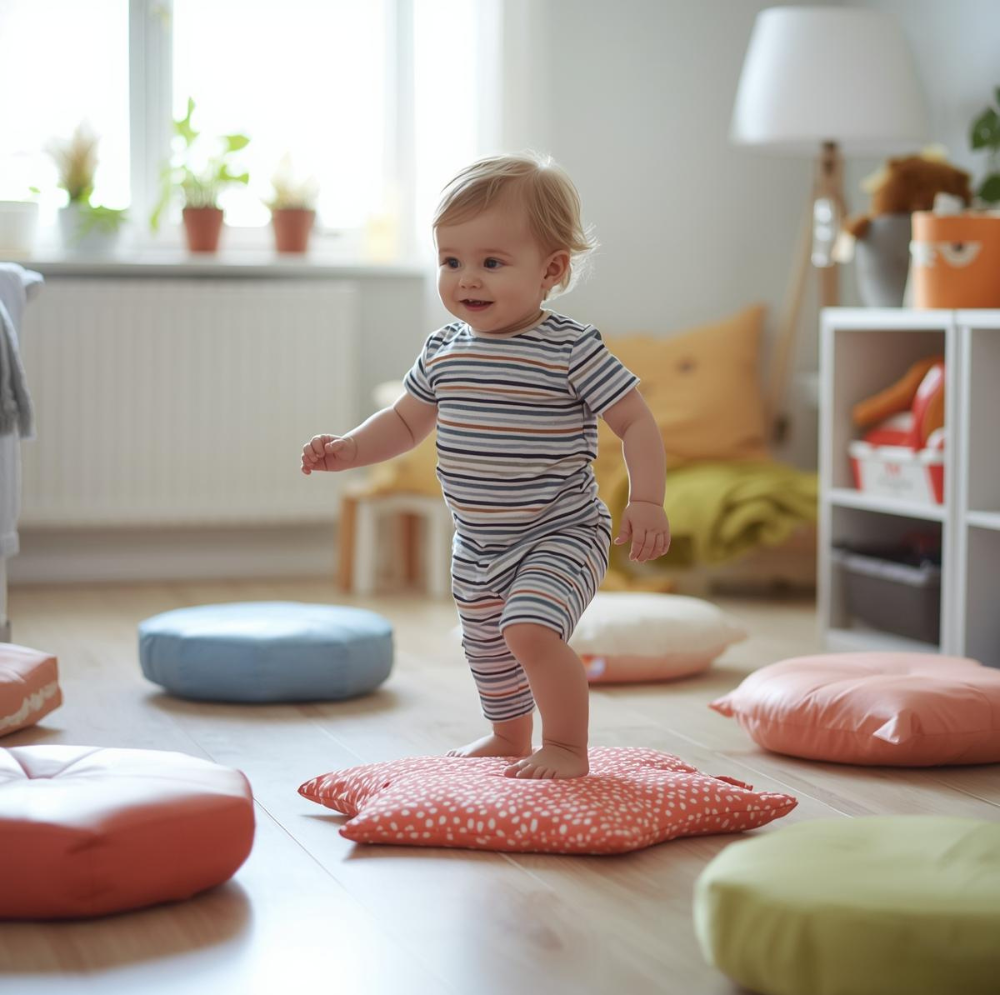
1. Cushion climbing path
Place sofa cushions or pillows on the floor and let them climb over.
Goal: slow, controlled climbing
Not jumping chaos
2. Pushing heavy objects
Laundry basket + books or toys
Ask them to:
“Push this to the kitchen”
Deep pressure work calms the nervous system quickly.

3. Carrying jobs
Toddlers naturally look for weight to move.
When they don’t find it, they create it — by throwing, pushing furniture, or crashing into things.
Give the body a real job instead.
Offer simple tasks with a clear beginning and end:
- move potatoes from the bag to a bowl
- carry water bottles to the table
- bring clothes to the washer
- return books to a shelf
- carry groceries from the hallway
- take towels to the bathroom
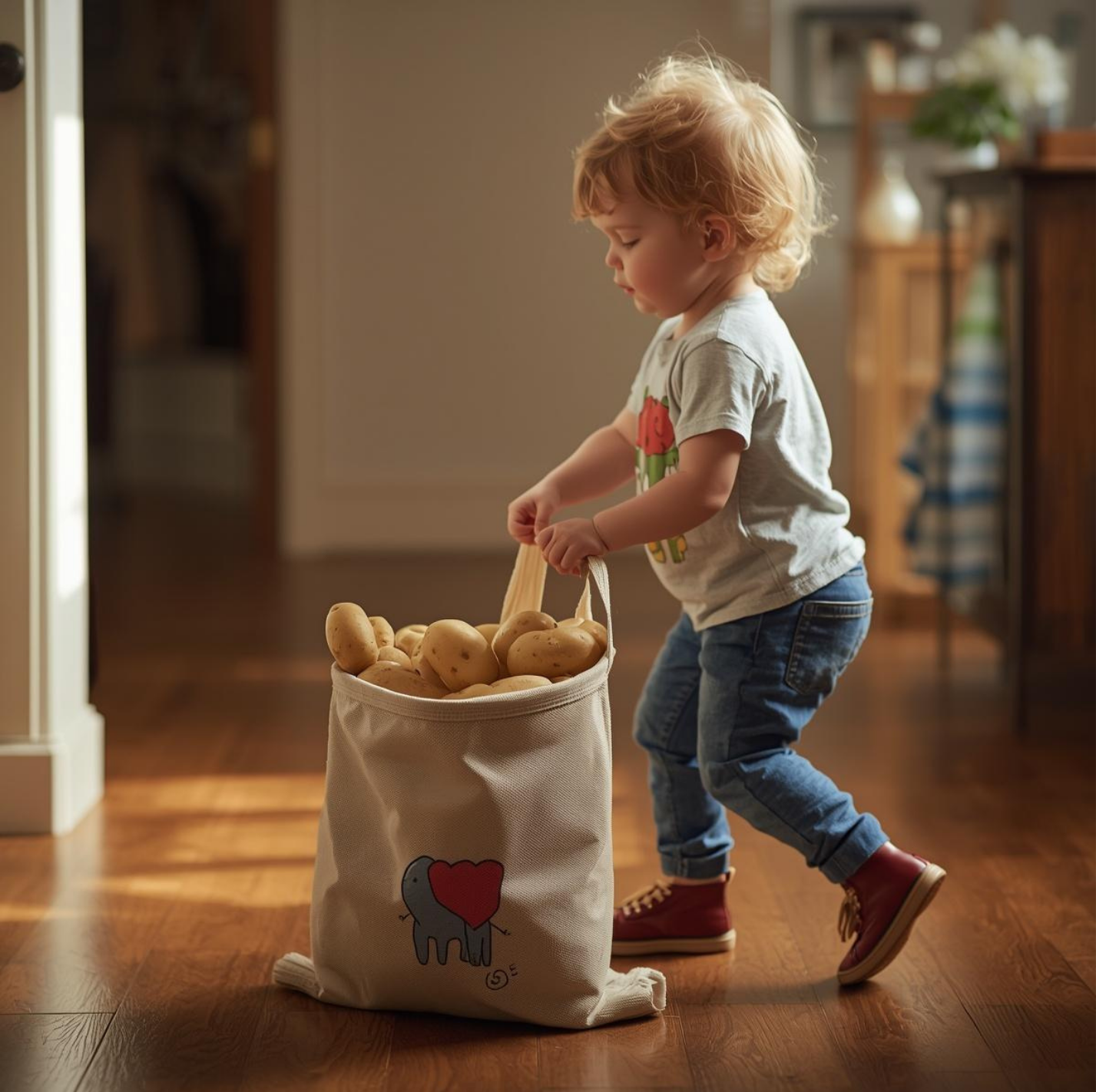
Show slowly once, then let them repeat.
The goal isn’t helping you — it’s deep pressure through the arms and shoulders.
This type of movement organises the nervous system and often reduces restlessness far more effectively than telling a child to “be gentle” or “sit still.”
Work calms because it has meaning.
This kind of purposeful movement is also the foundation of independent play.
You can explore that more here: How to encourage independent play at home
4. Rolling & crashing safely
Some toddlers seek strong body input — they throw themselves onto the sofa, jump from furniture, or crash into people. This isn’t recklessness. It’s the body asking for deep pressure and impact.
Create a predictable place where that need is allowed.
Set up a simple crash spot on the floor:
a thick rug or mat with a few firm cushions piled together.
Keep it in the same place so the rule stays clear.

Show once:
kneel → roll → land
Then invite:
“Crash goes here.”
Children repeat this kind of movement because it helps their body feel organised and grounded. When the need is met safely, they stop searching for bigger, riskier places to jump.
Instead of constantly stopping the behaviour, you’ve given it a boundary and a location.
5. Sticky Tape Web (Crawling Challenge)
Create a simple obstacle course by stretching strips of masking tape across a hallway, doorway, or between two walls at different heights. Make a loose “web” so your toddler has to crawl under, step over, and twist around the lines.
Demonstrate slowly once, then let them figure it out.
This activity gives the body exactly what it’s asking for — bending, squatting, crawling, and coordinating movement through space. These are regulating movements that help organise the nervous system, which is why children often become calmer afterwards.

Disclaimer: As an Amazon Associate I earn from qualifying purchases.
Optional helper:
Colourful painter’s tape makes this much more exciting and removes cleanly from walls and floors. We use soft-adhesive tape so toddlers can pull it off themselves without damage.

If you enjoy simple setups like this, you’ll probably love:
👉 Easy indoor toddler activities that actually work
The Missing Piece: Vertical Climbing
Horizontal movement helps —
but toddlers especially seek up and down movement.
Climbing provides:
- joint pressure
- balance input
- body awareness
- controlled risk
Without a safe place to climb, they will use:
sofas, tables, counters, shelves
They are not choosing danger — they are meeting a developmental need.
A Prepared Indoor Movement Option
A small indoor climbing frame – also called a ‘Pikler Climbing Frame’ gives toddlers a consistent place for this work.
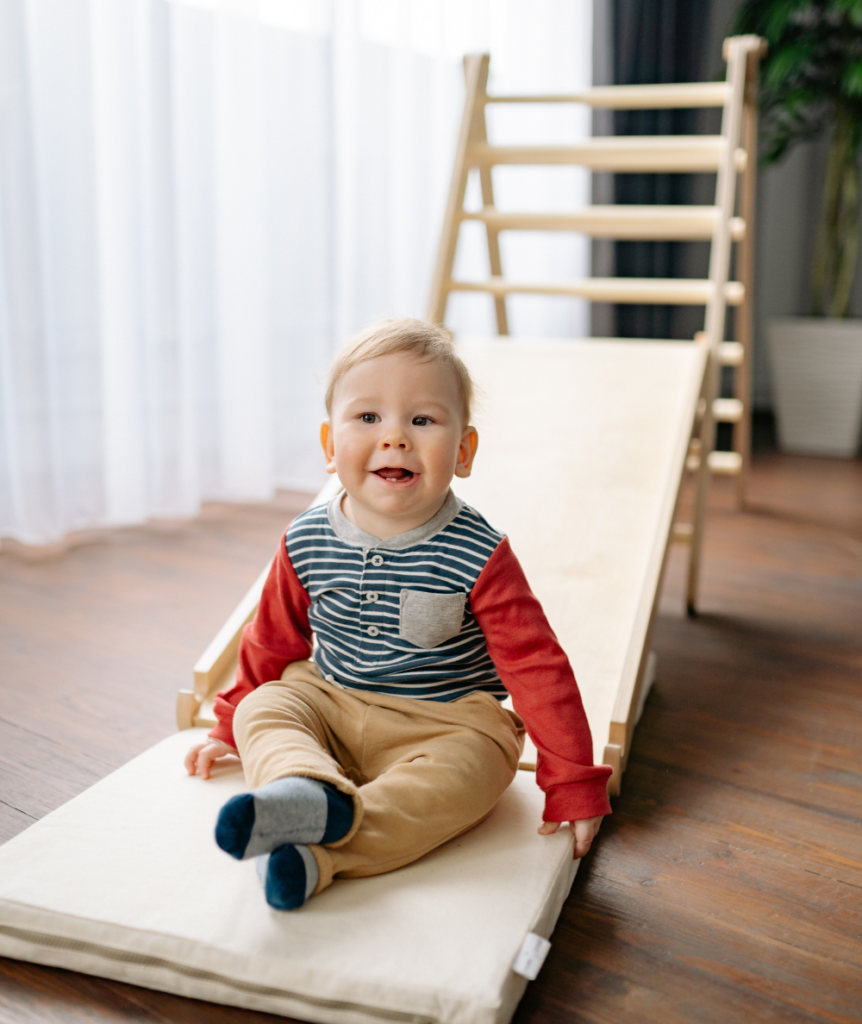
A wooden triangle climbing frame creates:
- predictable limits
- safe repetition
- independent movement
Instead of saying “don’t climb,” you can redirect:
“Climbing is for your triangle.”
Children accept limits faster when the need still has a place.
If you’re building a calmer home environment overall, this fits beautifully into a simple setup.
See how to create a Montessori-style home setup
What Age Is a Climbing Triangle Suitable For?
Many parents assume climbing equipment is only for older toddlers, but movement needs begin much earlier.
Even before confident walking, children are already working on:
pulling up, stepping over, shifting weight, and testing balance.
A low indoor climbing frame can be used in different ways depending on age:
Around 8–12 months (pulling up stage)
Children may hold the bars, stand, or cruise along the side.
They are not climbing yet — they are practising stability and confidence.
12–18 months (early walkers)
They begin stepping onto the lower rungs and climbing partially with help.
Repetition here builds coordination more than height does.
18–24 months
Climbing becomes intentional.
They go up and down repeatedly and often start turning to descend.
2–3 years
They use the full structure — climbing, hanging, and controlled risk-taking.
The value isn’t how high they climb, but how often they repeat the movement.
Always supervise closely and place the frame on a stable surface with clear space around it.
What Changes After Movement
When the movement need is met, behaviour shifts:
Before movement:
- restless
- throwing toys
- seeking reactions
After climbing:
- longer focus
- calmer play
- easier transitions
You are not tiring them out —
you are organising the brain.
How Often Toddlers Need This
Not once a day.
Usually every 1–2 hours.
Short movement periods prevent long behaviour struggles.
Movement first → calm follows
Final Thoughts
Many indoor behaviour struggles are movement struggles.
Instead of removing energy, guide it.
When the body gets what it needs, cooperation grows naturally — and the house becomes quieter without constant correction.
You Might Also Find Helpful