18 Month Old Hyper Before Bed? The Surprising Reason
If your 18 month old is hyper before bed, you’re not alone. Many parents feel confused when their toddler seems exhausted all day — then suddenly wired, silly, and bouncing off the walls at bedtime.
Many parents search:
- Why is my 18 month old hyper before bed?
- Why does my toddler get wired at night?
- Why is my overtired toddler suddenly full of energy?
It feels confusing. They should be exhausted… but instead they’re bouncing off the walls.
Here’s what’s really happening — and how to handle it calmly.

The Short Answer: Overtired Toddlers Look Hyper
The most common reason an 18-month-old is hyper before bed is simple:
They’re overtired.
But overtired doesn’t look sleepy.
When toddlers miss their natural sleep window, their bodies release:
- Cortisol (stress hormone)
- Adrenaline
This creates a “wired but tired” state.
Instead of slowing down, they:
- Run in circles
- Laugh hysterically
- Jump on furniture
- Resist pajamas
- Seem suddenly wild or defiant
It’s not extra energy.
It’s a stress response.
Why 18 Months Is a Perfect Storm for Bedtime Chaos
Around 18 months, toddlers go through major developmental changes:
1. Language Explosion
Their brains are processing new words all day long.
2. Stronger Independence
They now understand: “I can say no.”
3. Separation Awareness
They know bedtime means separation from you.
4. Emotional Intensity
Big feelings, limited regulation.
By the end of the day, their nervous system is overloaded.
Hyper behaviour before bed is often:
A dysregulated toddler trying to release built-up stimulation.
Is This the 18-Month Sleep Regression?
Possibly.
The 18-month sleep regression often includes:
- Fighting bedtime
- More night wakings
- Clinginess before sleep
- Sudden hyperactivity at night
This stage combines developmental leaps, separation anxiety, and overtiredness.
It’s common. It’s temporary. But it’s exhausting.
Disclaimer: This post contains affiliate links. I may earn a small commission at no extra cost to you. As an Amazon Associate I earn from qualifying purchases.

If hyper evenings are paired with frequent night wakings, a consistent white noise machine can help reduce sudden stimulation and create a more predictable sleep environment.
If your toddler not only gets hyper before bed but also wakes frequently overnight, you may also relate to Baby Wakes Up When Put Down — Here’s Why (And What Actually Helps), where we explore sleep transitions and nervous system regulation more deeply.
Around 18 months, clinginess and bedtime resistance often increase alongside hyper behaviour. If you’re also noticing separation anxiety or sudden attachment at night, you may want to read Why Is My 18 Month Old So Clingy, where we break down what’s normal and how to respond calmly.
Why Toddlers Get “Silly” at Night
Parents often describe it as:
“He gets so silly.”
“She runs away laughing.”
“They won’t stop jumping.”
Silliness at bedtime is often:
- Connection-seeking
- Anxiety about separation
- Nervous system overload
- Delay tactics
At 18 months, toddlers don’t say:
“I feel dysregulated.”
They run.
Signs Your Toddler Is Overtired at Bedtime
Your 18-month-old may be overtired if you notice:
- Hyperactivity instead of sleepiness
- Clumsiness
- Emotional outbursts
- Increased clinginess
- Falling asleep quickly once finally settled
If they crash within 10–15 minutes after the chaos ends, overtiredness is likely the cause.
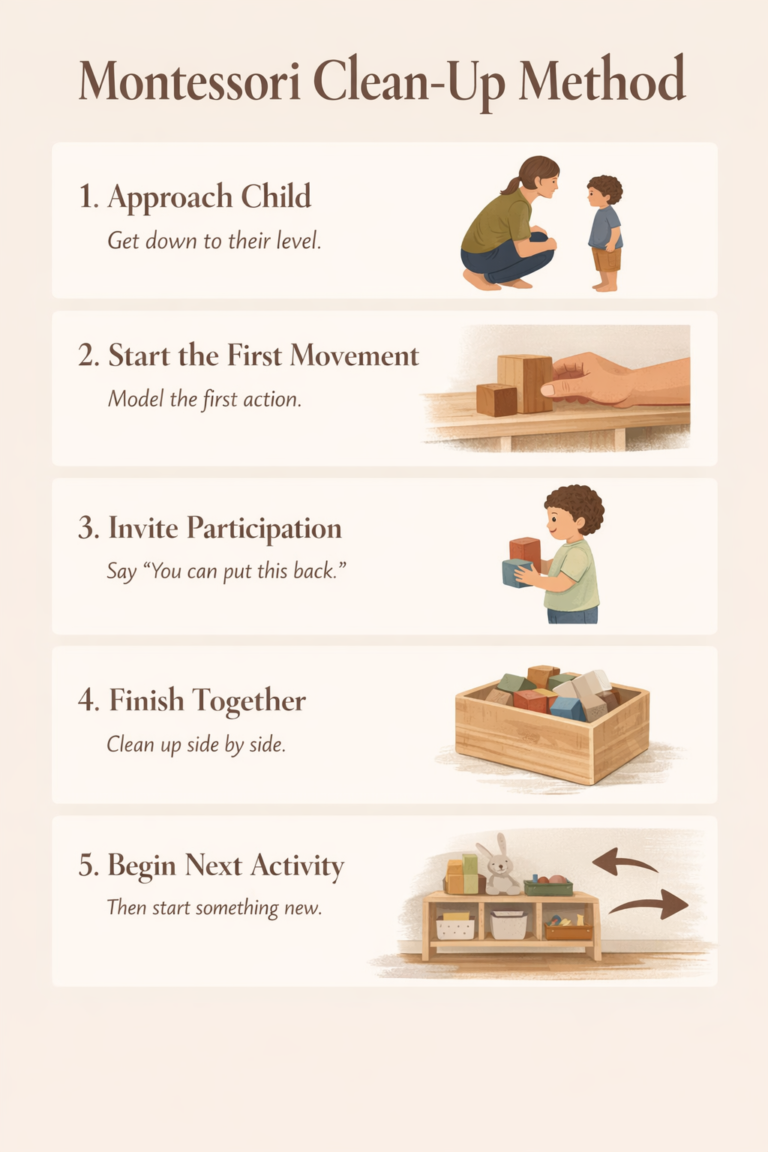
Hyperactivity before bed is often connected to broader toddler regulation challenges. In Montessori Toddler Behaviour: A Calm, Practical Guide, we explain how behaviour is often a sign of dysregulation — not defiance — and how the environment can reduce power struggles throughout the day.
What Actually Helps (Calm, Practical Solutions)
Hyper behaviour before bed often leads to repeated “no’s,” escalating tension instead of calming it. If you’re finding bedtime turning into a power struggle, you may also find What to Say Instead of NO to Your Toddler helpful for holding boundaries calmly while reducing resistance.
Instead of trying to “burn off energy,” focus on nervous system regulation.
1. Move Bedtime Earlier
Many 18-month-olds do best with bedtime between:
6:30–7:30pm
Even 20–30 minutes earlier can reduce the hyper burst.
2. Dim Lights 60–90 Minutes Before Bed
Light directly affects melatonin production.
Lower lighting signals the brain:
Sleep is coming.
Bright lights = alert brain.
Many families find that switching to a warm, dimmable bedside lamp instead of overhead lighting makes a noticeable difference in how easily toddlers wind down. Soft, amber-toned light supports melatonin production and creates a calmer transition into sleep.
We recently switched to a soft, dimmable night light for our two-year-old daughter, and it made a noticeable difference in how smoothly evenings transition. A gentle, warm light reduces stimulation far more effectively than overhead lighting. We’ve been using the JolyWell Night Light — it offers stepless dimming, warm and soft RGB options, and a simple tap control that toddlers can operate independently. The one-hour timer is especially helpful during wind-down time, and the portable design makes it easy to move between rooms if needed.
3. Replace Rough Play with “Heavy Work”
Heavy work calms the nervous system.
Try:
- Carrying books to a shelf
- Pushing a laundry basket
- Helping wipe the table
- Slow rocking
- Deep-pressure cuddles
Movement isn’t the problem.
Unregulated stimulation is.
4. Slow Yourself Down
Your nervous system regulates theirs.
Instead of:
“Stop running!”
Try:
Lowering your voice
Moving slowly
Whispering
A calm adult reduces cortisol.
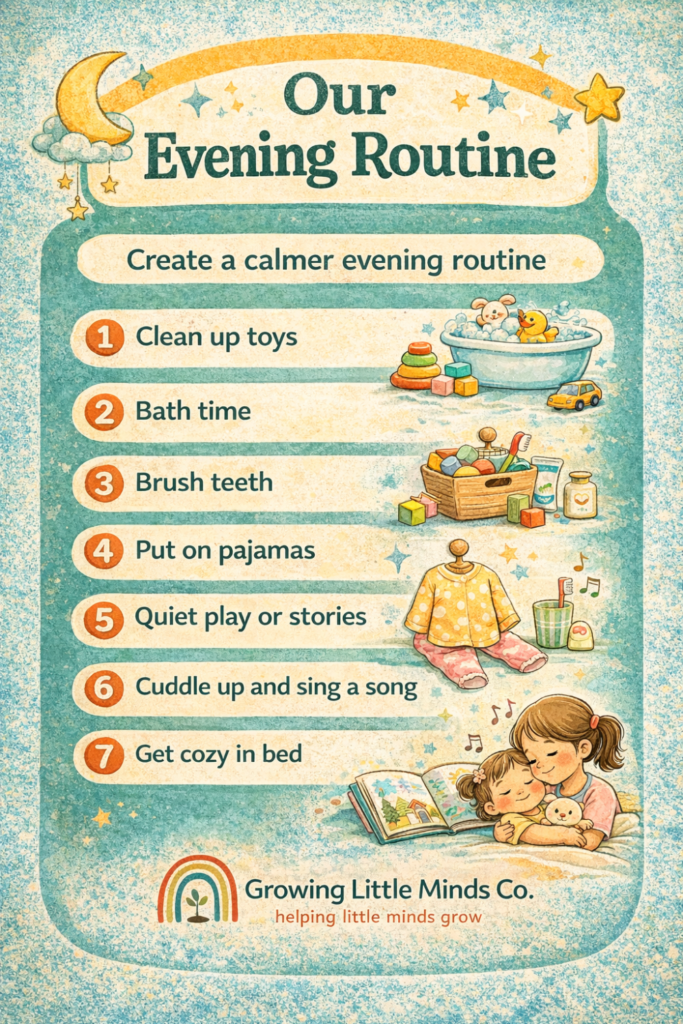
5. Keep Bedtime Predictable
At this age, structure reduces anxiety.
Same order. Same rhythm. Same expectations.
Example:
Bath → Pajamas → Books → Song → Bed
No surprises.
No long negotiations.
I Love You to the Moon and Back is one of our bedtime favourites. The gentle rhythm and reassuring message make it perfect for winding down after a busy day, especially during phases when toddlers feel clingier at night. It’s short, calming, and sweet — ideal for that final quiet moment before lights out.
You can find it easily on Amazon, and it’s also often available in second-hand bookshops if you prefer to shop pre-loved copies.
👉 I Love You to the Moon and Back
What NOT to Do
❌ Don’t add extra stimulation to “tire them out”
❌ Don’t interpret hyper behaviour as defiance
❌ Don’t delay bedtime further
Overtired toddlers don’t need more activity.
They need earlier, calmer transitions.
When to Adjust the Schedule
Consider adjusting naps or bedtime if:
- Hyperactivity lasts over an hour
- Bedtime battles are increasing
- Night wakings are frequent
- Your toddler seems clingier than usual
Small schedule shifts can make a big difference.
Your toddler’s sleep environment can also impact how easily they wind down. A thoughtfully prepared space — like the ideas in Montessori Bedroom Setup for Toddlers (1–3 Years) — can support independence while reducing bedtime resistance.
Some families transitioning to a Montessori floor bed find that increased independence at bedtime reduces resistance over time. A simple, low bed setup allows toddlers to feel secure and capable within clear boundaries.
If you’re looking for a long-term Montessori bed that balances independence with safety, this solid pine house floor bed (200 × 90 cm) is a practical investment. The low-to-ground design allows toddlers to climb in and out confidently, while the smooth safety rails and sturdy slatted frame provide reliable support as they grow. Crafted from natural pine with a strong weight capacity, it’s built to last beyond the toddler years. The playful cottage-style frame also makes bedtime more inviting — and can be personalised with soft lights or fabric for a cosy sleep space. It’s one of those pieces that supports both development and durability in one simple setup.
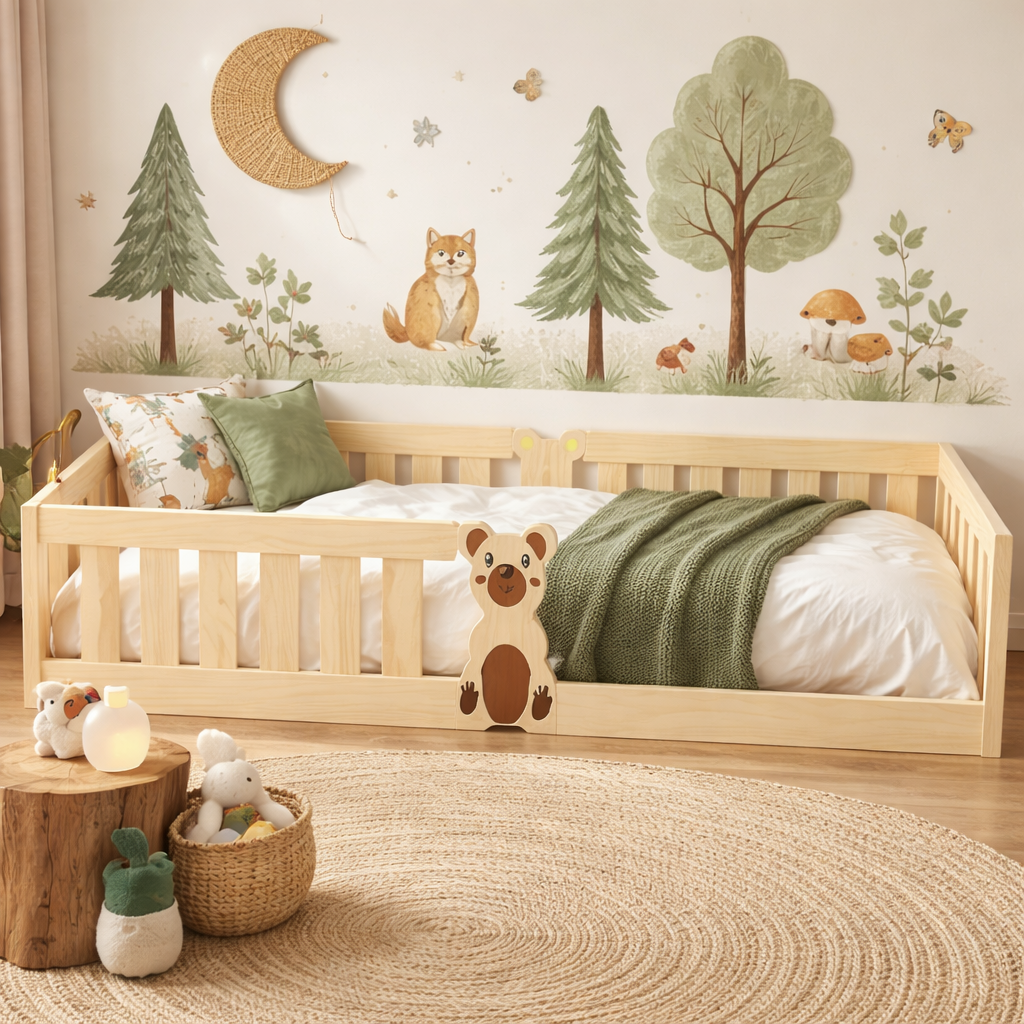
👉 Montessori floor bed solid pine house bed with safety rail
The Reframe Every Parent Needs
An 18-month-old who gets hyper before bed is not being difficult.
They are:
- Overtired
- Overstimulated
- Developmentally overloaded
- Seeking connection
Hyper behaviour is often the last signal before collapse.
The solution isn’t stricter discipline.
It’s earlier, slower, calmer.
🌿 A Gentle 18 Month Daily Rhythm
At 18 months, toddlers thrive on predictability — but they don’t need a rigid, minute-by-minute schedule.
A daily rhythm is about the flow of the day, not controlling the clock.
Think in patterns:
Connection → Play → Outside → Rest → Calm → Sleep
Here’s what that can look like in real life.
🌞 Morning: Slow Start + Movement
- Wake up (around the same general time each day)
- Nappy change, cuddles, connection
- Breakfast together
- Free play or a simple practical life activity (helping unload laundry, pouring water, tidying shelves)
- Outdoor time or a walk
Morning is often your toddler’s most regulated window. This is when concentration and cooperation are highest.
🌿 Midday: Food + Rest
- Lunch (ideally before overtiredness hits)
- Wind-down routine (books, dimmer lights, calm voice)
- Nap
Most 18 month olds still need 1.5–2.5 hours of daytime sleep. Protecting the nap is one of the biggest ways to prevent bedtime hyperactivity.
🍎 Afternoon: Gentle Activity + Independence
- Wake, snack, reconnect
- Independent play
- Movement (park, garden, dance, climbing)
- Simple shared activity (cooking, water play, art)
Afternoons tend to be shorter attention spans and bigger emotions — keep expectations lighter here.
🌙 Evening: Earlier + Calmer Than You Think
- Early dinner
- Calm play (puzzles, books, low shelves only — no overstimulating toys)
- Bath (if it relaxes your child)
- Bedtime routine (same sequence each night)
- In bed around 7–7:30pm for many toddlers
The key is starting wind-down before your toddler looks tired.
Overtired toddlers often look wired.
🌿 What Matters Most
The exact times matter less than:
- Predictable order of events
- Protecting nap time
- Outdoor movement daily
- Starting wind-down early
- Keeping evenings boring (in the best way)
Rhythm builds security.
Security supports regulation.
Regulation makes bedtime calmer.
Gentle 18 Month Daily Rhythm
A calm, Montessori-inspired daily flow focused on rhythm rather than rigid timing.
Morning — Slow Start + Movement
- Wake and connect (cuddles, nappy change)
- Breakfast together
- Free play or simple practical life activity
- Outdoor time or walk
Midday — Food + Rest
- Lunch before overtiredness sets in
- Calm wind-down (books, dim lights)
- Nap (1.5–2.5 hours for many toddlers)
Afternoon — Gentle Activity + Independence
- Snack and reconnect
- Independent play
- Movement (park, garden, dancing)
- Simple shared activity (cooking, water play, art)
Evening — Calm + Early Wind-Down
- Early dinner
- Calm play (books, puzzles)
- Bath (if relaxing for your child)
- Bedtime routine (same sequence nightly)
- In bed around 7–7:30pm for many toddlers
The goal is not perfection. Focus on predictable order, protected rest, daily movement, and starting wind-down before your toddler looks tired.
Download the printable image version here (free).
Download the printable PDF version here (free).
Final Thoughts
If your 18-month-old is hyper before bed, you’re not failing — and neither are they.
This stage is common, especially during developmental leaps and sleep regressions.
Focus on:
Earlier bedtime
Lower stimulation
Calm connection
Predictable routines
Small adjustments can transform evenings.
Toddlers often feel calmer when their evenings follow a predictable rhythm. A simple bedtime routine helps children transition from active play to rest while giving their bodies and minds time to settle. The goal isn’t perfection — just a gentle sequence of familiar activities that signals to your toddler that bedtime is approaching.