6 Month Old Suddenly Won’t Sleep Through the Night
If your baby was sleeping well — and suddenly isn’t — it can feel confusing.
Waking more often.
Shorter stretches.
More unsettled nights.
You might be wondering:
👉 “What changed?”
At around 6 months, most babies need roughly 12–15 hours of total sleep in a 24-hour period, including naps.
This usually includes:
- 10–12 hours overnight (often with some waking)
- 2–3 hours of daytime sleep
But sleep at this age is not always consistent.
Even babies who were previously sleeping longer stretches can suddenly start waking more often.
The truth is:
👉 this is very common around 6 months
And in most cases, it’s not a problem.
It’s development.
Sleep at this age often looks less predictable than before — and that’s part of the transition.
Things to Check First
Before assuming this is just a developmental phase, it’s worth ruling out a few common factors.
Most sleep changes at this age are normal — but sometimes there’s a simple reason behind them.
1. Physical discomfort
Check for anything that might be making your baby uncomfortable:
- teething
- illness (even mild colds or congestion)
- growth spurts
- digestive discomfort
Even small changes can affect sleep more than expected.
If your baby seems unusually unsettled or in pain, it’s always worth checking with your GP or health visitor.
2. Hunger or feeding changes
Around 6 months, feeding patterns often shift.
- starting solids
- changes in milk intake
- growth-related hunger
Some babies begin waking more simply because their needs have changed.
3. Overtiredness or undertiredness
Sleep can become more sensitive at this stage.
- too much awake time → overtired
- too little awake time → not ready for sleep
Both can lead to more night waking.
4. Environmental changes
Even small changes can affect sleep:
- room temperature
- lighting
- noise
- changes in sleep space
Babies at this age are becoming more aware of their surroundings.
⚠ A Quick Note on Safe Sleep
In the UK, the NHS recommends that babies sleep in the same room as their caregiver for at least the first 6 months — regardless of how you choose to approach sleep.
This can help reduce the risk of sudden infant death syndrome (SIDS) and allows you to respond more easily to your baby during the night.
Whether your baby sleeps in a cot, bedside crib, or alongside you, keeping them nearby during this stage supports both safety and responsiveness.
If you’re adjusting your baby’s sleep space, this can help
→ Montessori Bedroom for a Newborn: A Simple Setup Guide
5. Developmental changes
Once you’ve ruled out the above, the most likely cause is development.
In most cases, sleep changes at this age are not something being “wrong” — they’re part of growth.
Why Sleep Changes Around 6 Months
At this age, several important changes happen at once.
Your baby is:
- becoming more aware of their surroundings
- developing memory and recognition
- going through physical development (rolling, sitting, moving more)
- experiencing changes in sleep cycles
All of this affects sleep.
Even if things felt settled before.
It’s Not Always a “Sleep Regression”
You might hear this called the “6 month sleep regression.”
But it’s not a step backwards.
It’s a shift.
Your baby is moving from newborn sleep patterns into more mature sleep cycles.
That transition can temporarily cause:
- more night waking
- lighter sleep
- difficulty settling
Increased Awareness Changes Sleep
Around 6 months, babies begin to understand more about separation.
They notice:
- when you leave
- when they wake alone
- changes in their environment
Before, they may have fallen asleep without much awareness.
Now, they’re more alert.
And that can make night waking feel more intense.
Physical Development Can Disrupt Sleep
Learning new skills affects sleep.
Rolling.
Sitting.
Trying to crawl.
Your baby may:
- practise skills at night
- wake more frequently
- struggle to settle back down
This is temporary.
Common Changes You Might Notice
- waking more often overnight
- shorter sleep stretches
- needing more comfort
- resisting sleep they previously accepted
Some nights feel manageable.
Others feel exhausting.
That’s normal at this stage.
If your baby also wakes immediately when put down, this is often related
→ Baby Wakes Up When Put Down — Here’s Why (And What Actually Helps)
Disclaimer: This post contains affiliate links. As an Amazon Associate I earn from qualifying purchases at no extra cost to you.
What Actually Helps
The goal isn’t to force longer sleep.
It’s to support your baby through the change.
🛏 Simple Sleep Support (What Actually Helps at 6 Months)
| Need | Simple Option | Why It Helps |
|---|---|---|
| Low light at night | Soft, dimmable night light (Recommended: JolyWell Dimmable Easy Touch Night Light ↗) | Allows you to respond without fully waking your baby |
| Quick, gentle cleanup | Muslin cloths or soft cloths (Recommended: Little Bamboo Muslin, Small – 6 pack ↗) | Useful for feeding, spit-up, and settling without disruption |
| Comfortable sleep surface | Firm, breathable mattress | Supports safe, consistent sleep across different setups |
| Night-time comfort | Simple sleep sack, sleeping bag* or wearable blanket (Recommended: Yoofoss Baby Summer Sleeping Bag ↗ or Yoofoss Baby Spring Sleeping Bag ↗) | Keeps temperature consistent without loose bedding |
| Easier night responses | Comfortable chair or floor cushion | Helps you stay calm and settled during night waking |
*NOTE:
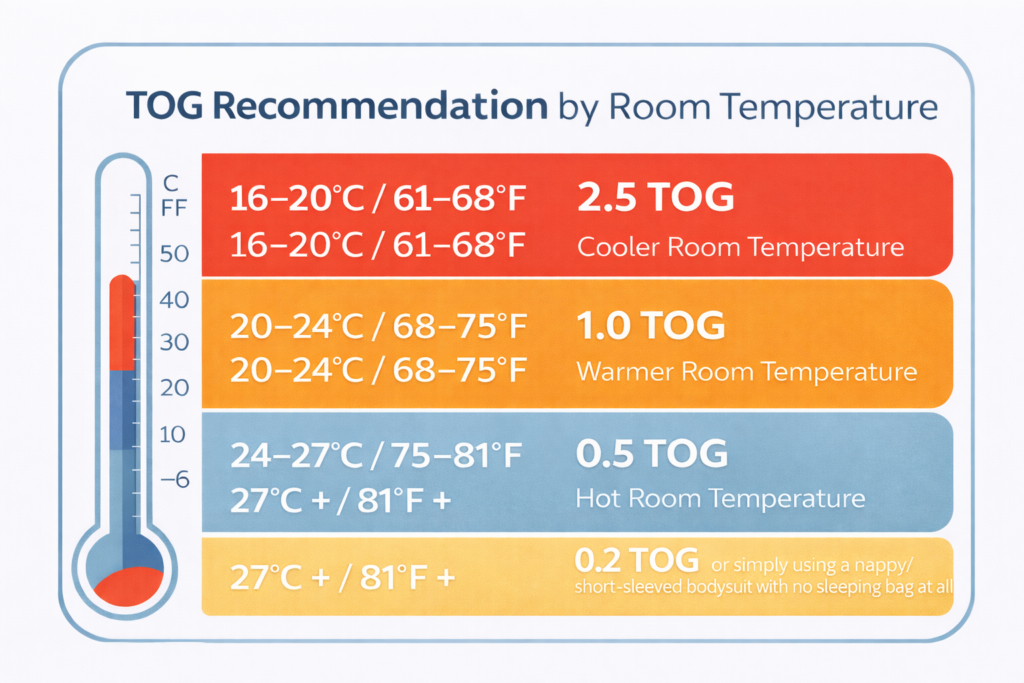
Sleeping bags are given a TOG rating, which indicates how warm the fabric is. Choosing the correct TOG depends on your room temperature, not the season.
According to NHS safer sleep guidance, babies should sleep without loose blankets or duvets, and parents should adjust clothing layers based on the temperature of the room.
Recommended TOG Ratings
• 2.5 TOG – Suitable for cooler rooms around 16–20°C (typical UK nursery temperature).
• 1.0 TOG – Suitable for warmer rooms around 20–24°C.
• 0.5 TOG – Suitable for hot weather or rooms around 24–27°C.
1. Keep the Environment Calm and Predictable
A simple, consistent sleep space helps.
- low stimulation
- familiar surroundings
- consistent setup
👉 predictability supports settling
If you’re finding the day feels unsettled as well, a simple routine can help create more predictability
→ A Simple Montessori Toddler Daily Routine for Calm Days
As your baby grows, adjusting the sleep space can also make a difference
→ Montessori Bedroom Setup for Toddlers (Full Guide for 1–3 Years)
If you’re rethinking your baby’s setup as they grow, this can help keep things simple and calm
→ How to Design a Montessori Bedroom for 12–18 Month Olds (Without Overcomplicating It)
2. Respond Without Overstimulating
When your baby wakes:
- keep lights low
- limit interaction
- stay calm and predictable
This helps your baby return to sleep more easily.
If you’re currently supporting more night waking or feeding overnight, this can help you do it safely
→ Co-Sleeping With a Baby: Bedsharing Safety Guide for New Parents
3. Expect Temporary Disruption
This phase often passes on its own.
Sleep may look different for a while.
That doesn’t mean something is wrong.
4. Support Daytime Development
More movement and exploration during the day can help balance night disruption.
At this age, simple floor play and movement opportunities are enough.
5. Avoid Overcomplicating Sleep
It can be tempting to change everything at once.
New routines.
New methods.
New expectations.
But often:
👉 less change works better
Consistency supports your baby more than constant adjustment.
As your child gets older, you may notice sleep challenges shift in different ways
→ 18 Month Old Hyper Before Bed? The Surprising Reason
What Not to Do
You don’t need to:
- “fix” sleep immediately
- remove comfort
- push independence before your baby is ready
At this stage, responsiveness builds security.
And that security supports sleep over time.
When Does This Phase End?
For most babies, this stage gradually settles.
You may notice:
- longer stretches returning
- easier settling
- fewer night wakings
It doesn’t happen overnight.
But it does shift.
The Bigger Picture
Sleep changes at 6 months are not a sign of failure.
They’re a sign of growth.
Your baby is:
- learning
- developing
- becoming more aware
Sleep is adjusting to that.
One Perspective That Helps
Instead of asking:
👉 “Why did sleep get worse?”
Try asking:
👉 “What is changing right now?”
That shift can make the phase feel more manageable.
Final Thoughts
This stage can feel exhausting.
But it’s temporary.
And meaningful.
Because the same changes that disrupt sleep now are building:
👉 awareness
👉 movement
👉 independence later on
Even if it doesn’t feel like it at 3am.
Frequently Asked Questions About 6 Month Sleep Changes
Why is my 6 month old suddenly waking at night?
Night waking often increases around 6 months due to development.
Your baby is becoming more aware, learning new physical skills, and transitioning into more mature sleep cycles.
This can make sleep lighter and more easily disrupted — even if they previously slept well.
Is the 6 month sleep regression real?
What’s often called a “sleep regression” is actually a developmental shift.
Your baby’s sleep is becoming more structured and adult-like, which can temporarily lead to more waking.
It’s not a step backwards — it’s a sign of progress.
Why does my 6 month old wake every 2 hours?
Frequent waking can happen when sleep cycles change.
Your baby may now wake more fully between cycles and need support to settle again.
Other factors like hunger, development, or overtiredness can also contribute.
Should a 6 month old be sleeping through the night?
Some babies do — but many don’t.
Night waking at this age is still very normal.
Sleep patterns vary widely, and waking doesn’t mean something is wrong.
Why is my 6 month old harder to settle at bedtime?
Increased awareness can make bedtime feel different.
Your baby may notice more about their surroundings, resist separation, or feel more alert.
This can make settling take longer than before.
Could teething cause night waking at 6 months?
Yes — teething can affect sleep.
Discomfort, even mild, can make it harder for your baby to settle or stay asleep.
This is often temporary and tends to pass as symptoms ease.
How long does the 6 month sleep phase last?
This stage doesn’t have a fixed timeline.
For many babies, sleep gradually improves over a few weeks as they adjust to developmental changes.
It tends to ease rather than suddenly stop.
What helps a 6 month old sleep better at night?
Simple, consistent support makes the biggest difference:
- a calm, predictable sleep environment
- consistent routines
- responding gently to night waking
- avoiding overstimulation
Over time, this helps your baby feel secure and settle more easily.